How to catch crappie around brush piles
If you’ve ever tried to target crappie, you know they are masters of hide-and-seek, often congregating in the densest, most difficult-to-fish cover. Brush piles, while fantastic fish magnets, can also be tackle-eating monsters, leaving you frustrated and lighter in your wallet from lost jigs and hooks. This guide is all about turning that frustration into triumph, equipping you with the knowledge and tactics to confidently pull slabs from those snaggy havens here in Texas.
Why Brush Piles are Crappie Magnets and Your Biggest Headache
Brush piles are universally recognized as prime crappie real estate, but understanding why they draw fish in like a moth to a flame is the first step toward effectively fishing them. Crappie aren't just hiding; they're living, feeding, and seeking refuge within these submerged structures. However, this same attractive quality is precisely what makes them so challenging to fish without constantly losing tackle.
Understanding Crappie Behavior Around Structure
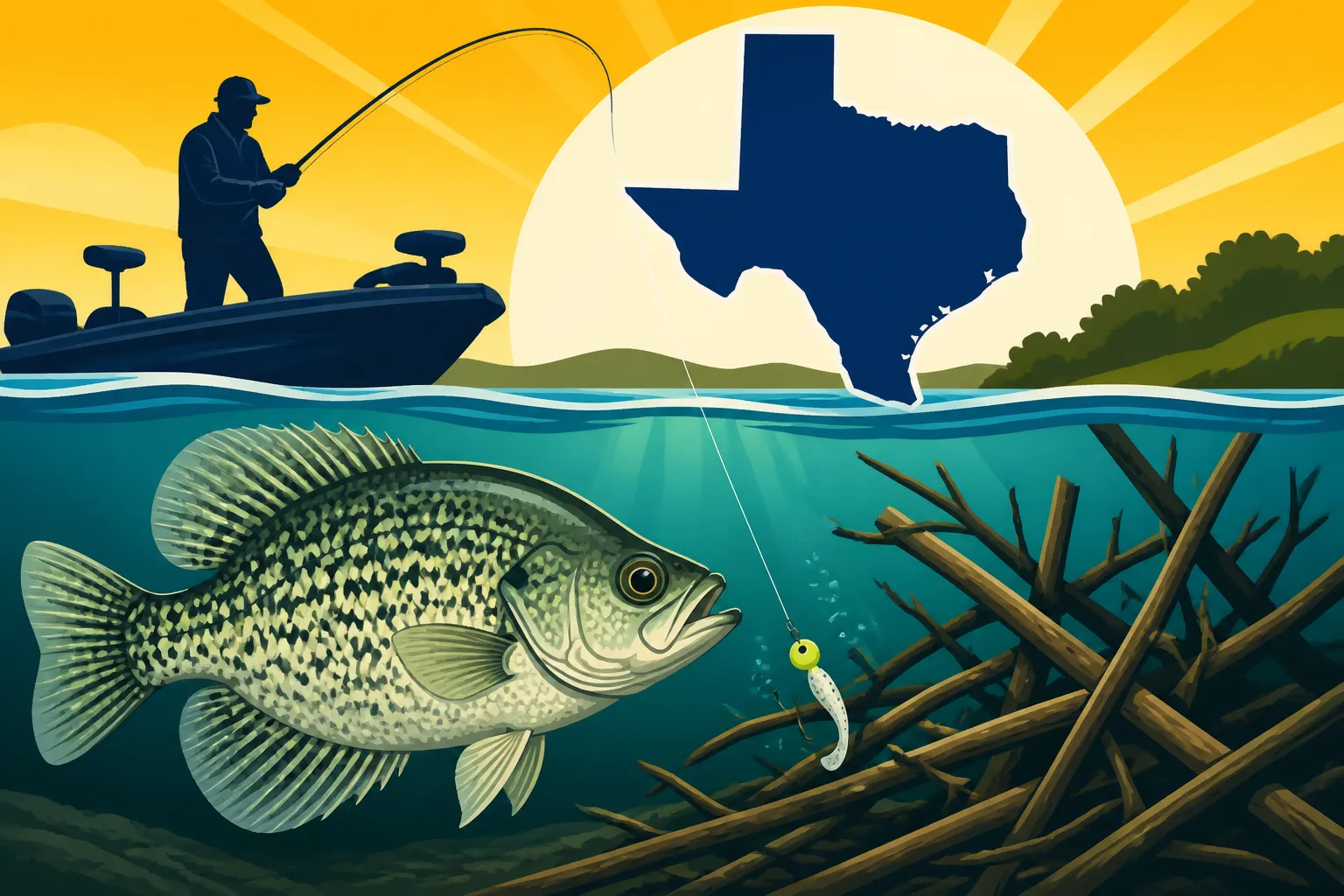
Think of a brush pile as a miniature underwater ecosystem, a bustling metropolis for baitfish and, consequently, their predators like crappie. Crappie are visual feeders that love to ambush their prey, and the dense branches, limbs, and leaves of a brush pile provide countless nooks and crannies for them to do just that. They're not always buried deep in the brush, though many anglers make that mistake. Instead, they often position themselves just above, to the sides, or in the open pockets within the structure, always ready to dart out for a passing shad or minnow. This preference for structured cover gives them both a sense of security from larger predators and an ideal ambush point to grab a quick meal.
Their position within the brush pile can vary dramatically based on factors like light penetration, current, water temperature, and even the time of day. On bright, sunny days, crappie will often hug the shadiest, densest parts of the pile, seeking refuge from the glaring sun. In lower light conditions, such as early morning, late evening, or on overcast days, they might spread out more, venturing closer to the edges of the brush pile to actively hunt. Understanding these subtle shifts in their behavior is crucial. For instance, if you're not getting bites directly in the pile, try working your lure just outside the immediate perimeter, especially if conditions are dim. They might be using the pile as a home base but foraging in the slightly more open water nearby.
Identifying Productive Brush Piles
Not all brush piles are created equal, and knowing how to distinguish a crappie hotspot from a barren stick heap is a game-changer. Both natural and man-made brush piles can hold fish, but they often have different characteristics. Natural brush, such as fallen trees or stumps, might be scattered more haphazardly, while man-made piles (like sunk Christmas trees, pallets, or PVC structures) are often intentionally placed in key areas by anglers or fisheries management. These intentionally created structures are typically found near creek channels, ledges, old roadbeds, or submerged humps – all prime locations that naturally attract baitfish and, in turn, crappie.
The best way to locate and interpret these underwater structures is with good sonar and fish-finding equipment. A quality fish finder with down imaging and side imaging capabilities, like those offered by brands such as Lowrance or Humminbird, can literally show you a picture of the brush pile, revealing its density, size, and even fish marks within or around it. Look for piles that have some vertical relief and are dense enough to provide good cover, but not so dense that your bait can't get through. Crucially, don't just look for the brush itself, but for the "halo" of baitfish or the distinct arches of crappie hovering around it. A brush pile without visible fish activity might be worth a few casts, but one showing clear marks is where you should spend your time. Many anglers use GPS to mark these successful piles, creating a personal database of crappie hotspots, which you can then revisit through the seasons.
Essential Gear for Brush Pile Crappie Fishing
Fishing brush piles effectively demands a specific setup that balances sensitivity, strength, and a certain degree of disposability for inevitable snags. Having the right tools won't just increase your catch rate; it'll also reduce your frustration and the amount of money you spend replacing lost tackle.
Rods, Reels, and Line Choices
When it comes to brush pile crappie, your rod and reel setup needs to be highly sensitive to detect those subtle crappie bites, which can often feel like nothing more than a slight tick or the line going "mushy." A light to ultralight action rod, typically 6 to 7.5 feet in length, is ideal. The longer rods give you more leverage and reach to place your jig precisely and can sometimes help "work" a snagged lure free by changing the angle. A sensitive rod tip, often made of graphite, is paramount for feeling those light bites, especially when the crappie are barely mouthing the bait. For instance, a dedicated "crappie rod" from a brand like BnM Poles or Lew's might be specifically designed with the backbone to pull fish out of cover but a tip sensitive enough for finesse presentations.
Pair this with a small spinning reel, typically a 500 or 1000 size, which allows for light lines and smooth, controlled retrieves. Some seasoned crappie anglers also opt for ultralight baitcasting reels for specific techniques like tight-lining, but spinning reels are generally more forgiving for beginners and versatile for most applications.
Now, let's talk line, because this is where a lot of anglers get tripped up. You want a line that offers sensitivity and some abrasion resistance but also has a breaking point that saves your main line from being lost entirely on a snag.
| Line Type | Stretch | Abrasion Resistance | Visibility | Snag Management | Best Use Case |
|---|---|---|---|---|---|
| Monofilament | High | Moderate | Moderate | Good for breaking off close to lure | All-around, forgiving |
| Fluorocarbon | Low | High | Low | Strong, can be harder to break at knot | Sensitive, clear water |
| Braided | None | High | High | Excellent sensitivity, can cut vegetation but can also wedge deeper | Main line with fluoro leader |
Many anglers opt for a braided main line (6-10 lb test) for its incredible sensitivity and lack of stretch, which helps detect even the lightest bites. However, braid is highly visible, and if it snags deep in wood, it can sometimes wedge itself in so tightly that it’s nearly impossible to break free without losing a lot of line. A common and effective strategy is to use a braided main line with a 4-6 lb fluorocarbon leader. Fluorocarbon is less visible underwater, offers good abrasion resistance, and provides a "fuse" – if you snag, the knot connecting your fluorocarbon leader to your main braid is usually the weakest point, allowing you to break off just the leader and lure, saving your main line. You can find a wide variety of quality fishing lines, including specific fluorocarbon leaders, on Amazon.
The Right Jigs and Baits for Snags
When fishing around brush piles, your lure choice needs to be effective at attracting crappie but also somewhat "snag-friendly" or easily replaceable. Small jig heads, typically ranging from 1/32 ounce to 1/8 ounce, are the bread and butter for brush pile crappie. The lighter the jig, the slower it falls, often giving the crappie more time to react, and it’s also less likely to get irretrievably wedged deep in the structure.
Pair these jig heads with soft plastic bodies like tube jigs, small grubs, or tiny swimbaits. The color can make a huge difference depending on water clarity and light conditions. In murky water, bright colors like chartreuse, orange, or pink often stand out best. In clearer water, more natural tones like white, smoke, or even black/blue can be incredibly effective. Don't be afraid to experiment! Many anglers carry a wide assortment of jigs, and you can stock up on various colors and sizes on Amazon before your next trip. To learn more about specific types of lures, you might want to check out our guide on the Best Crappie Jigs for Texas Lakes.
For live bait enthusiasts, a small minnow hooked through the lip or back and suspended beneath a bobber or fished on a tight line is often irresistible to crappie. Using a tiny Aberdeen hook, known for its thin wire, can be a smart move. If an Aberdeen hook snags, its thin wire will often bend straight, allowing you to retrieve it and simply bend it back into shape, rather than losing the entire rig. While a bobber rig is effective, consider tight-lining with a small split shot weight if you're trying to work very specific depths within the brush.
Sonar and Navigational Tools
In the world of brush pile crappie fishing, your boat's electronics are truly your eyes underwater. A good fish finder with advanced features like down imaging and side imaging is invaluable for not just finding the brush piles but also understanding the fish activity within and around them. Down imaging gives you a detailed, photographic-like view directly beneath your boat, showing you the structure of the brush pile and individual fish. Side imaging allows you to scan wide areas to the left and right of your boat, revealing brush piles that might be just out of your direct path. This capability saves you immense time, as you can quickly determine if a piece of structure is worth approaching or if you should keep moving.
Once you locate a promising brush pile and observe fish marks, your GPS becomes your best friend. Mark that spot! Being able to return precisely to the most productive spots, sometimes down to a few feet, is crucial, especially on large Texas lakes. GPS also helps you navigate around known underwater obstacles and lets you meticulously work the edges of a brush pile. For deeper dives into choosing the right electronics, consider reading our comprehensive guide on the Best Fishing Electronics for Texas Anglers. Learning to interpret the sonar readings takes practice, but understanding how to differentiate between baitfish schools, larger crappie, and the actual structure of the brush pile will drastically improve your success. Look for those distinct arches or clusters of dots suspended just above or in the open pockets of the brush.
Proven Techniques for Extracting Crappie from the Brush
Fishing brush piles can feel like a delicate dance between presenting your bait effectively and avoiding the inevitable snags. But with the right techniques, you can master this dance and consistently land crappie.
Vertical Jigging Strategies
Vertical jigging is perhaps the most precise and effective method for targeting crappie holding tight to brush piles. The key here is boat control and stealth. You want to position your boat directly over the brush pile, ideally using a trolling motor with GPS Spot-Lock feature (if you have one) to hold your position steady, even in wind or current. Once positioned, slowly drop your jig or baited hook straight down, watching your sonar screen intently. The goal is to drop your bait just above the highest fish marks or into the open pockets you've identified within the brush.
The presentation itself should be subtle. Crappie often react better to a slow, controlled fall and gentle movements. Try a slow lift of your rod tip (maybe 6-12 inches), followed by an equally slow, controlled fall, allowing the jig to flutter naturally. Sometimes, simply holding the bait perfectly still at the crappie's depth for an extended period is what triggers a bite. Experiment with these motions: a gentle shake, a very slow retrieve, or just letting it sit. Remember, crappie often feed upwards, so keeping your bait slightly above them can be more productive than trying to drop it directly into their midst. Pay close attention to your line for any unusual twitch, slackening, or subtle movement – these are often crappie bites that you might otherwise miss. This technique is often enhanced by using multiple short poles, spread out around the boat, each with a different depth or bait, known as "spider rigging."
Trolling and Drifting the Edges
While vertical jigging is fantastic for precise presentations, sometimes crappie are more scattered around a brush pile or are shy of a boat directly overhead. This is where trolling or drifting the edges of the brush pile becomes highly effective. Instead of parking directly on top, you're working the perimeter, allowing your baits to sweep through the crappie's feeding zones without disturbing them.
For trolling, use your trolling motor to move slowly, typically between 0.5 to 1.5 mph, around the brush pile. You can deploy multiple rods, each set at a different depth and distance from the boat, to cover a wider water column and test various presentations. This allows you to quickly determine where the fish are holding without having to adjust constantly. Try incorporating different lure types too – a small crankbait on one rod, a jig on another, and a minnow rig on a third. The goal is to present a natural-looking lure that mimics baitfish moving by the crappie's hideout.
When drifting, let the wind or a slight current push your boat gently past the brush pile. This passive technique can be incredibly effective, especially if the crappie are finicky. Again, use multiple rods at varying depths. The natural movement of the boat imparts a subtle action to your lures that can be very enticing. Always keep an eye on your sonar to ensure you're drifting through productive areas and to identify any changes in the crappie's depth.
Minimizing Snags and Losing Lures
Let's be honest: fishing brush piles means you will get snagged. It's part of the game. The goal isn't to eliminate snags entirely, but to minimize them and learn how to manage them when they inevitably happen. The biggest frustration, and expense, comes from losing countless lures. This is where strategic tackle choices and techniques really shine.
One key strategy is to use the lightest possible weight that still allows you to reach the crappie's depth. Lighter jigs fall slower and are less likely to wedge deep into the structure. As mentioned earlier, using a slightly lighter fluorocarbon leader tied to a braided main line acts as a "fuse." When you get snagged hard, the leader knot will often break before your main line, saving you from having to re-spool a long section of expensive braid.
When you feel a snag, don't just yank straight up. Try these techniques: first, give your line some slack, then quickly snap it tight a few times – sometimes this "thumping" action can dislodge the lure. If that doesn't work, point your rod tip directly at the snag, keeping tension, and motor your boat around the brush pile, pulling the line from a different angle. Often, approaching the snag from a new direction can free the lure. For truly stubborn snags, a specialized lure retriever (often called a "lure knocker" or "plug knocker") can be a lifesaver. These devices slide down your line, impacting the lure and often jarring it free. You can find several effective lure retrievers on Amazon, and they can pay for themselves quickly by saving you just a few jigs.
Seasonal Considerations for Brush Pile Success
Crappie behavior around brush piles isn't static; it changes with the seasons, largely driven by water temperature and their spawning cycles. Knowing how these patterns shift throughout the year in Texas can significantly boost your success rate. For a broader understanding of how fish patterns change, consider our guide on the Best Time of Year to Fish in Texas.
Spring Spawn and Post-Spawn Tactics
Spring is often when crappie fishing really heats up in Texas. As water temperatures begin to rise, typically into the mid-50s to low 60s Fahrenheit, crappie move shallower for their annual spawn. During this period, brush piles located closer to spawning flats – in 5 to 15 feet of water – become absolute hotspots. The females will stage in these piles, waiting for the optimal temperature to move onto the very shallow spawning beds. Males will often guard the beds or nearby cover, including brush.
Your tactics should reflect this shallower movement. Look for brush piles near protected coves, creek mouths, or submerged points that offer easy access to shallower areas. Vertical jigging or pitching small jigs and minnows into the open pockets of these brush piles can be incredibly effective. The crappie are often aggressive as they prepare for or recover from the spawn. Immediately after the spawn, usually when water temperatures hit the mid-60s, crappie may move slightly deeper to recover from their arduous reproductive efforts. They'll still relate to brush piles, but perhaps in 10-20 feet of water, seeking refuge and an easy meal. This post-spawn period can still offer fantastic fishing if you adjust your depth accordingly.
Summer Heat and Deep Brush
When the scorching Texas summer arrives and water temperatures soar into the 80s and even 90s, crappie, like most fish, seek thermal refuge. This means they retreat to deeper, cooler waters, and those brush piles that are typically 15 to 30 feet deep (or even deeper in some reservoirs) become their primary residence. Look for brush piles along old creek channels, river bends, deep ledges, or submerged humps where cooler water might be found. To pinpoint these deeper fish, understanding how to interpret depth finders is critical. You might find large schools of crappie tightly stacked within or just above these deep structures.
Vertical jigging remains a prime technique here, but you'll be working much deeper. Use slightly heavier jigs (1/8 oz) to get down to the fish efficiently. In some parts of Texas, night fishing becomes exceptionally popular during the summer. Anglers will often anchor over deep brush piles and deploy submersible lights to attract plankton, which then draws in baitfish, and finally, crappie. Fishing under lights can be incredibly productive, often yielding limits of slab crappie. If you're wondering about the best depth for crappie in the summer, we have a detailed guide on Best depth to find crappie in summer. Remember to bring a good cooler for your catch in the Texas heat – you can find excellent options for keeping fish fresh in our guide to Best Coolers for Texas Summer Fishing Trips.
Fall Transition and Winter Holding Patterns
As the relentless Texas summer heat finally gives way to cooler fall temperatures, crappie begin a period of active feeding, often dubbed the "fall feeding frenzy." As the water cools, baitfish will become more active, and crappie will follow. Initially, crappie might move shallower again, relating to brush piles in 10-20 feet of water as they chase baitfish. However, as winter approaches and temperatures drop further, crappie will consolidate and stack up in dense, deep brush piles, much like they do in the peak of summer. These deep winter brush piles, often in 20-40 feet of water, can hold massive schools of crappie.
During winter, crappie metabolism slows, and they become less active. This means your presentations need to be very subtle and slow. Smaller jigs (1/32 to 1/16 oz) or tiny minnows fished with minimal movement are key. They might not chase a fast-moving bait, but a small jig gently suspended in front of their faces can be irresistible. Once you locate a winter brush pile holding fish, you can often catch multiple crappie from the same spot, as they tend to school tightly. Locating these schools is the biggest challenge, but once found, they can provide incredible action. Our guide on How to Catch Crappie in Cold Water offers even more insights into winter tactics. You can also explore specific strategies for locating fish in colder temperatures by reading How to Find Crappie in the Winter.
Disclaimer
Fishing conditions and regulations in Texas can change. Always consult the latest Texas Parks and Wildlife Department (TPWD) fishing regulations before heading out. This guide is for informational purposes only and does not constitute legal advice regarding fishing licenses or regulations.