How to fish around boat docks for bass
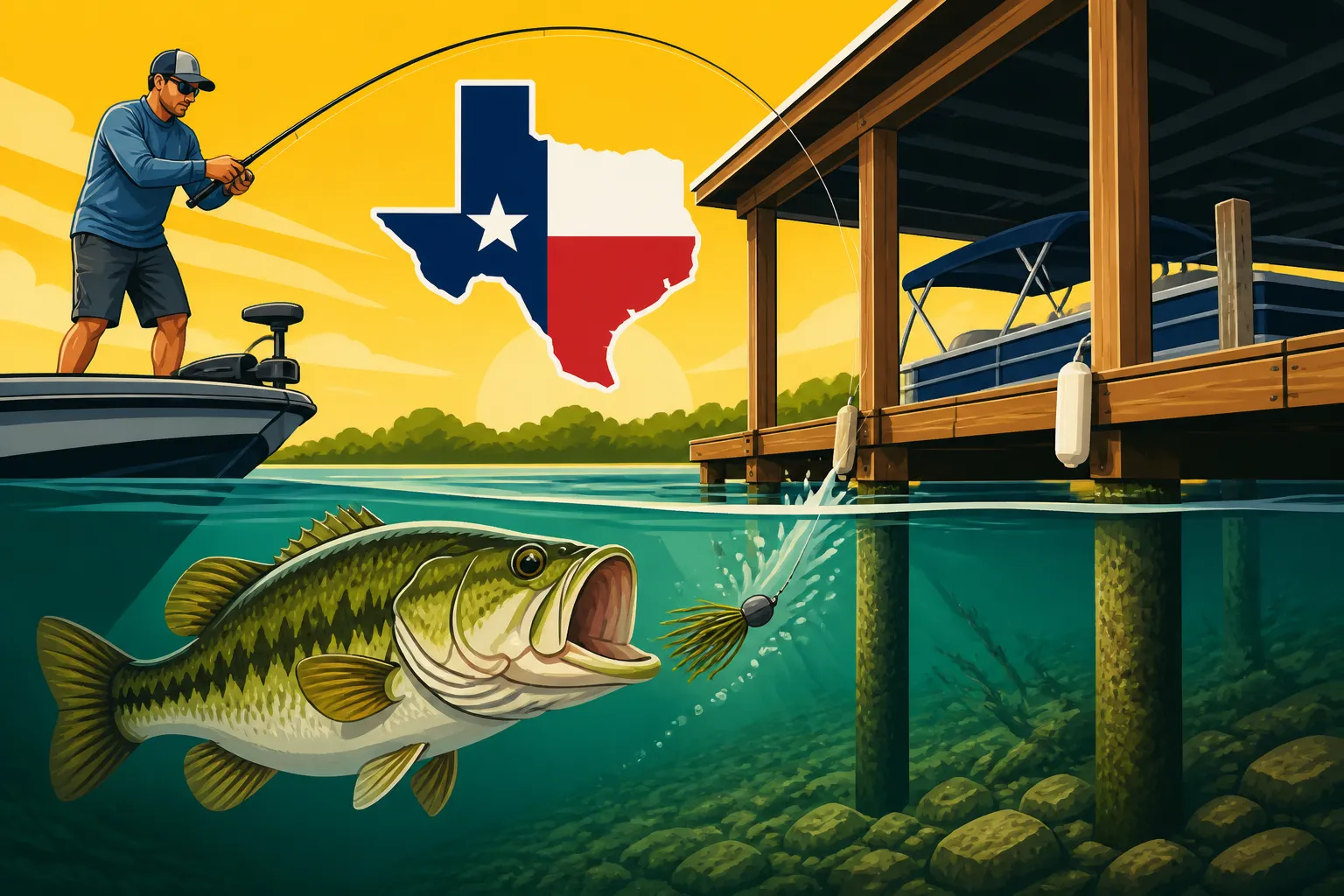
There's nothing quite like the frustration of spotting a massive bass lurking deep under a boat dock, just out of reach, seemingly mocking your best efforts. These man-made structures are notorious bass havens, offering shade, cover, and ambush points, but getting your lure into their living room without snagging can feel like a Herculean task. This guide is dedicated to demystifying the art of dock fishing for bass, equipping you with the knowledge, gear, and techniques to consistently pull those stubborn fish from their submerged sanctuaries.
Why Boat Docks are Irresistible to Texas Bass
Boat docks are far more than just places to tie up a boat; they're bustling aquatic ecosystems that attract a wide variety of baitfish, insects, and, you guessed it, hungry bass. For an angler, understanding why bass gravitate to docks is the first step in effectively fishing them. It's not just about randomly casting a lure; it's about appreciating the unique advantages these structures provide to our finned friends.
The Allure of Shade and Shelter
In the scorching Texas sun, especially during those long, hot summers, bass are constantly seeking refuge from direct sunlight. Docks, with their solid platforms, roofs, and boat covers, cast deep, inviting shadows where bass can escape the heat. This shade isn't just about comfort; it's also a strategic advantage. Bass are ambush predators, and low light conditions help them hide from prey, allowing them to strike unsuspecting baitfish from the darkness.
Think about a typical summer day on Lake Conroe or Lake Fork. The surface water might be bathwater warm and blindingly bright. Underneath a pontoon boat or a large covered boathouse, however, the water is cooler, darker, and offers a perfect hiding spot. These shady zones also concentrate baitfish, which are also looking for cooler water and protection, creating a ready-made buffet for opportunistic bass.
Structure and Ambush Points Galore
Beyond just shade, boat docks offer an incredible amount of complex structure, from the pilings and crossbeams themselves to submerged ladders, old tires, boat lifts, and even discarded items that might have fallen in over the years. This labyrinth of structure provides bass with endless ambush points and security. They can tuck themselves right against a piling, hover under a crossbeam, or hide within a sunken brush pile beneath a dock, waiting for an easy meal to swim by.
Each component of a dock serves as a potential holding spot. A bass might be hugging the shadiest side of a main piling, or it could be deeper under a boat lift, using the mechanics as cover. The more intricate the dock, the more potential hiding spots there are. This also means you often need to be precise with your casts, aiming for those tight little pockets and openings that offer the best cover. Learning to "read" a dock and anticipate where bass might be hiding based on its construction and conditions is a skill that comes with practice.
Forage Concentration and Food Chains
Docks are magnets for food. Algae grows on the submerged parts of pilings, which attracts invertebrates and small baitfish. Spiders and insects often fall from the dock into the water, becoming an easy meal. Minnows, shad, and sunfish all seek the protection and food sources that docks offer, creating a vibrant ecosystem. This consistent availability of forage means bass don't have to travel far to eat.
Imagine a busy marina on Richland Chambers Reservoir. Every dock piling is a miniature habitat. Minnows dart in and out, bluegill nip at algae, and a predatory bass knows this is a reliable grocery store. The combination of abundant bait, protective cover, and comfortable temperatures makes docks prime real estate for bass, often holding multiple fish. Targeting these docks correctly can lead to some incredible fishing, especially when other areas of the lake are slow.
Essential Gear and Tackle for Dock Fishing
Successfully fishing around boat docks for bass isn't just about technique; it's heavily reliant on having the right gear. Because you're often dealing with tight quarters, abrasive structures, and strong fish trying to bury themselves, your rod, reel, line, and lures need to be up to the challenge. Don't skimp on quality here; losing a trophy bass because of inadequate tackle is a gut punch no angler wants to experience.
Rod and Reel Combos for Precision and Power
When it comes to dock fishing, you'll want a rod that offers a good balance of sensitivity for feeling subtle bites and backbone for muscling fish out of heavy cover. A medium-heavy to heavy power casting rod, typically between 6'6" and 7'6" in length, is ideal. The shorter end of this range (6'6" to 7'0") can be beneficial for tighter casting spaces, while longer rods offer better leverage and casting distance when needed. Look for a fast action tip, which allows for accurate, quick hooksets and better feel.
Pair your rod with a baitcasting reel that has a smooth drag system and a relatively high gear ratio (7.1:1 or higher is excellent). A high gear ratio helps you quickly pick up slack line after a cast or when a bass makes a run, giving you better control. If you're new to baitcasters, don't worry—practice makes perfect, and the precision they offer for techniques like flipping and pitching around docks is unmatched. Many anglers find great options for these setups on Amazon, which offers a wide selection from various brands. For more specific recommendations, you might want to check out our guide on Best baitcasting reels for Texas bass fishing.
Line Selection: Strength and Abrasion Resistance
This is where many anglers make mistakes around docks. You're fishing in a minefield of sharp edges, barnacles, and rough wood. Standard monofilament or fluorocarbon might not cut it. The best option for dock fishing is often braided line, particularly in the 30-50 pound test range. Braided line offers superior abrasion resistance, virtually no stretch for solid hooksets, and incredible strength.
However, bass can be line-shy in clearer waters. This is where a fluorocarbon leader comes into play. Attach a 15-25 pound test fluorocarbon leader (about 18-36 inches long) to your braided main line using a strong knot like an FG or Alberto knot. Fluorocarbon is nearly invisible underwater and provides an extra layer of abrasion resistance, though not quite as robust as braid. For situations requiring maximum stealth or when bass are extremely finicky, some anglers opt for straight fluorocarbon in the 15-20 pound range, but be prepared for potential break-offs if it rubs against sharp structure. For a comprehensive look at your options, our article on Best line weight for Texas bass fishing could be a great resource.
Lure Choices: Versatility is Key
The best lures for dock fishing are those that can be presented effectively in tight spaces, mimic natural forage, and withstand some abuse.
- Jigs (Flipping/Pitching Jigs): These are absolute workhorses around docks. A 3/8 to 1/2 ounce jig, often paired with a craw-style or creature bait trailer, is perfect. The compact profile allows it to slip into tight spots, and the weed guard helps prevent snags. Think about natural colors like black/blue, green pumpkin, or brown. Our guide on How to catch bass on a jig goes into more detail.
- Soft Plastics (Texas Rigs, Senkos, Tubes): Soft plastics rigged weedless are phenomenal. A 4-6 inch stick bait (like a Yamamoto Senko) can be wacky rigged or Texas rigged and skipped under docks with incredible accuracy. Small creature baits or tubes on a jig head also excel. For heavy cover, a properly weighted How to fish a Texas rig for bass is almost snag-proof and very effective.
- Small Crankbaits (Squarebills): In areas where docks are less cluttered or have open water between them, a shallow-diving squarebill crankbait can be deadly. They're designed to deflect off cover without getting hung up, triggering reaction strikes. Look for natural shad or crawfish patterns.
- Topwater Lures (Frogs, Poppers): For bass lurking directly under dock lights at night, or in low-light conditions during the day, topwater frogs or smaller poppers can draw explosive strikes. Cast them right to the edge of the shadow line or into openings.
Choosing the right lure often depends on the specific dock, water clarity, and bass activity. Always have a few different options rigged and ready to go.
Top Techniques for Targeting Dock Bass
Now that you're geared up, let's talk about how to actually get your lure to those elusive bass. Fishing docks requires a unique blend of accuracy, stealth, and sometimes, a bit of finesse. You can't just throw a lure wildly and expect results; precision is paramount.
Flipping and Pitching: The Stealthy Approach
These are fundamental techniques for dock fishing and are crucial for presenting lures quietly and accurately into tight spots.
- Flipping: This is a short-distance, stealthy presentation. You basically "dangle" your lure, swinging it like a pendulum, and gently place it into cover. Hold your rod tip low, let out a short amount of line, and swing the lure underhand, controlling its trajectory with your thumb on the spool. The key is minimal splash and precise entry. You'll be standing fairly close to the target, often within 10-20 feet.
- Pitching: Similar to flipping but for slightly longer distances. Instead of a pendulum swing, you swing the rod back slightly, then forward, "pitching" the lure in a low arc underhand. Again, the goal is a quiet, controlled entry. Both techniques minimize spooking fish and allow you to probe every nook and cranny of a dock. Practice these in your yard to build muscle memory before hitting the water. They are incredibly effective for targeting bass tucked deep against pilings or under low-hanging structures.
Skipping: Reaching the Unreachable
This is the ultimate dock fishing superpower. Skipping involves casting a lure in such a way that it skims across the water's surface like a skipping stone, allowing it to penetrate deep under low-clearance docks where traditional casts would be impossible. It's fantastic for getting your bait under pontoon boats, low docks, or even into narrow gaps between structures.
- The Technique: You'll typically use a baitcasting reel for this due to its control. Keep your rod tip low, almost parallel to the water. Make a sidearm cast with enough speed to propel the lure, but not too much height. The lure should hit the water at a very shallow angle and "skip" several times.
- Lure Selection: Weightless or lightly weighted soft plastics (like Senkos or flukes), tubes, small jigs, or even certain frogs are excellent for skipping. The flatter the bottom of the lure, the better it will skip. This technique takes practice, but once mastered, it opens up a whole new world of dock-fishing opportunities. Our article on How to skip a bait under docks offers a deeper dive into mastering this advanced cast.
Dock Shooting: The "Slingshot" Cast
Dock shooting is another specialized technique for getting lures far under docks, often from a distance, without spooking fish. This is most commonly done with spinning tackle and a small jig or soft plastic.
- The Technique: Hold the lure in one hand while gripping the reel stem and pinching the line with your index finger of the other hand. Pull back on the lure, bending the rod tip significantly, creating tension. Aim, open the bail, and release the lure, allowing the rod's stored energy to "shoot" the lure forward. The lure flies low and fast, sliding far under the dock.
- Advantages: This method allows for incredible distance under docks, especially when you can't get close with your boat. It's particularly useful when bass are holding deep under a long, covered dock. It requires practice to get accurate, but it's a game-changer when conditions call for it.
Cranking and Swimbaiting Dock Edges
While much of dock fishing focuses on getting under the structure, don't neglect the edges and surrounding areas. Bass often patrol the perimeter, especially where there's a drop-off or a transition in cover.
- Squarebill Crankbaits: As mentioned, squarebills are fantastic for running along the outer edges of docks. Cast them parallel to the dock or at a slight angle, letting them bang into pilings and beams. The deflection can trigger aggressive reaction bites. This is a great way to cover water quickly and find active fish.
- Swimbaits: Smaller paddle-tail swimbaits on a jig head can be very effective when slow-rolled along the sides of docks or through open lanes between structures. They mimic baitfish that frequently congregate around these areas. The subtle vibration and realistic profile can entice bass that are less aggressive. Keep an eye on the water depth; you want a swimbait that runs just above or at the same depth as any submerged structure.
Overcoming Common Dock Fishing Challenges
Let's be real: dock fishing isn't always glamorous. It comes with its own set of frustrations, from constant snags to spooking fish. But by understanding these challenges and preparing for them, you can minimize the headaches and maximize your catches.
The Inevitable Snags and Break-Offs
Fishing around docks means you're intentionally placing your lure into prime snag territory. Pilings, ropes, ladders, old tires, and even discarded trash lurking beneath the surface are all potential lure magnets. Expect to get hung up, and don't let it discourage you. It's part of the game.
- Preventative Measures: Use weedless presentations as much as possible, like Texas rigs with pegged weights or jigs with sturdy weed guards. If you're skipping or pitching, try to maintain a light touch, letting the lure fall naturally rather than crashing into structure.
- Retrieving Snags: If you do get snagged, don't just pull harder. Try varying tensions, jigging the rod tip, or even reeling down to the snag and plucking the line like a guitar string. Sometimes, a quick slack-line snap can free the lure. If all else fails, a lure retriever can be a lifesaver, allowing you to slide a weight down your line to knock the lure free. Losing lures is expensive, and a good retriever pays for itself quickly. For a wide range of tackle, including lure retrievers, checking out retailers like Amazon can be very helpful.
Stealth and Boat Positioning
Bass under docks are often highly sensitive to vibrations and shadows. A loud approach or casting a boat shadow over their hiding spot can instantly send them deeper into cover, making them uncatchable.
- Approach Quietly: Use your trolling motor judiciously, or if you're in a kayak, paddle silently. Avoid bumping the dock with your boat. Keep talking to a minimum, especially if you're close to the dock.
- Maintain Distance: Sometimes, the best way to catch dock bass is to stay a bit further back and use casting techniques like skipping or dock shooting to reach them. This minimizes your presence and gives the fish less reason to be wary.
- Work with the Sun: Pay attention to the sun's position. If the sun is high, a boat shadow can be very obvious. Try to position your boat so that your shadow isn't falling directly over the target area under the dock. Approaching from the shady side can also give you an advantage.
Dealing with Boat Traffic and Dock Owners
Texas lakes can get busy, especially on weekends. Other boaters, jet skis, and even curious dock owners can disrupt your fishing. This can be a major source of frustration, but a little courtesy goes a long way.
- Be Respectful: Give other boats plenty of space. If a dock owner is out enjoying their dock, try to fish a different one or politely ask if they mind you casting near their property. Most anglers find that a friendly wave and a respectful distance can prevent any issues. Remember, many docks are on private property, even if the water itself is public.
- Time Your Trips: If possible, try to fish docks during less busy times, like early mornings on weekdays. This not only minimizes interruptions but often coincides with better fishing conditions when bass are more active.
- Adapt and Move: If a particular dock is too crowded or disturbed, don't dwell on it. There are usually plenty more docks to explore. Be flexible and willing to move to find undisturbed water. For general information about navigating Texas waters, you may find our article on Texas Boat Registration Requirements useful.
Table: Popular Lures for Texas Dock Fishing
To help visualize your options, here's a quick rundown of some go-to lures for hitting those dock bass.
| Lure Type | Best Use Case | Key Characteristics | Pros | Cons |
|---|---|---|---|---|
| Flipping/Pitching Jig | Tight cover, under docks, deeper pilings | Heavy, compact, weed guard, soft plastic trailer | Excellent snag resistance, mimics crawfish/baitfish | Requires precision casting, can be slow |
| Texas Rigged Soft Plastic | Skipping, heavy brush under docks, versatile | Weedless, customizable weight, various shapes | Very snag-proof, subtle presentation, good for finesse | Can be time-consuming to rig, less flash than other lures |
| Weightless Stick Bait (Senko) | Skipping, slow fall, finesse presentation | Simple, natural fall, subtle action | Easy to skip, irresistible to bass on the fall | Fragile (tear easily), limited depth control |
| Squarebill Crankbait | Dock edges, open pockets between docks, reaction bites | Deflects off cover, shallow diver | Covers water quickly, triggers aggressive strikes | Prone to snags if too deep, less effective deep under docks |
| Topwater Frog | Low light, heavy surface cover, night fishing | Weedless, floats, surface disturbance | Exciting blow-ups, good for thick mats/lily pads | Limited to surface, often requires follow-up cast |
Mastering Your Dock Fishing Game
Fishing around boat docks for bass isn't a one-and-done kind of skill. It's an ongoing learning process that involves observation, adaptation, and a willingness to try new things. Every dock is a little different, and what works on one might not work on the next.
Observing Your Surroundings
Before you even make a cast, take a moment to observe the dock and its immediate surroundings. What kind of boats are tied up there? Are there pontoon boats, bass boats, or ski boats? Pontoon boats, with their large, flat undersides, often provide excellent overhead cover. Bass boats, with their lower profiles, might offer less immediate cover but could have more submerged structure from their lifts.
Look for any signs of baitfish activity—small ripples, flashes, or even birds diving. Note the water depth around the dock and how clear or stained it is. Are there visible brush piles or rock formations? Is there current flow around the dock, perhaps from a nearby creek channel? All these details will inform your lure choice and presentation. Understanding the specific nuances of a spot, like the unique environment of Lake Texoma fishing license rules, can make a huge difference in your approach.
Adapting to Conditions
Bass behavior around docks can change dramatically with the weather, time of day, and season. On a hot, sunny afternoon, bass will be glued to the deepest, darkest shade. During overcast conditions or early morning, they might be more willing to roam the outer edges or even come shallower.
- Warm Weather: In the heat of a Texas summer, focus on the darkest, coolest spots. This means getting your lure as far under the dock or boat as possible. Think slow, subtle presentations. You might also find bass relating to deeper pilings or submerged features.
- Cool Weather: As temperatures drop, bass might move to the sunnier side of docks to warm up, or they might suspend slightly deeper if the water is clear. Consider vertical presentations with jigs or drop shots.
- Wind and Rain: Wind can push baitfish against docks, creating a feeding frenzy. Use a lure that can cut through the wind and still maintain accuracy. Rain can wash nutrients into the water, stirring up activity, and often makes bass more aggressive.
Practice, Practice, Practice
There's no substitute for time on the water. The more you practice flipping, pitching, skipping, and dock shooting, the more accurate and confident you'll become. Start with easier targets, like open gaps between pilings, and gradually work your way up to more challenging spots, like tiny openings under pontoon boats.
Don't be afraid to experiment with different lures, weights, and retrieval speeds. What might seem like a subtle difference can often be the key to unlocking a pattern. Keep a log if you like, noting what worked (and didn't work) on specific docks under various conditions. This will help you build a mental library of successful strategies for future trips. Soon, you'll be one of those anglers who makes dock fishing look effortless, pulling bass after bass from seemingly impossible places.
Disclaimer
This article is for general informational purposes only and does not constitute professional advice. Laws, prices and regulations vary by location and change over time. Consult a qualified professional for guidance on your specific situation.