What age must wear a life jacket on a Texas boat
It's easy to feel overwhelmed and a little anxious when you're getting ready for a boat trip on a beautiful Texas lake or along the coast, especially when you have kids on board. You want to ensure everyone is safe, but the rules around life jackets, particularly for children, can feel like a tangled fishing line – confusing and hard to untangle. This guide is here to clear up all that confusion, detailing exactly what age must wear a life jacket on a Texas boat so you can focus on making memories, not worrying about fines.
The Core Texas Life Jacket Law for Children
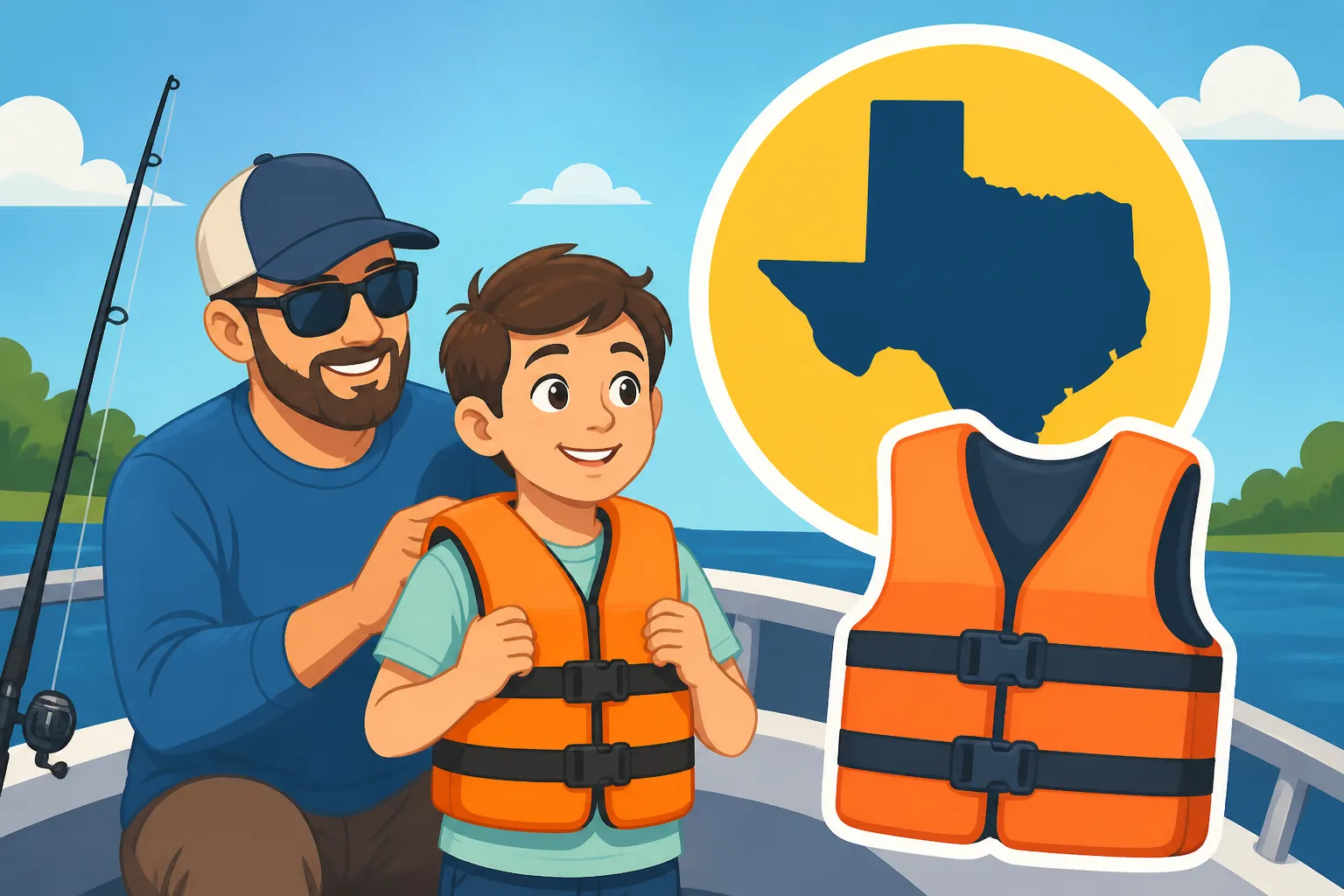
Let's cut right to the chase because this is usually the most pressing question for parents and guardians. In Texas, any child under 13 years of age must wear a U.S. Coast Guard-approved personal flotation device (PFD), commonly known as a life jacket, while underway on any vessel under 26 feet in length. This isn't just a suggestion; it's a non-negotiable legal requirement designed to protect our youngest and most vulnerable boaters.
This rule applies universally across all public waters in Texas, whether you're cruising on the vast expanse of Lake Travis, fishing for bass on Lake Fork, or enjoying a leisurely ride on Galveston Bay. It doesn't matter if it's a bass boat, a pontoon, a sailboat, or even a small fishing skiff; if it's under 26 feet and you're moving, those under 13 need their vests on. Many parents find themselves scrambling at the last minute to find appropriately sized life jackets, which is why picking up a few different sizes from a reputable retailer like Bass Pro Shops or even online through Amazon well before your trip can save a lot of headaches.
Why "Underway" is the Key Term
Understanding the term "underway" is absolutely crucial here. A vessel is considered "underway" when it is not at anchor, tied to a dock, or aground. Essentially, if your boat is moving under its own power (or even drifting with the current or wind), that child under 13 needs to be wearing their life jacket.
Think about it this way: if you're pulling away from the boat ramp, motoring across the lake to your favorite fishing spot, or even just slowly navigating a channel, you are "underway." This means the life jacket needs to be on the child, not just stored on the boat. It's a common misconception that simply having enough life jackets on board for everyone is sufficient. While having enough PFDs for all passengers is another legal requirement, for children under 13, wearing it is the specific mandate when underway on smaller vessels. This distinction is vital for safety and compliance.
The Rationale Behind the Age Limit
The 13-year-old cutoff isn't arbitrary. It's based on extensive research and accident statistics that show younger children are at a significantly higher risk of drowning in boating accidents. They might not have the swimming skills, the physical strength, or the presence of mind to stay afloat and alert in an emergency. A life jacket acts as an immediate, passive safety net. Even a strong swimmer can be knocked unconscious in a collision or fall overboard unexpectedly, and a life jacket provides that critical flotation until help arrives. It buys precious time. This law ensures that even if an adult isn't immediately able to assist, the child has a much greater chance of survival.
Understanding Exemptions and Other Life Jacket Requirements
While the "under 13 and underway" rule is the primary focus for children, there are nuances and other regulations that apply to everyone on board, regardless of age. Knowing these additional requirements ensures everyone's safety and keeps you on the right side of the law.
Exemptions to the "Under 13" Rule
There are very few exemptions to the "under 13" life jacket rule in Texas. The main one relates to the length of the vessel. If your vessel is 26 feet or longer, children under 13 are not required to wear a life jacket while underway, as long as they are below deck or in an enclosed cabin. This acknowledges that larger vessels often have more enclosed spaces that offer a degree of protection. However, even in these situations, common sense and parental discretion strongly suggest that children should wear a life jacket whenever they are on an open deck or near the water, especially if the conditions are choppy.
Another common question might arise if you're fishing from a dock or a pier. Do you need a life jacket then? Generally, no, the "underway" rule doesn't apply to stationary structures like docks or piers. However, some state parks or specific fishing areas might have their own local rules or strong recommendations, especially for young children. Always check local signage. Free Shoreline Fishing at Texas State Parks often details such nuances for specific locations.
Life Jacket Requirements for All Ages
Beyond the specific rule for children, Texas law, mirroring federal regulations, requires that all vessels must have at least one readily accessible U.S. Coast Guard-approved wearable life jacket for each person on board. This means if you have five people on your boat, you need five wearable life jackets. These life jackets must be in serviceable condition, meaning no rips, tears, or excessive fading that might compromise their effectiveness. They also need to be of the appropriate size for the intended wearer. You can't just have adult XL life jackets for a group that includes small children.
| Life Jacket Type | Description | Best Use | Key Features |
|---|---|---|---|
| Type I (Offshore) | Most buoyant, designed for rough or remote waters where rescue may be delayed. | Offshore, open ocean, rough conditions. | Turns unconscious wearer face up, highly visible. |
| Type II (Near-Shore Buoyancy) | Good for calm, inland waters or where rescue is likely to be quick. | Lakes, calm rivers, protected waters. | Turns some unconscious wearers face up, less bulky than Type I. |
| Type III (Flotation Aid) | Designed for continuous wear, comfortable for most recreational activities. | General boating, watersports, fishing. | Wearer must actively turn themselves face up, wide range of styles. |
| Type IV (Throwable Device) | Not designed to be worn; meant to be thrown to someone in the water. | Supplemental to wearable PFDs, emergency use. | Ring buoys, boat cushions. Required on vessels 16 feet or longer. |
| Type V (Special Use) | Specific activities or conditions (e.g., kayaking, work vests, inflatable PFDs). | Kayaking, waterskiing, commercial use. | Must be worn for specific activity to count as required PFD. Some inflatables require manual inflation. |
For vessels 16 feet and longer (excluding canoes and kayaks), you must also have one Type IV throwable device on board, in addition to the wearable PFDs for everyone. This could be a ring buoy or a buoyant cushion, kept immediately accessible for emergencies. Ensuring your boat has all the required safety equipment, not just life jackets, is covered in more detail in Texas Boat Safety Equipment Requirements.
Special Rules for Personal Watercraft (PWCs)
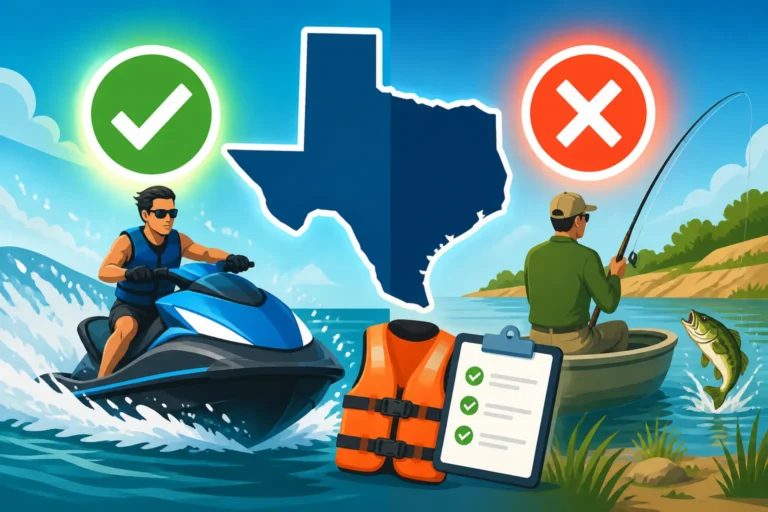
If you're operating a personal watercraft (PWC), like a Jet Ski or Sea-Doo, there are even stricter life jacket rules. Everyone on board a PWC, regardless of age, must wear a U.S. Coast Guard-approved life jacket at all times while the PWC is underway. This is due to the inherent speed and agility of PWCs, which often lead to falls into the water and the increased risk of impact. There are no exemptions for age or location on a PWC in Texas; if you're riding, you're wearing a life jacket.
Choosing the Right Life Jacket and Ensuring a Proper Fit
The law specifies a "U.S. Coast Guard-approved" life jacket, but within that, there's a wide range of options. Choosing the right one and, more importantly, ensuring it fits correctly, is paramount for safety. A life jacket that doesn't fit properly is almost as bad as no life jacket at all.
Different Types of Life Jackets
As highlighted in the table above, PFDs come in several types, each suited for different situations. For children, you'll most commonly find Type II and Type III vests.
- Type II (Near-Shore Buoyancy) PFDs are good for calm inland waters. They are designed to turn an unconscious person face up in the water. These are often the bright orange, somewhat bulky vests you might be familiar with.
- Type III (Flotation Aid) PFDs are typically more comfortable and come in a wider variety of styles, often looking like a jacket or vest. They are designed for continuous wear and activities like watersports or fishing. However, they require the wearer to be conscious and actively hold their head out of the water. For children, especially younger ones, it's often wise to opt for a Type II or a child-specific Type III that is designed to provide maximum head support.
When you're shopping for life jackets, whether at a local sporting goods store or online from retailers like Bass Pro Shops or Amazon, always look for the U.S. Coast Guard approval stamp clearly printed on the inside label. This stamp confirms it meets the rigorous safety standards.
The Critical Importance of Proper Fit
A life jacket's effectiveness hinges entirely on its fit. For children, this is even more critical. A life jacket that's too big can ride up around their ears and face, obstructing breathing and providing little actual flotation. One that's too small might not provide enough buoyancy or could be uncomfortably restrictive, leading the child to try and remove it.
Here’s how to check for a proper fit on a child:
- Check the Weight and Chest Size: Life jackets are sized by weight range, not age. Always check the manufacturer's label for the appropriate weight and chest size.
- Buckle and Zip It Up: Ensure all buckles are fastened and zippers are fully closed.
- Lift Test: With the child standing, gently pull up on the shoulders of the life jacket. If it slides up past their ears or chin, it's too large. It should fit snugly, but still allow for comfortable movement.
- Practice in Shallow Water: If possible, have your child try on the life jacket and get in shallow water to see how it performs. This helps them get used to the feel and confirms it provides adequate flotation for their body in real-world conditions. Many community pools or calm lake areas are perfect for this "test run" before a full boating trip.
Remember, a child's size and weight can change quickly, so always re-check the fit before each boating season or if there's been a significant growth spurt. It's an investment in safety that's well worth the effort.
Enforcement, Penalties, and Staying Safe
Understanding the rules is one thing, but knowing the potential consequences of not following them and adopting a safety-first mindset is another. Texas Parks and Wildlife Department (TPWD) game wardens and other law enforcement officials are serious about boating safety, and life jacket violations are among the most common citations issued on the water.
What Happens If You Don't Comply?
If you're caught operating a vessel under 26 feet in length with a child under 13 not wearing a life jacket while underway, you could face a citation. These violations typically result in a fine. The exact amount can vary by jurisdiction and the specifics of the situation, but it's generally a preventable expense. More importantly, the financial penalty pales in comparison to the potential tragic consequences if an accident were to occur.
Game wardens routinely patrol Texas waters, especially on busy weekends and holidays, specifically looking for safety violations, including proper life jacket wear. They are there to educate and enforce, ultimately working to prevent accidents and save lives. Understanding Penalties for Fishing Without a Texas License might give you a broader idea of how serious TPWD is about all regulations on the water.
Beyond the Law: Embracing a Culture of Safety
While the law mandates life jacket wear for children under 13, many experienced Texas boaters and fishing families extend this requirement to everyone on board, especially in certain conditions. Why? Because accidents happen fast.
- Unexpected Swells: Even on a seemingly calm day, an unexpected wake from another boat or a sudden change in weather can create dangerous conditions.
- Falls Overboard: Slipping on a wet deck, losing balance, or a sudden lurch of the boat can send anyone into the water in an instant.
- Cold Water Shock: Texas waters can be surprisingly cold, especially in winter or early spring. Falling into cold water can quickly incapacitate even a strong swimmer, and a life jacket is crucial for survival in such situations.
- Fatigue: A long day on the water can lead to fatigue, reducing alertness and reaction time.
Teaching children about boating safety, including the importance of wearing their life jackets, is an ongoing process. Make it a routine. Before you even leave the dock, ensure every child has their life jacket on. Make sure adults understand the importance of wearing them too, setting a good example. Many parents opt for comfortable Type III vests for themselves and older children, available from retailers like Amazon, making them more likely to keep them on. Consider taking a boater education course, which can provide a comprehensive overview of safety practices and regulations in Texas.
Ultimately, the Texas life jacket law for children under 13 is a simple, yet incredibly effective, measure to protect our most precious cargo on the water. By understanding and adhering to this rule, along with other safety guidelines, we can ensure that every boating trip is a safe and enjoyable one for the entire family.
Disclaimer
This article is for general informational purposes only and does not constitute professional advice. Laws, prices and regulations vary by location and change over time. Consult a qualified professional for guidance on your specific situation.