Texas Boat Safety Equipment Requirements
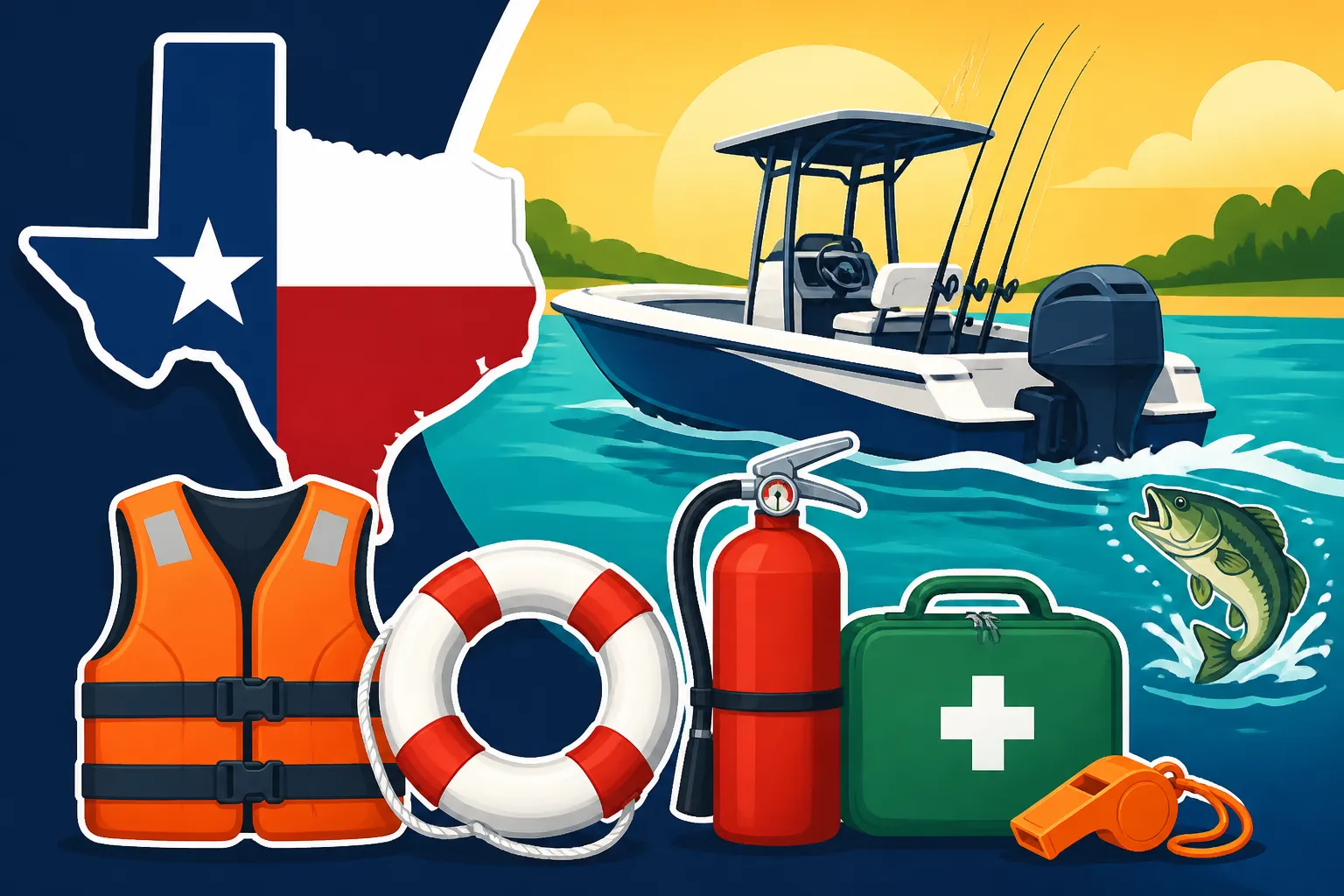
Getting out on the water here in Texas is an incredible experience, whether you're chasing trophy bass on Lake Fork, cruising the Gulf Coast, or enjoying a serene sunset on a local reservoir. But the sheer joy of boating can quickly be overshadowed by uncertainty about what safety equipment you actually need to have on board. Nobody wants to face a Texas Game Warden with an incomplete setup, not to mention putting loved ones at risk. This comprehensive guide will meticulously break down all the essential boat safety equipment requirements mandated by Texas law, helping you navigate the rules with confidence and ensuring your adventures are both fun and safe for everyone aboard.
The Absolute Essentials: Life Jackets and PFDs
Let's be honest, the first thing most people think of when it comes to boat safety is a life jacket. And for good reason! Personal Flotation Devices (PFDs) are the undisputed champions of preventing drowning incidents, and Texas law, in alignment with U.S. Coast Guard regulations, takes them very seriously. It’s not just about having a life jacket; it's about having the right kind for each person on your vessel, readily accessible, and in good condition.
Understanding Different Types of PFDs
Not all life jackets are created equal, and knowing the different types can save you a lot of hassle – and potentially a life. The U.S. Coast Guard classifies PFDs into five main types, each designed for specific uses and conditions. Type I PFDs are offshore life jackets, offering the most buoyancy and designed to turn an unconscious person face-up. They're bulky but are your best bet in rough, remote waters where rescue might be delayed. Type II are near-shore buoyant vests, which are a bit more comfortable for general boating but might not turn an unconscious person face-up in all situations. They're good for calm, inland waters.
Type III PFDs are flotation aids, like vests designed for watersports such as skiing or kayaking. They offer comfort and mobility, but like Type IIs, they may not turn an unconscious person face-up. Many anglers prefer these for their comfort during long hours on the water. Type IV are throwable devices, like ring buoys or buoyant cushions, which are not meant to be worn, but rather thrown to someone in distress. Every vessel 16 feet or longer (excluding canoes and kayaks) must have at least one throwable Type IV PFD. Finally, Type V PFDs are special-use devices, often inflatable vests or deck suits, approved for specific activities and must be worn to be counted as a legal PFD. Always check the label to ensure it's Coast Guard approved and suitable for your activity.
Age and Size Requirements for Wearable PFDs
This is where many boaters get tripped up, and it's super important, especially if you have kids on board. In Texas, all children under 13 years of age must wear a U.S. Coast Guard approved PFD while underway on any vessel under 26 feet in length, including canoes, kayaks, and paddleboards. "Underway" simply means not moored, anchored, or aground. This rule applies regardless of whether the child is an excellent swimmer or not. Their PFD must be properly fitted, meaning it fits snugly and doesn't ride up over their ears when lifted by the shoulders.
For adults, the rule is slightly different but no less crucial: you must have one U.S. Coast Guard approved wearable PFD for each person on board your vessel. These PFDs need to be readily accessible, not stashed away in a locked compartment under a pile of gear. They should be in serviceable condition, meaning no rips, tears, or missing straps. If a Game Warden boards your boat and finds a PFD that's not up to snuff, it's considered non-compliant, even if you technically have enough PFDs. So, before every trip, take a moment to inspect your vests. You can easily stock up on a variety of sizes and types at stores like Bass Pro Shops or even online through Amazon, ensuring everyone from the smallest tot to the largest adult is covered.
Exceptions and When You Don't Need a PFD
While the general rule is "one for every person," there are a few nuances. Remember the "under 13 years of age" rule for PFDs? That's quite broad. For anyone 13 years or older, you don't legally have to wear the PFD, but it must be on board and accessible. However, common sense and good safety practices dictate that wearing a PFD, especially if you're not a strong swimmer, in rough conditions, or fishing alone, is always the smartest choice. If you fall overboard unexpectedly, it's often too late to grab a stowed PFD.
Certain vessels like canoes, kayaks, and stand-up paddleboards also fall under these PFD requirements. While they are often excluded from the "vessel 16 feet or longer" rule for throwable devices, the one wearable PFD per person rule absolutely applies to them. Furthermore, Texas law aligns with federal regulations that require PFDs for recreational vessels. However, remember that specific regulations for state-regulated areas or events might differ slightly, so it's always wise to check local signage or event rules. The most important takeaway is that having the right amount and type of PFDs for all on board, in good shape and easily reachable, is a cornerstone of safe boating in Texas. For more details on what's required for your specific vessel, check out Texas Life Jacket Requirements for Boats.
Visual Distress Signals: Making Sure You're Seen
Imagine you're out on the vast expanse of a Texas lake or the seemingly endless Gulf Coast, and suddenly, your engine sputters and dies. Or maybe a squall rolls in faster than you anticipated, and you find yourself in distress. How do you signal for help, especially if your cell phone is out of range or dead? This is where Visual Distress Signals (VDS) come into play. These devices are designed to attract attention and alert other boaters or rescue personnel to your emergency, and specific types are legally required depending on where and when you operate your boat.
Daytime Visual Distress Signals (VDS)
For daytime use, you generally have a few options for VDS. The most common are flares, which can be handheld or launched via a pistol. Orange smoke signals are another effective daytime option, creating a vivid plume that can be seen from a significant distance. Some boaters also carry an orange distress flag, which is a square flag with a black square and a black circle on an orange background. This flag is passive but can be highly visible against certain backdrops. For vessels operating on U.S. coastal waters, the Great Lakes, or territorial seas, and for those on waters connected to these bodies that are more than two miles wide, VDS are mandatory.
It’s important to remember that all flares and pyrotechnic VDS have expiration dates, typically three years from the date of manufacture. Using expired flares is not only dangerous (they might not work when you need them most), but also potentially illegal if they are your only form of VDS. Always check the expiration dates and replace them proactively. While pyrotechnic flares are highly effective, they do come with a risk of fire, so handle them with care and dispose of expired ones properly. You can often find VDS kits that include both day and night signals, and these are readily available at marine supply stores or online from retailers like Amazon.
Nighttime Visual Distress Signals (VDS)
When the sun dips below the horizon, your options for VDS shift to lights and pyrotechnics that are easily seen in the dark. Red flares, whether handheld or aerial, serve as both day and night signals, but they are particularly crucial after dark. An electric distress light (sometimes called an S.O.S. light) is another excellent option. This device automatically flashes the international Morse Code signal for S.O.S. (three short flashes, three long flashes, three short flashes) and is often battery-operated, providing a safer, non-pyrotechnic alternative to flares. These lights are typically required to be visible for a certain distance and operate for a minimum amount of time.
If you are operating your boat between sunset and sunrise on federally controlled waters, you are required to carry approved visual distress signals for nighttime use. This is a critical safety measure, as the darkness can make a small vessel virtually invisible to larger boats. Just like daytime flares, any pyrotechnic nighttime VDS also has an expiration date that you must adhere to. Non-pyrotechnic lights, like the S.O.S. light, are a great investment as they don't expire in the same way, though you'll need to regularly check their batteries. Having a robust set of both day and night VDS ensures you’re prepared no matter when an emergency strikes.
Storing and Maintaining Your VDS Gear
The effectiveness of your visual distress signals largely depends on how you store and maintain them. Pyrotechnic devices like flares should be kept in a waterproof, clearly marked container, preferably in a dry location, away from direct sunlight and heat sources. This protects them from moisture and extreme temperatures that could degrade their effectiveness or cause accidental ignition. It's wise to have them stored in an easily accessible spot, not buried under tackle boxes or towels. Imagine needing to grab a flare quickly in a rough sea – you don't want to be fumbling around.
For electric distress lights, routinely check the batteries. A good practice is to swap out batteries at the start of each boating season or after any extended period of disuse. Test the device to ensure it's functioning correctly. If you have an orange distress flag, keep it folded and protected so it doesn't get dirty or torn, making it harder to see. Maintaining your VDS also means knowing how to use them safely and effectively. Familiarize yourself with how to ignite flares or activate your electric light before an emergency happens. Remember, these signals are your lifeline to help, so treat their storage and maintenance with the utmost importance.
Sound-Producing Devices: Alerting Others
On the water, just like on the road, communication is key to preventing accidents. And when you can't communicate visually, you need to rely on sound. Whether you're navigating through fog, signaling your intentions to another vessel, or trying to warn someone of danger, an audible signal can be an absolute lifesaver. Texas regulations, mirroring federal law, outline specific requirements for sound-producing devices, ensuring that all boats have a way to make their presence known.
The Importance of Audible Signals
Think about a sudden fog bank rolling in on Galveston Bay, obscuring your view of other boats and channel markers. Or perhaps you're approaching a blind bend on the Trinity River, and another vessel might be coming around the corner. In these situations, your eyes aren't enough. Sound signals become your primary tool for collision avoidance. They allow you to communicate your position and intentions to other boats, helping them understand if you're turning, overtaking, or if you're experiencing restricted visibility.
Beyond collision avoidance, sound devices are also critical in emergency situations. A continuous blast from a horn can signal distress, drawing attention from nearby vessels or shore patrol. Having a reliable sound-producing device on board isn't just a legal formality; it's a fundamental aspect of safe navigation, especially in unpredictable marine environments. Without one, you're essentially driving blindfolded and mute in certain conditions, which is an unnecessary risk to take.
Requirements for Different Vessel Sizes
The type of sound-producing device required largely depends on the length of your boat. For vessels under 16 feet in length, a simple whistle or horn is sufficient. It must be capable of producing an efficient sound audible for at least one-half mile. This includes many smaller jon boats, personal watercraft (PWCs), canoes, and kayaks. Many small boats will simply tie a marine-grade whistle to their life jacket or attach it to the steering console. These are inexpensive and incredibly important, especially if you get separated from your group or encounter unexpected fog.
For vessels 16 feet but less than 40 feet in length, you're required to carry a whistle or horn and a bell. The bell isn't for signaling in the same way as the horn; rather, it's typically used when anchored in fog, to signal your stationary position. The horn or whistle must be audible for at least one-half mile. For larger vessels, 40 feet or longer, the requirements become more stringent, demanding a whistle or horn audible for at least one mile, and a bell. While many recreational boats in Texas fall into the under 40-foot categories, it’s crucial to know your specific vessel’s length and ensure you meet the correct standard.
Proper Use in Various Scenarios
Knowing you have a sound device is one thing; knowing when and how to use it is another. There's a specific language of sound signals that all boaters should understand, outlined in the Inland Navigation Rules. For example, one short blast indicates "I intend to leave you on my port side," while two short blasts mean "I intend to leave you on my starboard side." Three short blasts are "I am operating astern propulsion" (backing up). Five or more short, rapid blasts signify danger or that you don't understand the other vessel's intentions.
In restricted visibility, such as fog or heavy rain, the rules change again. Power-driven vessels making way must sound one prolonged blast every two minutes. Vessels at anchor in restricted visibility are required to ring a bell rapidly for about five seconds every minute. Taking a boater education course, which we'll discuss later, will thoroughly cover these signals. Practicing these signals and understanding their meaning is just as important as having the equipment itself. A cheap whistle or a marine air horn found at Bass Pro Shops could be the simplest, most effective safety tool you carry.
Fire Extinguishers: Preparing for the Unexpected
Fire on a boat is one of the most terrifying scenarios a boater can face. Unlike a house fire where you can simply run outside, you're often surrounded by water, which can bring its own set of dangers, and rescue might be far away. Because of the presence of fuel, oil, and electrical systems, boats are susceptible to fires. This is why Texas, following federal guidelines, mandates fire extinguishers on most power-driven vessels. Having one, and knowing how to use it, can be the difference between a minor scare and a catastrophic event.
When a Fire Extinguisher is Required
Not every single vessel needs a fire extinguisher, but most powered boats do. Generally, if your boat has an inboard engine, permanently installed fuel tanks, or enclosed compartments where flammable vapors could accumulate, you're going to need a fire extinguisher. Specifically, boats with any of the following typically require one or more portable B-I type fire extinguishers:
- Enclosed engine compartments.
- Closed living spaces (cabins, galleys).
- Permanently installed fuel tanks.
- Double bottoms not sealed to the hull or not completely filled with flotation materials.
- Enclosed storage areas in which flammable or combustible materials are stored.
- Outboard-powered vessels are often exempt if they don't have these features, but always check your specific boat's configuration against current regulations.
It's better to err on the side of caution. Even if your small outboard fishing boat isn't strictly mandated to carry one, the peace of mind and added safety of having a portable fire extinguisher on board is well worth the small investment. A leaky fuel line, an electrical short, or even a carelessly dropped cigarette could ignite a serious problem.
Types of Fire Extinguishers and Ratings
Marine fire extinguishers are typically rated for Class B fires, which involve flammable liquids like gasoline, diesel, oil, and grease – the most common types of fires on boats. They're also usually rated for Class C fires, which involve electrical equipment. You'll often see ratings like "B-I" or "B-II" on marine fire extinguishers. A B-I extinguisher is smaller, usually 2 pounds of extinguishing agent, while a B-II is larger, often 10 pounds or more. The number of extinguishers and their ratings depend on the size of your vessel and the presence of certain features like an automatic fixed extinguishing system.
For example, a typical 20-foot bass boat with an enclosed engine compartment and a permanently installed fuel tank might require one B-I type portable extinguisher. A larger vessel with multiple enclosed spaces might need two B-I extinguishers or one B-II. Always ensure your extinguisher is Coast Guard approved and suitable for marine use. They are designed to withstand the harsh marine environment. You can purchase these at marine supply stores, many outdoor recreation retailers, or easily online through Amazon.
Inspection and Maintenance Tips
A fire extinguisher is only useful if it works when you need it. This means regular inspection and proper maintenance are non-negotiable. First, check the pressure gauge on your extinguisher to ensure the needle is in the green "charged" zone. If it's in the red, it needs to be recharged or replaced immediately. Second, check the physical condition of the extinguisher: look for any dents, corrosion, or blockages in the nozzle. The tamper seal should be intact, and the pin should be securely in place.
Third, and critically, check the inspection date. Many extinguishers have a date tag that needs to be punched annually. While not all small portable extinguishers require professional servicing, it's good practice to mark the date you last checked it. Fourth, make sure your extinguisher is mounted in an easily accessible location, away from extreme heat, and clearly visible. Don't hide it under the bow where you'd have to scramble to find it in an emergency. Knowing the "PASS" method (Pull the pin, Aim at the base of the fire, Squeeze the handle, Sweep side to side) is also vital. Consider taking a boater safety course to practice these skills, as they can save your boat and potentially your life.
Navigation Lights: Guiding Your Way in the Dark
Boating after sunset or before sunrise in Texas offers some truly magical experiences – the quiet calm of the water, the stars overhead, and the thrill of fishing under the moon. But these low-light conditions also introduce significant risks, primarily collisions with other vessels. This is where navigation lights become absolutely non-negotiable. Properly functioning and correctly displayed navigation lights are not just a legal requirement; they are your primary means of signaling your presence and direction to other boaters, making night-time navigation safe for everyone.
Understanding Basic Navigation Light Rules
The fundamental principle behind navigation lights is that they tell other vessels two critical pieces of information: first, that you are there, and second, which way you are headed. This is achieved through a specific color and placement scheme. The most common lights you'll see are the red and green sidelights, and a white stern light or all-around white light. The red light is always on the port (left) side of your boat, and the green light is on the starboard (right) side. Each of these sidelights shines from directly ahead to 112.5 degrees aft on its respective side.
The white light comes in different forms. For power-driven vessels under 65.6 feet (20 meters), an all-around white light is often used, which shines continuously over an arc of 360 degrees. For larger vessels or those with specific configurations, a masthead light (white, shining forward over 225 degrees) combined with a stern light (white, shining aft over 135 degrees) is used. The key is that these lights must be visible from specific distances and must be turned on from sunset to sunrise, and during periods of restricted visibility, such as fog or heavy rain. Don't forget, if your boat is anchored at night outside of a designated mooring area, it might also require an anchor light (an all-around white light) to show its presence.
Specific Requirements for Powerboats
For power-driven vessels, whether they are bass boats, bay boats, or cruisers, the requirements are fairly consistent. If your powerboat is less than 65.6 feet (20 meters) in length, you typically need to display:
- Red and Green Sidelights: As described above, one on each side, showing the direction of travel.
- An All-Around White Light: This light must be visible from 360 degrees around the vessel and should be unobstructed. It serves both as a stern light and a masthead light for smaller vessels.
It's vital that these lights are bright enough and positioned correctly to avoid confusion. Many older boats might have dim or corroded light fixtures, so it’s a good idea to check them before you head out, especially if you plan to be on the water after dark. Consider upgrading to LED lights, which are brighter, more energy-efficient, and last longer. Remember, the absence of proper navigation lights is a serious safety violation and significantly increases your risk of a collision. Before embarking on any nighttime journey, perform a thorough check to ensure all lights are operational.
Sailboats, Canoes, and Kayaks: Unique Light Needs
While powerboats have their specific lighting requirements, sailboats, canoes, kayaks, and even stand-up paddleboards also need to comply, though their rules can be a bit different. For sailboats under sail (not using an engine), they are required to display the red and green sidelights, and a white stern light. Alternatively, they can combine these into a tricolor light at the top of the mast. If a sailboat is using its engine, it is considered a power-driven vessel and must display the lights for a powerboat.
Canoes, kayaks, and other manually propelled vessels, regardless of their length, must have at hand a white light (like a flashlight or lantern) which shall be exhibited in sufficient time to prevent collision. This means you need to actively shine it to make yourself known to other vessels. You don't leave it on continuously like permanent navigation lights, but you must have it ready to use. This is especially important for kayak anglers who might be on the water before dawn or after dusk. A good quality, waterproof flashlight or headlamp is an absolute must-have in your gear bag if you're on a paddle craft after hours. The goal for all vessels is the same: to be seen and understood by others, preventing dangerous encounters on the water.
Other Critical Safety Gear: Beyond the Big Five
While PFDs, VDS, sound devices, fire extinguishers, and navigation lights are the "big five" of boat safety, there's a whole host of other critical equipment that, while perhaps not always legally mandated for every single boat, are absolutely essential for safe and responsible boating in Texas. These items contribute to the overall safety of your vessel and everyone on board, often addressing specific risks associated with particular types of boats or activities.
Bilge Ventilation and Blowers
This requirement is primarily for boats with enclosed engine compartments, especially those running on gasoline. Gasoline vapors are heavier than air and can accumulate in the bilge, creating a highly explosive atmosphere. A single spark – from starting the engine, a loose wire, or even a static discharge – could cause a devastating explosion. To combat this, most powerboats with gasoline engines require a ventilation system that includes an exhaust blower. This blower, when activated before starting your engine and during operation, expels any accumulated gasoline fumes from the bilge, drawing in fresh air.
It's absolutely critical to run your bilge blower for at least four minutes before starting your engine, and also any time you're refueling. Many boats have a switch on the dash for the blower, often with a warning reminder. If your boat has one, make sure it's working properly. A malfunctioning blower can lead to extremely dangerous conditions. This is one of those invisible safety features that you might take for granted, but its importance cannot be overstated. Always trust your nose: if you smell gasoline, investigate immediately and run your blower.
Backfire Flame Arrestors
Another important safety device for gasoline-powered inboard engines is the backfire flame arrestor. If you have an inboard gasoline engine, especially one with a carburetor, it's designed to prevent engine backfires from igniting flammable vapors in the engine compartment. When an engine backfires, flames or sparks can exit the carburetor. Without a flame arrestor, these flames could ignite gasoline fumes, leading to a catastrophic fire or explosion.
These devices are typically chrome-plated or stainless steel mesh covers that fit over the carburetor intake. They are designed to cool any flames from a backfire to below the ignition temperature of gasoline vapors. Like all engine components, they should be inspected regularly for damage, corrosion, or blockages. If they're dirty, they should be cleaned according to the manufacturer's instructions. Ensuring your backfire flame arrestor is in good working order is a simple but vital step in preventing engine fires on your boat. If you're unsure about your boat's specific requirements or the condition of these components, consult a qualified marine mechanic.
Pollution Regulations and Waste Management
Beyond immediate safety gear, boaters in Texas are also responsible for adhering to environmental regulations, which are ultimately about the long-term safety and health of our waterways. This includes rules regarding sewage discharge, oil and hazardous substance spills, and trash disposal. It's illegal to discharge raw sewage into most inland waters and within three miles of the U.S. coastline. Many boats are equipped with marine sanitation devices (MSDs) that either treat sewage or hold it for pump-out at designated facilities. Know your vessel's MSD system and where to find pump-out stations.
Furthermore, it's against the law to discharge oil or hazardous substances into Texas waters. Every boat with a propulsion engine should carry a sufficient number of absorbent pads or a bilge sock to contain minor oil or fuel spills. Larger spills must be reported immediately. Finally, littering is not only illegal but also harms marine life and degrades the beauty of our lakes and coasts. Carry a trash bag and dispose of all waste properly ashore. Being a responsible boater means protecting the environment we all love to enjoy. Even something as simple as a designated trash can or a spill kit from Bass Pro Shops can help you stay compliant and protect Texas waters.
The Texas Boater Education Card: Knowledge is Safety
While having all the right equipment on board is fundamental, the most important piece of safety gear you can possess is knowledge. Understanding the rules of the road (or, in this case, the rules of the water), how to operate your vessel safely, and how to react in an emergency can prevent countless accidents. That's where the Texas Boater Education Card comes in. It's not just a legal requirement for many; it's an investment in your safety and the safety of everyone around you on the water.
Who Needs a Boater Education Certificate
Texas law mandates that anyone born on or after September 1, 1993, who operates a powerboat (including personal watercraft like jet skis) over 15 horsepower, or a wind-blown vessel over 14 feet in length, must complete a boater education course and carry a boater education certificate. So, if you're a younger boater, or if you're just getting into the sport, this is a requirement you absolutely cannot overlook. This rule doesn't apply to a person accompanied on board by another person who is 18 years of age or older and who holds a boater education certificate, or by a person who is exempt from the certificate requirement.
The primary goal of this requirement is to ensure that boat operators have a basic understanding of boating safety, navigation rules, and environmental responsibilities. It covers everything from knot tying and reading buoys to emergency procedures and responsible stewardship of our waterways. Even if you're older and not legally required to get the card, taking a course is highly recommended. It's always beneficial to refresh your knowledge and learn about any updates in regulations or best practices. For a deeper dive into who needs this certification, check out Who needs a boater education certificate in Texas.
How to Obtain Your Boater Education Card
Getting your Texas Boater Education Card is a straightforward process. The most common way is to take an approved boater education course. These courses are offered by various providers, including the Texas Parks and Wildlife Department (TPWD) itself, the U.S. Coast Guard Auxiliary, and the U.S. Power Squadrons. Many of these courses are now available online, allowing you to learn at your own pace from the comfort of your home. They typically cover topics such as navigation rules, aids to navigation, safety equipment requirements, emergency procedures, environmental concerns, and responsible boating practices.
Upon successful completion of the course and passing a final exam, you will receive your boater education certificate. This certificate is proof that you've met the state's educational requirements. Remember to carry it with you whenever you're operating a vessel that falls under the mandatory education rules, just as you would your driver's license. Keep a physical copy in a waterproof bag or a digital copy accessible on your phone. The small amount of time and effort it takes to get certified is a worthwhile investment in your boating future.
Benefits Beyond Legal Compliance
While legal compliance is a significant motivator, the benefits of completing a boater education course extend far beyond simply avoiding a fine. The knowledge you gain can genuinely save lives – your own, your passengers', and those of other boaters. You'll learn how to handle challenging situations, identify potential hazards, and prevent common boating accidents. Understanding navigation rules helps you confidently share the water with other vessels, reducing the risk of collisions.
Furthermore, some insurance companies offer discounts on boat insurance premiums for operators who have completed an approved boater education course. This can translate into real savings over time, making the course even more financially appealing. Most importantly, a well-educated boater is a more confident and responsible boater. This enhanced confidence makes boating more enjoyable and less stressful, allowing you to fully relax and appreciate the beauty of Texas's lakes and coastal waters. Don't think of it as a chore; think of it as empowering yourself with the skills to truly master the water. For more information on boating requirements in general, you might want to look at Texas Boat Registration Requirements or Texas Boat Safety Inspection Checklist.
Penalties and Enforcement: What Happens If You Don't Comply
No one wants their day on the water ruined by a run-in with law enforcement, especially when it could have been easily avoided. Texas Game Wardens and other marine patrol officers are out on the water to ensure everyone's safety and to protect our natural resources. They take boating safety equipment requirements seriously, and for good reason: these rules are in place to prevent accidents, injuries, and fatalities. Non-compliance can lead to citations, fines, and in some cases, even more severe consequences. It’s far better to be prepared than to face the repercussions of being caught short.
Common Violations and Fines
The most common violations related to boat safety equipment often involve missing or improperly stored PFDs, expired flares, or the absence of a required fire extinguisher or sound-producing device. For instance, having a child under 13 on board a vessel under 26 feet without a properly fitted PFD is a frequent citation. Similarly, not having an all-around white light on a powerboat operating at night can quickly lead to an enforcement action. Each of these violations can result in a citation and a fine.
The exact amount of the fine can vary depending on the specific offense and whether it's a first or repeat offense. While I cannot give specific dollar amounts, these fines are generally designed to be significant enough to deter future non-compliance. Beyond monetary penalties, some serious violations might require a court appearance. The disruption to your day, the legal process, and the potential impact on your boating record are all things you want to avoid. Being proactive and performing a thorough pre-departure check of all your safety gear is the simplest way to steer clear of these problems.
The Role of Game Wardens and Coast Guard
In Texas, the primary enforcement authority on inland waters, lakes, and rivers falls to the Texas Parks and Wildlife Department (TPWD) Game Wardens. These dedicated officers patrol our waterways, checking for fishing license compliance (a topic for another time, but equally important, see Texas Fishing License Requirements Explained or Penalties for Fishing Without a Texas License), safe boating practices, and ensuring all vessels meet safety equipment requirements. They have the authority to stop and board vessels to conduct safety checks.
On coastal waters, the U.S. Coast Guard also has jurisdiction and conducts similar patrols and inspections. Both Game Wardens and Coast Guard officers are trained to identify safety hazards and verify compliance with state and federal boating laws. They are not out to spoil your fun, but rather to ensure that everyone can enjoy Texas waters safely. When approached by law enforcement on the water, always be polite, cooperative, and follow their instructions. Have your registration, boater education card (if required), and fishing license (if fishing) readily available.
Avoiding Problems: Being Prepared
The best way to avoid any issues with boating law enforcement is simple: be prepared. Treat your boat safety equipment checklist as seriously as you would your car's pre-trip inspection. Before every outing, especially if you haven't been on the water in a while, take a few minutes to go through your safety gear.
| Equipment Type | Under 16 ft (e.g., small jon boat, PWC, kayak) | 16 ft to less than 26 ft (e.g., bass boat, bay boat) | 26 ft to less than 40 ft (e.g., small cruiser) |
|---|---|---|---|
| PFDs (Wearable) | 1 per person (children <13 must wear) | 1 per person (children <13 must wear) | 1 per person (children <13 must wear) |
| PFDs (Throwable) | Not required (though recommended) | 1 (Type IV) | 1 (Type IV) |
| Visual Distress Signals | Not required on inland waters (Coast. > 2mi wide) | Day and Night required on coastal waters | Day and Night required on coastal waters |
| Sound Device | Whistle or Horn (audible 0.5 mi) | Whistle or Horn (audible 0.5 mi) & Bell | Whistle or Horn (audible 0.5 mi) & Bell |
| Fire Extinguisher (B-I) | Required if certain conditions exist* | 1 (if certain conditions exist*) | 2 (if certain conditions exist*) |
| Navigation Lights | Appropriate for size & type (e.g., all-around white light) | Appropriate for size & type | Appropriate for size & type |
| Bilge Blower / Ventilation | If gasoline engine enclosed | If gasoline engine enclosed | If gasoline engine enclosed |
| Flame Arrestor | If gasoline inboard engine | If gasoline inboard engine | If gasoline inboard engine |
*Conditions for fire extinguisher requirement include: enclosed engine compartments, permanently installed fuel tanks, enclosed living spaces, double bottoms not sealed or filled with flotation.
Make it a habit to check your PFDs for condition, verify your flares haven't expired, ensure your horn is working, and that your fire extinguisher is charged. Consider having an extra set of batteries for your flashlight or electric VDS. Knowing the Texas Boat Safety Equipment Requirements and adhering to them isn't just about avoiding a ticket; it's about fostering a culture of safety on our Texas waters. This commitment to safety allows everyone, from families enjoying a weekend cruise to serious anglers chasing their next big catch, to have a truly enjoyable and worry-free experience.
Disclaimer
This article is for general informational purposes only and does not constitute professional advice. Laws, prices and regulations vary by location and change over time. Consult a qualified professional for guidance on your specific situation.