Texas Boat Safety Inspection Checklist
Hitting the vast open waters of Texas in your boat, whether it's for a peaceful day of fishing on Lake Fork or an exhilarating run across Galveston Bay, is one of life's true pleasures. But before you launch, there's a serious and often overlooked step that can prevent major headaches, hefty fines, and even save lives: making sure your vessel meets all the safety requirements. This comprehensive guide will walk you through the essential components of a Texas boat safety inspection checklist, ensuring you're fully prepared and compliant for every adventure on the water.
Why a Safety Inspection is Non-Negotiable in Texas Boating
It's easy to get caught up in the excitement of a new fishing trip or a fun day out with family and friends. You've got the cooler packed, the rods rigged, and the perfect spot in mind. But overlooking boat safety isn't just a minor oversight; it's a critical error that can have far-reaching consequences. In Texas, with our expansive lakes, rivers, and coastal waters, safety isn't just a suggestion—it's the law, and it's there to protect everyone.
Understanding Texas' Commitment to Water Safety
Texas boasts an incredible array of waterways, from the sprawling freshwater lakes of East Texas to the intricate bay systems along the Gulf Coast. This abundance draws countless boaters and anglers, making water safety a paramount concern for state authorities. The Texas Parks and Wildlife Department (TPWD) is diligent in promoting safe boating practices, and their officers regularly patrol these waters to ensure compliance with state and federal regulations. They're not just looking to give out tickets; they're actively working to prevent accidents, injuries, and fatalities.
Think of it this way: every regulation on that safety checklist exists because, at some point, its absence contributed to a preventable tragedy. Texas wants its waters to be enjoyed responsibly, and that means every boater needs to do their part. It's about more than just your own safety; it's about the safety of your passengers, other boaters, and even the wildlife that calls these waters home. Having your boat regularly checked and maintaining all the necessary safety equipment is a crucial aspect of responsible outdoor recreation here in the Lone Star State.
The Real-World Consequences of Neglecting Safety
Skipping a safety check might seem like a shortcut to the water, but it's a shortcut fraught with peril. Beyond the obvious risk of accident or injury, there are immediate legal and financial repercussions for failing to meet safety requirements. If a TPWD game warden or other law enforcement officer stops you and finds your boat lacking mandatory safety equipment, you could face significant fines. These aren't just minor citations; they can quickly add up, turning your fun day into a costly nightmare.
Consider a scenario where you're out on Lake Texoma, and an officer pulls you over for a routine check. If you don't have enough properly fitting life jackets for everyone on board, or your fire extinguisher is expired, you're looking at a citation. If you're involved in an accident and found to be non-compliant with safety regulations, you could face even more severe legal penalties, including criminal charges in some cases, and your insurance company might even deny your claim, leaving you to shoulder the financial burden of damages and medical expenses. The emotional toll of a preventable accident, especially one involving loved ones, is immeasurable. Taking the time for a thorough safety inspection before each outing is a small investment that yields massive returns in peace of mind and security.
Essential Documents and Registration You'll Need to Have Onboard
Just like driving a car, operating a boat in Texas requires specific documentation to be readily accessible. These aren't just bureaucratic formalities; they serve as proof of ownership, demonstrate your legal right to operate the vessel, and confirm your understanding of safe boating practices. Forgetting these key items can easily lead to delays, fines, or even having your trip cut short by law enforcement.
Proof of Boat Registration and Ownership
Every motorized boat, sailboat over 14 feet long, and personal watercraft (PWC) operated on public waters in Texas must be registered with the Texas Parks and Wildlife Department. This isn't optional, and the proof of that registration needs to be on your boat at all times while it's in use. This typically includes a current registration certificate and the registration decal displayed prominently on your hull. Law enforcement officers need to verify that your vessel is legally allowed on the water.
Beyond the registration certificate, it's wise to carry proof of ownership, such as a title or bill of sale, especially if you're operating a newer vessel or one you've recently acquired. While not always strictly required to be on the boat, having it readily available can save you a lot of hassle if there are any questions about your ownership. Always double-check that your registration is current; ignoring renewal notices is a common mistake that can land you in hot water. For a deeper dive into what's required, check out our guide on Texas Boat Registration Requirements.
Valid Boater Education Certification
Texas law requires certain individuals to complete a Boater Education course. Generally, anyone born on or after September 1, 1993, who operates a motorized boat or PWC must have a valid Boater Education Certificate. There are some exceptions, such as operating under direct supervision of someone who is exempt or of legal age and certified, but for most folks, getting this certification is a must. This course covers everything from navigation rules and legal requirements to emergency procedures, equipping you with fundamental knowledge for safe operation.
When you're out on the water, a game warden might ask to see your Boater Education Certificate. Having a physical card or a digital copy that's easily accessible on your phone can prevent any issues. If you fall into the age category that requires it and don't have it, you could face a citation. It's a small investment in time that pays dividends in safety and compliance. If you're unsure if you need it, take a look at our article, Who needs a boater education certificate in Texas.
Navigational Lights and Sound Signaling Devices
Imagine trying to navigate a dark lake or a foggy bay without any way to see or be seen, or to communicate with other vessels. It’s a recipe for disaster. That’s why navigational lights and sound signaling devices are fundamental elements of any boat safety inspection. They ensure visibility and allow you to communicate your intentions or signal distress, especially in low-light conditions or reduced visibility.
Meeting Requirements for Day and Night Operation
Navigational lights are absolutely critical, particularly when operating from sunset to sunrise, or during periods of restricted visibility like fog or heavy rain. The specific lights required depend on the size and type of your vessel. For most powerboats, this means a masthead light (white, shining forward), sidelights (red on port, green on starboard), and a stern light (white, shining backward). The key is that these lights must be visible from specific distances and angles to help other boaters understand your position and direction of travel.
Before you ever leave the dock, especially if you plan to be out around dusk or dawn, you need to test all your navigational lights. Turn them on, walk around your boat, and make sure they are working brightly and are free from obstructions. Carry spare bulbs if your lights aren't LED, and always check your battery levels. A dim or non-functioning light can lead to confusion, collisions, and a hefty fine from a patrolling officer. Remember, even during the day, if visibility is significantly impaired, these lights become a safety requirement, not just a courtesy.
Sound Signals for Communication and Emergency
Sound-producing devices are your voice on the water, allowing you to signal intentions or alert others to danger. Every boat needs a way to make an efficient sound signal. For boats under 40 feet (12 meters), this can be as simple as a handheld air horn or a whistle. For larger vessels, a mechanical horn or bell might be required. The key is that it must be capable of producing a prolonged blast of at least 4-6 seconds and be audible for a specific distance depending on your boat's length.
You might wonder when you'd use a sound signal. Think about navigating around a blind bend in a river, entering or exiting a busy channel, or encountering dense fog. A quick five-second blast can alert unseen vessels to your presence. In an emergency, continuous short blasts are a distress signal. Make sure your device is easily accessible, in good working order, and loud enough. You can find reliable air horns and whistles at most marine supply stores or even on platforms like Amazon, ensuring you're ready for any situation that requires you to make some noise.
Personal Flotation Devices (PFDs) for Every Passenger
If there's one piece of safety equipment that absolutely cannot be overlooked, it's personal flotation devices, or PFDs (often called life jackets). Despite their critical importance, they are also one of the most common deficiencies found during boat safety checks. Texas takes PFD requirements very seriously, and for good reason: they are often the last line of defense in an unexpected capsize or fall overboard.
The Right Type and Fit for All Ages
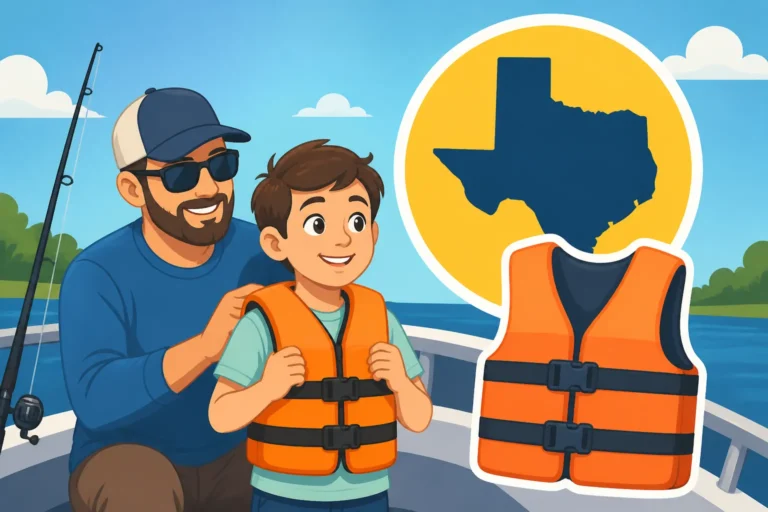
It's not enough to simply have PFDs on board; you need to have the right type and quantity for everyone, and they must fit properly. In Texas, all vessels must carry one Coast Guard-approved wearable PFD for each person on board. Additionally, boats 16 feet or longer (excluding canoes and kayaks) must also carry one throwable PFD (Type IV) in an easily accessible location. Children under 13 years of age are required to wear a Coast Guard-approved PFD while underway on any vessel under 26 feet in length, unless they are below deck or in an enclosed cabin. This rule is often overlooked, so pay close attention to the little ones!
When selecting PFDs, consider the activity. Type I (offshore) PFDs offer the most buoyancy and turn an unconscious person face-up, ideal for rough, open water. Type II (near-shore) PFDs are good for calm, inland waters. Type III (flotation aid) PFDs are popular for general recreational use, fishing, or watersports, allowing for more movement. Type V are special-use devices, often for specific activities like kayaking. Crucially, each PFD must be in good, serviceable condition—no rips, tears, or broken straps—and it must be the correct size for the wearer. A PFD that's too big can ride up and not offer proper support, while one that's too small might not provide enough buoyancy. Head over to Bass Pro Shops or check online retailers to find a wide selection of PFDs for all ages and activities, ensuring everyone on your boat is protected. Our article on Texas Life Jacket Requirements for Boats offers even more detail.
Proper Storage and Accessibility of PFDs
Having the correct PFDs is only half the battle; they must also be readily accessible. This means they shouldn't be stuffed away in a locker under a pile of gear, wrapped in plastic, or tucked under the seats where they're hard to grab in an emergency. In a sudden capsize or unexpected fall overboard, you'll have mere seconds to react. If you or your passengers can't quickly reach a PFD, it might as well not be on board.
The best practice is to store wearable PFDs in an open compartment, hung on hooks, or laid out on seats so they can be grabbed instantly. For children who are required to wear them, ensure they are comfortable and properly fastened before the boat even leaves the dock. Periodically inspect all PFDs for signs of wear and tear, mildew, or sun damage, which can compromise their effectiveness. Test zippers and buckles regularly. Remember, a PFD is useless if it's damaged, inaccessible, or doesn't fit correctly. Make it a routine part of your pre-launch checklist to ensure everyone has a properly fitting PFD within arm's reach.
Fire Safety and Ventilation Systems
Fire on a boat is one of the most terrifying scenarios an operator can face. Unlike on land, your options for escape and extinguishing are severely limited, and combustible materials like fuel are often nearby. That's why having proper fire safety equipment and ensuring your boat's ventilation systems are in top shape are absolute musts. These measures are designed to prevent fires from starting and to give you a fighting chance if one does occur.
The Critical Role of Fire Extinguishers
Every motorized vessel must carry at least one Coast Guard-approved fire extinguisher, and larger boats may require more or larger units. The type of extinguisher you need will depend on the size of your boat and whether it has a permanently installed fire suppression system. For most recreational boats, a Type B-I or B-II marine-grade extinguisher is required. These are designed to fight flammable liquid fires (like fuel or oil) and electrical fires, which are the most common types on a boat.
Just like PFDs, a fire extinguisher needs to be in good working order and easily accessible. It should be mounted in a visible spot, away from engine compartments where a fire might start, but close enough to be grabbed quickly. Check the pressure gauge periodically to ensure it's in the green, and inspect the hose and nozzle for any obstructions or damage. Also, make sure the inspection tag is current; extinguishers expire and need to be replaced or recharged. If you’re not sure where to get one or need to replace an old one, a marine-specific fire extinguisher can be found at any well-stocked marine supply store or online via Amazon. Don't ever operate your boat without a functional fire extinguisher; it's a small item with potentially life-saving power.
Ensuring Proper Fuel System Ventilation
Boats with enclosed engine compartments or fuel tanks must have a functioning ventilation system. The purpose of this system is to remove flammable fuel vapors from the bilges and engine spaces, preventing them from accumulating to dangerous levels where a spark could cause an explosion. This is especially critical for gasoline-powered boats, as gasoline fumes are heavier than air and tend to settle in low areas.
There are generally two types of ventilation: natural and mechanical. Natural ventilation uses cowls and vents to allow fresh air in and expel fumes when the boat is underway. Mechanical ventilation involves a powered blower that actively vents fumes. If your boat has an enclosed engine compartment, you are required to have a mechanical blower, and it must be operated for at least four minutes before starting the engine, and any time you are idling. Always check for fuel odors before starting your engine, and if you smell gas, don't start it. Investigate the source of the smell immediately. Regularly inspect all fuel lines, fittings, and tanks for leaks and ensure all ventilation ducts are clear of obstructions. This diligence is crucial for preventing a catastrophic explosion.
Other Crucial Safety Equipment and Considerations
While documents, PFDs, lights, and fire extinguishers cover the major categories, a truly comprehensive Texas boat safety inspection checklist includes several other critical items. These pieces of equipment might seem minor, but they play indispensable roles in ensuring your safety and the safety of those around you, particularly when unexpected situations arise.
Visual Distress Signals for Emergencies
If you find yourself in trouble on the water, you need a way to signal for help. That's where visual distress signals (VDS) come in. All boats used on coastal waters, territorial seas, and connecting waters (like major bays and sounds) must be equipped with Coast Guard-approved VDS. This requirement extends to most Texas saltwater anglers and recreational boaters. While not strictly required for inland lakes and rivers, carrying VDS on any waterway is a smart safety practice.
VDS come in various forms, including pyrotechnic devices (flares, orange smoke signals) and non-pyrotechnic devices (orange distress flags, electronic visual distress signals or EVDS). Pyrotechnic flares are highly effective but have expiration dates and must be stored carefully. EVDS are reusable and have no expiration date, making them a popular choice. Always carry at least three flares or one EVDS for night use, and a distress flag for day use. Make sure everyone on board knows where they are stored and how to deploy them. You can easily find these at marine stores or online from retailers like Bass Pro Shops. Remember, knowing how to signal for help quickly can be the difference in a real emergency.
Anchor, Bilge Pump, and Kill Switch Essentials
Beyond the legally mandated items, several other pieces of equipment are essential for safe and responsible boating in Texas. First up is a reliable anchor. Having an anchor with sufficient rode (rope or chain) can prevent your boat from drifting into danger if you experience engine trouble or need to hold your position in current or wind. The general rule of thumb for anchor line length is 7:1 scope in calm conditions (7 feet of line for every 1 foot of water depth), so make sure you have enough.
Next, a functional bilge pump is crucial for removing water that might enter your boat from rain, waves, or a leak. Most boats have an automatic bilge pump that kicks on when water reaches a certain level, but it's important to also have a manual override and to check its operation regularly. If your boat starts taking on water, a working bilge pump can buy you critical time. Lastly, for any boat with an open cockpit and a motor, a kill switch (engine cutoff switch) lanyard is required. This safety device attaches to the operator and automatically shuts off the engine if the operator is thrown from the helm, preventing the boat from becoming a runaway hazard. Always wear your kill switch lanyard, and ensure it's functioning properly before you head out. These small but mighty pieces of gear contribute significantly to overall boat safety.
Your Pre-Launch Boat Safety Inspection Checklist for Texas Waters
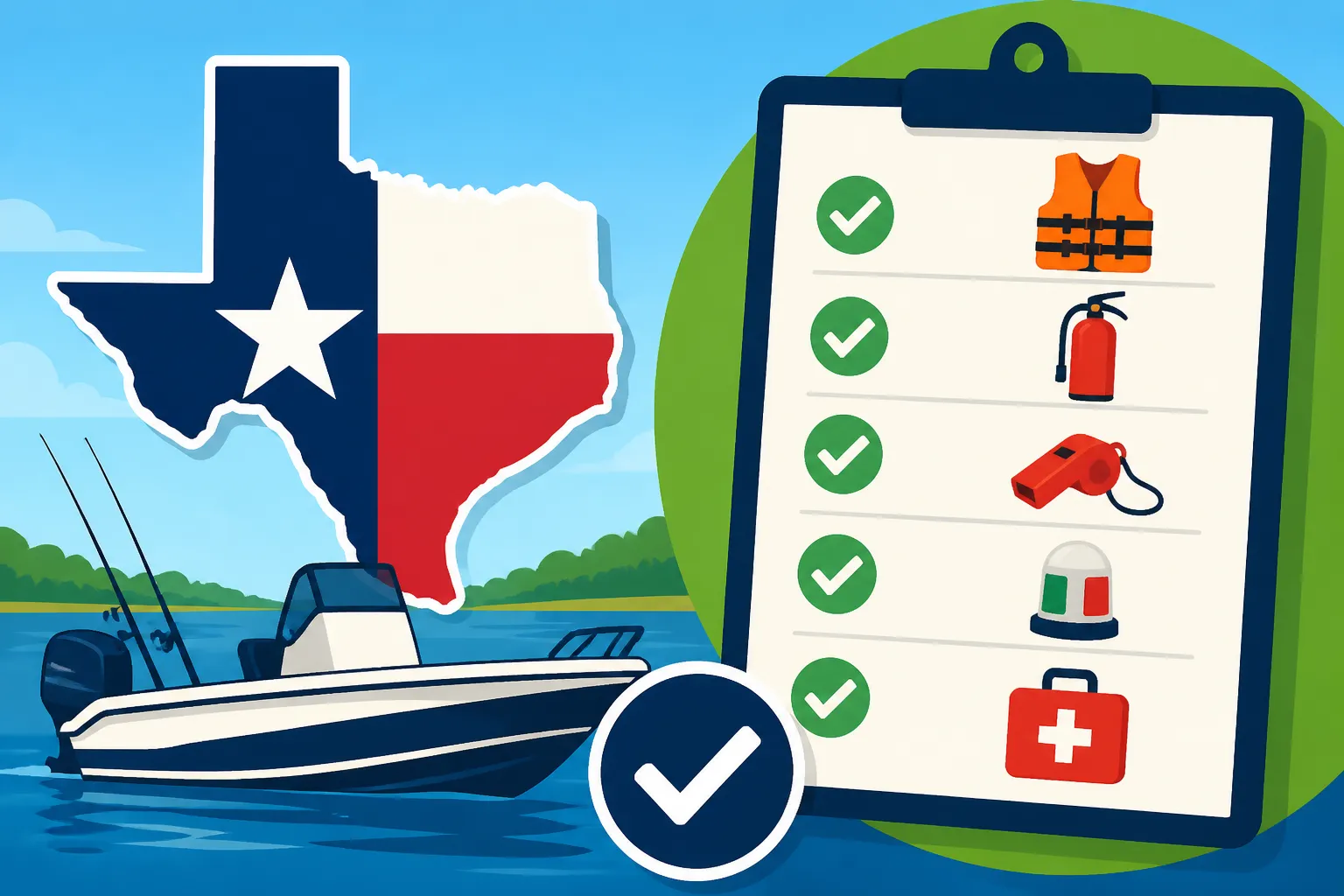
Okay, so we've covered a lot of ground! Now, let's put it all together into a practical, repeatable checklist you can use before every single outing on Texas waters. Making this a routine will not only keep you compliant with state law but, more importantly, will drastically increase your safety and enjoyment on the water. No one wants to be caught off guard by an unexpected problem, especially when it could have been prevented with a quick check.
| Item | Requirement Summary | Why It Matters | Check Status |
|---|---|---|---|
| Registration & Documents | Current boat registration certificate on board; display decals. | Legal operation, proof of ownership. | [] |
| Boater Education Certificate (if applicable by age/role). | Demonstrates safe boating knowledge. | [] | |
| Personal Flotation Devices (PFDs) | One Coast Guard-approved wearable PFD for EACH person (correct type & fit). | Life-saving buoyancy in emergencies. | [] |
| One throwable PFD (Type IV) for boats 16ft+ (excluding canoes/kayaks). | Aids overboard individuals. | [] | |
| PFDs in serviceable condition & easily accessible. | Must be functional & quickly deployable. | [] | |
| Visual Distress Signals (VDS) | For coastal/tidal waters: Day (flag) & Night (flares/EVDS). | Signals for help in emergencies. | [] |
| Sound Signaling Device | Whistle or horn capable of 4-6 sec blast, audible 0.5 mile. | Communication & emergency alerts. | [] |
| Fire Extinguisher | At least one Coast Guard-approved (Type B-I or B-II) for motorboats. | Extinguishes common boat fires. | [] |
| In good condition, charged, and easily accessible. | Must be functional & quickly deployable. | [] | |
| Navigation Lights | Functional sidelights (red/green), stern light, masthead light (as required). | Visibility for collision prevention (dusk/night). | [] |
| Ventilation | Functional blower for enclosed engine compartments (gasoline engines). | Prevents fuel vapor explosions. | [] |
| Kill Switch | Lanyard attached to operator (for open cockpit motorboats). | Prevents runaway boat if operator falls overboard. | [] |
| Anchor & Rode | Anchor of appropriate size with sufficient line. | Holds position, prevents drifting in emergencies. | [] |
| Bilge Pump | Functional bilge pump (manual & automatic if equipped). | Removes water from hull, prevents sinking. | [] |
| Overall Condition | No obvious leaks, electrical issues, or structural damage. | Ensures seaworthiness. | [] |
This checklist, while comprehensive, is not exhaustive for every possible scenario or boat type. Always refer to the latest TPWD and U.S. Coast Guard regulations for specific requirements for your vessel. The goal is to build a habit of safety. A few minutes of checking before you cast off can make all the difference, transforming a potentially dangerous situation into a manageable one. Whether you're chasing trophy bass or enjoying a sunset cruise, safety should always be your first priority.
Disclaimer
This article is for general informational purposes only and does not constitute professional advice. Laws, prices and regulations vary by location and change over time. Consult a qualified professional for guidance on your specific situation.