Best Trolling Motors for Texas Bass Boats
One of the biggest headaches for any serious bass angler in Texas isn't just finding those lunker spots or figuring out the bite; it's making sure your boat is rigged right to get you there and keep you there. You've got your rod and reel, your favorite lures, and a cooler full of drinks, but if your trolling motor isn't up to snuff, you're going to spend more time fighting the wind and current than you are fighting fish. This guide is all about cutting through the confusion to help you pick the best trolling motor for your Texas bass boat, ensuring you have the control and reliability you need for a successful day on the water.
Understanding Your Bass Boat's Needs for a Trolling Motor
Choosing a trolling motor isn't a one-size-fits-all situation, especially when you consider the vast and varied waters we have here in Texas, from shallow, stump-filled coves to open, wind-swept reservoirs. Your boat's size, weight, and even your typical fishing conditions all play a huge role in determining what kind of power and features you'll need. Skipping this foundational step is like trying to build a house without a blueprint – you might get something, but it probably won't be what you truly need.
Thrust: Powering Through Texas Waters
Thrust is arguably the most critical factor when selecting a trolling motor, as it dictates how effectively your boat can move against wind, current, and even heavy vegetation. It's measured in pounds, and more isn't always better if it means unnecessary battery drain or cost, but too little thrust will leave you frustrated and adrift. A general rule of thumb for flat, calm water is about 2 pounds of thrust for every 100 pounds of boat weight (fully loaded, including gear and passengers). However, Texas rarely offers consistently calm conditions. Think about those blustery days on Lake Fork, or the strong currents you might encounter on the Trinity River during a good white bass run. For these scenarios, you'll want to err on the side of more power. Many seasoned Texas anglers will tell you to add at least 20-30% more thrust to that basic calculation to account for wind, current, or fishing in thick hydrilla. A larger boat, say a 20-foot bass boat, fully loaded with fuel, gear, and a couple of anglers, could easily weigh 3,000 pounds or more. This would translate to a minimum of 60 pounds of thrust, but for practical Texas fishing, many would opt for 80-100+ pounds to really have confident control.
Imagine you're trying to hold your position in a strong crosswind on a big lake like Sam Rayburn Reservoir, trying to pick apart a brush pile. If your motor is underpowered, you'll constantly be overcorrecting, burning through battery, and feeling like you're fighting the boat instead of fishing. Conversely, with adequate thrust, your motor can effortlessly hold you in place, allowing you to focus on your presentation. This is especially vital when How to fish deep structure in Texas reservoirs or How to fish around boat docks for bass where precision boat positioning is key.
Shaft Length: Reaching the Water in All Conditions
The shaft length of your trolling motor is another non-negotiable measurement that directly impacts performance. Too short, and your propeller will come out of the water in choppy conditions, losing thrust and potentially damaging the motor as it cavitates. Too long, and it can drag, become a hazard in shallow water, or make it awkward to deploy and stow. To determine the right length, you'll need to measure the distance from where the trolling motor will mount (usually the bow) to the waterline. Then, add about 20 inches to that measurement to ensure the propeller stays submerged in rougher conditions and when your boat is loaded differently.
Consider the diverse fishing spots across Texas. You might be fishing the wide-open expanse of Lake Texoma, where a short chop can quickly develop, requiring a longer shaft to maintain prop submersion. Then, the very next weekend, you might be navigating the cypress tree-filled backwaters of Caddo Lake, where too long a shaft could snag or bottom out. For a typical bass boat with a high bow, a 45-inch to 52-inch shaft is a common starting point, but many anglers opt for 60 inches or more for maximum versatility on Texas's big, windy lakes. A longer shaft gives you peace of mind, knowing that even if you hit a big wake or choppy water, your prop isn't going to be sucking air and making a racket.
Power Source: 12V, 24V, or 36V Systems
Trolling motors are powered by 12-volt (V) batteries, and the voltage rating of the motor (12V, 24V, or 36V) indicates how many batteries are required and how they should be wired. Generally, higher voltage systems deliver more thrust and longer run times, making them a significant consideration for Texas bass boats.
- 12V Systems: These typically offer lower thrust (up to around 55 pounds) and are suitable for smaller boats, canoes, or kayaks. While they are simple to install with just one battery, their limited power and shorter run time make them less ideal for serious bass fishing on larger Texas lakes. You'd find these more on a smaller jon boat exploring calm rivers for Texas catfish species guide rather than a tournament bass boat.
- 24V Systems: Requiring two 12V batteries wired in series, these motors offer thrust ratings from about 70 to 80 pounds. This is a very popular choice for many medium to large bass boats, providing a good balance of power and run time for a full day of fishing in most conditions. They offer enough oomph to handle decent wind and current without requiring a massive battery bank.
- 36V Systems: These are the workhorses, demanding three 12V batteries in series, and provide the highest thrust, often 100 pounds or more. For larger bass boats (19 feet and up) or anglers who frequently fish massive, windy reservoirs like Toledo Bend or those who demand maximum power and endurance for long tournament days, a 36V system is often the preferred choice. While they require more batteries and a more robust charging system, the performance gain in terms of sustained power and control is undeniable.
Choosing the right voltage system is also about managing your onboard power. More batteries mean more weight, which can affect boat performance and fuel efficiency. You'll also need a compatible charger, and many serious anglers invest in multi-bank chargers to keep all their trolling motor batteries topped off and balanced. When considering a system, think about your typical day on the water. Are you making short hops or spending hours on the trolling motor? The answer will heavily influence your power choice.
Key Features to Look for in Texas Trolling Motors
Modern trolling motors are far more than just a motor on a stick. They're packed with advanced technology designed to make your time on the water more productive and enjoyable. These innovations can truly transform your fishing experience, offering unprecedented boat control and integration with your other electronics.
GPS-Based Spot-Lock and Navigation
One of the most revolutionary features in recent trolling motor history is GPS-based anchoring, often called "Spot-Lock" (Minn Kota's term) or "Anchor Mode" (MotorGuide's term). This technology uses an internal GPS receiver to pinpoint your boat's position and automatically adjust the motor's thrust and direction to keep you holding a precise spot, even in wind and current. This is a game-changer for Texas anglers.
Imagine you've found a productive hump on Lake Whitney, or a small patch of submerged hydrilla that's holding bass on Lake Conroe. Instead of dropping an anchor or constantly nudging a foot pedal to stay in place, you simply press a button, and your boat stays put. This frees up your hands for casting, re-tying, or even grabbing a snack. It's incredibly useful when How to fish deep structure in Texas reservoirs or when you're working a specific cover along a shoreline. Beyond just holding a spot, many of these systems also offer advanced navigation features like:
- Route Tracking: Record a path and have the motor automatically retrace it later.
- Waypoint Navigation: Select a saved waypoint, and the motor will steer your boat directly to it.
- Cruise Control: Maintain a set speed, perfect for slow trolling or covering water while casting.
These smart features mean less time messing with boat positioning and more time focused on fishing, which is exactly what we want, right? Systems like those from Minn Kota with their i-Pilot or MotorGuide with their Pinpoint GPS are hugely popular among Texas tournament anglers and weekend warriors alike for these very reasons. When you're dealing with the sheer size and unpredictable weather of Texas lakes, having a trolling motor that can virtually anchor itself is an absolute blessing.
Sonar Integration: Seeing What's Below
Many premium trolling motors now come with built-in sonar transducers, allowing for a cleaner installation and better performance compared to external, bracket-mounted transducers. This integration means you can run your sonar cables directly through the shaft of the trolling motor, protecting them from snags and wear, and giving you a clear, unobstructed view of the bottom directly beneath your motor.
For Texas bass fishing, having this sonar capability right at the bow is incredibly valuable. You can use it to scan structure as you approach it, identify baitfish schools, or locate individual bass holding tight to cover. Some advanced systems offer both 2D sonar and even Side Imaging or Down Imaging directly from the trolling motor, giving you a comprehensive underwater picture. This is especially useful for targetting specific species like Texas largemouth bass fishing guide or Texas crappie fishing guide, where understanding the bottom contour and cover is crucial.
The beauty of integrated sonar is the seamless connection to your main fish finder unit. Brands like Garmin are leading the way in creating cohesive ecosystems where your trolling motor, fish finder, and GPS communicate effortlessly. This allows you to mark waypoints directly from your sonar screen and then command your trolling motor to go there with the press of a button. It streamlines your entire fishing operation, making you a more efficient and effective angler.
Foot Pedal vs. Hand Control
The choice between a foot pedal and hand control for your trolling motor is a matter of personal preference and fishing style, but it's one that can significantly impact your comfort and control on the water. Both have their dedicated fans in Texas.
-
Foot Pedal Control: This is the traditional choice for serious bass anglers, especially those who grew up fishing from bass boats. Foot pedals allow for hands-free operation, meaning your hands are always free to hold a rod and reel. The control is typically very precise, with a heel-toe action for steering and a rocker switch or button for speed. This hands-free advantage is crucial when you're rapidly casting a jig into tight cover or making quick adjustments while fighting a fish. The learning curve for a foot pedal can be a bit steep for newcomers, but once mastered, it feels like an extension of your body, allowing for intuitive boat control. Many modern foot pedals also integrate buttons for Spot-Lock, momentary on/off, and propeller speed, putting all key functions literally at your feet.
-
Hand Control: Often found on smaller boats, pontoon boats, or for transom-mount applications, hand-controlled trolling motors have a tiller handle that you steer directly. They are simple, straightforward, and generally less expensive. While you lose the hands-free advantage, some anglers prefer the direct feel and immediate response of a hand control, particularly for smaller bodies of water or situations where precise, subtle movements aren't as critical. For someone doing a lot of bank fishing with a small inflatable boat or a canoe, a hand-control might be perfect. However, for a dedicated bass boat where constant casting and precise boat positioning are key, the foot pedal almost always wins out among experienced anglers.
Many of the advanced GPS-enabled motors come with a wireless remote control as an alternative or supplement to the foot pedal. This remote gives you the best of both worlds, allowing you to control steering, speed, and Spot-Lock from anywhere in the boat, which is fantastic when you're fighting a fish or helping a buddy. It offers incredible flexibility, especially when How to fish a Texas reservoir in the heat and you need to stay cool under a bimini or at the back of the boat.
Types of Trolling Motors and Their Texas Applications
Beyond the features, the physical mounting location of your trolling motor is a fundamental decision. Each type serves a different purpose and offers distinct advantages depending on your boat and fishing preferences.
Bow-Mount Trolling Motors
Bow-mount trolling motors are, without a doubt, the most popular choice for bass boats and most other serious fishing vessels. They are mounted on the front (bow) of the boat, and they pull the boat through the water rather than pushing it. This "pulling" action provides superior control, especially in wind and current, as it's much easier to steer a boat by pulling from the front than by pushing from the back.
The advantages of a bow-mount are numerous for Texas bass anglers. When you're trying to work a shoreline, follow a contour, or stay on a specific piece of structure, the precise control of a bow-mount is unmatched. You can subtly nudge the boat left or right with a foot pedal, keeping your casting angles perfect. They typically offer the highest thrust options and are where you'll find all the advanced features like GPS anchoring and integrated sonar. The motors themselves are usually larger and more robust, designed to withstand the stresses of constant use and choppy water.
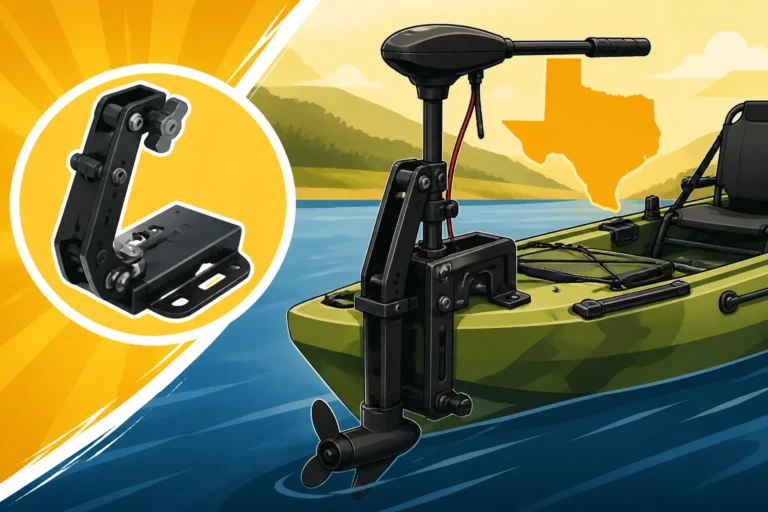
Installation typically involves a quick-release bracket, allowing you to easily remove the motor for security or storage. However, they do require dedicated space on the bow and proper wiring to your battery bank, which usually resides in a forward compartment to balance the boat. For anyone serious about bass fishing on Texas's diverse lakes, a bow-mount trolling motor is almost always the go-to choice, offering the maximum in control, power, and technological integration. This is the setup you'll see on nearly every boat participating in a How to fish a Texas bass tournament.
Transom-Mount Trolling Motors
Transom-mount trolling motors attach to the stern (back) of your boat, clamping directly onto the transom. They are generally simpler, more compact, and less expensive than bow-mount motors. These motors push the boat from the rear and are typically hand-controlled, though some models offer remote steering.
While they don't offer the same level of precise control for intricate boat maneuvering that a bow-mount provides, they are excellent for smaller boats, canoes, kayaks, or as a secondary propulsion system for larger boats. If you have a small aluminum jon boat that you use to access skinny water for Texas alligator gar fishing guide or to quietly putter around a small pond, a transom-mount can be ideal. They are also popular for anglers who primarily drift or anchor and only need a motor for minor adjustments or getting back to the ramp.
The primary limitation of a transom-mount for serious bass fishing is the reduced control, especially in windy conditions, where steering from the rear can be like pushing a rope. You also lose the hands-free operation critical for casting and reeling. However, for their intended purpose – portability, simplicity, and affordability – they are a fantastic option. They are also often much easier to install, requiring less wiring and setup than their bow-mounted counterparts.
Engine-Mounted Trolling Motors (Newer Tech)
A relatively newer category, engine-mounted trolling motors, sometimes called "steerable prop motors," offer a unique solution, especially for those who want to minimize clutter on the bow or who fish from larger boats not traditionally designed for bow-mount trolling motors. These motors mount directly to the cavitation plate of your outboard motor.
The primary benefit is that they leverage your existing outboard for steering, making them incredibly discreet and almost invisible when not in use. They offer excellent power and can be quite effective for cruising or holding position in open water. Since they are positioned at the stern, they push the boat. However, they typically lack the ultra-fine control needed for precise bass fishing in tight cover, and their steering is tied to your main outboard, which might not be as responsive as a dedicated bow-mount system. They also don't usually incorporate the advanced GPS anchoring features found on dedicated bow-mounts.
While still evolving, these types of motors might appeal to certain types of anglers, perhaps those who fish larger, multi-purpose boats, or who prefer a minimalist setup. For the hardcore Texas bass angler focused on tournaments and precision casting, a bow-mount motor still holds the crown, but engine-mounted options present an interesting alternative for specific niches.
Maintenance and Longevity for Texas Trolling Motors
A trolling motor is an investment, and like any piece of critical fishing gear, it requires some love and care to ensure it performs reliably for years to come. The harsh Texas environment, with its intense heat, sudden storms, and sometimes muddy waters, can be particularly tough on electronics and moving parts.
Battery Care and Charging Practices
Your trolling motor is only as good as the batteries powering it, and proper battery maintenance is paramount for longevity and consistent performance. This is especially true for 24V and 36V systems, where multiple batteries need to work in harmony.
- Use Deep Cycle Batteries: Trolling motors require deep cycle batteries, which are designed for sustained power discharge over a long period, unlike starting batteries that provide a short burst of high current.
- Charge After Every Use: Even if you only used your trolling motor for a short time, always fully recharge your batteries after each outing. This prevents sulfation, a common cause of battery degradation.
- Use a Smart Charger: Invest in a high-quality multi-bank charger that can charge all your trolling motor batteries simultaneously and automatically. These chargers typically have different charging stages to protect batteries and prevent overcharging. Many popular brands like Minn Kota and ProMariner offer excellent onboard chargers. Avoid using automotive trickle chargers, as they are not designed for deep cycle batteries.
- Check Water Levels (Lead-Acid): If you're using traditional flooded lead-acid batteries, regularly check the electrolyte levels and top off with distilled water as needed.
- Clean Terminals: Keep battery terminals clean and free of corrosion. A wire brush and a battery terminal protector spray can go a long way in ensuring good electrical connections.
- Winter Storage (if applicable): While Texas winters are generally mild, if your boat will be stored for an extended period, ensure your batteries are fully charged and kept in a cool, dry place. Many smart chargers have a maintenance mode that will keep them topped off.
Neglecting battery care can lead to premature battery failure, reduced run time on the water, and frustrating power issues when you least expect them. A dead battery on a vast lake far from the ramp is a scenario no angler wants to face.
Routine Cleaning and Inspection
Just like you wouldn't go weeks without cleaning your reels, your trolling motor needs regular attention too. A little bit of routine cleaning and inspection can prevent major problems down the line.
- Rinse After Use: After every trip, especially if you've been in saltwater or brackish water (like Galveston Bay or Sabine Lake), thoroughly rinse the entire motor unit with fresh water. Pay special attention to the propeller and motor head to remove any weeds, mud, or salt residue. This helps prevent corrosion and ensures smooth operation.
- Check Propeller: Regularly inspect the propeller for fishing line wrapped around the shaft, nicks, or cracks. Even a small piece of fishing line can damage the prop seal and lead to water intrusion into the motor housing. Keep a spare prop and the necessary wrench in your boat's tackle box.
- Inspect Cables and Connections: Check all electrical cables for cuts, chafing, or corrosion. Ensure all connections are tight and secure. Loose connections can lead to power loss or even electrical fires.
- Lubricate Moving Parts: Depending on your motor model, there might be specific lubrication points for hinges, steering mechanisms, or deployment arms. Consult your owner's manual for recommended lubrication schedules and products.
- Look for Wear and Tear: Visually inspect the mounting bracket, shaft, and foot pedal (if applicable) for any signs of excessive wear, cracks, or loose hardware. Address minor issues before they become significant problems.
Consistent cleaning and inspection are particularly vital for Texas saltwater fishing techniques where the corrosive nature of saltwater can quickly wreak havoc on unprotected components.
Common Issues and Troubleshooting
Even with the best maintenance, sometimes things go wrong. Knowing some common issues and basic troubleshooting steps can save you a trip to the repair shop and get you back on the water quicker.
- Motor Not Responding: First, check all battery connections for tightness and corrosion. Ensure the circuit breaker (if installed) hasn't tripped. Check the prop for any obstructions. If it's a foot pedal, ensure it's properly connected.
- Loss of Power/Weak Thrust: This often points to a battery issue. Check battery voltage with a multimeter. One weak battery in a 24V or 36V system can drag down the entire system. Low charge, old batteries, or a bad connection are usually the culprits.
- Excessive Noise/Vibration: Inspect the propeller for damage or fishing line. A bent prop or one with a nick can cause significant vibration. Also, check for any loose components on the motor head or shaft.
- GPS/Spot-Lock Issues: Ensure there's a clear line of sight to the sky (no obstructions directly above the motor). Check for any magnetic interference from nearby electronics. Sometimes a simple reset of the system can resolve glitches.
For more complex issues, consulting your motor's owner's manual or contacting the manufacturer's customer support is always a good idea. Many issues can be resolved with a few simple checks, saving you time and money. Investing in a Beginner fishing gear checklist for Texas might include a multi-meter and spare prop nuts.
| Feature | Bow-Mount Trolling Motor (Typical Bass Boat) | Transom-Mount Trolling Motor (Smaller Boat/Kayak) |
|---|---|---|
| Control Type | Foot Pedal, Wireless Remote | Hand Tiller (primary), some Remotes |
| Steering | Highly precise, directional pull | Less precise, pushes from rear |
| Thrust Range | 55-112+ lbs | 30-55 lbs |
| Voltage System | 24V, 36V (most common) | 12V (most common) |
| GPS Anchoring | Standard on high-end models | Rare, if ever |
| Sonar Integration | Common, often built-in | Less common |
| Cost | Higher | Lower |
| Installation | More complex (wiring, dedicated mount) | Simple clamp-on |
| Typical Use | Tournament bass fishing, large lake fishing | Small boats, kayaks, secondary propulsion |
Top Trolling Motor Brands Popular in Texas
When it comes to trolling motors, a few brands consistently rise to the top, earning the trust of Texas anglers through their innovation, reliability, and performance. You'll see these names everywhere, from small community ponds to major tournament trails.
Minn Kota: A Texas Favorite
Minn Kota is arguably the most recognizable and widely respected name in the trolling motor industry, and for good reason. They have been at the forefront of innovation for decades, introducing many of the features we now consider essential. For Texas bass anglers, Minn Kota's Ultrex and Fortrex models are particularly popular.
The Minn Kota Ultrex is often considered the gold standard for bass boats, especially in Texas. It masterfully combines the feel of a traditional cable-steer foot pedal with the game-changing features of GPS-based Spot-Lock and i-Pilot Link. This means you get the instant, tactile response and control that tournament anglers demand, coupled with the ability to precisely hold your position with the push of a button. This dual functionality makes it incredibly versatile for fishing everything from shallow grass beds on Cedar Creek Reservoir to deep ledges on Falcon Lake. The Ultrex's Lift-Assist feature also makes deployment and stowing incredibly easy, a small detail that makes a big difference over a long day.
Their Fortrex series offers a more traditional, cable-steer-only option, still with robust construction and reliable performance, but without the advanced GPS features. It's a workhorse for anglers who prefer pure mechanical control and don't need the digital integration. Minn Kota also offers a wide range of accessories, from battery chargers to shallow water anchors, creating a comprehensive ecosystem for boat control. You can find their full line of products at most major outdoor retailers, including Bass Pro Shops, where you can often see them on display and talk to staff about specific models.
MotorGuide: Reliable Performance
MotorGuide is another powerhouse in the trolling motor market, known for its rugged durability and consistent performance. They have a loyal following among Texas anglers, particularly for their Tour Pro and Xi5 models.
The MotorGuide Tour Pro is their answer to the needs of serious bass fishermen. It combines a durable, all-metal foot pedal with their precise Pinpoint GPS anchoring system. What many anglers appreciate about the Tour Pro is its robust construction and intuitive control. The foot pedal offers excellent responsiveness, and the Pinpoint GPS is incredibly accurate, holding your boat firmly in place even in strong currents or heavy winds, which is a common scenario when fishing the main lake points on Lake Livingston. The Tour Pro also features a powerful, quiet motor that won't spook fish.
Their Xi5 model is a popular choice for anglers looking for a wireless, steer-by-wire experience. It's designed for silent, precise navigation and comes standard with Pinpoint GPS. While it doesn't offer the cable-steer feel of the Tour Pro or Ultrex, its remote control and quiet operation make it a favorite for anglers who value convenience and stealth, especially when wade fishing a flat for Texas redfish fishing guide in saltwater. MotorGuide motors are also widely available, and you can compare their features and pricing easily on platforms like Amazon or through authorized dealers.
Garmin: Integrating Electronics
While a newer player in the dedicated trolling motor game, Garmin has quickly made a significant impact by leveraging its expertise in marine electronics. Their Force trolling motor is designed to integrate seamlessly with Garmin's extensive line of fish finders and chartplotters.
The Garmin Force offers a unique combination of features. It's incredibly powerful and efficient, utilizing a brushless motor that delivers impressive thrust while consuming less battery power, which is a huge advantage for long days on big Texas lakes. What truly sets the Force apart is its deep integration with Garmin's marine ecosystem. If you're running Garmin Echomap or GPSMAP units on your console and bow, the Force can be controlled directly from those screens, allowing for truly networked boat control. You can navigate, set waypoints, activate its anchor mode, and even control the trolling motor's speed and direction right from your fish finder display.
The Force also boasts an exceptionally quiet operation, which is critical for sneaking up on wary bass. It comes with a wireless foot pedal that feels very much like a traditional cable-steer, offering tactile feedback that many anglers prefer. Furthermore, it has a built-in Ultra High-Definition ClearVü and SideVü sonar transducer, providing crystal-clear imagery without the need for external transducers. For anglers already invested in Garmin electronics, or those looking to build a fully integrated system, the Garmin Force is an incredibly compelling option that brings a new level of sophistication to trolling motor technology.
Making Your Final Decision and Where to Buy
Choosing the best trolling motor is a significant decision that impacts your enjoyment and success on the water. It’s not just about picking the most expensive one; it’s about finding the perfect match for your boat, your fishing style, and your budget.
Considering Your Budget and Fishing Style
Before you pull the trigger on a new trolling motor, take a realistic look at your budget. Trolling motors can range from a few hundred dollars for basic transom-mounts to several thousand for high-end bow-mount models with all the bells and whistles. Remember, this investment extends beyond the motor itself; you'll also need appropriate deep cycle batteries and a quality charger, which can add significant costs.
Your fishing style should also heavily influence your choice.
- Are you a tournament angler? If so, precision, power, and reliability are paramount. Features like high thrust, GPS anchoring, and robust foot pedal control (like a Minn Kota Ultrex or MotorGuide Tour Pro) will be worth the investment. You'll likely be on the water for long hours, covering a lot of ground, and battling various conditions, so endurance and advanced features are key. Your focus is often on Texas largemouth bass length limits and catching those trophy fish.
- Do you mostly bank fish and occasionally use a smaller boat? A simpler, less expensive transom-mount or a basic bow-mount might be perfectly adequate. If you're targeting Texas crappie bag limits in calm coves, you might not need 112 pounds of thrust or a complex GPS system.
- How often do you fish? A casual angler might not need the top-of-the-line model, whereas someone who is on the water every weekend will benefit greatly from the durability and advanced features of a premium motor.
- What kind of water do you primarily fish? Large, open, windy reservoirs will necessitate higher thrust and shaft length, while smaller, protected lakes or rivers might allow for a less powerful motor. When How to fish in hot Texas summers, a reliable motor that can quickly reposition your boat to follow shade lines or thermal breaks can make a huge difference.
It's also a good idea to think about future upgrades. If you plan to add more advanced fish finders down the road, choosing a trolling motor with integrated sonar or strong network compatibility (like the Garmin Force) could be a smart move, preventing you from having to replace your motor later to achieve full system integration.
Local Dealers vs. Online Retailers
Once you've narrowed down your choices, the next step is deciding where to make your purchase. Both local dealers and online retailers offer distinct advantages.
-
Local Dealers: Visiting a local marine or outdoor recreation dealer, like a Bass Pro Shops, offers several benefits. You can physically see the different models, get a feel for the foot pedals, and ask questions to knowledgeable staff. They often have demo units or can help you compare features side-by-side. Additionally, local dealers typically offer installation services, which can be invaluable, especially for more complex bow-mount systems. They also provide local warranty support and repair services, which can be a huge convenience if you encounter any issues down the road. Building a relationship with a local dealer means you have a go-to resource for future maintenance, accessories, or even advice on Texas boat registration requirements.
-
Online Retailers: Websites like Amazon, Tackle Warehouse, or the manufacturer's own online stores often provide a wider selection and competitive pricing. You can easily compare specifications, read user reviews, and have the motor shipped directly to your door. For experienced DIYers who are comfortable with electrical wiring and installation, buying online can be a cost-effective option. However, you'll need to be diligent about checking warranty policies and ensuring you have access to technical support if needed. When purchasing online, be sure to verify the seller's reputation and return policy. While the upfront cost might be lower, consider the potential for added installation costs or the hassle of shipping a large item back for warranty service if something goes wrong.
Ultimately, the best approach for many Texas anglers is a hybrid: do your research online, compare models and read reviews, but then visit a local dealer to see the motors in person and discuss your specific needs. This way, you get the best of both worlds – informed decision-making and reliable local support. Remember, a new trolling motor isn't just a piece of equipment; it's an enhancement to your entire fishing experience.
Disclaimer
This article is for general informational purposes only and does not constitute professional advice. Laws, prices and regulations vary by location and change over time. Consult a qualified professional for guidance on your specific situation.