Texas Alligator Gar Fishing Guide
Oh, the alligator gar! If you've ever dreamt of battling a true prehistoric leviathan right here in Texas waters, you know the mix of excitement and intimidation these creatures inspire. They're legendary for a reason, but trying to figure out where to start, what gear you actually need, and how on earth to even land one can feel like deciphering an ancient scroll. This comprehensive guide is here to cut through the confusion, helping you understand Texas's incredible alligator gar and equipping you with the knowledge to pursue these magnificent fish responsibly and successfully.
The Alligator Gar: Texas's Ancient River Monster
There's something truly awe-inspiring about the alligator gar. They're not just big fish; they're living fossils, perfectly adapted predators that have been cruising Texas waters for millions of years. For many anglers, catching one is a bucket-list achievement, a test of skill, patience, and sheer tackle strength. Their powerful presence and unique appearance set them apart from almost every other freshwater species you'll encounter, making them an incredible quarry for those seeking a unique fishing challenge. But before you even think about casting a line, it's crucial to understand these remarkable animals.
Identifying the Alligator Gar
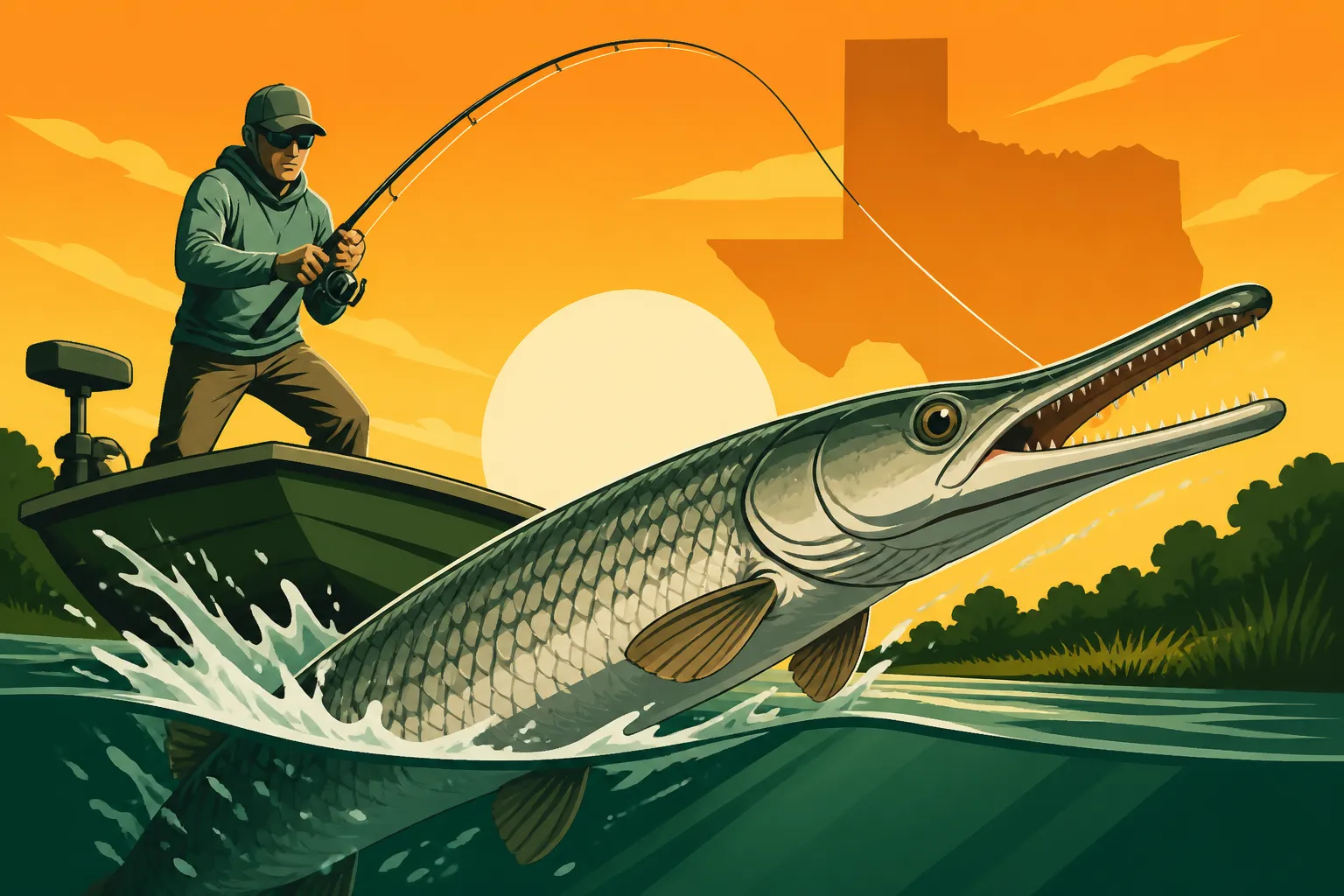
Distinguishing an alligator gar from other gar species in Texas is key, not just for identification, but for understanding their unique characteristics and fishing approach. The most striking feature of an alligator gar is its broad, flattened, alligator-like snout, which is filled with two rows of formidable teeth in the upper jaw. This isn't just a stylistic choice by Mother Nature; it's a highly efficient tool for ambushing and holding onto prey. Their bodies are covered in heavy, diamond-shaped ganoid scales, which are incredibly tough, almost like armor plating. These scales make them nearly impervious to most conventional fishing hooks, adding to the challenge of hooking one effectively.
Coloration can vary, but typically, they have an olive brown to greenish-grey back that fades to a lighter, often yellowish, belly. Dark spots are usually present on their fins and often on their body, though these can be less prominent on larger, older specimens. They possess a long, cylindrical body that tapers to a powerful tail, capable of explosive bursts of speed. Compared to longnose, shortnose, or spotted gar, the alligator gar's head is notably wider and shorter relative to its body length, and its rows of teeth are a dead giveaway. Knowing these distinctions helps you appreciate the specific adaptations that make the alligator gar such a formidable predator and a unique angling target.
Habitat and Distribution in Texas
Texas is truly blessed to be a stronghold for alligator gar, boasting some of the best fishing opportunities for these giants in the entire world. Historically, they were found throughout the lower Mississippi River basin and Gulf Coast states, but Texas remains a prime location. You'll primarily find them in the sluggish, warm waters of large rivers, bayous, and coastal bays and estuaries. They love areas with plenty of submerged vegetation, standing timber, and slow-moving currents where they can ambush unsuspecting prey. Think oxbow lakes adjacent to major river systems, deep holes in river bends, and brackish marshes.
Major river systems like the Trinity River, Brazos River, and the lower portions of the Sabine River and Neches River are renowned for their healthy alligator gar populations, often producing true trophy-sized fish. Lakes connected to these river systems, especially those with extensive shallow, weedy flats, can also hold good numbers. While they prefer freshwater, they are highly tolerant of salinity and frequently venture into brackish coastal bays and estuaries, particularly during spawning season or in search of food. Understanding their preferred hangouts is the first step in successful gar fishing, as pinpointing these areas will significantly increase your chances of an encounter with one of these magnificent creatures.
Understanding Gar Behavior and Life Cycle
Alligator gar are apex predators in their ecosystems, playing a vital role in keeping populations of other fish species in check. They are primarily ambush predators, often lying motionless near cover, waiting for an unsuspecting fish to swim by. Their diet consists mostly of rough fish like carp, buffalo, and shad, but they are opportunistic and will eat anything they can catch, including ducks, small mammals, and even other gar. Their unique swim bladder allows them to gulp air from the surface, which is particularly useful in low-oxygen environments, giving them an edge in stagnant backwaters where other fish might struggle. This behavior also provides visual cues for anglers; a gar rolling on the surface to gulp air often indicates their presence.
Their life cycle is fascinating and contributes to their longevity and impressive size. Spawning typically occurs in spring and early summer when water temperatures rise and floodwaters create shallow, vegetated nurseries. Females can lay tens of thousands of sticky eggs that adhere to vegetation, and these eggs are toxic to most other animals, protecting them from predation. Growth can be surprisingly rapid in their early years, but they are incredibly long-lived, with some individuals estimated to be over 50 years old. This slow growth to maturity and remarkable lifespan underscores the importance of responsible angling practices, especially catch and release, to ensure these ancient fish continue to thrive in Texas waters for generations to come. Texas Alligator Gar Size and Growth is a topic worth exploring further if you're keen on understanding just how big these fish can get.
Texas Regulations for Alligator Gar Fishing
Fishing for alligator gar in Texas isn't just about the thrill of the chase; it's also about understanding and respecting the rules that govern their management. Texas Parks and Wildlife Department (TPWD) has specific regulations in place to protect this unique species, ensuring sustainable populations for future generations of anglers. Ignoring these rules can lead to hefty fines and loss of fishing privileges, which nobody wants after a long day on the water. It's truly disappointing when a fantastic catch is marred by an avoidable legal issue, so let's make sure you're well-informed before you hit the water.
License Requirements and Endorsements
First and foremost, to fish for any species in Texas, including alligator gar, you need a valid Texas fishing license. This is non-negotiable for most adults. For alligator gar specifically, there aren't usually special endorsements beyond the standard fishing license, but it's always wise to double-check the current regulations, especially if you're an out-of-state angler. Texas has various license options, including annual resident and non-resident licenses, as well as temporary options like a Texas One-Day Fishing License for Visitors.
It's important to remember that these licenses usually run from September 1st to August 31st of the following year, regardless of when you purchase them. Always carry proof of your license while fishing, whether it's the physical copy or an electronic version on your phone via an official app. The game wardens in Texas are serious about conservation, and they will check. Don't let a simple oversight ruin your fishing trip for these magnificent creatures. Always refer to the most current Texas Fishing License Requirements Explained for the definitive word on what you need.
Bag and Length Limits for Alligator Gar
This is where alligator gar regulations get particularly specific and crucial. For recreational anglers, the general rule is a one (1) alligator gar per day bag limit. This means you can only harvest one alligator gar in any 24-hour period. However, there are very specific exceptions and additional regulations depending on where you are fishing. For instance, on the Trinity River, there are highly restricted harvest periods, sometimes allowing harvest only during certain months of the year, or even requiring an "Alligator Gar Harvest Authorization" for a small number of permitted anglers in specific zones.
Length limits can also apply, and these are often designed to protect larger, spawning-capable females. While there isn't a statewide minimum length, specific water bodies might have restrictions. It's absolutely critical to consult the current Texas Fish Bag and Length Limits for the specific body of water you intend to fish. These regulations can change, so always check the latest outdoor annual available from TPWD online or at any license retailer. Misunderstanding these limits can have serious consequences, especially when dealing with such a prized and protected species. The intent behind these rules is simple: ensure these impressive fish continue to thrive.
Special Rules and Prohibited Methods
Beyond standard bag and length limits, alligator gar fishing comes with its own set of unique rules and prohibited methods. Certain gear types, such as spears, gigs, and even certain types of nets, are generally prohibited for taking game fish, though bowfishing for alligator gar often has specific provisions. Texas bowfishing license requirements and rules apply to this method, and they can be quite detailed regarding equipment and seasons. Noodling, or hand fishing, for alligator gar also falls under specific regulations and might require a special endorsement or be restricted to certain areas or times.
Perhaps one of the most important special rules involves how you treat the fish once caught. If you intend to harvest an alligator gar, you must retain it. Releasing a gar that has been gaffed or badly injured and is unlikely to survive is illegal. This emphasizes the importance of making a quick decision to either harvest the fish or release it unharmed immediately. Using wire leaders and specific hooks designed for gar, combined with careful handling, are essential best practices for a successful and ethical experience. Always ensure you are familiar with the specific rules for the method you choose, as something as seemingly innocent as a particular type of lure or trap could be illegal in certain contexts.
Essential Gear for Alligator Gar Fishing
Going after an alligator gar isn't like your typical bass or catfish trip. These fish are built like tanks, and their raw power demands a serious upgrade in your tackle. Many anglers learn this the hard way, losing monster gar to snapped lines or bent hooks, a frustrating experience that can leave you questioning your gear choices. The right equipment isn't just about success; it's about safety for both you and the fish. Investing in appropriate gear means you're prepared for the battle of a lifetime.
Rods, Reels, and Line Built for Battle
When it comes to alligator gar, think heavy-duty, then think heavier. You'll want a rod that can handle immense stress, typically a heavy or extra-heavy action rod, around 7 to 8 feet long. These rods need to have a strong backbone to set the hook through a gar's bony mouth and enough leverage to turn a powerful fish. Many anglers opt for saltwater-rated rods, as they are often designed for similar heavy-hitting species. Look for rods with durable guides that can withstand the abrasion of heavy line.
For reels, a large, robust baitcasting reel or a heavy-duty spinning reel with a strong drag system is essential. Your reel needs to hold a substantial amount of heavy line and have the cranking power to retrieve a large fish. Capacity is key here; a big gar can make blistering runs, and you don't want to be spooled. As for line, braided line is the undisputed champion for gar fishing. Its incredible strength-to-diameter ratio, zero stretch, and abrasion resistance are vital. Most serious gar anglers will use braided line in the 80 to 150-pound test range, sometimes even heavier. Monofilament or fluorocarbon simply won't cut it for the main line – they lack the necessary strength and resistance to the gar's rough scales and teeth. You can find a great selection of these heavy-duty rods and reels on Amazon, making it easy to compare options from various brands before committing to your setup.
Baits and Rigs: What Gar Can't Resist
Alligator gar are primarily piscivores, meaning they love to eat other fish. Therefore, live bait and cut bait are by far the most effective offerings. Large, oily baitfish like carp, buffalo, shad, or even smaller tilapia work wonders. The size of your bait should match the potential size of the gar; we're talking about baits that are often 1-2 pounds or more for trophy fish. For cut bait, fresh chunks of the same species, with plenty of blood and scent, are highly attractive. Using a bait that's legal to catch and use in your specific fishing area is important, so check Texas Freshwater Fishing Regulations if you're unsure.
The rigging is critical because of the gar's unique mouth structure. Traditional hooks are notorious for pulling out of a gar's bony jaw. This is why many experienced gar anglers forgo standard hooks in favor of specially designed "snare" or "rope" rigs. These rigs often use frayed nylon or polypropylene rope, or a large treble hook wrapped in heavy-duty rope, which tangles in the gar's numerous teeth. When the gar takes the bait, the rope fibers get intertwined with their teeth, effectively "snaring" them without needing a traditional hookset into flesh. If you do opt for hooks, extra-large, incredibly strong treble hooks, often in sizes like 10/0 or 12/0, are preferred, often rigged with a heavy wire leader, sometimes up to 200 lb test, to prevent bite-offs. Many anglers head to Amazon to compare different rope material and leader options. A heavy lead weight (4-8 oz or more) is typically used to hold the bait on the bottom in current. How to Rig a Trotline in Texas offers insights into heavy-duty rigging concepts that can be adapted for static gar setups.
| Component | Recommendation | Key Features for Gar Fishing |
|---|---|---|
| Rod | Heavy to Extra-Heavy Action, 7-8 ft | Strong backbone, durable guides, leverage for large fish |
| Reel | Large Baitcasting or Heavy Spinning Reel | High line capacity, powerful drag, strong gears, saltwater-rated |
| Main Line | Braided Line, 80-150 lb test | Zero stretch, extreme strength, abrasion resistance |
| Leader | Heavy Wire (100-200 lb test) or Heavy Mono/Fluoro | Bite-proof, abrasion resistant, prevents line twisting |
| Bait | Large Live or Cut Bait (Carp, Buffalo, Shad) | Strong scent, natural movement, appropriate size |
| Rigs | Rope Rigs, Large Treble Hooks (10/0-12/0) | Tangles in teeth, ensures secure hold, reduces hook pull-outs |
| Weights | Pyramid or Sinker Weights, 4-8 oz+ | Holds bait on bottom in current, allows for casting |
Safety and Handling Equipment
Landing a large alligator gar is a serious endeavor that requires careful planning and the right safety equipment. These fish are powerful, can thrash violently, and their teeth are no joke. A large, sturdy net designed for muskie or similar big game fish is essential if you plan to land one from a boat. For bank fishing or larger specimens, a heavy-duty gaff with a long handle is often necessary to secure the fish, though this should only be used if you intend to harvest the gar. If you plan to release the fish, a large cradle or sling can help support its body, preventing injury during measurement and photos.
Gloves, thick leather ones ideally, are absolutely critical for handling the fish and protecting your hands from their scales, fins, and teeth. Long-nosed pliers or bolt cutters might be needed to remove hooks or cut rope rigs safely. Because these fish can be extremely heavy and unwieldy, having a partner is highly recommended for safely landing and handling a large gar. Think through your entire process, from hookset to release or retention, and ensure you have all the necessary tools at hand. Proper equipment not only makes the process easier but significantly reduces the risk of injury to both the angler and the fish. When you are focused on How to Catch Gar in Texas, having the right tools for the job is paramount.
Where to Find Alligator Gar in Texas
Texas is a truly special place for alligator gar fishing, boasting some of the most prolific waters for these impressive fish. Knowing where to go and how to identify prime habitat is half the battle. You can have the best gear and bait in the world, but if you're fishing barren water, you're not going to have any luck. It's frustrating to spend hours on the water only to realize you're in the wrong spot, so let's dial in on where these monsters lurk.
Top Rivers and Lakes for Trophy Gar
While alligator gar can be found in many Texas waterways, a few locations stand out as consistent producers of truly massive fish. The Trinity River is arguably the most famous alligator gar river in the world. Its lower and middle sections, particularly the stretch below Lake Livingston, are legendary for their dense populations and the sheer size of the gar caught there. The river's slow-moving, often murky waters, abundant oxbows, and rich forage base create ideal conditions. It's not uncommon for anglers here to hook fish exceeding 100 pounds, with some truly ancient giants breaking 200 pounds. However, remember the specific regulations for this river mentioned earlier; they are very strict to preserve these incredible fish.
Other fantastic options include the Brazos River, especially its lower reaches, which also offers excellent opportunities for large gar. The Neches River and Sabine River, particularly their lower sections and associated backwater lakes, are also prime targets. For lakes, those connected to these major river systems, such as Lake Livingston on the Trinity, can hold significant numbers, especially in their shallow, vegetated coves and upstream river channels. These aren't necessarily the lakes you'd go to for Best Bass Lakes in Texas, but they're perfect for gar. Scouting these areas, either by boat or by studying maps, is crucial before your trip. Look for areas with minimal boat traffic, plenty of cover, and access to deeper channels.
Scouting Prime Gar Habitat
Finding alligator gar often involves a keen eye for subtle indicators and a good understanding of their preferred environments. As mentioned, they love slow-moving, warm water with plenty of structure and cover. This includes standing timber, submerged logjams, dense aquatic vegetation, and deep holes or bends in rivers. During hot Texas summers, they'll often seek out slightly deeper, cooler water, but they'll still be near structure where they can ambush prey.
One of the most valuable scouting techniques is simply observing the water. Alligator gar are obligate air-breathers, meaning they periodically surface to gulp air. Look for large "rolls" or swirls on the surface, especially in calmer waters during early morning or late evening. A gar rolling to breathe can be quite distinctive – it's often a slow, deliberate movement where a portion of their back or head briefly breaks the surface. Pay attention to areas where baitfish are abundant, as the gar won't be far behind. Using bathymetric maps to identify deep channels, submerged humps, or old riverbeds can also be incredibly helpful, as these areas provide both cover and travel corridors for large gar. Even a simple pair of binoculars and a patient watch from a high vantage point can reveal key fishing spots.
Seasonal Movements and Best Times to Fish
Alligator gar can be caught year-round in Texas, but certain seasons and times of day offer better chances for success. Generally, spring and early summer are prime times, especially during and after heavy rains when rivers might be swollen. This is often when gar are most active, moving into shallow, flooded areas to spawn and feed aggressively. The slightly cooler water temperatures can also make them more active hunters.
As summer heats up, gar tend to become more lethargic during the day, often suspending in deeper holes or under thick cover to escape the intense sun. During these scorching months, your best bet is often very early morning, late evening, or even night fishing. How to Fish in Hot Texas Summers for other species can provide some crossover insights for gar as well, emphasizing dawn, dusk, and nighttime activity. During fall and winter, their activity can decrease with colder water temperatures, but they can still be caught, particularly on warmer, sunny days in deeper, thermal refuges. The key is to match your fishing efforts to their activity patterns, focusing on periods when they are most likely to be actively feeding or moving. Consistent observation of local conditions and water temperatures will be your best friend in predicting the ideal time to target these magnificent fish.
Effective Techniques for Landing Alligator Gar
Okay, you've got the monster gear, you've found the perfect spot, and you've got the ideal bait. Now comes the moment of truth: actually getting a bite and, even more challenging, landing that alligator gar. It's a different game than most fishing, and many anglers get frustrated by missed bites or lost fish. Understanding the unique challenges of their bony mouth and immense power is key to converting those opportunities into successful catches.
Bank Fishing and Casting Techniques
Bank fishing for alligator gar can be incredibly effective, especially on river bends, oxbows, and areas with deep access close to shore. The primary technique involves casting out a large bait, often a whole or half a large carp or buffalo, weighted heavily to keep it on the bottom. You'll want to use a heavy sinker, usually 4-8 ounces or even more, depending on the current, to anchor your bait in place. The idea is to present a large, enticing meal directly in a gar's feeding zone.
Once your bait is cast, it's a waiting game. Gar often pick up bait slowly, mouthing it before committing. This is where patience is paramount. Avoid the urge to set the hook immediately. Many experienced gar anglers recommend a long delay, sometimes 10-15 minutes or even longer, to allow the gar to fully engulf the bait and for the rope rig to tangle in its teeth, or for a large hook to find purchase. When you do decide to set the hook, do it with extreme force, repeatedly, to try and drive the hook through their incredibly tough, bony mouth. This isn't a gentle wrist flick; it's a full-body effort. How to Rig a Trotline in Texas explores some of the heavy-duty rigging concepts that translate well to static, bottom-fishing setups from the bank.
Fishing from a Boat: Trolling and Anchoring
Fishing for alligator gar from a boat opens up more opportunities, allowing you to access remote areas of rivers and lakes that are inaccessible from shore. Anchoring is a common technique, especially in river bends, deep holes, or near submerged structure where gar are known to congregate. Just like bank fishing, you'll deploy large baits on heavy rigs, letting them soak on the bottom. The advantage of a boat is the ability to move and try different spots if one isn't producing. You can spend an hour or two in one spot, then pull anchor and relocate to another promising area, covering more water and increasing your chances.
Trolling for alligator gar is less common than for other species, but it can be effective in certain situations, especially for covering large expanses of water or when gar are actively hunting. This usually involves slow-trolling large live baits or oversized artificial lures that mimic large baitfish. However, given the gar's ambush predator nature, a more passive approach with anchored baits often yields better results. From a boat, you also have the advantage of a higher vantage point, which can help in spotting those tell-tale gar rolls on the surface, giving away their location.
Noodling and Bowfishing for Gar
While rod and reel fishing is a popular method, it's worth noting that alligator gar are also targeted through other, more specialized techniques. Noodling, or hand-fishing, involves locating gar in submerged logs, crevices, or undercut banks and catching them by hand. This is an extremely challenging and dangerous method that requires specific skills, knowledge, and adherence to very strict regulations, which can include special licenses or permits. It's definitely not for the faint of heart, and not recommended for beginners.
Bowfishing is another popular and often effective method for alligator gar. This involves shooting gar with specialized arrows attached to a line, typically from a boat at night with powerful lights. This method requires a different set of skills, including excellent aim and quick reflexes. Texas bowfishing license requirements are in place for this activity, so ensure you understand them fully if you choose this path. While these methods are certainly unique and can be exciting, they require specific equipment, knowledge, and a commitment to safety and legality that goes beyond traditional rod and reel angling. For many, the true challenge of the gar lies in the intense battle on a line.
The Art of the Hookset and Landing a Gar
So, you've patiently waited, the line has tightened, and you know you've got a gar mouthing your bait. This is often the most nerve-wracking part of alligator gar fishing, as their legendary bony mouths can make a successful hookset incredibly difficult. Many a gar has been felt, fought for a moment, and then lost, leaving anglers with a mixture of awe and frustration. It's a specific skill, honed by experience, that separates successful gar anglers from those who just tell stories of "the one that got away."
The Challenge of the Gar's Bony Mouth
The primary reason alligator gar are so challenging to hook effectively lies in their anatomy. Their elongated, bony snout is not soft like a catfish's mouth or fleshy like a bass's. It's a dense, hard structure, almost like bone and cartilage, designed for crushing and holding prey. This means that a standard hookset often just slides off their jaws or barely penetrates, leading to frustrating pull-outs. This is precisely why many dedicated gar anglers have moved away from traditional hooks in favor of rope rigs or extremely large, strong treble hooks.
When using rope rigs, the delay in the hookset is critical. You need to allow the gar ample time to chew and work the bait, ensuring the rope fibers become thoroughly entangled in their hundreds of needle-sharp teeth. Once you feel continuous, steady pressure and perhaps a slow pull, rather than just tentative taps, it’s time to retrieve. With treble hooks, the goal is still to get one of those points to lodge in the softer tissue at the corners of their mouth, or deep inside their throat. This requires a powerful, sweeping hookset, often repeated multiple times, to try and drive the hook home through that tough structure. It's a test of patience, intuition, and sheer physical effort.
Safe Handling and Releasing Alligator Gar
Once hooked, an alligator gar will put up an incredible fight, often making powerful runs and violent head shakes. This is where your heavy-duty tackle earns its keep. Play the fish firmly but steadily, using your rod's backbone to turn its head and your reel's drag to manage its powerful surges. Do not try to horse a big gar; they are incredibly strong and can easily snap lighter lines or bend weak hooks. The fight can last a considerable amount of time, especially with larger fish, so be prepared for a marathon, not a sprint.
When the gar is finally subdued and alongside your boat or at the bank, the real challenge of safe handling begins. This is critical for both your safety and the fish's well-being. If you intend to harvest the fish, a single, powerful gaff to the lower jaw or head is often used to secure it for landing. If you plan to release, avoid gaffing. Instead, use a large, strong net or carefully grasp the fish by the gill plates (being mindful of their sharp teeth) or the base of the tail to lift it into a measuring sling or cradle. Never lift a large gar by the head or tail alone, as this can severely damage its internal organs. Always wear thick gloves, and if possible, have a partner to assist. Cut rope rigs as close to the mouth as possible, or use bolt cutters to remove hooks. The goal is to minimize time out of water and ensure the fish swims away strong. The decision to harvest or release should be made quickly, as Is it legal to keep an alligator gar in Texas discusses, once a gar is landed, you cannot release an injured fish.
Documenting Your Trophy Catch
Catching a trophy alligator gar is an experience you'll want to remember forever. These aren't everyday fish, and a photo with a truly massive specimen is a badge of honor. However, ethical and safe photography is just as important as safe handling. Plan your photo op in advance to minimize the time the fish is out of the water. Have your camera ready, your measurement device handy, and know exactly where you'll pose with the fish.
For large gar, supporting the fish's full body weight is crucial. If possible, keep the fish partially submerged in the water while taking photos, or use a large measuring mat or sling to support its body. Never hold a large gar vertically by the jaw or tail, as this can cause irreversible damage to its spine and internal organs. Instead, cradle its body horizontally, supporting its weight evenly. Get your shots quickly, then prepare for release. A quick measurement of length and girth, perhaps with a weight estimate if you have a reliable scale, allows you to document its size without undue stress. Remember, the goal is to celebrate your catch responsibly, ensuring these incredible fish continue to thrive. Texas Fish Bag and Length Limits often encourages good reporting of large fish to aid in conservation efforts.
Conservation and Respecting Texas's Alligator Gar
Alligator gar have faced significant challenges throughout their history, from habitat loss to misunderstanding and over-harvest. Thankfully, in Texas, their populations are relatively healthy, largely due to proactive management and the growing respect of anglers. Being a responsible angler means more than just following the rules; it means understanding the vital role these fish play and actively contributing to their conservation. We're incredibly lucky to have these ancient creatures in our waters, and it's our duty to protect them.
The Importance of Catch and Release
For many, the allure of alligator gar fishing is the challenge and the thrill, not necessarily the harvest. Given their slow growth rates, long lifespans, and the specific conservation concerns for large, breeding-size females, catch and release is highly encouraged, especially for trophy-sized fish. Releasing a majestic gar, particularly one that has taken decades to reach its impressive size, ensures it can continue to contribute to the population through spawning and genetic diversity.
When practicing catch and release, minimizing stress and injury to the fish is paramount. Use appropriate gear that can handle the fight quickly. Handle the fish as little as possible, keep it in the water or supported horizontally, and avoid touching its eyes or gills. Cut the line as close to the mouth as possible if a hook is deeply set or difficult to remove quickly, as the hook will often rust out. For rope rigs, cut the rope near the mouth. A strong, healthy release is the ultimate sign of respect for these incredible animals and the true mark of a conservation-minded angler. Think about the legacy you're leaving for future generations of anglers when you decide whether to release or harvest.
Understanding Their Role in the Ecosystem
Alligator gar are not just impressive game fish; they are crucial components of their aquatic ecosystems. As apex predators, they play a vital role in maintaining the health and balance of fish populations. They primarily prey on slower, less desirable species like carp and buffalo, helping to prevent overpopulation of these rough fish and ensuring healthier environments for other game fish. Without gar, these ecosystems could become unbalanced, leading to negative impacts on water quality and other species.
Historically, gar were often viewed as "trash fish" or nuisances, a sentiment that led to widespread persecution. However, modern scientific understanding has revealed their ecological importance. They are a sign of a healthy, biodiverse aquatic environment. By respecting and protecting alligator gar, we are indirectly protecting the entire ecosystem they inhabit, including the waters where we catch bass, catfish, and crappie. Recognizing their value beyond just a trophy on the wall is a fundamental shift that benefits all anglers and the natural world.
Minimizing Impact and Ethical Angling
Ethical angling for alligator gar extends beyond just catch and release. It involves a holistic approach to minimizing your impact on the environment and the fish. This means properly disposing of all fishing line, bait containers, and trash; leaving no trace behind. It also means being mindful of sensitive habitats, especially during spawning season, and avoiding disturbing areas where gar may be breeding. Being informed about Texas Freshwater Fishing Regulations and any special site-specific rules is a part of this commitment.
Consider the long-term health of the fishery. If you do harvest a gar, ensure it is within all legal limits and that you will utilize the fish. Many enjoy eating gar, and they can provide a delicious and unique meal. If you don't intend to eat it, perhaps consider releasing it, especially if it's a very large, older female that is crucial for reproduction. Promoting responsible fishing practices to others and sharing knowledge about gar conservation also contributes to their future. By embracing these principles, we ensure that the thrill of pursuing Texas's ancient river monster remains a viable and cherished experience for generations to come. When planning your next trip, remember that every piece of gear, even a simple leader you buy on Amazon, is part of an experience that affects these incredible fish.
Disclaimer
This article is for general informational purposes only and does not constitute professional advice. Laws, prices and regulations vary by location and change over time. Consult a qualified professional for guidance on your specific situation.