Texas Smallmouth Buffalo Fish Guide
Ever found yourself scratching your head at the lake, looking at a fish you just caught and wondering, "What is this thing?" For many Texas anglers, the smallmouth buffalo falls squarely into that mysterious category. Often mistaken for common carp or its larger buffalo brethren, this native Texas fish is frequently misunderstood, overlooked, or even unfairly dismissed. But let me tell you, there's a lot more to the smallmouth buffalo than meets the eye, and this guide is here to shed some light on this fascinating, hard-fighting, and ecologically important species that deserves a spot in every Texas angler's knowledge base.
What Exactly Is a Smallmouth Buffalo?
Before we dive into fishing for them, let's clear up the identity crisis. The smallmouth buffalo (scientific name: Ictiobus bubalus) is a native North American freshwater fish, a member of the sucker family, and it's definitely not a carp, though it shares a similar bottom-feeding lifestyle. They are common residents of Texas waters, from our sprawling reservoirs to our winding rivers, playing a vital role in aquatic ecosystems.
Key Identification Features
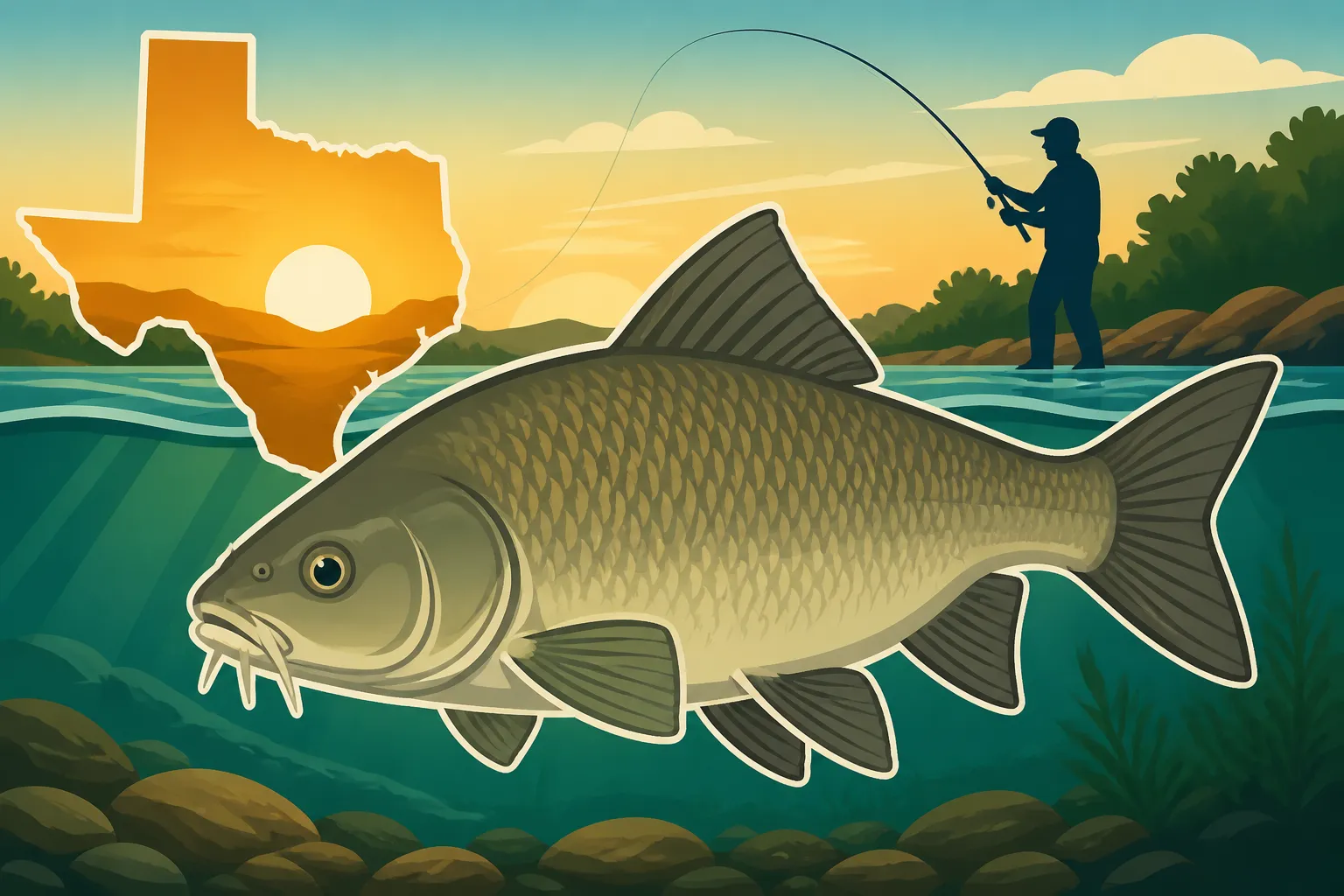
When you pull a smallmouth buffalo from the water, you'll immediately notice a few distinctive traits. Unlike the common carp with its whisker-like barbels around its mouth, the smallmouth buffalo has no such appendages. Its mouth is small, downturned, and positioned beneath its snout, perfectly adapted for sucking up food from the bottom. This is where the "smallmouth" part of its name comes from, and it's a dead giveaway.
Their body shape is robust and deep, often with a hump on their back, especially in larger specimens. The coloring can vary, but generally, they are dark bronze or olive green on their backs, fading to a lighter, silvery or yellowish belly. Their scales are large and cycloid, giving them a smooth, uniform appearance. When you hold one, you'll feel how muscular and strong they are – a testament to the fight they put up on a line. Don't confuse their powerful build with a lack of grace; they are quite streamlined in the water.
Smallmouth Buffalo vs. Other Buffalo Fish
Texas waters are home to a few different species of buffalo fish, and it's easy to get them mixed up. Besides the smallmouth, you might encounter the bigmouth buffalo (Ictiobus cyprinellus) and, less commonly, the black buffalo (Ictiobus niger). The key difference, as their names suggest, is in their mouths and overall body structure.
The bigmouth buffalo has a large, terminal mouth that points forward, almost like a bass, designed for filtering plankton from the water column. Its body is often a bit more streamlined than the smallmouth. The black buffalo, on the other hand, has an oblique mouth that points slightly upwards, and its body is generally darker and more compressed laterally. The smallmouth buffalo's distinctive subterminal, downward-pointing mouth is your primary identifier. Knowing these differences can help you appreciate the diversity of the sucker family and identify your catch accurately, especially if you're keen on knowing exactly what kind of fish you're targeting.
Distinguishing from Common Carp
This is perhaps the most frequent point of confusion, and one that often leads to unfair judgment of the smallmouth buffalo. Many anglers immediately assume any large, scaly bottom-feeder is a common carp, but they are entirely different fish. The most obvious difference, as mentioned, is the absence of barbels on the smallmouth buffalo. Common carp always have those prominent "whiskers" around their mouth.
Another crucial distinction is the dorsal fin. Common carp have a single, long dorsal fin with a serrated, spiny ray at the front. Smallmouth buffalo, while also having a long dorsal fin, lack this hard, spiny ray. Their fins are softer, and their overall appearance is less "gnarly" than a carp. Moreover, carp tend to have larger, more protrusible mouths, adapted for grubbing directly into the substrate. Smallmouth buffalo, with their fixed, downward-facing mouths, are more suited to vacuuming up detritus. Once you know what to look for, telling them apart becomes second nature.
Where to Find Smallmouth Buffalo in Texas
Smallmouth buffalo are incredibly widespread throughout Texas, showcasing their adaptability to a variety of freshwater environments. You might be surprised at how many of our favorite fishing spots hold thriving populations of these impressive fish. They're not picky about company, often sharing their waters with popular game fish like bass and catfish.
Preferred Habitats
These fish are true generalists when it comes to habitat, but they do have preferences. You'll typically find smallmouth buffalo in slow-moving or still waters with soft, muddy, or silty bottoms. This makes them perfectly suited for the vast expanses of Texas reservoirs, the lazy bends of our larger rivers, and even some oxbow lakes and larger ponds. They thrive in areas with abundant submerged vegetation, which often contributes to the detritus and microorganisms they feed upon.
Unlike some fish that prefer clear, pristine waters, smallmouth buffalo are quite tolerant of turbidity. In fact, slightly murky water can often be advantageous for them, as it helps camouflage their feeding activities on the bottom. They are less common in fast-flowing, rocky streams, simply because those environments don't offer the rich, soft bottoms and calmer currents they prefer for foraging.
Specific Texas Waters
You'd be hard-pressed to find a major Texas reservoir that doesn't have a healthy population of smallmouth buffalo. Lakes like Lake Fork, Sam Rayburn Reservoir, and Toledo Bend Reservoir, famous for their bass fishing, also hold plenty of buffalo. In central Texas, Canyon Lake and Lake Buchanan are known to have them. Down south, Choke Canyon Reservoir can be a great spot. Even urban lakes and larger city park ponds often have them, quietly going about their business at the bottom.
Our major river systems, such as the Trinity River, Brazos River, and Colorado River, are also prime smallmouth buffalo territory, especially in their slower, deeper stretches. Anywhere there's a stable, nutrient-rich, soft bottom, these fish are likely present. You might not always see them jumping like carp, but they're there, contributing to the ecosystem's health.
Seasonal Movements
Like many freshwater species, smallmouth buffalo do exhibit some seasonal movement, primarily driven by spawning and feeding patterns. In the cooler months, especially winter, they tend to congregate in deeper pockets of lakes and rivers, becoming less active but still feeding. They might move to areas with slightly warmer water, such as deeper channels or near power plant discharges if available.
As water temperatures rise in spring, typically between April and June, they begin their spawning migrations. They'll move into shallower, vegetated areas of lakes and floodplains, often seeking out flooded grasses or shallow coves to deposit their eggs. This can be a great time to target them, as they are more concentrated and often more active. After spawning, they'll spread back out into their summer feeding grounds, which can be anywhere from shallow flats to deeper humps, always close to a soft bottom where they can vacuum up their meals. Understanding these general patterns can significantly improve your chances of locating them.
The Diet and Behavior of Smallmouth Buffalo
Smallmouth buffalo are fascinating creatures, primarily because of their unique feeding habits and their often-underestimated intelligence. They are true bottom-dwellers, and their entire physiology is geared towards this lifestyle.
What's on the Menu
Forget about chasing flashy lures; smallmouth buffalo are primarily detritivores and opportunistic omnivores. This means their diet consists largely of detritus (decaying organic matter), algae, plankton, and insect larvae they find on or in the bottom substrate. Their small, downturned mouth acts like a natural vacuum cleaner, sucking up mouthfuls of mud and silt, filtering out the edible bits, and expelling the rest. They don't have teeth in their jaws, but they possess pharyngeal teeth in their throats that grind their food before digestion.
This diet is precisely what makes them so valuable to the aquatic ecosystem. By consuming detritus and algae, they help keep the water cleaner and cycle nutrients, preventing excessive build-up of organic material that could otherwise degrade water quality. They are essentially the cleanup crew of the lake bed, a role often overlooked by anglers focused on predatory species.
Bottom Feeders Extraordinaire
Their feeding technique is quite specialized. They cruise slowly along the bottom, using their sensitive mouths to detect food. Once they find a promising spot, they will suck in the substrate, sift through it, and then expel the unwanted material through their gills or mouth. This process can sometimes create clouds of stirred-up mud, which, if you're observant, can actually be a sign of feeding buffalo.
Because of this feeding method, traditional baits that sit on the bottom are most effective. They aren't going to strike a spinnerbait or a crankbait out of aggression. Instead, they're looking for an easy, nutritious meal that blends into their natural foraging environment. This makes them a more patient angler's fish, requiring different tactics than, say, a fast-moving bass.
Social Creatures
Smallmouth buffalo are known to be schooling fish. You'll rarely find a lone buffalo; they typically travel and feed in groups, sometimes quite large ones. This schooling behavior can work to your advantage as an angler. If you catch one smallmouth buffalo, there's a good chance that others are nearby. This is particularly true when they are concentrated in deeper holes during winter or gathered in shallower spawning areas in spring.
Their social nature also means they can impact an area together. A large school of buffalo methodically working a soft bottom can significantly stir up sediment, which in turn can sometimes attract other species looking for disturbed invertebrates. Observing these subtle signs can be key to locating a productive buffalo fishing spot.
Fishing Techniques for Smallmouth Buffalo
Now that we know what they are and where they live, let's talk about how to catch 'em! Fishing for smallmouth buffalo is a distinctly different experience than chasing bass or catfish, but it can be incredibly rewarding, especially when you feel the sheer power of a big one on the end of your line. Patience, the right bait, and a bit of finesse are your best friends here.
Choosing the Right Gear
You might be surprised to learn that smallmouth buffalo, especially the larger ones, can put up a truly incredible fight. They're built like tanks and use their broad, flat sides to create immense drag in the water. Therefore, you'll want gear that can handle a serious tug-of-war.
- Rods: A medium-heavy to heavy action spinning or baitcasting rod, typically 7 to 9 feet long, is ideal. You want something with enough backbone to set the hook firmly and muscle a strong fish away from snags, but also with enough flex in the tip to detect subtle bites.
- Reels: A sturdy spinning reel in the 3000-5000 size range or a reliable baitcasting reel with a smooth drag system is perfect. Capacity for a decent amount of line is important, as these fish can make powerful runs. You can find many suitable options on Amazon that won't break the bank.
- Line: Monofilament line in the 12-20 lb test range is a good all-around choice. Its stretch can act as a shock absorber during sudden runs. Some anglers prefer braided line for its sensitivity and strength, but remember to use a fluorocarbon leader with braid if the water is clear, as buffalo can be line-shy.
- Hooks: Strong, sharp circle hooks or Kahle hooks in sizes 2/0 to 4/0 are excellent. Circle hooks are particularly good for buffalo as they tend to hook the fish in the corner of the mouth, making for easier release and less harm to the fish.
Having reliable gear, much like when you're targeting big catfish, is paramount. If you're looking for a good starting point, check out basic freshwater fishing setups on Amazon.
Effective Baits and Rigs
Smallmouth buffalo are not predatory, so your bait choices will reflect their detritivore diet. Forget live shiners or flashy crankbaits. Simplicity and natural offerings are the keys to success.
- Dough Balls/Prepared Baits: This is perhaps the most classic and effective bait. You can make your own dough balls from flour, cornmeal, sugar, and water, or buy commercially prepared carp/buffalo baits. These are designed to break down slowly, releasing attractants.
- Sweet Corn: Believe it or not, canned sweet corn is a buffalo magnet! It's cheap, easy to use, and they absolutely love it. Thread several kernels onto a small hook.
- Boilies: Popular in carp fishing, boilies (hardened dough balls with various flavors) can also be effective for buffalo. They come in many varieties and can be found in specialty bait shops or online.
- Worms/Nightcrawlers: While primarily a catfish or bass bait, a gob of worms presented on the bottom can sometimes entice a curious buffalo, especially if they are looking for insect larvae.
For rigging, a simple bottom rig is usually all you need. A slip-sinker rig, with an egg sinker or similar weight sliding freely on your main line above a swivel, leader, and hook, allows the fish to pick up the bait without feeling the weight immediately. This is similar to how you'd set up for How to Catch Catfish in Texas. Another effective setup is a simple ledger rig, where the weight is fixed a short distance above the hook. Make sure your hook is completely covered by the bait, as buffalo can be finicky.
Reading the Water for Buffalo
Finding smallmouth buffalo requires understanding their preferred environments. Look for areas with a soft, silty bottom, often indicated by darker water or even bubbles rising to the surface (a sign of feeding activity).
- Familiar Structure: In lakes and reservoirs, target coves, creek channels, and gradual slopes that lead to deeper water. Areas with submerged timber or brush can also hold buffalo, as these spots accumulate detritus.
- River Bends and Pools: In rivers, focus on slower-moving pools, eddies behind sandbars, and deep bends where current is reduced and sediment settles.
- Visual Cues: Sometimes, you might see them "rolling" on the surface, especially in calmer waters. This is when they break the surface briefly, often on warm, humid days. Don't mistake them for jumping carp; their roll is usually slower and more deliberate. Keep an eye out for stirred-up mud plumes, which are tell-tale signs of a school actively feeding on the bottom. These observations are crucial for Beginner Fishing Techniques for Texas Anglers.
Once you've found a promising spot, cast your bait out and let it settle on the bottom. Patience is key. Buffalo bites can be subtle — a slight twitch, a slow pull, or a gentle bend of the rod tip. Don't be too quick to set the hook; let them take the bait confidently.
Why Smallmouth Buffalo Deserve Your Attention
So, why bother fishing for a species often overshadowed by the "glamour fish" like bass and trout? Smallmouth buffalo offer a unique and rewarding fishing experience that many anglers are missing out on. They are strong, abundant, and play a critical role in our aquatic environments.
The Fight Factor
Let's get this straight: a big smallmouth buffalo will absolutely test your angling skills. These fish are incredibly powerful and resilient. Once hooked, they don't typically make acrobatic jumps like a bass, but they do something arguably more impressive: they pull like a freight train. Their large, deep bodies act like underwater parachutes, creating immense resistance against your line.
You'll feel powerful, head-shaking runs, and they'll often try to dig deep or peel line off your reel with surprising speed and stamina. A 20-pound smallmouth buffalo can put up a fight comparable to or even exceeding a similarly sized redfish or even a decent blue catfish. Many seasoned anglers who have hooked into a truly large buffalo come away with a newfound respect for their fighting prowess. It's an honest, brute-force battle that is truly exhilarating.
Are They Good to Eat?
This is where a lot of misconceptions come into play. Many people dismiss smallmouth buffalo as "trash fish" or believe they taste muddy. I'm here to tell you that this is simply not true. When properly prepared, smallmouth buffalo can be absolutely delicious! The key is to know how to clean and cook them.
The flesh is firm, white, and flaky, with a mild flavor that can be compared to drum or even some freshwater snapper. The "muddy" taste often attributed to them is largely a myth, usually stemming from improper handling or mistaking them for common carp, which can sometimes have a stronger flavor. Here are a few tips:
- Bleed the fish: As soon as you catch it, cut a gill arch to bleed it out. This significantly improves the taste of the meat.
- Fillet carefully: Like many fish, buffalo have a Y-bone structure, especially in larger specimens. Learning to properly fillet around these bones (a technique often called "zippering") will yield boneless, delicious fillets. There are plenty of online tutorials for filleting Y-boned fish.
- Cooking methods: Smallmouth buffalo meat is versatile. It's fantastic fried, baked, grilled, or smoked. Many folks prefer to soak the fillets in milk or buttermilk overnight before cooking, which can firm up the flesh and ensure a mild taste.
Don't let old wives' tales deter you from trying this excellent table fare. It's a sustainable, abundant protein source right here in Texas!
Ecological Importance
Beyond their fighting spirit and culinary potential, smallmouth buffalo are vital cogs in our freshwater ecosystems. As we discussed, their detritivorous diet makes them natural water filters and nutrient recyclers. By consuming decaying organic matter and algae, they help maintain water quality and prevent algal blooms that can deplete oxygen and harm other aquatic life.
They also represent a significant biomass in many lakes and rivers, serving as a food source for larger predators, even if indirectly. Healthy buffalo populations are often indicators of a robust and balanced aquatic environment. Recognizing their ecological contributions helps us appreciate all native species, not just the ones traditionally sought after for sport.
Regulations and Conservation for Smallmouth Buffalo
Understanding the rules and knowing the conservation status of any fish you target is a responsible part of angling. When it comes to smallmouth buffalo in Texas, you'll find that regulations are generally quite lenient, reflecting their healthy populations and robust nature.
Texas Regulations for Buffalo
The Texas Parks and Wildlife Department (TPWD) manages fishing regulations for all public waters in the state. For smallmouth buffalo, like other non-game species, the regulations are typically quite open. Generally, there are no daily bag limits or length limits for smallmouth buffalo in Texas public waters. This means you can keep as many as you legally catch, regardless of size. This differs greatly from popular game fish like Texas Largemouth Bass Length Limits or Texas Redfish Size and Bag Limits, which have strict rules.
However, always remember to double-check the current official TPWD Outdoor Annual or their website before you head out, as regulations can change. While buffalo don't have specific limits, you still need to adhere to general fishing regulations. This includes possessing a valid Texas Fishing License Requirements Explained, unless you fall under one of the exemptions mentioned in Who Doesn't Need a Texas Fishing License. Also, be mindful of any specific gear restrictions for the body of water you're fishing, such as Texas Trotline and Jugline Rules.
Conservation Status and Outlook
Unlike some endangered or threatened species, smallmouth buffalo populations in Texas are generally healthy and abundant. They are a resilient species that can adapt to a variety of conditions, which is why they thrive across so many of our lakes and rivers. Their high reproductive rates also contribute to stable populations.
TPWD does not typically stock smallmouth buffalo, as their natural reproduction is more than sufficient to sustain healthy numbers. This robust status is a testament to their hardiness and adaptability. While there's no immediate conservation concern for the species as a whole, responsible angling practices are always encouraged. This includes not leaving trash, avoiding unnecessary harm to fish you intend to release, and respecting the environment.
Dispelling Misconceptions
One of the biggest hurdles for smallmouth buffalo is the persistent misconception that they are "trash fish" or inferior to common carp. This negative perception is largely unwarranted. They are native to Texas, unlike the invasive common carp, and they play a beneficial role in the ecosystem. Anglers who learn to target them often discover a challenging and rewarding pursuit.
By understanding their biology, recognizing their fighting ability, and appreciating their value as a food source and ecological contributor, we can help change these outdated perceptions. The more anglers who respect and target smallmouth buffalo, the more this native Texan will get the recognition it truly deserves. So next time you're out on a Texas lake, consider setting aside some time to explore the challenge and reward of fishing for this incredible, often-overlooked species!
Disclaimer
This article is for general informational purposes only and does not constitute professional advice. Laws, prices and regulations vary by location and change over time. Consult a qualified professional for guidance on your specific situation.