Texas Trotline and Jugline Rules
Navigating the unique world of passive fishing methods in Texas, like trotlines and juglines, can feel like trying to decipher a secret code. Many anglers are familiar with rod-and-reel fishing, but when it comes to setting lines overnight or leaving buoyant devices to do the work, the rules can suddenly become murky and confusing. This comprehensive guide is here to clear up all that uncertainty, walking you through the specific Texas Parks and Wildlife Department (TPWD) regulations for both trotlines and juglines, ensuring you can enjoy these effective fishing techniques legally and responsibly.
Understanding Trotlines in Texas
Trotlines are a traditional and highly effective way to catch a variety of fish in Texas waters, particularly popular among those targeting catfish. However, their stationary nature and the number of hooks involved mean they come with a specific set of rules to ensure fairness, safety, and the sustainability of fish populations.
What is a Trotline and Why Use One?
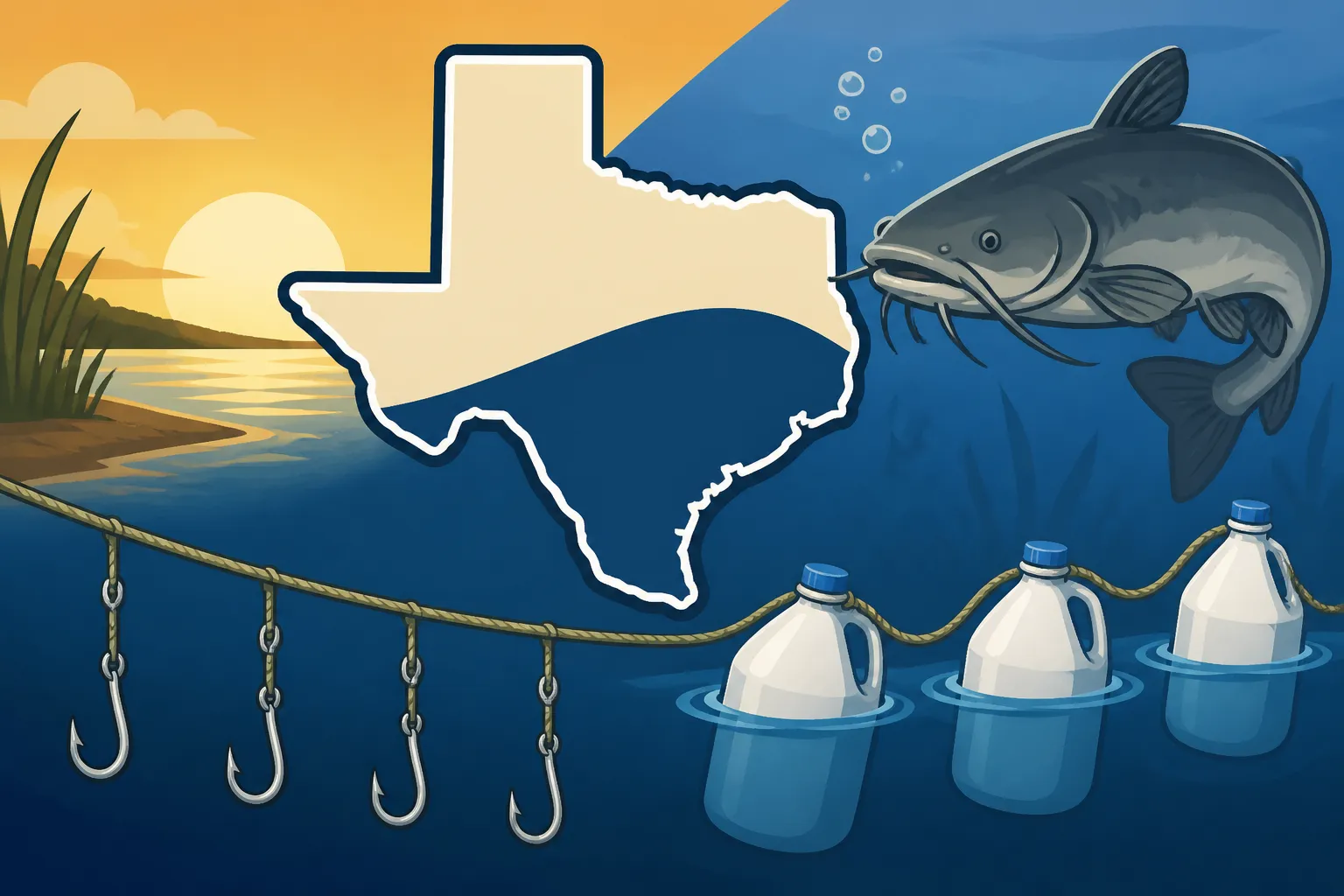
A trotline, in the simplest terms, is a fishing line stretched across a body of water, or anchored at both ends, from which numerous baited hooks are suspended at intervals. Unlike a rod and reel, where you're actively holding the gear, a trotline is set and left to fish passively, usually overnight. This method has been a staple in Texas fishing for generations, particularly in larger lakes and rivers where target species like catfish roam widely. Anglers often choose trotlines for their efficiency, allowing them to cover more water and increase their chances of a substantial catch without requiring constant attention. Imagine setting a trotline in a known catfish hole on Lake Livingston in the evening, then coming back at dawn to find several keepers waiting for you – it’s a time-honored approach for a reason.
While the convenience is a major draw, trotlines are also incredibly effective for certain species. Channel catfish, blue catfish, and flathead catfish are prime targets, as they are opportunistic feeders that will readily take baits left on a trotline. Freshwater drum are another species commonly caught this way. The line allows for a wide array of baits to be deployed simultaneously across a significant distance, mimicking a natural feeding ground and increasing the likelihood of attracting fish. For many, it's not just a fishing technique but a cultural practice passed down through families, connecting them to generations of Texas anglers who relied on these methods for sustenance and sport.
Key Regulations for Trotline Construction and Deployment
The Texas Parks and Wildlife Department has very specific guidelines for how trotlines must be constructed and where they can be set. These rules are crucial to prevent overfishing, protect other aquatic life, and ensure the safety of other recreational users of the water. First and foremost, you're looking at a limit of no more than 50 hooks on a single trotline. This isn't just a suggestion; it's a hard limit designed to manage harvest rates. Each hook must be spaced at least three feet apart, which helps prevent fish from becoming entangled with each other and reduces the chances of hooks snagging on debris or other lines. The mainline itself, the heavy cord to which the hooks are attached, can be made of various strong materials like nylon or polypropylene.
When it comes to placement, trotlines cannot be placed in public freshwaters closer than three feet from the surface of the water or closer than three feet from the bottom. This depth restriction is generally aimed at allowing boat traffic and other aquatic activities to proceed unimpeded, and to minimize interference with other fishing methods. However, in certain specifically designated freshwater areas, the trotline depth requirement might be waived, so it's always wise to check the local appendix for your chosen body of water. For saltwater, trotlines generally cannot be set in navigation channels or within 200 feet of a public boat ramp or fishing pier. Furthermore, if you're fishing near a dam, there are strict rules about how close you can set your gear. The "Texas Fishing License Requirements Explained" article offers more detailed information on overall licensing, but understanding these specific gear rules is paramount. Imagine accidentally placing your trotline too close to a popular boat ramp; not only could it snag a passing boat, but you'd also be in violation of regulations.
Proper Marking and Identification Requirements for Trotlines
Visibility and identification are critical aspects of trotline regulations in Texas. Every trotline, no matter how short or long, must be clearly marked. This usually means attaching a float or buoy to each end of the mainline. These floats need to be readily visible and must be solid white, yellow, or orange in color, and at least six inches in diameter or six inches in length. This ensures that other boaters, swimmers, and anglers can easily spot your line and avoid it, preventing accidents and tangles.
Beyond visibility, each trotline must also carry a gear tag. This tag is your line's official identification. It needs to be made of a durable, waterproof material, and legible information must be permanently affixed to it. This information includes your customer number (from your fishing license), or your name and address. The date the trotline was set must also be clearly marked on the tag. These tags are important for enforcement officers to identify the owner of the gear and ensure compliance with all regulations. If you're setting multiple trotlines, each one requires its own individual gear tag. You can find pre-made gear tags at many sporting goods stores or easily craft your own from durable plastic. Many anglers find it convenient to order waterproof tags or markers from online retailers like Amazon to ensure compliance. Failure to properly tag your trotline is a common violation and can result in fines and confiscation of your gear.
How Often Must You Check Your Trotline in Texas?
Once you've set your trotline, it’s not a “set it and forget it” situation. Texas law requires regular checks to ensure fish are not left on the line for extended periods, reducing spoilage and preventing unnecessary suffering. In freshwaters, trotlines must be checked at least once every 24 hours. This means if you set your line on Monday evening, you need to check it by Tuesday evening at the latest. For saltwater, the requirement is slightly more frequent: trotlines must be checked at least once every 36 hours. This might seem like a small difference, but it's important to keep track of, especially when planning multi-day fishing trips.
The rationale behind these checking frequencies is rooted in both ethical angling and conservation. Leaving fish on a line for too long not only compromises the quality of the meat but can also lead to the fish dying unnecessarily. Furthermore, non-target species that might be caught can be released alive if the line is checked promptly. Regular checking also allows you to re-bait hooks, clear any snags, and ensure your line is still properly marked and positioned. It’s an active responsibility that comes with the privilege of using passive fishing gear. Knowing the local "Texas Freshwater Fishing Regulations" and "Texas Saltwater Fishing Regulations" is vital to understanding the full context of these rules.
Navigating Texas Jugline Regulations
Juglines offer a different flavor of passive fishing compared to trotlines. They are popular for their mobility and the ability to cover vast stretches of water, often yielding impressive catches, particularly of large catfish. But with this flexibility comes a distinct set of rules that Texas anglers must adhere to.
What is a Jugline and Its Popularity?
A jugline is essentially a single fishing line attached to a buoyant device, often a plastic bottle, jug, or foam float. Unlike a trotline, which is anchored, a jugline is typically free-floating, carried by currents or wind across a body of water. Each jugline usually has one or more hooks suspended beneath it. This method is incredibly popular for targeting trophy catfish, especially blue and flathead catfish, in large Texas reservoirs like Lake Conroe or Richland Chambers. The main advantage of juglines is their mobility; they can drift into areas where fish are actively feeding, covering a wider range than a stationary trotline. Anglers can deploy a spread of juglines, each with different baits or depths, effectively scouting the water for active fish.
The "hunt" for juglines can be as exciting as the initial setup. Imagine putting out 20 juglines across a big lake, then spending the morning cruising around, spotting a bobbing jug, and reeling in a monster blue cat. It's an active form of passive fishing that appeals to many. They're also relatively simple to construct, making them accessible to many anglers. You can buy pre-made juglines, or with a few supplies from a tackle shop or a quick order from Amazon, you can easily make your own using common plastic jugs, sturdy line, and hooks. This DIY accessibility and effectiveness contribute to their widespread popularity across Texas.
Legal Limits on Jugline Quantity and Construction
Texas Parks and Wildlife has clear rules regarding the number of juglines an individual angler can deploy and how those juglines must be constructed. In freshwaters, an angler is generally limited to no more than 20 juglines. This ensures that an individual isn't over-harvesting or creating an excessive amount of gear in the water that could interfere with others. Each individual jugline can have no more than one hook attached to it. This single-hook rule is a major distinction from trotlines and is strictly enforced.
For saltwater, the rules can vary slightly depending on the specific bay or coastal area, but generally, the 20-jugline limit and single-hook per jugline rule still apply. The buoyant device itself must be made of a non-metallic material, like plastic or foam. You often see old milk jugs, soda bottles, or custom-made foam floats repurposed for this use. These materials are chosen because they are readily available, inexpensive, and generally do not pose environmental hazards if accidentally lost (though responsible retrieval is paramount). These rules, along with "Texas Trotline and Jugline Rules" which offers more context, are critical for maintaining a balanced and sustainable fishery. Understanding these specifics prevents unintentional violations, which are surprisingly common for new jugliners.
Marking and Retrieval Rules for Texas Juglines
Just like trotlines, juglines must be properly marked for identification and safety. Each individual jugline needs to have a gear tag firmly attached to its buoyant device. This tag must contain the same legible information as a trotline tag: your customer number (from your fishing license), or your name and address. This ensures that game wardens can identify the owner of the gear.
Beyond identification, juglines also have specific checking requirements. In freshwaters, all juglines must be checked at least once every 24 hours. For saltwater, this period extends to at least once every 36 hours. The reasons for these rules are identical to trotlines: to ensure fish are harvested humanely and in good condition, and to allow for the release of non-target species. After you're done fishing, all juglines must be removed from the water. Abandoned juglines are considered litter and can be detrimental to the environment, snagging on boat propellers, polluting waterways, and acting as ghost fishing gear that continues to catch and kill fish. Responsible anglers ensure all their gear, especially free-floating juglines, is retrieved at the end of their fishing session. This commitment to cleaning up is a fundamental part of good stewardship, keeping our beautiful Texas waters healthy for everyone.
Licensing and General Rules Affecting Trotlines and Juglines
Before you even think about setting a trotline or deploying a jugline, there's a fundamental requirement that applies to all recreational fishing in Texas: a valid fishing license. Ignoring this simple step can turn an otherwise legal fishing trip into a costly mistake.
Do You Need a License to Use Trotlines or Juglines?
Yes, absolutely. The use of trotlines and juglines for recreational fishing in Texas requires a valid Texas fishing license. There's no special "trotline license" or "jugline endorsement"; your standard fishing license covers these methods, as long as you adhere to all other gear-specific regulations. Whether you're casting a lure from the bank, dropping a line from a boat, or setting out passive gear, that little piece of paper (or digital image on your phone) is your ticket to legally harvest fish.
The type of license you need depends on where you plan to fish. If you're targeting freshwater species like catfish in the vast network of Texas lakes and rivers, a freshwater fishing license is sufficient. If your ambition takes you to the bays and coastal waters for saltwater species, then a saltwater fishing license or the required saltwater endorsement is a must. For the ultimate flexibility, many Texas anglers opt for the all-water fishing license, which covers both freshwater and saltwater fishing throughout the state. You can easily purchase your license online through the TPWD website, by phone, or in person at most sporting goods stores and many retail outlets. For detailed information on costs and types, check out the article "Texas Fishing License Cost for Residents and Nonresidents" or "How to Get a Texas Fishing License". Without a valid license, any fish you catch, regardless of the method, is considered illegally taken, and the penalties can be significant, as highlighted in "Penalties for Fishing Without a Texas License".
Species-Specific Regulations and Bag Limits
Just because you're using a trotline or jugline doesn't mean you're exempt from the established bag and length limits for various fish species in Texas. These regulations are designed to maintain healthy fish populations and ensure sustainable fishing for future generations. For example, if you're targeting blue catfish with your trotline on Lake Fork, you still must adhere to the specific limits for blue catfish in that reservoir – typically a 12-inch minimum length and a 25-fish daily bag limit, with specific exceptions for larger trophy fish. Similarly, catching a red drum on a jugline in Galveston Bay still means respecting the slot limit and daily bag limit for redfish.
It's critical for anglers using passive gear to be familiar with the "Texas Fish Bag and Length Limits" for the species they are targeting and the specific body of water they are fishing. These limits can vary not only by species but also by lake, river, or bay. Always consult the current Texas Parks and Wildlife Outdoor Annual, which is available online and in print, before you head out. This annual guide provides comprehensive details on specific regulations for "Texas Channel Catfish Length and Bag Limit," "Texas Blue Catfish Length and Bag Limit," and "Texas Flathead Catfish Minimum Length Limit," among many others. The responsibility to know and abide by these limits falls squarely on the angler, regardless of the fishing method employed.
Restricted Areas and Waterways
While trotlines and juglines are legal fishing methods in much of Texas, there are specific areas where their use is prohibited or restricted. These restrictions are often in place to protect sensitive habitats, ensure public safety, or prevent conflicts with other recreational activities. For instance, most state parks and public fishing areas, including many city and county park ponds, have rules against setting trotlines or juglines. These areas are typically high-use zones for bank fishing, swimming, and boating, and passive gear could pose a hazard or simply be considered unsightly.
Additionally, certain lakes, rivers, or specific sections of waterways may have special regulations prohibiting or limiting the use of these gears. For example, some smaller, highly managed lakes might ban them entirely, or certain rivers during specific fish runs might have restrictions. It's also generally prohibited to set trotlines or juglines in designated navigation channels, near commercial shipping lanes, or within a certain distance of major public access points like boat ramps and fishing piers. Before you even pack your gear, it is imperative to check the local regulations for the specific body of water where you intend to fish. A quick search on the TPWD website or a call to a local game warden's office can save you a lot of hassle and potential legal trouble. Ignorance of these local rules is not a valid defense if you're found in violation.
Avoiding Common Violations and Understanding Penalties
It's easy to get excited about the prospect of a big catch with trotlines or juglines, but overlooking the rules can quickly turn that excitement into a headache. Understanding common pitfalls and the potential consequences is crucial for any responsible angler.
Typical Mistakes Anglers Make with Passive Gear
Many violations related to trotlines and juglines aren't malicious but rather stem from a lack of awareness or simple oversight. One of the most common mistakes is improper tagging. Forgetting to attach a gear tag, or having one that's illegible or missing required information (like your customer number or current date), is a frequent citation. Imagine you've spent hours setting up your perfect trotline, only for a game warden to find an untagged line and confiscate it – that's a frustrating end to a fishing trip.
Another common error involves exceeding hook limits. Forgetting that a trotline can only have 50 hooks, or mistakenly putting more than one hook on a jugline, are easy traps to fall into if you're not meticulous. Additionally, not checking lines within the required timeframe (24 hours for freshwater, 36 for saltwater) is a regular violation. Life happens, and sometimes plans change, but the responsibility to check your lines remains. This often leads to fish spoiling on the line, which is not only wasteful but also an ethical concern. Finally, leaving lines unattended as litter is a significant problem. Anglers sometimes forget about a jugline or abandon a trotline when they're done, leaving behind ghost fishing gear that can harm wildlife and pollute our beautiful Texas waterways. These lines can pose a real hazard, sometimes even tangling boat props and causing dangerous situations.
Consequences of Non-Compliance
The penalties for violating Texas trotline and jugline regulations can range from irritating to severe. For minor infractions, like an improperly tagged line or a small number of excess hooks, you might face a warning or a relatively small fine. However, repeat offenses or more serious violations, such as fishing without a license (which is required for these methods, as discussed in "Do you need a license to run a trotline in Texas?"), can lead to substantial fines, confiscation of all your fishing gear, and even potential criminal charges.
The fines alone can quickly add up, easily costing hundreds of dollars per violation. Beyond the financial hit, having your fishing gear confiscated can be a real blow, especially if you've invested heavily in quality lines, hooks, and floats. In some cases, particularly for egregious or repeated offenses, you could even lose your fishing privileges for a period, meaning no more legal angling in Texas until that suspension is lifted. It's worth remembering that game wardens are dedicated to preserving our natural resources and ensuring fair play. They take these regulations seriously because they are vital for protecting fish populations and maintaining safe, enjoyable waterways for everyone. A quick refresher on "Penalties for Fishing Without a Texas License" would show you just how costly neglecting these rules can be.
Essential Gear and Best Practices for Responsible Passive Fishing
Successfully and responsibly deploying trotlines and juglines involves more than just understanding the rules; it also means having the right equipment and adopting an ethical approach to your angling.
Recommended Gear for Setting and Managing Lines
To get started with trotline and jugline fishing, you don't necessarily need a mountain of expensive gear, but having the right tools makes a huge difference in efficiency, safety, and compliance. For trotlines, you'll need a robust mainline – often a heavy-duty nylon or braided polypropylene rope – strong enough to handle multiple fish and the forces of the water. Swivels are essential to prevent individual hook lines from twisting, and appropriately sized hooks are critical for your target species; for example, large circle hooks are popular for big catfish. You'll also need secure anchors for each end of your trotline, typically heavy weights or tie-offs to sturdy bankside features. Buoys or floats for marking the ends are a must, ideally in bright, visible colors.
For juglines, the buoyant devices themselves are key – think sturdy plastic jugs, foam floats, or even purpose-built jugline floats. Each jugline will need a strong line, swivels, and a single hook. Don't forget those all-important gear tags for both methods; you can usually find durable, waterproof options at sporting goods stores or easily order them from online retailers like Amazon. Beyond the lines themselves, consider a heavy-duty pair of pliers or bolt cutters for managing hooks, stout gloves to protect your hands from sharp fins and hooks, and a reliable cooler filled with ice to keep your catch fresh. A sharp knife is also invaluable for cutting bait or freeing snags. Having a comprehensive setup not only makes the job easier but also helps you comply with regulations by ensuring your gear is properly assembled and marked.
Ethical Angling and Environmental Stewardship
Responsible angling goes far beyond simply following the letter of the law; it encompasses a commitment to ethical practices and environmental stewardship. When using trotlines and juglines, this means being mindful of the impact your methods have on the ecosystem and other users of the waterway. One key aspect is catch and release considerations. While trotlines and juglines are often used for harvesting, you might sometimes catch non-target species or fish that are undersized. Checking your lines regularly, as required by law, increases the chances that these fish can be safely released, minimizing bycatch mortality. Carrying a de-hooking tool can also aid in safely releasing fish.
Another crucial element is minimizing your environmental footprint. Always retrieve all your gear at the end of your fishing trip. Abandoned lines and jugs become dangerous litter, polluting the water and acting as "ghost fishing" devices that can continue to ensnare wildlife. If a line snags, make every effort to retrieve it, even if it means losing some hooks or bait. Proper disposal of old gear, line scraps, and bait packaging is also vital. Leaving fishing line on the bank or in the water poses a serious threat to birds, mammals, and other aquatic life. By taking the time to pack out everything you pack in, and being considerate of other anglers and the natural environment, you contribute to keeping Texas waters healthy and beautiful for everyone to enjoy. If you want to learn more about broader strategies for catching common species, articles like "How to Catch Catfish in Texas" offer great insights.
Texas Trotline vs. Jugline Regulations at a Glance
To help you quickly differentiate between the key rules for these two popular passive fishing methods, here's a handy comparison table. Remember, always consult the current TPWD Outdoor Annual for the most up-to-date regulations.
| Feature | Texas Trotline Regulations | Texas Jugline Regulations |
|---|---|---|
| Number of Hooks | Maximum 50 hooks per line | Maximum 1 hook per jugline |
| Hook Spacing | Hooks must be at least 3 feet apart | Not applicable (single hook per line) |
| Total Lines Allowed | No specific limit on number of trotlines (within reasonable use) | Maximum 20 juglines per angler (freshwater) |
| Depth Requirements | Fresh: No closer than 3 ft from surface or 3 ft from bottom | Not applicable (free-floating) |
| Anchoring | Must be anchored at both ends | Free-floating, attached to buoyant device |
| Buoyant Device | Floats required at each end (solid white, yellow, or orange, >= 6") | Buoyant device required for each jugline (non-metallic) |
| Gear Tag Required | Yes, on each line (customer number/name & address, date set) | Yes, on each jugline (customer number/name & address, date set) |
| Check Frequency | Fresh: Every 24 hours; Salt: Every 36 hours | Fresh: Every 24 hours; Salt: Every 36 hours |
| Retrieval | All lines must be removed when fishing ceases | All juglines must be removed when fishing ceases |
| Water Type | Freshwater & Saltwater (with specific area restrictions) | Freshwater & Saltwater (with specific area restrictions) |
Disclaimer
The information provided in this guide is intended for general informational purposes only and is subject to change. While we strive to provide accurate and up-to-date information, fishing regulations in Texas can be complex and are regularly updated by the Texas Parks and Wildlife Department. It is always the angler's responsibility to consult the most current official Texas Parks and Wildlife Outdoor Annual or contact the TPWD directly to ensure full compliance with all applicable laws and regulations before engaging in any fishing activities.