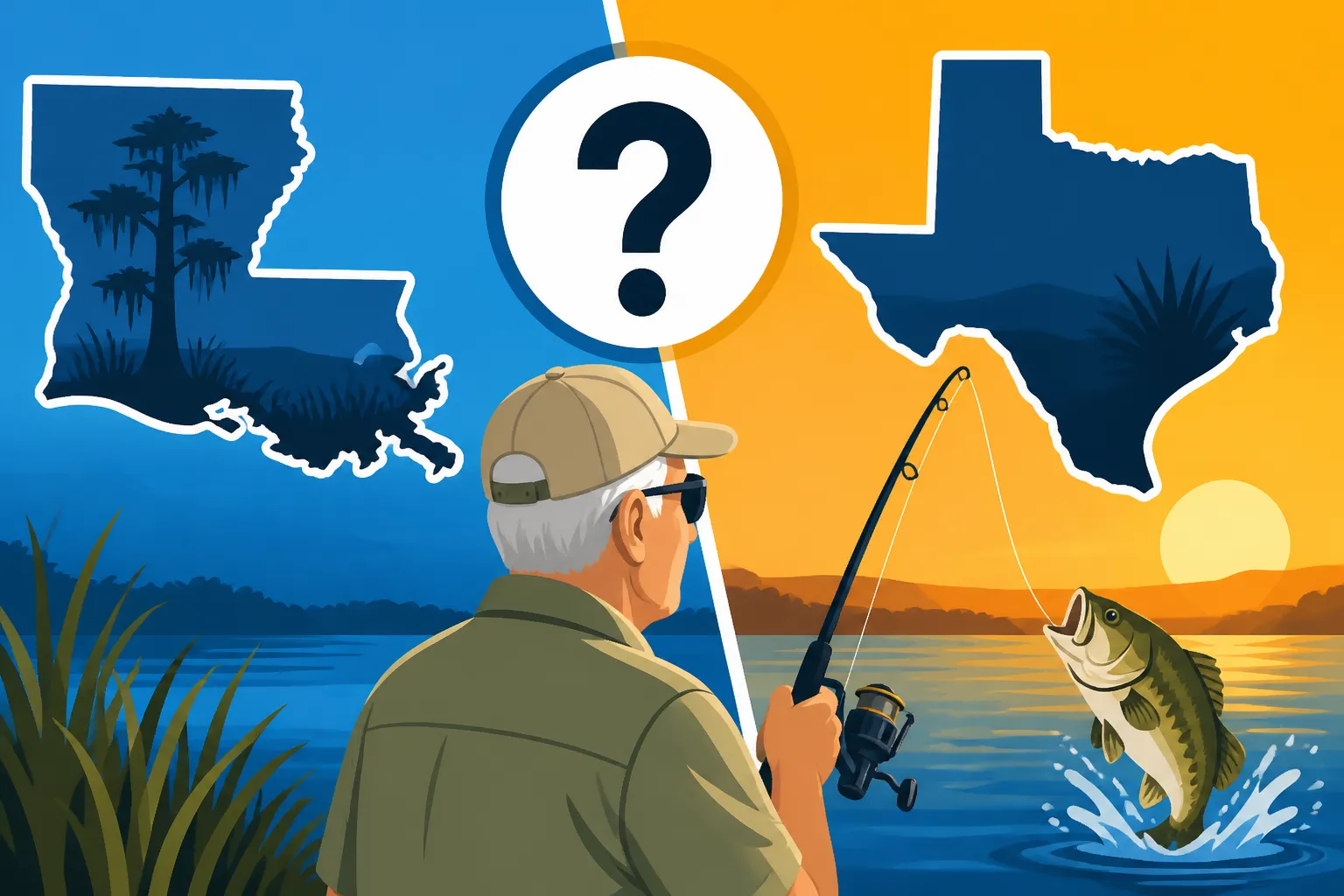
Do Louisiana seniors need a Texas license to fish Texas waters?
It’s a common scenario that brings so many folks to Texas for fishing: maybe you’ve got family here, or you’ve heard about our incredible bass lakes and Gulf Coast opportunities, and you’re packing your bags. But if you’re a senior from Louisiana, you might be scratching your head, wondering if your home state’s fishing license covers you once you cross the Sabine River or head to places like Toledo Bend. The rules can be surprisingly nuanced and, frankly, a bit confusing, so let's clear up exactly when a Louisiana senior needs to secure a Texas fishing license to enjoy our abundant waters.
Navigating the Waters: Understanding Fishing License Basics for Seniors
The world of fishing licenses often feels like a maze, especially when state lines are involved. For seniors, there are often special considerations, but these usually apply to residents of a particular state. When you're an out-of-state angler, even if you’re a senior, the rules shift considerably. It's not uncommon for folks to assume their senior status grants them universal privileges, but unfortunately, that's rarely the case across state lines.
The General Rule: Non-Resident Means Texas License
Let's cut right to the chase: as a general rule, if you are a resident of Louisiana and you want to fish in Texas waters, you will need a Texas fishing license. Your valid Louisiana senior fishing license, while fantastic for fishing back home, doesn't automatically grant you permission to cast a line in a Texas lake, river, or bay. This applies whether you're 65, 75, or 85 years young. Texas, like most states, requires non-residents to purchase a non-resident license to help fund its own conservation and fisheries management programs. It might feel a little redundant, especially if you rarely venture out of Louisiana, but that's how the system works to ensure everyone fishing is contributing to the health of the local ecosystem they're enjoying.
Think of it like driving: your Louisiana driver's license is valid in Texas, but if you wanted to become a Texas commercial truck driver, you'd need to go through Texas's licensing process. It's a different kind of permit for a different jurisdiction, even if you already have one from your home state. To understand all the general requirements, you might want to read our full guide on Texas Fishing License Requirements Explained.
Texas Resident Senior Exemptions and Discounts
Now, it’s easy to get confused because Texas does have specific rules for its own senior residents. If you happen to be a Texas resident who was born before January 1, 1931, you are actually exempt from needing a fishing license in Texas entirely. That's a pretty sweet deal for our longest-standing anglers! For Texas residents who are 65 years or older but were born after that date, they are eligible for a special, discounted "Senior Resident Fishing License." This license is much more affordable than the standard adult resident license, acknowledging their lifetime contributions to the state and promoting continued participation in fishing.
This distinction is key. The generous exemptions and discounts are specifically for Texas residents. As a Louisiana senior, you would not qualify for these particular Texas resident benefits. It's a common point of misunderstanding, and I've seen many anglers accidentally fall afoul of the regulations because they thought their age automatically granted them an exemption in any state. If you are a Texas resident, you can dive deeper into the specifics of the Texas Senior Fishing License Discount.
Louisiana Resident Senior License Overview
Back in Louisiana, once you turn 60, you become eligible for a senior fishing license. This license, offered by the Louisiana Department of Wildlife and Fisheries (LDWF), is typically a lifetime license at a greatly reduced cost, often for just a few dollars, or sometimes even free depending on various programs or veteran status. It’s a fantastic benefit for Louisiana residents, allowing them to fish their home state’s bountiful lakes, rivers, and coastal waters without worrying about annual renewals.
However, the validity of this license is strictly for Louisiana's jurisdictional waters. While it makes fishing convenient and affordable within Louisiana, it doesn't cross state lines. So, if you're holding your lifetime Louisiana senior license, remember it's your golden ticket for fishing in Louisiana, but a different ticket will be required for most adventures into Texas.
The Special Case of Reciprocal Border Waters
Alright, let's talk about the exceptions, because there are some specific instances where your Louisiana license might get you by in certain Texas waters. This is where the concept of "reciprocal agreements" comes into play, primarily along shared border lakes and rivers. These agreements are fantastic examples of states working together to make life easier for anglers who frequent these unique, shared bodies of water.
Toledo Bend Reservoir: A Unique Agreement
One of the most famous examples of a reciprocal agreement between Texas and Louisiana is Toledo Bend Reservoir. This massive lake, spanning both states, is a renowned bass fishing destination, and it would be an absolute nightmare for anglers if they needed to buy two licenses just to fish one lake! Recognizing this, both states have a special agreement in place.
Under this agreement, a Louisiana resident (including a Louisiana senior with their valid Louisiana license) can fish anywhere on Toledo Bend Reservoir, including the Texas portion, without needing a Texas fishing license. The same applies to Texas residents: a Texas license holder can fish the Louisiana side of Toledo Bend. This applies to the entire reservoir's main pool, including its tributaries up to the first road crossing immediately above the reservoir. This is incredibly convenient for everyone who fishes this incredible body of water, making it a truly seamless experience. Just remember, this specific agreement is only for Toledo Bend itself. Venture off into a nearby Texas creek or small lake, and the general rule applies again. For more details on this specific scenario, check out Texas-Louisiana Reciprocal Fishing License Rules or even Toledo Bend Reservoir Fishing Guide.
Sabine River and Caddo Lake Reciprocity
Beyond Toledo Bend, similar reciprocal agreements exist for other shared border waters, primarily the Sabine River and Caddo Lake.
- Sabine River: The Sabine River forms a significant portion of the border between Texas and Louisiana. Just like Toledo Bend, both states have agreed that residents with a valid fishing license from either Texas or Louisiana can fish the boundary waters of the Sabine River without needing a license from the other state. This means if you're a Louisiana senior, your Louisiana license will cover you while fishing the main stem of the Sabine River where it forms the border.
- Caddo Lake: This beautiful, cypress-studded lake is another shared treasure. Anglers with a valid Louisiana fishing license (including Louisiana seniors) can legally fish the Texas side of Caddo Lake, and vice-versa for Texas residents. It’s another great example of how these agreements smooth over potential bureaucratic headaches for cross-border anglers.
These specific reciprocal agreements are designed to promote ease of access and enjoyment for anglers on these particular bodies of water. They acknowledge the unique nature of shared resources and prevent anglers from being forced to buy multiple licenses for what is essentially one continuous fishing experience.
What "Border Water" Really Means
It's crucial to understand the exact scope of these reciprocal agreements. When we talk about "border waters," we're generally referring to the main channel or basin of the lake or river that forms the official boundary between the two states. This does not typically extend far up into tributaries, bayous, or smaller lakes that are entirely within one state's jurisdiction, even if they're very close to the border.
For instance, if you're fishing Toledo Bend with your Louisiana license, you're good. But if you decide to take a detour into a small Texas lake like Brandy Branch Reservoir, which feeds into the Sabine River system but is entirely within Texas, your Louisiana license won't cut it. You'd need a Texas non-resident license for that. The key takeaway is that reciprocity is specific and limited. Don't assume it applies to all waters in the vicinity of the border. Always double-check the exact regulations for the specific body of water you plan to fish. When in doubt, it's always safer to assume you need a Texas license if you are not explicitly on a defined reciprocal body of water.
When a Texas Non-Resident License is Absolutely Necessary
For the vast majority of your fishing adventures in Texas, if you're a Louisiana senior, you're going to need a non-resident Texas fishing license. There are no two ways about it. This isn't meant to be a barrier, but rather a standard way for states to manage their natural resources and ensure that everyone enjoying them contributes to their upkeep.
Exploring Texas's Inland Lakes and Rivers
Texas is home to an incredible array of freshwater fishing opportunities, from the sprawling, trophy bass-laden waters of Lake Fork and Sam Rayburn, to the diverse fisheries of the Brazos and Colorado rivers, and countless smaller lakes and ponds. If you plan to visit any of these iconic spots, or even a smaller, lesser-known fishing hole that is entirely within Texas state lines, your Louisiana license will not be valid.
Let's say you've heard whispers about the monster catfish in Lake Livingston or the excellent crappie fishing at Lake Palestine. Or perhaps you're visiting grandkids near Dallas and want to try your luck at Lake Grapevine. In all these scenarios, you'll need to purchase a Texas non-resident fishing license. There are no age-based exemptions for non-residents, so the non-resident license cost will apply regardless of your senior status. These licenses help fund the stocking programs, habitat restoration, and enforcement efforts that keep these fisheries thriving, ensuring future generations (and visiting seniors!) can enjoy them too. You can find more specific details on Texas Freshwater Fishing Regulations to prepare for your trip.
Fishing the Texas Gulf Coast
The Texas Gulf Coast is a world-class fishing destination, offering incredible opportunities for species like redfish, speckled trout, flounder, and much more. From the jetties of Galveston and Port Aransas, to the wade-fishing flats of Matagorda Bay, and the offshore bounty beyond the passes, the saltwater fishing here is legendary. If your plans include targeting these coastal species, you will absolutely need a Texas non-resident saltwater fishing license, which includes a saltwater endorsement. Your Louisiana license, even if it covers saltwater fishing in Louisiana, does not extend to Texas coastal waters.
The Texas Parks and Wildlife Department (TPWD) manages these vital coastal fisheries, and the revenue from non-resident licenses plays a critical role in their conservation efforts, including scientific research, oyster reef protection, and monitoring fish populations. So, if you're dreaming of a Texas redfish trip, make sure you've got the proper Texas license in hand before you hit the bays or the surf. Our guide on Texas Saltwater Fishing Regulations offers a wealth of information for coastal anglers.
The Cost and Convenience of a Non-Resident License
Purchasing a Texas non-resident fishing license is a straightforward process, and thankfully, there are a few options. While it might be a bit more expensive than your Louisiana senior license, it grants you legal access to the vast majority of Texas's incredible fisheries.
Here’s a look at some common non-resident license options:
| License Type | Description |
|---|---|
| Non-Resident Annual All-Water | This is your best bet for a full year of fishing across all Texas public freshwater and saltwater. It covers everything except certain federal permits or specific endorsement requirements not covered by the basic fishing package. |
| Non-Resident Annual Freshwater | If you're only planning on fishing Texas's inland lakes and rivers (e.g., chasing bass on Lake Fork), this license covers you specifically for freshwater species. |
| Non-Resident Annual Saltwater | For those solely focused on the Gulf Coast (e.g., speckled trout in Galveston Bay), this license covers saltwater species. It includes the mandatory saltwater endorsement. |
| Non-Resident Special 1-Day | This is a fantastic option if you're just passing through or only planning one or two days of fishing in Texas. It's more affordable and perfect for short visits. You can purchase multiple 1-day licenses if your trip extends, though an annual might be cheaper. |
You can find current pricing and detailed information on Texas Fishing License Cost for Residents and Nonresidents or specifically for your situation, Texas Nonresident Fishing License Cost. You'll find that for a short trip, a Texas One-Day Fishing License for Visitors can be a very economical choice.
Purchasing is simple: you can buy them online through the Texas Parks and Wildlife Department (TPWD) website, over the phone, or in person at various license retailers across the state, including many sporting goods stores like Academy Sports + Outdoors or even some Walmarts. It's a fairly painless process, so there's really no excuse to risk fishing without one.
Avoiding Fines and Ensuring a Smooth Fishing Trip
Nobody wants their fishing trip ruined by a run-in with a game warden, especially over something as avoidable as a license issue. Understanding the rules and being prepared is paramount for a stress-free experience on the water.
The Importance of Carrying Your License
Once you've secured your Texas non-resident fishing license, it’s absolutely essential to have it with you while you're fishing. This isn't just a suggestion; it's a legal requirement. Texas game wardens have the authority to ask to see your license at any time, and not being able to produce it can lead to a citation and a fine. You don't want to explain your situation from the middle of a lake or a remote fishing spot!
Whether it's a physical copy, or a digital version on your phone via the official Outdoor Annual app, make sure it's accessible. Many anglers keep their paper license laminated in their tackle box or wallet, while others prefer the convenience of the digital version, which is perfectly legal in Texas. Just ensure your phone is charged!
Where to Purchase a Texas Non-Resident License
As mentioned, purchasing a Texas non-resident license is quite easy. You have a few main avenues:
- Online: The Texas Parks and Wildlife Department (TPWD) website is the most convenient place. You can buy your license from the comfort of your home before you even pack your bags. Print it out or save it to your phone.
- By Phone: You can call the TPWD licensing customer service line to purchase a license.
- In Person: Most sporting goods stores (like Academy Sports + Outdoors or Bass Pro Shops), many larger retailers (like Walmart), and even some independent bait and tackle shops across Texas are authorized license vendors. This can be handy if you forgot to buy it online or decide last-minute to fish in Texas.
It’s always a good idea to buy it before you head out to your fishing spot, as cellular service can be spotty in some remote areas, making an online purchase impossible once you're there. Don't risk a Penalties for Fishing Without a Texas License just for convenience!
Common Misconceptions and What to Double-Check
Let's bust a couple of persistent myths and emphasize key checks:
- "My Louisiana guide said I don't need one!" While a guide on Toledo Bend might be correct, don't assume that applies everywhere. Always verify information yourself, especially when crossing state lines. A reputable Texas guide will always advise you correctly on Texas license requirements.
- "I'm only fishing from the bank/pier." License requirements in Texas generally apply regardless of whether you're fishing from a boat, pier, or the bank. There are very few exemptions for fishing location itself.
- "I'm fishing on private property." If you are fishing on private property, and it is a wholly contained, private water body (meaning it has no inlet or outlet to public waters), you might not need a license. However, if that pond or lake connects to a public waterway, or if you're fishing a river that flows through private land, you absolutely need a license. When in doubt, get the license.
- Always check the most current regulations: Fishing laws can change, albeit usually not dramatically year to year for basic license requirements. However, bag limits, length limits, and specific species regulations do change more frequently. Always check the current Texas Outdoor Annual, available online and often in print at license vendors, for the most up-to-date rules for your target species and fishing location.
Ultimately, while the special reciprocal agreements for border waters like Toledo Bend, Sabine River, and Caddo Lake are a fantastic convenience for Louisiana seniors, the general rule holds true: if you're fishing anywhere else in Texas, your Louisiana license won't cut it. Investing in a Texas non-resident fishing license ensures your trip is legal, worry-free, and contributes to the fantastic fisheries we have here in the Lone Star State. You can even find great tackle and gear, or research various fishing techniques, on platforms like Amazon to prepare for your Texas adventure, making sure you're geared up and ready to go.
Disclaimer
This guide is intended for informational purposes only and does not constitute legal advice. Fishing regulations can change, and it is the responsibility of each individual angler to be aware of and comply with all current Texas Parks and Wildlife Department (TPWD) regulations. Always consult the official TPWD Outdoor Annual or contact TPWD directly for the most up-to-date and accurate information before fishing.