Texas-Louisiana Reciprocal Fishing License Rules
Navigating fishing regulations can feel like a maze, especially when you're casting your line in waters that straddle state lines. For those of us who love to chase fish on both sides of the Texas-Louisiana border, the question of which license you need can be incredibly confusing. This comprehensive guide will untangle the reciprocal fishing license rules between Texas and Louisiana, helping you understand exactly where and how your single state license can keep you legal and enjoying your time on the water.
Understanding Reciprocal Fishing Agreements Between Texas and Louisiana
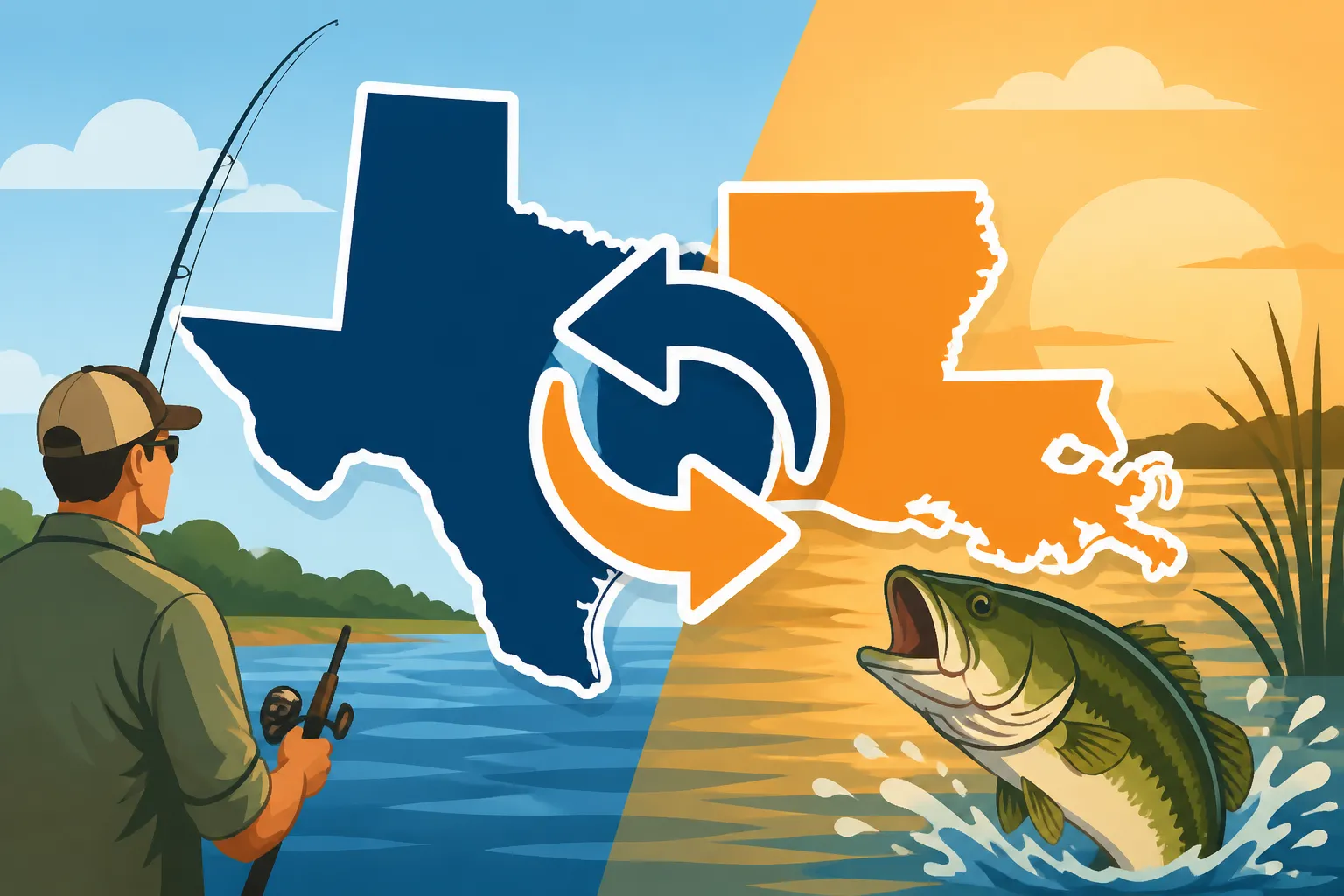
When you look at a map of Texas and Louisiana, you'll immediately notice the intricate border, especially along significant waterways. These aren't just lines on a map for us anglers; they represent a unique challenge and opportunity. Without special agreements, fishing in a lake or river that's partly in Texas and partly in Louisiana would mean needing two separate fishing licenses, which can be both costly and a hassle to keep track of. Thankfully, both states recognize this dilemma and have established reciprocal agreements.
The Logic Behind Reciprocity
The core idea behind a reciprocal agreement is simple: if you hold a valid fishing license from either Texas or Louisiana, that license is recognized as valid in certain shared border waters, regardless of which side of the actual state line you're fishing on. It's a pragmatic solution designed to promote recreational fishing and reduce bureaucratic hurdles for residents of both states. Imagine fishing the vast expanse of Toledo Bend Reservoir – it’s literally split down the middle by the state line. Without reciprocity, one cast could be legal, and the next, just a few feet away, could land you in violation if you only held one state's license. These agreements prevent that kind of absurdity, letting you focus on the fish, not the GPS coordinates of the invisible border.
General Conditions for Reciprocal Licenses
While the concept is straightforward, the execution has its specific conditions. Generally, these agreements apply to residents of either state who hold a valid recreational fishing license. This usually means your standard annual fishing license, not necessarily a temporary or specialty permit, although some specific conditions might apply. The most crucial detail is that this reciprocity only applies to the officially designated shared border waters. You can't just take your Texas license to any lake in central Louisiana and expect it to be valid, nor vice versa. The spirit of the agreement is strictly for those specific bodies of water that literally lie within both states' jurisdictions. Always remember that while your license might be valid across the border in these specific areas, you are still subject to the bag and length limits and other specific regulations of the state whose waters you are physically fishing in at that moment. It's a tricky balance, but one we'll dive into more deeply.
Toledo Bend Reservoir: The Jewel of Border Lakes
Toledo Bend Reservoir isn't just a border lake; it's a massive, sprawling body of water that's become a legendary fishing destination for bass anglers across the country. It perfectly embodies the need for and the benefits of a reciprocal fishing license agreement between Texas and Louisiana. This 185,000-acre lake is often cited as a prime example of successful fisheries management and cross-state cooperation.
Specific Licensing for Toledo Bend
For many anglers, Toledo Bend is the first place that comes to mind when discussing Texas-Louisiana reciprocal licenses. If you possess a valid recreational fishing license from either Texas or Louisiana, you are legally permitted to fish anywhere on the main body of Toledo Bend Reservoir, from bank to bank and dam to upstream limits. This includes all its coves, creeks, and tributaries up to the point where they leave the main reservoir. This means if you're a Texas resident with a current Texas fishing license, you can fish the Louisiana side of Toledo Bend without needing a Louisiana license, and the same goes for Louisiana residents fishing the Texas side. It simplifies things immensely, allowing you to chase those lunker bass wherever they might be hiding. If you're wondering about the specific requirements for your home state's license, you might want to read our guide on Texas Fishing License Requirements Explained.
Where Your License is Valid on Toledo Bend
It's important to visualize this correctly. The reciprocal agreement for Toledo Bend covers the entire main reservoir. This isn't just a narrow strip along the border; it's the whole enchilada. So, if you launch your boat from a marina on the Texas side near Hemphill and decide to fish a cove deep into Louisiana territory, your Texas license has you covered. Conversely, a Louisiana angler launching from the Many area can head over to the Texas side near Burkeville and fish legally with their Louisiana license.
However, there's a subtle but critical caveat. This reciprocity generally applies to the main body of the reservoir itself. If you decide to pull your boat out of the water on the Louisiana side, drive a few miles inland, and launch into a different, exclusively Louisiana-owned lake or river, your Texas license will not be valid there. The same applies in reverse for a Louisiana license holder moving to an inland Texas lake. The agreement is truly specific to the shared waters. You can check Amazon for portable GPS devices that can help you understand the precise boundaries if you're ever in doubt, though for Toledo Bend, the main reservoir is quite clearly covered.
Key Regulations to Remember on Toledo Bend
Even with a reciprocal license, you’re not free from regulations. On Toledo Bend, you are bound by the fishing laws and regulations of the state in which you are physically fishing. This is where it gets a little tricky. Let’s say you’re a Texas resident fishing on the Louisiana side of the reservoir. While your Texas license allows you to be there, you must adhere to Louisiana's specific bag and length limits for the species you're targeting. If Louisiana has a different slot limit for largemouth bass or crappie than Texas does, you must follow Louisiana's rules when on their side.
This requires anglers to be well-versed in both states' regulations for Toledo Bend. The good news is that for frequently targeted species like largemouth bass, speckled trout, and redfish, Texas and Louisiana often have similar or identical regulations on these shared waters to avoid undue confusion. Still, it’s always best practice to double-check the latest guidelines from both the Texas Parks and Wildlife Department (TPWD) and the Louisiana Department of Wildlife and Fisheries (LDWF) before you head out. You can find detailed information on species-specific rules in our Texas Largemouth Bass Length Limits guide or Texas Crappie Bag Limits guide, but remember to compare them with Louisiana's rules for Toledo Bend.
Sabine River and Sabine Lake: Coastal Border Waters
Moving south, the Sabine River and Sabine Lake form another significant part of the Texas-Louisiana border, extending all the way to the Gulf of Mexico. This is a critical area for both freshwater and saltwater species, and the reciprocal agreement here is just as important, though with its own unique characteristics.
Licensing Rules for the Sabine System
Similar to Toledo Bend, if you have a valid Texas or Louisiana fishing license, you can legally fish the shared portions of the Sabine River and Sabine Lake. This means any part of the river that forms the boundary between the two states, and the entirety of Sabine Lake itself, is fair game with either state's license. This reciprocal agreement is a huge benefit for coastal anglers, particularly those targeting popular species like redfish and speckled trout in Sabine Lake, or catfish and white bass further up the river.
However, the "shared portion" is key. Once the Sabine River veers entirely into one state or the other, the reciprocity ends. For instance, if you're a Louisiana resident fishing the Sabine River with your Louisiana license, and you venture upstream past the officially designated border waters into a section that is solely within Texas, you would then need a Texas license. It’s crucial to know your geography when fishing these areas, especially if you plan to explore tributaries or smaller creeks feeding into the main river or lake.
Navigating the Sabine's Unique Geography
The Sabine system presents a mix of freshwater and saltwater environments, offering diverse fishing opportunities. From the bayous and marshlands around Sabine Lake to the more riverine stretches upstream, the habitat changes significantly. This means anglers need to be mindful of both where they are geographically and the type of fishing they're doing.
For saltwater anglers in Sabine Lake, the reciprocal license covers the entire lake, which is fantastic for targeting flounder, redfish, and trout. Just like Toledo Bend, however, you must adhere to the bag and length limits of the state whose physical waters you are fishing. For example, Texas Redfish Size and Bag Limits might differ slightly from Louisiana's, so pay attention to where your cast lands. Many anglers will find themselves moving back and forth across the invisible line without even realizing it, making the reciprocal license absolutely essential. Checking real-time conditions and local advisories from both TPWD and LDWF is always a smart move before you head out, especially for coastal fishing which can be heavily influenced by tides and weather. If you're gearing up for a trip, finding good quality gear, from specialized rods to bait, can often start with a quick search on Amazon.
Caddo Lake: East Texas's Cypress-Lined Gem
Caddo Lake, a truly unique and mystical waterway, also shares its waters between Texas and Louisiana. Known for its labyrinthine cypress swamps, Spanish moss, and incredible natural beauty, it's a bucket-list destination for many anglers, especially those seeking largemouth bass and crappie among the ancient trees.
Caddo Lake's Unique Reciprocity
Similar to Toledo Bend and the Sabine system, a valid fishing license from either Texas or Louisiana allows you to fish anywhere on the main body of Caddo Lake. This includes all of its intricate sloughs, bayous, and timbered areas that comprise the shared border waters. This is a blessing for anglers, as navigating Caddo's maze-like structure would be even more challenging if you constantly had to worry about crossing an invisible state line without the proper licensing.
This reciprocity extends to the lake's tributaries that form the actual boundary. However, like other agreements, this doesn't mean your Texas license is suddenly valid in solely Louisiana bayous far from the main lake, or vice versa. The principle remains: shared water, shared license validity. If you're planning a trip to this unique lake, understanding Texas Freshwater Fishing Regulations will be crucial, but remember to cross-reference with Louisiana's specific Caddo Lake rules for the area you plan to fish.
Special Considerations for Caddo Lake Anglers
Caddo Lake, due to its complex and often shallow nature, presents some special considerations. Navigation can be tricky, even for experienced boaters. The reciprocal license removes one layer of complexity, but you still need to be aware of other regulations. Waterfowl hunting seasons, for example, might vary between the Texas and Louisiana sides, impacting access to certain areas. Also, conservation efforts are vital in such a delicate ecosystem, so respecting all signage and local guidelines is paramount.
When fishing for species like largemouth bass or crappie, ensure you know the bag and length limits for the state you are actively fishing in. For instance, Louisiana might have a slightly different crappie limit than Texas. Local bait shops and guides are often excellent resources for the most up-to-date information on species-specific rules for the lake. Before heading out, many anglers like to stock up on essentials, checking Amazon for tackle boxes, lures, and line, which can be invaluable when trying to match the specific patterns of Caddo Lake fish.
Who Can Use a Reciprocal License and Why It Matters
Understanding who these reciprocal agreements are designed for is just as important as knowing where they apply. These aren't blanket exemptions for everyone, everywhere. They're specific tools designed to make fishing more accessible for certain groups of anglers in defined areas.
Residents vs. Non-Residents on Border Waters
The primary beneficiaries of these reciprocal agreements are residents of Texas and Louisiana. If you are a Texas resident with a valid Texas resident fishing license, you can fish the shared waters of Toledo Bend, the Sabine River/Lake, and Caddo Lake without purchasing a Louisiana license. The same holds true for Louisiana residents. This makes perfect sense; these agreements are designed to ease the burden on local anglers who live near these border areas and frequently fish both sides.
What about non-residents of either state? Let's say you're visiting from Oklahoma or Arkansas. If you purchase a Texas Nonresident Fishing License Cost, that license will be recognized as valid on the Louisiana side of the reciprocal waters. Likewise, if you purchase a Louisiana non-resident license, it will be valid on the Texas side of those same shared waters. Essentially, your valid license, regardless of whether it's a resident or non-resident type, is recognized by the other state for those specific shared waters only. However, if you are a non-resident and plan to fish extensively in both states, outside of these reciprocal waters, you'd still need a full license from each state you intend to fish.
Benefits for Frequent Cross-State Anglers
For those of us who live near the border or simply love exploring the diverse fisheries that Texas and Louisiana offer, these reciprocal agreements are invaluable. They save money and reduce administrative hassle. Instead of buying two annual licenses, you only need one, assuming your fishing is confined to these specific shared areas, or you choose to obtain an Texas All-Water Fishing License Explained if you plan to fish various Texas waters.
Consider a scenario where a Texan lives just a short drive from Toledo Bend. Without the reciprocal agreement, every time they wanted to explore the vast upper reaches of the reservoir that might technically be in Louisiana, they'd need a Louisiana license. This would significantly limit their fishing grounds or double their expenses. The agreement removes this barrier, allowing anglers to follow the fish, explore new spots, and fully enjoy the entire body of water without worrying about state lines. It fosters a sense of unity among anglers from both states, focusing on the shared resource rather than arbitrary boundaries.
| Shared Waterway | Texas License Valid in LA Side | Louisiana License Valid in TX Side | Primary Species | Key Regulation Reminder |
|---|---|---|---|---|
| Toledo Bend Reservoir | Yes | Yes | Largemouth Bass, Crappie, Catfish, Striped Bass | Follow local state's bag/length limits where physically fishing. |
| Sabine River | Yes (shared border segments) | Yes (shared border segments) | Catfish, White Bass (upper); Redfish, Trout (lower) | Reciprocity ends where river leaves shared border. |
| Sabine Lake | Yes | Yes | Redfish, Speckled Trout, Flounder, Black Drum | Follow local state's bag/length limits. |
| Caddo Lake | Yes | Yes | Largemouth Bass, Crappie, Catfish, Sunfish | Follow local state's bag/length limits, mind navigation. |
Limitations and Exceptions: What Reciprocal Doesn't Cover
While reciprocal agreements are fantastic for shared waters, it's a big mistake to assume they cover everything. These agreements have very clear boundaries, and stepping outside them can lead to unexpected fines or legal trouble. It's crucial to understand these limitations to ensure you're always fishing legally.
Fishing Outside Designated Reciprocal Waters
This is perhaps the most important limitation to grasp. Your Texas fishing license only allows you to fish on the Louisiana side of Toledo Bend Reservoir, the Sabine River (shared border segments), and Sabine Lake, and Caddo Lake. It does not grant you permission to fish in any other body of water located entirely within Louisiana's borders. The same applies in reverse for a Louisiana license.
For example, if you finish a day of fishing on Toledo Bend and then decide to drive to Lake Bistineau, which is entirely in Louisiana, your Texas license won't cut it. You'd need a valid Louisiana fishing license for that. The reciprocal agreement is not a universal pass; it's a specific agreement for specific, shared waterways. Always confirm the exact geographic scope of the reciprocal agreement if you're venturing beyond the well-known shared lakes. This is where understanding Texas Fishing License Cost for Residents and Nonresidents comes in handy, as you might need to purchase a non-resident license for the other state if you plan to fish more broadly.
State-Specific Endorsements and Stamps
Another critical point: reciprocal agreements generally cover the base recreational fishing license. They do not automatically extend to state-specific endorsements, stamps, or special permits that might be required in either Texas or Louisiana. For instance, Texas requires a Texas Saltwater Endorsement Explained for fishing in saltwater. If you're a Louisiana resident fishing the Texas side of Sabine Lake, even though your Louisiana license is valid for the reciprocal agreement, you might still need to comply with specific Texas endorsements if they apply to the species or gear you're using.
While both states often try to harmonize these requirements for shared waters, there can be nuances. For example, if Texas implemented a special tag requirement for a certain trophy fish, even if you're a Louisiana angler legally fishing on the Texas side of Toledo Bend, you might still need to acquire that specific Texas tag. Always check the very latest regulations for both states, focusing on any special endorsements beyond the base license, especially for saltwater fishing. You can often check Amazon for specific fishing maps that detail these different zones and requirements.
Harvest Limits and Size Restrictions
We touched on this earlier, but it bears repeating: while your license might be valid across the border on reciprocal waters, the harvest regulations (bag limits, length limits, seasons) are determined by the state whose physical waters you are fishing in. This means you need to be aware of both states' rules for the fish you're targeting.
Imagine you're fishing for speckled trout on Sabine Lake. The Texas regulations for speckled trout might be slightly different from Louisiana's. If you catch a fish on the Texas side, you follow Texas's limits. If your next cast is technically on the Louisiana side, you'd follow Louisiana's limits. This can be challenging, especially in open waters where the state line is invisible. Many anglers will err on the side of caution and follow the stricter of the two states' regulations when fishing in a reciprocal zone to ensure they're always compliant. Knowing your Texas Fish Bag and Length Limits is a good start, but be sure to compare them to Louisiana's specific rules for these border areas. This dual-regulation understanding is a key part of fishing these incredible shared waterways responsibly.
Enforcement, Penalties, and Staying Compliant
It's one thing to understand the rules on paper, and another to be prepared for real-world scenarios on the water. Game wardens and enforcement officers from both Texas and Louisiana patrol these shared waterways, and they are well-versed in the reciprocal agreements. Ignoring regulations, even unknowingly, can lead to serious consequences.
Wardens on Shared Waters
Officers from both Texas Parks and Wildlife Department (TPWD) and the Louisiana Department of Wildlife and Fisheries (LDWF) regularly patrol Toledo Bend, the Sabine River/Lake, and Caddo Lake. They have jurisdiction within their respective states' waters, but they also cooperate extensively, especially on these border areas. This means a Texas game warden can check your license and compliance even if you're a Louisiana resident fishing on the Texas side of Toledo Bend. They will expect you to understand the regulations of the state you are fishing in at that moment.
These officers are often the best resource if you have questions while on the water. They are there to enforce regulations but also to educate and ensure the safety of anglers and the health of the fishery. Being polite, cooperative, and having your license readily accessible (either a physical copy or via a mobile app) will make any interaction smooth and pleasant. Don't forget, if you ever lose your physical license, our guide on How to replace a lost Texas fishing license can help you get back on track quickly.
Consequences of Non-Compliance
Fishing without a valid license, or failing to adhere to bag and length limits in the state you're fishing, can result in significant penalties. These can range from hefty fines to the confiscation of your gear, and potentially even criminal charges in more severe cases. A common scenario is catching an "oversized" fish that is legal in one state but not the other, and keeping it while in the waters of the state where it's illegal. Even if you have a valid reciprocal license, violating these specific regulations is still a violation.
The monetary fines for fishing without a license or violating limits can quickly add up, easily surpassing the cost of an annual license from both states. Beyond the financial impact, there's the possibility of losing your fishing privileges, which for passionate anglers, can be an even tougher pill to swallow. Our article on Penalties for Fishing Without a Texas License details just how serious these infractions can be. It's simply not worth the risk to disregard the rules.
Tips for Ensuring You're Legal
To ensure you're always compliant and can enjoy your fishing trip without stress, here are a few practical tips:
- Always Carry Your Valid License: Whether it's a physical card or accessible on your phone through an official app, make sure your license is current and easy to produce.
- Know the Shared Waters: Be clear on which specific bodies of water are covered by the reciprocal agreement. If you're going to fish anywhere else, get the appropriate license.
- Check Both States' Regulations: Before every trip to a reciprocal water body, quickly review the latest fishing regulations for both Texas and Louisiana. Pay close attention to bag limits, length limits, and any seasonal closures for the species you intend to target. Websites for TPWD and LDWF are your best friends here.
- Err on the Side of Caution: If there's any doubt about a specific regulation while on the water, always choose the more conservative or stricter option. It's better to release a fish than to face a fine.
- Utilize Technology: Download the official TPWD and LDWF apps if available. They often contain digital copies of your license and updated regulation handbooks, making it easier to reference rules on the go. You can even check Amazon for specific fishing maps or fish identification guides that might help.
By taking these steps, you can confidently enjoy the incredible fishing opportunities that the shared waters of Texas and Louisiana offer, knowing you're always on the right side of the law.
Disclaimer
Please note that fishing regulations can change. While every effort has been made to provide accurate and up-to-date information, it is always the angler's responsibility to consult the latest official regulations published by the Texas Parks and Wildlife Department (TPWD) and the Louisiana Department of Wildlife and Fisheries (LDWF) before fishing. This guide is for informational purposes only and should not be considered legal advice.