Texas Alligator Gar Size and Growth
There’s something about the sheer size of an alligator gar that both fascinates and intimidates anglers across Texas. Many folks head out hoping to encounter one of these ancient giants, only to wonder, "Just how big do these things get?" It's a valid question, because while you might reel in a 3-foot gar in some rivers, others hold true monsters that dwarf a full-grown person. This comprehensive guide will dive deep into the remarkable size and growth patterns of the Texas alligator gar, helping you understand what makes them such legendary freshwater fish and what you might expect when chasing these incredible creatures.
Understanding the Alligator Gar: A Texas Giant
The alligator gar is a fish that truly commands respect. With its distinctive, reptilian head, rows of sharp teeth, and armored scales, it looks like something left over from the dinosaur age – and in many ways, it is. These fish have been around for millions of years, largely unchanged, patrolling the slow-moving waters of Texas rivers and lakes. Their imposing appearance and potential for immense size are what make them such a captivating target for many anglers, but also the source of many misconceptions.
The Ancient Predator's Impressive Stature
Imagine a fish that can grow longer than a pickup truck bed and weigh more than a professional football player. That's the reality of an alligator gar. They are truly one of the largest freshwater fish in North America, and Texas is particularly known for producing some of the biggest specimens. We're not talking about your average bass here; these are apex predators that can dominate their ecosystem. Their sheer length, often accompanied by considerable girth, is a testament to their longevity and their position at the top of the food chain. It's not just about length, either; a large gar possesses incredible power, a thick hide, and a prehistoric resilience that makes every encounter memorable.
Why Their Size Captivates Anglers
For many anglers, the pursuit of an alligator gar isn't just fishing; it's an adventure into the wild, a quest for a truly magnificent trophy. The challenge of hooking and landing a fish that can easily be twice your weight is an adrenaline rush unlike any other. There's a certain primal draw to these beasts. Stories of giant gar caught in remote bayous or sprawling reservoirs fuel the imagination, making every bent rod a potential encounter with a living legend. Plus, the sheer photographic potential of posing with a gar that rivals your height is a badge of honor in the fishing community. It's a testament to the wildness that still exists in our state's waterways, and a reminder of the incredible biodiversity we have.
Dispelling Myths About Alligator Gar Size
Despite their undeniable size, there are a lot of tall tales and exaggerations surrounding alligator gar. You might hear stories of gar attacking people or boats, or growing to truly unbelievable, unsubstantiated sizes. While they are powerful predators, they are generally not aggressive towards humans. Their diet consists primarily of other fish, and they tend to avoid confrontation.
It's important to differentiate between genuine trophy catches and exaggerated claims. While a 7-foot, 250-pound gar is absolutely possible and has been documented, claims of 12-foot, 500-pound fish are usually pure fiction. Understanding the realistic size range helps anglers appreciate the actual giants they can catch, rather than chasing phantoms. This creature is impressive enough on its own without needing embellishment. If you want to learn more about the species in general, check out our Texas Alligator Gar Fishing Guide.
Factors Influencing Alligator Gar Size and Growth
Just like any other living creature, the size and growth of an alligator gar aren't random. A complex interplay of environmental conditions, food availability, and genetic factors all contribute to how massive these fish can become. It's a slow and steady process, built over many, many years in the rich ecosystems of Texas.
Habitat and Environmental Impact on Growth
The environment an alligator gar lives in plays a monumental role in its growth potential. Gar thrive in warm, slow-moving freshwater environments, like the bayous, backwaters, and large reservoirs of East and South Texas. Waters with stable temperatures, ample cover, and minimal human disturbance tend to produce larger, healthier fish. A consistent water level, not prone to extreme droughts or floods, provides a more stable food supply and less stress on the fish.
Conversely, harsh conditions, like prolonged droughts that lead to lower water levels and higher temperatures, can stunt growth or even lead to increased mortality. Pollution or habitat degradation can also impact a gar's ability to find food and grow to its full potential. Lakes and rivers that offer vast expanses of uninterrupted habitat, such as the Trinity River basin or certain stretches of the Brazos River, are often renowned for their trophy gar populations.
Diet and Food Availability's Role
You don't get to be 7 feet long and over 200 pounds by nibbling on tiny minnows! Alligator gar are opportunistic predators, and their diet is a huge factor in their growth. They need a consistent and abundant supply of large prey fish. This includes carp, buffalo, shad, and even other smaller gar. In environments where these forage species are plentiful, gar have the energy and nutrients to grow quickly and sustain their massive bodies.
Areas with a robust food web, often characterized by healthy populations of rough fish, are prime locations for larger gar. When food is scarce, gar will spend more energy hunting and less on growing, resulting in smaller average sizes for that population. This is why you'll often find the biggest gar in areas known for abundant carp and buffalo, which make up a significant portion of their diet. To learn more about their eating habits, read our What do alligator gar eat article.
Genetic Predisposition and Lifespan
Just like people, some gar are simply genetically predisposed to grow larger than others. While a healthy environment and abundant food are critical, underlying genetics provide the blueprint for maximum potential size. A gar from a lineage of naturally larger fish might outgrow its peers even under identical conditions. Furthermore, their incredible lifespan is a key to their size. Alligator gar can live for decades, often well over 50 years, and some estimates push that even further.
This extended lifespan allows them ample time to continually grow, adding inches and pounds year after year. Unlike many fish that reach a maximum size relatively quickly, gar continue to grow throughout their lives, albeit at a slower rate once they reach maturity. This combination of robust genetics and long life is what allows them to reach such truly impressive, almost unbelievable dimensions. Understanding their age can also help you appreciate the journey these fish have taken; check out How old can an alligator gar live to be for more information.
Typical Sizes and Weights for Texas Alligator Gar
When you're out on the water in Texas, what kind of alligator gar can you reasonably expect to encounter? While the records are certainly exciting, it's good to have a realistic expectation of the average catch, and how that compares to the giants of legend.
Average Catches vs. Record Breakers
Most alligator gar caught by anglers in Texas will typically range from 3 to 6 feet in length, weighing anywhere from 30 to 100 pounds. These are still incredibly impressive fish, offering a thrilling fight and a memorable experience. A gar in this size range is considered a solid catch and a testament to the health of the fishery.
However, the "record breakers" are in a league of their own. These are the fish that push past the 7-foot mark, often exceeding 200 pounds, and occasionally even approaching 300 pounds or more. These truly massive gar are rare, representing a tiny fraction of the overall population, and are typically very old, seasoned individuals who have managed to survive and thrive for many decades. Landing one of these giants is often a once-in-a-lifetime achievement. For more on the biggest fish ever caught, our What is the Texas record alligator gar article is a great resource.
Regional Differences in Size
It's not just luck that determines the size of the gar you'll find; geography plays a significant role. Certain regions and river systems in Texas are more famous for producing larger alligator gar than others. The lower Trinity River, especially the stretches below Livingston Dam, is widely considered the epicenter for giant alligator gar. This river system provides vast, stable habitats, abundant food sources, and ideal conditions for gar to reach colossal sizes. Other river systems like the Brazos and Nueces also hold big fish, but perhaps not with the same consistency as the Trinity.
Coastal rivers and bayous often have healthy populations, but these fish might not reach the same extreme sizes as their inland counterparts due to different ecological pressures and food availability. For example, while you might find many 4-5 foot gar in the bayous around Galveston, the truly 7-foot plus monsters are more consistently found further up the major river systems.
How to Estimate a Gar's Weight by Length
Since most anglers don't carry a giant scale for a 200-pound fish, being able to estimate a gar's weight by its length and girth can be really useful, especially for catch-and-release efforts. While not perfectly precise, a few formulas exist to give you a good approximation. The most common involves measuring the length (from the tip of the snout to the fork of the tail) and the maximum girth (the circumference around the thickest part of the body).
A commonly cited formula for fish in general, which can be adapted for gar, is:
Weight (lbs) = (Length in inches * Girth in inches * Girth in inches) / 800
Let's look at some examples:
| Length (inches) | Girth (inches) | Estimated Weight (lbs) |
|---|---|---|
| 60 (5 feet) | 25 | 47 |
| 72 (6 feet) | 30 | 81 |
| 84 (7 feet) | 35 | 128 |
| 90 (7.5 feet) | 38 | 162 |
| 96 (8 feet) | 42 | 211 |
Note: These are estimates. Actual weight can vary based on the fish's build, recent feeding, and overall health.
As you can see, a small increase in girth for a given length can lead to a significant jump in estimated weight, which highlights how robust these fish can be.
Texas Alligator Gar World Records and Trophy Catches
Texas has a storied history with alligator gar, being home to some of the most impressive catches ever recorded. These aren't just big fish; they're legendary creatures that have cemented their place in angling lore.
The All-Tackle World Record and Texas's Contribution
The current all-tackle world record alligator gar is an absolute beast. While the record has changed hands a few times over the decades, a truly monumental fish was caught in Mississippi, weighing in at 327 pounds and measuring an incredible 8 feet, 5 inches long! This fish stands as a testament to the maximum potential of the species.
Texas, however, has produced many fish that come very close to this monumental mark, and in some cases, have held world records themselves. Texas waters are consistently acknowledged as prime habitat for these giants, making it a bucket-list destination for serious gar anglers. The sheer volume of large gar caught and released here makes Texas an undisputed leader in the pursuit of these ancient fish.
Notable Texas Trophy Gar Catches
Texas is famous for its large gar catches, and tales of these monsters are a common currency among local anglers. While official state records are tracked by the Texas Parks and Wildlife Department (TPWD), many truly gigantic fish are caught and released without ever making it to the record books. A few years back, a gar caught in the Trinity River reportedly measured over 8 feet long and weighed an estimated 280 pounds, a fish that would rival almost any record.
These catches often involve specialized gear and incredible patience, with fights lasting for hours. Social media and fishing forums are often abuzz with photos and stories of other massive gar, particularly those caught by bowfishermen, who also pursue these giants with great skill and dedication. These trophy catches not only highlight the incredible potential of Texas waters but also underscore the importance of conservation efforts to protect these magnificent fish.
Pursuing a Legacy-Class Alligator Gar
For many dedicated anglers, catching a truly "legacy-class" alligator gar—one that is exceptionally large and old—is the ultimate goal. This pursuit requires specialized knowledge, heavy-duty gear, and a deep understanding of gar behavior and habitat. Anglers often target specific stretches of rivers known for holding large populations of mature fish, using large baits like carp or buffalo on robust tackle.
If you're serious about targeting these giants, consider investing in a heavy-action rod, a large capacity reel spooled with strong braided line (think 80-130 lb test), and heavy-duty hooks. Many anglers find their gear for these adventures on platforms like Amazon, ensuring they have the robust equipment needed for these powerful fish. The challenge isn't just hooking them, but also fighting them effectively without causing undue stress, especially if planning a release. Learning How to Catch Gar in Texas is essential for this pursuit.
Estimating Age and Growth Rates of Alligator Gar
Understanding how alligator gar age and grow is key to appreciating their status as true survivors. These aren't fish that mature and die quickly; they embark on a lifelong journey of growth.
Scientific Methods for Age Determination
Scientists don't just guess a gar's age; they have specific methods, much like counting tree rings. The most common and accurate way to determine the age of a fish like an alligator gar is by examining otoliths (ear bones) or cross-sections of fin rays. These structures lay down annual growth rings, similar to tree rings, which can be counted under a microscope. Each ring represents a year of life.
This method has revealed that alligator gar are incredibly long-lived, far surpassing many other freshwater fish species. Such studies are crucial for understanding population dynamics, setting appropriate fishing regulations, and ensuring the long-term health of the species. Without this scientific insight, we wouldn't truly grasp the monumental timeline these fish live through.
Growth Rates Through Different Life Stages
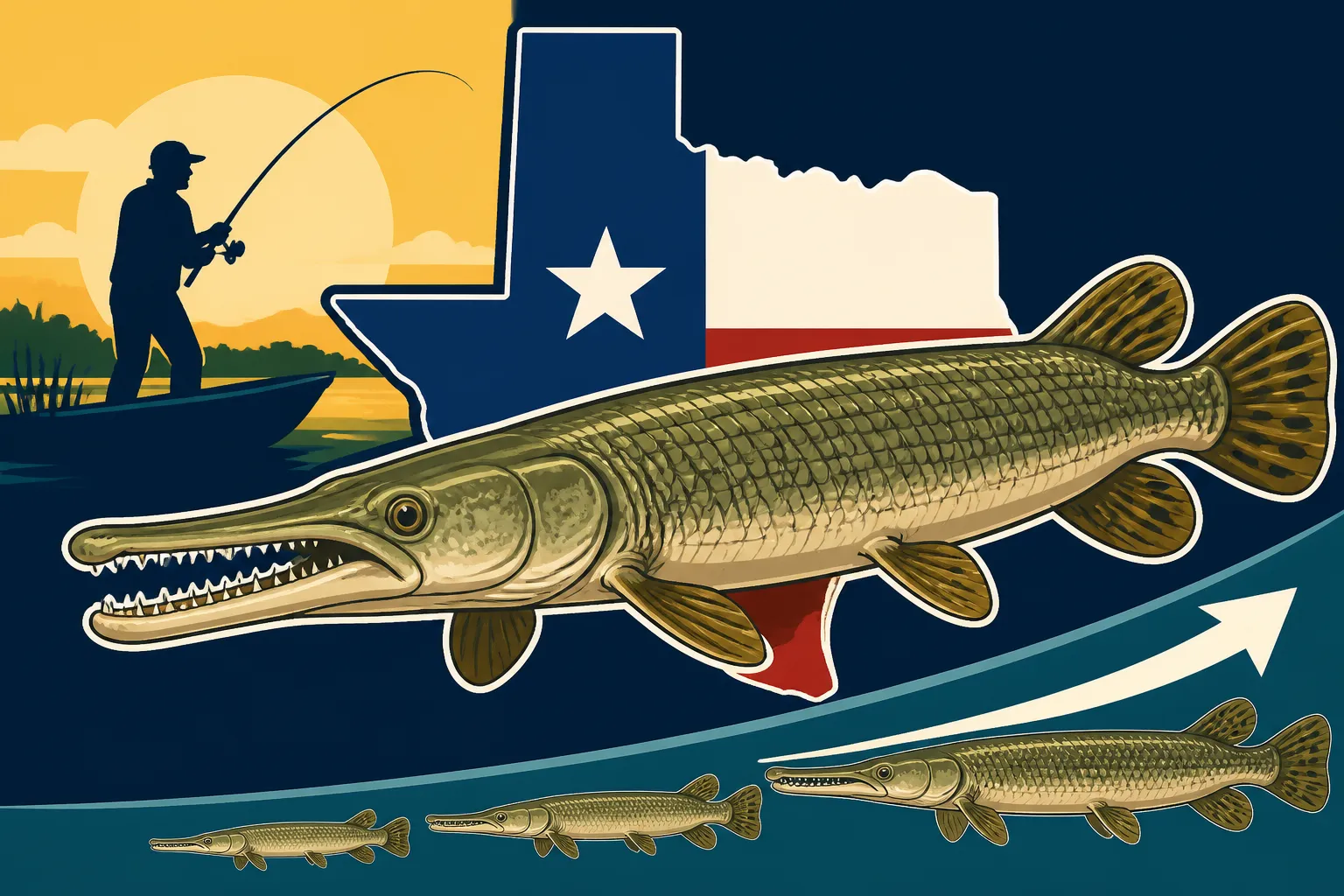
Alligator gar growth isn't linear; it varies significantly throughout their lives. As juveniles, they grow relatively quickly, taking advantage of abundant small prey to establish themselves. This rapid early growth helps them quickly outgrow potential predators.
Once they reach maturity, their growth rate slows down considerably, but it never truly stops. Instead of adding massive length each year, they might add just a few inches and, more noticeably, increase in girth and weight. An older, large gar might only grow an inch or two in length annually, but that consistent growth, sustained over many decades, is what allows them to reach such incredible dimensions. This slow, steady accumulation of size is a hallmark of truly ancient species.
Longevity: How Old Can They Get?
The longevity of alligator gar is truly remarkable. While many fish species live only a few years, scientific studies have documented alligator gar living well into their 50s and even 60s. There are anecdotal reports and estimations that suggest some exceptionally large individuals might even approach or exceed 70 years old. Imagine a fish that was born during World War II, still swimming in the rivers of Texas today!
This extended lifespan is a critical factor in their ability to reach such immense sizes. It also means that every truly giant gar you encounter is a living piece of history, a testament to resilience and survival in its natural habitat. Their long lives make them particularly vulnerable to overfishing, which is why conservation and responsible angling practices are so vital. If you're wondering about specific rules, our Is it legal to keep an alligator gar in Texas post dives into those details.
Catching and Releasing Large Alligator Gar Responsibly
Catching an alligator gar, especially a truly large one, is an unforgettable experience. But with great power comes great responsibility. Handling these ancient giants requires careful consideration, not just for your safety, but for the well-being of the fish itself, especially if you plan on releasing it.
Appropriate Gear for Handling Giants
When you're dealing with a fish that can easily outweigh you, standard fishing tackle just won't cut it. You need gear designed for big game. This means heavy-duty rods, often rated for 80-130 pound line, paired with robust conventional reels that can hold hundreds of yards of strong braided line. For leaders, heavy mono or fluorocarbon (200-400 lb test) or even steel wire is essential to prevent their sharp teeth from cutting your line. You can find many of these heavy-duty fishing lines and leaders, perfect for tackling a Texas gar, on Amazon.
Beyond the rod and reel, think about safety and handling. Long-nosed pliers or dehooking tools are crucial for hook removal, keeping your hands away from their formidable jaws. A heavy-duty glove can offer some protection, but direct handling of their mouth should be avoided. A large, strong net or a robust tail rope can aid in securing the fish boat-side for photos and release.
Best Practices for Gar Conservation and Release
Many anglers choose to practice catch and release for alligator gar, especially the larger, older individuals, recognizing their value to the ecosystem and their slow growth rate. If you plan to release a gar, here are some best practices:
- Minimize Fight Time: Use appropriate tackle to bring the fish in as quickly as possible without over-stressing it. A prolonged fight can exhaust the fish beyond recovery.
- Keep the Fish in Water: For photos, try to keep the fish in the water as much as possible. If you must lift it, support its entire body horizontally to avoid internal damage. Never hold a large gar vertically by its head or tail.
- Quick Hook Removal: Have your dehooking tools ready. If the hook is too deep or difficult to remove quickly, consider cutting the line as close to the hook as possible. Stainless steel hooks will eventually rust out.
- Revive Carefully: If the fish seems sluggish, hold it gently in the water, facing into a current if possible, and allow water to flow over its gills until it regains strength and can swim away on its own.
Understanding and respecting Texas Fishing License Requirements Explained is also part of being a responsible angler, as these regulations help manage fish populations sustainably.
Safety Considerations When Landing Big Gar
Landing a truly large alligator gar isn't without its risks. Their powerful thrashing, sharp teeth, and armored scales can pose a danger if you're not careful.
- Stay Aware of the Jaws: Always be mindful of their head and mouth. Those teeth are designed for gripping prey, and a thrashing gar could cause serious injury.
- Control the Head: Once boat-side or bank-side, try to control the head of the fish. A tail rope can help secure the tail, but controlling the head is paramount for safety.
- Wear Protective Gear: Gloves can help protect your hands from scrapes from their tough scales, though they won't stop a bite.
- Teamwork: If possible, have a partner assist with landing and handling, especially for very large fish. Two sets of hands make the process safer and less stressful for the fish.
- Know Your Limits: Don't attempt to lift a fish that is too heavy for you to safely manage. Prioritize the safety of both yourself and the fish.
Approaching these magnificent creatures with respect and caution ensures a memorable and safe experience for everyone involved.
Disclaimer
This article is for general informational purposes only and does not constitute professional advice. Laws, prices and regulations vary by location and change over time. Consult a qualified professional for guidance on your specific situation.