Is a flounder a flatfish
The Texas coast offers some of the most exciting fishing, but there's a common question that pops up, especially when you reel in one of those uniquely shaped fish: "Is a flounder a flatfish?" It's a simple question with a fascinating answer that goes deep into marine biology and impacts how we approach fishing for these elusive, delicious creatures. This guide will dive into what makes a flatfish, why the Texas flounder perfectly fits the bill, and why this understanding is so important for every angler hitting our coastal waters.
What Exactly Makes a Fish a "Flatfish"?
When you think of a fish, you probably picture something streamlined, with eyes on either side of its head, swimming upright. Flatfish, however, completely flip that image on its side – literally. They are a distinct order of ray-finned fish, known scientifically as Pleuronectiformes, characterized by their truly unique body plan and lifestyle.
The Evolutionary Marvel of a Flattened Body
Imagine a regular fish that decided, somewhere along its evolutionary path, that lying on the seafloor was the absolute best way to live. Over countless generations, these fish adapted, and their bodies gradually compressed laterally. This isn't just a slight squishing; it's a dramatic change that results in a fish that's much wider than it is thick, designed perfectly for camouflaging itself against the sandy or muddy bottom. It's a marvel of natural selection, allowing them to blend in seamlessly with their surroundings, hiding from both predators and unsuspecting prey. Their shape isn't just for looks; it's a fundamental part of their hunting strategy, letting them lie in wait, half-buried, ready to ambush anything that swims too close.
This flattened form isn't like a manta ray or a skate, which are dorsoventrally flattened (top to bottom). Instead, flatfish are compressed sideways, almost as if someone pushed down on their spine until they lay horizontally. One side becomes the "bottom" where they rest on the seabed, while the other side becomes the "top" that faces upwards. This adaptation allows them to hug the contours of the ocean floor, becoming incredibly difficult to spot. It also means their internal organs are rearranged to accommodate this unusual body shape, a testament to the incredible flexibility of evolution.
The Incredible Eye Migration Story
Perhaps the most astonishing characteristic of flatfish, and certainly the most defining, is their eye migration. When a flatfish hatches from its egg, it looks like any other tiny, symmetrical fish larva, swimming upright with an eye on each side of its head. But as it grows, a truly remarkable transformation begins. One eye slowly starts to migrate across the top of its head to the other side, eventually settling next to its fellow eye. This means that, as an adult, both eyes are on one side of its head, which is now its "top" side. This allows them to lie flat on the bottom, with both eyes scanning upwards for food or danger.
This process isn't quick; it's a gradual repositioning that happens over weeks or months, depending on the species. The skull and bone structure of the fish actually deform and reshape to allow for this migration. It's a process so unique that it's a primary distinguishing feature of the entire flatfish order. Imagine the challenges of adapting to such a profound change in vision and orientation! For Texas anglers, recognizing this means understanding that a flounder's vision is primarily upward, which can influence where and how you present your bait or lure. You might want to consider fishing techniques like the Texas rig that keeps your bait near the bottom where they are looking.
Camouflage Masters: Living on the Seabed
With their flattened bodies and upward-facing eyes, flatfish are perfectly designed for life on the seabed. Their mastery of camouflage is unparalleled. They can rapidly change the color and pattern of their skin to match the sand, mud, or gravel beneath them. This ability makes them incredibly effective ambush predators and helps them evade larger fish, sharks, and even observant birds. A flounder can literally disappear before your eyes, a trait that makes them both frustratingly difficult to spot and incredibly exciting to catch when you finally do find one.
They often partially bury themselves, flicking sand or mud over their bodies until only their eyes are visible, peering out like tiny periscopes. This behavior is crucial for their survival and successful hunting. They wait patiently, sometimes for hours, for shrimp, small fish, or crabs to swim or scuttle past. Then, with a sudden burst of speed, they erupt from the bottom, engulfing their unsuspecting prey. Understanding this behavior is critical for successful flounder fishing in Texas, as it dictates where they might be hiding and how you need to entice them. If you're looking for gear that helps with sight fishing in shallow waters, searching for polarized sunglasses on Amazon can make a huge difference in spotting these camouflaged experts.
The Texas Southern Flounder: Our Prized Flatfish
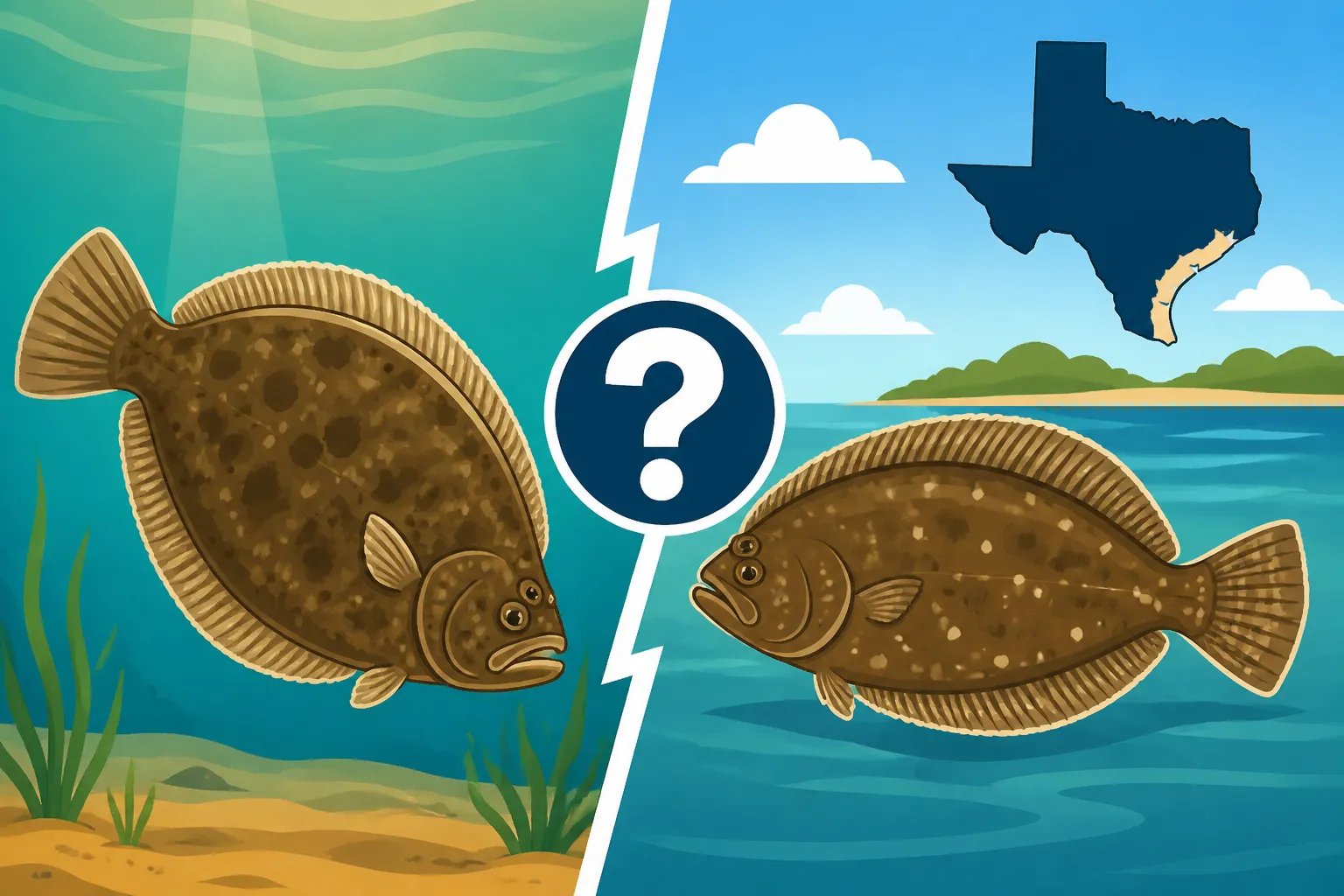
Among the diverse flatfish family, the Southern Flounder (Paralichthys lethostigma) holds a special place in the hearts of Texas anglers. It's the most commonly targeted flounder species along our coast, known for its challenging catch and delectable taste. Yes, to answer the initial question definitively, the Southern Flounder is absolutely a flatfish, showcasing all the remarkable adaptations we've just discussed.
Identifying the Southern Flounder: More Than Just Flat
While all flounder are flat, the Southern Flounder has specific characteristics that help identify it. Typically, it's a "left-eyed" flatfish, meaning both eyes are on the left side of its body when viewed from the top, though some individuals can be right-eyed. Their color can vary greatly depending on their habitat, ranging from mottled brown and gray in sandy areas to darker hues in muddier bottoms, all thanks to their exceptional camouflage abilities. They generally have a rather large mouth with a single row of sharp, conical teeth, perfectly adapted for grabbing and holding slippery prey.
Distinguishing a Southern Flounder from other bottom-dwelling fish might seem tricky at first glance, but once you know what to look for, it becomes easier. They don't have the prominent spines or armored plates you might see on some other bottom dwellers, and their overall profile is much sleeker and more oval-shaped. While they share their flat habitat with other species like skates or rays, the Southern Flounder’s distinct eye placement and fin structure immediately set it apart. For more detailed identification, checking out resources like the Texas Southern Flounder Identification Guide can be incredibly helpful. Learning these visual cues is part of the fun and challenge of saltwater fishing.
Habitat and Behavior: Where and How They Live
Southern Flounder are estuary-dependent, meaning they spend a significant portion of their lives in the brackish waters of bays, estuaries, and tidal creeks along the Texas Gulf Coast. They prefer soft bottoms – mud, sand, and shell – where they can easily bury themselves. You'll often find them lurking around structure like oyster reefs, jetties, docks, and submerged vegetation, as these areas provide cover and concentrate baitfish. They are opportunistic predators, feeding primarily on shrimp, small fish (like mullet and killifish), and crabs. Their ambush style of hunting means they'll lie in wait, perfectly still, until a meal swims by.
Their activity is often tied to tides and water temperature. During cooler months, they tend to move to deeper bay channels and eventually offshore for spawning. In warmer months, they spread out more into shallower flats and marshes. Understanding these habitat preferences is key to successful flounder fishing. It tells you where to focus your efforts and why a certain spot might be productive at one time of year but not another. Anglers often find success wade fishing the shallow flats of Galveston Bay or Matagorda Bay, carefully shuffling their feet to avoid startling a buried flounder.
The Flounder Run: A Unique Texas Phenomenon
One of the most anticipated events for Texas saltwater anglers is the annual "flounder run," primarily occurring in the fall, typically from October through November. This is when mature Southern Flounder migrate from the bays and estuaries through passes and channels out into the Gulf of Mexico to spawn. During this period, large numbers of flounder concentrate in predictable locations, making them more accessible to anglers. It's a prime time to target these fish, both with rod and reel and by gigging.
The flounder run is a critical part of their life cycle, ensuring the next generation of these fascinating flatfish. Because of the intense fishing pressure during this time, Texas Parks and Wildlife Department (TPWD) implements specific regulations to protect the species, often including a reduced bag limit and a nighttime closure for gigging during the peak month of November. It's why understanding rules like the Texas Flounder Season and Limits and Why Is Texas Flounder Season Closed in November is absolutely essential for responsible fishing. This conservation effort highlights the importance of the Southern Flounder to the Texas ecosystem and angling community.
Why Understanding Flounder as Flatfish Matters for Anglers
Knowing that a flounder is a flatfish isn't just a bit of trivia; it profoundly impacts how you approach fishing for them. It guides your choice of gear, your techniques, and your understanding of local regulations, ultimately increasing your chances of success and promoting responsible angling.
Tailoring Your Tackle and Techniques
Because flounder are bottom dwellers and ambush predators, your fishing setup needs to be tailored to present bait or lures effectively on or near the seabed. Heavy weights are often necessary to keep your offering down, especially in current. A common rig for flounder involves a leader with a single hook, often tipped with a live shrimp, a small finger mullet, or a soft plastic bait that mimics their natural forage. The classic "flounder rig" is designed to drag along the bottom, kicking up sand and attracting attention, much like a natural prey item.
Drifting with the current in a boat or slowly wading and shuffling your feet are effective strategies. When wade fishing, you're literally putting yourself in their environment. A slow retrieve, punctuated by short hops or drags along the bottom, is often key. Remember, they are looking up, so presenting your bait slightly above the bottom, but still within their strike zone, can be deadly effective. Many anglers find the Best Rigs for Flounder Fishing to be simple yet incredibly effective. Investing in the right tackle, readily available from online retailers like Amazon, can truly elevate your flounder game.
| Trait | Flounder (Flatfish) | Black Drum (Roundfish) |
|---|---|---|
| Body Shape | Laterally flattened, eyes on one side | Laterally compressed, but more oval/round |
| Eye Placement | Both eyes on one side (top) | One eye on each side of the head |
| Mouth Position | Terminal, angled for upward strike | Subterminal (downward pointing) |
| Primary Habitat | Rests on bottom, often partially buried | Forages on bottom, actively swims |
| Feeding Strategy | Ambush predator, lies in wait | Rooter/feeder, senses prey on bottom |
| Typical Movement | Burrows, short bursts of speed | Steady swimming, often schooling |
| Coloration Change | Rapidly changes to match bottom | More consistent coloration |
Respecting Regulations and Conservation
Understanding the biology of a flatfish like the Southern Flounder underscores the importance of fishing regulations. The specific bag and length limits, as well as seasonal closures for gigging, are in place to ensure a healthy and sustainable flounder population for future generations. For example, the Texas Flounder Minimum Length Limit ensures that fish have a chance to reproduce at least once before being harvested. When you know about their unique life cycle, including their migration for spawning, it makes perfect sense why special rules apply during the "flounder run."
Conservation efforts for flatfish also extend to careful handling. When releasing undersized flounder or those caught during closed seasons, minimizing stress is crucial. Wetting your hands before handling, using de-hooking tools, and supporting their body weight can significantly increase their chances of survival. Always double-check the latest regulations from TPWD before heading out. Being informed about Texas Saltwater Bag Limits by Species is a responsibility that comes with the privilege of fishing our incredible coast.
The Joy of the Catch: From Identification to Table
Ultimately, the journey from understanding what a flatfish is to reeling in a beautiful Southern Flounder is incredibly rewarding. The moment you correctly identify a flounder camouflaged against the seabed, or feel that distinctive thump as one inhales your bait, is pure exhilaration. Whether you're carefully How to Gig Flounder Legally in Texas or patiently working a soft plastic, the pursuit of this unique flatfish is a quintessential Texas fishing experience.
And let's be honest, few fish are as delicious on the dinner table as a fresh flounder. Their delicate, white, flaky meat is prized by chefs and home cooks alike. Knowing that you successfully outsmarted a creature so perfectly adapted to hide and ambush makes that meal even more satisfying. So yes, a flounder is most definitely a flatfish, and understanding this fundamental biological fact is your first step towards becoming a more knowledgeable, effective, and responsible Texas angler. Now get out there and enjoy the hunt for these incredible creatures in some of the Best Places to Fish in Texas.
Disclaimer
This article is for general informational purposes only and does not constitute professional advice. Laws, prices and regulations vary by location and change over time. Consult a qualified professional for guidance on your specific situation.