Texas Southern Flounder Identification Guide
Few fish cause as much head-scratching on the boat or the bank as the Southern Flounder here in Texas. You hook into a beautiful flatfish, and your heart races, but then that little voice pops up: "Is it really a Southern Flounder, or one of its sneaky cousins?" It's a common frustration, especially when regulations are specific. This guide is here to help you confidently identify the elusive Southern Flounder, making sure you stay compliant and contribute to healthy fish populations.
The Importance of Knowing Your Texas Flounder
Let's be real: fishing in Texas is a passion, but it also comes with rules. And when you're targeting a prized fish like the Southern Flounder, those rules can be pretty strict. Getting it right isn't just about showing off your catch; it's about respecting the law and doing your part for conservation. Nobody wants to deal with a citation because they mistook one flatfish for another.
Navigating Texas Fishing Regulations
Imagine you're out on Galveston Bay, the sun is setting, and you've just landed what looks like a beautiful flounder. You're thrilled! But then you start to second-guess yourself. Is it legal size? Is it even the right species? Texas Parks and Wildlife Department (TPWD) has specific rules for Southern Flounder regarding Texas Flounder Minimum Length Limit and daily bag limits. These aren't suggestions; they're enforceable laws. If you accidentally keep a fish that's too small or the wrong species, you could be facing a hefty fine.
It's a frustrating situation because, to the untrained eye, many flatfish can look similar. You might think, "A flounder is a flounder, right?" Not quite. TPWD differentiates between species, and your ability to tell them apart directly impacts whether your catch is legal. This is especially true during specific times of the year, like when the Texas Flounder Season and Limits are in effect, which can include closure periods. Knowing your fish means you can confidently measure your catch and either keep it or release it, free from worry.
Contributing to Conservation and Healthy Fisheries
Beyond avoiding legal headaches, accurate identification plays a vital role in the bigger picture of conservation. When anglers correctly identify and report their catches (or simply adhere to regulations), TPWD gets better data. This data is crucial for understanding fish populations, assessing their health, and setting appropriate limits that ensure future generations of Texans can enjoy flounder fishing.
Think about it: if everyone mistakenly keeps juvenile Gulf Flounder because they think they're Southern Flounder, that skews the data. It could lead to incorrect management decisions that harm the Southern Flounder population in the long run. By knowing your species, you're becoming a responsible steward of Texas's incredible natural resources. It’s about more than just your individual catch; it’s about the legacy of fishing we leave behind. The Texas Saltwater Fishing Regulations and Texas Saltwater Bag Limits by Species are designed with these long-term goals in mind, and our participation is key.
Unpacking the Southern Flounder's Distinctive Features
When you're trying to identify a Southern Flounder, you need to know its signature traits. These fish are masters of camouflage, but they do have specific characteristics that set them apart from other flatfish you might encounter in Texas waters. Once you learn to spot these key features, you'll feel much more confident in your identification.
Body Shape, Coloration, and Camouflage Expertise
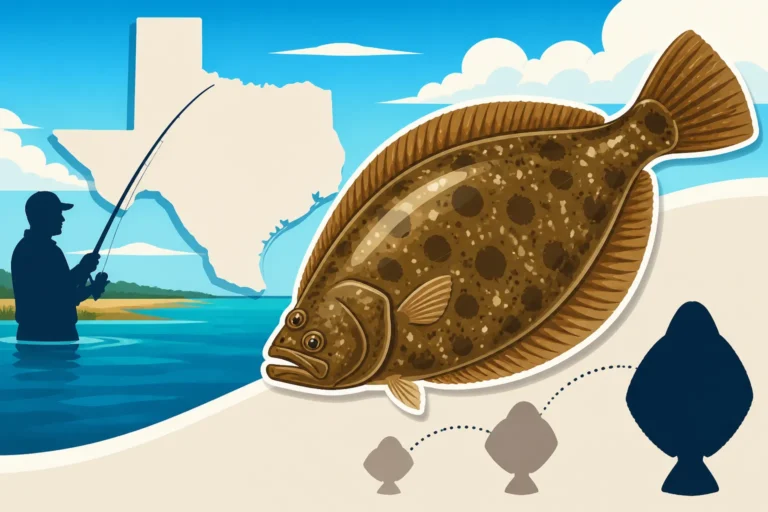
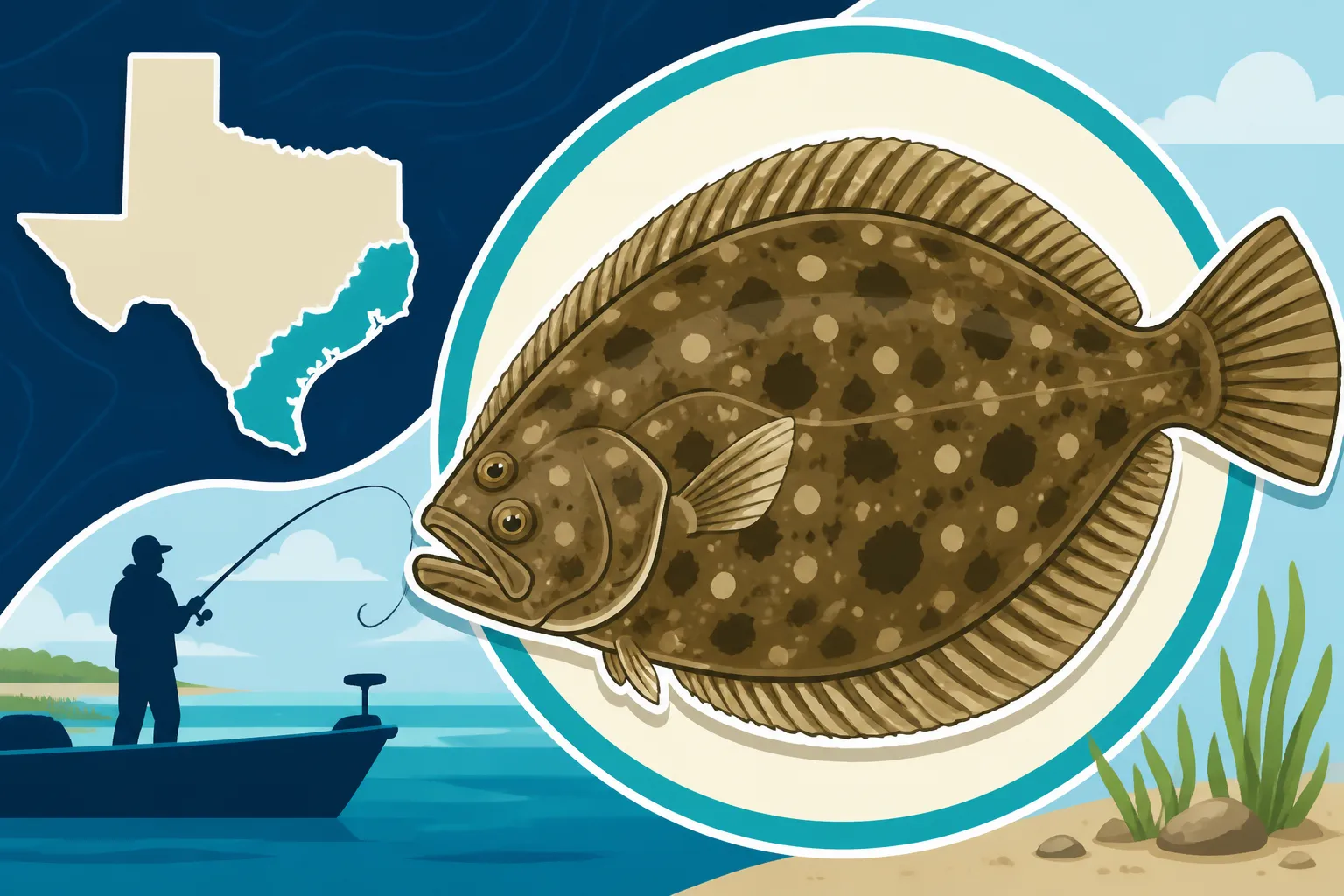
The Southern Flounder has that classic flat, oval, somewhat diamond-shaped body that most people associate with flounders. It's built for life on the bottom, lying in wait. Their coloration is usually a drab brown, olive, or grayish hue on their "top" side (the side with the eyes), which allows them to blend seamlessly with sandy, muddy, or shell-covered bottoms. This chameleon-like ability is truly remarkable; they can lighten or darken their skin and even mimic patterns on the seabed to become almost invisible to prey and predators alike.
While this camouflage is incredible for the fish, it can be a bit tricky for us anglers! You might catch a flounder with a lighter, sandy color in one spot and a darker, muddier one in another, simply because of where it was hiding. This adaptable coloration means you can't rely solely on general color to identify them. However, one consistent characteristic is the absence of prominent, distinct spots or rings on their body, which is a major differentiator from some other flounder species we'll discuss shortly.
The "Left-Eyed" Rule and Mouth Anatomy
This is perhaps the single most important characteristic for identifying a Southern Flounder: it's a left-eyed flounder. This means that when you hold the fish with its mouth pointing away from you and its dark, eyed side facing up, both of its eyes will be on the left side of its head. This sounds simple, but it's a critical distinction from many other flatfish species, including some flounders, that are "right-eyed." Make it a habit to check the eye placement first.
Beyond the eyes, take a look at the mouth. The Southern Flounder has a relatively large, terminal mouth, meaning it opens towards the front of its head, not underneath it. It's also well-equipped with numerous sharp, needle-like teeth. This mouth structure is perfectly designed for ambushing unsuspecting baitfish and shrimp that swim too close. You'll often find these teeth exposed, even when the mouth is closed, giving them a rather formidable appearance. This jaw structure, combined with its left-eyed nature, is a tell-tale sign of a Southern Flounder.
Size, Lifespan, and Growth in Texas Waters
Southern Flounder in Texas typically grow to a respectable size, making them a fantastic catch for anglers. While juveniles might be just a few inches, adults commonly range from 14 to 20 inches in length, with some larger specimens pushing towards the mid-20s. A legal keeper, per current regulations, usually starts around 15 inches. The weight for these fish often falls between 1 to 3 pounds, though bigger flounder can certainly exceed that.
They are relatively long-lived for a coastal game fish, with some individuals reaching ages of 7 to 10 years, and occasionally even older. Their growth rate depends on factors like food availability and water temperature. This longevity and potential for growth mean that older, larger females are incredibly important for spawning and the overall health of the population. That's why strict adherence to length limits is so crucial – it allows these fish to mature and reproduce, ensuring continued generations of flounder for Texas anglers.
Spotting the Differences: Southern Flounder vs. Its Look-Alikes
Here's where the real challenge often lies for Texas anglers. Our waters are home to a few different flatfish species, and at first glance, they can all look pretty similar when they're flopping around in the bottom of your boat. But with a keen eye for specific details, you can quickly learn to tell the difference. This is especially important for the Southern Flounder, as it's the most targeted and regulated species in our state.
Southern Flounder vs. Gulf Flounder
This is by far the most common identification dilemma on the Texas coast. The Southern Flounder (Paralichthys lethostigma) and the Gulf Flounder (Paralichthys albigutta) share similar body shapes and often inhabit the same coastal waters. The absolute key differentiator here lies in the spots.
The Gulf Flounder typically has three prominent, ocellated (eye-like) dark spots arranged in a triangle on its eyed side. These spots are usually distinct, dark, and often have a lighter ring or halo around them. They are generally quite noticeable, even against the flounder's camouflaged skin. The Southern Flounder, on the other hand, lacks these distinct spots. While a Southern Flounder might have some vague blotches or irregular markings that mimic its surroundings, it will not have those three clear, dark, ocellated spots. This is your go-to visual cue. Another subtle difference can be the number of gill rakers, but that’s a bit too invasive for a quick boat-side ID. Stick to the spots and eye placement for clarity.
Southern Flounder vs. Other Texas Flatfish
While the Gulf Flounder is the main imposter, Texas waters are also home to other flatfish species that might occasionally confuse anglers, though they are usually less common or distinct.
For example, the Starry Flounder (Platichthys stellatus) is much rarer in Texas, typically preferring colder Pacific waters, but it's a good example of how different flatfish can be. If encountered, a Starry Flounder would stand out with its rougher, star-like scales and prominent dark bands on its fins. Then there are various species of soles and tonguefishes. These are generally much smaller, have incredibly small mouths, and often lack the sharp teeth and robust body shape of a flounder. Soles also typically have eyes very close together and a more teardrop or oval shape, with much smaller fins. They aren't usually considered game fish, and their appearance is quite different once you know what to look for. Always remember the overall body shape and eye position.
The Critical Eye Test: Left-Eyed vs. Right-Eyed Flounder
Let's circle back to the eye test, because it is that important. The Southern Flounder is reliably left-eyed. This means that when you place the fish on a flat surface with its dark, colored side up, its head will be to your left, and both eyes will be on that left side. For the vast majority of other flatfish species you might encounter, this is a clear distinction.
Many other flatfish, including species like hogchokers (a type of sole) or even some less common flounders, are right-eyed. If you find a flatfish with eyes on the right side of its head (when oriented mouth-forward, dark side up), it is not a Southern Flounder. This simple anatomical difference is a biological rule for these fish and serves as a very reliable identifier. Don't underestimate the power of this single, consistent trait. It's often the fastest way to rule out non-Southern Flounder species when you're making a quick decision on the water.
| Feature | Southern Flounder (Paralichthys lethostigma) | Gulf Flounder (Paralichthys albigutta) | Soles/Tonguefishes (General) |
|---|---|---|---|
| Eye Placement | Both eyes on the left side of the head. | Both eyes on the left side of the head. | Can be left-eyed or right-eyed, often very small eyes close together. |
| Body Markings | No prominent, distinct spots. May have vague blotches. | Three distinct, dark, ocellated spots in a triangular pattern. | Typically mottled, often uniform, or complex patterns, but rarely distinct spots like Gulf Flounder. |
| Mouth | Large, terminal mouth with sharp, visible teeth. | Large, terminal mouth with sharp teeth. | Very small, often downturned mouth, few to no visible teeth. |
| Body Shape | Oval, somewhat diamond-shaped, robust. | Oval, somewhat diamond-shaped, robust. | More elongated oval or teardrop, thinner. |
| Typical Size (TX) | Often 14-20+ inches, up to 3+ lbs. | Often 12-18 inches, generally smaller than Southern Flounder. | Usually much smaller, typically under 10 inches. |
Habitat, Behavior, and Where to Find Southern Flounder
Understanding where Southern Flounder like to hang out and what they're up to can give you a huge advantage, not just in catching them, but also in anticipating what you've hooked before it even comes to the surface. Their preferred environments are directly tied to their flat, camouflaged bodies and ambush predation style.
Preferred Bottoms, Water Depths, and Structures
Southern Flounder are true bottom dwellers. They absolutely love a good soft bottom – think sandy flats, muddy bays, and areas where sand meets mud. They use these soft substrates to bury themselves, often leaving only their eyes exposed, waiting for an unsuspecting meal to swim by. This incredible camouflage makes them practically invisible in their natural element. You'll frequently find them in bays like Galveston Bay, Matagorda Bay, and Aransas Bay, particularly in the shallower reaches.
Beyond the soft bottom, they are drawn to structure. This includes anything that offers them a current break or a place to ambush prey. Think oyster reefs, submerged grass beds (especially sparse areas where they can lie on the sand adjacent to the grass), jetties, pilings, and the edges of channels. Any slight depression or ripple in the sand can hold a flounder. When you're fishing coastal areas, focusing on these transitions between different bottom types and near structures will increase your chances significantly. You'll find these conditions in many of the Best Texas Gulf Coast Fishing Spots.
Feeding Strategies and Nocturnal Habits
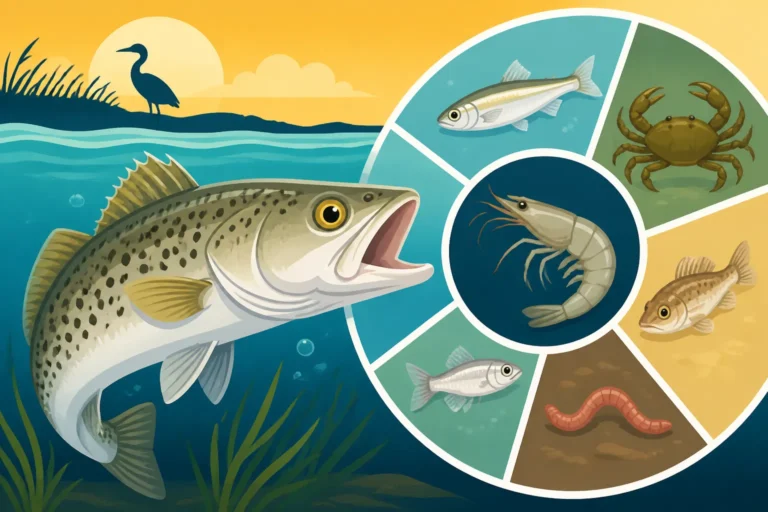
The Southern Flounder is an opportunistic ambush predator. They aren't usually chasing down prey across open water. Instead, they lie perfectly still, camouflaged against the bottom, and wait. When a baitfish, shrimp, or crab gets close enough, they spring into action with a quick burst of speed and that large, toothy mouth. They are incredibly patient hunters.
While they will feed during the day, Southern Flounder are often more active feeders during low light conditions – dawn, dusk, and especially at night. Their superb low-light vision gives them an advantage over many of their prey items. This nocturnal behavior is why methods like gigging are so popular and effective; a good light source at night can reveal their presence on the flats. Techniques described in a How to Gig Flounder Legally in Texas guide often highlight their nighttime tendencies. When fishing with a rod and reel, focusing your efforts during these crepuscular hours can yield better results, especially in clear, shallow water.
Texas Flounder Season and Limits: Understanding Spawning and Migration
The life cycle of the Southern Flounder is fascinating, and it directly impacts when and where you can find them, as well as the regulations surrounding their harvest. Each fall, typically from October through December, mature Southern Flounder undertake a significant migration. They move from the shallow bays and estuaries, where they've spent the warmer months, out into the deeper waters of the Gulf of Mexico to spawn.
This "flounder run" is a highly anticipated event for Texas anglers, as large numbers of fish concentrate in passes and near jetties as they head offshore. This is also Why is Texas flounder season closed in November, for example, to protect these vital spawning fish and ensure a healthy population for the future. After spawning, the adult flounder eventually return to the bays in smaller numbers, and the cycle continues. Understanding this migration pattern is key to successful flounder fishing and adhering to the Texas Flounder Season and Limits, ensuring you're fishing ethically and legally.
Practical Tips for Anglers: Confirming Your Flounder Catch
So you've hooked into a flatfish, brought it to the boat, and now it's time for the moment of truth: is it a keeper Southern Flounder? Having a clear checklist in your head can save you time, stress, and potential legal issues. Don't rush the identification process, especially if you're not absolutely sure.
Immediate Visual Cues on the Deck
The moment that flatfish hits your deck or the bank, start your mental checklist. The very first thing you should do, even before unhooking, is orient the fish so its mouth is pointing away from you and its dark side is facing up. Then, immediately look at the eyes. Are they both clearly on the left side of its head? If the answer is yes, you're on the right track for a Southern Flounder. If they're on the right, it's definitely not.
Next, quickly scan the fish's body for those tell-tale spots. Does it have three distinct, dark, ocellated (eye-like) spots arranged in a triangle? If you see those, it's almost certainly a Gulf Flounder, not a Southern Flounder. If it's relatively spot-free on its main body, with only irregular blotches or coloration matching its camouflage, that further supports Southern Flounder identification. These two steps—eye placement and spot check—will rule out most other flatfish very quickly. Always remember to check these crucial details before making a decision to keep or release.
Utilizing Digital Resources and Physical Guides
Even with practice, sometimes you'll encounter a fish that still makes you scratch your head. This is where having good reference materials comes in handy. Many anglers find it incredibly useful to have a waterproof fish identification card or poster specific to Texas saltwater species. You can often find these at local bait shops or through online retailers like Amazon. They provide clear illustrations and key identification points in a format that can withstand the elements of a fishing trip.
Beyond physical cards, there are numerous excellent fishing apps available for smartphones. Many of these apps include comprehensive fish identification guides, often with high-quality photos and detailed descriptions of distinguishing features. Some even offer "AI" identification features where you can upload a photo of your catch. While these can be helpful tools, always cross-reference with official TPWD guides if you're in doubt, as technology isn't always perfect. Having a reliable resource, whether physical or digital, at your fingertips can be a real game-changer when you're on the water.
Safe Handling and Measuring for Verification
Once you're reasonably confident in your identification, the next step is often to measure the fish to ensure it meets the Texas Flounder Minimum Length Limit. Handle the flounder gently to minimize stress. A wet rag or glove can help you get a grip without harming its protective slime coat. Lay the fish flat on a measuring board, ensuring its mouth is closed and its tail is pinched to get the most accurate length.
If the fish doesn't meet the legal length, or if you're still unsure about the species, it's always best to release it quickly and carefully. Use a dehooking tool if possible, and return the fish to the water headfirst. Your quick and responsible actions help ensure the survival of released fish. Remember, when in doubt, let it go. It's better to miss out on one meal than to face a fine or contribute to the decline of a valuable species. For a comprehensive guide on all things related to this amazing fish, check out our full Texas Flounder Fishing Guide.
Disclaimer
This article is for general informational purposes only and does not constitute professional advice. Laws, prices and regulations vary by location and change over time. Consult a qualified professional for guidance on your specific situation.