Texas Speckled Trout Identification Guide
One of the most common frustrations for new and even seasoned Texas anglers is confidently identifying the fish they've just pulled out of the water, especially when it comes to popular game species. Among the most sought-after catches along our vast coast is the speckled trout, or as many of us call them, "specks." This comprehensive guide will walk you through everything you need to know to accurately identify a Texas speckled trout, helping you avoid misidentification and ensure you're always fishing within the rules.
Understanding Texas Speckled Trout: The Basics
Ah, the speckled trout. There's just something about that silver flash and those distinctive spots that gets every saltwater angler's heart pumping. If you've spent any time on the Texas coast, from Sabine Lake down to the Lower Laguna Madre, you've probably heard tales of big "gator" trout or seen folks proudly showing off a stringer of healthy specks. But beyond the thrill of the catch, really knowing your fish is paramount.
Why Identification Matters for Anglers
Let's be honest, nobody wants to be that person who brings in a fish they shouldn't have, or worse, releases a trophy thinking it was something else entirely. Misidentifying your catch can lead to a heap of trouble, from hefty fines if you keep a fish that's out of slot or over the bag limit, to simply missing out on enjoying the bounty of our waters responsibly. Texas Parks and Wildlife Department (TPWD) has specific regulations for speckled trout—size limits, bag limits, and seasons—that are different from other species. You can find more details in Texas Saltwater Fishing Regulations. Knowing for sure that you've got a speckled trout in your hand, and not a sand trout or a weakfish, is the first step in being a responsible angler. It’s also about respect for the resource and ensuring healthy populations for future generations to enjoy. Imagine catching what you think is a small speck, only to realize later it was a protected juvenile of another species. Proper identification removes that doubt and anxiety.
The Allure of the Speckled Trout in Texas
Why all the fuss about speckled trout, you ask? Well, for starters, they're incredibly abundant and widely distributed throughout our bay systems. They offer a fantastic fight on light tackle, making them a favorite for both bait and artificial lure enthusiasts. Beyond the sporting aspect, they're also fantastic table fare, with delicate white meat that's a true culinary treat. Many anglers plan entire trips around targeting these beauties, spending hours wading grass flats or drifting shell reefs, all in pursuit of that tell-tale strike. The challenge of finding and fooling them, combined with their striking appearance and delicious taste, solidifies their place as a premier game fish on the Texas coast. Plus, the sheer variety of ways you can catch them—from casting soft plastics on the flats to fishing live shrimp under a popping cork—means there's a speckled trout technique for every angler, regardless of experience level.
Key Physical Characteristics of a Speckled Trout
Alright, let's get down to brass tacks. You've got a fish on the line, it's splashing at the surface, and you're wondering, "Is this the speck I've been looking for?" Here's how to tell, with some clear, unmistakable visual cues.
Distinctive Coloration and Markings
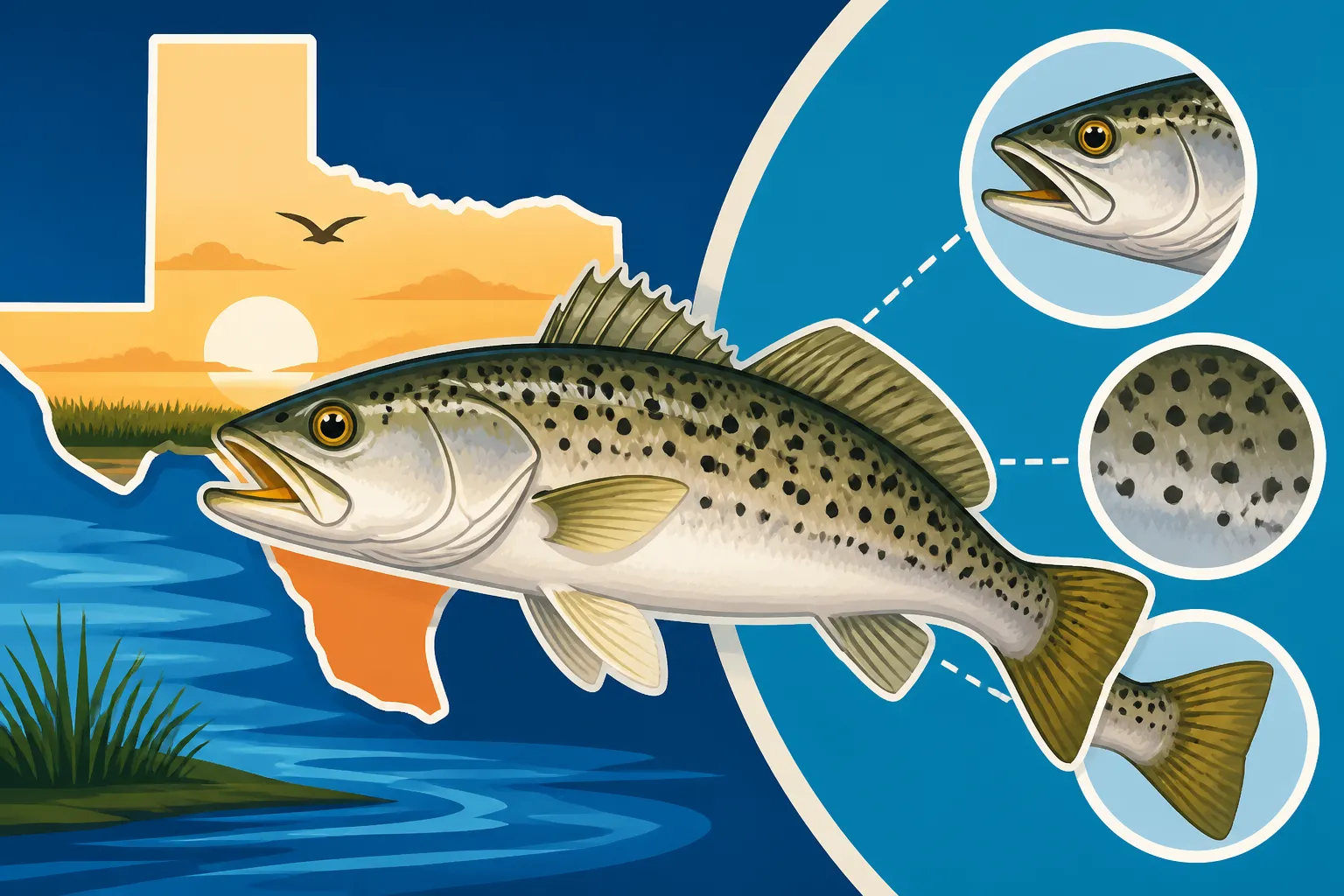
The most obvious feature, and the one that gives the speckled trout its name, is the presence of numerous small, dark spots scattered across its upper body and extending onto the dorsal and caudal (tail) fins. These spots are irregular in shape and size, but they are always present. The body color can vary quite a bit depending on the water clarity, bottom composition, and even the time of year. Fish caught over dark mud bottoms or in darker, tannin-stained waters might have a more pronounced golden or brownish hue along their backs, while those caught over light sand or grass flats in clear water tend to be a more vibrant silver-green on top, fading to a pearly white belly. However, regardless of the overall body color, those distinct spots are your primary clue. Don't be fooled by a single spot or a faint scattering; a true speckled trout will have spots distributed fairly evenly across its back and fins. It's like their signature, unmistakable and always there.
Fin Structure and Body Shape
Take a close look at the fins. Speckled trout have two distinct dorsal fins. The first dorsal fin is spiny and relatively short, while the second dorsal fin is longer and soft-rayed, often with a slightly concave or rounded profile. The caudal (tail) fin is typically slightly forked or concave, not deeply forked like some mackerel or straight-edged like many drum species. Their body shape is generally elongated and slender, especially when compared to the broader, more robust build of a redfish or black drum. They have a sleek, almost torpedo-like appearance, built for speed and quick strikes in open water and over grass flats. When you hold one, you'll notice how streamlined they feel. This slender profile is a key differentiator from their more stout-bodied cousins in the drum family. Pay attention to that overall elegant contour rather than a blocky, powerful build, which signals other species.
The Tell-Tale Teeth and Mouth
Now, for a feature that's often a bit startling, especially to new anglers: the mouth of a speckled trout. Open that mouth carefully (watch those fingers!). You'll immediately notice two prominent canine-like teeth, often called "fangs," located at the very front of the upper jaw. These teeth are sharp and are designed for grasping and holding onto slippery prey like mullet and shrimp. Beneath these, you'll find a row of smaller, but still sharp, teeth along both jaws. No other common game fish in Texas bays has this same distinctive dental arrangement with those two large canines. This is a dead giveaway. If you see those prominent fangs, you've almost certainly got a speckled trout. This feature is particularly helpful in low light conditions or when the coloration might be less clear, as the teeth are a consistent, unmistakable characteristic. Many anglers carry a de-hooking tool to safely remove hooks without getting too close to these impressive chompers, a good investment you can find on Amazon.
Differentiating Speckled Trout from Look-Alikes
Here's where it gets a little tricky sometimes, especially for those new to saltwater fishing or when you're trying to quickly identify a fast-moving fish. Several other species frequent Texas bays and can, at first glance, be confused with speckled trout. But once you know what to look for, the differences become quite clear.
Speckled Trout vs. Sand Trout
This is perhaps the most common identification challenge. Sand trout (often called "white trout" in some areas) are very similar in overall shape and color to speckled trout, and they also have an elongated body and silvery flanks. However, there are a few critical distinctions. Firstly, sand trout generally lack the prominent, distinct dark spots on their body and fins that are characteristic of speckled trout. While they might have a faint, almost shimmering pattern, it's not the defined, leopard-like spotting of a true speck. Secondly, and very importantly, sand trout do not have the large, canine-like "fangs" in the front of their upper jaw. They have small, uniform teeth, but nothing like the specks' impressive dental work. Finally, sand trout tend to have a more pointed snout and a softer overall feel when handled, whereas a speckled trout feels a bit more rigid. Knowing Texas Saltwater Bag Limits by Species is crucial here, as sand trout often have different regulations, or sometimes none at all, depending on the specific rules.
Speckled Trout vs. Weakfish
Weakfish are closely related to speckled trout and share many characteristics, even down to having spots. However, weakfish are far less common in Texas waters, generally being more prevalent further north along the Atlantic coast. If you do encounter one, the key difference lies in the spots: weakfish typically have a series of irregular, wavy lines or streaks of darker spots along their sides, rather than the more scattered, distinct individual spots found on a speckled trout. Their caudal fin is also often a bit more pointed than the speckled trout's subtly forked tail. Unless you're fishing in a very specific geographic overlap, the chances of catching a weakfish in Texas are slim, but it's good to be aware of the distinction, especially if you venture out of state or encounter a truly unusual specimen.
Speckled Trout vs. Other Drum Species (Redfish, Black Drum)
While experienced anglers might chuckle at this comparison, beginners sometimes confuse speckled trout with juvenile redfish or even small black drum due to some shared coloration or the presence of spots. However, the differences are quite stark once you know what to observe.
- Redfish (Red Drum): The most obvious identifier for a redfish is the prominent, usually single, black "eye spot" located on the caudal peduncle (the narrow part of the body just before the tail fin). While some redfish may have multiple spots, they are almost always concentrated on or near the tail. Speckled trout, conversely, have many spots scattered over their entire upper body and fins, but never a single, prominent black spot on their tail. Redfish also have a much more robust, stout body shape and a more rounded, blunt snout, lacking the elongated profile and sharp fangs of a speckled trout. Their overall coloration is also typically a coppery red to bronze, not the silver-green of a speck. Check out Texas Redfish Size and Bag Limits for more specifics on these popular game fish.
- Black Drum: Black drum are even easier to distinguish. While juveniles can sometimes have faint vertical bars that might be mistaken for "spots" in poor light, they lack any true, defined spotting like a speckled trout. Black drum have barbels (whiskers) under their chin, which speckled trout absolutely do not possess. Their body is much deeper and more rounded, and their coloration ranges from silvery-gray to dark bronze, not the vibrant hues of a speck. They also have a distinctly different mouth and jaw structure.
Here's a quick comparison table to help you keep these species straight:
| Feature | Speckled Trout | Sand Trout | Redfish (Juvenile) | Black Drum (Juvenile) |
|---|---|---|---|---|
| Spots | Many, distinct, scattered on body and fins | Few to none, faint, shimmering | One or more prominent black spots near tail | Faint vertical bars, no true spots |
| Teeth/Mouth | Two large canine "fangs" in upper jaw | Small, uniform teeth, no fangs | Small teeth, blunt snout, no fangs | Small teeth, blunt snout, barbels present |
| Body Shape | Elongated, slender, torpedo-like | Elongated, slender, more pointed snout | Robust, stout, deeper body | Very deep, rounded body |
| Caudal (Tail) Fin | Slightly forked/concave | Slightly forked/concave | Squared to slightly concave | Squared to slightly concave |
| Barbels | None | None | None | Present (whiskers on chin) |
| Coloration | Silver-green/gold back, white belly | Silvery, sometimes iridescent | Coppery red to bronze | Silvery-gray to dark bronze |
Habitat and Behavior Clues for Identification
Sometimes, where and how you catch a fish can offer subtle clues about its identity even before you get a clear look. Speckled trout have very specific preferences when it comes to their environment and how they hunt.
Preferred Habitats in Texas Bays
Speckled trout are creatures of the bay. They thrive in brackish estuarine environments, particularly around areas with good structure and access to baitfish. You'll commonly find them associated with:
- Grass Flats: Healthy seagrass beds are prime real estate for specks. These areas provide cover for baitfish like mullet and shrimp, making them excellent ambush points. Wading these flats at dawn or dusk, or drifting over them, is a classic Texas speckled trout technique.
- Shell Reefs and Oyster Beds: These natural structures create current breaks and attract a smorgasbord of smaller organisms, which in turn draw in baitfish. Specks love to hang around the edges and tops of these reefs, waiting to ambush their prey.
- Deep Channels and Passes: Especially during colder months, or when seeking refuge from intense summer heat, larger speckled trout might move into deeper channels and passes, where water temperatures are more stable. They'll also patrol these areas, picking off baitfish moving with the tides.
- Shorelines and Jetties: Protected shorelines with scattered shell or vegetation, as well as the rocky structure of jetties, can hold good numbers of speckled trout, particularly smaller "schoolie" fish.
If you're fishing in freshwater far upstream or way out in the Gulf of Mexico, your chances of catching a speckled trout diminish significantly. Their domain is primarily the brackish waters of our bays and estuaries. Understanding this habitat preference helps narrow down the possibilities of what you've hooked. For more on coastal fishing, check out Texas Saltwater Fishing Techniques.
Schooling Patterns and Feeding Behavior
Speckled trout are generally schooling fish, especially the smaller ones. You'll often find them grouped together, particularly when they're actively feeding. This means if you catch one, there are likely more in the vicinity. They are ambush predators, often hiding in cover (like grass or behind structure) and darting out to strike at passing bait. Their feeding activity is often tied to tidal movements, with incoming or outgoing tides concentrating bait and stimulating their feeding instincts.
You'll often see them crashing baitfish on the surface, a clear sign of their presence. The sound of a speckled trout "blowing up" on a school of mullet near the surface is unmistakable and thrilling. They are aggressive feeders, which is why artificial lures like topwaters, soft plastics, and twitchbaits are so effective. If you're consistently catching aggressive, fast-striking fish in bay environments, especially around baitfish activity, it’s a good bet you’re in speckled trout territory. Their feeding behavior is distinct from the bottom-grubbing of a drum or the more passive feeding of some other species.
Size, Age, and Growth of Texas Speckled Trout
Understanding the typical size and growth patterns of speckled trout not only aids in identification but also in appreciating the biology of this magnificent fish. Plus, it's vital for adhering to those pesky, but necessary, regulations!
Typical Size and Slot Limits
Most of the speckled trout caught by recreational anglers in Texas bays range from about 12 to 25 inches in length. However, those truly large fish, often called "gator trout," can push well past 25 inches, sometimes reaching lengths over 30 inches. TPWD manages speckled trout populations using a "slot limit" system. This means there's a minimum and maximum length for fish you can legally keep, along with a daily bag limit. The purpose of a slot limit is to protect both the very young fish (allowing them to grow and reproduce) and the largest, most productive spawning fish (the "brood stock"). For example, many slot limits might be something like 15-25 inches, with only one fish over 25 inches allowed within your daily bag. It's crucial to always check current regulations, as these numbers can change. A simple measuring device, often available at tackle shops or online at Amazon, is an essential tool for any speck angler. These limits are in place to help the population thrive, so knowing what you've caught means knowing if it's a keeper. You can learn more about specific rules in Texas Fish Bag and Length Limits.
How Age Affects Appearance
Like many fish, the appearance of a speckled trout can change subtly as it ages and grows. Younger, smaller trout tend to be a more uniform silver with distinct, crisp spots. As they grow larger and become "gator trout," their coloration can become more pronounced, sometimes taking on a richer golden or even greenish hue along the back and flanks. The spots often remain prominent, but their overall body mass and head size will be noticeably larger. Older, larger trout also tend to have more pronounced "shoulders" or a thicker body, giving them a more powerful look. While the core identification features (spots, fangs, fin shape) remain consistent, the overall impressiveness of a trophy-sized speck is undeniable. They are truly magnificent specimens that have survived many seasons in the bay.
Conservation and Responsible Angling Practices
As passionate anglers, we all share a responsibility to protect the incredible natural resources that make Texas fishing so special. This means not just following the rules, but understanding the why behind them, and embracing practices that ensure healthy fish populations for years to come.
Understanding Regulations for Speckled Trout
Texas has robust regulations specifically designed to manage speckled trout populations sustainably. These regulations often include:
- Length Limits: As mentioned, slot limits are common, ensuring that both very young and very old, large breeding fish are protected. For example, a common slot might allow you to keep fish between 15 and 25 inches, with one fish over 25 inches allowed as part of your daily bag.
- Bag Limits: This refers to the maximum number of fish you can keep per day. It’s important to note that this is usually a daily bag, not a possession limit, meaning you can't accumulate more than the daily limit over multiple days unless they are properly stored and processed.
- Gear Restrictions: While less common for general rod-and-reel speckled trout fishing, it's always wise to be aware of any specific gear restrictions that might apply to certain areas or times of year.
These rules are not arbitrary; they are based on scientific data collected by TPWD biologists who monitor the health and reproductive success of speckled trout. By understanding and adhering to these rules, you contribute directly to the long-term vitality of the fishery. Ignorance of the law is never an excuse, and penalties for violations can be significant, so always double-check the latest regulations before heading out. You can also explore Texas Speckled Trout Bag Limits for specific current numbers.
Importance of Accurate Identification for Conservation
This brings us back to our main point: accurate identification is a cornerstone of conservation. If you can't tell the difference between a speckled trout and a sand trout, you might inadvertently keep a fish that's illegal or release a fish you could have legally harvested. Imagine accidentally keeping a fish that falls outside the slot limit for a speck because you thought it was a sand trout with no size restrictions. That's a violation, and it's also a missed opportunity to protect the resource. Every fish matters, and every angler's actions contribute to the bigger picture.
Beyond legality, it’s about informed decision-making. If you're releasing fish, knowing their species helps you handle them properly. For example, if you're targeting speckled trout but catch a juvenile redfish, you'll know to handle that redfish with care to maximize its survival, rather than mistaking it for a small speck and potentially mishandling it. Taking the time to properly identify your catch, whether through visual cues, understanding their habitat, or even just taking a quick photo to consult a guide later, is a sign of a truly dedicated and responsible angler. It’s part of the joy of fishing – learning about the incredible creatures we share the water with.
Disclaimer
This article is for general informational purposes only and does not constitute professional advice. Laws, prices and regulations vary by location and change over time. Consult a qualified professional for guidance on your specific situation.