What do speckled trout eat
One of the most thrilling parts of chasing speckled trout along the Texas coast is trying to figure out what they’re eating right now. These fish can be incredibly picky one day and aggressive biters the next, often because their diet changes with the tides, seasons, and available bait. Understanding what speckled trout typically munch on is the secret sauce to putting more of them in your cooler, or just enjoying the fight before a careful release. This guide will dive deep into the diverse menu of a Texas speckled trout, helping you predict their behavior and choose the right bait or lure.
The Core Diet of Texas Speckled Trout
Speckled trout, or "specks" as we affectionately call them, are voracious, opportunistic predators. Their diet is largely dictated by what's readily available in the diverse Texas bay systems. While they certainly have favorites, they're not above snacking on whatever crosses their path. Knowing their preferred meals helps us narrow down our bait and lure choices considerably.
Primary Forage: Finfish
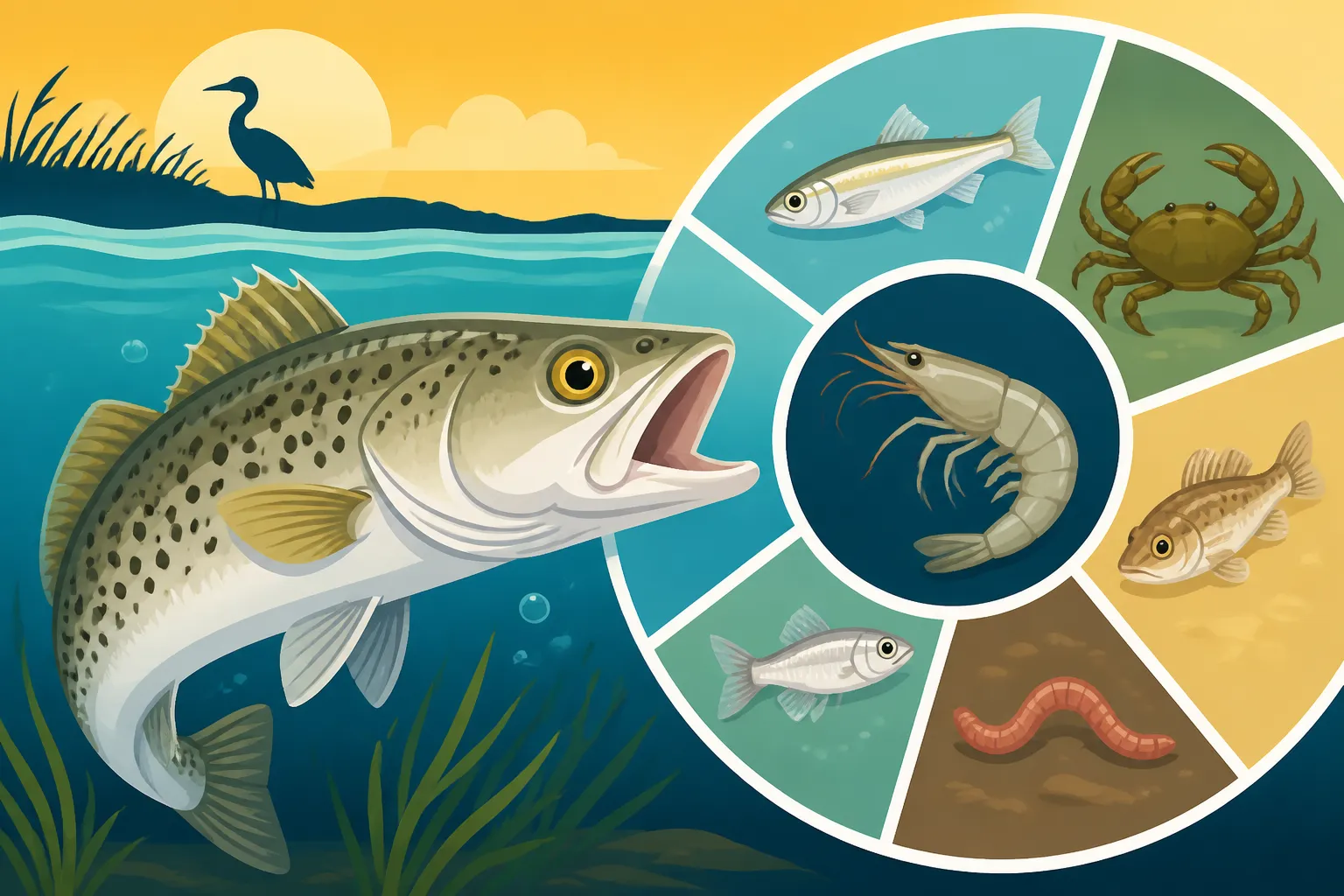
By far, finfish make up the bulk of a speckled trout's diet. These active swimmers provide a high-energy meal that specks are perfectly adapted to hunt. When trout are on a finfish bite, you'll often see them crashing bait on the surface or ambushing schools around structure.
The most common finfish on their menu include menhaden (pogies), various types of mullet (especially finger mullet), pilchards, and anchovies. These smaller baitfish often congregate in schools, making them an easy target for hungry trout. In areas like Galveston Bay or Corpus Christi Bay, when the menhaden are schooling thick, trout will gorge themselves, sometimes to the point of regurgitating baitfish when landed. Similarly, schools of finger mullet moving through grass flats are like a dinner bell for specks. It's why many anglers religiously cast topwater lures or soft plastic swimbaits designed to imitate these fleeing baitfish. Thinking about it, What do speckled trout eat is often synonymous with "what small fish are in the bay?"
Crustaceans: A Key Protein Source
While finfish might be the main course, crustaceans, especially shrimp, are a beloved dessert for speckled trout. Shrimp are a ubiquitous food source in Texas bays, and trout absolutely cannot resist them, particularly when they're actively migrating. The "pop" or "click" sound a fleeing shrimp makes is a natural trigger for a trout's lateral line, sending them straight into attack mode.
Brown shrimp, white shrimp, and pink shrimp are all fair game. During spring and fall shrimp migrations, trout will key in on these crustaceans almost exclusively. You'll often hear anglers talking about a "shrimp bite" when trout are less interested in finfish imitations and more focused on something that looks and acts like a shrimp. Small blue crabs and fiddler crabs can also be on the menu, especially for larger trout, though they're typically a less frequent meal compared to shrimp. For this reason, many effective artificial lures, particularly soft plastics, are designed to perfectly mimic a live shrimp, both in profile and action.
Opportunistic Feeding Habits
Beyond their preferred finfish and crustaceans, speckled trout are truly opportunistic feeders. This means they'll pretty much eat whatever they can catch, especially if it's easy prey. They're not particularly picky when food is scarce or when they're in a feeding frenzy.
This opportunistic nature means that while a large trout might be targeting a 6-inch mullet, a smaller one might snatch a tiny minnow, a small grass shrimp, or even a juvenile crab. They will also readily eat smaller, weaker members of their own species or other small fish that happen to be struggling. This behavior reinforces the idea that understanding the overall ecosystem of the bay system you're fishing in is crucial. Are there baitfish schooling? Is there a shrimp run? Is the water murky after a rain, pushing out smaller invertebrates from the marsh? All these factors can influence what a speckled trout decides to put on its plate, and anglers who pay attention to these environmental cues will often have the most success.
Seasonal and Environmental Influences on Speckled Trout Diet
Just like our own diets might change with the seasons (more salads in summer, heartier stews in winter), a speckled trout's diet is heavily influenced by the time of year and specific environmental conditions. What they eat in the scorching Texas summer is often very different from their winter menu, and understanding these shifts is crucial for consistent success.
Springtime Feasting: Following the Bait
As the Texas bays begin to warm in spring, it's a time of renewed activity and abundant food. Trout, emerging from a slower winter, become incredibly active and hungry. This is often when the first major shrimp migrations begin, and baitfish like menhaden and mullet start to move into the bay systems in larger numbers.
Speckled trout will actively follow these bait migrations, often congregating in areas where food is plentiful, like around grass flats, oyster reefs, and near the mouths of bayous where nutrients are washing in. They are often in a post-spawn feeding mode, recovering energy after the rigors of reproduction. This is a prime time for aggressive topwater bites as trout are eager to ambush unsuspecting prey. Targeting areas with abundant juvenile baitfish or a strong presence of actively moving shrimp is key. Anglers should be ready with both finfish and shrimp imitations.
Summer's Bounty: Abundance and Adaptations
Texas summers bring intense heat, and while the water temperatures rise, so does the metabolism of speckled trout. This means they need to eat frequently, but they also adapt their feeding strategies to cope with the heat. Baitfish and shrimp are typically abundant, offering a smorgasbord for hungry specks.
During the hottest parts of the day, trout might retreat to deeper, cooler water, such as channel edges, deep grass beds, or shaded areas around docks and piers. They might feed more actively during the cooler hours of dawn and dusk, or even throughout the night. When they do feed in the heat, they often target schools of baitfish that are pushed to the surface by predatory activity, creating visible "slicks" on the water or attracting diving birds. Anglers looking to brave the summer heat should focus on these deeper haunts or plan for early morning or late evening trips. Understanding How to Fish in Hot Texas Summers can definitely increase your chances of finding actively feeding fish.
Fall Run: Preparing for Winter
The fall season is arguably one of the most exciting times to fish for speckled trout in Texas. As water temperatures begin to cool, the bays become a highway for baitfish and shrimp migrating out to the Gulf of Mexico. This "fall run" triggers an intense feeding frenzy in speckled trout as they instinctively gorge themselves to build up fat reserves for the leaner winter months.
Trout become incredibly aggressive, chasing down schools of mullet and menhaden with reckless abandon. This is a fantastic time for throwing large topwater lures, suspending twitch baits, or big soft plastic swimbaits. You'll often find them schooled up, pushing bait against shorelines, jetties, or points. Look for diving birds, which are a dead giveaway for active feeding. This behavior creates some of the most memorable fishing experiences, with multiple hookups not uncommon. This period is a prime example of their finfish-centric diet at its most active.
Winter Slowdown: Survival and Scarcity
Winter brings colder water temperatures, which significantly slow down the metabolism of speckled trout. They become more lethargic, conserve energy, and feed less frequently. Baitfish migrations have largely ceased, and many shrimp have moved offshore or burrowed into the mud, leading to scarcer food sources within the bays.
During winter, trout will often move into deeper, more stable water, seeking refuge from cold fronts. They might congregate in deep channels, cuts, bayous, or around protected structures. Their diet shifts to whatever slow-moving or bottom-dwelling prey is available, such as smaller shrimp, mud minnows, or even juvenile crabs that are hunkered down. How to Catch Speckled Trout in Winter often involves slowing down your retrieve, using smaller, subtler baits, or fishing during periods of stable weather between cold fronts. The trout are still eating, but they're doing it with much less energy expenditure.
Water Clarity and Structure
The clarity of the water also plays a huge role in a speck's diet and how they hunt. In clear water, trout rely heavily on sight, making realistic baitfish imitations and stealthy approaches crucial. They'll also be more prone to ambushing prey in clearer water, using grass beds or oyster reefs for cover. In murkier or stained water, trout will lean more on their lateral line to detect vibrations and scent. In these conditions, lures with rattles, strong scents, or larger profiles that displace more water can be highly effective, as can strong-smelling natural baits.
Structure within the bay—be it oyster reefs, grass flats, deeper channels, or even man-made structures like piers and jetties—also dictates what food sources are available. Oyster reefs attract a variety of small organisms and provide ambush points. Grass flats are nurseries for juvenile baitfish and shrimp. Deeper channels act as highways for migrating bait and offer cooler water in summer. All these elements concentrate specific prey items, influencing where trout choose to hunt and what they choose to eat.
Mimicking Natural Prey: Lure and Bait Selection
Understanding what speckled trout eat is only half the battle; the other half is presenting something that they think is on their menu. This is where wise lure and bait selection comes into play. Whether you prefer natural baits or artificials, the goal is always to imitate what the trout are actively feeding on at that moment.
Live Bait Strategies
There's no denying the effectiveness of live bait when targeting speckled trout. It's the real deal, offering natural scent, movement, and vibration that artificials can only strive to replicate.
- Live Shrimp: This is arguably the most popular and effective live bait for speckled trout, especially during shrimp runs. You can fish them under a popping cork to mimic a shrimp's "click" and distress, free-lined with a small split shot, or on a light jig head. The key is to keep them lively and natural. Many tackle shops along the coast will sell live shrimp.
- Finger Mullet: Small mullet are another top choice, particularly for larger trout that are looking for a more substantial meal. They can be free-lined, fished under a popping cork, or slowly retrieved on a small Kahle hook. They're robust baitfish and can withstand casting well.
- Croaker: This baitfish is a well-known speckled trout magnet, especially during the summer. Croakers emit a distinct croaking sound when stressed, which drives trout wild. They are typically fished on a kahle hook with minimal weight, allowing them to swim naturally. The challenge with croaker can sometimes be keeping them alive and lively in a livewell.
- Other Live Baits: Depending on the region and season, other live baitfish like piggy perch, pinfish, or even small mud minnows can be effective. The key is always to use fresh, lively bait that mimics the natural forage in the area.
Artificial Lures that Imitate Forage
For many anglers, the thrill of catching a speckled trout on an artificial lure is unmatched. Modern lures are incredibly advanced, designed to mimic every aspect of a trout's natural prey. You can find an incredible array of options, and a quick search on Amazon will show you just how many variations exist for each type.
- Soft Plastics: These are incredibly versatile and likely account for the most speckled trout catches. They come in countless shapes, sizes, and colors, often designed to imitate shrimp or baitfish.
- Shrimp Immitations: Soft plastic shrimp, often fished under a popping cork or on a light jig head, are deadly when trout are keying in on crustaceans. Brands like D.O.A. and Vudu Shrimp are perennial favorites.
- Baitfish Immitations: Paddle tail, curly tail, or straight tail soft plastics rigged on a jig head are fantastic for imitating mullet, menhaden, or pilchards. Sizes from 3 to 5 inches are common, with colors ranging from natural baitfish patterns (chartreuse, silver, white) to brighter "reaction strike" colors (limetreuse, pink). The Z-Man DieZel Minnowz are a personal favorite that you can find readily on Amazon.
- Topwater Lures: There's nothing quite like a speckled trout exploding on a topwater lure at dawn or dusk. These lures, often called "walk-the-dog" or "chuggers," imitate a fleeing or wounded baitfish on the surface. They are most effective in calm to lightly choppy water, especially when trout are actively feeding near the surface. Popular choices include the Heddon Super Spook Jr., MirrOlure She Dog, and Rapala Skitter Walk. These are fantastic for the spring and fall feeding frenzies.
- Hard Baits (Suspending Twitch Baits & Lipless Crankbaits): These lures are excellent for targeting trout holding slightly deeper in the water column, especially in colder water or when fish are less aggressive.
- Suspending Twitch Baits: These lures sink to a certain depth and suspend there, allowing anglers to work them with a "twitch, twitch, pause" retrieve that perfectly imitates a wounded baitfish. The MirrOlure MirrOdine and Paul Brown Devil are classic examples.
- Lipless Crankbaits: These lures, like the Rat-L-Trap or Cordell Super Spot, produce strong vibrations and can be retrieved at various depths, making them effective when trout are scattered or when you need to cover a lot of water.
- Spoons: Metal spoons, especially silver or gold, are simple yet effective, mimicking a wounded or fleeing baitfish with their wobbling action. They cast a mile and can be worked effectively in windy conditions.
Scent and Sound Attractants
While visual appeal and action are crucial, don't underestimate the power of scent and sound. Speckled trout have keen senses, and these attractants can often make the difference, especially in murky water or when fish are finicky.
Many soft plastics now come pre-scented with natural fish attractants, or you can add scent gels and sprays to any lure. Brands like Pro-Cure or Fishbites are popular for adding an extra olfactory appeal. The scent helps trout track the lure and hold onto it longer once they strike, giving you more time to set the hook.
Sound, primarily from rattles in lures or popping corks, can also be a significant draw. The clicking sound of a popping cork imitating a feeding shrimp, or the internal rattles in a topwater or soft plastic jig, can call in trout from a distance, especially in low light or stained water conditions. It stimulates their lateral line, acting like a dinner bell signaling a struggling meal. Many of the soft plastic jig heads available on Amazon incorporate rattles for this very reason.
Understanding Speckled Trout Feeding Behavior
Beyond what they eat, understanding how speckled trout eat and their general behavior can provide invaluable insights for anglers. Are they schooling? Are they ambushing? Are they impacted by the tide? All these factors dictate where and how you should present your offerings.
Ambush Predators
Speckled trout are classic ambush predators. While they can and will chase down prey in open water, they often prefer to lie in wait, concealed by structure, grass, or subtle changes in depth, ready to dart out and strike.
They use features like oyster reefs, submerged grass beds, potholes, and channel edges as prime ambush points. Here, they can hide from their prey while also being positioned to intercept baitfish or shrimp moving with the current. Their mottled coloration provides excellent camouflage against these backgrounds. When you approach these areas, try to present your lure or bait in a way that suggests an easy, unsuspecting meal passing by their hiding spot. This is why fan-casting across a grass flat or working the edges of an oyster reef can be so effective.
Schooling and Group Feeding
While larger, solitary "gator trout" might roam alone, speckled trout often exhibit schooling behavior, especially smaller to medium-sized fish. These schools provide safety in numbers and also allow for more efficient feeding.
When a school of trout finds a concentration of bait, they will often work together to corral it, pushing the baitfish towards the surface or into shallow areas where escape is difficult. This is when you'll see those telltale signs of active feeding: nervous water, baitfish showering out of the water, or the most exciting sign, diving birds like terns or gulls. How to Catch Speckled Trout Under Diving Birds is a golden ticket to finding schools of actively feeding fish. These birds are simply capitalizing on the trout's hard work, picking off baitfish that are pushed to the surface. When you spot these signs, it's usually a cue to cast aggressively into the commotion.
Impact of Tides and Weather
Tides and weather are the ever-present, uncontrollable variables that significantly impact speckled trout feeding. Understanding their influence can greatly improve your success.
- Tidal Movement: Moving water is almost always better for fishing than slack tide. Tides create currents that concentrate baitfish, flush out shrimp from their hiding spots, and provide ambush opportunities for trout. A strong incoming or outgoing tide can push bait through specific bottlenecks, making those areas prime feeding grounds. Many experienced anglers closely consult tide charts, knowing that Best tides for fishing Texas bays often coincide with the strongest current flows.
- Weather Fronts: Cold fronts, in particular, can drastically alter trout behavior. Before a front arrives, fish often go on a feeding binge, sensing the impending change. Immediately after a strong cold front, however, the water temperatures drop, and trout become sluggish, moving to deeper, more stable waters and feeding sparingly. How weather fronts affect saltwater fishing on the coast is a critical piece of knowledge for any serious Texas angler. Conversely, stable weather with consistent temperatures often leads to more predictable feeding patterns. Wind also plays a role, creating currents, oxygenating the water, and sometimes pushing bait into certain areas, or making it difficult for trout to hunt visually.
By combining an understanding of what speckled trout eat with insights into their behavior and environmental factors, you'll be well on your way to more productive and enjoyable fishing trips on the Texas coast.
Disclaimer
This article is for general informational purposes only and does not constitute professional advice. Laws, prices and regulations vary by location and change over time. Consult a qualified professional for guidance on your specific situation.