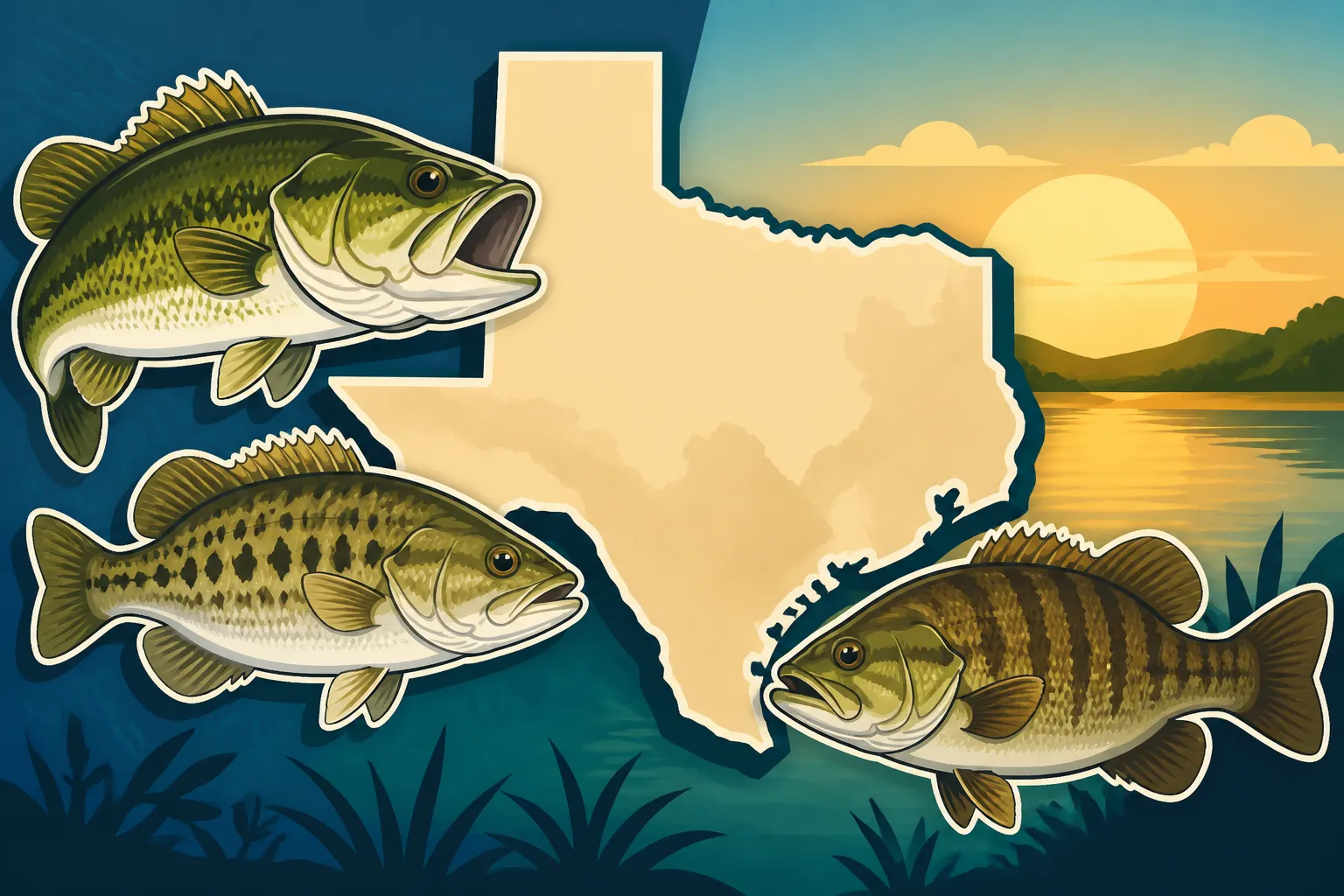
What black bass species live in Texas
It can be incredibly confusing for anglers, both seasoned and new, when folks start talking about "black bass" in Texas. Most of us just say "bass" and immediately picture that big, green largemouth we all love to catch. But did you know there are actually a few distinct species of black bass swimming in our Texas waters? This guide is here to clear up the mystery, detailing the different black bass species you might encounter, how to tell them apart, and where you're most likely to find them.
The Iconic Texas Largemouth Bass
When most people in Texas talk about "bass," they're almost certainly referring to the largemouth bass (Micropterus salmoides). This is the undisputed king of freshwater fishing across the state, the one that spawns dreams of trophy catches and countless fishing tournaments. Its aggressive strikes and powerful fights make it a favorite among anglers, and it truly thrives in the diverse aquatic environments Texas offers.
Identifying a Largemouth Bass
The largemouth bass is characterized by its deep green color, often with a prominent dark, horizontal stripe or blotches along its flanks that can sometimes break up into a series of splotches. Its belly is typically white or light gray. The most definitive identifying feature, however, is its mouth. When closed, the corner of the mouth extends noticeably past the back of its eye. If you can slip your thumb into its mouth and feel the jaw hinge extend beyond its eye, you've got a largemouth. They also have a deep notch between their spiny dorsal fin and soft-rayed dorsal fin, making them look like two separate fins. You'll also notice that their scales on the cheek are generally smaller than the scales on the gill cover. Knowing how to identify them properly is key, especially if you're trying to meet specific length limits or just impress your fishing buddies. For a deeper dive into distinguishing these fish, check out How to identify a largemouth bass vs a spotted bass.
Where Largemouth Bass Thrive in Texas
Largemouth bass are incredibly adaptable, which is why they're found in nearly every lake, pond, and slow-moving river system across Texas. They prefer warm, somewhat murky waters with plenty of cover like submerged vegetation, standing timber, brush piles, rocky outcrops, and boat docks. Think about those big, sprawling reservoirs like Lake Fork, Sam Rayburn Reservoir, and Toledo Bend – these are legendary for their largemouth bass populations. You'll find them lurking in the shallows during cooler months and early mornings, then retreating to deeper, cooler water as the Texas sun beats down. They're ambush predators, patiently waiting in cover to dart out and snatch an unsuspecting baitfish or crawfish. Learning about Best Bass Lakes in Texas can help you pinpoint some prime largemouth spots.
Fishing for Texas Largemouth Bass
Catching largemouth bass in Texas is an art form, really, and there are as many techniques as there are anglers. During the spring, when bass are in their Texas Bass Spawning Season Guide, you'll often find them guarding nests in shallow coves. Flipping and pitching jigs or soft plastics into heavy cover is incredibly effective. As summer heats up, they'll move deeper, making crankbaits, deep-diving jigs, and Texas rigs great choices for probing ledges and submerged structures. Topwater lures are exhilarating during low-light conditions. Many anglers spend hours perfecting their technique with various baits and lures, which you can easily find on sites like Amazon, to tempt these finicky fish. If you're looking for more guidance on specific methods, our How to Fish for Bass in Texas guide has a wealth of information.
The Unique Guadalupe Bass: Texas's State Fish
Next up, we have the Guadalupe bass (Micropterus treculii), a true Texas treasure and our official state fish! What makes this species so special is that it's endemic to Texas, meaning it's found naturally nowhere else in the world. It’s a smaller, scrappier cousin to the largemouth, beloved by fly fishermen and those who appreciate its spirited fight in riverine environments.
Identifying a Guadalupe Bass
The Guadalupe bass is often described as resembling a smallmouth bass due to its elongated, torpedo-shaped body and smaller mouth compared to a largemouth. However, it has its own distinct features. Its coloration is typically olive green to bronze on the back, fading to white on the belly, with distinct diamond-shaped spots or irregular blotches running along its sides, which don't form a continuous lateral line. Crucially, the corner of its mouth does not extend past the back of its eye when closed. Another key identifier is the presence of rows of small dark spots below the lateral line, especially on the lower side. They also lack the distinct vertical bars often seen on smallmouth bass. For an even more detailed description of this unique fish, take a look at Guadalupe Bass Texas State Fish Guide.
Where Guadalupe Bass Call Home
Unlike the widespread largemouth, the Guadalupe bass is a river dweller, preferring the clear, flowing waters of the Edwards Plateau. Its native range includes the Guadalupe River (of course!), but also the San Marcos, Colorado, Llano, Pedernales, and Frio Rivers. They thrive in rocky, swift-moving stretches with plenty of riffles, runs, and deep pools, often hiding among submerged boulders, cypress roots, and undercut banks. These fish are sensitive to habitat changes and interbreeding with smallmouth bass, which makes conservation efforts incredibly important. If you’re looking to find this native beauty, focusing on the pristine river systems of the Hill Country is your best bet. You can find more information on their habitat and conservation efforts in Where does the Guadalupe bass live in Texas.
Fishing for Guadalupe Bass
Fishing for Guadalupe bass is a unique experience, often involving lighter tackle and a more finessed approach due to their smaller size and riverine habitat. Fly fishing is a particularly popular method, with anglers casting small poppers, streamers, and nymphs into eddies and along current breaks. Ultralight spinning gear with small crankbaits, spinnerbaits, or soft plastic grubs can also be highly effective. The key is to present your lure naturally in the current and be ready for a feisty fight. While they don't grow to the massive sizes of largemouths, their spirited battles in current make them a rewarding catch. If you’re preparing for a trip to the Hill Country, consider grabbing some specialized river fishing gear.
The Elusive Spotted Bass Species in Texas
Often mistaken for its more famous cousin, the largemouth, the spotted bass (Micropterus punctulatus) is another black bass species found in Texas. While not as dominant as the largemouth in most systems, it can provide excellent fishing, especially in certain reservoirs and river sections. There are actually a few subspecies, but in Texas, we primarily encounter the Kentucky spotted bass.
Identifying a Spotted Bass
The spotted bass shares many similarities with the largemouth, which leads to frequent misidentification. However, there are distinct differences. Like the largemouth, it has a horizontal dark stripe, but this stripe often appears more as a series of distinct, somewhat irregular spots. The key identifier is the mouth: when closed, the corner of a spotted bass's mouth does not extend beyond the back of its eye, similar to the Guadalupe bass, but unlike the largemouth. Another crucial characteristic is the patch of small teeth on the tongue, which a largemouth bass typically lacks (though some very large largemouths can sometimes develop a slight roughness). The spotted bass also has more scales on its cheek than its gill cover, and its dorsal fins are less deeply notched than the largemouth, appearing more connected. For a comprehensive comparison, our Texas Spotted Bass Identification Guide can be a great resource.
Where Spotted Bass Reside in Texas
Spotted bass prefer clearer, rockier waters than largemouths, often inhabiting reservoirs with significant rock formations, bluffs, and deep points. They are generally found in the eastern half of Texas, particularly in reservoirs like Lake Whitney, Lake Texoma, and parts of the Brazos River and its tributaries. You'll often find them deeper than largemouths, especially during the warmer months, schooling around humps, ledges, and submerged timber. They're known for occupying areas that are transition zones between rocky and vegetated structures, or deep, clear water areas that might be less appealing to largemouths. Understanding their preferred habitats is crucial for targeting them specifically.
Fishing for Spotted Bass
Fishing for spotted bass often involves a blend of largemouth and smallmouth techniques. They can be very aggressive and will hit a wide variety of lures. Because they often hold in deeper, clearer water and around structure, techniques like drop-shotting, shaky heads, finesse jigs, and small crankbaits are highly effective. They're also known to school up, so once you find one, you might find many! While they don't reach the sheer size of trophy largemouths, they are incredibly strong fighters for their size, providing a thrilling experience on light to medium-light tackle. Getting the right gear, like specific weights for drop-shotting or specific colored finesse worms, can really make a difference, and you can explore many options on Amazon to match the conditions.
Differentiating Texas's Black Bass Species at a Glance
To help you quickly tell the difference between these fascinating black bass species on the water, here's a quick comparison table of their most prominent features. Remember, practice makes perfect when it comes to identification!
| Feature | Largemouth Bass | Guadalupe Bass | Spotted Bass |
|---|---|---|---|
| Mouth Position | Jaw extends past eye | Jaw does not extend past eye | Jaw does not extend past eye |
| Lateral Line Markings | Dark, irregular horizontal stripe/blotches | Diamond-shaped spots, no continuous stripe | Series of distinct spots, sometimes continuous |
| Tooth Patch on Tongue | Usually absent (smooth) | Absent (smooth) | Present (rough, like sandpaper) |
| Dorsal Fin Notch | Deeply notched, appears almost separated | Moderately notched | Moderately notched, more connected |
| Body Shape | Robust, deepest body profile | Elongated, torpedo-shaped | Intermediate, somewhat elongated |
| Preferred Habitat | Warm, vegetated lakes & slow rivers | Clear, flowing Hill Country rivers | Clear, rocky reservoirs & rivers |
| Native to Texas? | Introduced (widespread) | Yes, endemic to Texas | Native |
This table provides a concise summary, but remember that individual fish can vary, and sometimes hybrids occur, making identification even trickier. If you're ever unsure about bag or length limits for a specific fish, always consult the most current Texas Fish Bag and Length Limits regulations.
Conservation and Responsible Angling
Understanding the different black bass species isn't just about identifying your catch; it's also about being a responsible angler. The Texas Parks and Wildlife Department (TPWD) manages our fisheries to ensure healthy populations for future generations. This includes specific Texas Largemouth Bass Length Limits, bag limits, and special regulations for unique species like the Guadalupe bass, which often has stricter catch-and-release rules in its native rivers.
It’s crucial to know the rules, not just to avoid penalties, but to contribute to conservation. Catch-and-release practices, especially for larger breeding fish, help sustain populations. Handle fish gently, minimize their time out of water, and use proper de-hooking tools. By taking the time to learn about these different species, their habitats, and the regulations surrounding them, you're not just becoming a better angler; you're becoming a steward of Texas's incredible freshwater resources. So next time you're out on the water, take a closer look at your catch – you might be holding something truly unique!
Disclaimer
This article is for general informational purposes only and does not constitute professional advice. Laws, prices and regulations vary by location and change over time. Consult a qualified professional for guidance on your specific situation.