What is a black bass
Ever heard someone mention "black bass" and wondered exactly which fish they were talking about? It's a common bit of fishing jargon that can definitely cause some head-scratching, especially here in Texas where we have a fantastic variety of these feisty fish. Many anglers, even seasoned ones, often use the term broadly, making it tough to know if they mean a largemouth, a smallmouth, or one of our unique native species. This guide is here to clear up that confusion, diving deep into what exactly constitutes a "black bass" in the Lone Star State, the distinct types you'll encounter, and how to confidently tell them apart.
Understanding the "Black Bass" Family
The term "black bass" isn't just a casual nickname; it actually refers to a specific group of freshwater fish within the scientific genus Micropterus. These are some of the most sought-after game fish across North America, and for good reason—they're incredibly fun to catch, often put up a thrilling fight, and can be quite challenging to outsmart. But within this family, there's a good deal of diversity, especially when you start looking at the individual species that call our Texas waters home.
What Exactly is a Black Bass?
At its core, a "black bass" is a freshwater fish belonging to the sunfish family, but distinct enough to get its own special recognition. They are characterized by their typically dark, blotchy patterns, often appearing "blackish" or dark green, which helps them camouflage in various aquatic environments. While "bass" is a broad term used for many different fish, from ocean stripers to rock bass, the Micropterus genus specifically encompasses what most freshwater anglers think of when they hear "bass"—the largemouth, smallmouth, spotted, and our very own Guadalupe bass, among others.
They're typically predatory fish, meaning they actively hunt other smaller fish, crustaceans, and insects. This makes them excellent targets for a wide array of artificial lures and baits. Their aggressive nature and powerful runs are why they've earned such a celebrated status in the angling world. From the biggest lakes to the smallest creeks, finding a black bass is often the highlight of a fishing trip, and understanding their nuances is key to consistent success.
Why the Confusion Around the Term?
Let's be honest, the casual use of "bass" can be a bit of a linguistic mess, can't it? One person might say they caught a "bass" on Lake Fork and immediately you picture a massive bucketmouth. Another might say they caught a "bass" on the Guadalupe River, and you're imagining a Guadalupe bass. The confusion often stems from a few key factors. First, many anglers, particularly those new to the sport or those who primarily fish one type of water, might not be aware of the distinct species differences. To them, if it looks like a bass and fights like a bass, it's just "a bass."
Second, some species have subtle differences that aren't immediately obvious, especially to the untrained eye. For example, telling a spotted bass from a largemouth can be tricky at first glance, leading to them being grouped together. This becomes particularly relevant when local regulations might differ slightly between species, or when you're trying to replicate a successful fishing pattern. If someone tells you to use a certain lure for "bass" in a river, knowing if they're usually catching Guadalupe bass or spotted bass will significantly impact your lure choice and presentation. It's a common frustration, but with a little knowledge, you'll be able to confidently identify your catch.
The Primary Black Bass Species You'll Find in Texas
Texas is blessed with an incredible diversity of black bass species, each offering a unique challenge and experience for anglers. While the largemouth bass is undeniably the most famous, we have several other members of the Micropterus family that are equally deserving of your attention. Knowing these distinct species will not only help you identify your catch but also refine your fishing techniques to better target them.
Largemouth Bass: The Undisputed King
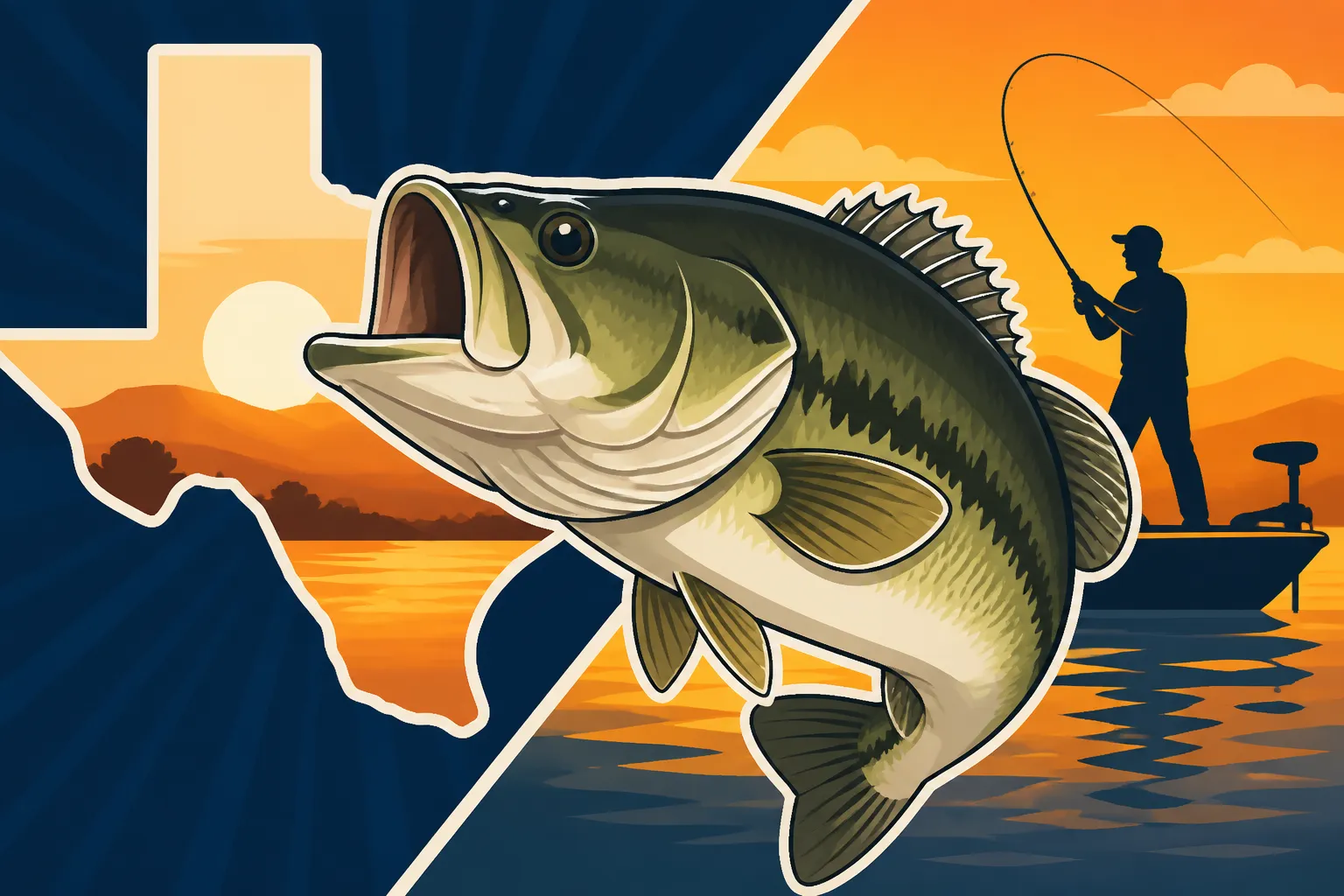
When most people in Texas talk about "bass," they're almost certainly referring to the largemouth bass (Micropterus salmoides). This is the iconic fish of Texas freshwater fishing, known for its aggressive strikes, powerful fights, and impressive size. You'll find largemouths in virtually every lake, pond, and slow-moving river across the state, from the sprawling waters of Sam Rayburn Reservoir to your local community fishing pond.
The largemouth is easily identifiable by its most prominent feature: its large mouth, where the jaw extends beyond the back of the eye when closed. It typically has a dark, irregular lateral line running down its side, which can sometimes appear as a series of blotches. Their coloration can vary wildly from bright green in clear water to almost black in stained or muddy environments. These fish are ambush predators, often hiding in submerged vegetation, timber, or around docks, waiting to erupt on unsuspecting prey. They are the backbone of our bass fishing culture and the target of countless tournaments and recreational outings. If you want to learn more about targeting these giants, check out our Texas Largemouth Bass Fishing Guide.
Guadalupe Bass: Texas's Own Treasure
The Guadalupe bass (Micropterus treculii) holds a special place in the hearts of Texans – it's our official state fish! What makes the Guadalupe bass so unique is that it's endemic to Texas, meaning it's found naturally nowhere else in the world. This makes every catch of a Guadalupe bass a truly special Texas experience. These smaller, feisty bass are typically found in the clear, rocky, and fast-flowing rivers and streams of the Texas Hill Country, particularly the Guadalupe, Llano, San Gabriel, and Colorado River systems.
Guadalupe bass are often confused with smallmouth bass due to their similar habitat preferences and fighting style. However, they generally have a more distinct pattern of dark, diamond-shaped blotches along their sides, which can sometimes connect to form a lateral line that looks almost like a chain. Their jaw does not extend past the eye. They typically don't grow as large as largemouths, with a trophy Guadalupe bass often being measured in ounces rather than pounds, but what they lack in size, they more than make up for in pure fighting spirit against the current. Protecting this native species is crucial for Texas's ecological heritage. You can explore more about this incredible fish in our Guadalupe Bass Texas State Fish Guide.
Spotted Bass: The Often-Overlooked Cousin
The spotted bass (Micropterus punctulatus) is another member of the black bass family found in Texas, and it's often the source of much identification confusion with both largemouth and even smallmouth bass. They are commonly found in the eastern parts of the state, especially in rivers and reservoirs with rocky bottoms and clearer water. Lakes like Lake Texoma and Toledo Bend have healthy populations.
Spotted bass share some traits with largemouths, like a similar body shape and coloration, but there are key differences. Their mouth is smaller than a largemouth's, with the upper jaw typically not extending past the eye. They also have distinct rows of dark spots below their lateral line, giving them their "spotted" name. Perhaps the most definitive identification feature is a small, rough patch of teeth on their tongue, which you can feel with your thumb. This is absent in largemouths. Spotted bass are known for their strong, consistent fighting style, often staying deep and pulling hard, rather than jumping like a largemouth.
Smallmouth Bass: The Less Common Fighter
While not as widespread as largemouths or even spotted bass in Texas, smallmouth bass (Micropterus dolomieu) have been successfully introduced into several of our state's cooler, clearer, and rockier reservoirs. You'll primarily find them in places like Canyon Lake, Lake Meredith, and Stillhouse Hollow Lake, where they thrive in conditions reminiscent of their native northern habitats.
True to their name, smallmouth bass have a noticeably smaller mouth than a largemouth, with the upper jaw ending before the back of the eye. They typically have vertical bars or blotches along their sides, which can vary in intensity, and their overall coloration tends to be more bronze or brown. They are absolute powerhouses, renowned for their incredible fighting ability, including strong runs, deep dives, and spectacular aerial acrobatics. Catching a smallmouth in Texas is a real treat, offering a different kind of angling challenge compared to the ubiquitous largemouth. They are definitely distinct from our Guadalupe Bass vs Smallmouth Bass, so knowing the differences is important.
How to Tell Your Texas Black Bass Apart
Distinguishing between the different black bass species in Texas can feel like a puzzle at first glance, but once you know what to look for, it becomes much easier. It's not just about bragging rights; accurate identification is crucial for adhering to specific regulations and truly understanding the fish you're targeting. Let's break down the key markers.
Key Identification Markers (Jawline, Lateral Line, Tongue Patch)
These three features are your best friends when trying to identify a black bass on the fly. You'll often hear experienced anglers referencing them, and for good reason—they're incredibly reliable.
- Jawline Extension: This is often the quickest giveaway, especially when distinguishing largemouth from other black bass.
- Largemouth Bass: The corner of its jaw extends noticeably past the back of its eye. Imagine drawing a vertical line down from the back of the eye; the jaw will go beyond it.
- Guadalupe Bass, Spotted Bass, Smallmouth Bass: The corner of their jaw typically ends before or directly under the back of the eye. This is a subtle but consistent difference.
- Lateral Line and Body Pattern: The horizontal line running down the side of the fish, and the patterns around it, are also very telling.
- Largemouth Bass: Has a distinct dark, often broken, horizontal band or blotchy lateral line. The belly is usually white.
- Guadalupe Bass: Features unique, diamond-shaped or connected dark blotches along its lateral line, often with horizontal rows of spots below it, creating a "chain-link" appearance. Their belly often has spots.
- Spotted Bass: Shows distinct rows of small, dark spots below the lateral line, especially on its lower flanks, almost like a dotted pattern.
- Smallmouth Bass: Generally has vertical bars or blotches along its sides, and a more uniform brownish or bronze coloration. It lacks the strong horizontal line of a largemouth or the distinct spots of a spotted bass.
- Tongue Patch: This is a definitive, tactile test that separates spotted bass from largemouth bass, especially important if the jawline is ambiguous or you’re dealing with a hybrid.
- Spotted Bass: Gently run your thumb over the tongue of the fish. You will feel a small, rough patch of teeth in the middle.
- Largemouth Bass, Guadalupe Bass, Smallmouth Bass: Their tongues will feel smooth.
Habitat and Behavior Clues
Beyond the physical characteristics, where you catch a bass and how it fights can offer valuable clues about its species. These contextual hints are often what local anglers rely on even before they get a close look at the fish.
- Habitat:
- If you're pulling a bass out of thick lily pads, submerged timber, or heavy brush in a calm, warm lake, it's almost certainly a largemouth. They love cover and ambush points.
- If you're fishing a clear, rocky, flowing river in the Texas Hill Country, and the fish are smaller but incredibly strong, you've likely hooked a Guadalupe bass. Guadalupe Bass Native Range in Texas is very specific.
- If you're on a clear, deeper reservoir with lots of rock structures, ledges, or points, and the fish fight deep, it could be a spotted or smallmouth bass. Smallmouths especially prefer cooler, rocky habitats with current.
- Fighting Style:
- Largemouth Bass: Famous for explosive, often aerial jumps, head shakes, and trying to bury itself in cover.
- Guadalupe Bass: Pound-for-pound one of the strongest fighters, especially in current. They make powerful, determined runs.
- Spotted Bass: Known for a strong, deep fight, pulling hard without as much jumping. They feel "heavier" for their size than a largemouth.
- Smallmouth Bass: The undisputed champion of acrobatics, often making multiple spectacular jumps and hard runs.
A Quick Reference Identification Table
To make identification even easier, here's a handy table summarizing the key differences between the most common black bass species you'll encounter in Texas. Keep this in mind next time you're out on the water! You might even print it and laminate it for your tackle box. For a deeper dive into the nuances, consult resources like our Texas Black Bass Species Comparison.
| Feature | Largemouth Bass | Guadalupe Bass | Spotted Bass | Smallmouth Bass |
|---|---|---|---|---|
| Jaw Extends Past Eye | Yes | No | No | No |
| Lateral Line | Dark, distinct, often broken horizontal band | Diamond-shaped blotches, sometimes connected | Less distinct, but rows of spots below it | Faint or absent, often vertical bars/blotches |
| Tongue Patch (Teeth) | No (Smooth) | No (Smooth) | Yes (Rough, distinct patch) | No (Smooth) |
| Primary Habitat | Warm, calm, vegetated lakes, ponds, slow rivers | Clear, rocky, flowing Hill Country rivers | Clear lakes, rocky rivers, reservoirs | Cooler, clear, rocky reservoirs |
| Typical Size | Largest of the black bass in Texas | Smallest of the black bass in Texas | Medium-sized | Medium-sized, but stockier |
| Overall Color | Green to olive, white belly | Greenish with darker chain-like pattern | Greenish-brown, lighter belly, spots | Bronze to brown, vertical bars |
Why Correct Identification Matters for Texas Anglers
You might be thinking, "What's the big deal if I can't tell them all apart? A bass is a bass, right?" While all black bass are indeed fun to catch, knowing exactly which species you've landed goes far beyond simple curiosity. For anglers in Texas, accurate identification is absolutely critical for several practical reasons, impacting everything from legal compliance to the success of your next fishing trip.
Regulations and Bag Limits
This is perhaps the most important reason to correctly identify your catch. The Texas Parks and Wildlife Department (TPWD) sets specific fishing regulations for different species, and these rules can vary significantly based on the fish type and even the specific body of water. For example, the legal size limits and daily bag limits for a largemouth bass might be completely different from those for a smallmouth or Guadalupe bass in the same lake or river.
Imagine you're fishing a river that's known for Guadalupe bass, and you accidentally keep a fish thinking it's a largemouth when it's actually an undersized Guadalupe bass. That could lead to a citation or a fine. Texas Freshwater Fishing Regulations are intricate, and they exist to protect fish populations and ensure sustainable angling for everyone. Being familiar with Texas Largemouth Bass Length Limits or the general Texas Freshwater Bag Limits by Species is a must for any responsible angler. If you're ever in doubt about a fish's identity and its corresponding rules, it's always best to release it unharmed.
Conservation Efforts
Correct identification plays a vital role in conservation, especially for species like our native Guadalupe bass. The TPWD, along with various conservation groups, works tirelessly to protect and enhance populations of these unique Texas fish. Misidentification can hinder these efforts by obscuring accurate population data or inadvertently leading to the harvest of protected or endangered fish.
For example, when anglers can correctly distinguish a Guadalupe bass, they are better equipped to understand and respect its specific regulations, which are often designed to ensure its survival and proliferation in its native range. Being able to confidently identify a Guadalupe Bass Native Range in Texas fish means you can contribute to its well-being by following catch-and-release practices in sensitive areas, or by simply being a more informed ambassador for our state's natural resources. Every angler has a part to play in protecting these precious species for future generations.
Enhancing Your Fishing Strategy
Beyond rules and conservation, knowing your black bass species will genuinely make you a better, more successful angler. Each species has distinct preferences for habitat, diet, and behavior, and tailoring your approach to these nuances can dramatically improve your catch rate.
Think about it:
- Lure Selection: Largemouth bass might smash a big spinnerbait or a plastic worm fished in heavy cover. Spotted bass might prefer a jig or a shaky head fished on rocky points. Guadalupe bass in current often respond well to smaller crankbaits or topwater lures presented aggressively. Knowing what you're targeting allows you to select the right bait from your tackle box (or from the extensive selection available on Amazon).
- Location: Are you casting into a dense weed bed? Great for largemouth. Are you targeting riffles and rocky eddies in a river? Perfect for Guadalupe bass or smallmouth. Knowing where each species prefers to live helps you spend your time fishing the most productive spots.
- Technique: Different bass require different presentations. A slow retrieve for a largemouth in cold water might be perfect, while a fast, erratic retrieve might be necessary to entice a smallmouth in a river current. Our Best Bait and Lures for Texas Fishing article might give you some ideas for different species.
By understanding the distinct personalities of each Texas black bass species, you move from just "bass fishing" to truly strategic, targeted angling. It transforms your approach, making every cast more intentional and every catch more rewarding.
Disclaimer
This article is for general informational purposes only and does not constitute professional advice. Laws, prices and regulations vary by location and change over time. Consult a qualified professional for guidance on your specific situation.