Texas Black Bass Species Comparison
It can be incredibly frustrating to hit a Texas lake, hook into a spirited fight, and then stare at your catch, wondering, "Is this a largemouth, a spotted, or something else entirely?" Texas is home to several members of the black bass family, and understanding the differences isn't just a matter of bragging rights; it's crucial for following regulations and truly appreciating the diversity of our fisheries. This guide will meticulously break down the distinct characteristics, preferred habitats, and fishing strategies for each black bass species found in the Lone Star State, ensuring you can identify your next trophy with confidence.
The Black Bass Family in Texas: More Than Just Largemouths
When most folks talk about "bass fishing" in Texas, their minds immediately jump to the largemouth bass. And for good reason – it's an iconic, widespread, and frequently stocked game fish that provides incredible angling opportunities across the state. However, to truly understand the rich tapestry of Texas freshwater fishing, we need to broaden our view beyond just the green monster. There are other fascinating and challenging members of the black bass family swimming in our rivers and reservoirs, each with its own unique charm and angling appeal.
Why "Black Bass" Can Be Confusing
The term "black bass" itself is a common source of confusion, even among seasoned anglers. It's not a single species, but rather a group of freshwater fish belonging to the genus Micropterus, which is part of the larger sunfish family (Centrarchidae). In Texas, we primarily deal with three native black bass species, plus a few introduced ones and hybrids. The confusion often stems from their similar appearances, especially to the untrained eye, and the fact that they often share the same waters. You might be fishing a creek, catching what you assume are small largemouths, only to realize later that they were actually spotted bass or even our beloved state fish, the Guadalupe bass. Each species has unique characteristics that, once you know what to look for, make identification much clearer.
A Quick Look at Texas's Black Bass
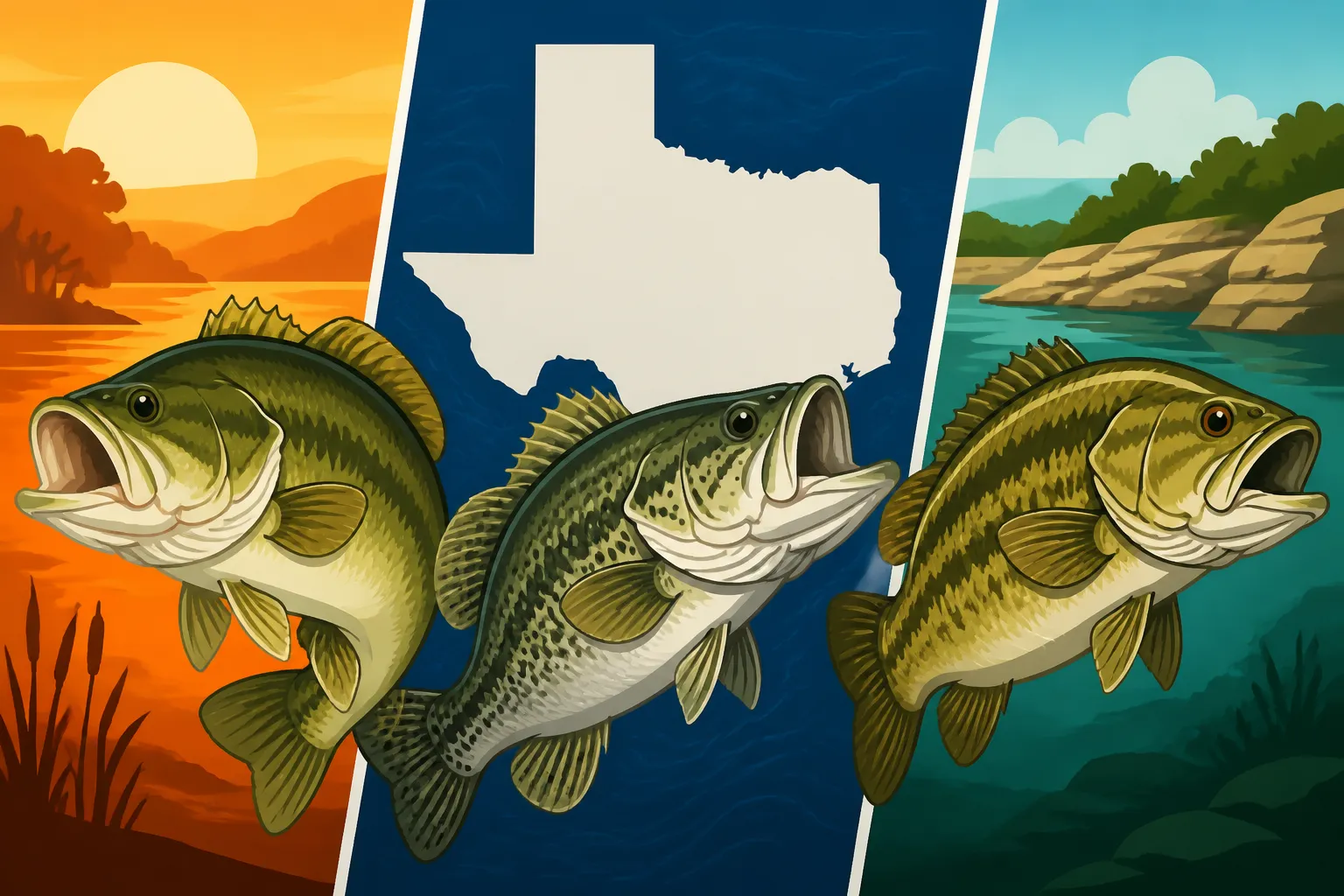
Texas is a truly special place for black bass, boasting a diverse range of species that thrive in various aquatic environments. Our big three native black bass species are the Largemouth Bass (Micropterus salmoides), the Spotted Bass (Micropterus punctulatus), and the Guadalupe Bass (Micropterus treculii). While the largemouth is the most recognizable, the spotted bass offers a powerful fight in rocky river systems, and the Guadalupe bass, found only in Texas, is a feisty native treasure that holds significant conservation importance. Beyond these, you might occasionally encounter Smallmouth Bass (Micropterus dolomieu) in certain colder, clearer reservoirs, though they are not native and less common than the other three. We'll focus primarily on the most prevalent species to give you a solid foundation for your Texas fishing adventures. Understanding these distinct species will not only improve your fishing knowledge but also help you appreciate the incredible biodiversity that makes Texas a premier fishing destination.
The Reigning King: Largemouth Bass
Ah, the largemouth bass! This is the fish that has launched a million fishing careers and remains the undisputed heavyweight champion of Texas freshwater angling. Known for its aggressive strikes and powerful leaps, the largemouth is the reason many of us got into fishing in the first place. From the massive reservoirs of East Texas like Lake Fork Fishing Guide to the smaller stock ponds across the state, the largemouth bass is both abundant and eagerly sought after. Its sheer size potential and widespread distribution make it the star of many fishing tournaments and weekend outings alike.
Identifying the Largemouth Bass
The largemouth bass is probably the easiest of the black bass species to identify, primarily due to its namesake feature: a truly massive mouth. When its mouth is closed, the upper jaw (maxilla) extends noticeably beyond the rear edge of its eye. This is the most reliable distinguishing characteristic. Beyond that, largemouths typically have a prominent dark, irregular horizontal stripe or blotches running along their sides, which can vary in intensity from a very distinct pattern in clear water to almost invisible in muddy conditions. Their body color generally ranges from dark green to olive on the back, fading to lighter green or white on the belly. Another key feature is the deep notch in their dorsal fin, almost creating two separate fins. Their scales often feel larger and rougher to the touch compared to some other bass. These visual cues are essential for a proper Texas Largemouth Bass Identification Guide.
When you catch a largemouth, take a moment to look at these details. The jawline is the big giveaway. If you can put your thumbnail on the very back edge of the eye, and the jaw still extends past it, you're almost certainly holding a largemouth. Their overall body shape is also generally more robust and football-like, especially in larger specimens, hinting at their predatory prowess. Their color can sometimes be deceiving, as bass adapt their coloration to their environment, but the physical characteristics remain constant.
Habitat and Behavior
Largemouth bass are incredibly adaptable, thriving in a wide variety of freshwater environments, but they do have preferences. They are primarily a warm-water species and prefer still or slow-moving water with abundant cover. Think submerged timber, thick aquatic vegetation like hydrilla or lily pads, boat docks, brush piles, and rocky outcroppings. These structures provide ambush points for hunting prey and protection from predators. Lakes like Sam Rayburn Reservoir Fishing Guide and Lake Fork Fishing Guide are perfect examples of prime largemouth habitat in Texas, offering vast expanses of ideal cover and forage.
Their diet is diverse and opportunistic, consisting of smaller fish, crayfish, frogs, and even small birds or rodents that fall into the water. Largemouths are sight feeders and aggressive predators, often ambushing their prey from cover. Their behavior changes significantly with water temperature and seasons. During the Texas Bass Spawning Season Guide, typically in spring when water temperatures reach the mid-60s, they move into shallow, protected areas to build nests and guard their eggs and fry. In the heat of summer, they often seek deeper, cooler water or dense shade. Understanding these seasonal movements is key to consistent success when fishing for them.
Fishing for Largemouths
Fishing for largemouth bass is a true art form, with countless techniques and baits employed by anglers. The key is often to "match the hatch" or imitate the prey they are feeding on, while also considering the depth, cover, and water conditions. Popular techniques include flipping jigs into heavy cover, Texas rigging soft plastics through weeds, working crankbaits along points and ledges, or twitching topwater lures over grass beds at dawn and dusk. For a deeper dive, check out our How to Fish for Bass in Texas guide.
When it comes to lures, the options are endless. Spinnerbaits, chatterbaits, plastic worms, creature baits, jerkbaits, and swimbaits all have their time and place. Many anglers rely on popular soft plastic baits for their versatility, often purchased in bulk from retailers like Amazon. The choice of lure often depends on the specific cover you're fishing and the bass's mood. For instance, a weighted Texas rig is perfect for penetrating thick vegetation, while a lipless crankbait excels at covering open water quickly. Always remember that largemouth bass can be finicky, so having a diverse tackle box and being willing to experiment is crucial for a successful day on the water.
The Feisty Cousin: Spotted Bass
Often overshadowed by its larger cousin, the spotted bass is a formidable and exciting game fish in its own right. While it may not reach the gargantuan sizes of a trophy largemouth, the spotted bass makes up for it with its aggressive nature and powerful, hard-fighting demeanor, especially on lighter tackle. Many anglers initially mistake them for small largemouths, but once you learn to identify their subtle differences, you'll find them to be a unique and rewarding catch. In certain river systems and clear reservoirs across Texas, the spotted bass can even outnumber largemouths, providing consistent action.
Identifying the Spotted Bass
The spotted bass (Micropterus punctulatus) shares many similarities with the largemouth, leading to common misidentification. However, there are a few critical distinctions. First, look at the jaw: for a spotted bass, when its mouth is closed, the upper jaw typically does not extend past the back edge of the eye. This is a primary differentiator from the largemouth. Second, and perhaps the most defining characteristic, is the presence of distinct rows of small, dark spots running below the lateral line on its lower sides, giving it its "spotted" name. These spots are usually more pronounced than any mottled pattern on a largemouth.
Another key identifier is the patch of teeth on its tongue. If you run your finger across the tongue of a spotted bass, you'll feel a rough patch of teeth, a feature largely absent in largemouths. The spotted bass also has a less pronounced dorsal fin notch than the largemouth, making the two sections appear more connected. Their body shape is generally more streamlined, and their overall coloration tends to be a bit lighter, often with a more uniform olive-green back fading to white. For a more detailed look, consult a Texas Spotted Bass Identification Guide. The combination of the jawline, the belly spots, and the tongue patch are your best bets for accurate identification.
Habitat and Behavior
Spotted bass prefer different habitats than largemouths, typically favoring clearer, deeper waters with rock and gravel bottoms, often with moderate currents. They are right at home in riverine environments and the rocky main lake bodies of reservoirs. While largemouths might be found deep in hydrilla beds, spotted bass will often patrol rocky points, bluff walls, rip-rap, and open water humps. Lakes like Canyon Lake and sections of the Brazos River are excellent examples of spotted bass strongholds in Texas. They don't typically associate with dense vegetation as much as largemouths.
Their diet is similar to largemouths, consisting of various smaller fish, crawfish, and insects. However, their preference for rocky, open-water environments means they might feed more on pelagic baitfish or crawfish found in rock crevices. Spotted bass are known for schooling behavior, especially in open water, which can lead to incredible fishing action when you find a school. They are also known for their strong pull and tendency to fight "down" or "dirty," often digging for structure, as opposed to the acrobatic jumps of a largemouth. This makes them a thrilling fish to catch, as they often trick you into thinking you've hooked a much larger fish.
Fishing for Spotted Bass
Fishing for spotted bass often involves techniques that target their preferred rocky, deeper habitats. Drop-shot rigs, shaky heads, finesse jigs, and small crankbaits are highly effective, mimicking the baitfish and crawfish they feed on in these environments. When spotted bass are schooling in open water, spoons, swimbaits, and even topwater lures (if they're pushing bait to the surface) can be incredibly productive. Unlike largemouths, which might hide deep in cover, spotted bass are often found relating directly to hard structure like submerged ledges or creek channels.
For anglers looking to target these feisty fish, consider using lighter line and spinning tackle to enhance the fight and present smaller baits more subtly. Many anglers find great success using soft plastics in natural crawfish or baitfish colors. When you find one spotted bass, chances are there are more in the immediate area, so don't be afraid to make multiple casts to the same spot. Whether you're buying your favorite finesse jigs from a local tackle shop or stocking up on soft plastics on Amazon, having the right gear for rocky, clear water fishing will significantly increase your chances of hooking into these powerful bass.
The Lone Star Original: Guadalupe Bass
The Guadalupe bass (Micropterus treculii) holds a special place in the hearts of Texans: it's our official State Fish! This unique black bass species is native only to the rivers and streams of the Edwards Plateau in Central Texas, making it a true Texan treasure. While smaller than its largemouth and spotted cousins, the Guadalupe bass is renowned for its aggressive strikes and incredible fighting spirit in fast-moving water. Catching a "Guad" is a point of pride for many anglers, representing a true connection to the state's natural heritage.
Identifying the Guadalupe Bass
Identifying the Guadalupe bass can be a bit trickier, as it shares characteristics with both largemouth and smallmouth bass. The most reliable identification method involves examining the color pattern and the mouth size. Guadalupe bass typically have very distinct, diamond-shaped or "chain-like" dark spots along their sides, which often extend below the lateral line. These spots are usually more discrete and not as random as the blotches on a largemouth, nor are they the uniform "spotted" pattern of a spotted bass. They also often display a series of vertical bars or blotches on their sides, giving them a "tiger stripe" appearance.
The mouth size is intermediate between a largemouth and a smallmouth. When its mouth is closed, the upper jaw (maxilla) typically does not extend past the rear edge of its eye, similar to a spotted bass. Unlike spotted bass, however, the Guadalupe bass typically does not have a distinct tooth patch on its tongue. Another subtle feature is the presence of small scales that extend further up onto the fin membranes of the soft dorsal and anal fins, giving them a slightly different texture. For a comprehensive guide, refer to Guadalupe Bass Texas State Fish Guide. The distinct diamond or chain-like pattern, combined with the mouth size and lack of a tongue patch, are your best indicators.
Habitat and Behavior
Guadalupe bass are habitat specialists, preferring the clear, flowing waters of spring-fed rivers and streams within the Edwards Plateau region of Central Texas. They thrive in areas with strong currents, rocky bottoms, limestone ledges, and overhead cover from cypress trees or undercut banks. You'll find them in rivers like the Llano, Guadalupe, San Marcos, and Colorado (upper stretches). They actively avoid still or muddy waters and are rarely found in large impoundments unless they are directly connected to their preferred river systems.
Their diet consists mainly of insects, small crustaceans (like crawfish), and small fish found in their riverine environment. They are opportunistic ambush predators, using the current and structure to their advantage. Despite their smaller size, they are incredibly strong swimmers and fighters, perfectly adapted to their challenging fast-water homes. They are also known to be quite territorial, especially during spawning season, which typically occurs in spring. Conservation efforts are particularly focused on the Guadalupe bass, as they can hybridize with introduced smallmouth bass, threatening the genetic purity of the species. This makes accurate identification and adherence to regulations even more critical.
Fishing for Guadalupe Bass
Fishing for Guadalupe bass is a unique experience that often requires lighter tackle and a keen understanding of river dynamics. Fly fishing is incredibly popular for "Guads," using small streamers, poppers, and nymph patterns that mimic their natural prey. For conventional anglers, small spinnerbaits, crankbaits, finesse jigs, and soft plastic grubs or worms are highly effective. The key is to present baits naturally with the current, targeting eddies, riffles, and the deep pools behind boulders or fallen timber. They are aggressive biters and will often strike quickly, even in strong currents.
Since they don't grow to the massive sizes of largemouths, many anglers use ultra-light to medium-light spinning gear, which makes even a 12-inch Guadalupe bass feel like a trophy. Their habitat often involves wading, so proper footwear and understanding river safety are essential. If you're looking for a challenging and rewarding angling experience that connects you deeply with the spirit of Texas, chasing Guadalupe bass in their native rivers is an absolute must. Just remember that their populations are precious, so responsible catch-and-release practices are strongly encouraged.
Comparing the Texas Black Bass: Key Differences at a Glance
Navigating the subtle distinctions between Texas's black bass species can be a challenge, especially when they share similar waterways or juvenile fish haven't fully developed their characteristic markings. However, understanding these differences is not just academic; it's vital for accurate identification, proper regulation adherence, and a deeper appreciation of our state's diverse aquatic ecosystems. Let's break down the key morphological features, habitat preferences, and growth patterns that set the largemouth, spotted, and Guadalupe bass apart.
Morphological Distinctions
The most reliable way to distinguish between the various black bass species in Texas is to look closely at their physical characteristics, especially the mouth, dorsal fin, and coloration.
| Feature | Largemouth Bass | Spotted Bass | Guadalupe Bass |
|---|---|---|---|
| Mouth Size | Upper jaw extends past the rear of the eye | Upper jaw does not extend past the rear of the eye | Upper jaw does not extend past the rear of the eye |
| Tongue Patch | Usually absent or very small | Present (rough patch of teeth) | Usually absent or very small |
| Dorsal Fin | Deep, distinct notch, appearing almost separated | Less pronounced notch, appearing more connected | Moderate notch, distinct but not deeply separated |
| Body Markings | Prominent dark horizontal stripe/blotches | Rows of distinct dark spots below lateral line | Diamond-shaped or chain-like spots, vertical bars |
| Body Shape | Robust, football-like, often deeper bodied | More streamlined, slender | Streamlined, but slightly deeper than a spotted |
Remember, these features are best observed with a fish in hand. The mouth extension is usually the first and easiest check for differentiating largemouths. Then, move to the tongue patch for spotted bass, and finally the unique chain-like pattern for Guadalupe bass. Juvenile fish can sometimes be harder to distinguish, but these general guidelines hold true.
Habitat Preferences and Growth Rates
Beyond physical appearance, each black bass species thrives in different types of aquatic environments and exhibits varying growth potentials.
Largemouth bass are the most adaptable, favoring warm, still, or slow-moving waters with abundant cover like submerged vegetation, timber, and docks. They are widespread across Texas lakes and reservoirs. They have the fastest growth rate and the largest maximum size among the three, routinely exceeding 10 pounds in prime Texas lakes, with the state record being significantly higher. Their fast growth makes them a prime target for trophy anglers, often requiring specialized gear and techniques, sometimes found on platforms like Amazon.
Spotted bass prefer clearer, deeper waters with rocky or gravel bottoms and often moderate currents, making them common in river sections and the main lake bodies of reservoirs. They are more tolerant of current than largemouths. Spotted bass generally grow slower and to a smaller maximum size than largemouths, typically topping out around 3-5 pounds in Texas, though larger individuals are occasionally caught. Their feisty fight, however, often makes them feel heavier than they are.
Guadalupe bass are highly specialized, inhabiting the clear, flowing, rocky streams and rivers of Central Texas. They are intolerant of still or turbid waters. They are the smallest of the native black bass, with an average size of 10-12 inches and rarely exceeding 2 pounds. Their growth is slow, and they have a shorter lifespan compared to largemouths. Their niche habitat and smaller size make them a truly unique and challenging target for anglers, often requiring a more patient and finessed approach. Texas Freshwater Fishing Regulations often have specific rules regarding bag and length limits for each species.
Hybridization and Management
One of the most interesting and critical aspects of black bass management in Texas is the issue of hybridization. Largemouth bass, spotted bass, and Guadalupe bass are all capable of interbreeding, producing hybrid offspring. While some hybrids, like the "tiger bass" (largemouth x spotted), can occur naturally, the most significant management concern revolves around the Guadalupe bass. Introduced smallmouth bass in certain river systems can hybridize with native Guadalupe bass, threatening the genetic purity of our State Fish. This is why organizations like the Texas Parks and Wildlife Department (TPWD) undertake extensive efforts to restore and protect pure Guadalupe bass populations, sometimes even removing smallmouth bass from sensitive areas.
For anglers, this means responsible identification is paramount. Accidentally misidentifying a protected Guadalupe bass as a spotted bass could lead to unintended consequences for the species' conservation. Management strategies for black bass often include stocking programs to enhance populations (especially largemouths and sometimes smallmouths in appropriate reservoirs) and regulations like Texas Fish Bag and Length Limits and slot limits designed to protect certain size classes or species. Understanding these interrelationships helps foster a stronger conservation ethic among anglers, ensuring these magnificent fish continue to thrive for future generations.
Practical Tips for Anglers: Knowing Your Catch
So, you're out on a Texas lake or river, you've got a bass on the line, and you're trying to figure out if it's a largemouth, a spotted, or a Guadalupe. It happens to the best of us! Even experienced anglers sometimes pause to double-check. But making an accurate identification is more than just impressing your fishing buddies; it's a fundamental part of responsible angling in Texas. Each species has its own story, its own preferred habitat, and, crucially, its own set of rules and regulations.
Why Identification Matters for Regulations
Texas has very specific Texas Freshwater Fishing Regulations that vary by species and even by lake or river. For example, the minimum length limit for largemouth bass might be 14 inches on most lakes, but certain trophy bass lakes could have slot limits or higher minimums. For spotted bass, there might be no statewide length limit in some areas, or it could be grouped with largemouths. Guadalupe bass, being our State Fish and a species of conservation concern, often have more stringent rules, including catch-and-release only in some river sections or specific length and bag limits.
Imagine this scenario: you're fishing a Central Texas river known for Guadalupe bass, and you catch a beautiful specimen. If you mistakenly identify it as a spotted bass (which might have a more liberal limit) and keep it when the regulation calls for catch-and-release, you could face penalties. Beyond legal repercussions, you've also removed a valuable, unique fish from a fragile ecosystem. Proper identification ensures you're complying with the law and actively participating in the conservation efforts that protect these incredible species. Always carry a current copy of the TPWD Outdoor Annual (available online or at most tackle shops and on Amazon) and review the specific regulations for the water body you are fishing.
Best Practices for Catch-and-Release
Regardless of the species, practicing proper catch-and-release is vital for sustaining healthy fish populations, especially for those highly prized or more sensitive species like the Guadalupe bass. When you're dealing with multiple black bass species, where identification can take a moment, having good release practices in place is even more critical.
First and foremost, handle the fish as little as possible and always with wet hands to protect their slime coat, which acts as their primary defense against disease. Minimize their time out of the water; aim for just enough time for a quick photo and identification before returning them. If the fish has swallowed the hook deeply, cut the line as close to the hook as possible rather than trying to rip it out. Using a pair of long-nose pliers or a hook remover, also widely available on Amazon, can make de-hooking much faster and safer for the fish. For larger fish, support their body horizontally rather than vertically by the jaw to avoid internal organ damage. When releasing, gently place them back in the water, headfirst, and hold them upright until they swim away under their own power. Sometimes a gentle forward and backward motion can help push water over their gills, aiding recovery, especially in warmer water temperatures. These simple steps ensure that the next angler, or even you, can enjoy the thrill of catching these magnificent Texas black bass again.
Disclaimer
This article is for general informational purposes only and does not constitute professional advice. Laws, prices and regulations vary by location and change over time. Consult a qualified professional for guidance on your specific situation.