Guadalupe Bass vs Smallmouth Bass
It's a familiar scenario for many Texas anglers: you pull in a beautiful bass, and your first thought is, "Is this a Guadalupe or a Smallmouth?" These two species, while distinctly different and important to our ecosystems, often get confused due to similar appearances and overlapping habitats. This guide is here to untangle that confusion, offering clear identification tips, habitat insights, and fishing considerations so you can confidently tell your native Guadalupe bass from its more widespread cousin, the Smallmouth bass.
The Identity Crisis: Why Guadalupe Bass and Smallmouth Bass Are Often Confused
For generations of Texas anglers, distinguishing between different black bass species has been a bit of an art form, especially when it comes to the feisty Guadalupe bass and the robust Smallmouth bass. You might be casting your line on the Llano River or a clear Hill Country stream, and every fish that hits your lure seems to offer a fresh challenge in identification. It's not just a matter of curiosity; proper identification is crucial for adhering to bag limits and contributing to conservation efforts. The confusion often stems from subtle visual similarities and the broad term "bass" itself, which lumps together several distinct species.
Overlapping Habitats and Appearance
One of the biggest reasons for the mix-up is that both Guadalupe bass and Smallmouth bass thrive in clear, rocky, flowing water. Think about those stunning Hill Country rivers and streams – perfect habitat for both. When you’re pulling a fish out of a similar environment, your brain naturally defaults to what you expect to see there. Both fish also share a generally streamlined, powerful body shape and a range of earthy tones, from olive green to brownish gold, often with darker markings. These similarities can be incredibly deceptive, especially to the untrained eye or under less-than-ideal lighting conditions on the water. It’s like trying to tell two siblings apart in a crowd when you only get a quick glance!
Furthermore, the size range of juvenile Smallmouth bass can sometimes overlap with that of mature Guadalupe bass, adding another layer to the identification challenge. Imagine catching a decent-sized bass that fits within the typical Guadalupe range, but it's actually a young Smallmouth. Without knowing the precise distinguishing marks, it's easy to misidentify the fish, which could lead to unknowingly violating regulations or simply not appreciating the unique catch you've made. We'll delve into those crucial distinguishing marks later, but understanding why the confusion exists is the first step.
The "Smallmouth" Misnomer
The name "Smallmouth bass" itself can be a bit misleading when you're trying to differentiate it from other bass. Many anglers, especially those new to black bass fishing, might assume that any bass with a relatively smaller mouth compared to, say, a huge largemouth, could be a Smallmouth. However, the key feature of a Smallmouth's mouth is not just its size relative to a Largemouth, but how far back the jaw extends. For a true Smallmouth bass, the upper jaw (maxilla) typically does not extend beyond the back edge of the eye, whereas on a Largemouth, it extends well past it. Guadalupe bass also have a mouth that generally doesn't extend past the middle of the eye. This subtle distinction requires a closer look and a clear understanding of what you're examining.
Compounding this is the fact that many anglers are just generally familiar with "bass" as a category and may not have been taught the specific nuances between the various black bass species present in Texas. For instance, while Guadalupe bass are often smaller than Smallmouth bass, a large Guadalupe might be mistaken for a smaller Smallmouth if one isn't looking for the distinctive patterns and scale characteristics. It’s a common frustration, but with a bit of knowledge, you'll be identifying these beauties like a pro in no time. For a broader perspective on other bass species in Texas, you might want to check out Texas Black Bass Species Comparison.
Deep Dive into the Guadalupe Bass: Texas's Native Gem
The Guadalupe bass (Micropterus treculii) holds a special place in the hearts of Texas anglers – and rightfully so. It's our official state fish, a true native son of the clear, flowing waters of the Edwards Plateau. This isn't just any bass; it's a testament to the unique aquatic environments of our state. Catching a Guadalupe bass is often a badge of honor, a sign that you're fishing in pristine, wild Texas waters. Understanding this fish isn't just about identification; it's about appreciating a vital part of our natural heritage and the unique challenges it faces. If you're wondering What is the Texas state fish, you've found your answer!
Key Identifying Features of the Guadalupe Bass
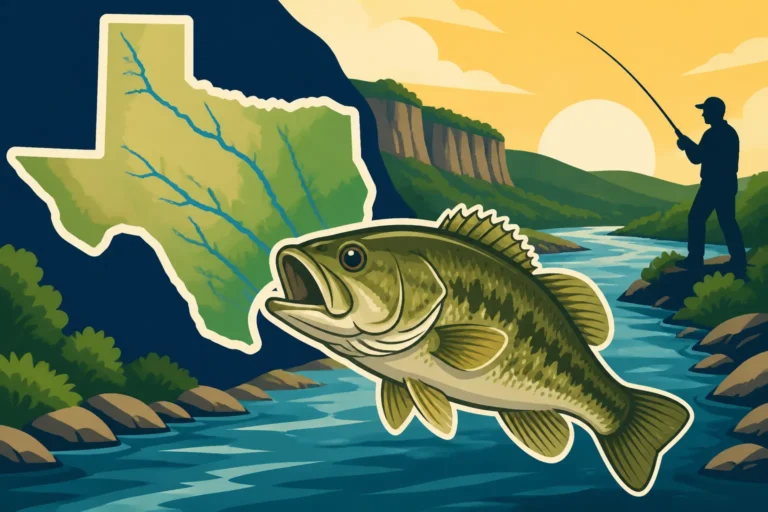
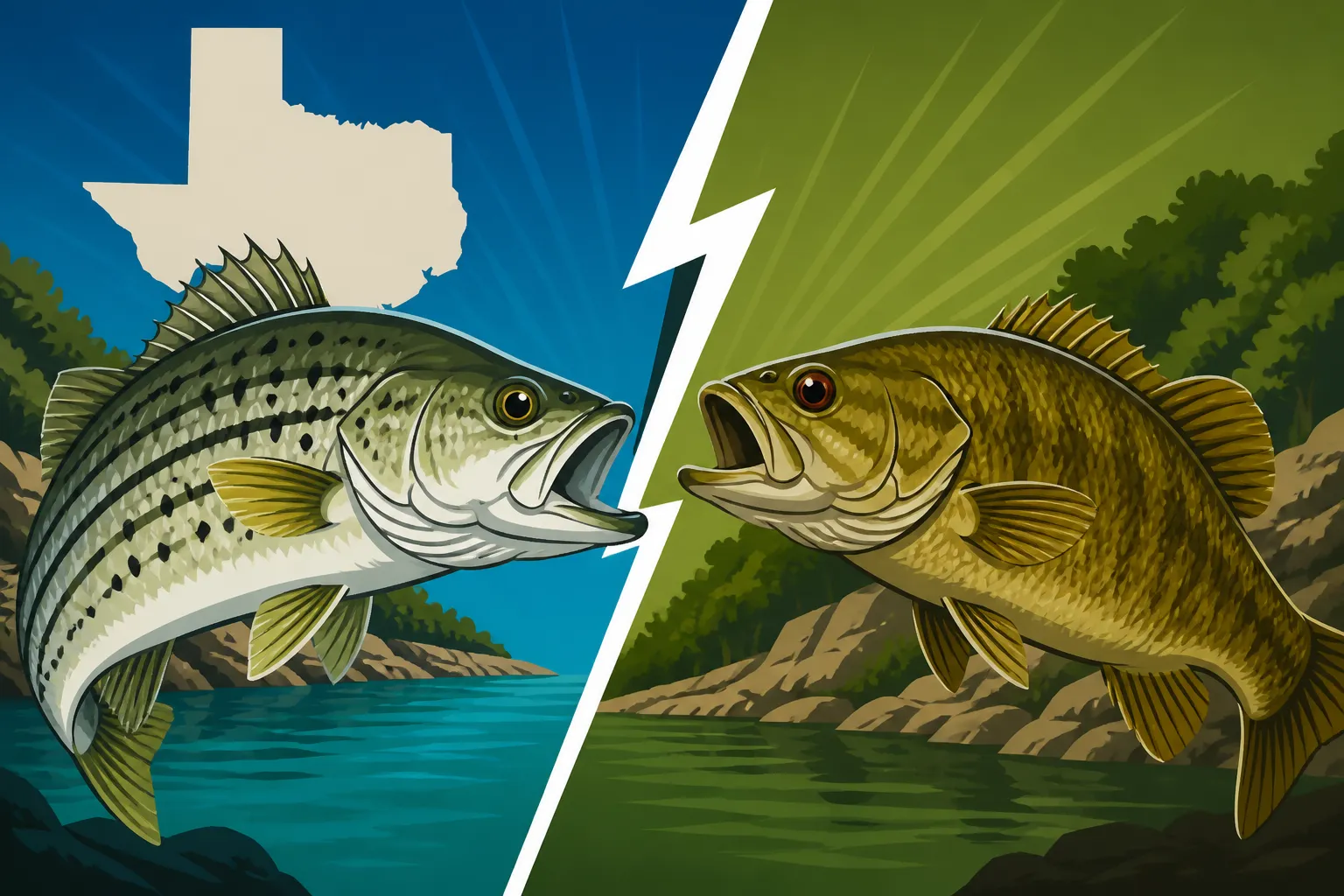
When you pull a Guadalupe bass out of the water, there are a few tell-tale signs that should immediately grab your attention. First and foremost, look at its markings. Guadalupe bass typically have very distinct, irregular, diamond-shaped or "chain-like" markings along their lateral line. These aren't the solid, vertical bars you might see on a Smallmouth, but more broken-up, sometimes interconnected blotches. The overall coloration tends to be a beautiful olive green to brownish hue on the back, fading to a lighter, often yellowish-white belly. Another critical feature is the jawline: the upper jaw of a Guadalupe bass generally extends only to or slightly beyond the front of the eye, rarely reaching the middle of the eye. This is a subtle but important distinction.
Beyond the distinct markings and jaw, pay attention to the dorsal fin. While not always definitive on its own, Guadalupe bass tend to have a less distinctly separated dorsal fin compared to some other black bass species. The rows of spots on the lower side of the body, below the lateral line, are often arranged in a somewhat scattered pattern rather than distinct horizontal lines. Also, feel the fish; they often have a relatively slender, torpedo-like body, built for navigating swift currents. It’s these subtle combinations of features that make identification possible. Many anglers find a good waterproof fish identification chart, easily found on Amazon, to be an invaluable tool when trying to distinguish these species on the fly.
Native Range and Preferred Habitat
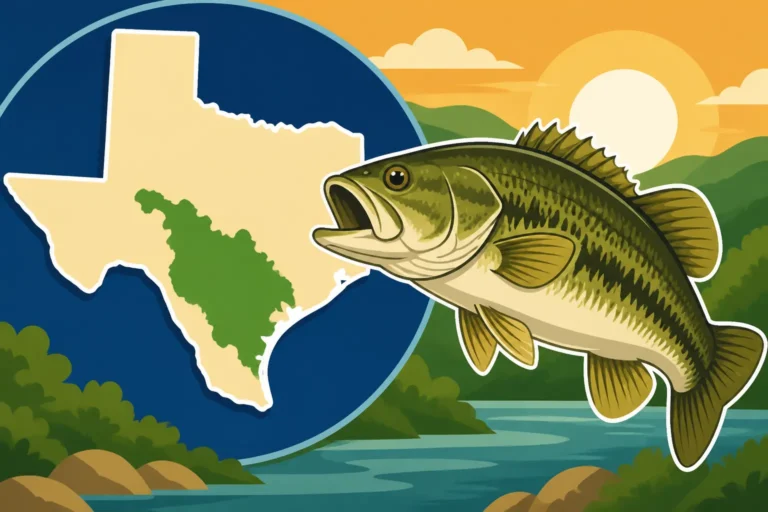
The Guadalupe bass is endemic to Texas, meaning it's found nowhere else naturally in the world. Its stronghold lies in the clear, cool, spring-fed rivers and streams of the Edwards Plateau in Central Texas. Think rivers like the Guadalupe, Llano, San Gabriel, San Marcos, and Colorado River tributaries. These waters are characterized by rocky bottoms, abundant aquatic vegetation, and consistent flows, which provide the perfect blend of cover, food, and current that Guadalupe bass absolutely adore. They thrive in areas with limestone bedrock, gravelly runs, and deep pools, often hiding among submerged rocks or undercuts. If you're fishing in these kinds of waters, especially in its native range, you have a good chance of encountering a Guadalupe bass.
Their preference for these specific habitats is precisely why they are so vulnerable to changes in water quality, flow rates, and habitat degradation. When these natural river systems are altered, the Guadalupe bass suffers. Guadalupe Bass Native Range in Texas highlights just how localized and precious these fish truly are. They need that specific mix of current and structure, making them a true indicator of a healthy Texas Hill Country river. When I’m out on the Llano, I always make sure to keep an eye out for those prime Guadalupe bass spots, knowing I’m fishing where these incredible native fish truly belong.
Unique Behavioral Traits and Diet
Guadalupe bass are known for their feisty nature, often described as "small but mighty." Despite their typically smaller size compared to Largemouth or even Smallmouth bass, they put up an incredible fight on light tackle, making them a favorite among fly fishermen and ultralight spinning enthusiasts. They are ambush predators, often lurking behind rocks or in pockets of slower water, darting out to snatch unsuspecting prey. Their diet primarily consists of insects, small crustaceans, and smaller baitfish that inhabit their riverine environments. This includes things like crayfish, minnows, grasshoppers, and various aquatic insect larvae.
Their aggression and diet make them a blast to catch using techniques like small crankbaits, jigs, or even topwater lures that mimic insects or small baitfish. You might also find them congregated around areas with fallen timber or submerged brush, which offers both cover and feeding opportunities. Because they are often found in relatively shallow, clear water, sight fishing for Guadalupe bass can be an incredibly rewarding experience. There's nothing quite like seeing one of these beauties dart out from behind a rock to smash your lure. However, remember they are precious, so understanding Texas Freshwater Fishing Regulations and practicing catch and release is vital.
Unpacking the Smallmouth Bass: A Northern Transplant in Texas Waters
While the Guadalupe bass is a true Texan, the Smallmouth bass (Micropterus dolomieu) is more of a visitor, albeit one that has found a comfortable home in certain parts of our state. Originally hailing from the cooler, rockier waters of the northern and eastern United States and Canada, Smallmouth bass were introduced into Texas waters decades ago, primarily for sport fishing opportunities. They've since established self-sustaining populations in several of our reservoirs and rivers, offering a different kind of angling challenge. Understanding their origins and adaptations helps us differentiate them from our native bass.
Key Identifying Features of the Smallmouth Bass
When you're trying to identify a Smallmouth bass, the first thing to look for is its distinctive pattern. Unlike the broken, chain-like markings of the Guadalupe bass, Smallmouth typically display distinct, dark vertical bars or blotches along their sides. These bars are usually more pronounced on smaller fish and can sometimes fade on larger, older individuals, but they are a hallmark. Their coloration also tends to be browner or bronzier, often referred to as "bronzebacks," with a creamy white belly. The eye of a Smallmouth bass often has a reddish tint, especially when freshly caught, which is another good indicator.
Just like with the Guadalupe bass, the jaw is crucial for Smallmouth identification. The upper jaw (maxilla) of a Smallmouth bass does not extend past the rear margin of the eye. Compare this directly to a Largemouth bass, where the jaw extends well past the eye. While the Guadalupe bass also has a relatively "small" mouth, the overall head shape and body markings are what truly set it apart from the Smallmouth. Another subtle feature: Smallmouth bass often have horizontal rows of spots on their lower flanks, below the lateral line, that are more ordered than the scattered spots on a Guadalupe bass.
Introduced Populations and Typical Habitats
Smallmouth bass aren't native to Texas, but they've been successfully introduced into several of our large reservoirs and some river systems that mimic their preferred northern habitats. You'll find strong populations in lakes like Lake Meredith in the Panhandle, Possum Kingdom Lake, Canyon Lake, and even parts of Lake Whitney. These lakes typically feature clear water, rocky shorelines, deep drop-offs, and plenty of submerged structure like boulders, ledges, and rocky points. They prefer cooler water than Largemouth bass and thrive in areas with good oxygen content and consistent current, much like their native river environments.
When they were first introduced, the hope was to create a new, exciting sport fishery, and they certainly delivered. Smallmouth bass are notorious for their acrobatic fights and hard-pulling runs, making them a thrilling catch. However, their presence also brings up ecological questions, especially in areas where their habitat might overlap with native species. Understanding where these fish were introduced and why helps anglers not only target them effectively but also understand the broader context of Texas Freshwater Fishing Regulations and fishery management in our state. For gear suitable for catching these powerful fish, many anglers rely on sturdy rods and reels, often found on Amazon, capable of handling their aggressive fights.
Behavioral Patterns and Feeding Habits
Smallmouth bass are incredibly active and aggressive predators. They are known for their schooling behavior, especially when actively feeding, and will often chase down prey with relentless energy. Their diet is quite varied, consisting heavily of crayfish, which are a major food source, along with minnows, shad, and larger insects. You'll often find them cruising rocky points, humps, and submerged timber, ambushing prey. They are highly attuned to changes in water temperature and current, often moving to deeper water during the hottest parts of summer and congregating near current breaks.
Fishing for Smallmouth bass is a dynamic experience. They respond well to a variety of lures, including crankbaits, spinnerbaits, jigs, and soft plastic presentations that imitate crawfish or baitfish. Unlike Largemouth bass, which often hide in heavy cover, Smallmouth prefer open, rocky structure where they can patrol and ambush. Their fighting style is legendary, characterized by strong runs, head shakes, and often spectacular jumps out of the water. If you're looking for an exhilarating battle on the end of your line, a Texas Smallmouth will definitely provide it. Check out How to Fish for Bass in Texas for more techniques suitable for smallmouth.
Side-by-Side Comparison: Guadalupe Bass vs. Smallmouth Bass
Alright, it's time to get down to the nitty-gritty. Now that we've looked at each species individually, let's put them head-to-head. This is where we break down the subtle yet crucial differences that will empower you to identify your catch with confidence. Remember, it’s not just one feature, but a combination of characteristics that provides the definitive answer. Think of yourself as a detective, piecing together clues from each fish.
Visual Distinctions: Spots, Stripes, and Jawlines
This is where most of the confusion, and the clarity, happens. Let's really zero in on what to look for.
- Body Markings: This is often the most reliable initial indicator.
- Guadalupe Bass: Look for those unique, broken, often diamond-shaped or "chain-like" blotches along the lateral line. These markings are irregular and don't form distinct vertical bars. Below the lateral line, the spots tend to be scattered and less organized.
- Smallmouth Bass: You'll typically see 8-12 distinct, dark vertical bars or blotches along their sides. These bars are usually solid, not broken up like a chain. Below the lateral line, they often have horizontal rows of spots, giving a more ordered appearance.
- Coloration:
- Guadalupe Bass: Generally olive green to brownish-green on the back, with a lighter, sometimes yellowish belly.
- Smallmouth Bass: Often a "bronze" color, ranging from golden-brown to deep brown on the back and sides, with a creamy or white belly. Reddish eyes are also common.
- Jawline:
- Guadalupe Bass: The upper jaw extends to or just slightly past the front of the eye.
- Smallmouth Bass: The upper jaw typically does not extend past the rear margin of the eye. This is a very similar jaw length to the Guadalupe but, combined with other features, is still useful.
- Body Shape:
- Guadalupe Bass: Tends to be more slender and streamlined, built for faster currents.
- Smallmouth Bass: Often appears a bit more robust and stout.
To truly grasp the differences, sometimes having a good visual guide is key. You can often find excellent laminated fish identification charts that clip onto your tackle box (many available on Amazon) which show these features side-by-side.
Habitat Preferences and Water Conditions
While both species enjoy clear, flowing water, their specific preferences can offer clues to their identity, especially if you know the typical range for each.
- Guadalupe Bass: Exclusively native to the clear, cool, spring-fed rivers and streams of the Edwards Plateau in Central Texas (e.g., Guadalupe, Llano, San Gabriel, San Marcos rivers). They are indicators of healthy, flowing riverine systems with rocky bottoms and aquatic vegetation. You generally won't find them in large, murky reservoirs unless they are stocked in the very headwaters or tailraces with strong current.
- Smallmouth Bass: Primarily found in clearer, rockier reservoirs in various parts of Texas, particularly in the Panhandle, Central, and North Texas (e.g., Lake Meredith, Possum Kingdom Lake, Canyon Lake, Lake Whitney). They can also be found in river systems that mimic these conditions, often in the tailraces below dams or in the upper reaches of rivers with good current and rocky structure. They are typically introduced, not native, to these waters. Knowing the specific body of water you're fishing can instantly narrow down the possibilities. If you're on the lower Guadalupe River, you're almost certainly targeting Guadalupe bass. If you're on Possum Kingdom, it could easily be a Smallmouth.
Fishing Implications and Conservation Status
The differences in these fish aren't just academic; they have real implications for anglers and conservation.
| Feature | Guadalupe Bass | Smallmouth Bass |
|---|---|---|
| Native Status | Native to Texas (Endemic) | Introduced to Texas (Native to North/East US) |
| Primary Habitat | Clear, rocky, flowing Hill Country rivers/streams | Clear, rocky reservoirs; some river systems |
| Body Markings | Irregular, broken diamond/chain-like blotches | Distinct vertical bars/blotches |
| Overall Color | Olive green to brownish, yellowish belly | Bronze to brown, creamy/white belly, reddish eye |
| Jaw Extension | To or slightly past front of eye | Does not extend past rear margin of eye |
| Typical Size | Smaller (often 1-2 lbs), feisty | Larger (often 2-5+ lbs), powerful, acrobatic |
| Conservation | State fish, focus on habitat preservation | Sportfish, managed populations |
The Guadalupe bass is a species of concern, designated as the official What is the Texas state fish for a reason. Its populations are sensitive to habitat changes, and conservation efforts, including strict bag limits and length limits, are in place to protect it. Misidentifying a Smallmouth as a Guadalupe, or vice-versa, could lead to inadvertently violating these regulations. For instance, length limits and bag limits can differ, so always double-check the current Texas Fish Bag and Length Limits for the specific water you are fishing.
From a fishing perspective, both offer fantastic sport. Guadalupe bass, despite their smaller size, are incredibly strong fighters, often preferred by fly anglers due to their preference for insect patterns. Smallmouth bass are known for their powerful runs and aerial acrobatics, hitting a wide range of lures. Selecting the right tackle, whether it's for a Guadalupe or a Smallmouth, is key to success. A good medium-light spinning rod from a reputable brand like those found on Amazon can serve you well for both. For specific gear recommendations, you might find Best Fishing Rods for Texas Anglers helpful, and Best Bait and Lures for Texas Fishing will offer options for both species.
Practical Tips for Anglers: Knowing Your Catch
So, you're out on a beautiful Texas day, casting your line, and you hook into a spirited bass. What do you do now to make sure you know exactly what you've got? It's not always easy, especially when the fish is flopping around, but with a few practical tips, you can become much more confident in your identification skills. Remember, accurate identification is not only for your peace of mind but also crucial for conservation and compliance with regulations.
How to Accurately Identify Your Bass on the Water
The moment of truth often happens quickly, so it pays to be prepared. Here’s a step-by-step approach to help you accurately identify your bass:
- Observe Immediately: As soon as you land the fish, take a good look. What's the primary coloration? Are there distinct vertical bars or more irregular blotches?
- Examine the Markings Closely: This is your number one clue.
- Vertical Bars (often distinct): Leans towards Smallmouth.
- Broken, Chain-like, or Diamond Blotches (irregular): Leans towards Guadalupe.
- Spots Below Lateral Line: Are they in horizontal rows (Smallmouth) or more scattered (Guadalupe)?
- Check the Jawline: Carefully extend the mouth and see how far back the upper jaw (maxilla) extends relative to the eye.
- Does not extend past the back of the eye: Could be a Smallmouth or a Guadalupe. This helps rule out Largemouth.
- Extends to or slightly past the front of the eye: More indicative of a Guadalupe bass.
- Definitely past the back of the eye: Not a Smallmouth or Guadalupe; likely a Largemouth bass. For more on this, consult Texas Largemouth Bass Identification Guide.
- Consider the Habitat: Where did you catch it?
- Clear, flowing Hill Country river (Guadalupe, Llano, San Gabriel): Strong indicator for Guadalupe bass.
- Large, rocky reservoir (Possum Kingdom, Canyon, Meredith): Strong indicator for Smallmouth bass.
- Use a Reference: Keep a laminated fish identification card or a reliable app on your phone (make sure it works without signal!). Sometimes, a quick comparison to a known image is all you need. You can find excellent waterproof guides on Amazon.
- Take a Photo (Safely): If you're still unsure and planning to release the fish, a quick, clear photo can help you identify it later. Always prioritize the fish's safety and release it quickly.
Remember, practice makes perfect. The more you catch and examine these fish, the easier it will become to tell them apart instinctively.
Regulations and Conservation Efforts
Accurate identification isn't just a fun challenge; it's a critical part of being a responsible angler in Texas. Both Guadalupe and Smallmouth bass are part of the broader black bass family, and their specific regulations can vary. The Texas Parks and Wildlife Department (TPWD) sets these rules to ensure healthy fish populations for future generations.
- Guadalupe Bass: As our state fish, Guadalupe bass are subject to specific regulations aimed at protecting their unique populations, particularly in their native river systems. These often include more restrictive length limits and bag limits compared to other bass species. For example, some stretches of river may have slot limits or minimum length requirements designed to allow fish to mature and spawn. Always, always check the current TPWD Outdoor Annual for the specific body of water you're fishing. Penalties for violating these rules can be significant, so knowledge is power.
- Smallmouth Bass: While not native, Smallmouth bass are a valued sportfish, and their populations are managed as well. Regulations for Smallmouth bass are generally similar to those for Largemouth bass in many reservoirs, but it's important not to assume. Again, consulting the TPWD Outdoor Annual is paramount to ensure you're compliant.
- General Considerations: Always ensure you have a valid Texas Fishing License Requirements Explained before you even cast a line. Beyond that, understanding the nuances of Texas Freshwater Fishing Regulations and the specific bag and length limits for each species in the waters you frequent is your responsibility as an angler. Your actions directly contribute to the health of our fisheries.
Best Practices for Catch-and-Release
Because both Guadalupe and Smallmouth bass are prized sportfish and are often caught in fragile ecosystems, practicing proper catch-and-release techniques is vital for their survival. Even if you plan to keep a fish within legal limits, knowing how to handle it carefully is important for its health.
- Minimize Handling Time: The less time a fish is out of the water, the better. Have your camera, measuring board, and scale ready.
- Wet Your Hands: Always wet your hands before touching the fish. Dry hands can remove the fish's protective slime coat, making it vulnerable to disease.
- Support the Fish: When holding a bass, support its body horizontally, especially larger fish, to avoid damaging its internal organs or jaw. Don't just hang it by the jaw, particularly if it's a heavy fish.
- Use Barbless Hooks (Optional but Recommended): Barbless hooks make removal much easier and quicker, reducing stress and injury to the fish. If your hooks aren't barbless, gently flatten the barb with pliers.
- Use Pliers or a De-Hooking Tool: Avoid using your bare hands to remove hooks, as this can injure both you and the fish. Long-nose pliers or a specialized de-hooking tool work wonders, especially if the hook is deep. Many reliable options are available on Amazon.
- Revive if Necessary: If the fish seems sluggish after the fight, hold it gently in the water, facing into the current, until it regains strength and swims away on its own. Never throw a stunned fish back into the water.
By following these practices, you ensure that these magnificent fish can continue to thrive and provide sport for generations to come. Every angler has a role to play in protecting our natural resources.
Identifying the difference between a Guadalupe bass and a Smallmouth bass might seem like a small detail in the grand scheme of fishing, but it speaks volumes about your respect for our diverse Texan waters and the incredible fish that inhabit them. From the unique "chain-like" markings of our native Guadalupe bass thriving in those pristine Hill Country rivers to the distinct vertical bars of the introduced, hard-fighting Smallmouth bass in our rocky reservoirs, each species brings its own magic to our angling experiences. By taking the time to learn these distinctions, understanding their habitats, and adhering to conservation practices, you become not just an angler, but a steward of Texas's rich aquatic heritage. So next time you feel that powerful tug on your line, take a moment to truly appreciate the incredible fish you've caught, knowing exactly which magnificent black bass has honored you with its presence.
Disclaimer
This article is for general informational purposes only and does not constitute professional advice. Laws, prices and regulations vary by location and change over time. Consult a qualified professional for guidance on your specific situation.