Best Bait and Lures for Texas Fishing
There's nothing quite as frustrating as showing up at your favorite Texas fishing spot, ready to make some memories, only to stare at your tackle box overflowing with baits and lures and wonder, "What in the world do I even use today?" Texas fishing is incredibly diverse, from the vast freshwater reservoirs to the expansive Gulf Coast, and what works wonders in one spot might get you absolutely nowhere in another. This comprehensive guide is designed to cut through that confusion, helping you understand the best baits and lures for every type of Texas fishing, so you can spend less time guessing and more time reeling in that next big catch.
Understanding the Texas Fishing Landscape
Before we even dive into specific baits and lures, it’s crucial to wrap your head around just how varied the fishing opportunities are here in Texas. This isn't a one-size-fits-all kind of state, and what an angler needs for a giant blue catfish on Lake Livingston is worlds apart from what they’d use for a hungry redfish down in Galveston Bay. Understanding these fundamental differences will be your first step toward building a truly effective tackle box.
Freshwater vs. Saltwater Nuances
The most obvious, yet often overlooked, distinction lies between freshwater and saltwater environments. Each brings its own unique set of challenges and opportunities, dictating everything from your tackle choice to the species you're targeting.
Picture yourself on a calm morning on Lake Fork, a legendary bass fishing lake. Here, you're dealing with vast stretches of cypress trees, submerged timber, hydrilla beds, and deep creek channels. The water might be stained, clear, or somewhere in between. The fish you're after — largemouth bass, crappie, catfish, white bass — are all primarily ambush predators or bottom feeders, accustomed to dining on shad, sunfish, crawfish, and various insects. Your baits and lures need to mimic these forage items effectively, whether that's a soft plastic worm crawling through brush or a crankbait diving deep to intercept schooling baitfish. Durability against freshwater snags, like logs and rocks, is also a consideration.
Now, imagine a completely different scenario: wading through the shallow grass flats of Matagorda Bay. Here, you're contending with tides, salinity, oyster reefs, and expansive open water. The target species—speckled trout, redfish, flounder, black drum—have evolved to hunt shrimp, mullet, crabs, and smaller baitfish that thrive in a brackish environment. Your lures need to be able to handle saltwater corrosion, often feature different color patterns (like "new penny" for redfish or chartreuse for trout), and be retrieved in ways that imitate coastal prey. The presentation might involve a popping cork to attract attention on the surface or a jig bounced along an oyster bed. The sheer difference in the ecosystem means a complete shift in strategy and equipment.
Matching Bait to Species and Season
Beyond the freshwater/saltwater divide, successful Texas fishing boils down to a fundamental principle: matching your bait or lure to the specific fish you're after and the time of year. Fish are creatures of habit and opportunity, and their feeding patterns are heavily influenced by their natural diet and seasonal behaviors.
Take largemouth bass, for instance. In the spring, during the spawn, bass are often shallow and aggressive, protecting nests. A soft plastic creature bait or a jig pitched into cover can be deadly, mimicking a territorial intruder or an easy meal. During the heat of a Texas summer, bass retreat to deeper, cooler water or dense cover, often becoming lethargic during the day. This might call for a deep-diving crankbait, a slow-fished Carolina rig, or perhaps night fishing with a dark-colored worm. In the fall, as baitfish school up, bass go on a feeding frenzy, making topwater lures and fast-moving crankbaits incredibly effective. Anglers who excel at Texas Largemouth Bass Fishing Guide know these seasonal shifts are paramount.
Crappie, another popular freshwater target, similarly change their habits. In early spring, they move into shallow brush piles and timber to spawn, making live minnows or small jigs irresistible. As summer heats up, they pull back to deeper brush piles or suspended over creek channels, often requiring a fish finder to locate schools before dropping a minnow or a jig right on their heads. Catfish, while generally less finicky, also have seasonal preferences; blue catfish might school up in deep holes in winter, while channel catfish are more active in warmer shallows. Knowing the general habits of Texas Catfish Species Guide and Texas Crappie Fishing Guide will significantly improve your catch rates. The same applies to saltwater species like redfish and speckled trout, whose movements and feeding often align with tides and bait migrations. Understanding the nuances of the Best Time of Year to Fish in Texas can make all the difference.
Essential Live Baits for Freshwater Fishing
There's a reason live bait has been a staple of fishing for centuries – it's often irresistible to hungry fish. For many freshwater species in Texas, a wiggling, struggling live offering is simply too good to pass up. While artificial lures offer versatility, sometimes you just can't beat the real thing.
Minnows and Shad: The Universal Attractors
For many freshwater predators across Texas, minnows and shad are the bread and butter of their diet. These small, silvery baitfish are a natural food source, making them incredibly effective for a wide range of game fish.
Golden shiners are a classic choice, readily available at most bait shops. Their vibrant flash and lively movement make them highly visible and attractive, particularly for largemouth bass and crappie. When targeting bass, shiners can be rigged in a few ways: hooked lightly through the lips for free-lining near cover, or under a bobber to keep them at a specific depth. For crappie, a small shiner hooked through the back and suspended under a slip bobber near a brush pile is a deadly combination. The key is to keep them lively; good aeration in your livewell or bait bucket is essential. Remember that while effective, smaller golden shiners are also excellent bait for active Texas White Bass Fishing Guide when they are schooling.
Shad, particularly threadfin and gizzard shad, are often the primary forage base in large Texas reservoirs. If you can "match the hatch" with live shad, you're usually in for a good day. Threadfin shad are smaller and generally preferred by crappie, white bass, and smaller largemouth. Gizzard shad are larger and tougher, making them excellent bait for trophy largemouth, blue catfish, and even striped bass. Catching your own shad with a cast net is often the best way to get fresh, lively bait, but some larger bait shops will carry them. When fishing with shad, free-lining them near schooling fish, especially during the white bass run, or around underwater structure can be incredibly effective. The erratic movement of a stressed shad triggers aggressive strikes from predators.
Worms and Crickets: Tried and True Classics
When it comes to sheer simplicity and effectiveness, especially for younger anglers or those targeting panfish, you simply can't beat worms and crickets. These humble baits have put countless fish in the cooler and remain a go-to for many Texans.
Nightcrawlers and red wigglers are universally recognized as excellent freshwater baits. Nightcrawlers, being larger, are fantastic for channel catfish, especially when fished on the bottom with a simple paternoster or Carolina rig. They also attract bass and larger panfish. Red wigglers, smaller and more active, are perfect for bluegill, sunfish, and smaller crappie. You can often find them wiggling in the soil after a rain, or easily purchase them from any bait shop, even convenience stores like your local Stripes or Buc-ee's. Rigging them is straightforward: thread a nightcrawler onto a hook once or twice, leaving plenty of tail to wriggle, or simply impale a red wiggler through its middle. The natural scent and movement are incredibly appealing to a wide array of fish.
Crickets are another secret weapon, particularly for targeting panfish like bluegill and sunfish. There's something about the frantic kicking of a live cricket that panfish just can't resist. They're often sold by the dozen or half-dozen at bait shops and are relatively inexpensive. A small hook (size 8 or 10) lightly through the cricket's thorax, suspended under a tiny bobber, is all you need. Cast it near lily pads, submerged timber, or docks, and watch that bobber disappear. Crickets are also excellent for kids, as the action is usually fast and furious, keeping their attention and building excitement for fishing.
Perch and Other Forage
Sometimes, to catch a really big fish, you need to offer a really big bait. In Texas freshwater systems, small perch (sunfish) and other larger forage fish can be the key to landing that trophy bass or monster flathead catfish.
Small sunfish, often referred to as "perch" by anglers, are prime live bait for targeting colossal largemouth bass and huge flathead catfish. Flatheads, in particular, are ambush predators with a strong preference for live bait, and a lively sunfish is a top choice. When using perch as bait, always ensure they are legal to use in terms of size and species. Check the latest Texas Freshwater Fishing Regulations to confirm that the species you're using isn't a game fish that has length or bag limits when used as bait. Generally, small bluegill or green sunfish are acceptable. They should be hooked through the back, above the lateral line, with a stout hook (like a 4/0 or 5/0 circle hook for catfish) and fished on a heavy-duty rod and reel combo.
Other larger forage can include small carp, goldfish (yes, they’re sold as bait sometimes!), or even illegally caught smaller gamefish, which is why checking regulations is so vital. When targeting big fish, patience is key. These larger baits often take longer to entice a strike, but the reward can be immense. Using small sunfish also requires attention to your gear; a flimsy rod and line won't stand a chance against a 10-pound bass or a 40-pound flathead that just inhaled a 6-inch bluegill. Ensure your hooks are sharp and your line is strong enough to handle a potential heavyweight fight.
Top Freshwater Lures for Texas Anglers
While live bait certainly has its place, artificial lures offer unparalleled versatility, allowing anglers to cover more water, target specific depths, and imitate a wider range of forage. For the serious Texas angler, a well-stocked tackle box of lures is non-negotiable.
Bass Fishing Powerhouses
Largemouth bass are the undisputed kings of Texas freshwater fishing, and the array of lures designed to catch them is staggering. Understanding when and where to deploy different types of lures is a lifelong pursuit for many anglers.
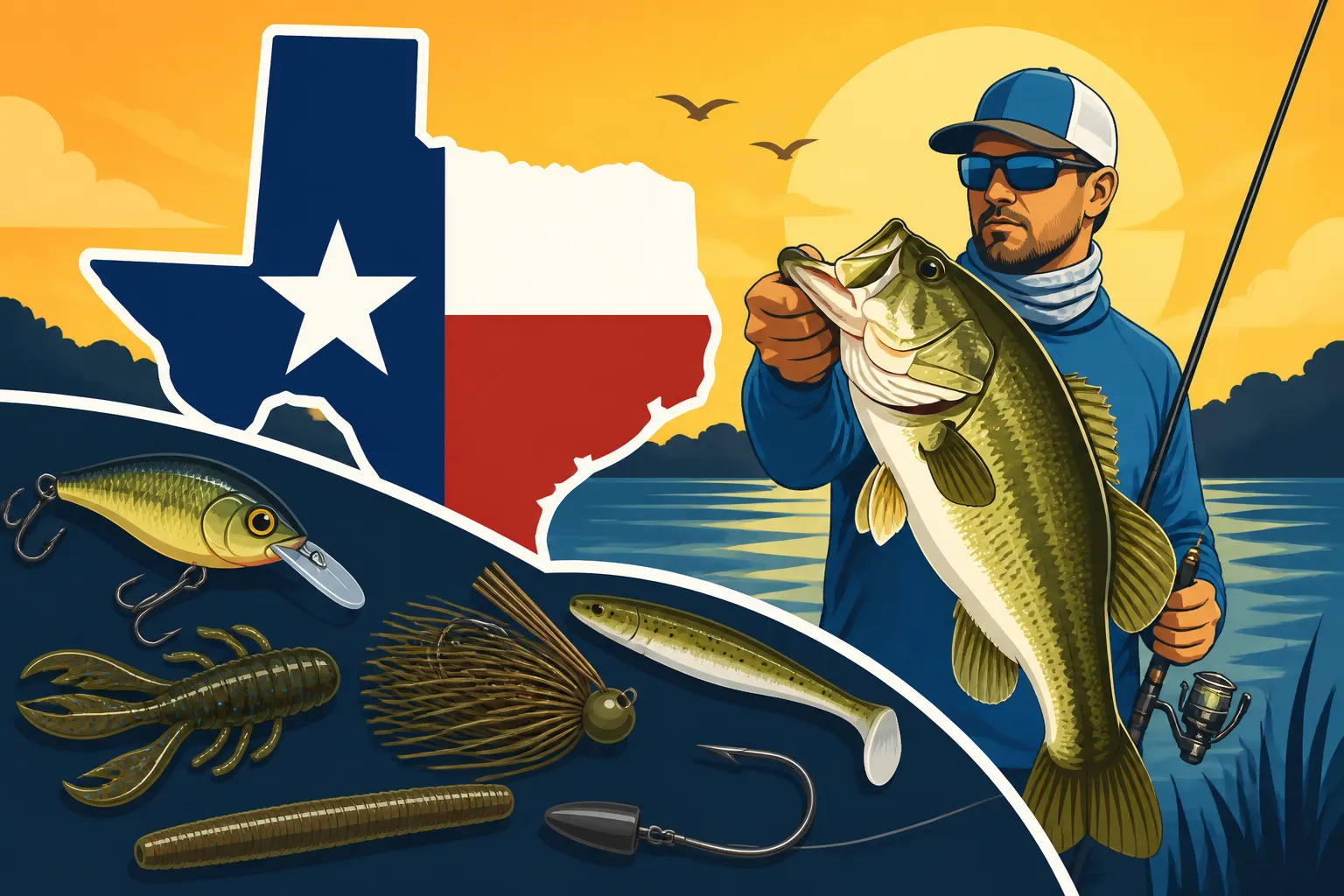
When it comes to soft plastics, the Texas rig is a legendary setup, perfect for fishing in and around heavy cover like timber, hydrilla, and rocks without snagging. It typically involves a worm, creature bait, or crawfish imitation (like those from Zoom or Strike King) rigged weedless with an offset worm hook and a bullet weight. Common colors like green pumpkin, junebug, and watermelon red are perennial favorites. The retrieve involves dragging, hopping, or slowly reeling the bait along the bottom. The Carolina rig, on the other hand, excels in slightly deeper, open water, allowing a worm or lizard to float freely above a heavier weight, mimicking a baitfish grazing the bottom. These rigs are essential for anglers wanting to master How to Fish a Texas Rig for Bass. The venerable Senko-style worm, particularly from Yamamoto, is another soft plastic marvel, often fished weightless for a slow, seductive fall that bass find irresistible, especially when they're finicky.
Crankbaits are designed to dive to specific depths, making them ideal for covering water and finding active fish. Shallow-diving crankbaits (think square bills) are great for bouncing off stumps and rocks in shallow water, while medium and deep-diving models (like a Rapala DT series or a Strike King KVD) are perfect for targeting ledges, points, and creek channels. Shad patterns are classic for clear water, while crawfish colors excel in stained or muddy conditions. Spinnerbaits and chatterbaits (Bladed Jigs) create a lot of vibration and flash, triggering reaction strikes from bass, especially in windy or cloudy conditions or stained water. White and chartreuse are staple colors for these.
Jigs, whether flipping jigs designed for dense cover or football jigs for deep structure, are also incredibly effective. They imitate crawfish or baitfish and are often tipped with a soft plastic trailer. Topwater lures – poppers, walk-the-dogs, and frog imitations – provide exhilarating strikes, particularly during low-light conditions in the morning or evening, or when bass are feeding on the surface in thick vegetation. Remember, many of these lures and popular brands can be found easily on Amazon, offering a wide selection and convenient delivery right to your door.
Catfish and Crappie Go-To Lures
While often associated with live or prepared baits, catfish and crappie can certainly be caught on artificial lures, especially when they are actively feeding.
For catfish, especially channel and blue catfish, prepared baits often outperform artificial lures, but when the bite is on, or you're targeting larger, more aggressive cats, lures can work. Stink baits, punch baits (like Danny King's or Sure Shot), and cut bait (strips of shad or carp) are king for stationary fishing. However, for active blue cats, especially those chasing bait in reservoirs, a heavy slab spoon or a jigging spoon can entice strikes. Fishing these vertically over deep schooling fish or near ledges can be effective. A good quality circle hook with a piece of cut bait on a Santee Cooper rig remains a staple for those seeking a trophy.
Crappie, on the other hand, are very receptive to small artificials. Tiny jigs are the bread and butter of crappie fishing. Tube jigs, curly tail grubs, and hair jigs in sizes 1/32 to 1/8 ounce are incredibly effective. Colors like chartreuse, white, pink, and black are popular. These jigs can be fished under a bobber, tight-lined (no bobber), or vertically jigged over brush piles and submerged timber. Tipping these small jigs with a live minnow adds an extra layer of enticement that often proves irresistible. Small inline spinners, like a Johnson Beetle Spin, can also be effective when crappie are active and scattered in shallower water. The versatility of these small lures allows anglers to effectively target schools of crappie, especially when located using sonar.
White Bass and Hybrid Striper Favorites
Texas is famous for its incredible white bass runs and robust populations of hybrid stripers. These schooling predators are aggressive and often respond well to lures that imitate schooling baitfish.
During the spring white bass run, when these fish migrate upstream in rivers and creeks to spawn, fishing can be absolutely phenomenal. The primary lures for white bass are small, flashy, and designed for fast retrieval. Slabs (lead spoons, often chrome or white) are arguably the most iconic white bass lure. They are cast out and reeled back with a lift-and-drop motion, mimicking a wounded baitfish. Small swimbaits, particularly paddle tails rigged on a lightweight jig head, are also incredibly effective. Inline spinners, like a Road Runner or Rooster Tail, in white, chartreuse, or silver, are perfect for covering water and drawing strikes from aggressive schools. These fish often feed in a frenzy, so having a good selection of these lures, and being able to cast accurately into the schooling action, is key.
Hybrid striped bass, a cross between striped bass and white bass, are even more powerful and grow much larger. They inhabit many of the same large reservoirs as white bass and often chase similar baits. Slabs and swimbaits are still highly effective, but often in larger sizes to match the hybrid's bigger appetite. Trolling crankbaits that mimic shad at appropriate depths is also a very popular and successful method for hybrids, particularly on large reservoirs like Lake Texoma or Lake Whitney. When these fish are feeding on the surface, often indicated by diving birds or violent splashes, topwater lures can also provide explosive action. Keeping an eye on your fish finder for schools of bait and predators is crucial for consistently locating and catching these hard-fighting fish.
Essential Live Baits for Saltwater Fishing
The vast expanse of the Texas coast, from the Sabine Lake to South Padre Island, offers incredible saltwater fishing opportunities. And just like in freshwater, live bait often reigns supreme, particularly for finicky coastal predators.
Shrimp and Mullet: Coastal Staples
For anyone venturing into the Texas bays and flats, live shrimp and finger mullet are as essential as a fishing rod itself. These two baits are absolute magnets for a multitude of popular game fish.
Live shrimp are, without a doubt, one of the most effective and widely used saltwater baits on the Texas coast. They are readily available at most coastal bait camps and are irresistible to almost everything that swims in the bay, including speckled trout, redfish, flounder, drum, and even sheepshead. The key to success with live shrimp is proper presentation. One popular method is to rig them under a popping cork. The cork creates a "chugging" sound that mimics feeding activity, drawing fish to the struggling shrimp below. This is incredibly effective over grass flats and oyster reefs. Another highly effective method is free-lining or fishing them on a light Carolina rig, allowing the shrimp to move naturally near the bottom or along current lines. Hook them lightly through the head, just behind the horn, or through the tail for different swimming actions. The frantic movement and natural scent of a live shrimp are hard for any coastal predator to ignore.
Finger mullet, the juvenile form of striped mullet, are another powerhouse live bait, especially for larger redfish and black drum. They are more robust than shrimp and can withstand more aggressive strikes. Like shrimp, they can be purchased at bait camps or, for the more ambitious, caught with a cast net in shallow grass flats or ditches. Live mullet are excellent when free-lined near structure, around marsh edges, or along jetty rocks. For redfish, a mullet hooked through the back and allowed to swim naturally near the bottom is a classic tactic. Cut mullet, particularly the head or a chunk of the body, is also highly effective for various drum species and larger redfish, appealing to their strong sense of smell. Always ensure your mullet are lively; a struggling bait is a tempting target for any predator.
Crabs and Croakers: Specialty Baits
While shrimp and mullet are generalists, sometimes you need a specialized bait to target specific species or larger, more wary fish. Crabs and croakers fit this bill perfectly.
Live croakers are a secret weapon, particularly for targeting big speckled trout. Trout absolutely love croakers, and if you're serious about catching a trophy "gator trout" on the Texas coast, a live croaker is often your best bet. Croakers are typically hooked through the back or lips and fished on a Carolina rig or free-lined over deep grass beds, oyster reefs, or along channel edges. The croaker's distinctive "croaking" sound, especially when stressed, acts as a powerful attractant for nearby trout. While effective, croakers can be pricey and are generally used for targeting larger, more aggressive trout, especially during warmer months. Anglers often keep them in well-aerated livewells to ensure they stay active until deployed. If you're looking for that truly massive trout, you can't go wrong with a live croaker.
Blue crabs, particularly fiddler crabs, are another specialty bait, primarily for sheepshead and black drum. Sheepshead, with their human-like teeth, are notorious for nibbling baits, and a tough fiddler crab is often the only thing that stays on the hook long enough for them to bite. Fiddler crabs are tiny and are usually fished on small, sharp hooks (like a size 4 or 6) with minimal weight, near pilings, jetties, or oyster reefs where sheepshead congregate. For larger black drum, a quartered blue crab or even a whole small blue crab can be irresistible. Black drum have powerful crushing plates in their mouths, perfectly adapted for cracking shells. A half blue crab on a sturdy circle hook fished on the bottom is a classic approach for these powerful fish. The hard shell and strong scent of crab make it a top choice when targeting these specific bottom feeders.
Top Saltwater Lures for Texas Anglers
Just like in freshwater, artificial lures have revolutionized saltwater fishing, allowing anglers to cover ground quickly, cast to specific targets, and mimic a wide variety of coastal forage with precision. These lures are often designed to withstand the corrosive effects of saltwater and entice aggressive strikes.
Redfish and Speckled Trout Magnets
Redfish and speckled trout are the twin pillars of Texas saltwater fishing, and a well-chosen artificial lure can be incredibly effective for both. Many lures work for both species, making them versatile additions to your tackle box. For a deeper dive, check out our Texas Redfish Fishing Guide and Texas Speckled Trout Fishing Guide.
When it comes to soft plastics, paddle tails are king. Brands like Saltwater Assassin, Down South Lures, and the ubiquitous Berkley Gulp! shrimp are immensely popular. These typically consist of a soft plastic body with a paddle-shaped tail that creates vibration and enticing action when retrieved. They are usually rigged on a lead jig head, ranging from 1/8 ounce for shallow water up to 1/4 or 3/8 ounce for deeper water or strong currents. Popular colors include "new penny" (a brown/copper hue), chartreuse, white, plum, and various combinations that mimic shrimp or baitfish. Anglers cast these and retrieve them with a steady reel, punctuated by short twitches and pauses, allowing the paddle tail to do its work. The scent-infused Gulp! shrimp are particularly effective, as their strong odor can attract fish even when visibility is low. You can find a huge variety of these soft plastics, including many multi-packs, on Amazon for convenience.
Topwater lures provide some of the most exciting strikes in saltwater fishing. "Walk-the-dog" style lures, like the Heddon Super Spook or MirrOLure Top Dog, are incredibly effective, especially during low-light conditions (dawn and dusk) or when baitfish are active on the surface. These lures are retrieved with a rhythmic twitch-pause motion that makes them "walk" side-to-side across the surface, mimicking an injured or fleeing baitfish. Popping corks with a soft plastic or live shrimp underneath are also technically a topwater presentation, drawing fish up from below. Gold or silver spoons, like a Johnson Sprite or similar casting spoons, are another classic for redfish. Their flash and wobble imitate a fleeing baitfish, and they can be retrieved steadily or with a stop-and-go motion. In colder months, suspending twitchbaits, which mimic slow-moving baitfish, can be very effective for speckled trout that are less willing to chase fast-moving baits.
Flounder and Drum Favorites
While redfish and trout get a lot of attention, Texas also offers fantastic opportunities for flounder and various drum species. These fish often require slightly different lure presentations and bait choices due to their feeding habits and preferred habitats. Learn more about Texas Flounder Fishing Guide to maximize your chances.
Flounder are masters of camouflage, lying in ambush on the bottom, often near structure or drop-offs, waiting for an unsuspecting meal to swim by. For this reason, lures that stay close to the bottom and mimic small baitfish or crustaceans are most effective. Jigging soft plastics, particularly those with curly tails or paddle tails (like the Berkley Gulp! Swimming Mullet), on a light jig head (1/8 to 1/4 ounce) is a top method. The key is to keep the lure bouncing or dragging along the bottom, occasionally pausing it to allow a flounder to ambush. Live mud minnows, fished on a Carolina rig, are also incredibly effective. When the "flounder run" happens in the fall, these tactics become even more productive as flounder migrate offshore through passes and channels.
For black drum and sheepshead, while live and cut bait (especially crab and shrimp) are generally preferred, artificial lures can sometimes tempt them. Black drum, being primarily bottom feeders, will occasionally hit heavy jigs or soft plastics that are fished slowly and bounced along the bottom. They are more scent-driven, so scent-infused baits like Berkley Gulp! are more likely to draw a strike than purely visual lures. Sheepshead are notoriously difficult to catch on artificials due to their small, nibbling mouths and preference for shellfish. However, tiny jigs tipped with a small piece of shrimp or even a small, scent-infused soft plastic can sometimes work around pilings or jetties where they feed. These species truly challenge the angler and often require a precise, patient presentation, regardless of whether you're using live bait or lures.
Where to Get Your Bait and Lures
Alright, so you’ve got a handle on what you should be using. Now, the practical question arises: where do you actually get your hands on all this essential gear? Luckily, Texas offers a wealth of options, from local mom-and-pop shops to vast online marketplaces.
Local Bait Shops and Convenience Stores
For many Texas anglers, particularly those seeking fresh live bait or local knowledge, the traditional bait shop is still king. These establishments are often more than just a place to buy worms; they're community hubs and invaluable sources of information.
Stepping into a local bait shop, whether it's a small shack near a popular lake or a dedicated storefront on the coast, is often like stepping back in time. You'll find tanks brimming with lively minnows, shad, shrimp, and sometimes even croakers. The biggest advantage here is the freshness of the live bait – a vital factor for attracting bites. Beyond that, the people behind the counter are often lifelong anglers themselves, armed with up-to-the-minute fishing reports, hot spots, and advice on what's biting right now and what specific baits or lures have been working. They can tell you about recent stocking efforts, water levels, and even local regulations you might not be aware of. Places like local tackle shops, or the sporting goods section of stores like Academy Sports + Outdoors, often have regional-specific baits and lures that are proven producers in your area. Building a relationship with your local bait shop owner can seriously elevate your fishing game, as their insights are often more valuable than any fancy lure.
Even smaller convenience stores, especially those along popular routes to fishing destinations, often carry a basic supply of worms, crickets, and occasionally minnows, alongside a small selection of common lures. While they might not have the specialized knowledge of a dedicated bait shop, they offer a convenient last-minute stop when you’re already on your way to the water. It’s always a good idea to call ahead if you’re looking for something specific, especially live bait, as stock can vary greatly. Remember, supporting these local businesses is crucial for keeping these valuable resources available to the angling community.
Major Retailers and Online Options
For artificial lures, terminal tackle, rods, reels, and a vast selection of fishing accessories, major retailers and online platforms offer unparalleled selection and competitive pricing.
Big box stores like Walmart, Bass Pro Shops, and Cabela's are fantastic resources for anglers. They stock an incredible array of artificial lures from virtually every major brand – think Strike King crankbaits, Zoom soft plastics, and Rapala jerkbaits. They also carry a wide selection of fishing lines, hooks, sinkers, tools, and even clothing. The sheer volume of product means you can often find exactly what you're looking for, or discover new items you never knew you needed. These stores are particularly good for stocking up on essentials, trying out new lure types, or purchasing larger items like rods and reels. While the staff might not always have hyper-local fishing reports, they generally have a good grasp of product knowledge.
In the digital age, online retailers have become an indispensable part of the fishing world. Websites like Amazon offer a seemingly endless selection of fishing gear, often at competitive prices and with the convenience of home delivery. You can find everything from individual packs of specific soft plastics to bulk orders of hooks and sinkers, or even entire fishing combos. This is especially useful for finding specialty items, niche brands, or reading reviews from other anglers before making a purchase. For example, if you're looking for a specific color of Berkley Gulp! shrimp for your next saltwater trip or a particular size of Yamamoto Senko, Amazon will likely have it in stock. Just be mindful of shipping times if you need something for an urgent trip. The ability to browse and compare hundreds of products from the comfort of your home has made online shopping a game-changer for many Texas anglers.
Catching Your Own Bait
For the truly dedicated, or budget-conscious, angler, catching your own bait is a rewarding and often highly effective way to ensure you have the freshest possible offerings. This approach connects you even more deeply with the ecosystem you're fishing.
Cast netting is perhaps the most popular method for catching your own bait in Texas, particularly for shad and mullet. Learning to properly throw a cast net takes practice, but once mastered, it’s an incredibly efficient way to acquire a large quantity of prime baitfish. In freshwater lakes and rivers, you can often find schools of threadfin and gizzard shad near boat ramps, creek mouths, or around docks. On the coast, finger mullet can be found in shallow grass flats, ditches, and along shorelines. Always be aware of local regulations regarding cast netting, including mesh size limits and where it's permitted. A good cast net (often 6-10 feet in diameter with 3/8 inch mesh) can quickly fill your livewell with irresistible bait.
Beyond cast netting, trapping for minnows or even seining with a small mesh net can yield a good supply of smaller baitfish for panfish or crappie. A simple minnow trap, baited with bread or dog food, can be placed in shallow creeks or pond edges and checked periodically. For worms, a shovel and some damp soil after a rain can be all you need. The ultimate benefit of catching your own bait is not just the cost savings, but the assurance that your bait is as fresh and lively as possible, having just come from the local waters. This natural presentation can often outfish store-bought alternatives, as the fish are already accustomed to feeding on these exact forage species.
Advanced Tips for Maximizing Your Bait and Lure Success
Fishing in Texas is a constant learning experience. While knowing what baits and lures to use is a great start, truly maximizing your success means diving into the finer details and understanding how to use them effectively.
Color, Scent, and Presentation
The subtle aspects of lure choice and how you present them can often make the difference between a frustrating day and a fantastic one. It's about thinking like a fish.
First, let's talk about color. It's not just about aesthetics; color can significantly impact visibility and attraction based on water clarity and light conditions. In clear water, natural colors like greens, browns, and whites that mimic real baitfish or crawfish are often more effective. Translucent colors can also work well. When the water is stained or muddy, or under low light conditions (overcast days, early morning/late evening), brighter, more contrasting colors like chartreuse, orange, or black-and-blue can be more visible and trigger reaction strikes. For instance, a black-and-blue jig will often shine in murky water, presenting a strong silhouette that fish can easily spot. Always consider what the local forage looks like too; if the lake has golden shiners, a gold-colored lure might be better than a silver one.
Scent is another powerful, yet often underestimated, factor. Fish have an incredible sense of smell, and adding natural or artificial scents to your lures can significantly increase their appeal, especially for species like catfish, drum, or even finicky bass. Products like Pro-Cure or various liquid attractants can be applied directly to soft plastics, jigs, or even live bait. Berkley Gulp! baits are a prime example of lures infused with powerful scents that disperse in the water, attracting fish from a distance. The scent can mask human odors, entice tentative bites, and encourage fish to hold onto the bait longer, giving you more time to set the hook.
Finally, presentation is paramount. It's not enough to have the right bait; you need to make it act alive and natural. Are you retrieving a crankbait at the correct speed to achieve its intended dive depth and wobble? Is your soft plastic worm crawling along the bottom like a real crawfish, or just dragging unnaturally? Are you imparting enough action to a topwater lure to make it "walk the dog" effectively? The way you work your lure should mimic the natural movements of the forage you're trying to imitate. Consider the water temperature – fish are often more lethargic in cold water, requiring slower, more subtle presentations, while warm water usually calls for faster, more erratic retrieves.
Understanding Water Conditions and Structure
The environment itself is a giant roadmap to where the fish are and what they're willing to eat. Mastering the art of reading the water and identifying key structures is a crucial skill for any Texas angler.
Water depth plays a huge role. In summer, bass often retreat to deeper, cooler waters, seeking refuge from the heat. This means you need lures that can reach those depths – deep-diving crankbaits, heavy jigs, or drop-shot rigs are essential. In spring, during the spawn, fish might be much shallower, making spinnerbaits, square bills, or soft plastics pitched into visible cover more effective. Current, especially in rivers or tidal areas on the coast, dictates how fish position themselves and how you should present your bait. Fish often face into the current, waiting for food to be swept to them, so presenting your bait upstream and letting it drift naturally downstream can be highly effective. Understanding Texas Saltwater Fishing Techniques involves a deep understanding of tides and currents.
Structure and cover are essentially fish magnets. In freshwater lakes, this means looking for submerged timber, brush piles, rock piles, ledges, creek channels, docks, and hydrilla beds. Each type of structure holds fish differently, and different lures excel in different scenarios. A Texas rig is perfect for penetrating thick brush, while a football jig is great for dragging over rocky ledges. For saltwater, think oyster reefs, jetties, grass flats, depth changes in bay channels, and marsh drains. Redfish and speckled trout often patrol the edges of grass flats, while flounder will lie on sandy bottoms near structure. Learning how to identify these features, either visually or with a fish finder, and then choosing the appropriate lure and presentation to fish them effectively, will put you on fish more consistently. Even understanding what causes fish to move, such as during the Texas Bass Spawning Season Guide, will improve your approach.
Experimentation and Local Knowledge
Even with all the best advice and the most advanced gear, fishing still involves an element of mystery and continuous learning. The most successful anglers are those who are willing to experiment and tap into the wealth of local knowledge.
Never be afraid to try something new, even if it's unconventional. If what you're doing isn't working, change it up! Switch lure colors, alter your retrieve speed, try a different depth, or move to a new spot. Sometimes, a subtle change is all it takes to unlock the bite. Keep notes on what worked and what didn't under specific conditions (weather, water clarity, time of day); this personal data will become an invaluable resource over time. There's no single "magic" lure for all situations, and conditions can change rapidly in Texas, so adaptability is crucial.
Perhaps the most potent "advanced tip" is to leverage local knowledge. Strike up conversations with other anglers at the boat ramp, visit your local bait shop, and don't be shy about asking questions. Guides and seasoned locals have spent countless hours on the water and often possess insights that you can't find in any book or online article. They might share a specific technique for catching blue catfish on a certain lake or a particular color of soft plastic that's been producing big speckled trout in a specific bay. While you won't get every secret, even a small nugget of information can significantly improve your chances. Read fishing reports, follow local fishing forums, and engage with the angling community. The collective wisdom of Texas anglers is immense, and tapping into it is one of the quickest ways to elevate your own skills.
| Species | Preferred Freshwater Baits & Lures | Preferred Saltwater Baits & Lures |
|---|---|---|
| Largemouth Bass | Live minnows, soft plastics (worms, creature baits, jigs), crankbaits, spinnerbaits, topwaters | N/A |
| Channel Catfish | Live worms (nightcrawlers), cut bait (shad), prepared stink baits, punch baits, chicken livers | N/A |
| Blue Catfish | Live shad, cut bait (shad, carp), live perch | N/A |
| Flathead Catfish | Live perch, live sunfish, live goldfish | N/A |
| Crappie | Live minnows, small jigs (tube, curly tail, hair), small spinners (Beetle Spin) | N/A |
| White Bass | Live minnows, slabs, small swimbaits, inline spinners | N/A |
| Hybrid Striper | Live shad, slabs, swimbaits, trolling crankbaits | N/A |
| Redfish | Live shrimp, live mullet, cut mullet, soft plastics (paddle tails), spoons, topwaters | Live shrimp, live mullet, soft plastics (paddle tails), spoons, topwaters |
| Speckled Trout | Live shrimp, live croakers, soft plastics (paddle tails), topwaters, suspending twitchbaits | Live shrimp, live croakers, soft plastics (paddle tails), topwaters, suspending twitchbaits |
| Flounder | Live mud minnows, live shrimp, soft plastics (curly tails) on jig heads | Live mud minnows, live shrimp, soft plastics (curly tails) on jig heads |
| Black Drum | Live shrimp, cut mullet, blue crab (cut or whole) | Live shrimp, cut mullet, blue crab (cut or whole) |
| Sheepshead | Live fiddler crabs, live shrimp | Live fiddler crabs, live shrimp |
Disclaimer
The information provided in this guide is for general informational purposes only and is not intended as legal advice. Fishing regulations in Texas can change frequently, and it is the angler's sole responsibility to understand and comply with all current Texas Parks and Wildlife Department (TPWD) rules and regulations before engaging in any fishing activity. Always consult the official TPWD outdoor annual for the most up-to-date and accurate information on licenses, bag limits, length limits, and legal fishing methods.