Texas Flathead Catfish Identification Guide
It’s easy to feel a little overwhelmed when you’re out on a Texas lake or river, reeling in a feisty catfish, and trying to figure out exactly which species you’ve got on the line. With several different types of catfish calling our waters home, and regulations varying by species, misidentification isn't just a minor mistake; it can lead to penalties or, worse, unintended harm to our precious fish populations. This comprehensive guide is here to help you confidently identify the magnificent flathead catfish, ensuring you’re always on the right side of the rules and practicing responsible angling.
Why Accurate Flathead Catfish Identification is Crucial for Texas Anglers
Landing a big catfish is a thrill, but the excitement can quickly turn to anxiety if you're not absolutely sure what you're holding. Texas waters are teeming with various catfish species, each with its own unique characteristics, and more importantly, its own set of fishing regulations. Knowing precisely what you've caught isn't just about showing off; it's about being a responsible angler and abiding by the law.
Understanding Texas Fishing Regulations and Flathead Catfish
Texas Parks and Wildlife Department (TPWD) sets specific bag and length limits for different fish species, including flathead catfish. Imagine spending a glorious afternoon on Lake Fork or the Trinity River, pulling in what you believe are prize-winning flatheads, only to discover later that you’ve misidentified them. Perhaps you've kept an undersized blue catfish, or an oversized channel catfish, thinking it was a flathead. This kind of mix-up can result in serious fines and a ruined day of fishing. It's not just about the monetary cost; it's about the feeling of disappointment and frustration that comes from unintentionally breaking the rules. That’s why a clear understanding of Texas Freshwater Fishing Regulations and specifically Texas Catfish Bag Limits is non-negotiable. It truly pays to know your fish before you ever cast a line.
The Importance of Conservation and Species Protection
Beyond the legal aspect, accurate identification plays a vital role in conservation. Each species plays a unique role in the ecosystem, and improper harvesting practices can disrupt the delicate balance of our waterways. For instance, flathead catfish are apex predators in many freshwater systems, helping to control populations of smaller fish. By knowing exactly what you're catching, you contribute to sustainable fishing practices. If a particular species is under stress or its population is declining, strict limits are often put in place to help it recover. Without proper identification, anglers might inadvertently put additional pressure on vulnerable populations. Being able to correctly identify a flathead ensures you’re not only following the law but also actively participating in the long-term health of Texas's aquatic environments.
Distinctive Physical Characteristics of the Texas Flathead Catfish
Flathead catfish are truly unique among their whiskered cousins in Texas. They possess a suite of physical traits that, once you know them, make them stand out. Unlike the sleek, dark blue of a blue cat or the spotted patterns of a channel cat, the flathead has a rugged, almost prehistoric appearance that is hard to mistake.
The Unique Head and Jaw Structure
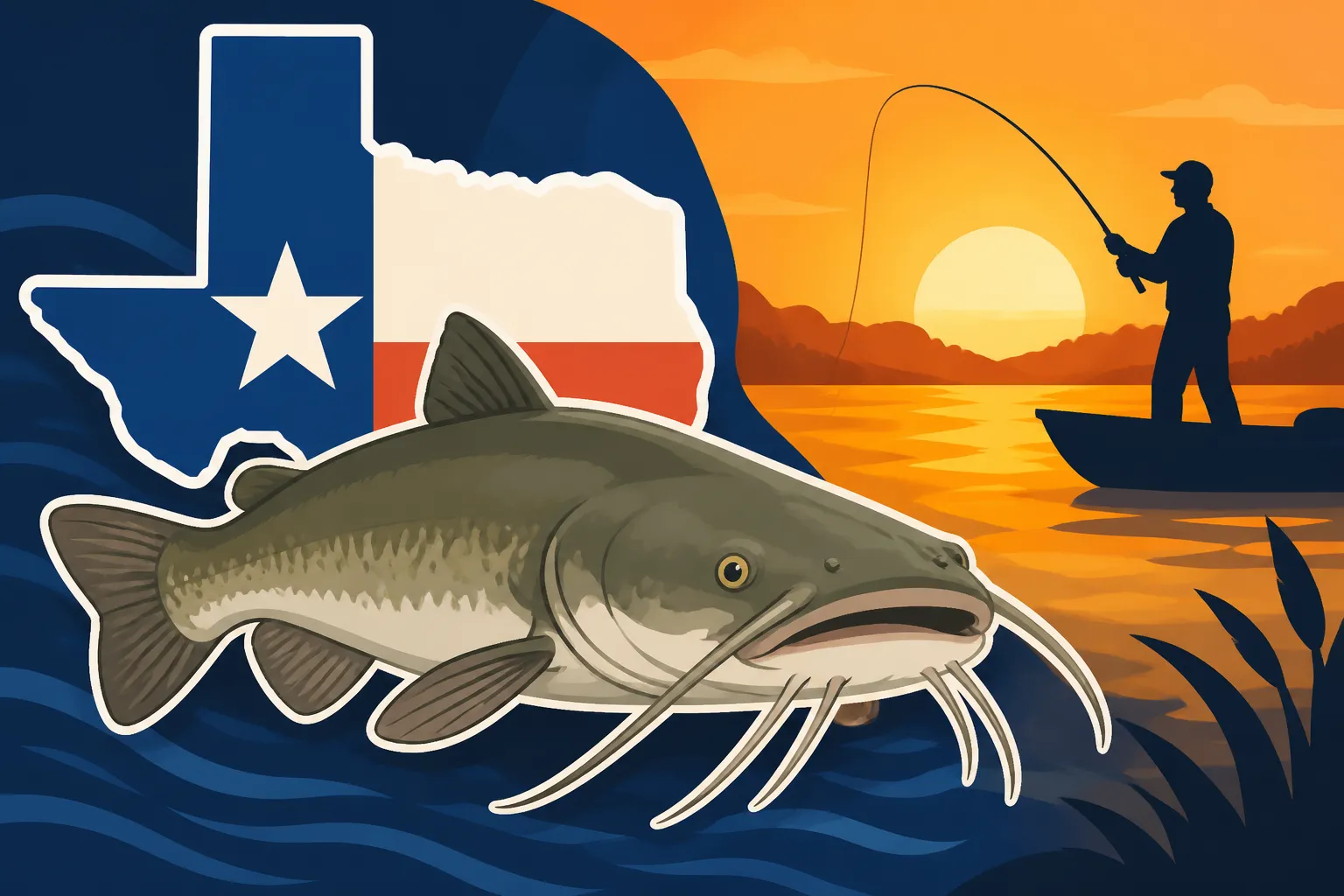
The most obvious distinguishing feature of a flathead catfish, as its name suggests, is its broad, flattened head. This isn't just a slight flattening; it's quite pronounced, especially when compared to the more rounded or tapered heads of other catfish species. From a top-down view, their head looks almost shovel-like. But don't just stop at the shape; pay close attention to the lower jaw. The lower jaw of a flathead typically protrudes noticeably beyond the upper jaw. This underbite is a tell-tale sign that helps them ambush prey from below. Their eyes are also relatively small and located on the top of their head, further emphasizing that flattened, predatory appearance. If you're looking at a fish with a wide, flat head and a prominent underbite, you're almost certainly holding a flathead.
Tail Fin and Body Shape: Key Visual Cues
Moving beyond the head, the tail fin of a flathead catfish offers another critical identification marker: it's typically square or very slightly emarginate (meaning just a tiny indentation), but never deeply forked like that of a blue or channel catfish. This difference is stark and easily observable. Imagine the tail as a broad, powerful paddle designed for strong, short bursts of speed rather than sustained cruising. The body itself is robust and solid, generally tapering smoothly from the broad head to the powerful tail. They are stout fish, built for lurking in cover and ambushing prey. While other catfish might have more streamlined or slender bodies, the flathead’s structure screams "power" and "ambush predator." You can easily feel this difference when you're wrestling one into the boat, they are dense and muscular.
Coloration, Patches, and Other Subtle Markings
Flathead catfish display a remarkable range of coloration, often adapting to their environment, which can sometimes make identification a bit trickier if you only rely on color. However, there are general patterns to look for. Their base color typically ranges from yellowish-brown to dark olive green on their back and sides, often mottled with darker brown or black patches. These blotches can be irregular and streaky, almost like camouflage patterns, helping them blend into rocky bottoms, submerged timber, or muddy banks. Their bellies are usually a pale yellow or creamy white, sometimes with a faint mottling. Unlike channel catfish, which often have distinct dark spots all over their body when younger, flatheads typically have more irregular, blotchy patterns. As they get older and larger, these patterns can become less defined, but the underlying mottled appearance usually remains. The overall impression is one of a camouflaged, bottom-dwelling predator. You can sometimes find excellent illustrations of these variations in fish identification books, many of which are available for purchase on Amazon.
Comparing Flathead Catfish to Other Texas Catfish Species
Texas is home to several popular catfish species, and distinguishing a flathead from a blue catfish or a channel catfish is often the biggest challenge for anglers. While they all share the common "catfish" moniker, they have distinct features that, once learned, are easy to recognize. Let’s break down the key differences to ensure you’re never left guessing. This is crucial not just for identification but for understanding their behavior; for example, knowing the difference can help you decide how to approach How to Catch Catfish in Texas.
Flathead vs. Blue Catfish: A Head-to-Head Comparison
Blue catfish are often mistaken for flatheads, especially when they reach impressive sizes, as both can grow to be truly massive. However, there are several key differences. The most prominent is the tail fin: blue catfish have a distinctly forked tail, much like a swallow's tail, whereas the flathead's tail is square or only slightly notched. Secondly, look at the head shape. While flatheads have that distinctively flattened head and protruding lower jaw, blue cats have a more rounded, humped head and an upper jaw that extends slightly beyond or is even with the lower jaw. Their coloration also differs; blues tend to be a slate blue or gray on their backs and sides, fading to a white belly, and rarely have the mottled pattern of a flathead. Blue catfish also have an anal fin with 30-35 rays, which is a higher count than a flathead. If you're comparing a giant fish you caught to pictures online, checking the tail and the jaw can quickly tell you if it's a Texas Blue Catfish Identification Guide or a flathead.
Flathead vs. Channel Catfish: Spotting the Differences
Channel catfish are perhaps the most widespread and commonly caught catfish in Texas, and while they rarely reach the colossal sizes of flatheads or blues, they are still sometimes confused with juvenile flatheads. The easiest way to tell them apart is by their tail fin – channel catfish have a deeply forked tail, even more pronounced than a blue cat, a stark contrast to the flathead's square tail. Another giveaway is the spots: juvenile and even many adult channel catfish will have distinct, dark spots scattered over their body, particularly along their sides. Flatheads, as we discussed, have irregular blotches, not distinct spots. The head shape of a channel cat is also more slender and conical compared to the flat, broad head of a flathead. Finally, the anal fin on a channel catfish is curved and has 25-29 rays, which is fewer than a blue cat but more than a flathead, and it's a different shape than the flathead's shorter, straighter anal fin. When considering Texas Channel Catfish Identification Guide, remember to focus on the tail, spots, and head profile.
Brief Overview: Distinguishing from Bullheads and Other Less Common Catfish
While flatheads are most commonly confused with blues and channels, Texas also has bullhead catfish (black, yellow, and brown) and a few other, less common species. Bullheads are much smaller, rarely exceeding a few pounds, and typically have a very stout body, a square or slightly rounded tail, and often barbels that are dark or mottled. Their heads are usually rounder and not flattened like a flathead. Other species like the small madtom catfish are tiny and would never be mistaken for a flathead. Essentially, if you're holding a large catfish (over 5-10 pounds) in Texas, your primary identification challenge will almost certainly be between a flathead, blue, or channel cat.
Here’s a quick comparison table to help solidify the differences:
| Feature | Flathead Catfish | Blue Catfish | Channel Catfish |
|---|---|---|---|
| Head Shape | Broad, flattened; lower jaw protrudes | Rounded, often humped; upper jaw slightly extends | More slender, conical; upper jaw extends or even |
| Tail Fin | Square or slightly emarginate (straight) | Deeply forked | Deeply forked |
| Coloration | Yellowish-brown/olive, mottled with dark blotches | Slate blue/gray, white belly, no spots or blotches | Olive/gray, white belly, distinct dark spots (esp. young) |
| Anal Fin Rays | 14-17 (short, straight base) | 30-35 (long, straight base) | 25-29 (curved base) |
| Eyes | Small, located on top of head | Larger, more to the side | Moderately sized |
| Size | Can grow very large | Can grow very large, often larger than flatheads | Moderate, rarely exceeding 20-30 lbs (can be larger) |
Habitat, Behavior, and Diet Clues for Flathead Identification
Understanding where a fish lives and what it eats can often provide secondary clues for identification, especially when combined with physical characteristics. Flathead catfish are creatures of habit, and their preferred environments and feeding strategies are quite distinct from other catfish. This insight can even influence your choice of gear, like the Best Rods for Texas Catfish Fishing or specific bait.
Preferred Habitats and Locating Flathead Catfish
Flathead catfish are primarily found in large rivers, reservoirs, and deep creeks throughout Texas. Unlike channel catfish that are more widespread and adaptable, flatheads prefer slow-moving or still waters with abundant cover. Think about deep pools, areas with submerged timber, brush piles, rock ledges, undercut banks, and old creek channels. They are creatures of structure and current breaks. You'll often find them lurking near snags or in deep holes, waiting to ambush prey. They are not typically found in open, shallow flats or fast-moving rapids. If you're consistently catching catfish in dense cover in a deep part of a river like the Trinity, or a reservoir like Lake Livingston, the chances of it being a flathead increase significantly. They are masters of hiding, using their mottled coloration to disappear into the surroundings, so when you do hook one, it's often a surprise given how well they conceal themselves.
Behavioral Patterns and Feeding Habits
Flatheads are primarily nocturnal hunters, meaning they are most active during the night. They are ambush predators, often holding tight to structure during the day and emerging at night to forage. This behavior is a stark contrast to blue catfish, which are often found roaming open water or flats, or channel catfish, which are more opportunistic feeders active day and night. Flatheads are also unique among Texas catfish in that they predominantly feed on live fish. While a blue cat will readily take cut bait or shad, and a channel cat loves stink bait or worms, a flathead has a strong preference for live prey. This is why many anglers targeting flatheads use live bluegill, sunfish, or small carp as bait. Understanding this helps you predict where they might be, especially if you're trying to figure out How to Catch Flathead Catfish at Night. If you're catching a fish on live bait, especially after dark and near heavy structure, it significantly narrows down the possibilities towards a flathead.
The Role of Diet in Flathead Appearance
The flathead's diet of live fish directly influences its robust, muscular build and predatory appearance. Unlike omnivorous catfish that might scavenge or eat insects and vegetation, a flathead's diet requires strong swimming muscles and a powerful jaw to subdue its prey. This diet is reflected in their firm, flaky white meat, which many consider to be superior tasting among catfish species. The type of food they eat also contributes to their overall health and growth rate. Knowing What do catfish eat in Texas lakes can not only aid in identification but also in selecting the right bait and tactics to hook one of these magnificent fish. Their preference for live bait means they are often less susceptible to baits like dough balls or chicken liver, which are more effective for channel cats.
Tips for On-the-Water Flathead Identification
Even with all the knowledge in the world, identifying a fish quickly and accurately when it's flopping around in your hands can be a challenge. Having a plan and the right tools can make all the difference, especially when you need to decide quickly whether to keep or release your catch according to regulations. Remember, when you're thinking about How big do flathead catfish get in Texas, you're often dealing with a powerful fish that requires careful handling.
Best Practices for Observing Your Catch
When you land a catfish and need to identify it, here are some practical tips:
- Safety First: Catfish have sharp pectoral and dorsal fins. Always handle them carefully, ideally using a glove or a lip gripper. A flathead's pectoral fins can deliver a painful poke.
- Observe Immediately: Before unhooking, take a good look at the fish's head, jaw, and tail. These are the primary identifiers.
- Use a Release Mat or Net: If you're practicing catch and release, especially with larger fish, use a wet release mat or a large, rubberized landing net. This keeps the fish calm and off hot surfaces, giving you a better chance to observe without harming it.
- Take a Quick Photo (if allowed): A quick picture can be reviewed later if you're still uncertain, especially if you plan to release the fish quickly. Many anglers use waterproof phone cases that can be found on Amazon, allowing them to snap a picture on the spot without worrying about water damage.
- Examine the Mouth: Gently open the mouth to confirm the protruding lower jaw. This is a very reliable flathead characteristic.
- Check the Tail: The square tail is unmistakable. Gently spread the tail to confirm it's not forked.
Gear That Aids in Field Identification
Having the right gear on hand can significantly improve your ability to identify fish accurately:
- Fish Identification Guide: Keep a laminated Texas fish identification guide in your tackle box or boat. Many anglers download apps or print out species guides before they head out.
- Measuring Tape/Board: Essential for checking length limits. If you're unsure of the species, you absolutely must verify its size against regulations for all possible species.
- Small Digital Scale: While not directly for identification, knowing the weight can sometimes give you a clue, as flatheads grow to impressive sizes.
- Clear Viewing Bucket: For smaller catches, a clear bucket allows you to observe the fish's features without handling it excessively. This is particularly helpful for delicate smaller fish, although less common for larger flatheads.
- Polarized Sunglasses: These cut glare on the water, allowing you to see fish more clearly, which can help in pre-catch identification if you're sight fishing in clearer waters.
What to Do If You're Still Unsure
Let's be realistic: sometimes, even with all the tips, a fish might present confusing characteristics, or you might just be having an "off" day. If you find yourself in this situation, the absolute best advice is to err on the side of caution.
- When in doubt, release it. If you can't confidently identify a fish and confirm it meets the legal size and bag limits, the safest and most responsible action is to release it unharmed. It's better to let a potential keeper go than to face a fine for keeping an illegal fish.
- Consult a fellow angler: If you're fishing with experienced friends, ask for their opinion. A second pair of eyes can often spot the key features you might be overlooking.
- Review your Texas Fishing License Requirements Explained: Ensure your license is valid and you understand the regulations for the specific body of water you're fishing. Sometimes local regulations can vary.
Remember, the goal isn't just to catch fish, but to enjoy the process responsibly and ensure healthy fisheries for years to come. Confident identification of a flathead catfish means you're not just a successful angler, but a knowledgeable steward of Texas's aquatic resources.
Disclaimer
This article is for general informational purposes only and does not constitute professional advice. Laws, prices and regulations vary by location and change over time. Consult a qualified professional for guidance on your specific situation.