What do catfish eat in Texas lakes
If you've ever spent hours by a Texas lake, rod in hand, wondering why the catfish aren't biting, it's likely you're grappling with one of the most fundamental questions in angling: "What do catfish actually eat?" It can be incredibly frustrating to try bait after bait with no success, feeling like you're speaking a different language than the fish below. This comprehensive guide is here to unravel the dietary mysteries of Texas catfish, helping you understand their natural food sources and, more importantly, how to pick the perfect bait to bring them to your hook.
Understanding Catfish Species in Texas Lakes
Before we dive into their favorite meals, it's crucial to understand that "catfish" isn't just one type of fish. Texas lakes are home to several distinct species, each with its own preferences, hunting styles, and, consequently, dietary staples. Knowing which catfish you're targeting can dramatically improve your success.
Channel Catfish: The Opportunistic Foragers
Channel catfish are arguably the most common and widespread catfish species across Texas, thriving in a huge variety of environments from small ponds to massive reservoirs and slow-moving rivers. What makes them so prevalent? Their incredibly opportunistic feeding habits. These whiskered bottom-dwellers aren't picky; they'll eat just about anything they can find.
Their diet is a true smorgasbord, ranging from insects, snails, and mussels to smaller fish, plant matter, and even decaying organic material. They rely heavily on their excellent sense of smell and touch, using those prominent whiskers (barbels) to detect food in murky waters or along the lakebed. If there's a scent trail, a channel cat is likely to investigate it. This makes them particularly susceptible to strong-smelling baits. When you're trying to figure out Texas Channel Catfish Identification Guide, remember their adaptability is key to their success and their broad palate.
Blue Catfish: The Voracious Predators
Blue catfish are the titans of Texas freshwater. These magnificent fish can grow to astounding sizes, and their diet reflects their status as apex predators. While young blue cats might start with insects and crustaceans, as they mature, they transition almost exclusively to a diet of other fish. They are active hunters, often chasing down schools of baitfish in open water or ambushing prey along structure.
Their preferred prey includes shad (especially gizzard and threadfin shad), smaller carp, sunfish, and even other small game fish. Unlike channel cats, blue catfish are less interested in scavenging for decaying matter and more focused on fresh, meaty meals. If you're targeting trophy-sized blue cats, you absolutely need to think like a predator and present baits that mimic their natural prey. Understanding Texas Blue Catfish Identification Guide means recognizing their predatory nature.
Flathead Catfish: Live Bait Enthusiasts
Flathead catfish are unique among their Texas brethren, displaying a strong preference for live prey. While they might occasionally scavenge, their primary diet consists almost entirely of live fish. They are ambush predators, often lurking in heavy cover—like submerged timber, rock piles, or undercut banks—waiting for an unsuspecting meal to swim by. They'll also patrol the edges of deeper channels or ledges, especially at night.
Their favorite meals include sunfish (bluegill, green sunfish), carp, suckers, and various baitfish. What makes them challenging, yet rewarding, to catch is their insistence on fresh, lively bait. A dead or sluggish bait often won't even get a second glance from a discerning flathead. Successfully catching these powerful fish often means understanding their habitat and presenting live bait precisely. For more on distinguishing these impressive fish, check out the Texas Flathead Catfish Identification Guide.
Natural Food Sources for Catfish in Texas Waters
To truly master the art of catfish fishing in Texas, it pays to understand what's naturally available to them in their environment. When you mimic these natural food sources, you're tapping into their instinctual feeding patterns.
The Aquatic Buffet: What's On the Menu Naturally
Texas lakes and rivers are teeming with life, providing a rich and varied natural pantry for catfish, especially for the opportunistic channel cats and juvenile blues.
- Insects and Larvae: This is a huge category. Catfish will gorge on aquatic insect larvae, such as those from dragonflies, damselflies, and caddisflies, which live on the bottom. When insects hatch and fall into the water, or when terrestrial insects like grasshoppers and crickets accidentally tumble in, catfish are quick to snatch them up. This is particularly true in shallower areas or around vegetation.
- Crustaceans: Crayfish are a major food source in many Texas waters. Their crunchy shells and meaty tails are irresistible. Catfish will actively hunt crayfish in rocky areas or around submerged wood. Freshwater shrimp, though smaller, also contribute to their diet in some systems.
- Mollusks and Snails: Clams, mussels, and various aquatic snails are often found on the lakebed, attached to rocks or submerged objects. Catfish, with their powerful jaws and tough mouths, can easily crush these shells to get to the nutritious meat inside. This is a common diet item for bottom-feeding channel and smaller blue catfish.
- Worms and Larvae: Earthworms, often washed into lakes after a rain, are a natural delicacy. Various other worms and grubs living in the mud and sediment also form a regular part of their diet.
Fish as a Primary Food Source
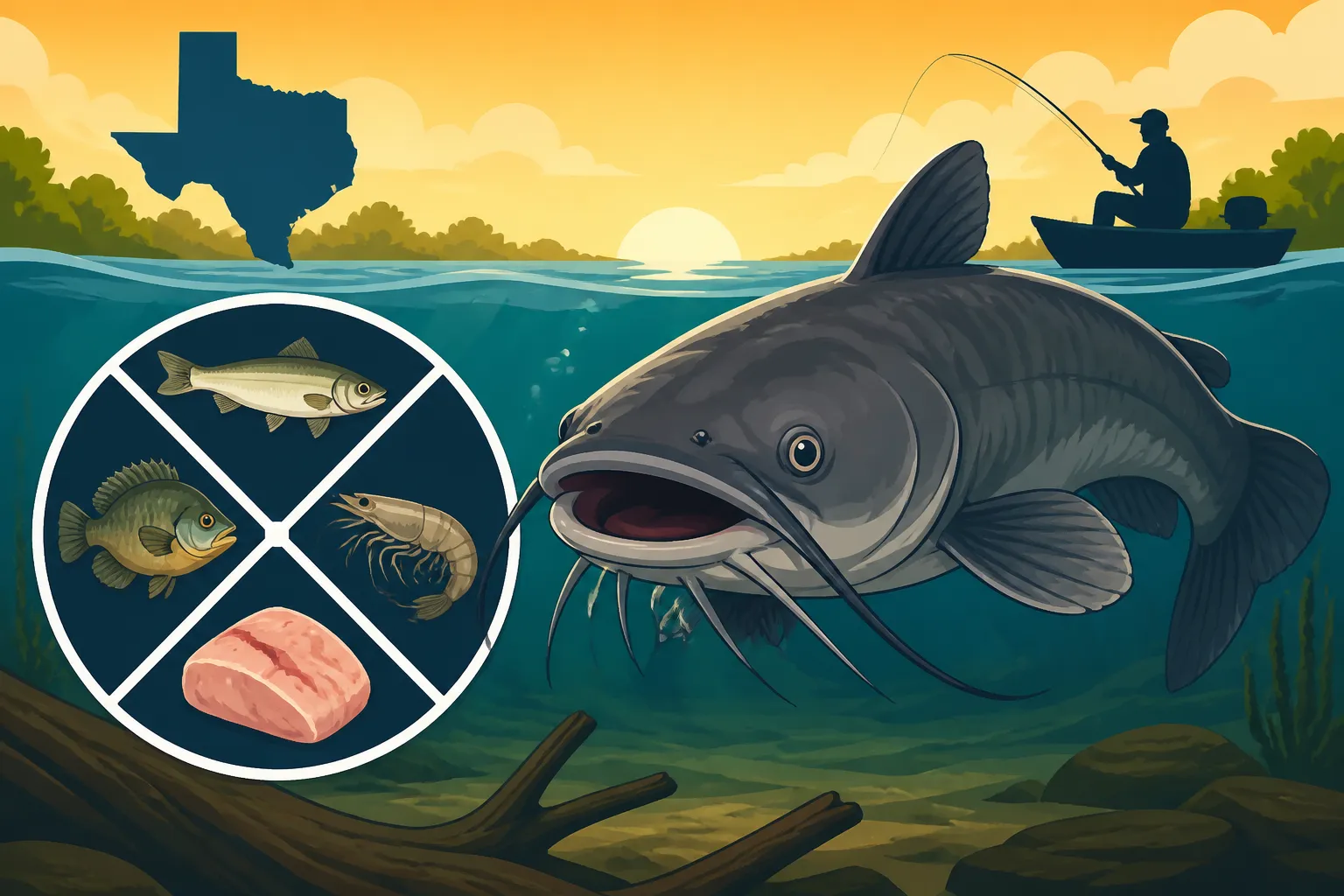
For larger blue catfish and virtually all flatheads, other fish are the absolute cornerstone of their diet. They are true piscivores, meaning fish eaters, and will consume a wide array of species found in Texas waters.
- Shad: Gizzard shad and threadfin shad are perhaps the most critical forage fish in many Texas reservoirs. They school in massive numbers, providing an abundant and easily accessible food source for larger catfish. Blues and stripers will chase these schools in open water, while flatheads might ambush them as they move near cover.
- Sunfish (Perch): Bluegill, green sunfish, and other panfish are a staple for flatheads and often targeted by larger blue cats. These small, meaty fish are commonly found around structure and vegetation, making them easy prey for ambush predators.
- Minnows: Various species of minnows populate Texas waters and serve as food for smaller catfish and juvenile blues. They are a constant, readily available snack.
- Carp and Buffalo: While larger carp and buffalo might seem intimidating, smaller individuals or even cut pieces of larger ones can be a food source for big catfish. These fish are oily and provide a strong scent trail.
- Smaller Game Fish: Don't be surprised if a large blue or flathead has a small bass or crappie in its stomach. They are not particular about species when they are hungry and capable of catching it.
The Role of Scavenging and Odor
Catfish possess an incredibly keen sense of smell, far more developed than many other freshwater fish. This unique adaptation allows them to detect food, even in turbid or dark water, from a significant distance. This is why many traditional catfish baits rely heavily on strong odors.
- Decaying Organic Matter: Channel catfish, in particular, are expert scavengers. They will readily consume dead fish, aquatic vegetation, and other decaying organic material that sinks to the bottom. Their olfactory system is highly tuned to detect amino acids and other chemical compounds released by decomposing matter. This is why "stink baits" work so well for them.
- Dead Fish: While blue catfish prefer live fish, they will absolutely scavenge fresh dead fish, especially if it's recently deceased and hasn't started to break down too much. A fresh-cut piece of shad or carp with its blood and oils leaking out is a powerful attractant.
- Terrestrial Scavenging: Occasionally, items like dead insects, small mammals, or birds that fall into the water can become part of a catfish's diet, especially in slower-moving or smaller bodies of water. The strong current or deeper water in larger lakes can disperse these quickly, but in quiet coves, anything edible is fair game.
This remarkable sense of smell is a key characteristic that makes catfish such a unique and accessible species for anglers. If you're thinking about How to Catch Catfish in Texas, remember that leveraging their powerful olfactory senses is often your best bet, especially for channel cats. For tips on when they're most active, check out How to Catch Catfish at Night in Texas.
Best Baits to Use for Catfish in Texas Lakes (Mimicking Natural Diet)
Now that we know what catfish eat, let's translate that knowledge into effective bait choices. The goal is to present something that either closely resembles their natural food or, for channel cats, smells utterly irresistible.
Cut Bait: A Tried-and-True Favorite
Cut bait is a staple for a reason: it's incredibly effective, especially for blue catfish and larger channel catfish. It works by releasing blood and oils into the water, creating a scent trail that catfish follow.
- Types of Cut Bait:
- Shad: Hands down, fresh gizzard or threadfin shad is one of the best cut baits for blue catfish in Texas. Their oily flesh and strong scent are exactly what big blues are looking for. You can catch shad with a cast net or purchase it from bait shops.
- Carp and Buffalo: These rough fish also make excellent cut bait. Their meat is tough, staying on the hook well, and their strong, musky scent is a big draw. Just make sure the carp you're using is legal as bait in your specific water body.
- Perch (Sunfish): Smaller sunfish, cut into chunks, are fantastic for blue cats and even channel cats. They have a good scent profile and are readily available. Always check local regulations regarding the use of game fish as bait.
- How to Prepare: For shad or other baitfish, simply cut them into chunks or strips. For larger fish like carp, you might fillet a side and then cut strips from the fillet. Exposing the flesh and blood is key. You can find robust bait knives and cutting boards easily on platforms like Amazon if you're looking to upgrade your bait prep gear.
- Why It Works: The immediate release of blood, natural oils, and fishy scent creates a powerful attractant. This mimics a freshly injured or dead fish, which is a natural part of a catfish's diet. For a deeper dive, read How to rig cut bait for catfish.
Live Baits: Irresistible for Flatheads and Large Blues
If you're after flathead catfish, live bait isn't just an option; it's practically a requirement. Large blue catfish will also readily take live bait, often preferring it over cut bait.
- Minnows: While smaller, lively minnows can entice smaller channel cats and juvenile blues.
- Sunfish (Perch): Bluegill and green sunfish are absolute flathead magnets. A lively sunfish, hooked correctly to allow it to swim naturally, is hard for a flathead to resist. Keep them fresh and active by using a good aerated livewell or bucket.
- Suckers: In some river systems, suckers are a common forage fish and make excellent live bait for larger flatheads.
- Importance of Fresh, Lively Bait: The key here is lively. Catfish, especially flatheads, are attracted to the distress signals and vibrations of struggling prey. A dead or dying bait won't produce these signals and will often be ignored. Make sure your live bait is healthy and active.
Prepared Baits and Stink Baits: For Channels and Scavengers
For channel catfish, and sometimes smaller blue cats, prepared baits that capitalize on their incredible sense of smell are often the most productive. These baits are designed to leach strong odors into the water.
- Punch Baits: These are gooey, thick baits often made from cheese or other pungent ingredients, designed to be "punched" onto a treble hook or sponge bait holder. They stick well and release a strong, consistent scent.
- Dip Baits: Similar to punch baits but often thinner, these require a special applicator, like a dip worm or a porous sponge, to hold the bait. They are incredibly stinky and effective for channel cats.
- Blood Baits: Made with dried blood or blood meal, these baits are potent attractants, appealing directly to the catfish's scavenging instincts.
- Why They Work: These baits are designed to mimic the decomposition process, releasing compounds that catfish associate with food. They create a long-lasting scent trail that draws fish from a distance. If you're looking for pre-made options or even bait additives to concoct your own super-stinky recipes, Amazon can be a great place to explore the endless world of prepared catfish baits.
Other Effective Natural Baits
Sometimes the simplest things work best, especially for channel cats and smaller blues.
- Worms: Good old earthworms, nightcrawlers, or red wigglers are classic catfish baits. They're natural, readily available, and fish have been eating them for eons. They release a natural scent and wriggle enticingly.
- Chicken Livers: A longtime favorite, chicken livers are soft, bloody, and incredibly stinky. They're a mess to work with, but their effectiveness for channel cats is undeniable. The trick is to keep them on the hook, sometimes by wrapping them with a small piece of nylon stocking or thread.
- Shrimp: Fresh or frozen shrimp, especially those with the heads on, can be a surprisingly effective bait, particularly in brackish waters or for cats that have a varied diet. They have a strong, natural aroma.
- Hot Dogs: Yes, you read that right! Cut-up hot dogs, particularly those that have been "doctored" by soaking them in garlic juice or Kool-Aid, can be very effective for channel catfish. Their processed smell and texture appeal to the channel cat's opportunistic nature.
Choosing the right bait can make or break your catfish trip. By understanding what these fish naturally eat and how to present those options, you're well on your way to a successful day on the water. For more specific bait recommendations, refer to Best Catfish Bait for Texas Lakes.
Factors Influencing Catfish Feeding Habits
Catfish don't just eat the same things, in the same way, all the time. Their feeding behavior is heavily influenced by environmental factors. Understanding these can help you fine-tune your bait selection and presentation for maximum success.
Water Temperature and Seasonality
Temperature plays a huge role in a catfish's metabolism and, therefore, its appetite. Texas experiences a wide range of temperatures throughout the year, impacting where catfish are found and what they're willing to eat.
- Warm Water (Summer): In the scorching Texas summer, catfish metabolism is high, and they need to eat frequently. However, extremely hot surface water can push them to deeper, cooler areas during the day. They'll often feed aggressively during cooler periods, like early morning, late evening, or at night. Food sources are abundant, but competition can also be high. During this time, strong-smelling baits like cut bait or stink bait can be particularly effective at drawing them out of deeper haunts. Knowing How deep do you fish for catfish in summer is critical.
- Cooler Water (Spring/Fall): Spring and fall are often prime times for catfish fishing. Water temperatures are comfortable, and catfish are actively feeding to bulk up for spawning (spring) or for winter (fall). Baitfish are plentiful, and catfish are often more spread out across different depths and structures. Live baits and fresh cut bait are excellent choices during these seasons.
- Cold Water (Winter): While catfish don't hibernate, their metabolism slows significantly in cold water. They might feed less frequently and be more sluggish. They often congregate in deeper holes, channels, or near thermal refuges. During winter, presentation becomes even more critical; slow-moving, natural baits like live minnows or small chunks of cut bait might be more appealing than overpowering stink baits.
Time of Day and Weather Conditions
Just like us, catfish have preferences about when and where they grab a bite. These preferences are often linked to light levels, comfort, and the activity of their prey.
- Night Feeding: Many catfish species, especially blue and flathead catfish, are primarily nocturnal predators. Their excellent sense of smell and touch gives them an advantage in low light conditions, while many of their prey fish become less active. Night fishing for catfish can be incredibly productive, especially in the summer when daytime temperatures are prohibitive. Strong scents and live baits that create vibrations are key. See Best time of day to catch catfish for more.
- Daytime Feeding: Channel catfish are often more willing to feed during the day, especially in stained or murky water, or during overcast conditions. Larger blue and flathead catfish might feed during the day, but often prefer deeper, darker water or heavy cover.
- Overcast Skies/Rain: Low light conditions and rainy weather can make catfish more active, as it mimics night-like conditions. Rain can also wash natural food sources into the water, creating feeding opportunities.
- Cold Fronts: Just like other fish, catfish can get lockjaw after a strong cold front passes through. The sudden drop in temperature and stable high pressure can make them lethargic and less willing to feed. During these times, smaller, more subtle baits and slower presentations are usually more effective.
Lake Structure and Habitat
Where catfish live dictates what food is readily available to them. Understanding the structure of a lake helps you predict where different food sources will be concentrated.
- Depth: Catfish will move through various depths depending on water temperature, oxygen levels, and prey location. In summer, they might go deeper during the day to find cooler water, then move shallower at night to feed. In winter, they often hold in deep channels or holes.
- Cover: Submerged timber, brush piles, rock formations, and even man-made structures like bridge pilings or riprap provide excellent cover for both catfish and their prey. Flatheads, in particular, love to ambush from dense cover. Channel cats will also forage around cover, looking for insects, crustaceans, and smaller fish.
- Current: In rivers and reservoirs with current, catfish often position themselves strategically to ambush food flowing downstream. Eddies, current breaks, and the mouths of creeks are prime locations where food gets funneled to them. Understanding the currents on a Texas river for catfish is crucial.
- Open Water: Schools of baitfish like shad often inhabit open water. Large blue catfish will actively chase and feed on these schools, sometimes indicated by diving birds or disturbances on the surface.
By considering these environmental factors, you can make more informed decisions about where to fish, what bait to use, and when to be on the water. It’s a dynamic puzzle, but with practice, you’ll start to see the patterns emerge. Remember that all fishing has limits, so be sure to know Texas Catfish Bag Limits for your area.
Catfish Bait Comparison Table
To help you quickly decide which bait might be best for your next trip, here's a quick comparison:
| Bait Type | Target Catfish Species | Pros | Cons |
|---|---|---|---|
| Fresh Cut Bait | Blue Catfish, Large Channel Catfish | Strong scent, mimics natural prey, very effective for big fish | Can be messy, requires fresh bait, may attract unwanted smaller fish |
| Live Bait (Sunfish) | Flathead Catfish, Large Blue Catfish | Extremely effective for flatheads, highly enticing | Requires live bait well, harder to keep alive, can be expensive |
| Stink/Punch/Dip Bait | Channel Catfish, Smaller Blue Catfish | Incredibly strong scent, attracts from a distance, easy to use | Not as effective for large blues/flatheads, can be very messy |
| Worms/Nightcrawlers | Channel Catfish, Smaller Catfish | Natural, widely available, easy to rig, good for all species | Not strong enough for trophy cats, smaller bites |
| Chicken Livers | Channel Catfish, Smaller Blue Catfish | Very strong scent, inexpensive | Extremely messy, falls off hook easily, short shelf-life |
| Shrimp | Channel Catfish, Small Blue Catfish | Natural scent, readily available, less messy than livers | Can be expensive, may attract non-catfish |
| Hot Dogs (Doctored) | Channel Catfish | Inexpensive, easy to obtain, stays on hook well, customizable scent | Less natural, may not attract larger, more discerning cats |
Ultimately, understanding what catfish eat in Texas lakes boils down to recognizing the unique dietary preferences of each species and then aligning your bait selection with those natural instincts and environmental conditions. From the opportunistic channel cat to the predatory blue and the live-bait-loving flathead, there’s a perfect meal to be offered. Don't be afraid to experiment, pay attention to the conditions, and most importantly, enjoy the chase. Every successful catch is a testament to understanding the hidden world beneath the surface!
Disclaimer
This article is for general informational purposes only and does not constitute professional advice. Laws, prices and regulations vary by location and change over time. Consult a qualified professional for guidance on your specific situation.