How to fish a Texas river for catfish
Figuring out how to consistently catch catfish in Texas rivers can feel like trying to solve a mystery, especially with their constantly changing currents and hidden depths. It’s easy to get frustrated when you spend hours on the bank or in a boat without much to show for it. This comprehensive guide is here to unravel those mysteries, helping you understand the different catfish species you’ll encounter, what gear you truly need, the most effective techniques, and when and where to find them lurking in our diverse river systems.
Getting to Know Texas River Catfish: Species, Habits, and Where They Hide
Texas rivers are teeming with catfish, but not all catfish are created equal. Understanding the distinct characteristics and behaviors of the main species you'll encounter is your first step toward consistent success. Each has its preferred hangouts and dining habits, and knowing these can dramatically improve your catch rates.
The Big Three: Channel, Blue, and Flathead Catfish
When you're fishing Texas rivers, you're most likely targeting one of three dominant species, each with its own charm and challenge. Learning to differentiate them, beyond just their size, will help you tailor your approach. For a more detailed look at what you're reeling in, you might find our Texas Channel Catfish Identification Guide, Texas Blue Catfish Identification Guide, and Texas Flathead Catfish Identification Guide useful.
Channel catfish are arguably the most common and widespread. They're often found in clearer, flowing sections of rivers, preferring areas with moderate current and some structure. They're opportunistic feeders, meaning they'll eat just about anything – cut bait, stink bait, worms, even small lures. They're characterized by their scattered dark spots (though these can fade with age), a deeply forked tail, and a relatively slender body. While they can grow to impressive sizes, most river channels you'll catch will be in the 1-5 pound range, perfect for a fish fry. They put up a respectable fight, making them a favorite for many anglers, especially those new to river fishing.
Blue catfish are the giants of the Texas river system. These powerful fish thrive in large, turbid rivers and deep pools, often congregating in strong currents or downstream of dams. They are characterized by a slate-blue color (hence the name), a noticeably humped back on larger specimens, and a deeply forked tail, but they lack the spots of the channel cat. Blue cats are primarily piscivorous, meaning they prefer to eat other fish. Fresh cut bait from shad, carp, or even perch is their absolute favorite. If you're chasing a true trophy, a blue cat is likely your target. Landing one of these can be an epic battle, testing both your tackle and your stamina.
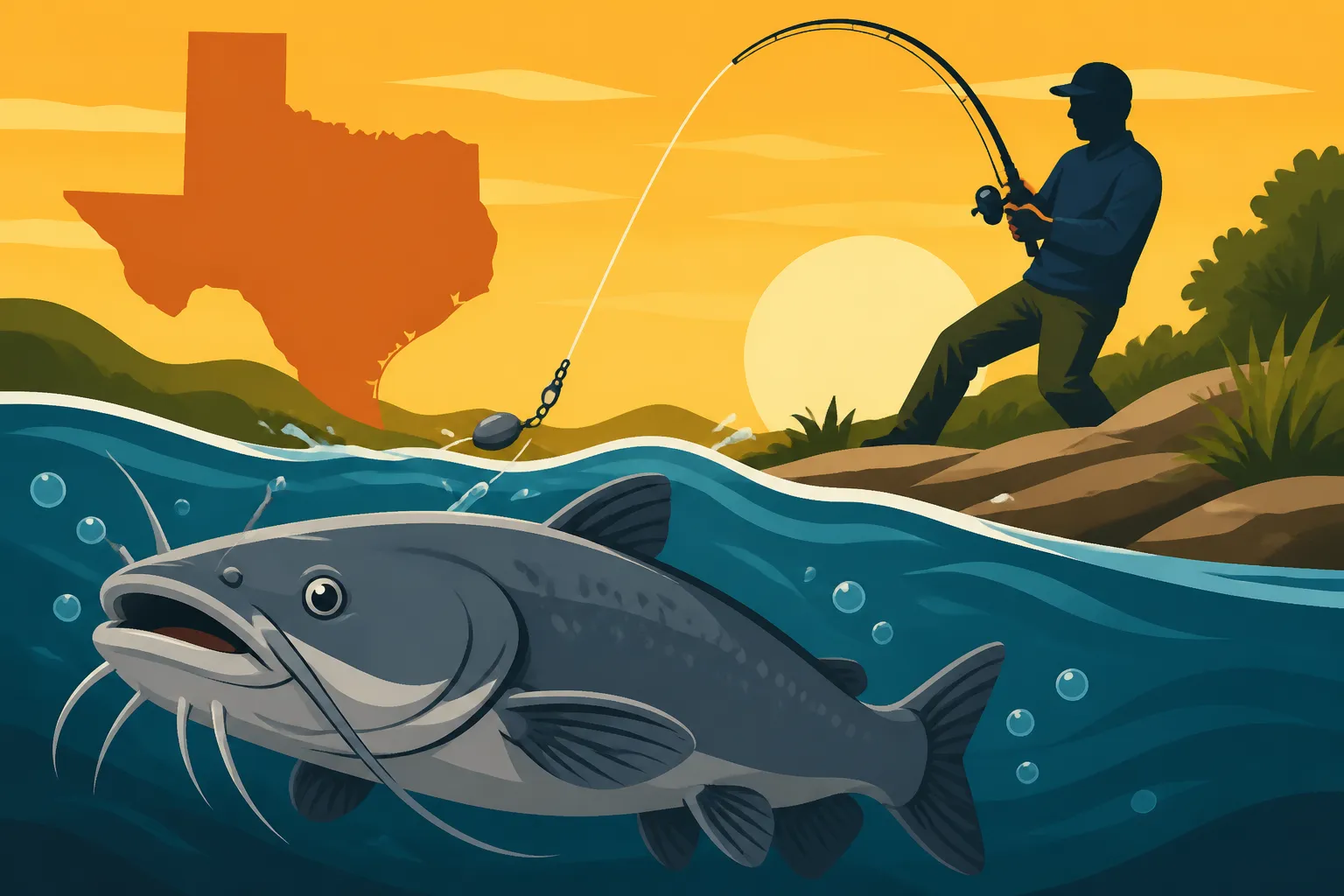
Flathead catfish are the stealthy predators of the river. Unlike their scavenger cousins, flatheads are ambush predators that prefer live bait and often hide out in heavy cover like log jams, undercut banks, and deep holes. They're easily identified by their flattened, broad head, shovel-like lower jaw, mottled brown and yellow coloration, and a square or slightly rounded tail. They don't have the deeply forked tail of the channels and blues. Flatheads can grow to enormous sizes, often competing with blue cats for the title of largest catfish. Catching a flathead requires patience and precision, as they tend to be solitary and territorial. A live perch or sunfish is usually the ticket to enticing one of these wary monsters out of their lair.
Understanding Catfish Behavior in Rivers
Rivers are dynamic environments, and catfish behavior adapts constantly to the flow, depth, and available forage. Unlike still lakes, river currents dictate much of a catfish's life, from where they feed to where they rest. They are incredibly efficient at using the current to their advantage, often positioning themselves just out of the main flow, in current seams or eddies, where baitfish are swept past without them having to expend too much energy.
Catfish are primarily bottom feeders, but their activity levels vary. During periods of lower light, like dawn, dusk, and throughout the night, they tend to become more active, moving out of their daytime hiding spots to cruise for food. They use their barbels, which are highly sensitive chemosensory organs, to detect food particles in the water, even in murky conditions. This keen sense of smell makes scent a crucial factor in bait selection. In fast-moving water, they'll often hold tight to structure or in deep pockets, waiting for an easy meal to drift by. Knowing this behavior means you'll often cast your bait not directly into the fastest current, but into the calmer waters adjacent to it, where a catfish can sit comfortably and ambush prey.
Their preference for cover is also critical. Rivers offer an abundance of natural structure: fallen trees, brush piles, rock formations, and deep scour holes created by strong currents. These areas provide not only shelter from the current but also ambush points and protection from predators. Catfish will often school up around these structures, especially if there's a good food source nearby. Learning to "read" the river and identify these potential hotspots is a skill that comes with experience, but it’s always about looking for anything that breaks the uniform flow or offers a place to hide and eat.
Identifying Prime Catfish Haunts in River Systems
Finding the fish in a vast river can feel like searching for a needle in a haystack, but catfish have predictable preferences. Once you know what to look for, you'll start seeing potential hotspots everywhere. The key is to identify areas that offer food, shelter, and a break from strong currents.
River bends are classic catfish magnets. As the river carves its path, the outside bend is typically deeper with a stronger current, often creating deep holes and undercut banks – perfect hiding spots for flatheads and large blue cats. The inside bend, conversely, is usually shallower and slower, often accumulating sandbars or debris, which can attract channel cats and baitfish. Fishing both sides of a bend can yield different species and sizes of catfish. Confluences, where two rivers or a river and a major creek meet, are also prime real estate. The mixing currents create turbulent areas that disorient baitfish and concentrate food, making them feeding stations for all three species.
Log jams, brush piles, and fallen trees are absolute goldmines for flatheads and offer excellent cover for all catfish. These tangled messes provide a break from the current, deep pockets, and plenty of ambush points. Fishing directly into or around the edges of these snags requires heavy tackle and patience, as you're likely to get hung up, but the reward can be substantial. Rock piles, rip-rap along bridge abutments, and even old submerged foundations also serve as excellent current breaks and habitat. Lastly, look for deep scour holes, which are often found downstream of natural constrictions, sharp bends, or bridge pilings. These deep pockets allow catfish to escape strong currents and find cooler water during hot Texas summers. When you're fishing from the bank or a boat, scan the water for any surface disturbances or submerged features that indicate these prime spots.
Essential Gear for Successful River Catfishing in Texas
You wouldn't head to a construction site without the right tools, and river catfishing is no different. The right gear isn't about spending a fortune; it's about having the appropriate strength and durability to handle powerful fish and the often-demanding river environment. Skimping on tackle usually leads to lost fish and frustration.
Rods, Reels, and Line: Building Your Foundation
Your rod and reel are your primary connection to the fish, so choosing wisely is paramount. For river catfishing in Texas, especially if you're targeting those larger blue and flathead cats, you'll want gear that can take a beating. A good catfish rod is typically medium-heavy to heavy action, anywhere from 7 to 9 feet long. This length gives you the leverage to cast heavy baits and sinkers, and the power to control a big fish in current. A sturdy rod with a sensitive tip is ideal – tough enough to fight a monster, yet sensitive enough to detect subtle bites. For specific recommendations, check out our guide on Best Rods for Texas Catfish Fishing.
When it comes to reels, a robust baitcasting reel is often preferred for its power and line capacity, especially for larger species. Look for models with a strong drag system and all-metal construction for durability. Spinning reels can work for smaller channel cats, particularly for bank fishing with lighter tackle, but for battling a 50-pound blue cat in a strong current, a conventional baitcaster will give you more control and cranking power. Many anglers find great deals and a wide selection for these kinds of reels on sites like Amazon. As for line, braided line is a popular choice due to its incredible strength-to-diameter ratio and lack of stretch, which provides superior sensitivity. For heavy catfishing, you might opt for 30-80 lb test braid, depending on the target species and river conditions. However, many traditionalists still prefer heavy monofilament (20-40 lb test) for its shock absorption, which can be beneficial when a big fish makes a sudden run. Either way, ensure your line is fresh and free of nicks before each trip.
Hooks, Weights, and Terminal Tackle
The "business end" of your fishing setup – your hooks, weights, and connecting components – needs to be as strong as your rod and reel. Catfish have tough mouths, and you'll be using substantial baits, so small, flimsy hooks simply won't cut it. Circle hooks are overwhelmingly popular and highly recommended for catfish, particularly when using live or cut bait. Their design is self-setting, meaning they typically hook the fish in the corner of the mouth, leading to fewer gut-hooked fish and easier releases. Sizes range from 5/0 to 10/0, depending on the size of your bait and target fish. For prepared baits or when specifically targeting smaller channel cats, a stout J-hook in similar sizes can also work.
Your choice of sinker depends heavily on the current. In strong river currents, you'll need heavier weights to keep your bait on the bottom. Pyramid sinkers and no-roll sinkers (also known as coin sinkers) are excellent choices as they dig into the bottom and resist being swept away. Egg sinkers are also popular, especially in a slip-sinker rig, where the line runs through the weight, allowing the fish to pick up the bait without feeling immediate resistance. Weights can range from 1 ounce up to 8 ounces or more in extremely heavy currents. Finally, don't forget quality swivels (barrel or snap swivels) to prevent line twist and strong, abrasion-resistant leader material, like heavy monofilament or fluorocarbon (40-80 lb test), especially if you’re fishing around snags. Connecting these components effectively with strong knots is crucial.
The Right Bait for Texas River Catfish
Choosing the right bait can be the difference between a slow day and a successful outing. Catfish are not particularly picky, but they do have preferences that can significantly boost your chances. For a more comprehensive look at what tempts these whiskered wonders, our guide on Best Catfish Bait for Texas Lakes offers even more detail.
For channel catfish, a wide variety of baits work wonders. Prepared "stink baits" or "dough baits" are extremely popular and effective, especially for bank anglers, as their strong scent disperses well in the current. Worms (nightcrawlers, earthworms) are also universally effective. Cut bait, particularly from oily fish like shad or mullet, is excellent. Simply cut a fresh baitfish into chunks or strips; the fresher, the better. You can find pre-made catfish baits or ingredients for your own concoctions easily on Amazon. Remember, channel cats are scavengers and follow their nose, so strong scents are key.
Blue catfish, being primarily predators, strongly prefer fresh cut bait. Shad, carp, buffalo, or even larger sunfish cut into chunks or fillets are ideal. The oilier the fish, the better the scent trail it leaves in the water. Some anglers swear by using a whole, dead baitfish on a larger hook for monster blues. Live bait, like small sunfish or perch, can also be highly effective for blues, though cut bait is generally easier to manage and just as productive. Ensure your cut bait is fresh; old, freezer-burnt bait won't attract the big ones.
Flathead catfish are the most particular of the bunch, almost exclusively preferring live bait. A frisky live perch, sunfish, or even a small carp, fished on a stout hook near heavy cover, is your best bet. The flathead's predatory nature means it responds to the vibrations and natural movements of a struggling baitfish. While you can sometimes catch them on cut bait, live bait greatly increases your odds. Whatever bait you choose, ensure it's fresh and presented naturally. Catfish have an incredible sense of smell, so scent plays a huge role in attracting them, especially in the often-murky waters of Texas rivers.
Proven Techniques for Catching River Catfish
No matter if you prefer to keep your feet on solid ground or venture out onto the water, there are effective strategies for tempting river catfish. The key is adapting your approach to the specific river conditions and the species you're targeting.
Bank Fishing Strategies: Staying Grounded and Productive
Bank fishing for river catfish is accessible and rewarding, perfect for a relaxed afternoon or a dedicated night session. The main challenge is finding good access and knowing where to cast. Your primary goal from the bank is to get your bait into those prime catfish holding areas – the deeper channels, current seams, log jams, and drop-offs that run parallel to the bank or are within casting distance.
A popular and effective setup for bank fishing is the Carolina rig, sometimes called a slip-sinker rig. This involves threading your main line through an egg sinker, tying on a swivel, and then attaching a monofilament or fluorocarbon leader (12-24 inches) to the other side of the swivel, finally ending with your circle hook. This rig allows the fish to pick up the bait and swim a short distance without feeling the weight of the sinker, often resulting in a more solid hookset. Cast your rig upstream and let it drift naturally into a likely spot, or cast directly to a visible piece of structure. Many anglers will set up multiple rods along a productive stretch of bank, each baited differently or cast to a slightly different spot, to increase their chances. Always keep your rod tip pointed towards the water or use a sturdy rod holder to ensure your rod doesn't get pulled into the river by a powerful strike. For night fishing from the bank, you might want to read up on How to catch catfish at night in Texas.
Another effective bank fishing method, especially in areas with moderate current, is to use a three-way swivel rig. Tie your main line to one eye of the swivel, a short leader with a heavy weight (like a pyramid sinker) to another eye, and a longer leader (18-36 inches) with your baited hook to the third eye. This rig keeps your bait elevated off the bottom, allowing it to flutter enticingly in the current, which can be particularly attractive to channel cats. When bank fishing, pay attention to current breaks caused by fallen trees, large rocks, or bends in the river. These are often easier to access from shore and provide excellent ambush points for catfish. Patience is your best friend when bank fishing; sometimes it takes a while for a cruising cat to find your bait.
Boat Fishing Tactics: Reaching Those Hard-to-Get Spots
For serious river catfishing, a boat opens up a whole new world of possibilities, allowing you to access deeper water, far-bank structure, and mid-river channels that are unreachable from shore. Whether you’re drifting or anchored, a boat gives you the flexibility to chase the fish.
One of the most effective boat fishing tactics is anchoring upstream of a prime piece of structure, like a log jam, a deep hole, or a bridge piling. Position your boat so you can cast your baits downstream, allowing them to settle naturally into the target zone. Use a heavy anchor system to ensure you stay put, especially in strong currents. Once anchored, you can fish multiple rods, experimenting with different baits and depths. If you have electronics like a fish finder, use them to locate schools of baitfish or deep-holding catfish before you even drop a line. Spot-locking trolling motors are a game-changer for this kind of fishing, holding you precisely in place without the need for traditional anchoring.
Drifting is another powerful technique, especially for covering large sections of river or locating active fish. You can drift with the current, letting your baits bounce along the bottom, or use your trolling motor to control your speed and direction more precisely. This technique is particularly effective with cut bait for blue cats, as the scent trail drifts with you, covering a wider area. When drifting, keep your baits relatively close to the bottom, often using a three-way swivel rig or a Santee Cooper rig (which uses a peg float on the leader to keep the bait off the bottom, above snags). Pay close attention to your rod tip for bites, as they can sometimes be subtle when drifting. Be prepared to navigate around snags and adjust your drift to stay in productive water.
Passive Methods: Trotlines and Juglines
For those who want to maximize their catch with minimal effort, or perhaps just enjoy a different style of fishing, trotlines and juglines are time-honored traditions in Texas river catfishing. These methods allow you to set multiple baited hooks and let the river do the work while you relax or pursue other activities. However, it's crucial to understand and adhere to the regulations. You'll want to review Texas Trotline and Jugline Rules and Texas gear tag requirements for trotlines and juglines before you even think about setting them out.
A trotline is essentially a long line, often heavy nylon or poly rope, stretched across a section of the river or along a deep bank. Drop lines with baited hooks are tied at intervals along the main line. Typically, one end is anchored securely to a tree or heavy weight on the bank, and the other end is weighted and anchored mid-river or across the channel. Trotlines can hold a significant number of hooks, increasing your chances of catching multiple fish. They are particularly effective for targeting larger blue and flathead catfish, especially when baited with fresh cut bait or live perch. Setting a trotline requires a bit of planning and a sturdy boat to deploy and check it safely. It's essential to set them in areas away from common boat traffic to prevent accidents and clearly mark them as required by law.
Juglining involves individual lines tied to floating jugs or bottles, each with one or more baited hooks. These jugs are then released to drift with the current, or sometimes anchored in specific spots. Juglining is a highly active way to fish passively, as you'll often be chasing after your jugs as they move downstream with a fish on the line. It's an exciting method and can be incredibly productive, especially for blue and channel catfish. Like trotlines, proper baiting (cut bait for blues, stink bait for channels, live bait for flatheads) is key. Each jug must also be tagged with the angler's identification. Both trotlines and juglines require checking regularly – not just to retrieve fish, but also to re-bait hooks and ensure they haven't become snagged or a hazard. These methods are a unique part of Texas fishing culture and can yield impressive results if done correctly and legally.
Timing is Everything: Best Seasons and Conditions for River Cats
Successful catfishing isn't just about gear and technique; it's also about understanding the rhythm of the river and the seasonal movements of the fish. Knowing when and where to find them can turn a slow day into a memorable one.
Seasonal Hotspots and Catfish Movements
Catfish activity in Texas rivers follows distinct seasonal patterns, largely driven by water temperature and spawning cycles. Understanding these cycles helps you pinpoint their likely locations.
Spring is a fantastic time for river catfishing. As water temperatures rise, catfish become very active, feeding heavily to prepare for the spawn. During late spring, blue and channel cats will move into shallower, often more turbid waters to spawn. This is when you can find them concentrated in areas with submerged brush, roots, or undercut banks, often in relatively swift current. Post-spawn, they'll often stay in these areas for a short period, feeding aggressively to recover. Flatheads, too, become more active, but they tend to stay closer to their loggy hideouts. For blue cats, this pre-spawn and spawn period is prime time for big fish. Many anglers specifically target this window for trophy catches.
Summer brings warm water, and while it might seem counterintuitive, summer nights can be incredibly productive. During the day, especially in the scorching Texas heat, catfish will often retreat to deeper, cooler holes, under heavy cover, or into areas with strong current that provide more oxygen. This is when knowing How deep do you fish for catfish in summer becomes crucial. They'll venture out to feed more actively during the cooler hours of dawn, dusk, and throughout the night. Targeting deep bends, confluence points, or channels with fresh cut bait during these times can yield excellent results. Flatheads will remain tucked into their structure, but a well-presented live bait at night can entice them out.
Fall is another strong contender for top catfishing season. As water temperatures begin to drop, catfish go on a feeding frenzy, bulking up for the colder months. They become highly active and can be found in a wider range of depths and locations, often congregating in deeper holes or along channel edges where baitfish are abundant. This is a great time for both quantity and quality. The cooler temperatures also make fishing more comfortable for anglers. Winter generally sees a slowdown in activity. Catfish will typically move to the deepest, most stable holes in the river, often schooling tightly. While they still eat, their metabolism slows, and bites can be more subtle. Targeting these deep wintering holes with baits presented very slowly can still produce fish, particularly large blue cats.
Reading the River: Current, Clarity, and Water Levels
The river is constantly changing, and a truly successful catfish angler learns to "read" these dynamics. Current, water clarity, and water levels are major factors that dictate where catfish will be and how they’ll react to your bait.
Current is perhaps the most important factor in river catfishing. Catfish prefer to expend minimal energy while feeding. This means they will often position themselves in current breaks – eddies, behind log jams, in deep holes, or along channel edges where the current is slower. These areas allow them to rest comfortably while waiting for food to be swept to them. In very strong currents, they'll hug the bottom or hide in the slack water created by any obstruction. Conversely, if the current is too slow, catfish might become more dispersed and harder to locate. A moderate, consistent flow is generally ideal, concentrating baitfish and keeping catfish active. Always think about how the current is moving your bait and how a catfish would naturally position itself in that flow.
Water clarity also plays a significant role. Catfish, with their incredible sense of smell and barbels, are well-adapted to murky or turbid water, often thriving in it. In fact, slightly stained or muddy water can sometimes improve catfishing, as it reduces visibility for both predator and prey, making your scented bait even more effective. After heavy rains, when rivers become extremely muddy and swollen, catfish might move out of the main channel into flooded backwaters, creeks, or calmer eddies to escape the extreme current and find clearer water. As the water begins to clear, they'll gradually move back into the main river. In very clear water, catfish can be warier, and you might need longer leaders or less obtrusive presentations.
Water levels, whether rising or falling, significantly impact catfish behavior. Rising water often pushes catfish into newly flooded areas, like grassy banks or submerged timber, where new food sources become available. They'll follow the rising water, sometimes even into fields or ditches adjacent to the river. Falling water, on the other hand, can concentrate fish into the main channel or deeper holes as their habitat shrinks. This can make them easier to locate but also more stressed. Always pay attention to recent rainfall and river gauge reports. A sudden change in water level, particularly a rapid drop, can make fishing challenging until the fish adjust to their new environment.
Prime Time: Best Hours for River Catfishing
While catfish can be caught at any time, certain hours of the day and night tend to be more productive, especially in Texas rivers. Many anglers swear by specific times, and for good reason: catfish, like most predators, have peak feeding windows.
Generally, catfish activity ramps up during periods of low light. This means dawn, dusk, and throughout the night are often the most fruitful times to fish for them. As the sun rises and sets, baitfish become more active, moving into shallower areas to feed, which in turn draws in hungry catfish. The cooler temperatures and reduced light also make catfish feel safer and more inclined to leave their daytime cover to forage. Night fishing, in particular, is a legendary practice for catfishermen in Texas. The biggest blue and flathead cats are often caught after dark, when they are at their most active and least wary. If you're planning an overnight trip, consider what it takes to have a successful How to catch catfish at night in Texas.
During the day, especially in the brutal heat of a Texas summer, catfish will often retreat to the deepest, coolest, and most oxygenated parts of the river. This means fishing mid-day requires targeting deep holes, strong current seams, or dense cover. Bites might be less frequent, but the fish you do catch can often be large. Overcast days can also extend the "low light" conditions, making daytime fishing more productive than on a bright, sunny day. While less critical than current and clarity, some anglers also pay attention to moon phases, believing that full and new moons can influence feeding behavior, often leading to more active fish around these times. Ultimately, being on the water when the fish are most likely to feed will dramatically increase your chances of success.
Disclaimer
This article is for general informational purposes only and does not constitute professional advice. Laws, prices and regulations vary by location and change over time. Consult a qualified professional for guidance on your specific situation.