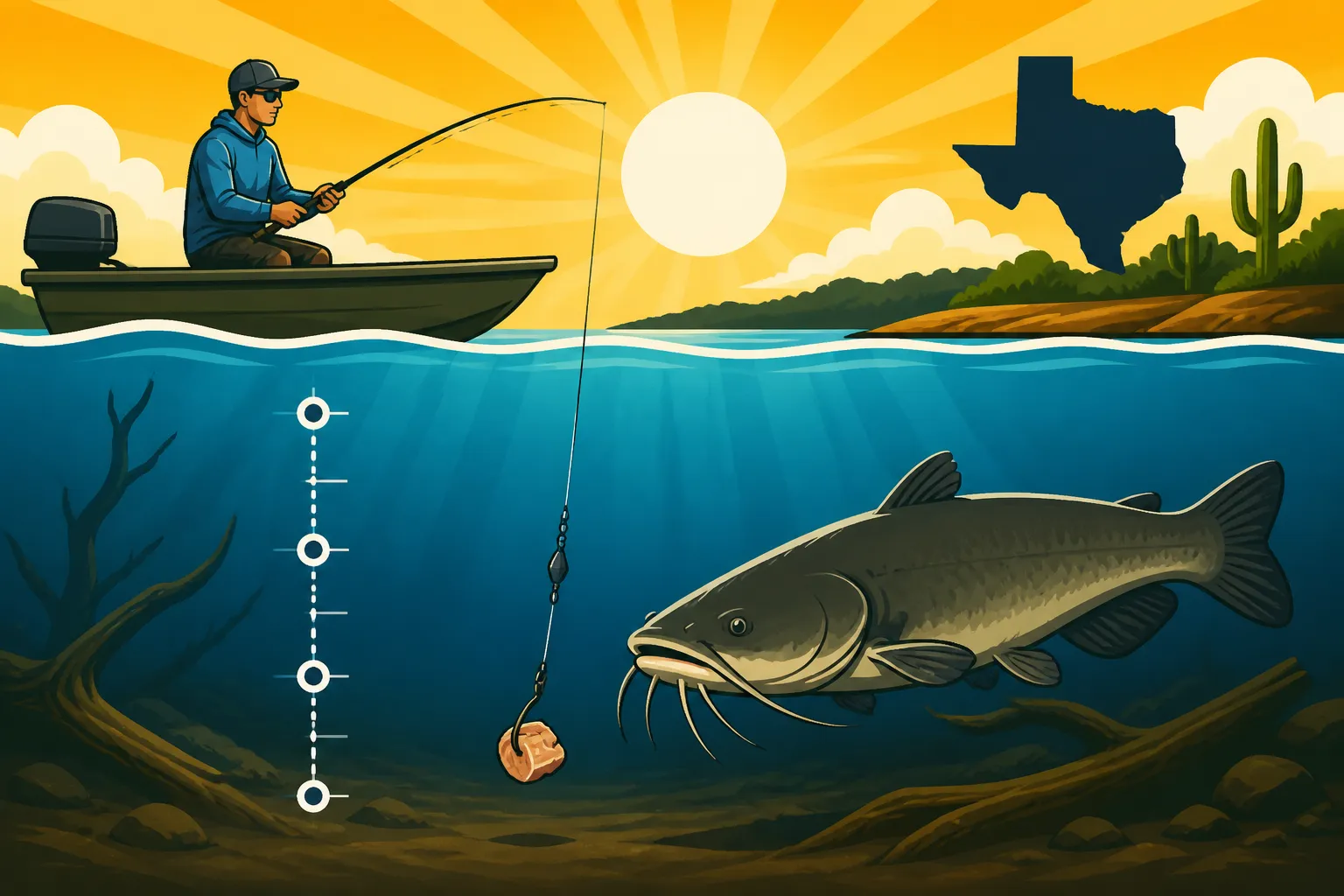
How deep do you fish for catfish in summer
Oh, the Texas summer! It's a glorious time to be out on the water, but if you've ever tried to chase catfish during those scorching months, you know the frustration of finding your usual honey holes suddenly barren. It feels like the fish just vanish, leaving you scratching your head and wondering if you're doing something wrong. But don't worry, you're not alone! This guide is all about understanding where catfish disappear to when the mercury rises and, more importantly, how deep to fish for catfish in summer to put those whisker fish in your cooler.
Understanding Why Catfish Seek Deeper Waters in Summer
When the Texas sun beats down relentlessly, and air temperatures soar past 90 or even 100 degrees Fahrenheit, our lakes and rivers undergo some significant changes. This isn't just about the surface water getting warm; it's about a complete shift in the aquatic environment, and catfish, being the smart survivors they are, adjust their behavior accordingly. They're not just looking for "cool" water; they're looking for comfortable, oxygenated water.
Thermal Stratification and the Thermocline
One of the biggest factors at play in deeper Texas lakes during summer is something called thermal stratification. Simply put, water forms layers based on temperature. The warm, lighter water stays on top, while cooler, denser water sinks.
The result is three distinct layers:
- Epilimnion: This is the top layer, which is warm and well-oxygenated due to contact with the air and wind. However, it can get too warm for catfish to be comfortable, especially during the hottest parts of the day.
- Metalimnion (or Thermocline): This middle layer is where the temperature changes rapidly. It's often the sweet spot for many fish, including catfish, as it offers cooler temperatures than the surface and often good oxygen levels.
- Hypolimnion: This is the bottom layer, which is typically the coldest. While the temperature might seem ideal, the deep water often has very low dissolved oxygen (DO) levels, or sometimes none at all, making it uninhabitable for most fish. This is a critical point that many anglers miss – deep doesn't always mean better if there's no oxygen.
So, when we talk about fishing deep for catfish in summer, we're really talking about targeting that thermocline layer or just above it, where the conditions are just right.
The Role of Dissolved Oxygen
Catfish, like all fish, need oxygen to survive. In summer, especially in stagnant or slow-moving waters, the dissolved oxygen (DO) levels can plummet. Warm water holds less oxygen than cold water, and decomposition of organic matter on the bottom consumes even more. If the deep water gets too warm and the decomposition accelerates, the entire bottom layer can become anoxic (devoid of oxygen).
This means that while the deepest parts of a lake might offer cooler temperatures, if there's no oxygen, no fish will be there. Catfish will actively seek out areas where the water temperature is tolerable and, critically, where there's enough oxygen. This often puts them in or around the thermocline, or in areas with moving water or underwater springs that provide a fresh supply of oxygen.
Pinpointing Summer Catfish: Key Depths and Structures
Knowing why catfish go deep is one thing, but figuring out where that sweet spot is on any given day is the real challenge. Catfish aren't just randomly distributed; they'll congregate around specific underwater structures and depths that offer the best combination of food, cover, and favorable conditions. You need to be a bit of an underwater detective to find them.
General Depth Guidelines for Different Species
While every lake and river is different, there are some general depth ranges you can start with, keeping in mind that the ideal depth can shift daily based on weather, time of day, and specific lake conditions.
Channel Catfish:
These are perhaps the most widespread catfish species in Texas, and they're often found in the widest range of habitats. In summer, they tend to hang out in depths from 10 to 30 feet, often relating to creek channels, submerged roadbeds, or the edges of flats near deeper water. They're opportunistic feeders, so they'll venture shallower to feed during low-light hours or if baitfish move up, but their daytime retreat is usually into cooler, deeper zones. Knowing the best strategies can really help you out, and our guide on How to Catch Catfish in Texas dives deeper into those techniques.
Blue Catfish:
Often the biggest of the Texas catfish, blue cats are true deep-water dwellers, especially the larger specimens. In summer, it's not uncommon to find them in 20 to 60 feet of water, sometimes even deeper in very large reservoirs. They love to patrol river channels, main lake humps, deep points, and submerged timber. If a lake has a strong current or river system running through it, blues will often be found in the scour holes or bends of those channels. For more on identifying these giants, check out Texas Blue Catfish Identification Guide.
Flathead Catfish:
Flatheads are a bit different. While they appreciate deep water for comfort and cover, they are highly structure-oriented and prefer areas with abundant snags, rock piles, or dense timber. In summer, look for them in depths ranging from 15 to 40 feet, often tucked into the deepest log jams or rock crevices within river or creek channels. They are ambush predators and will lurk in these covers, waiting for prey. Our guide on Texas Flathead Catfish Identification Guide can help you distinguish them from other species.
Here's a quick summary table:
| Catfish Species | Typical Summer Depth Range (Feet) | Preferred Summer Structures |
|---|---|---|
| Channel Catfish | 10-30 | Creek channels, submerged roadbeds, edges of flats, humps |
| Blue Catfish | 20-60+ | River channels, main lake humps, deep points, submerged timber, scour holes |
| Flathead Catfish | 15-40 | Dense log jams, rock piles, deep crevices within channels |
Locating Prime Structures
Finding these depths is just the first step; you need to find the right structures at those depths. This is where your boat's electronics become invaluable.
- Submerged River and Creek Channels: These are highways for baitfish and predators alike. Catfish will often sit on the edges or in the deepest parts of these channels, especially where they make a turn or intersect with another structure.
- Humps and Ridges: Underwater humps or ridges that rise from the main lake basin provide ambush points and foraging areas. Catfish will often stage on the deeper side of these structures, moving up to feed as conditions allow.
- Deep Points: Points that extend into the main lake or river channel can concentrate fish. The deeper edges of these points, especially if they have some kind of cover, are prime targets.
- Standing Timber and Brush Piles: Even in deep water, cover is king for catfish, particularly flatheads. Look for dense stands of submerged trees or artificial brush piles that offer sanctuary and ambush opportunities.
- Ledges and Drop-offs: Any abrupt change in depth is a potential holding spot. Catfish will often patrol ledges, moving up and down to find food.
- Bridges and Dams: These man-made structures often create current breaks, scour holes, and provide immense vertical cover that catfish will utilize, especially the areas immediately downstream from a dam. Remember, though, that there are Texas fishing license requirements near dams and often 600-foot restrictions directly below them.
Using your fish finder to identify these depth changes and structures, and then marking them on your GPS, will significantly increase your success rate. Don't just look for fish; look for the features that hold fish.
Gear and Techniques for Deep Summer Catfish
Once you've zeroed in on the depths and structures, it's time to talk about the practicalities of getting your bait down to where those deep-dwelling summer catfish are lurking. This requires specific gear and a refined approach compared to shallow-water catfishing.
Essential Deep Water Catfish Gear
Fishing deep means battling current, wind, and the sheer weight of getting your bait to the bottom. Your tackle needs to be robust. Our comprehensive guide on Best Rods for Texas Catfish Fishing provides excellent options, but here's a quick run-down for deep water:
- Rods: Look for heavy to medium-heavy action rods, typically 7 to 9 feet long. The extra length helps with casting heavier weights and controlling large fish in deep water. A good quality, durable rod will be your best friend. Many reliable options are available on online retailers like Amazon.
- Reels: A good quality baitcasting reel with a strong drag system and a high line capacity is crucial. You'll need to hold a lot of line for deep water, and a smooth, powerful drag will prevent you from losing those big blues. Alternatively, a sturdy spinning reel can work for lighter applications, but baitcasters generally handle heavy line and weight better.
- Line: Heavy braided line, from 30 to 80-pound test, is the go-to for deep catfish. Braid has minimal stretch, which gives you excellent feel for subtle bites at depth, and its strength is unmatched. Fluorocarbon or monofilament leaders can be used to add some stealth. You can find excellent braided line options from brands like PowerPro or Berkley on Amazon. For specific advice, refer to our guide on Best Line for Texas Catfish Rigs.
- Weights: This is where you really need to step up. Depending on current and depth, you might need weights from 2 ounces all the way up to 8 ounces or more to hold your bait on the bottom. Sinker slides are great for allowing the fish to pick up the bait without feeling the weight immediately.
- Hooks: Circle hooks are highly recommended for catfishing, especially when targeting larger fish. They are self-setting and typically hook the fish in the corner of the mouth, making for easy release and protecting the fish. Sizes from 5/0 to 10/0 are common for channel and blue cats. For more detail, check out our piece on Best Hook size for Texas catfish fishing.
- Electronics: A reliable fish finder with good down-imaging and side-imaging capabilities is invaluable. It allows you to see the bottom contours, identify submerged structures, and even spot fish holding near the bottom. Many units also have a temperature gauge, which can help you identify the thermocline.
Effective Deep Water Catfishing Techniques
Getting your bait to the strike zone and keeping it there requires a few specific techniques.
Carolina Rig (Bottom Rig)
This is a classic for a reason. Thread your weight onto your main line, followed by a bead (to protect your knot), then tie on a swivel. To the other end of the swivel, attach a leader of 12-24 inches, and then your hook. This allows your bait to float or drift naturally off the bottom, even with a heavy weight holding it in place. It's incredibly effective when you want to present bait directly on or just above the bottom in deeper water.
Drifting
If you're on a larger lake or reservoir, drifting can be an extremely effective way to cover ground and find schools of deep catfish. Use a drift sock or sea anchor to slow your boat down and allow your baits to present naturally as you cover various depths and structures. This technique is particularly potent for blue catfish. You can set up multiple rods with different weights and bait presentations to cover varying depths and scent trails.
Anchor and Fan Casting
Once you locate a promising structure (like a hump, channel bend, or brush pile) with your electronics, anchor upwind or upcurrent of it. Then, "fan cast" your baits all around the structure, trying different depths and distances. This allows you to thoroughly fish a productive area. Leave your rod in a sturdy rod holder and wait for the tell-tale tug. Many seasoned anglers use multiple rod holders on their boat, ensuring they can cover a wider area, with some great options available on Amazon for different boat types.
Best Baits for Deep Summer Catfish
While the technique gets the bait there, the bait itself is what seals the deal. Catfish are primarily scavengers with a keen sense of smell, so pungent baits often work best.
- Cut Bait: Fresh cut bait is king, especially for blue and flathead catfish. Shad, carp, perch, or even pieces of mullet work exceptionally well. The oilier the fish, the better. Cut bait releases a strong scent trail that catfish can detect from a distance.
- Live Bait: While cut bait is fantastic for blue and channel cats, flatheads often prefer live bait. Small sunfish, perch, or bluegill hooked through the back or lips are irresistible to them. Remember to check your Texas Fish Bag and Length Limits and local regulations on what live bait can be used.
- Prepared Baits (Stink Baits): These commercially available baits are designed to be extremely smelly and are highly effective for channel catfish. They come in various forms – dough balls, dip baits, and punch baits.
- Shrimp: Both fresh and frozen shrimp can be a fantastic bait, especially for channel cats. It's readily available and releases a good scent.
- Chicken Liver: A classic for channel catfish, chicken liver is messy but incredibly effective due to its strong smell and soft texture.
For an even more detailed breakdown of bait options, our guide on Best Catfish Bait for Texas Lakes is a must-read.
Adapting to Conditions: Water Temperature and Oxygen
Texas weather can be fickle, even in summer, and successful deep-water catfishing means being adaptable. The fish's behavior isn't static; it shifts with subtle changes in the environment. Being able to read these nuances can mean the difference between a full livewell and a frustrating day.
Monitoring Water Temperature and Oxygen Levels
While you might not carry a full scientific lab on your boat, there are tools and observations that can help you understand the water column:
- Fish Finder Temperature Gauge: Many modern fish finders come equipped with a temperature sensor that gives you a surface water temperature reading. Some advanced units can even give you a profile of temperature at different depths, which is crucial for locating the thermocline.
- Observing Baitfish: If your fish finder shows schools of baitfish congregated at a certain depth, there's a good chance that game fish, including catfish, will be nearby, feeding on them. Baitfish often hover just above or within the thermocline where food is abundant and oxygen is good.
- Bubbles and Stagnant Areas: Be wary of areas, especially deep pockets, where you see little to no signs of life, or if your electronics show a dense, featureless bottom that could indicate a "dead zone" of anoxic water. Bubbles rising from the bottom could indicate gas release from decomposition, a sign of low oxygen.
- Current and Flow: In rivers or areas affected by dam releases, current can be a huge factor. Moving water typically has higher dissolved oxygen, so areas with current can attract catfish even if they are somewhat shallower than in still water.
Strategic Fishing Times for Summer Catfish
Even in deep water, the time of day can influence catfish activity.
- Low Light Periods: Just like with many other species, catfish activity often increases during dawn, dusk, and even overnight. During these times, they might venture slightly shallower to feed before retreating to their deeper haunts as the sun climbs high. This is why many anglers swear by How to catch catfish at night in Texas.
- Cloudy Days: A heavily overcast or rainy day can offer a reprieve from the intense sun, leading to slightly cooler surface temperatures and often encouraging catfish to be more active throughout the day, potentially even in shallower areas than on a clear, sunny day.
- Post-Storm Activity: After a good summer rain or thunderstorm, the influx of fresh water can temporarily improve oxygen levels and stir up food sources, often triggering a feeding frenzy in catfish. The cooler temperatures following a front can also make them more active.
By paying attention to these environmental cues, you can refine your depth choices and improve your chances of a successful catfishing trip, always making sure you're aware of the Texas Catfish Bag Limits for your catch. Remember, patience and persistence are key, but informed decisions based on understanding the catfish's summer habits will give you a significant advantage.
Disclaimer
Fishing conditions and regulations in Texas can change. Always consult the latest Texas Parks and Wildlife Department (TPWD) regulations before heading out. This guide provides general information and recommendations.