Difference between a Texas rig and a Carolina rig
It can be incredibly frustrating when you're standing at the water's edge, or out on your boat, staring at a tackle box full of lures and rigs, and you just don't know which one to pick. Especially in Texas, where conditions can change on a dime, knowing the nuances of your tackle can make all the difference between a memorable day of catching and a frustrating day of casting. This comprehensive guide is here to clear up the age-old confusion between two cornerstone bass fishing rigs: the Texas rig and the Carolina rig, helping you understand when and how to deploy each one effectively.
Understanding the Texas Rig for Closer Combat
The Texas rig is a staple in every serious bass angler's arsenal, and for good reason. It’s primarily designed for fishing in and around heavy cover – think dense hydrilla beds, submerged timber, thick brush piles, or even pitching under docks. The beauty of this rig lies in its simplicity and its ability to be virtually snag-proof, which is a huge advantage when you're trying to coax a lunker out of its sanctuary.
Components and Setup of a Texas Rig
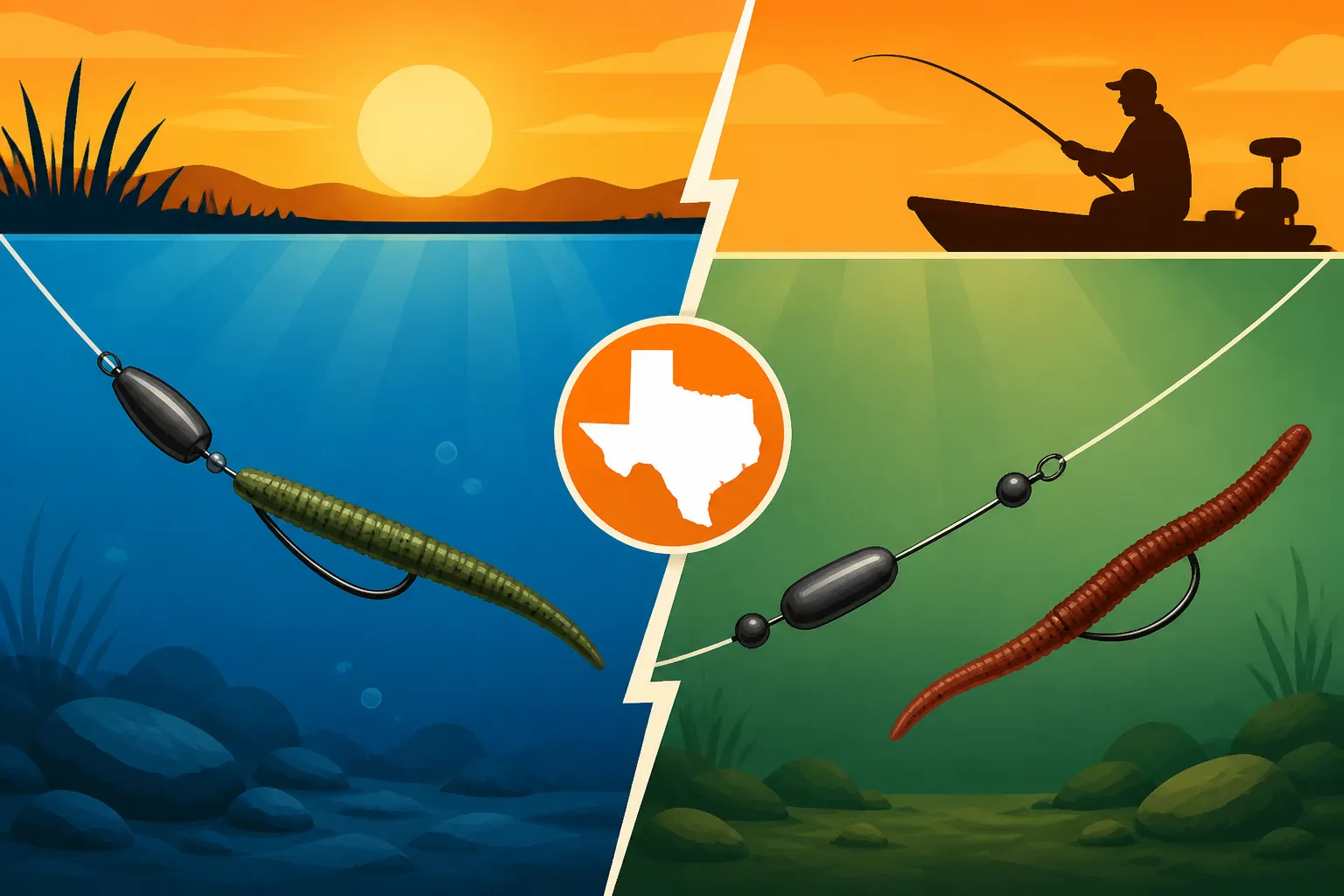
At its heart, a Texas rig is quite straightforward, but each component plays a crucial role. First, you'll need a worm hook, typically an Extra Wide Gap (EWG) hook, but sometimes a straight shank or offset worm hook works depending on your plastic bait. Then comes a bullet-shaped weight, which is threaded onto your fishing line before the hook. This weight is usually made of lead or tungsten. Tungsten is often preferred because it's denser, meaning a smaller weight can achieve the same sink rate, offering a more compact profile and better feel for detecting subtle bites. Sometimes, a small glass or plastic bead is added between the weight and the hook, which creates a clicking sound underwater, attracting curious bass, and also protects your knot from the constant banging of the weight. Finally, you rig a soft plastic bait, like a creature bait, worm, or craw, "weedless" onto the hook, meaning the hook point is embedded into the body of the plastic, making it resistant to snags.
When you're putting one of these together, you'll notice how the bullet weight slides freely up and down the line, right above your bait. This is called a "free-sliding" Texas rig. Sometimes, anglers "peg" the weight by inserting a small toothpick or rubber bobber stopper into the weight to keep it from sliding. This transforms it into a "pegged" Texas rig, which excels when you need to punch through thick vegetation or want the weight and bait to fall as one unit. The choice between pegged and unpegged often comes down to the density of the cover and how you want your bait to present itself. You can find a vast selection of these components, from hooks to weights, on platforms like Amazon, making it easy to experiment with different sizes and materials.
When and Where to Use a Texas Rig
The Texas rig truly shines when you're fishing in places where other rigs would get hopelessly snagged. If you're targeting bass tucked deep inside gnarly brush piles at Lake Fork or trying to flip a bait into thick reeds along the Trinity River, the weedless nature of the Texas rig is your best friend.
Consider a hot summer day on Lake Palestine, when the bass have moved deep into the shade of submerged timber. A standard jig or exposed hook would hang up almost immediately. But with a Texas rig, you can pitch your bait right into the heart of that cover, letting it slowly fall and entice those lethargic bass. It's also fantastic for "punching" through thick mats of vegetation that form on the surface of some lakes, like those you might encounter on Sam Rayburn Reservoir. A heavier, pegged tungsten weight drives the bait through the mat, and the weedless hook ensures it doesn't foul on the way down. This technique, and understanding the proper setup, is crucial for those looking to improve their game, especially if you're keen on how to fish a Texas rig for bass. It’s a vertical presentation that gets your bait down into the strike zone efficiently, especially when those fish are holding tight to structure.
Pros and Cons of the Texas Rig
Like any fishing rig, the Texas rig has its advantages and disadvantages.
Pros:
- Exceptional Weedlessness: This is its primary benefit, allowing you to fish in virtually impenetrable cover without constant snags. This feature saves you time, money (on lost lures), and frustration.
- Versatile for Soft Plastics: It can be used with a wide array of soft plastic baits, from straight worms to elaborate creature baits, giving you many options depending on what the fish are biting. You can explore different options for your tackle box, including soft plastics, on Amazon.
- Good for Precise Placements: You can pitch or flip it accurately into small pockets within cover, making it ideal for targeting specific spots where you suspect a bass is hiding.
- Great "Feel": When unpegged, the sliding weight allows you to feel subtle bites as the fish picks up the bait independently of the weight.
- Minimalist Setup: It's relatively quick and easy to tie, which is a blessing when you need to re-rig in a hurry. For detailed instructions, check out resources on how to tie a Texas rig.
Cons:
- Limited Action for the Bait: Because the weight is directly on the line with the bait, the soft plastic tends to have a more subtle, natural action. This can be a pro for some situations but less enticing if fish want something with more erratic movement.
- Slower Fall Rate (sometimes): The free-sliding weight can slow the descent of the bait if the fish pick it up before the weight reaches the bottom, sometimes making it harder to maintain bottom contact or detect strikes.
- Less Casting Distance: The compact nature of the rig means it doesn't always cast as far as a Carolina rig, which can be a limitation in open water scenarios.
Deciphering the Carolina Rig for Open Water Dominance
Now, let's pivot to its cousin, the Carolina rig. While the Texas rig is a brawler in the heavy cover, the Carolina rig is more of a finesse operator designed for covering vast expanses of open water, probing deep structure, and presenting baits with a freer, more natural movement. It's a fantastic choice when you need to drag a bait across points, ledges, or humps in deeper parts of lakes like Canyon Lake or Lake Whitney.
Components and Setup of a Carolina Rig
The Carolina rig is a bit more involved in its construction but still manageable for any angler. It starts with a weight, typically an egg sinker or a heavier bullet weight (often 1/2 oz to 1 oz or more), threaded onto your main fishing line. After the weight, you always add a glass or plastic bead, which protects the knot of your swivel from the weight. Then comes the critical piece: a swivel. This swivel serves two purposes: it prevents line twist and acts as a stop for your weight and bead.
Attached to the other end of the swivel is a leader line, usually made of fluorocarbon for its invisibility underwater, ranging from 1 to 4 feet in length (though some anglers go even longer). The leader length is a crucial factor, influencing how far your bait floats above the bottom. Finally, a hook (often an EWG or offset hook) is tied to the end of the leader, and a soft plastic bait is rigged weedless onto it. The key difference here is the separation between the weight and the bait, achieved by that leader. This creates a completely different action underwater, making the bait "float" or "swim" more freely behind the weight as it's dragged along the bottom.
When and Where to Use a Carolina Rig
The Carolina rig excels in clear, open water with sparse cover or when fishing deeper structures. It's truly built for covering water and locating fish. Imagine you're on O.H. Ivie Reservoir, known for its big bass, and you're trying to find fish scattered across a long, sloping point or a deep submerged hump. Dragging a Carolina rig across these areas allows you to cover a lot of ground effectively. The weight maintains contact with the bottom, signaling every change in terrain, while the bait trails seductively behind.
It's also a go-to when fish are suspended slightly off the bottom or when they're particularly finicky and need a more natural-looking presentation. The free-swimming action of the bait on the leader can be irresistible to bass that might shy away from a more aggressive, compact presentation. This rig is fantastic for situations where you need to present your bait subtly, such as fishing for bass in clear water lakes or during tough fishing conditions. It's a technique that many pros rely on for finding scattered fish, especially when fish are relating to the bottom but not buried in heavy cover. If you're curious about how to fish a Carolina rig in deep water, this setup is paramount.
Pros and Cons of the Carolina Rig
Just like its Texas-rigged counterpart, the Carolina rig has its own set of strengths and weaknesses.
Pros:
- Excellent for Covering Water: Its design allows for long casts and the ability to drag the bait over extensive areas, making it superb for searching for scattered fish.
- Natural Bait Presentation: The separation between the weight and the bait allows the soft plastic to move much more naturally underwater, mimicking a swimming or fleeing creature, which can be incredibly effective on pressured fish or in clear water.
- Great for Deeper Water and Sparse Cover: It's ideal for probing ledges, humps, points, and other deep-water structures where fish might be holding.
- Excellent Bottom Contact and Feel: The heavy weight helps maintain constant bottom contact, allowing you to "read" the bottom composition – detecting rocks, shell beds, or changes in depth.
- Reduced Line Twist: The swivel helps prevent your line from twisting, especially important when dragging baits over long distances.
Cons:
- More Prone to Snags in Heavy Cover: The exposed leader and weight make it much more susceptible to snagging in thick vegetation or dense wood. It's not designed for punching through mats.
- More Complex to Tie: With multiple components (weight, bead, swivel, leader, hook), it takes a bit more time and practice to tie effectively compared to a Texas rig.
- Slightly Less "Feel" for the Bite: Because the weight is so far from the hook, sometimes it can be harder to detect lighter bites as the fish might pick up the bait without moving the main line and weight immediately.
- Can Be Bulky: The heavier weights and multiple components can make for a bulkier presentation, which might not be ideal for extremely finicky fish.
Key Differences and Situational Applications
Understanding the core differences between these two rigs is essential for becoming a versatile Texas angler. It’s not about one being "better" than the other, but rather knowing which tool is right for the job at hand.
Weight Placement and Presentation
The most glaring difference lies in the weight's relationship to the bait. With a Texas rig, the weight is directly above the bait, either free-sliding or pegged. This means the bait follows the weight very closely, descending vertically as one unit. The presentation is compact, and the bait moves with the weight. This makes it ideal for focused drops into tight spaces or punching through dense cover.
On the flip side, the Carolina rig positions the weight several feet away from the bait, separated by a leader and a swivel. As you drag the weight along the bottom, the bait trails behind, seemingly weightless and suspended above the bottom. It dances and glides with a much more natural, horizontal motion. This "disconnected" presentation is key for enticing bass that are looking for something swimming freely, rather than something dropping straight down.
Cover Penetration vs. Open Water Presentation
This is where the distinct advantages of each rig truly emerge. If you're faced with a jungle of lily pads, submerged trees, or thick grass, the Texas rig with its weedless setup is your uncontested champion. It's designed to slip through obstacles that would instantly foul other rigs. Whether you're fishing for bass in Texas reservoirs with abundant timber or pitching into dense cattails, the Texas rig gets your bait into the strike zone.
Conversely, if you're fishing expansive flats, long points, or deeper humps with minimal cover, the Carolina rig is the star. Its heavy weight allows for long casts, and the trailing bait can be dragged across vast areas, effectively sweeping for fish. It’s not meant for punching or heavy cover; its strength is in its ability to present a natural-looking bait in open water, often at greater depths, where fish might be scattered.
Speed and Feel
The speed at which you can effectively fish each rig, and the feedback you get, also differs. The Texas rig, especially when unpegged, allows for a slower, more deliberate retrieve, letting the bait fall naturally after the weight hits bottom. The direct connection also often provides a very direct "thump" when a fish strikes, as there's little slack or separation. Many anglers feel a very intimate connection to their bait when using a Texas rig.
The Carolina rig is often fished at a steadier, albeit slow, drag. You're constantly moving that weight across the bottom, and the bait is just flowing along behind it. Because of the leader, the "feel" of a bite can sometimes be less direct. You might feel a slight pressure, a spongy resistance, or a tap that feels a bit muted through the leader. This requires a slightly different approach to detecting strikes, often relying more on visual cues or a consistent "dragging" feel.
Choosing the Right Rig for Texas Waters
When fishing in Texas, understanding the specific body of water and the current conditions is paramount.
- For Lake Fork, Sam Rayburn, or Toledo Bend during periods of high vegetation or when bass are hugging tight to flooded timber, the Texas rig is your best bet for penetrating cover. If you’re targeting trophy bass around dense structure, knowing how to rig for these conditions is vital.
- For clear, rocky lakes like Canyon Lake or the vast open areas of Lake Amistad, where bass might be patrolling deeper ledges or humps, the Carolina rig shines. It allows you to cover ground and present a natural bait effectively in these conditions. Consider it for times when fish are deeper or more spread out, and you need to present your bait in a subtle, sweeping manner.
- If you're fishing a versatile spot, say a point with some scattered brush but leading to a deeper drop-off, you might even consider alternating between the two rigs to see what the fish prefer. The ability to switch tactics based on fish behavior and cover density is a hallmark of an experienced angler. Having a good selection of Best Baits and Lures for Texas Fishing on hand, compatible with both rigs, is always a good idea.
| Feature | Texas Rig | Carolina Rig |
|---|---|---|
| Weight Placement | Directly above bait, free-sliding or pegged | Several feet in front of bait, separated by a leader |
| Bait Presentation | Compact, vertical fall, subtle action | Trails behind weight, natural swimming/gliding action |
| Ideal Cover | Heavy cover (brush, timber, grass mats) | Sparse cover, open water, deeper structure |
| Casting Distance | Shorter, more precise | Longer casts, excellent for covering water |
| Feel for Bites | Direct, strong contact with bait | Can be muted due to leader, slight pressure/resistance |
| Rigging Time | Quick and simple | More components, slightly longer to tie |
| Best For | Punching, pitching, flipping, bottom bouncing | Sweeping, dragging, searching, deep water finesse |
Step-by-Step Rigging Guides
Mastering these rigs is all about practice. Here are basic guides to get you started. Always use sharp hooks and fresh line for the best results! To ensure you're starting with quality components, you can find a wide range of options, from fishing line to hooks, on Amazon.
Tying a Perfect Texas Rig
- Select Your Line: Choose a strong monofilament, fluorocarbon, or braided line appropriate for the cover you'll be fishing and the size of bass you expect.
- Thread the Weight: Take your bullet weight (tungsten or lead) and thread your main line through the narrow end first, so the wider end faces your rod tip.
- Add a Bead (Optional): If you want to add a clicking sound or protect your knot, slide a small glass or plastic bead onto the line after the weight.
- Tie the Hook: Tie your worm hook (EWG, offset, or straight shank) to the end of your main line using a strong knot like a Palomar knot or an improved clinch knot.
- Rig Your Soft Plastic Weedless:
- Push the hook point into the very tip of your soft plastic bait (e.g., a plastic worm).
- Thread the hook through about a quarter to a half-inch of the plastic.
- Bring the hook point out of the plastic and rotate the hook 180 degrees.
- Lay the hook alongside the body of the plastic to find where the hook bend naturally falls.
- Push the hook point back into the plastic at that spot, ensuring the hook point is embedded but ready to pop out on a strike. This makes it weedless.
- Make sure the plastic is straight and not bunched up on the hook.
Assembling a Reliable Carolina Rig
- Thread the Weight: Start by threading your main fishing line through your chosen Carolina rig weight (egg sinker or heavier bullet weight), wide end first.
- Add a Bead: Slide a glass or plastic bead onto your main line after the weight. This will protect your swivel knot.
- Tie the Swivel: Tie a sturdy barrel swivel to the end of your main line using a strong knot. This is a critical connection point.
- Prepare the Leader: Take a separate piece of fluorocarbon line (your leader material) and cut it to your desired length, typically 1 to 4 feet.
- Tie the Hook to Leader: Tie your worm hook to one end of your leader using a strong knot.
- Attach Leader to Swivel: Tie the other end of your leader to the other eye of the barrel swivel.
- Rig Your Soft Plastic Weedless: Rig your chosen soft plastic bait onto the hook just like you would for a Texas rig, ensuring it’s weedless. The natural movement of these soft plastics in the water is often what triggers strikes, so choosing the right Best Soft Plastics for Texas Bass Fishing can make a big difference.
Disclaimer
The information provided in this guide is for general informational purposes only. Fishing regulations, techniques, and safety practices can vary by location and change over time. Always consult the latest Texas Parks and Wildlife Department (TPWD) regulations and prioritize your safety while on the water. Fishing involves inherent risks, and proper precautions should always be taken.