How to fish muddy water after heavy rain
Oh, the quintessential Texas rainstorm! It’s a beautiful, life-giving thing for our parched landscapes, but for us anglers, it often comes with a major headache: muddy water. You wake up after a deluge, ready to hit your favorite spot, only to find the usually clear waters churned into a chocolate milk shake. It's frustrating, right? You might think your fishing day is ruined, that the fish have vanished into thin air. But trust me, that's rarely the case. They're still there, just playing a different game. This guide is all about helping you understand how to fish muddy water after heavy rain, equipping you with the strategies to turn a seemingly ruined day into a memorable catch.
Understanding the Impact of Muddy Water on Fish Behavior
When heavy rains hit, they don't just add water to our lakes and rivers; they completely change the aquatic environment. This dramatic shift affects everything from visibility to oxygen levels, and consequently, how fish behave and where they choose to hang out. It's not about the fish disappearing; it's about them adapting, and you need to adapt with them.
Reduced Visibility and Fish Senses
Think about it from a fish's perspective. Most game fish, especially bass, are highly visual predators. They rely heavily on their eyesight to spot prey, track movements, and ambush dinner. When the water turns muddy, their primary hunting tool is severely hampered. It's like trying to navigate a dark room blindfolded. This doesn't mean they stop eating, but it absolutely changes how they hunt.
Fish compensate for low visibility by leaning much more heavily on their other senses: their lateral line and their sense of smell. The lateral line is an incredible sensory organ that runs along the side of a fish, detecting vibrations and pressure changes in the water. In murky conditions, a strong vibration from a struggling baitfish or a wobbling lure becomes an undeniable dinner bell. Their sense of smell also becomes paramount. They can sniff out prey or bait from a distance, even when they can't see it. This is why a bait with a strong scent can be a game-changer when fishing in stained water.
Oxygen Levels and Water Temperature Fluctuations
Heavy rains don't just bring mud; they bring new water. This fresh inflow can drastically alter the oxygen levels and temperature of a body of water. Often, the rain itself is cooler than the lake or river water, introducing a temperature shock. While this can initially scatter fish, the influx of fresh water usually means higher dissolved oxygen content, especially near the points of entry like creeks or feeder streams.
However, rapid runoff can also stir up sediment from the bottom, which consumes oxygen as it decomposes. This can create pockets of low oxygen, driving fish away from those areas. Fish are constantly seeking out comfortable zones with stable oxygen and temperature. This means they might move shallower to warmer water if the rain was cold, or they might seek out deeper, more stable thermal refuges if the surface water becomes too turbulent or oxygen-depleted. Understanding these dynamics is key to predicting their movements.
Adapting Your Lure and Bait Choices for Low Visibility
Fishing in muddy water demands a change in your tackle box strategy. What worked perfectly in clear water might get completely ignored when visibility drops to a few inches. We need to appeal to those heightened senses of vibration and smell, and use colors that stand out rather than blend in.
Lures That Vibrate and Make Noise
Since fish are relying on their lateral line, lures that create a commotion are your best friends. Think about baits that displace a lot of water or have built-in rattles.
- Crankbaits: Deep-diving or medium-diving crankbaits with a wide wobble are fantastic. Their broad bills push a lot of water, sending out strong vibrations that fish can feel from a distance. Many crankbaits also feature internal rattles, adding an auditory element to the appeal. Look for models that are designed to really "hunt" or have an erratic action.
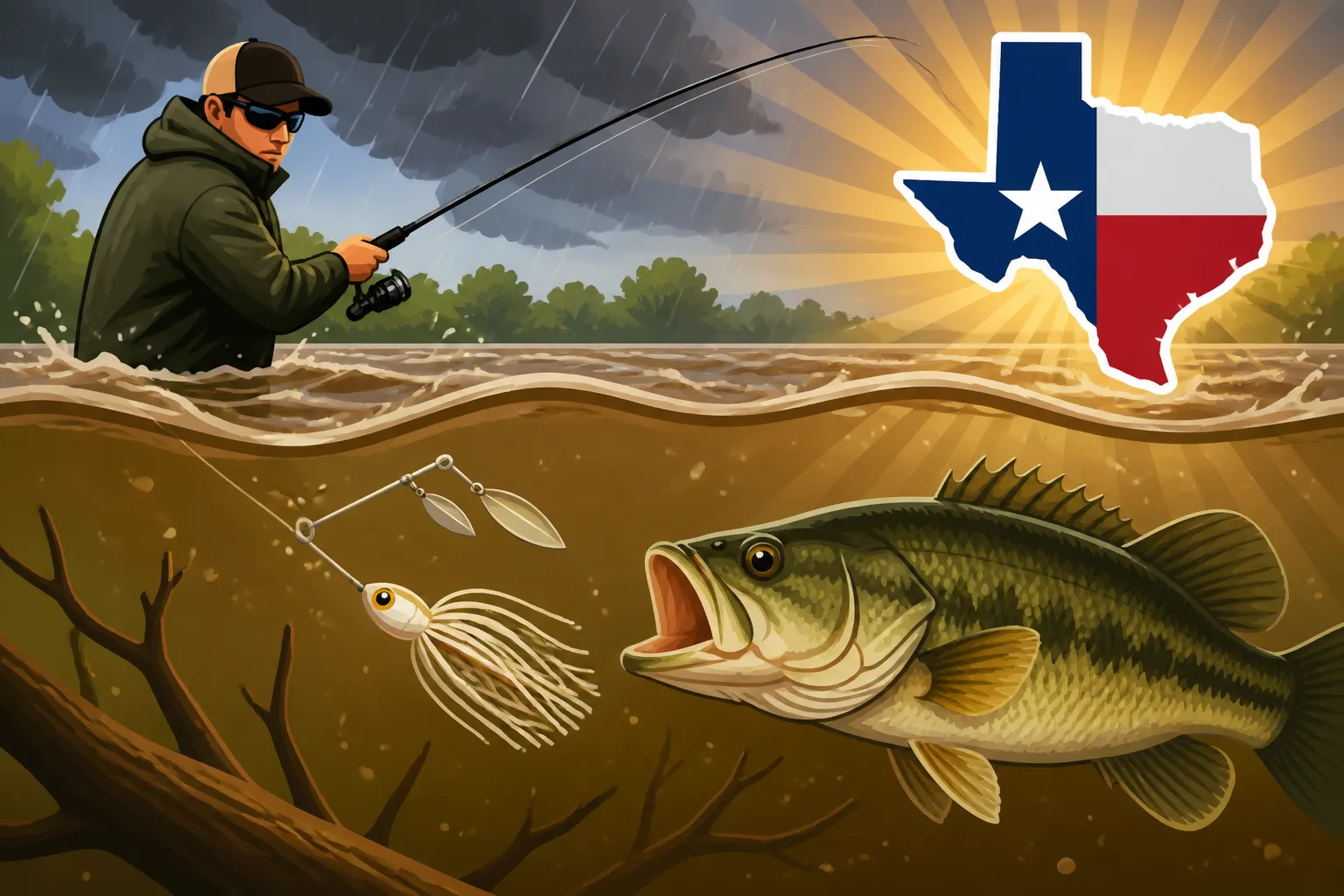
- Spinnerbaits: These are classic muddy water baits for a reason. The thumping blades (Colorado blades are particularly good for this due to their wide rotation and strong vibration) send out powerful pulses, and the skirt provides a bulky profile. Adding a trailer hook is often a good idea, as fish might just swat at the bait in the murk.
- Chatterbaits (Bladed Jigs): The vibrating blade on a chatterbait creates an irresistible, irregular thumping action that fish can easily locate. The skirt and trailer add to the visual appeal, even if it's just a silhouette.
- Buzzbaits: For surface action in very shallow, muddy areas, a buzzbait can be surprisingly effective. The squealing, churning prop creates a significant disturbance on the surface, mimicking a struggling creature. Fish often strike these by instinct, even if they can't get a clear visual.
When you're out there, experimenting with different vibration patterns can make all the difference. Sometimes a subtle throb is enough, other times you need a full-on ruckus. For a wide selection of these noise-making and vibrating lures, you might find a great variety and user reviews on Best Bait and Lures for Texas Fishing.
High-Contrast Colors and Scent Boosters
With limited visibility, subtle, natural colors often get lost. You need colors that provide a strong silhouette or stand out vividly.
- Fluorescent and Bright Colors: Chartreuse, often paired with black or blue, is a legendary muddy water color. The reason? It reflects certain light wavelengths particularly well, making it visible even in stained conditions. Hot pinks, oranges, and even stark white can also be effective. The goal is to create contrast against the murky background.
- Black and Blue: This combination creates a very strong, distinct silhouette that fish can easily see against a dark water column. It's a go-to for many bass anglers in muddy water, especially with jigs or soft plastics.
- Scent Attractants: This is where the fish's sense of smell comes into play big time. Coating your lures, especially soft plastics and jigs, with a strong scent attractant can drastically increase your hook-up ratio. These come in various forms, from gels to sprays, and often mimic natural prey like shad, crawfish, or garlic. Even when a fish can't see your lure, a strong scent trail can draw them in for a closer inspection and encourage them to hold on longer after a bite. You can often find a fantastic array of these scent sprays and gels through online retailers like Amazon, making it easy to experiment with different options.
For anglers looking for more specific recommendations on Best Lure Colors for Stained Water, there's a treasure trove of information available.
Natural Baits and Their Advantages
Don't underestimate the power of natural bait in muddy water. Live bait, with its inherent scent, movement, and natural appeal, can often outperform artificial lures when visibility is poor.
- Live Worms: Good old earthworms are a universal fish magnet. Their natural squirming movement and potent scent are irresistible to everything from catfish and crappie to panfish and even muddy-water bass. They're a classic for a reason.
- Minnows and Shad: Live baitfish, if legal and accessible, are fantastic for targeting predatory species. Their natural frantic movements and scent mimic injured prey, triggering a strong feeding response.
- Cut Bait: For catfish, particularly blue catfish and flatheads, cut bait is supreme in murky conditions. Freshly cut shad, carp, or other oily fish release a powerful scent trail that these bottom-dwelling scavengers can home in on from a long distance.
- Prepared Baits: Stink baits, punch baits, and various dough ball concoctions are designed specifically to release strong, attractive scents, making them ideal for catfish in murky water. These can be particularly effective when targeting schooling catfish in flooded creek channels.
For those eager to learn more about targeting specific species with these baits, check out our guide on How to Catch Catfish in Texas or delve into Texas Catfish Bag Limits to ensure you're fishing responsibly.
Where to Find Fish When the Water Turns Muddy
Fish don't just magically disappear when the water gets muddy. They simply relocate to areas where they feel more comfortable, where hunting is easier, or where the conditions are more stable. Your job is to think like a fish and predict their new hangouts.
Following the Inflow and Current Breaks
Heavy rains mean water is flowing into the main body of water. These inflows – creek mouths, culverts, drains, and even flooded fields – can be fish magnets.
- New Food Source: The rushing water often washes in insects, worms, and other terrestrial critters, creating a sudden buffet for opportunistic fish. Baitfish will often congregate here to feed, and predators will follow.
- Oxygenated Water: As mentioned earlier, rain often brings in cooler, oxygenated water. Fish will often stack up in these areas seeking the more comfortable conditions.
- Current Breaks: Direct current can be exhausting. Fish will seek out current breaks – areas where the flow is interrupted, allowing them to rest while still being close to the food source. Look for eddies behind fallen trees, large rocks, bridge pilings, or points where the current slows. These are prime ambush points.
However, be mindful of too much mud. While the inflow itself can be good, if the water is a raging chocolate torrent, fish might stage just outside the most turbulent, mud-choked zones, waiting for things to settle slightly or seeking the clearer edges where the muddy water meets cleaner water.
Shallower, Warmer Zones and Vegetation
Believe it or not, sometimes shallower water can be a boon in muddy conditions, especially after a cold rain.
- Sun Absorption: Muddy water absorbs more sunlight, and shallow muddy flats can warm up faster than deeper, clearer areas. This can attract baitfish, which in turn attract predators like bass and crappie.
- Submerged Vegetation: Underwater grass beds, lily pads, and submerged brush offer both cover and a filtering effect. Fish will often move into these areas. The vegetation provides a bit of a "refuge" from the worst of the murk, and the plants themselves can help to settle out some of the suspended sediment, leading to slightly clearer water pockets within the cover. Fishing the edges of these vegetation lines can be highly productive.
- Flooded Shorelines: If the water levels rise significantly, new areas of shoreline get inundated. These newly flooded areas often have fresh grass, bushes, and trees that become cover for baitfish and game fish. Cast your lures right into this new cover.
When exploring these areas, a shallow-running crankbait or a Texas-rigged worm can be incredibly effective for feeling out the submerged structure. For more insights on how these conditions affect fishing in reservoirs, our guide on How to Fish a Texas Reservoir in the Heat also touches on how fish adapt to changing environmental factors.
Structure and Cover
Just like in clear water, fish still relate to structure and cover in muddy conditions. These features become even more crucial as fish rely on them for ambush points and safety in the low visibility.
- Docks and Piers: The shaded areas under docks and piers offer a sense of security and often provide slightly clearer water underneath, as the structure blocks some direct runoff. Fish will often hold tight to the pilings.
- Laydowns and Brush Piles: Fallen trees, submerged logs, and brush piles are always excellent fish attractors. In muddy water, they offer essential ambush points where predators can wait for unsuspecting prey to swim by, relying on their lateral line to detect movement.
- Rock Piles and Riprap: Rocky areas, especially riprap along causeways or bridges, can hold heat, attract baitfish, and create small current breaks. The rough surface also provides ample hiding spots for crawfish and other forage, making them prime feeding grounds.
- Channel Swings and Drop-offs: Deeper features like channel swings and sharp drop-offs can be holding zones for fish seeking more stable conditions. They might move up onto the shallower portions of the drop-off to feed, then retreat to the deeper water. A good fish finder can help identify these subtle changes in depth.
Remember, in muddy water, fish will often hug these structures very tightly. You need to present your bait as close as possible, almost bumping it into the cover, to trigger a reaction strike.
Essential Techniques and Gear for Muddy Water Success
Catching fish in muddy water isn't just about the right bait; it's also about employing specific techniques and using gear that helps you overcome the visibility challenge. It requires patience, precision, and a willingness to slow down.
Slowing Down and Thorough Presentation
In clear water, a fast retrieve can trigger reaction strikes. In muddy water, it's often the opposite. Fish have less time to react if your bait zips by too quickly.
- Slower Retrieves: Generally, a slower retrieve gives fish more time to locate your bait using their lateral line and scent. This allows them to commit to a strike. Experiment with pauses and twitches, letting the bait linger in the strike zone.
- Fan Casting and Repeated Passes: Don't just cast in one direction. Fan cast an area thoroughly, hitting every possible angle and piece of cover. If you suspect fish are in a particular spot, make multiple casts, perhaps with different lures or retrieve speeds, to try and provoke a bite.
- Targeted Pitching and Flipping: For heavy cover like laydowns or thick vegetation, pitching and flipping jigs or Texas-rigged soft plastics allows for precise, quiet presentations right into the fish's living room. The limited visibility means you can get away with presenting a bait very close without spooking them.
The key here is patience. Bites in muddy water can be subtle, sometimes feeling like just a slight pressure or a "mushy" retrieve. Learning to distinguish these from snags is crucial.
Line and Rod Choices
Your equipment can also play a significant role in detecting those subtle bites and having the power to get fish out of cover.
- Heavier Line: Muddy water generally allows for heavier line without spooking fish, as they can't see it as well. Heavier line also provides more abrasion resistance around submerged timber and stronger pulling power. Monofilament or fluorocarbon in the 15-20 lb test range for bass can be effective, and for catfish, even heavier braid or mono. Braided line can also be an excellent choice for its zero-stretch properties, transmitting even the slightest tap directly to your hands.
- Sensitive Rods: Despite using heavier line, you still want a sensitive rod to feel those subtle muddy water bites. A medium-heavy to heavy power rod with a fast or extra-fast action will give you the backbone to wrestle fish out of cover while still transmitting feel. Graphite rods are generally more sensitive than fiberglass. Our guide on Best Fishing Rods for Texas Anglers offers more detailed advice on selection.
- Matching Reels: Pairing your sensitive rod with a quality baitcasting or spinning reel is important. A good reel will provide smooth drag for fighting fish and allow for precise casting. You can explore options and learn more in our article on Best Fishing Reels for Texas Anglers.
Using Electronics (with caveats)
While muddy water reduces the effectiveness of seeing fish on your screen, your fish finder and GPS are still invaluable tools.
- Mapping and Navigation: Your GPS unit with detailed lake maps (many excellent units are available from brands like Garmin and Lowrance) is critical for navigating murky waters safely and efficiently. You can identify channel swings, submerged points, old roadbeds, and creek channels that you might not be able to see above the surface. This allows you to pinpoint potential fish-holding structure even when visibility is zero.
- Structure Identification: Even if fish marks are harder to discern, your sonar will still show you changes in bottom contour, submerged timber, rock piles, and brush piles. These are key targets in muddy water, so being able to identify them is paramount.
- Bait Balls: Sometimes, even if you can't clearly distinguish individual fish, you might see dense clouds on your sonar that indicate schools of baitfish. Where there's bait, there are usually predators lurking nearby.
- Side Imaging and Down Imaging: These technologies can be incredibly useful for scanning wide areas around your boat, helping you locate isolated pieces of cover or schools of fish that might be off to the side, even in stained water.
Always remember that electronics are a tool, not a guarantee. They help you find the potential spots; it's still up to your angling skills to coax a bite.
Here's a quick reference for muddy water lure strategies:
| Lure Type | Primary Attractant | Best Conditions | General Colors | Pro Tip |
|---|---|---|---|---|
| Crankbaits | Vibration, Color | Moderate current, targeting structure, varying depths | Chartreuse/Black, Firetiger, Red, Fluorescent | Opt for wide-wobbling models with internal rattles. |
| Spinnerbaits | Vibration, Flash | Shallow cover, edges of vegetation, windy conditions | Chartreuse/White, Black/Blue, Bright Yellow | Use large Colorado blades for maximum thump. |
| Chatterbaits | Vibration, Profile | Heavy cover, grass lines, targeting active fish | Black/Blue, Green Pumpkin, Chartreuse | Add a bulky trailer for increased profile. |
| Jigs (Skirts) | Scent, Profile | Bottom contact, deep cover, slower presentation | Black/Blue, Green Pumpkin, Brown | Tip with a scented soft plastic or dipped in attractant. |
| Soft Plastics | Scent, Profile | Finesse applications, tight cover, slow bites | Dark colors (black, junebug), chartreuse | Use heavy scent attractants. |
| Live/Cut Bait | Scent, Natural Action | Targeting catfish, inactive fish, general panfish | Natural (worms, minnows, cut shad) | Freshness and proper rigging are key. |
Fishing after heavy rain in Texas can be incredibly rewarding, provided you adjust your approach. Don't let that muddy water deter you; instead, see it as an opportunity to sharpen your skills and outsmart those fish using their other senses. Sometimes, the most challenging conditions lead to the most memorable catches!
Disclaimer
This article is for general informational purposes only and does not constitute professional advice. Laws, prices and regulations vary by location and change over time. Consult a qualified professional for guidance on your specific situation.