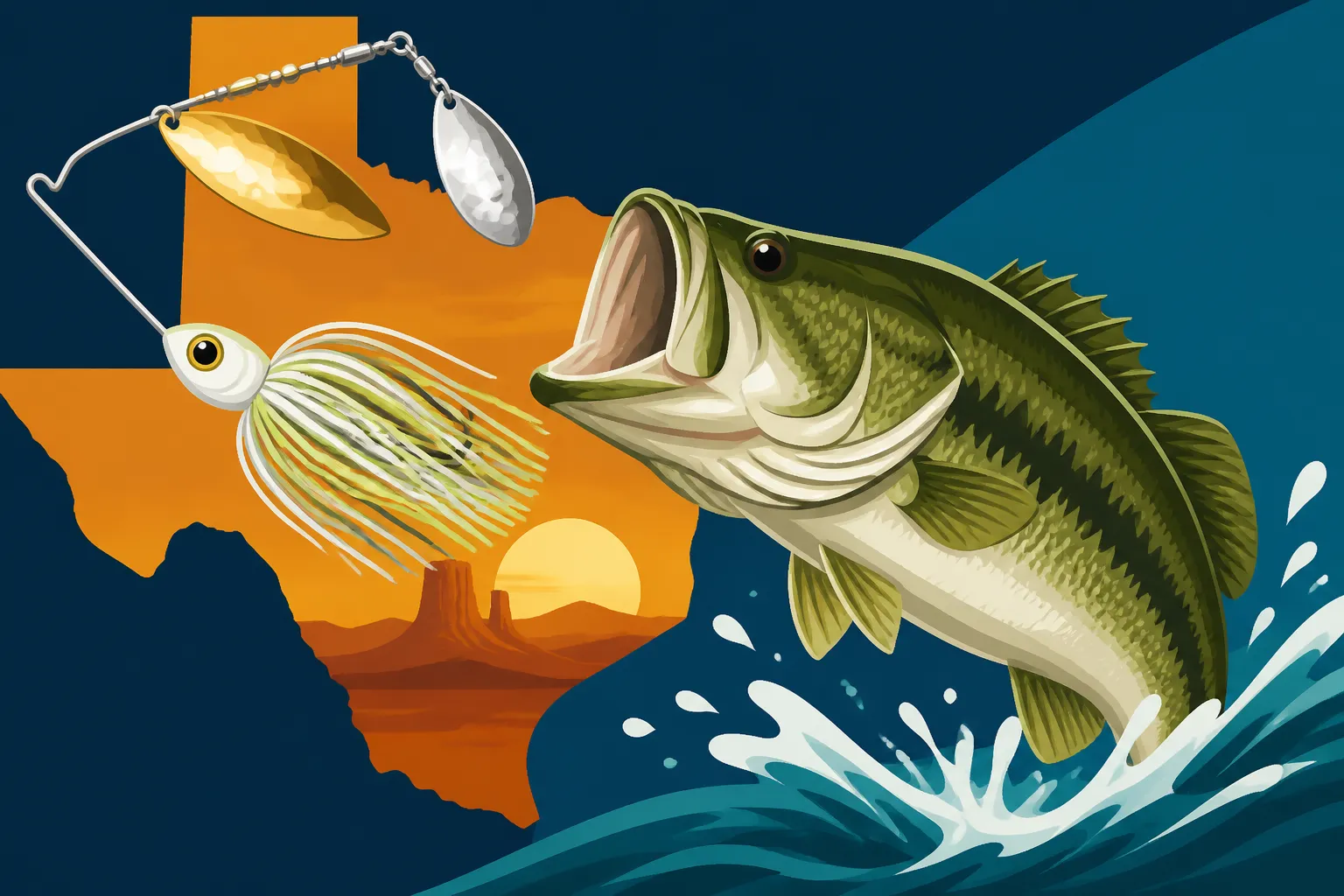
How to catch bass on a spinnerbait
It can be incredibly frustrating to hit the water, knowing there are bass lurking, but just can't seem to tempt them into biting. You’ve tried all the usual suspects, but sometimes, what you need is a bait that offers versatility, flash, and vibration all in one package. This comprehensive guide will walk you through everything you need to know about effectively catching bass with a spinnerbait in Texas' diverse waters.
Why Spinnerbaits are a Texas Bass Angler's Secret Weapon
For many anglers, the spinnerbait might seem like a relic from a bygone era, overshadowed by the latest finesse plastics or high-tech crankbaits. But trust me, in the vast and varied fishing environments of Texas, a spinnerbait is anything but outdated. It's a tried-and-true workhorse that can often outfish more specialized lures, especially when conditions are less than ideal.
The Versatility Factor: Covering Water and Conditions
One of the biggest headaches we face as Texas anglers is the sheer unpredictability of our weather and water conditions. One day, the lake is clear and calm, and the next, a gully washer has turned it into chocolate milk, accompanied by a stiff north wind. This is precisely where the spinnerbait shines. Its design allows it to be fished effectively in practically any water clarity, from gin-clear reservoirs like Canyon Lake to the stained, murky waters of Sam Rayburn Reservoir after a rain. Unlike some lures that demand specific conditions to be effective, a spinnerbait can adapt. You can slow roll it deep or burn it across the surface, making it incredible for covering a lot of water quickly when you're searching for active fish. It's truly a fantastic search bait, helping you pinpoint those bass that are ready to strike.
Mimicking Baitfish and Attracting Strikes
Bass are ambush predators, and they're constantly looking for an easy meal. Many of the most common baitfish species in Texas, like shad, sunfish, and even small perch, have a natural flash and erratic swimming motion. A spinnerbait, with its rotating blades and pulsating skirt, does an exceptional job of imitating these distressed or fleeing baitfish. The flash from the blades mimics the scales of a baitfish, while the vibration sends out irresistible signals through the water, even in low visibility. This combination of visual appeal and lateral line stimulation is a powerful one, often triggering reaction strikes from bass that might not be actively feeding. It's not just about matching the hatch; it's about creating a commotion that says "easy target" to a hungry bass. Even when bass are lethargic, that sudden flash and thumping vibration can be enough to make them instinctively strike.
Decoding the Spinnerbait: Components and Choices for Texas Waters
Understanding the different parts of a spinnerbait and how they interact with each other and the water is crucial for selecting the right one for your specific Texas fishing scenario. Just grabbing any old spinnerbait off the rack won't cut it if you want to maximize your success. Each component plays a vital role in its action and appeal.
Blade Types and Their Vibration Patterns
The blades are arguably the most critical component of a spinnerbait, as they create the flash and vibration that attract bass. There are three primary blade types, and knowing when to use each can make all the difference.
- Willow Leaf Blades: These are long, slender blades, shaped somewhat like a willow leaf. They're designed to produce maximum flash with minimal vibration, and they cut through the water efficiently. This makes them perfect for fast retrieves, deep presentations, and clear water, especially when bass are keying in on speed and flash. On a windy day, they help the bait sink faster and maintain depth better. They're also great for covering open water when you're trying to locate fish.
- Colorado Blades: These blades are round and wide, offering maximum vibration and lift with less flash compared to willows. They're ideal for slow retrieves, murky or stained water, and situations where you want to keep the bait higher in the water column. The heavy thumping vibration is excellent for attracting bass in low visibility conditions or when fishing in heavy cover where the bass rely more on their lateral line. If you're fishing in muddy water after a good rain, a Colorado blade spinnerbait is often a fantastic choice to get those fish's attention.
- Indiana Blades: A hybrid of willow and Colorado blades, Indiana blades are tear-drop shaped. They provide a balance of flash and vibration, making them a versatile "middle-ground" option. If you're unsure what the bass are looking for, or if you're fishing in varied conditions, an Indiana blade can be a great starting point. They're a solid all-around choice for many situations you'll encounter on Texas lakes, providing a good mix of both attraction qualities.
Many spinnerbaits come with combinations of these blades, like a smaller Colorado blade paired with a larger willow leaf. This "tandem" setup offers a blend of flash and thumping vibration, giving you the best of both worlds. Experimentation is key here; sometimes the bass will tell you exactly what they prefer on a given day.
Skirt Colors and Trailer Options
The skirt of a spinnerbait provides the body and profile, adding to the baitfish imitation. The color choices can seem endless, but typically, they fall into a few categories. For clear water and sunny days, natural colors like white, chartreuse, shad patterns, or even light blue and silver combinations tend to work well. In stained or muddy water, brighter, more contrasting colors like chartreuse, orange, or black and blue can be more visible and effective. If you're fishing during specific times of year, like when bluegill are spawning, a green pumpkin or sunfish pattern skirt can be deadly.
Adding a soft plastic trailer to your spinnerbait skirt is a popular technique that can significantly enhance its appeal. Trailers add bulk, change the action, and provide another splash of color.
- Grub Trailers: Simple paddle-tail or curl-tail grubs can add extra vibration and a larger profile, making the spinnerbait appear more substantial. Colors typically match or complement the skirt.
- Swim Bait Trailers: Small swimbait trailers provide a lifelike kicking action, perfect for mimicking active baitfish. These are often used when bass are aggressively feeding.
- Craw Trailers: In situations where bass might be feeding on crawfish, a small craw-shaped trailer can be a subtle but effective addition, especially around rocky banks or riprap.
When choosing trailers, think about what the bass are likely feeding on. Sometimes, just a simple 3-inch grub from Zoom or a similar brand found easily on Amazon is all it takes to complete the profile and get those extra bites. A good rule of thumb is to use a trailer that adds to the bait's overall profile without hindering the blade action.
Weight and Wire Frame Considerations
The weight of a spinnerbait determines how deep and fast you can fish it. Common weights range from 1/4 ounce to 1 ounce, with 3/8 ounce and 1/2 ounce being the most popular for general Texas bass fishing. Lighter weights (1/4 to 3/8 ounce) are excellent for shallower water, fishing over grass beds, or when you want a slower fall rate. Heavier weights (1/2 to 1 ounce) are better for deeper water, faster retrieves, strong currents, or when fishing in windy conditions where you need to get the bait down quickly.
The wire frame also plays a role. A lighter, thinner wire allows for more vibration, while a heavier wire is more durable and less prone to bending, especially when fighting larger fish or deflecting off heavy cover. Some spinnerbaits feature a "R-bend" or "open" wire frame, while others have a "closed" or "twist" frame, which can influence how blades attach and the overall strength. Often, a good quality spinnerbait from a brand like Strike King or War Eagle will have a sturdy enough wire frame to handle the powerful strikes of a Texas largemouth.
Here’s a quick overview of blade types and their common uses:
| Blade Type | Shape | Primary Action | Ideal Conditions | Retrieve Speed | Example Lure Feature |
|---|---|---|---|---|---|
| Willow Leaf | Long, slender | Maximum Flash | Clear Water, Deep Water, Open Water | Fast | Excellent for mimicking fleeing baitfish |
| Colorado | Round, wide | Maximum Vibration | Murky/Stained Water, Heavy Cover | Slow | Great for attracting attention in low visibility |
| Indiana | Tear-drop | Balanced Flash/Vibe | Varied Conditions, All-around performance | Medium | Versatile, good starting point for most scenarios |
| Tandem (Combo) | Mixed (e.g., Colorado/Willow) | Blended Flash/Vibe | General Purpose, Adaptable | Medium-Fast | Combines attraction of different blade types (e.g., War Eagle F1) |
Mastering the Retrieve: Techniques for Texas Bass
A spinnerbait isn't a "cast and reel straight in" kind of lure, at least not if you want to catch a lot of bass. The beauty of it lies in the myriad ways you can retrieve it, each technique designed to trigger strikes under different conditions. Mastering these retrieves will significantly increase your success on Texas lakes.
The Slow Roll: Deep Water and Cold Fronts
The slow roll is a fundamental spinnerbait technique, and it's particularly effective when bass are lethargic, hiding in deeper water, or after a cold front has moved through. When fishing after a cold front, bass often become finicky and require a slower presentation to entice a bite. The idea is to retrieve the spinnerbait just fast enough to get the blades turning, allowing the bait to run near the bottom or along submerged structure.
To execute a slow roll, cast your spinnerbait out and let it sink to your desired depth – often near the bottom in 8-20 feet of water, depending on the lake and time of year. Then, begin a slow, steady retrieve with your reel, keeping your rod tip slightly elevated. You want to feel the blades thumping and occasionally tick off rocks, stumps, or grass clumps. This contact with cover is crucial, as it often causes the bait to briefly hesitate or change direction, which can be exactly what a bass is waiting for. This technique is fantastic for exploring deeper points, humps, or creek channels in reservoirs like Lake Fork. For a deeper dive into adjusting your strategy for cooler temps, check out our guide on how to catch bass when the water is cold.
Burning and Ripping: Aggressive Bites and Reaction Strikes
Sometimes, bass aren't looking for a slow, easy meal; they want something fast and erratic that triggers an instinctual chase. This is where burning and ripping come into play. These high-speed retrieves are excellent for covering vast areas of water quickly, especially when bass are actively feeding or you're fishing in relatively clear water.
- Burning: As the name suggests, you cast out your spinnerbait and reel it back to the boat as fast as you can, keeping the bait just under the surface or even breaking the surface occasionally. The goal is to create a massive amount of flash and commotion, making it impossible for a bass to ignore. This technique is killer when bass are busting shad on the surface or when fishing over submerged grass where a fast-moving bait can draw strikes.
- Ripping: This technique involves a series of fast, erratic jerks and pauses. Cast your spinnerbait, let it sink for a moment, then aggressively rip your rod tip upward, causing the bait to dart and flash, much like a panicked baitfish. Immediately drop your rod tip and let the bait fall on a semi-slack line before ripping it again. This is incredibly effective around vertical cover like boat docks or standing timber. The sudden changes in speed and direction can provoke violent reaction strikes, even from bass that weren't actively feeding.
These aggressive retrieves are often most effective during the warmer months, particularly when fishing in summer. For anglers looking to understand year-round strategies, our guide on Texas Fishing Seasons Month by Month offers excellent context.
Deflection and Contact: Fishing Cover Effectively
Bass love cover – submerged brush piles, standing timber, rock piles, dock pilings, grass beds, you name it. A spinnerbait is uniquely designed to be fished through this cover rather than just around it, making deflection a key component of effective technique. The "R-bend" or angled head of many spinnerbaits helps them glance off obstructions rather than snagging.
The trick is to actively seek out contact with cover. Cast your spinnerbait so it lands near or directly into a brush pile, then retrieve it, allowing the blades and head to bump and grind against the wood. When the bait hits an obstruction, don't stop reeling. Instead, hesitate for just a split second, or even give your rod a slight twitch, then continue your retrieve. This sudden "pause and go" action, or deflection, often triggers an immediate strike from a bass that was hiding in the cover. It mimics a baitfish that has just bumped into something and is now trying to escape. This is an essential tactic when you're targeting bass around structures like those found in the Best Places to Fish in Texas or specifically around Lake Fork Bass Fishing Hot Spots.
When and Where to Throw a Spinnerbait in Texas
Knowing the 'how' is only half the battle; understanding the 'when' and 'where' to deploy your spinnerbait is equally vital for consistent success in Texas fishing. Certain conditions and locations just scream "spinnerbait time."
Prime Conditions: Wind, Clouds, and Stained Water
If you ask any seasoned Texas bass angler for their ideal spinnerbait conditions, chances are they'll mention wind, clouds, and stained water. These three factors often create a perfect storm for spinnerbait success.
- Wind: A choppy surface created by wind breaks up the light, making it harder for bass to get a clear look at your lure. This is fantastic for a spinnerbait because its flash and vibration cut through the visual clutter. Wind also positions baitfish, pushing them against shorelines and points, which in turn concentrates bass. On windy days, casting your spinnerbait into the wind and retrieving it with the current can be incredibly productive, as it mimics baitfish struggling in the chop.
- Clouds: Overcast skies diffuse sunlight, creating lower light conditions similar to dawn or dusk. Bass, being light-sensitive, often become more active and willing to chase in these conditions. The spinnerbait's blades still provide ample flash without being too overpowering, and the vibration ensures it's detected. This makes cloudy days prime time for burning a spinnerbait over grass flats or around submerged hydrilla.
- Stained Water: When the water has a bit of color to it, whether from runoff or natural tannins, visibility is reduced. This is a spinnerbait's bread and butter. The thumping vibration of Colorado blades, in particular, becomes a primary attractant. Bright skirt colors like chartreuse, white, or orange really pop in stained water, making the bait more visible. If you're encountering muddy water in Texas, a spinnerbait should be one of your first choices. For further tactics, consider reading our advice on How to Fish Muddy Water in Texas. The ability of the spinnerbait to call fish from a distance in these conditions is unmatched.
Key Structures and Cover: From Grass to Docks
The beauty of the spinnerbait is its ability to be fished effectively in a wide array of cover types, which is essential given the diverse aquatic habitats across Texas.
- Grass Beds: Whether it's hydrilla, coontail, or milfoil, grass beds are bass magnets. Spinnerbaits, especially those with willow leaf blades, can be retrieved effectively over the tops of submerged grass or worked through sparse patches. When the bait makes contact with the grass, give your rod a sharp snap to rip it free, often triggering an immediate strike. This is a classic tactic on lakes renowned for their grass, like Toledo Bend Reservoir Fishing Guide.
- Standing Timber and Laydowns: Old flooded timber and fallen trees offer excellent ambush points for bass. Cast your spinnerbait parallel to the timber or right into the densest part of a laydown. The weedless design allows it to bounce off the wood without snagging. Again, the deflection is key here; let it hit, then twitch or pause briefly, and resume the retrieve.
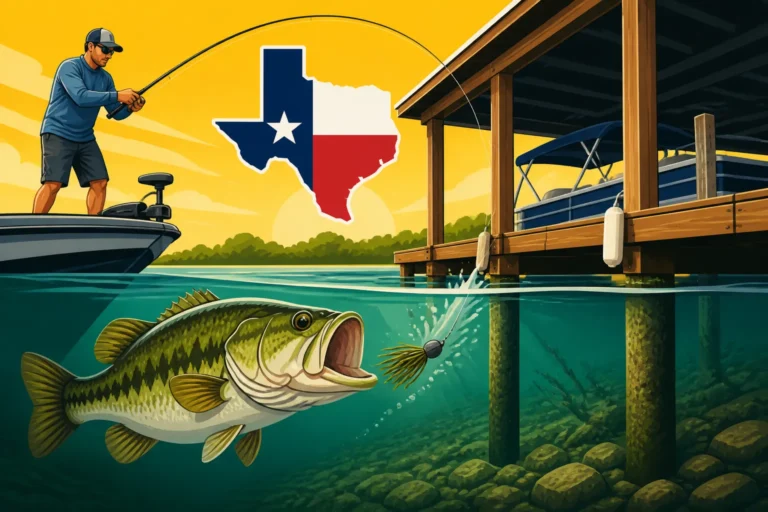
- Boat Docks and Piers: Docks provide shade, cover, and structure for both baitfish and bass. Skipping a spinnerbait under docks, where bass often hide in the shadows, can be incredibly productive. For more specific techniques, refer to our comprehensive article on How to Catch Bass Around Boat Docks. The flash and vibration as it comes out from under the dock can be too much for a hidden bass to resist.
- Rocky Banks and Riprap: Rock transitions, riprap along bridges and causeways, and rocky points are all prime spinnerbait territory. Crawfish often inhabit these areas, and a spinnerbait, especially with a craw trailer, can imitate a vulnerable crustacean. The spinnerbait's ability to deflect off rocks without hanging up is a huge advantage here.
Seasonal Strategies: Spring, Summer, Fall, Winter
Different seasons bring different bass behaviors, and the spinnerbait can be adapted for year-round effectiveness in Texas.
- Spring: This is arguably the prime spinnerbait season. As bass move shallow for the pre-spawn and spawn, they are aggressive and often looking for larger meals. A medium-weight spinnerbait with willow or Indiana blades, retrieved slowly around shallow points, spawning flats, and grass lines, can be deadly. It's a fantastic bait for exploring these areas and locating active fish. For deeper insights, check out our guide on How to Catch Bass in Spring in Texas.
- Summer: When the Texas heat sets in, bass often retreat to deeper, cooler waters or heavy shade. However, early mornings, late evenings, and overcast days can still offer excellent spinnerbait action. Use heavier spinnerbaits (1/2 to 3/4 ounce) for deep slow rolling along ledges or creek channels. Also, don't forget burning it over deep grass or through timber in the cooler parts of the day. Our article on How to Catch Bass in Summer in Texas provides more specific tips for these conditions.
- Fall: As water temperatures begin to cool, bass become incredibly active, feeding heavily in preparation for winter. This "fall feeding frenzy" makes them susceptible to a spinnerbait. Willow leaf blades are great for covering water quickly as bass chase schools of shad. Focus on creek channels, main lake points, and areas where baitfish are abundant. Our guide on How to Catch Bass in Fall in Texas explores this exciting season in more detail.
- Winter: While not typically a prime spinnerbait time, it can still be effective on warmer, sunny winter days or in specific situations. A very slow-rolled, heavy spinnerbait (3/4 to 1 ounce) along deep main lake points, humps, and creek channel swings can trigger a bite from lethargic bass. The key is extreme patience and a very subtle retrieve. For more tips on cold water fishing, see How to Catch Bass in Winter in Texas.
Pairing your spinnerbait with the right equipment is also essential. For general use, a medium-heavy rod around 7 feet, with a fast action, is ideal for casting and controlling spinnerbaits. Check out our recommendations for Best Fishing Rods for Texas Anglers and Best Fishing Reels for Texas Anglers to ensure your gear is up to par. Remember, the spinnerbait is a classic for a reason – its versatility and effectiveness are undeniable once you learn how to wield it properly. Many great options, from budget-friendly choices to premium models, are readily available on Amazon, ensuring you can stock up your tackle box for any Texas fishing adventure.
Disclaimer
Fishing involves inherent risks. Always prioritize safety, wear appropriate personal flotation devices when boating, and be aware of your surroundings. Regulations regarding fishing licenses, bag limits, and length limits are subject to change. Consult the official Texas Parks and Wildlife Department (TPWD) website for the most current and accurate regulations before heading out on the water. This guide is for informational purposes only and should not replace official safety and regulatory guidelines.