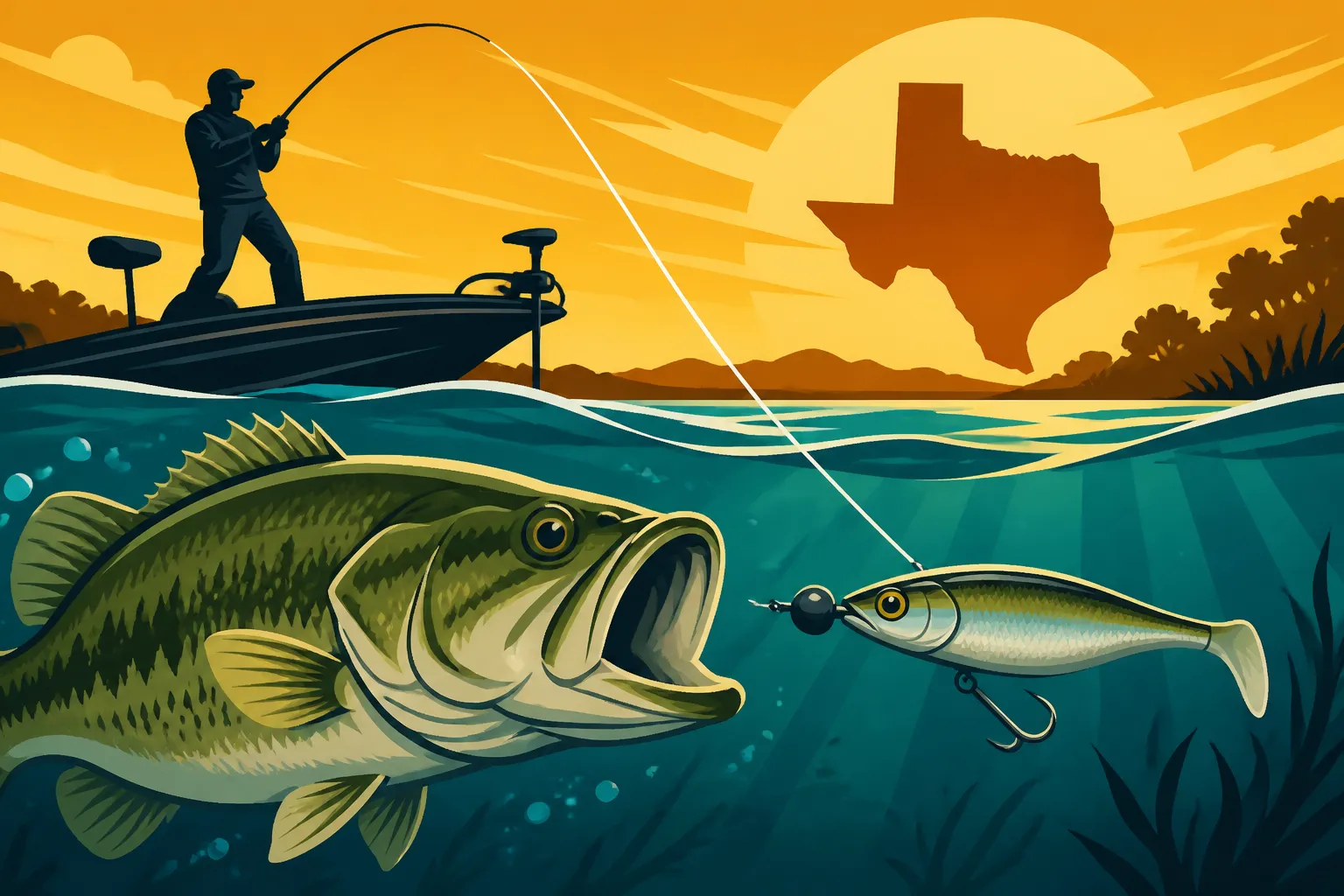
How to fish a swimbait for big bass
For any angler chasing that elusive monster largemouth in Texas, the struggle is real. Those giants often ignore smaller, more common baits, leaving you wondering how to tempt them out of their hiding spots. This comprehensive guide will pull back the curtain on one of the most effective lures for trophy bass: the swimbait, showing you exactly how to wield it in our unique Texas waters to hook into the fish of a lifetime.
Why Swimbaits are a Game Changer for Texas Trophy Bass
Let's be honest, everyone wants to catch a truly massive bass. In Texas, where the saying "everything's bigger" often applies to our fish, trophy largemouth bass are not just a dream, they're a tangible goal. But these big fish didn't get big by being foolish; they're often the most experienced and wary residents of our lakes and reservoirs. This is precisely where swimbaits shine, offering an advantage that many other lures simply can't match.
The Big Bass Hunter's Secret Weapon
Think about it: what do big bass eat? They don't waste energy chasing tiny minnows if a substantial meal is available. Their diet primarily consists of larger forage – things like gizzard shad, threadfin shad, bluegill, perch, and even smaller bass. A big bass is an opportunistic predator, always looking for the most caloric return for its effort. This is why swimbaits are so potent. They perfectly mimic these larger food sources, presenting a meal that's too enticing for a true lunker to pass up.
Many anglers might be intimidated by the size or cost of some swimbaits, but that apprehension often fades after seeing the results. These aren't your everyday crankbaits or worms; they are specialized tools designed for a very specific job: catching bigger bass. If you're serious about targeting trophy bass in Texas, adding swimbaits to your arsenal isn't just an option, it's a necessity. They present a silhouette and action that screams "easy meal" to a wary old bucketmouth.
Moreover, the sheer realism of modern swimbaits is astounding. From multi-jointed hard baits that swim with an incredibly natural S-curve to soft plastic versions with lifelike fins and holographic eyes, these lures are crafted to deceive even the most skeptical fish. When a massive bass sees something that looks, moves, and even feels like its natural prey, its predatory instincts take over, often leading to explosive strikes that are unforgettable.
Mimicking Natural Prey: The Science Behind the Success
The success of swimbaits isn't just anecdotal; it's rooted in the very biology of predatory fish. Bass, especially larger ones, are highly visual feeders. They key into subtle movements, flash, and vibrations that indicate a vulnerable meal. Swimbaits are engineered to replicate these cues with incredible precision. A hard-bodied swimbait might have a segmented body that produces a realistic swimming action, while a soft plastic version could be poured with a specific density to allow for a slow, seductive sink.
Consider the diverse forage in Texas lakes, from the vast shad schools in Lake Fork to the bluegill lurking in the hydrilla of Lake Palestine. Swimbaits come in countless variations to match these diverse food sources. When you throw a swimbait that perfectly imitates a 6-inch gizzard shad into a schooling baitfish frenzy, you're tapping into the bass's natural hunting patterns. You're not just throwing a lure; you're presenting a convincing illusion of a living, breathing meal.
The subtle vibrations and water displacement created by a swimming swimbait also play a crucial role. These vibrations travel through the water, alerting bass to the presence of potential prey long before they see it. This is particularly important in murky or stained waters common in parts of Texas after heavy rains. The combination of realistic appearance, lifelike action, and subtle vibrations makes swimbaits irresistible to larger bass who have learned to ignore less convincing offerings. If you're serious about understanding what draws these fish in, our comprehensive guide on Texas Largemouth Bass Fishing Guide offers even more insights into their habits and preferences.
Selecting the Perfect Swimbait for Texas Conditions
Walking into a tackle shop or browsing online for swimbaits can be overwhelming. There are so many shapes, sizes, colors, and materials! However, by understanding the basic categories and how they apply to Texas fishing, you can narrow down your choices and pick the right tools for the job. Matching your swimbait to the prevalent forage and conditions is paramount for success.
Hard-Bodied Swimbaits: Realism and Reaction
Hard-bodied swimbaits are often the most visually striking, with their jointed sections and incredibly detailed paint jobs. These are typically made from plastic, wood, or resin and are designed to replicate larger baitfish with uncanny accuracy. Their multi-jointed construction gives them a fluid, S-shaped swimming action that is incredibly realistic, especially on a steady retrieve.
One of the biggest advantages of hard-bodied swimbaits is their ability to draw reaction strikes. When retrieved, they push a significant amount of water, creating a strong wake and vibration that can call fish from a distance. Brands like Gan Craft, Roman Made, and even more accessible options you can find on Amazon, are renowned for their exceptional hard baits. They can be particularly effective during the pre-spawn and post-spawn periods in Texas, when bass are actively feeding on large meals. However, they can also be challenging to cast with lighter gear and are often a significant investment, so losing one can be a real heartache.
These baits excel when targeting suspended bass over deep water, along long tapering points, or cruising shallow flats. Their natural movement often triggers strikes from inactive fish that might ignore other lures. While they require a bit of practice to cast accurately and retrieve properly, the reward of a true trophy bass exploding on a hard swimbait is unparalleled. For anglers looking to dive deeper into lure choices, our Best Bait and Lures for Texas Fishing article offers additional valuable perspectives.
Soft-Bodied Swimbaits: Versatility and Subtle Action
Soft-bodied swimbaits, made from various soft plastic compounds, offer a different set of advantages. They are incredibly versatile, coming in paddletail, boot tail, and even flukes-style designs. Their softer material provides a more subtle, natural feel to a biting fish, often leading to longer holding times, which increases hook-up ratios. Brands like Keitech, Reaction Innovations, and Zoom offer popular soft swimbait options widely available, including on Amazon.
The beauty of soft swimbaits lies in their adaptability. They can be rigged in numerous ways: on a jighead for open water, Texas-rigged for weedless presentation through heavy cover, or even on a weightless hook for a slow, seductive fall. This makes them ideal for various Texas fishing scenarios, whether you're working through submerged hydrilla, skipping under docks, or probing deep ledges. Their softer profile and more natural texture can also be more appealing to pressured bass who might be shy of hard plastics.
Soft swimbaits generally cost less than their hard-bodied counterparts, making them a more budget-friendly option for anglers just getting into swimbait fishing. They can be highly effective year-round, from the warming waters of spring during the Texas Bass Spawning Season Guide to the dog days of summer where bass are found deep. The subtle vibration of a paddletail swimbait on a jighead can be deadly when slowly dragged across the bottom or retrieved through submerged timber, a technique often used when trying to how to fish standing timber for bass.
Here's a quick comparison of hard vs. soft swimbaits:
| Feature | Hard-Bodied Swimbait | Soft-Bodied Swimbait |
|---|---|---|
| Material | Plastic, Wood, Resin | Soft Plastic |
| Action | Highly realistic S-curve, strong wake | More subtle, natural tail kick, versatile |
| Feel to Fish | Hard, less natural | Softer, more natural, leads to longer holds |
| Rigging Options | Limited (often tied directly) | Versatile (jighead, Texas rig, weightless, A-rig) |
| Durability | Good, but can break if hit hard | Prone to tearing, but generally replaceable |
| Cost | Higher | Lower |
| Ideal for | Reaction strikes, calling fish from a distance | Versatility, subtle presentations, pressured fish |
Essential Swimbait Colors for Texas Waters
Choosing the right color is crucial for any lure, and swimbaits are no exception. The general rule of thumb applies: match the hatch. Observe the prevalent baitfish in the lake you're fishing. Are they silvery shad, greenish bluegill, or dark perch?
For clearer Texas lakes like Canyon Lake or Travis, natural baitfish patterns like chrome, silver, pearl white, and shad patterns work exceptionally well. If you're fishing areas with abundant bluegill, a bluegill-imitation swimbait in greens, browns, and oranges can be deadly. In stained or murky waters, which are common in many East Texas reservoirs, brighter colors with more contrast, such as chartreuse, white, or even black and blue, can be more visible to bass. Don't be afraid to experiment! Often, a subtle change in hue or a brighter belly can make all the difference.
Another factor to consider is sky conditions. On bright, sunny days with clear skies, more translucent or natural, shimmering colors might be best. On cloudy days or in low light conditions, opaque and solid colors or those with a bit of flash can stand out more effectively. Having a selection of natural patterns, a few brighter options, and perhaps a dark silhouette pattern (like black or dark blue) will cover most of your bases for Texas bass fishing.
Essential Gear for Swimbait Success in Texas
Throwing swimbaits, especially the larger hard-bodied varieties, isn't something you can typically do effectively with your everyday medium-heavy bass setup. These lures demand specialized tackle to handle their weight, the stress of casting, and the powerful strikes of big bass. Investing in the right gear will not only enhance your casting distance and accuracy but also significantly increase your chances of landing that trophy.
Rods and Reels Designed for Heavy Duty
When it comes to swimbait rods, think power. You'll want a heavy or extra-heavy power baitcasting rod, typically between 7'6" and 8'6" in length. The extra length aids in casting heavier baits a long distance and also provides better line control and leverage when fighting a big fish. Look for rods specifically labeled "swimbait rod" from brands like Dobyns, G. Loomis, or even more budget-friendly options found on Amazon. The action should lean towards moderate-fast or moderate, as this allows the rod to load up properly for casting heavy lures and provides a parabolic bend that prevents hooks from pulling out during a powerful head shake. Our guide on Best Fishing Rods for Texas Anglers can help you choose a suitable option.
For reels, a sturdy, high-capacity baitcasting reel is non-negotiable. Look for models with a strong drag system and a larger spool to accommodate heavier line. A gear ratio in the 5.0:1 to 6.5:1 range is often preferred for swimbaits, as it allows for slower, more controlled retrieves which are often key to enticing big bass. Brands like Shimano Tranx, Daiwa Lexa, or various offerings from Abu Garcia are excellent choices. A good reel will not only handle the stress of casting and retrieving heavy swimbaits but also provide the torque needed to turn a big bass away from cover. Check out Best Fishing Reels for Texas Anglers for more detailed recommendations.
Line Selection: Strength Meets Sensitivity
Choosing the right fishing line for swimbaits is critical. You need something strong enough to handle large lures and powerful fish, yet with enough castability and sensitivity. Braided line is a popular choice for swimbait fishing, especially for soft swimbaits or when fishing around heavy cover. It offers superior strength-to-diameter ratio, zero stretch for maximum sensitivity, and excellent casting distance. I often run 50-80 lb test braided line as a mainline.
However, many anglers prefer fluorocarbon for hard-bodied swimbaits due to its low stretch, high abrasion resistance, and invisibility underwater. Fluorocarbon in 20-30 lb test is a common choice. It also sinks, which can help keep certain swimbaits deeper in the water column. Some anglers opt for a hybrid approach: braided mainline with a heavy fluorocarbon leader (3-5 feet of 25-40 lb test) for the best of both worlds. The braid provides casting distance and strength, while the fluoro leader offers stealth and abrasion resistance. Learn more about the pros and cons in our Braided line vs fluorocarbon for Texas lakes article.
Terminal Tackle: Hooks and Weights
When fishing soft swimbaits, heavy-duty hooks are paramount. Standard bass hooks might straighten out under the pressure of a large fish or heavy cover. Look for wide gap, extra-strong hooks, often specifically labeled for swimbaits or larger soft plastics. For Texas rigging, an EWG (Extra Wide Gap) hook in sizes 4/0 to 8/0 is common, depending on the bait size. For jighead applications, ensure the jighead itself uses a stout hook and is heavy enough to get your swimbait to the desired depth.
Weights for soft swimbaits will vary greatly depending on the depth you're targeting and how fast you want the bait to sink. Tungsten weights, while more expensive, are often preferred due to their smaller profile and increased sensitivity. For weighted swimbait hooks, ensure they are designed for the specific swimbait you're using to maintain the bait's natural action. For hard swimbaits, their weight is inherent, but ensuring all split rings and treble hooks are strong enough to withstand a trophy bass's fight is crucial. Many factory hooks on budget swimbaits are too weak for true lunkers, so upgrading them can be a wise investment.
Mastering Swimbait Presentation and Retrieve Techniques
Getting a swimbait to perform correctly and elicit a strike from a big bass is an art form. It's not just about casting it out and reeling it in; it's about making that lure come alive in the water, mimicking natural prey in a way that’s irresistible. Different retrieve styles and understanding how to target specific structures will significantly impact your success in Texas waters.
Slow Rolling and Steady Retrieves
One of the most classic and consistently effective swimbait retrieves is the slow roll or steady retrieve. This technique involves casting your swimbait out and slowly reeling it back, just fast enough to get the bait's tail or joints to activate and create that natural swimming motion. The goal is to imitate a calmly cruising baitfish, perhaps one that's a bit lethargic or unaware, making it an easy target for a large bass.
This retrieve is incredibly versatile and can be used in various scenarios. It's excellent for fishing along weed lines, over submerged hydrilla beds, parallel to docks, or across long, shallow points where bass might be patrolling. During cooler months, or when bass are deeper, a slow roll can be especially effective. In Texas, where bass can often be found suspended in the water column, a slow-rolled soft swimbait on a weighted jighead can be deadly. You want to feel that steady thump of the tail or the subtle wobble, indicating the bait is working correctly. This technique also works wonders in clearer water, giving bass plenty of time to track and commit to the lure.
Rip and Pause: Aggressive Reactions
While a slow, steady retrieve is often the default, sometimes a more aggressive presentation is needed to trigger a reaction strike, especially when bass are highly active or feeding aggressively. The "rip and pause" technique involves a series of sharp jerks or rips of the rod tip, followed by pauses where the swimbait is allowed to sink or glide naturally. This simulates a wounded or fleeing baitfish, triggering the bass's instinct to strike at an easy meal before it escapes.
This technique is particularly effective in situations where bass are relating to cover, such as brush piles, stumps, or rock ledges. After a rip, the swimbait might flutter down erratically during the pause, often when the strike occurs. This can be dynamite during the pre-spawn in early spring, or in the fall when bass are actively chasing bait. The key is to vary the length of your rips and pauses until you find what the fish are responding to. Don't be afraid to experiment with how hard you rip and how long you let the bait pause. This aggressive approach can truly shine on lakes like Sam Rayburn or Toledo Bend, where large bass often hide within structure.
Targeting Key Texas Bass Structures
Understanding where to throw your swimbait is just as important as how you retrieve it. Big bass in Texas, like anywhere else, are creatures of habit and structure. They relate to specific types of cover or depth changes that provide ambush points, shade, or access to food.
Deep Water Ledges and Humps: Many of Texas's larger reservoirs, like Amistad or Falcon Lake, feature extensive deep-water structures. Big bass will often hold on these ledges and humps, especially during the warmer months, as detailed in our guide on How to Catch Bass in Summer in Texas. A soft swimbait on a heavy jighead or a hard swimbait designed for deeper diving can be slow-rolled along these contours or fished with a "rip and pause" to trigger strikes. Using your electronics to identify baitfish schools in these areas is crucial. Learning how to fish deep drop-offs for bass is a fundamental skill for successful swimbait fishing.
Standing Timber and Brush Piles: Lakes such as Lake Fork and Sam Rayburn are famous for their abundant standing timber and submerged brush piles. These provide excellent cover for both baitfish and predatory bass. Fishing a weedless-rigged soft swimbait through and around these structures can be incredibly effective. Cast beyond the cover, let the bait sink, and slowly retrieve it, allowing it to bump and deflect off the wood. Strikes often occur right after the bait clears a piece of cover. This is a classic Texas tactic, further explored in how to fish standing timber for bass.
Shallow Flats and Grass Beds: In lakes with healthy grass populations, like Lake Conroe or Lake Livingston, shallow flats adorned with hydrilla, coontail, or milfoil can hold massive bass. Hard-bodied swimbaits that run just over the top of the grass, or weightless soft swimbaits twitched through sparse patches, can be incredibly productive. These areas are particularly good during low-light conditions or when bass are actively feeding on baitfish pushed up into the shallows.
Texas-Specific Strategies for Maximizing Swimbait Bites
Fishing with swimbaits in Texas isn't a one-size-fits-all endeavor. Our diverse lakes, ranging from shallow, stained reservoirs to deep, clear impoundments, demand tailored strategies. Understanding the seasonal movements of bass and how to specifically target trophy fish in our unique environment will significantly increase your odds of success.
Seasonal Adjustments for Big Bass
Just like with any other bait, swimbait success is heavily influenced by the season and the bass's metabolic activity.
Spring (Pre-spawn & Spawn): This is prime time for big bass in Texas. As water temperatures rise into the 50s and 60s, large female bass are loading up on calories before the spawn. They are actively seeking substantial meals, making them highly susceptible to swimbaits. Hard-bodied swimbaits worked along secondary points, creek channels, and even shallow flats adjacent to deeper water can be incredibly effective. Once the spawn begins, targeting bass cruising the spawning flats or guarding beds with a slow-moving soft swimbait can draw aggressive strikes. However, always be mindful of ethical angling during the spawn, and practice catch-and-release, especially for large females. Our Texas Bass Spawning Season Guide offers detailed insights into this crucial period.
Summer: Texas summers are brutal, with scorching temperatures driving bass deeper and often making them lethargic during the day. This doesn't mean swimbaits are out, but the approach changes. Focus on early mornings, late evenings, and even night fishing. Target deeper ledges, humps, and standing timber, especially where baitfish are schooling. A soft swimbait on a heavy jighead, slow-rolled along the bottom or jigged vertically, can entice strikes from inactive bass. Look for areas with cooler, oxygenated water. Our guide on How to Catch Bass in Summer in Texas provides more tips for fishing during the heat.
Fall: As water temperatures cool, bass become incredibly active, chasing baitfish in what's often called the "fall feeding frenzy." This is another excellent time for swimbaits. Hard-bodied swimbaits retrieved rapidly through schooling baitfish or along points and humps can be explosive. Soft swimbaits on jigheads or a-rigs can also be highly effective when bass are grouped up. This is a time when bass are aggressively putting on weight for winter, and a large swimbait represents a highly appealing meal.
Winter: While fishing can be slower, some of the absolute biggest bass are caught in Texas during the winter. Bass are often lethargic and grouped up in deep water, relating to structure like creek channels, humps, or even warm water discharges. A slow-rolled soft swimbait, fished painstakingly slowly along the bottom, can trigger strikes. The key is patience and a painstaking retrieve. These cold-water giants are looking for a single, easy meal, and a well-presented swimbait can be just that.
Locating Trophy Bass in Texas Reservoirs
Finding the biggest bass in our vast Texas lakes requires more than just luck. It involves understanding their preferred habitats, especially as they grow larger. Trophy bass often prefer areas with easy access to deep water, substantial cover, and a consistent food supply.
On lakes like Lake Fork, Sam Rayburn, or Toledo Bend, this might mean focusing on areas with abundant standing timber, submerged brush piles, or flooded roadbeds. These structures offer concealment and ambush points for large predators. On clearer, rockier lakes like Canyon Lake or Travis, look for deep main lake points, steep bluffs, and large rock formations that provide shade and thermal refuge. Always pay attention to baitfish presence. If you're seeing large schools of shad on your fish finder, big bass are likely nearby. Using high-quality electronics to pinpoint these areas can be a game-changer. These strategies are particularly important when you're targeting those absolute monsters that make Texas one of the Best Bass Lakes in Texas in the country.
Remember, big bass are often solitary creatures, especially the true giants. Don't expect to catch multiple trophy fish from a single spot. Once you catch a big one, often it's best to move on and find another prime piece of cover or structure that might hold another lunker. Persistence and covering water are key. Also, pay close attention to the wind – a consistent wind blowing into a pocket or onto a point can concentrate baitfish and, subsequently, the bass that feed on them.
Capitalizing on ShareLunker Opportunities
Texas is renowned for its Toyota ShareLunker program, which encourages anglers to donate 13+ pound largemouth bass for spawning purposes to enhance the state's trophy bass genetics. Catching a ShareLunker is the ultimate achievement for many Texas bass anglers, and swimbaits are undoubtedly one of the most effective tools for accomplishing this goal.
When targeting ShareLunkers, think big baits and big fish. Focus your efforts during the peak ShareLunker season, typically from January through March, when the largest female bass are at their heaviest due to eggs. Concentrate on known trophy bass lakes and areas within those lakes that historically produce giants. These often include offshore humps, deep points, and creek channels with access to both deep water and spawning flats. For a detailed rundown of the program, refer to How to catch trophy bass for the ShareLunker program.
Using large swimbaits, often 6 inches or longer, can specifically target these giant fish. The idea is to present a meal so substantial that a 13-pound bass can't ignore it. Persistence is key, as bites from these truly massive fish can be infrequent, but when they hit, it's usually with a vengeance. Always have a large, deep livewell ready to keep a potential ShareLunker healthy, and know the nearest official ShareLunker weigh station. Remember that all Texas Largemouth Bass Length Limits and bag limits must be observed, though for ShareLunkers, the primary goal is often conservation and contribution to the program.
Disclaimer
Fishing regulations and conditions can change rapidly. Always consult the official Texas Parks and Wildlife Department (TPWD) website for the most up-to-date information on fishing licenses, bag limits, and specific lake regulations before heading out on your trip. This guide is for informational purposes only and does not supersede official regulations.