How to fish a frog lure in heavy cover
There's nothing quite as frustrating as casting your favorite lure into a promising patch of lily pads or thick hydrilla, only to have it immediately snagged, leaving you yanking, cussing, and ultimately, losing a good piece of tackle. But what if I told you there's a lure designed specifically to conquer that dense, fish-holding cover? This guide is all about mastering the art of fishing a frog lure in heavy cover across the great state of Texas, turning those impenetrable jungles into your personal fishing grounds.
Why Frog Lures Dominate Heavy Cover in Texas
Texas waters, from sprawling reservoirs like Lake Fork to smaller local ponds, are often teeming with dense vegetation. This heavy cover, while sometimes challenging to fish, is a magnet for big bass looking for shade, ambush points, and a ready meal. Frog lures are your secret weapon for penetrating these areas without getting hung up.
The Unmatched Weedlessness of Frog Lures
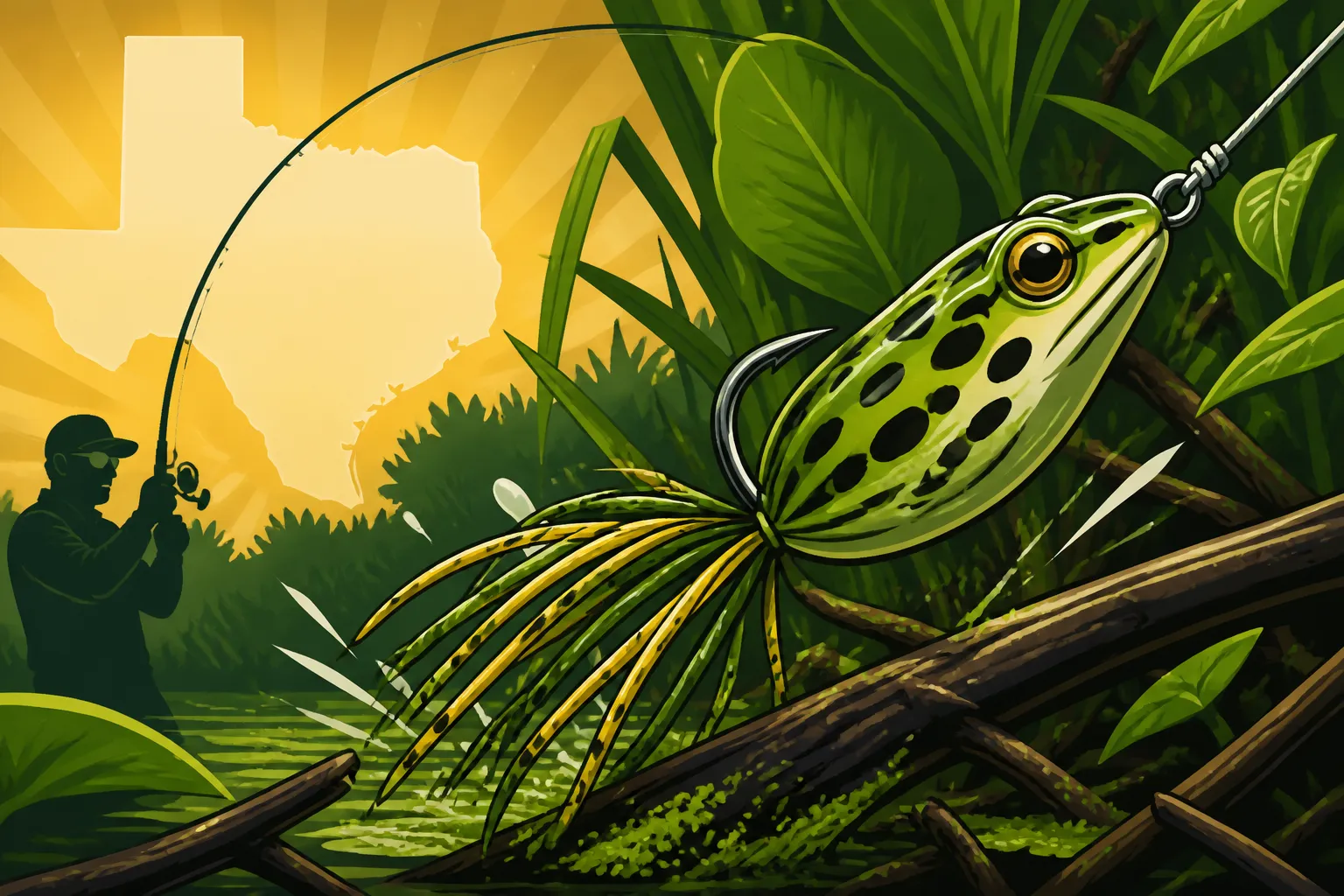
The fundamental design of a hollow-body frog lure is what sets it apart. Unlike most other baits with exposed hooks, a frog lure's double upturned hooks lie flush against its soft, pliable body. This clever engineering means that as the lure glides over thick mats of hydrilla, coontail, pondweed, or a field of lily pads, the hooks are protected. They won't grab onto every stalk or leaf they encounter, allowing you to cast directly into the densest, fishiest looking stuff without fear.
Imagine, for a moment, trying to work a crankbait or a jig through a tightly packed bed of matted duckweed. It's a futile exercise; the lure would foul instantly, collecting weeds and becoming completely ineffective. A frog, however, can literally sit on top of this vegetation, waiting for you to twitch it into an open pocket or drag it tantalizingly along the edge. This unique weedless characteristic isn't just a convenience; it's a strategic advantage that unlocks access to areas where bass feel safest and most likely to ambush prey. It allows you to present a bait directly where the big ones are hiding, unbothered by the thick green canopy above.
Mimicking Natural Prey for Texas Bass
Beyond their weedless nature, frog lures tap into a bass's primal instinct. Frogs, mice, small birds, and even snakes often find themselves in the water, becoming vulnerable targets for opportunistic bass. A frog lure, skittering or twitching across the surface, perfectly mimics these struggling creatures. The visual profile, the subtle disturbance on the water's surface, and the occasional "plop" or "gurgle" from a popping frog all scream "easy meal" to a lurking bass.
Think about a hot Texas summer day when the sun is beating down relentlessly. Bass will often retreat deep into the densest cover, seeking cooler water and shade. While deep-diving crankbaits or jigs might catch fish holding tighter to the bottom, a frog lure offers a compelling reason for a bass to rise from its sanctuary. The commotion and silhouette on the surface are hard for an aggressive bass to ignore, especially when it appears to be an easy target directly overhead. The sight of a frog lure dancing across a seemingly impenetrable mat of vegetation can trigger explosive, heart-stopping strikes that are among the most exciting in freshwater fishing.
Essential Gear for Frog Fishing in Texas's Jungle
To fish frog lures effectively in Texas's heavy cover, you can't just grab any old rod and reel. This isn't finesse fishing; it's a battle, and you need the right tools to win.
Rod and Reel Setup for Heavy Cover Combat
When you're dealing with thick vegetation and the potential for a trophy bass to be hiding within it, your rod and reel need to be capable of brute force. You need to pull that fish out of the cover as quickly as possible, before it can wrap your line around a submerged limb or burrow deep into a weed mat.
For your rod, look for something with a heavy or extra-heavy power rating and a fast action. The heavy power gives you the backbone needed to leverage a stubborn bass out of the weeds, while the fast action provides a sensitive tip for accurate casting and feeling subtle bites, transitioning quickly to the stout backbone for the hookset. A rod length between 7 feet and 7 feet 6 inches is ideal, offering excellent casting distance and leverage. Anything shorter might lack the necessary power and reach, while anything much longer can become unwieldy in tight casting situations. Think of it as a crowbar, designed not for delicate presentation, but for prying big fish from tough spots. If you're looking for recommendations, our guide on Best Rods for Texas Bass Fishing has some great options to consider.
Your reel choice is equally critical. A high gear ratio baitcasting reel, typically 7.1:1 or higher, is your best friend for frogging. This high retrieve rate allows you to quickly pick up slack line after a cast and, more importantly, swiftly crank a bass away from cover once it strikes. When a bass blows up on your frog, there's usually a momentary delay before it commits. A high gear ratio lets you take up that slack almost instantly, allowing for a powerful, immediate hookset. It also helps you manage your line when a bass makes a run for deeper cover, giving you the control to keep its head pointed away from snags. For some top picks, check out our insights on Best Baitcasting Reels for Texas Bass Fishing.
The Importance of Braided Line for Frogging
Forget about monofilament or fluorocarbon for frog fishing in heavy cover. This is where braided line truly shines and becomes non-negotiable. Braided line offers several key advantages that are absolutely essential for this technique.
First and foremost is its incredible strength-to-diameter ratio. You'll want to spool up with braided line in the 50-80 pound test range. This might sound like overkill, but it's not. That strength is necessary not just to land a big bass, but to literally rip it out of dense vegetation. Braided line is also incredibly abrasion resistant, meaning it can withstand rubbing against rough weed stalks, submerged branches, and even the rough mouth of a bass without fraying or breaking easily. This durability is critical when your line is constantly in contact with abrasive cover.
Perhaps the most crucial benefit of braided line for frog fishing is its lack of stretch. When a bass hits a frog lure, it's often an explosive, surface-level strike. With monofilament or fluorocarbon, the inherent stretch in the line would absorb much of the force of your hookset, making it difficult to drive those heavy frog hooks into a bass's bony mouth, especially through a mat of weeds. Braided line transmits every bit of that hookset power directly to the lure, ensuring a solid penetration. This is particularly vital when you factor in the length of your cast and the thickness of the cover you're pulling the fish out of. For a deeper dive into line choices, our article on Braided line vs fluorocarbon for Texas lakes can shed more light, but for frogging, braid is king. If you're unsure about what pound test to use, our guide on Best line for Texas bass fishing offers general recommendations, but for frogs, always lean towards the heavier end.
Choosing the Right Frog Lure for Texas Conditions
The world of frog lures is surprisingly diverse, offering a range of styles and colors to match different conditions and angler preferences. Knowing which one to tie on can make a big difference in your success.
When it comes to colors, a good rule of thumb is to match the hatch or the conditions. For clear Texas waters, especially on bright, sunny days, more natural patterns like greens, browns, and black with subtle flecks or realistic patterns tend to work best. These imitate real frogs, crawfish, or even small rodents that might accidentally fall into the water. However, when fishing in stained or muddy water, or on overcast days, brighter colors like white, chartreuse, or even a bold black can be more effective. These offer a stronger silhouette against the duller background, making them easier for bass to spot. Don't be afraid to experiment with belly colors either; sometimes a contrasting belly can be the trigger.
The sizes and shapes of frog lures also vary. You'll find standard hollow-body frogs that are designed to be "walked" across open water or skimmed over mats. These are your workhorses. Then there are popping frogs, which have a cupped face designed to create a louder "pop" and splash when twitched. These are excellent for calling bass out of dense cover or for fishing in small pockets of open water where a more aggressive presentation is needed. Finally, some frogs have a more streamlined "walking" profile, designed to glide and dart with minimal effort, making them perfect for covering large mats of vegetation. You can find a vast array of frog lures on Amazon, letting you pick out several different styles and colors to experiment with and see what the bass in your local Texas lake are responding to. Having a variety on hand allows you to adapt to whatever the fish are telling you on any given day.
Mastering the Retrieve: Techniques for Enticing Strikes
Once you have the right gear and a chosen frog lure, the magic truly happens in how you work that bait. A static frog sitting on a mat won't catch much; it's the action that brings it to life.
The Walk-the-Dog and Pop-and-Pause Retrieves
Two primary retrieves will serve you well when frog fishing: the "walk-the-dog" and the "pop-and-pause." Each has its time and place, and mastering both will significantly increase your success rate.
The Walk-the-Dog retrieve creates a captivating side-to-side sashay that perfectly mimics a confused or injured critter on the surface. To achieve this, cast your frog onto or near the cover. Once it lands, let any ripples dissipate. Then, lower your rod tip towards the water and give a series of short, downward twitches with your wrist while simultaneously reeling in slack line just enough to keep the line taut. The key is to create slack after each twitch, allowing the lure to glide to one side. The next twitch pulls it the opposite way. It takes a little practice to get the rhythm down, but once you do, the frog will dance enticingly across the surface. This retrieve is especially effective when fishing over relatively open patches within the cover, along the edges of weed mats, or when bass are actively chasing. If you want to refine your topwater game, our article on How to fish a topwater lure early in the morning offers more context on surface presentations.
The Pop-and-Pause retrieve, often used with popping frogs, is designed to generate more commotion and call fish from deeper within the cover. After casting, let the frog settle. Then, give a sharp, downward snap of your rod tip, causing the cupped face of the frog to "pop" and displace water, creating a noticeable splash and gurgle. Immediately follow this with a pause, anywhere from 2-5 seconds, sometimes longer. During this pause, bass often decide to strike. This technique is deadly when you're fishing small open pockets within a dense mat, or when trying to draw a reaction strike from a hesitant bass. Imagine a bass lurking deep in a mat of hydrilla; a subtle walk might go unnoticed, but a loud pop and then the vulnerable stillness of the frog can be irresistible. The sudden noise grabs their attention, and the subsequent silence gives them time to target the lure before ambushing it.
Precision Casting and Target Selection
Frog fishing isn't just about throwing your lure out there; it's about strategic placement. Bass in heavy cover are often tucked away in very specific ambush points, and your ability to hit those spots precisely is paramount. This makes precision casting a critical skill.
Your goal is to cast your frog directly into or immediately adjacent to the densest, most fish-holding cover you can find. Look for tell-tale signs: small holes in mats of vegetation, the edges of lily pad fields, gaps or open lanes between emergent grass, or shady pockets created by trees overhanging the water. These are classic ambush points where bass will wait for unsuspecting prey to come within striking distance. A cast that lands three feet away from a prime pocket might go unnoticed, but one that lands right in the sweet spot can trigger an immediate reaction. Often, the soft landing of a hollow-body frog is subtle enough not to spook nearby fish, allowing you to drop it right on their heads.
Consider a scenario where a large bass is nestled under a thick mat of matted grass, enjoying the shade and waiting for a meal. Your precise cast needs to land directly on that mat, allowing you to slowly work the frog over the thick stuff. Then, as you approach a small, isolated opening, you twitch your frog right into that hole, letting it sit for a moment before imparting a subtle twitch. This direct presentation into the fish's living room is what makes frog fishing so effective. Bass are masters of camouflage in these environments, and you need to get your lure right to them. If you're curious about targeting specific structures, our guides on How to fish around boat docks for bass and How to fish standing timber for bass can give you more ideas for pinpointing bass in various scenarios.
The Critical Hookset and Fight Strategy
This is where many anglers new to frog fishing lose fish. The explosive strikes are thrilling, but the hookset and subsequent fight require a specific approach to ensure success. Do not set the hook on the splash!
The mistake many make is setting the hook the instant they see the bass blow up on the frog. With a hollow-body frog, bass often "eat" the lure from underneath, collapsing the soft body and exposing the hooks. If you set too early, you'll pull the lure away from the fish before it has fully engulfed it, resulting in a missed strike. This is why a delayed hookset is crucial. When you see a bass strike, resist the urge to immediately set the hook. Instead, count to one or two seconds, or, even better, feel the weight of the fish on your line. You want to wait until the bass has fully turned with the lure in its mouth.
Once you feel that solid weight, it's time for a power hookset. Reel down quickly to take out any slack, then deliver a swift, powerful, sweeping hookset, often with two hands, pulling the rod sideways. This aggressive hookset is necessary to drive those robust hooks through the bass's tough, bony mouth. The fight doesn't end there, though. This is not a finesse battle. Once hooked, immediately start reeling and pulling that bass out of the heavy cover. Keep its head up and pointed towards you, using the heavy power of your rod and the strength of your braided line to keep it from burying itself back into the weeds. Every second you hesitate, the bass has a chance to wrap your line around a submerged branch, snag your lure in the thick vegetation, or spit the hook. It's a raw, powerful fight, and you need to be ready to bully that fish straight out of its lair.
When and Where to Fish Frog Lures in Texas
Knowing the right time and place to deploy your frog lures is just as important as knowing how to retrieve them. Texas's varied climate and diverse fisheries offer specific windows of opportunity.
Ideal Conditions and Seasons for Frogging
Frog fishing truly comes alive when the water warms up. The late spring through early fall represents the prime season for frogging in Texas. Bass become much more active and willing to chase baits on the surface when water temperatures are comfortably warm. They'll move shallower and relate to dense cover more consistently as the water heats up, seeking shade and ambush points.
The time of day also plays a significant role. Early morning, late evening, and overcast days are generally the most productive. The low light conditions allow bass to hunt more effectively on the surface without being as exposed to predators from above. During these periods, bass are often more willing to rise from cover to strike a surface lure. However, don't rule out frog fishing midday, especially if the heavy cover provides significant shade. Bass will still lurk in the cool shadows of lily pads or matted hydrilla, and a frog lure worked over their heads can be an irresistible temptation.
As for weather, stable warm weather is usually ideal. Frogs can also be effective after a cold front has moved through. While bass might become sluggish and move deeper in open water, those fish that remain in heavy cover often stay put. They'll hunker down in the thick stuff, making a frog lure one of the few baits you can present to them without getting snagged. This makes the frog a reliable option even when other patterns might be shutting down. For more general advice on timing your trips, our comprehensive guide on the Best time of year to fish in Texas can offer broader insights, and if you're battling the heat, check out How to fish in hot Texas summers for survival tips!
Top Texas Habitats for Frog Lure Success
Texas is blessed with an abundance of aquatic vegetation, creating countless perfect frog fishing scenarios. Knowing what to look for will help you pinpoint those productive spots.
In Texas lakes and reservoirs, you'll often encounter vast expanses of hydrilla, pondweed, milfoil, and coontail. These submerged grasses often grow to the surface, forming dense mats that are impenetrable to most lures. This is where your frog will shine. Look for any areas where these mats are particularly thick, especially near deeper water or channel swings, as bass will use these areas to stage. Lily pad fields are another classic frog habitat, offering shade and cover where bass love to hide. Don't overlook cattails, especially in marshy backwaters or shallow coves, as they provide similar ambush opportunities.
Several legendary Texas lakes are absolutely renowned for their frog fishing. Lake Fork, famous for its trophy bass, offers abundant hydrilla and lily pad fields. Sam Rayburn Reservoir and Toledo Bend Reservoir also boast massive amounts of aquatic vegetation that are perfect for throwing a frog. These are quintessential frog fishing destinations, where the technique is often a go-to for catching giants. Beyond the big lakes, explore the backwaters and sloughs of major rivers like the Trinity or Brazos. These slower-moving sections often develop dense mats of vegetation that mirror the conditions found in reservoirs, providing excellent, less-pressured frog water.
Overcoming Common Frog Fishing Challenges
Even with the right gear and technique, frog fishing can present a few challenges. The most common frustration for many anglers is missed strikes. It's incredibly exciting to watch a bass explode on your frog, only to reel it in untouched. As mentioned earlier, the number one culprit here is often setting the hook too early. Re-read the section on delayed hooksets and truly commit to waiting. Another factor could be dull hooks. Frog hooks can get dinged up by contact with cover or the bass's mouth. Regularly check your hooks for sharpness and either sharpen them or replace them. You can easily find replacement hooks on Amazon if you're looking to upgrade or repair your lures.
Line twist can also be an annoyance, especially if you're using cheaper braided line or not being mindful of your retrieve. While less common with baitcasters, it can happen. If it becomes a persistent issue, consider adding a high-quality swivel a foot or so above your frog, though this can sometimes pick up extra weeds. Ensure your reel is spooled correctly and avoid continually cranking against a stuck lure.
Finally, while frog lures are designed to be weedless, some lighter, stringy vegetation can occasionally foul the hooks. If you notice your frog isn't walking right or seems to be dragging, retrieve it, clean off any weeds, and cast again. Sometimes, adjusting your retrieve speed or the angle of your cast can help minimize this. Having a few different frog styles on hand, perhaps one with a slightly different hook design, can also help you adapt to specific types of vegetation. Need to replenish your frog lure stash or grab some new braided line? Amazon offers a huge selection, often with quick shipping to get you back on the water.
| Frog Lure Type | Best Action/Retrieve | Ideal Cover | Notes |
|---|---|---|---|
| Standard Hollow Body Frog | Walk-the-Dog, steady glide | Matted vegetation, lily pads, open pockets | Most versatile, excellent for covering large areas; often has a soft, collapsible body for good hook-ups. |
| Popping Frog | Pop-and-Pause, Chugging | Open pockets, edges of heavy cover, sparse mats | Creates splash and sound, great for calling bass from a distance or triggering reaction strikes. |
| Walking Frog | Effortless Walk-the-Dog | Slightly more open water, dense cover edges | Designed for an easier walking action; can be effective when bass are actively chasing. |
| Soft Plastic Toad | Fast retrieve, buzzing, waking action | Skimming over light grass, sparse pads | Not truly "weedless" in heavy mats, but creates a strong surface disturbance and can be very effective. |
Disclaimer
This article is for general informational purposes only and does not constitute professional advice. Laws, prices and regulations vary by location and change over time. Consult a qualified professional for guidance on your specific situation.