Best lure colors for clear water
We've all been there: standing on the bank or drifting in a boat over crystal-clear Texas waters, seeing fish darting below, yet our lures come back untouched. It's incredibly frustrating when you can see them, but they just aren't biting! This often comes down to lure color, especially in clear water conditions where fish rely heavily on their vision. This guide will walk you through the best lure colors for clear water fishing in Texas, helping you understand why some shades work wonders while others get ignored.
Understanding Clear Water Dynamics
Fishing in clear water is a whole different ballgame compared to fishing in murky, stained, or muddy conditions. When the water is exceptionally clear, light penetrates deeper, and fish have a much better view of what's swimming around them. This heightened visibility makes them pickier and often more cautious.
How Light and Visibility Impact Lure Choice
Think about it from a fish's perspective. In clear water, predators can see their prey from further away. This also means prey can see predators, and for an artificial lure, it means fish can get a really good look at what you're throwing. Bright, unnatural colors that might shine in stained water can actually send fish fleeing in clear conditions. The goal here is often to mimic natural forage or present something that looks natural enough not to spook them, or to create a very subtle, enticing flash.
Factors like the time of day and cloud cover also play a significant role. On a bright, sunny day, light penetration is at its maximum, making subtle, natural colors even more critical. On an overcast day or during low light conditions (dawn/dusk), you might get away with slightly more contrast, but subtlety usually still wins. Understanding these dynamics is the first step to mastering How to Fish Clear Water Lakes in Texas.
Mimicking Natural Forage
In clear water, the "match the hatch" principle becomes paramount. Fish aren't just looking for any meal; they're looking for a familiar meal. This means paying attention to the natural food sources in the lake or river you're fishing. Are there bluegill, shad, crawfish, or perch in the area? Your lure colors should closely resemble these natural prey items. This is where researching local baitfish and insect populations can give you a massive advantage. Sometimes, even a slight variation in the shade can make all the difference, tricking a wary bass or crappie into striking.
Top Lure Colors for Clear Water
When you're faced with gin-clear conditions, reaching for your brightest, most vibrant lures might feel instinctive, but more often than not, it's the subtle shades that pay off. Let's break down the go-to colors for clear water.
The Power of Natural and Earthy Tones
These are your bread and butter for clear water fishing, especially for species like largemouth bass, crappie, and even panfish in Texas lakes such as Canyon Lake, Lake Travis, or Lake Whitney.
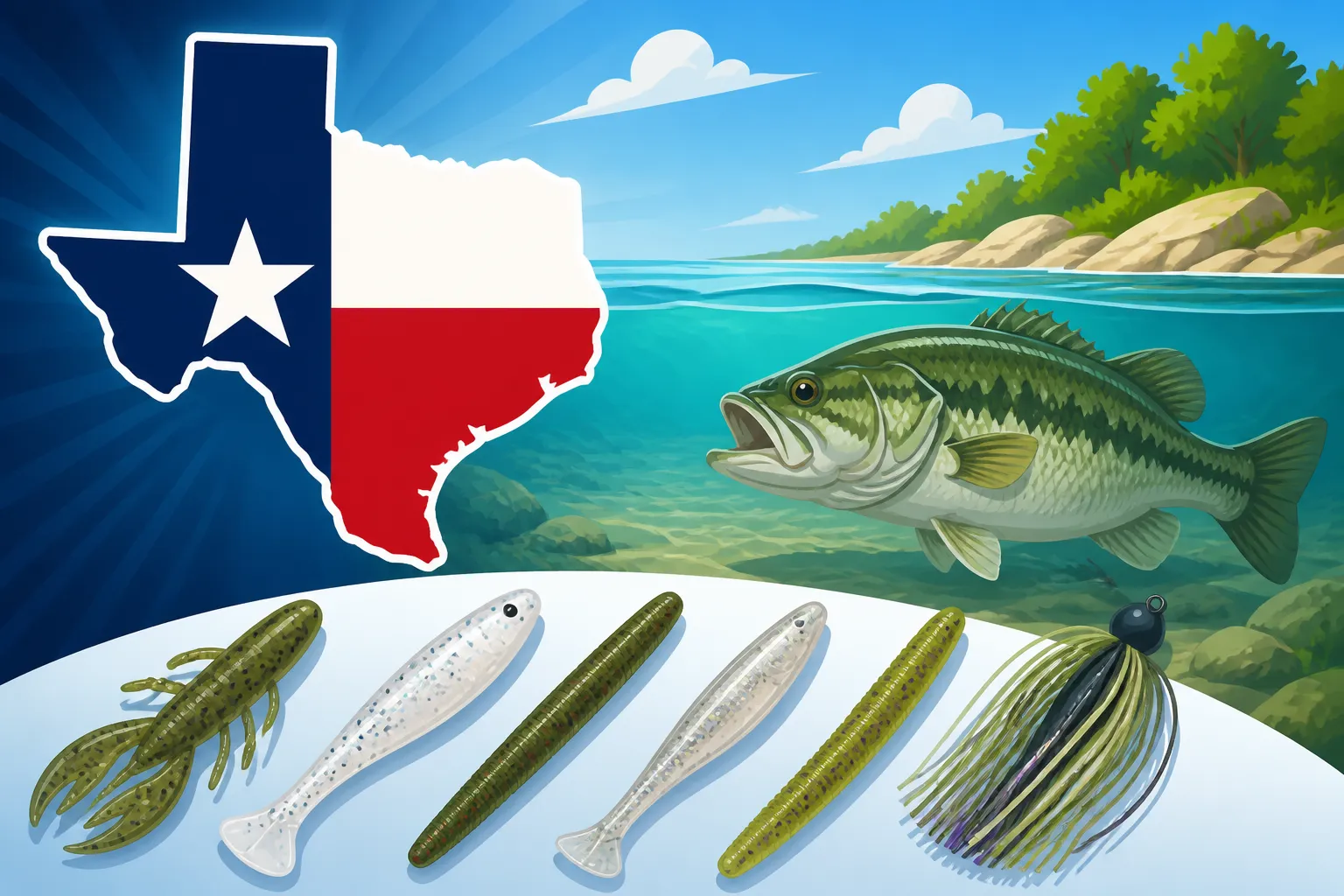
- Green Pumpkin: This is arguably the most versatile clear water color out there. It mimics a wide range of natural forage, from crawfish to various baitfish. It's subtle, doesn't cast an unnatural shadow, and blends beautifully with submerged vegetation. I've had countless days where a green pumpkin jig or soft plastic was the only thing those finicky bass would touch. It's a staple for a Texas rig for bass or a Carolina rig.
- Watermelon Red: Similar to green pumpkin but with a hint of red flake, this color is fantastic when crawfish are part of the fish's diet. The red flecks catch the light subtly, mimicking the natural pigmentation of crawfish or even stressed baitfish. It offers just enough visual interest without being overpowering.
- June Bug: This deep purple-black hue, often with green or blue flecks, is a killer, especially in slightly deeper clear water or on overcast days. It provides a distinct silhouette against the lighter sky, making it visible but still appearing natural. It's particularly effective for bass and crappie.
- Light Browns and Tans: These colors are excellent for imitating various smaller bottom-dwelling critters or even some types of shad. They're incredibly natural and non-threatening, perfect for when fish are highly pressured or simply being cautious. Think about the natural color of the bottom structure – a brown or tan lure can disappear into it, only to be noticed at the last second.
- Shad Patterns (Natural Silver/Gray/White): When shad are the primary forage, natural shad patterns are a must. Look for subtle silvers, grays, and whites that mimic the translucence and flash of actual shad. Often, these will have a slight shimmer or iridescent quality. These work wonders for Texas Striped Bass Fishing Guide or when fishing for white bass during their runs.
Transparent and Ghost Colors
For the most extreme clear water situations, or when fish are incredibly finicky, sometimes the most subtle approach is to use colors that are barely there.
- Clear with Glitter: These lures, often made of soft plastic, are almost entirely transparent but contain fine flecks of silver, gold, or holographic glitter. They catch and refract ambient light, creating a flash without a solid, unnatural color. It's like a ghost moving through the water – just enough to draw attention, but not enough to alarm. These can be particularly effective on pressured lakes or when fishing around very sparse cover.
- Subtle Blues and Purples: Think "ghost minnow" or "morning dawn" type colors. These are often clear or very light blue/purple plastics that have a very natural, almost ethereal look in the water. They can mimic small baitfish or invertebrates and are especially good on bright days when fish are looking up.
The Role of Contrast and Flash (Used Sparingly)
While subtlety is key, there are times in clear water where a touch of contrast can be beneficial, especially to trigger a reaction strike or in specific light conditions.
- White (with discretion): A pure white lure can be too stark in super clear conditions. However, a pearl white or off-white, perhaps with a touch of silver flake, can imitate dying baitfish or certain types of shad effectively. It's best used on overcast days or during dawn/dusk when light levels are lower.
- Chartreuse (as an accent): Full chartreuse lures are usually reserved for stained water. But in clear water, a small accent of chartreuse, like a chartreuse tail on a green pumpkin worm or a chartreuse stripe on a crankbait, can provide a subtle "hot spot" that draws attention without being overwhelming. It can often trigger a reaction bite, especially for Texas Crappie Fishing Guide or even bass.
Here's a quick reference table for clear water lure colors:
| Color Family | Primary Application | Best Conditions | Fish Response |
|---|---|---|---|
| Green Pumpkin/Watermelon | Crawfish, general baitfish | Sunny, clear, pressured fish | Natural presentation, subtle appeal |
| June Bug/Darker Naturals | Deeper water, overcast, bigger profile | Overcast, low light, slightly deeper | Stronger silhouette, still natural |
| Light Browns/Tans | Bottom forage, subtle baitfish | Highly clear, sunny, wary fish | Blends with bottom, non-threatening |
| Natural Shad Patterns | Shad imitation (silver, gray, pearl) | Any clear water where shad are present | Realistic baitfish, reflective flash |
| Transparent/Ghost | Finesse, extremely clear, finicky fish | Ultra clear, bright sun, high pressure | Minimal presence, subtle light refraction |
| Pearl White (subtle) | Dying baitfish, low light, reaction strikes | Overcast, dawn/dusk, slightly choppy | Mimics injured baitfish, visible silhouette |
| Chartreuse (accent) | "Hot spot" trigger, slightly stained areas | Low light, reaction bites, varied clarity | Draws attention without being overwhelming |
Beyond Color: Other Key Factors for Clear Water Success
While lure color is critical, it’s just one piece of the puzzle. In clear water, fish are more attuned to their surroundings, meaning presentation, lure action, and even your line choice become incredibly important.
Lure Action and Profile
In clear water, a fish can watch your lure's every move. This means a natural, lifelike action is often more effective than an erratic, aggressive one. Soft plastics that have subtle tail wiggles or jigs with flowing skirts can mimic natural forage without looking "fake." Think about the subtle movements of a real crawfish scuttling along the bottom or a baitfish gently swimming. The goal is to imitate life, not a frantic escape. When choosing your Best Bait and Lures for Texas Fishing, always consider the action it imparts.
The profile, or shape, of your lure also matters. A skinny worm might imitate a different prey item than a bulky creature bait. Match the size and shape to what the fish are currently eating. If they're feeding on small bluegill, a compact swimbait might be better than a long, slender worm.
Line Choice and Stealth
This is huge in clear water. Fish can see your fishing line! Using fluorocarbon line is almost a necessity because its refractive index is very close to water, making it nearly invisible beneath the surface. Using a lighter test line can also make a difference, as thinner lines are less visible.
Beyond just the line, your overall stealth on the water is crucial. Longer casts keep you further from the fish. Keeping shadows off the water, moving quietly in your boat, and even wearing drab clothing can prevent spooking wary fish. Remember, they can see you too! Techniques like a drop shot for bass or a Ned rig are often favored in clear, pressured conditions because they offer a natural presentation with light line.
Presentation: Subtle and Deliberate
In clear water, a slow, deliberate retrieve often outperforms fast, erratic movements. Fish have more time to inspect your lure, so giving them a chance to commit is important. Longer pauses, subtle twitches, and slower drags along the bottom can make your lure appear more vulnerable and natural. It's about coaxing a bite, not forcing one.
Think about how you'd present a lure to a fish you could see. You wouldn't throw it right on its head and rip it away, right? You'd try to make it swim naturally by, appearing as easy prey. This is also where understanding How to Fish a Texas Carolina rig effectively can be a game-changer for presenting soft plastics along the bottom without disturbing the fish too much.
Practical Tips for On-the-Water Application
Navigating clear water conditions can be daunting, but with a systematic approach, you can increase your chances of success. It's all about observation, adaptation, and having the right tools in your tackle box.
Start Subtle, Then Experiment
My general rule of thumb for clear water is to always start with the most natural, subtle color I have. I'll typically begin with a green pumpkin or a light watermelon red. If I'm not getting bites, I'll then experiment.
For example, if the sun is high and bright, and I'm fishing a clear lake like Possum Kingdom, I might try switching from a solid green pumpkin to a clear-with-glitter plastic worm. If it's overcast, I might try a June Bug. Sometimes, just adding a small amount of flash, like a jig with a few strands of metallic skirt material, can make the difference. Don't be afraid to change colors frequently until you find what the fish prefer that day. A good fishing app or even a basic fish finder can also help you understand depth and structure, which influences what colors are visible and effective, as detailed in How to use a fish finder for bass fishing.
Observe and Adapt
Pay close attention to your surroundings. What are the natural baitfish doing? Are there any crawfish scurrying under rocks? Are you seeing any insects hatching? The more you can match the prevalent forage in terms of color, size, and action, the better your chances. This is especially true for Texas Largemouth Bass Fishing Guide where they can be extremely selective.
Also, watch other anglers, if you can. What colors are they throwing? Are they catching anything? While you don't want to copy blindly, it can give you clues. If everyone is throwing bright colors and catching nothing, it might reinforce your choice to stick with subtle, natural tones. On the flip side, if someone is getting bites on a specific color, it's worth trying to replicate.
Building Your Clear Water Tackle Box
Having a dedicated selection of clear water lures is essential. I always recommend having a variety of soft plastics in green pumpkin, watermelon red, June bug, and some clear-with-glitter options. For hard baits, look for crankbaits and jerkbaits in natural shad patterns, some with subtle brown or green accents. Don't forget your Best Soft Plastics for Texas Bass Fishing.
When you're looking to stock up on these specific shades, online retailers like Amazon often have a fantastic selection that local tackle shops might not carry as consistently. You can usually find multi-packs of popular soft plastics in green pumpkin or watermelon red, ensuring you have enough to last. It’s also a great way to explore different brands and lure styles that perform well in clear water, all from the comfort of your home before your next trip to the lake.
Don't Discount Depth and Cover
Even in clear water, fish will seek cover. Submerged timber, rock piles, ledges, and deep grass beds offer refuge from predators and bright sunlight. The color you choose might also depend on the depth you're fishing and the type of cover. A darker, more opaque color might be more visible in deeper, dimmer water, even if the overall lake clarity is high. This applies to knowing How to find bass on a new lake by understanding its structure.
Similarly, if you're fishing dense vegetation, a lure that closely matches the vegetation's color can be highly effective, as it blends in while still creating a profile that fish can detect when it moves. It's not just about the water itself, but the environment within the water.
Ultimately, clear water fishing in Texas is about attention to detail and a willingness to adapt. By focusing on natural, subtle colors and paying mind to your presentation, you'll be well on your way to turning those frustrating "lookers" into solid catches.
Disclaimer
This article is for general informational purposes only and does not constitute professional advice. Laws, prices and regulations vary by location and change over time. Consult a qualified professional for guidance on your specific situation.