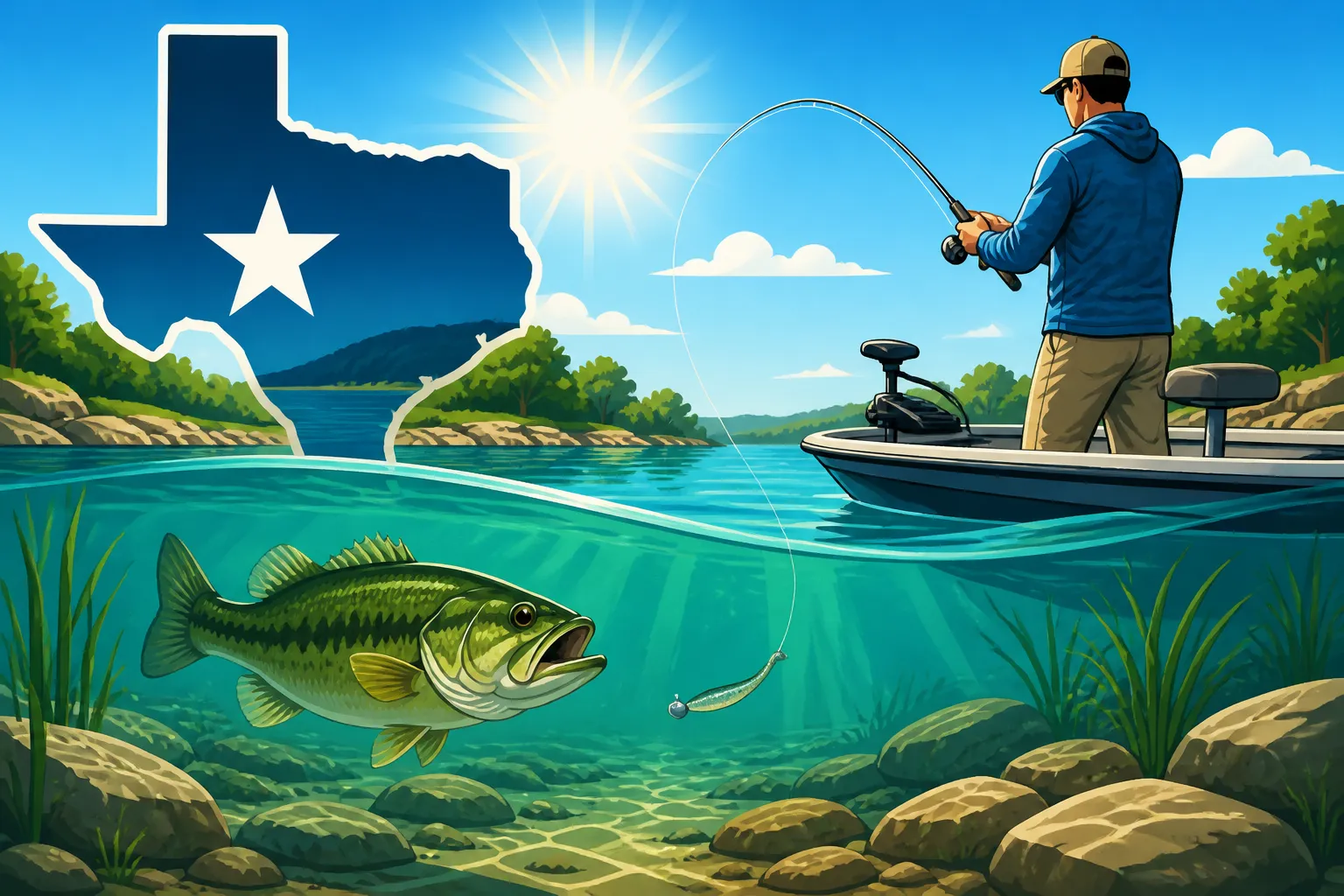
How to Fish Clear Water Lakes in Texas
There’s nothing quite like looking down into a Texas lake and seeing crystal clear water, right? It’s beautiful, no doubt about it. But for us anglers, that sparkling clarity can be a real headache. Fish in clear water can see everything – your boat, your shadow, even the heavy fishing line you're using. This makes them incredibly wary and tough to tempt. If you've ever felt like the fish are laughing at your offerings in these gin-clear conditions, you're not alone. This guide is here to unravel the mysteries of fishing clear water lakes in Texas, offering practical advice and techniques to turn those frustrating days into successful ones.
Understanding the Challenges of Clear Water
Fishing in clear water isn't just about switching up a lure color; it's a completely different ballgame that demands a change in mindset, gear, and technique. The fundamental challenge lies in the increased visibility. What's beautiful for us is a glaring spotlight for the fish.
Why Clear Water is Different
When water clarity extends beyond several feet, fish gain a distinct advantage. They can spot predators, including us, from a much greater distance. This heightened awareness makes them incredibly skittish and prone to spooking at the slightest disturbance. Imagine trying to sneak up on a deer in an open field versus a dense forest; the clear water is that wide-open field. Every little detail, from your boat's silhouette against the sky to the glint of your tackle, becomes magnified.
Furthermore, the increased visibility forces fish to become more discerning about their meals. They have ample time to inspect your lure, scrutinizing its color, size, shape, and even the thickness of your line. A bait that might draw an impulsive strike in murky water will be met with suspicion or outright rejection in clear conditions. This pickiness often means the fish are holding tighter to cover, staying deeper, or simply refusing to bite anything that doesn't look absolutely natural. It’s not just about what they can see, but what they don't see that makes them wary – like a bait that’s clearly tied to a thick, visible line.
Common Mistakes Anglers Make
Many anglers approach clear water with the same tactics they use in stained or muddy conditions, and that's where the frustration truly begins. One of the biggest blunders is using line that's too heavy or too visible. Monofilament, while a great all-around line, can be highly visible to fish in clear water, especially in heavier tests. Braided line, with its opaque nature, is even worse unless used with a fluorocarbon leader. These lines can create a "halo" effect around your lure, immediately signaling to the fish that something is amiss.
Another common mistake is the choice of lure color and size. Bright, gaudy colors that might shine in stained water often stick out like a sore thumb in clear conditions, screaming "artificial!" Similarly, oversized baits can appear unnatural and intimidating to fish already on high alert. Aggressive presentations, like loud splashes from casts or fast, erratic retrieves, also tend to spook fish rather than entice them. Remember, these fish have a broader "personal space" in clear water. Crashing your boat into a shoreline or making loud noises directly overhead can send them scattering to deeper water or denser cover, often for a long time. It’s all about subtlety when the water is gin-clear.
Essential Gear Adjustments for Clear Water
Conquering clear water fishing starts with making smart adjustments to your tackle. It's not about buying all new gear, but rather understanding how to optimize what you have, or investing wisely in a few key items that make a huge difference.
Line Selection Matters Most
Hands down, your line choice is the most critical adjustment for clear water. Fluorocarbon is the undisputed champion here, and for good reason. Its unique refractive index is very close to that of water, making it virtually invisible underwater. This characteristic is a game-changer because it allows your bait to present as naturally as possible, without the tell-tale line spooking wary fish. Fluorocarbon also boasts excellent abrasion resistance, which is a bonus when fishing around rocky bottom or submerged timber, common in many clear Texas lakes.
For clear water, it’s also crucial to drop down in pound test. Instead of your usual 15-20 lb test, consider 8-12 lb fluorocarbon for your main line or leader. Lighter line not only reduces visibility further but also allows your lures to have a more natural action, particularly finesse baits. Many anglers choose to spool their spinning reels with a thin, low-visibility braided line (like 10-20 lb) as a main line for its sensitivity and casting distance, then attach a 6-10 foot section of 6-12 lb fluorocarbon as a leader. This combination gives you the best of both worlds: strong, sensitive braid for detecting subtle bites, and invisible fluorocarbon at the business end. Learning proper leader knots, such as the FG knot or a double uni knot, is absolutely essential for a strong, reliable connection.
Rods, Reels, and Terminal Tackle
When it comes to rods and reels, the clear water game often leans heavily into finesse techniques. This means moving away from heavy flipping sticks and opting for lighter, more sensitive setups. For spinning gear, a medium-light to medium power rod with a fast or extra-fast tip is ideal. This combination allows for long, accurate casts with lightweight baits and provides the sensitivity needed to detect those incredibly subtle bites that are common in clear water. Brands like Shimano and Daiwa offer excellent spinning reels that provide smooth drag and consistent line lay, which are crucial when you're fighting a good fish on lighter line.
Baitcasting gear can still be used, especially if you're targeting slightly heavier cover or using a slightly beefier finesse presentation, but again, lean towards lighter setups. A medium power baitcasting rod with a fast tip, paired with a high-quality casting reel, can handle finesse jigs or lighter Texas rigs. Whatever your preference, the key is sensitivity and the ability to cast light baits effectively. For terminal tackle, think small and sharp. Downsize your hooks to smaller gauges (e.g., #1 or #2 hooks for wacky rigs, smaller jig heads for Ned rigs). Lighter weights (1/16 oz to 1/8 oz) for your jigs, Carolina rigs, or drop shot setups will allow for a slower, more natural fall that fish in clear water simply can't resist. You can find a fantastic selection of these specialized items on platforms like Amazon, making it easy to stock up on the right gear.
Subtle Lure Color and Size Choices
Just like your line, your lure selection needs a significant overhaul for clear water. Forget the loud chartreuse and bright orange. In clear water, natural, muted colors are your best bet. Think various shades of green pumpkin, watermelon, browns, clear with flakes, ghost lake blue, or even translucent options. These colors mimic the natural forage found in clear lakes, such as crawfish, bluegill, or various baitfish, without screaming "plastic imitation!"
Downsizing your baits is another crucial strategy. Instead of a 6-inch worm, try a 4-inch version. If you're throwing a jig, opt for a smaller skirt and a smaller trailer. Smaller profiles appear less threatening and more natural to cautious fish. This is where finesse baits truly shine. Ned rigs, often utilizing small, mushroom-head jigs paired with compact plastic worms (like a Z-Man Finesse TRD), are incredibly effective. Drop shot worms, small shaky head worms, and tiny swimbaits are also excellent choices. These subtle baits, combined with natural colors, become irresistible to even the most suspicious bass. When in doubt, always go smaller and more natural. You'll find that many of these highly effective clear water baits, including those from brands like Strike King and Yamamoto, are readily available on Amazon. For more detailed advice on what colors work best, check out our guide on "Best lure colors for clear water".
Mastering Finesse Techniques for Clear Water Bass
Finesse fishing isn't just a technique; it's an art form perfected for those days when the fish are being particularly finicky in clear water. It's about subtle presentations, light tackle, and a whole lot of patience.
The Drop Shot Rig
The drop shot rig is arguably one of the most effective clear water techniques, especially when bass are holding deep or suspended. The beauty of the drop shot lies in its ability to present a bait horizontally at a specific depth, completely independent of the weight. To set it up, tie your hook directly to your fluorocarbon leader, leaving a long tag end (typically 12-24 inches). Then, tie your drop shot weight to the very end of that tag end. The hook should be tied with a Palomar knot or similar, ensuring it stands out horizontally from the main line. You can thread a small plastic worm (3-6 inches) onto the hook, usually nose-hooked or wacky-rigged, allowing it maximum freedom of movement.
The presentation is key here. Cast your drop shot to a target area – often deep points, submerged humps, brush piles, or ledges. Let it sink until the weight hits the bottom. Then, with your rod tip slightly elevated, lightly shake the rod, imparting subtle quiver to the bait. The weight remains on the bottom, but the bait dances tantalizingly above it. This "dead sticking" or subtle shaking mimics a small baitfish or invertebrate struggling, often triggering bites from hesitant bass. This technique is a fantastic way to target fish holding tightly to deep structure. For more on this, consider reading our "How to Fish Deep Structure in Texas Reservoirs" guide.
Ned Rig Magic
If you haven't tried the Ned Rig in clear water, you're missing out. This simple yet incredibly effective setup originated in the Midwest but has proven its worth across Texas lakes. It consists of a small, mushroom-head jig (typically 1/16 oz to 1/8 oz) paired with a compact, buoyant soft plastic worm, often a Z-Man Finesse TRD or a similar small, stick-bait style plastic. The buoyancy of the plastic, combined with the jig head, allows the bait to stand upright on the bottom, mimicking a feeding baitfish or a small organism.
The retrieve is where the magic happens. Cast the Ned rig out, let it sink to the bottom, and then simply drag it slowly along. You can add very subtle hops or pauses, but often, the less you do, the better. The bait's natural action on the bottom, along with its diminutive size, is incredibly enticing to clear water bass. It’s particularly effective in areas with scattered rock, gravel, or sparse grass, and can be fished in surprisingly shallow or deep water. This rig has a reputation for catching fish when nothing else will, especially pressured fish in clear conditions.
Wacky Rigs and Weightless Worms
Sometimes, the simplest approach is the most effective. The wacky rig is exactly that – a straightforward, weightless soft plastic worm hooked right in the middle. The beauty of this rig is its incredibly natural, slow, and tantalizing fall. As the worm sinks, both ends gently flutter and wiggle, mimicking a dying or injured bait. This subtle action is often all it takes to trigger a strike from a cautious bass.
To rig it, simply take a 5-inch or 6-inch stick bait (like a Yamamoto Senko) and hook it directly through the center. For added durability and to prevent the worm from tearing off after one fish, many anglers use O-rings around the center of the worm, then hook through the O-ring. This prolongs the life of your expensive soft plastics. Cast the wacky rig near docks, over submerged grass, around brush piles, or even in open water, and let it fall on a slack line. Watch your line carefully; many bites occur on the fall. Once it hits bottom, give it a twitch, let it fall again, or retrieve it very slowly with gentle shakes.
Light Carolina Rigs
While Carolina rigs are often associated with heavy weights and deep water, a lightened-up version can be incredibly potent in clear water. Instead of 3/4 oz or 1 oz weights, switch to 1/4 oz or 3/8 oz bullet weights. Pair this with a longer fluorocarbon leader, sometimes 3-5 feet in length, and a smaller, more subtle bait like a 4-inch lizard, a creature bait, or a small worm.
The lighter weight and longer leader allow the bait to float and drift more naturally behind the weight, giving it an enticing, uninhibited action. Drag this rig slowly along points, humps, and flats. The weight acts as a bottom-scouting tool, transmitting information about the bottom composition directly to your rod tip, while the bait swims freely a distance behind it. This technique covers water effectively while maintaining a subtle presentation, making it ideal for covering broad areas in clear lakes without spooking fish.
Strategic Approach and Presentation Tactics
Beyond just the gear and specific rigs, how you approach the water and present your bait makes a huge difference in clear conditions. Stealth and patience are paramount.
Stealth is Your Best Friend
In clear water, fish have the home-field advantage. They can see you, and if they feel threatened, they're gone. That's why stealth becomes your absolute best friend. One of the biggest give-aways is noise. Avoid slamming lids, dropping tackle boxes, or running your outboard more than necessary. Utilize your trolling motor judiciously, and consider using the quietest settings. If you’re fishing from the bank, approach quietly, avoiding heavy footsteps or sudden movements.
Maintaining distance from your target is also critical. Longer casts are your ally here, allowing you to present your bait to fish that are far enough away not to be spooked by your presence. Always position your boat so that your shadow doesn't fall directly over the area you're trying to fish. On sunny days, the silhouette of your boat can send fish scattering. Wearing neutral-colored clothing – greens, browns, grays – can also help you blend into the background, especially if you're sight fishing or fishing from shore. Every little bit of discretion helps when the water is like glass.
Slower Retrieves and Longer Pauses
In clear water, fish have more time to inspect your bait. A fast, erratic retrieve might work in murky conditions, but in clear water, it often signals danger or simply looks unnatural. Instead, slow down. Seriously, slow down even more than you think you should. Your retrieve should be deliberate, subtle, and often punctuated by long pauses. Think of it as inviting the fish to investigate, rather than rushing them into a decision.
Many bites in clear water will come during these pauses or on an incredibly slow, barely perceptible retrieve. Give the fish time to swim up to your bait, examine it, and decide if it's a meal worth expending energy for. Subtle twitches, gentle drags, and letting your bait "dead stick" are incredibly effective. It requires patience, but the payoff is often big bass that wouldn't touch a faster-moving lure. Experiment with how long you pause – sometimes a 5-second pause is enough, other times 10-15 seconds might be what it takes to tempt a wary largemouth.
Targeting Key Structures and Depths
Clear water can push fish to specific types of cover or deeper depths, where they feel more secure from predators and bright light. Instead of scattering randomly, they tend to congregate around distinct structural elements. Focus your efforts on deep brush piles, offshore ledges, points that drop sharply into deep water, and submerged humps or roadbeds. These areas offer both cover and access to deeper, cooler, and darker water.
Transition zones, where one type of bottom changes to another (like rock to sand, or gravel to mud), are also prime clear water targets, as are thermoclines in the summer months. Fish will often suspend right on or just above these temperature breaks. Use your fish finder to locate these subtle changes and to identify schools of baitfish or individual fish holding tight to structure. Often, the fish won't be right on top of the cover, but rather hovering just off to the side, waiting to ambush. Learning to interpret what your electronics are showing you is invaluable in these scenarios. "Best Fish Finders for Texas Lakes" can give you a leg up on understanding your electronics.
Top Texas Clear Water Lakes to Practice These Skills
Texas is a massive state with an incredible diversity of fishing opportunities. While many lakes have stained or murky water, there are plenty of beautiful, clear water bodies where these finesse techniques will truly shine.
Hill Country Gems
The Texas Hill Country is renowned for its scenic beauty, and many of its lakes boast stunningly clear water, often due to their limestone bottoms and spring-fed sources. Canyon Lake, nestled in the heart of the Hill Country, is a prime example. Its deep, clear waters are home to healthy populations of largemouth bass, smallmouth bass, and Guadalupe bass. The lake features extensive rocky banks, steep bluffs, and numerous submerged structures that provide ideal habitat for wary clear water fish. Anglers here often find success with drop shots, Ned rigs, and light Carolina rigs fished along ledges and points.
Lake Travis, near Austin, is another famously clear and deep reservoir. While it can be challenging, especially with fluctuating water levels, its transparent waters make finesse techniques a must. Largemouth bass here are highly sensitive to pressure, making subtle presentations crucial. Look for deep timber, rock piles, and submerged vegetation. Lake Buchanan, one of the oldest and largest of the Highland Lakes, also offers clear sections, particularly in its lower reaches. It's known for its varied structure, including large rock formations and deeper channels, making it a great place to experiment with different clear water tactics. The clarity can be a challenge, but when you crack the code, the rewards can be plentiful.
East and Central Texas Challenges
While East Texas is more typically associated with tannin-stained waters, some lakes in central and eastern parts of the state can offer surprisingly clear conditions, especially in certain sections or during specific times of the year. Lake Palestine, a large reservoir south of Tyler, generally has a good stain, but some areas, particularly near the dam or during drier periods, can exhibit much clearer water. This presents an excellent opportunity to adapt your techniques. When you encounter that clearer water, reach for those lighter lines and natural baits.
Further west in Central Texas, Lake Belton and Lake Whitney are fantastic examples of clear water lakes that demand a finesse approach. Lake Belton, near Killeen, is a deep, clear U.S. Army Corps of Engineers reservoir known for its rocky banks, steep drops, and submerged timber. It's a fantastic lake for targeting largemouth bass, smallmouth bass, and even crappie, all of which become more challenging in its clear environment. Similarly, Lake Whitney, often hailed as one of Texas's best lakes for striped bass, also has very clear water that tests bass anglers. Its deep, clear, rocky structure is perfect for drop-shotting and dragging light Carolina rigs. These lakes often require precise boat positioning and long casts to avoid spooking fish. For more general insights on where to cast your line, you might consult our "Best Places to Fish in Texas" guide.
Adapting to Conditions
Clear water fishing isn't static; it requires constant adaptation based on the prevailing conditions. Understanding how light, wind, and water movement affect fish behavior is key to consistent success.
Understanding Light Penetration
Light is a critical factor in clear water. On bright, sunny days, fish will often push deeper or seek the densest cover to escape the intense light penetration. Their eyes are highly adapted, and direct sunlight in clear water can make them uncomfortable and less active. This is when fishing deep with drop shots, light Carolina rigs, or slow-dragging Ned rigs becomes particularly effective. During these bright periods, natural, subdued lure colors (like clear, watermelon, or light greens) tend to work best, as they don't reflect light too harshly.
Conversely, on cloudy days or during periods of low light (early morning, late evening), fish may feel more comfortable venturing into shallower water or suspending higher in the water column. The diffused light makes them less wary, and they might be more willing to chase a bait. This can be a good time to try weightless wacky rigs around cover or even small topwater baits if the fish are active. Even in low light, however, very bright, unnatural colors can still be a deterrent in exceptionally clear water; stick to slightly darker natural tones or even black and blue for increased silhouette.
Wind and Water Movement
Wind, often seen as a nuisance, can actually be a blessing in disguise for clear water anglers. A good chop on the water's surface breaks up light penetration, disrupts the fish's vision, and makes them less able to see your boat or line. This "surface disturbance" effectively creates a natural camouflage for you. On windy days, fish often become more active and less spooky, pushing into areas they might avoid on calm days. This is a great time to target wind-blown points, banks, and flats, as the wind also concentrates baitfish, creating feeding opportunities for bass.
While wind can be your friend, too much can make boat control and lure presentation difficult. Find a balance. When you have a moderate chop, consider slightly faster retrieves or even a subtle reaction bait like a small crankbait or a finesse spinnerbait, still adhering to natural colors. Additionally, areas with natural water movement, such as current near dams or creek inlets, can also be productive. This current concentrates bait and provides predictable ambush points for bass, even in clear conditions. Don't forget, when the Texas summer heat hits and water levels drop, the remaining water often becomes clearer, making these tactics even more vital. Check out our "How to Fish in Hot Texas Summers" guide for more tips.
| Line Type | Pros for Clear Water | Cons for Clear Water | Best Use Case |
|---|---|---|---|
| Fluorocarbon | Virtually invisible underwater, good abrasion resistance, sensitive, sinks well. | Can be stiff, more expensive, some brands have memory. | Main line on spinning reels, all finesse leaders. |
| Monofilament | Economical, good knot strength, floats, easy to cast. | Visible underwater, stretchy, less sensitive. | Not ideal for leaders, limited use as main line in clear water. |
| Braided Line | Extremely sensitive, no stretch, very strong for diameter, casts far. | Highly visible, no abrasion resistance (can fray). | Main line on spinning reels (with fluorocarbon leader), heavy cover. |
Disclaimer
Fishing regulations, license requirements, and local conditions can change. Always consult the latest Texas Parks and Wildlife Department (TPWD) regulations before heading out. The information provided in this guide is for general informational purposes only and should not be considered legal advice or a substitute for official TPWD guidelines. Stay safe and respect our natural resources.