Texas Blue Catfish Identification Guide
It can be incredibly frustrating when you're out on a Texas lake or river, reeling in a fantastic catfish, only to wonder if it's a blue, channel, or even a flathead. Misidentifying your catch can lead to confusion, especially with varying regulations, or simply a missed opportunity to appreciate the unique qualities of each species. This comprehensive guide will walk you through the precise characteristics that make a Texas blue catfish stand out, helping you confidently identify your next big catch.
Why Correct Identification Matters for Texas Anglers
Knowing exactly what kind of fish you've caught isn't just about showing off; it's genuinely important for a few key reasons. Texas waters are home to some incredible catfish species, and each one has its own story, its own preferred hangout spots, and most importantly, its own set of rules that we, as responsible anglers, need to follow. Getting it right ensures you're playing by the rules and also helps you become a more effective and knowledgeable fisherman.
Adhering to Regulations
One of the biggest headaches for any angler is accidentally violating fishing regulations. Texas Parks and Wildlife Department (TPWD) has specific length and bag limits for different catfish species, particularly for blue catfish, channel catfish, and flathead catfish. For instance, the slot limits or minimum length requirements can vary significantly. Imagine catching what you think is a channel cat, only to find out it was a blue cat that was undersized for its species' regulations, and now you’re in a sticky situation. Or perhaps you've kept your daily limit for one species but not another, and a game warden checks your cooler. It's a real bummer when you're trying to do the right thing but just didn't have all the information. Knowing these differences can keep you out of trouble and ensure you’re contributing to sustainable fishing practices. For a full breakdown of specific rules, you might want to consult our guide on Texas Catfish Bag Limits.
When you're out on the water, the last thing you want is to be guessing. Having a clear understanding of the visual cues for each catfish species means you can quickly and accurately assess your catch. This confidence allows you to make informed decisions about whether to keep or release a fish, ensuring you comply with the law. It’s not just about avoiding penalties; it’s about being a steward of our natural resources and respecting the efforts to maintain healthy fish populations for everyone. A little knowledge goes a long way in making your fishing trip stress-free and enjoyable.
Understanding Fish Behavior and Diet
Beyond regulations, proper identification helps you truly understand the fish you're targeting. Blue catfish, for example, are often found in deeper, open waters of large reservoirs and rivers, preferring to ambush prey. Their diet often consists of smaller fish, crayfish, and mussels. Channel catfish, while also omnivores, tend to forage more in shallower areas and are known for their keen sense of smell, often attracted to stink baits. Flathead catfish, on the other hand, are apex predators that prefer live bait and often hide in heavy cover like logjams or rocky ledges, waiting to strike.
Each species has evolved distinct characteristics that aid its survival and hunting strategy. Knowing you've hooked a blue cat can tell you a lot about the water column you're fishing, the kind of forage available, and even what baits might be most effective. This knowledge translates directly into better fishing success because you're approaching the fish on its terms. If you're struggling to catch blues, maybe you're fishing in channel cat territory, or vice-versa. Understanding these nuances makes you a more skilled and adaptable angler, rather than just casting and hoping. If you're looking to dive deeper into what these fascinating creatures eat, check out our article on What do catfish eat in Texas lakes.
Appreciating Texas' Diverse Fishery
Texas is a fantastic state for fishing, offering an incredible variety of environments and species. Catfish are a cornerstone of this diversity, and each type brings its own flavor (literally!) and challenge to the angling experience. The blue catfish, often the largest of the three primary Texas catfish species, offers a unique fight and trophy potential that differs from the feisty tug of a channel cat or the powerful, bulldogging fight of a flathead. Appreciating these differences enriches your overall fishing experience.
Think about it: identifying a magnificent blue cat isn't just about its legal status; it’s about recognizing a truly powerful freshwater predator. It’s about understanding its place in the ecosystem and the joy of landing such a magnificent specimen. This deeper appreciation fuels conservation efforts and encourages anglers to learn more about the intricate relationships within our aquatic environments. It’s what makes fishing more than just catching fish; it makes it a connection to nature. Our Texas Catfish Species Guide offers a broader look at the different catfish you might encounter.
The Key Visual Distinctions of a Texas Blue Catfish
When you pull a catfish out of the water, there are several immediate visual cues that can help you distinguish a blue cat from its cousins. Forget the old wives' tales; we're going to focus on clear, anatomical features that are reliable indicators. These are the details that game wardens and experienced anglers rely on every single time. Pay close attention to the overall shape, the fins, and especially the head and mouth.
Analyzing Body Shape and Coloration
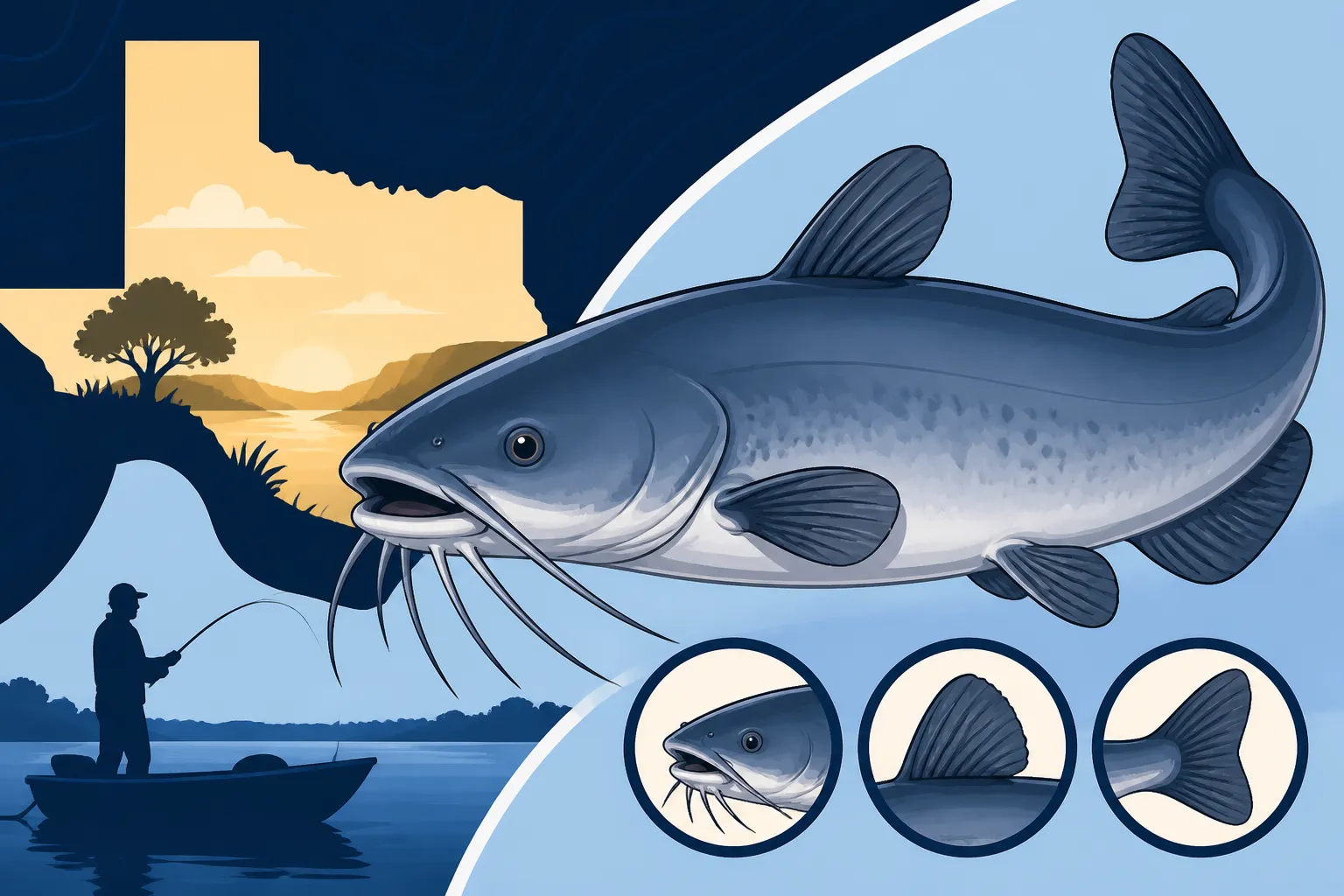
Blue catfish are generally characterized by a sleek, somewhat torpedo-shaped body that tapers toward the tail. They tend to be more slender than flatheads but can be more robust than channel catfish, especially larger specimens. Their coloration is a dead giveaway for many; as their name suggests, they typically have a grayish-blue hue on their backs and sides, fading to a white or silver belly. This blue-gray can range from a deep slate blue in clear waters to a lighter, almost silvery-blue in murkier environments. Unlike many channel cats, blue catfish do not have spots on their body, which is a crucial differentiating factor.
The absence of spots is a primary indicator. If you see distinct black spots, you're almost certainly looking at a channel catfish. Blues maintain a uniform, often iridescent, blue-gray color. Their skin is smooth and scaleless, a common trait among all catfish, but the specific tone and gradient of the blue cat are quite unique. This clean, unblemished appearance, combined with their muscular build, makes them stand out.
The Distinctive Forked Tail
One of the most obvious and defining features of a blue catfish is its deeply forked tail, or caudal fin. This tail is significantly more V-shaped and deeply cut than that of a channel catfish, and it's a stark contrast to the squared-off or slightly rounded tail of a flathead catfish. Think of a perfect, symmetrical "V" carved into the tail fin—that's what you're looking for on a blue cat. This deeply forked tail is crucial for their powerful, sustained swimming in strong currents, allowing them to chase down prey effectively.
When you're holding the fish, just spread out the tail fin gently. If the two lobes of the tail are long and pointed, with a deep indentation in the middle, you’ve got a strong candidate for a blue catfish. The depth of this fork is a reliable identifier that holds true across all sizes of blue cats. Comparing it side-by-side with a channel cat would show a distinct difference, even though channel cats also have a somewhat forked tail; the blue's fork is noticeably more pronounced and pointed.
Mouth and Head Characteristics
The head of a blue catfish is relatively small in proportion to its body, especially compared to the broad, flattened head of a flathead catfish. The most critical feature here is the upper jaw, which protrudes slightly beyond the lower jaw, giving it a slight "overbite" appearance. This is different from a channel catfish, where the jaws are often equal or the lower jaw might protrude slightly, and definitely distinct from the flathead's pronounced lower jaw. The blue cat's mouth is also relatively small, designed for suction feeding on smaller fish and invertebrates.
Their eyes are set somewhat forward on the head. Around the mouth, blue catfish possess eight barbels: two on the chin, two at the corner of the mouth, and four on the snout. These barbels are typically shorter than those found on a channel catfish. The combination of the slightly protruding upper jaw, the relatively small head, and the specific arrangement and length of the barbels are reliable indicators. If you're ever ordering specific hooks for catfish, make sure they match the mouth size – often, you'll find great options on sites like Amazon.
Blue Catfish vs. Channel Catfish: A Common Confusion
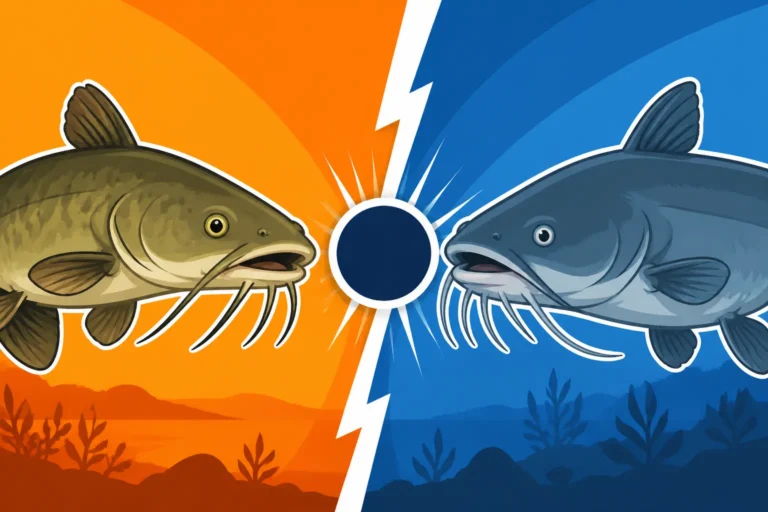
It's probably the most common catfish identification challenge in Texas: telling a blue cat apart from a channel cat. They share some similarities, both having somewhat forked tails and being found in many of the same waters. However, there are a few definitive features that, once you know them, make the distinction crystal clear. This is where getting up close and personal with your catch really pays off. Our guide on What is the difference between channel and blue catfish offers an even deeper dive into this specific comparison.
Counting the Anal Fin Rays
This is the golden rule, the most scientifically reliable way to differentiate between a blue catfish and a channel catfish. The anal fin is the fin located on the underside of the fish, behind the anus and before the tail. Carefully count the rays (the spiny or soft supports within the fin). A blue catfish will consistently have 30-36 rays in its anal fin. In contrast, a channel catfish will typically have 25-29 rays. This difference is usually quite clear once you've learned to do it.
To count the rays, gently spread the anal fin and use a small, blunt object like a toothpick or even your fingernail to trace each ray from its base to the tip. It might take a little practice, but it's the most accurate method. This number is fixed and doesn't change with the fish's age or environment, making it an invaluable diagnostic tool. It might sound technical, but once you try it a few times, it becomes second nature and an absolute game-changer for confident identification.
Spotting the Body Spots (or Lack Thereof)
As mentioned earlier, the presence or absence of spots is a quick and generally reliable visual cue. Channel catfish, especially younger ones, are often adorned with distinct, irregular black or dark spots on their sides. These spots can sometimes fade or become less prominent in very large, older channel cats, which is where some confusion can arise. However, true blue catfish simply do not have spots. Their coloration is a uniform blue-gray, often metallic or silvery on the flanks, without any scattered dark markings.
If you catch a catfish with a deeply forked tail and a generally blue-gray coloration, but it has no spots, you are very likely looking at a blue catfish. If it has spots, even faint ones, it’s almost certainly a channel catfish. This visual check is usually the first thing seasoned anglers look for. When in doubt, especially with larger, older fish where spots might be less obvious, always default to counting those anal fin rays for a definitive answer. For a closer look at their spotted cousins, check out the Texas Channel Catfish Identification Guide.
Jawline and Barbels as Clues
While the anal fin count is definitive, the jawline and barbels can offer strong supporting evidence. A blue catfish typically has a slightly protruding upper jaw, meaning its upper lip extends a bit further than its lower lip. Channel catfish, on the other hand, often have either equal jaws or a slightly protruding lower jaw. This might seem subtle, but once you've seen it a few times, it becomes easier to spot.
Regarding barbels (the whisker-like sensory organs), blue catfish tend to have relatively shorter barbels compared to channel catfish. The barbels on a channel cat are generally longer and more prominent, especially the ones near the corners of the mouth and on the chin. These differences, while not as conclusive as the anal fin ray count, can help build a strong case for identification, particularly when combined with the coloration and tail shape. It's like collecting clues for a detective case; the more evidence you gather, the clearer the picture becomes.
How Blue Catfish Differ from Flathead Catfish
Distinguishing blue catfish from flathead catfish is usually a bit easier than distinguishing them from channel cats, primarily because flatheads are quite unique in their overall appearance. They look more prehistoric, more rugged, and less streamlined than blues. However, if you're not familiar with them, it can still lead to mistakes. Let's break down their most striking differences.
Head Shape and Eye Placement
The most striking difference between a blue catfish and a flathead catfish is the head. A flathead, true to its name, possesses a distinctly broad, flattened head, almost shovel-like, that looks disproportionately large compared to its body. Its eyes are relatively small and located on the top of its head, giving it an upward-looking gaze, perfect for ambushing prey from below. In contrast, the blue catfish has a much smaller, more rounded head that is not flattened, and its eyes are positioned more on the sides of its head, similar to many other fish.
Imagine the difference: one looks like it's built to prowl the bottom and hide in cover with a wide, low-slung profile, while the other looks like a faster, more open-water swimmer. This head shape difference is so pronounced that it’s often the first thing experienced anglers notice. The flathead's unique head is a key adaptation for its predatory lifestyle, allowing it to hide effectively and strike quickly.
Tail Shape: Forked vs. Squared
Another unmistakable identifier is the tail fin. We've already established that the blue catfish has a deeply forked tail. The flathead catfish, however, has a tail that is either squared-off or only very slightly notched, appearing almost straight across or even somewhat rounded at the ends. It certainly doesn't have the deep, V-shaped fork that defines the blue cat. This difference in tail shape is immediately apparent when you spread the fin.
The flathead's tail is built for powerful, short bursts of acceleration rather than sustained swimming, which aligns with its ambush predator strategy. If you're holding a catfish with a broad, flat head and a tail that looks like a paddle or a fan, you've definitely got a flathead. There's no mistaking it for a blue cat's elegant, deeply carved tail. Our dedicated guide to Texas Flathead Catfish Identification Guide can offer even more specific details on this intriguing species.
Color and Pattern Variations
Flathead catfish also sport a very different coloration and pattern compared to the uniform blue-gray of the blue cat. Flatheads typically have a mottled, olive-brown to yellow-brown body, often with dark brown or black spots and blotches that create a camouflaged appearance. Their belly is usually yellowish or cream-colored. This irregular, patchy pattern helps them blend in with rocky bottoms, submerged logs, and muddy banks where they prefer to hunt.
The contrast with the blue cat is stark: blue cats are sleek and monochromatic in their blue-gray, while flatheads are patchy and earthy-toned. If your catfish is mottled, yellowish, and has dark blotches, it's a flathead. If it's a smooth, unspotted blue-gray, it's a blue. This combination of head shape, tail shape, and coloration usually makes distinguishing these two species quite straightforward, even for a relatively new angler.
Size and Habitat Clues for Identification
While visual features are paramount for identification, considering the size of the fish and the specific environment where you caught it can often provide helpful secondary clues. Different catfish species have different growth patterns and prefer distinct types of habitats within Texas' vast waterways. Understanding these preferences can give you a better idea of what you might encounter.
Understanding Growth Potential
Blue catfish are renowned for their massive growth potential. They are the largest freshwater fish in Texas and one of the largest in North America. It's not uncommon for blue catfish in Texas to exceed 50 pounds, with the state record being significantly higher. If you've just hauled in a true monster, especially one pushing past the 30-pound mark, there's a very good chance you've got a blue cat. Channel catfish, while common and widely distributed, rarely exceed 20-25 pounds, though exceptions exist. Flathead catfish can also grow quite large, often reaching 50-70 pounds, but their distinct body shape makes them easy to distinguish from large blues.
The sheer size of a trophy-class catfish is a strong hint. When anglers talk about catching a truly massive catfish in the big Texas reservoirs like Lake Texoma, Lake Tawakoni, or the Trinity River, they are almost invariably referring to a blue catfish. Smaller fish, say under 10 pounds, could be any of the three main species, but as the fish gets bigger, the probability of it being a blue cat increases significantly, especially if it maintains that sleek, blue-gray, deeply forked appearance. Our article on How big do blue catfish get in Texas has more details on their impressive growth.
Typical Habitat Preferences in Texas Waters
Blue catfish thrive in large, main-river channels, big reservoirs, and brackish bays along the coast. They prefer deeper water with strong currents or consistent water movement, often found near submerged structures, river bends, or deep holes. They are schooling fish, meaning where you find one blue cat, you'll likely find more. Prime blue cat habitat includes the lower reaches of major river systems like the Trinity, Brazos, Colorado, and Guadalupe rivers, as well as massive impoundments like Lake Fork, Lake Livingston, and Lake Conroe.
Channel catfish are far more adaptable and can be found in almost any freshwater body in Texas, from small ponds and creeks to large rivers and reservoirs. They tolerate a wider range of water conditions and temperatures. Flathead catfish, on the other hand, are highly territorial and prefer heavy cover in rivers and large creeks—think log jams, rock piles, and deep undercut banks. If you're fishing a vast, open body of water with significant depth, targeting channels and humps, you're much more likely to encounter blue catfish. Conversely, fishing a small, murky pond might yield channel cats, while a snag-filled river bend is flathead country.
Behavior and Feeding Habits
Blue catfish are active predators, often feeding throughout the day but with peak activity during twilight hours and at night. They are opportunistic scavengers but primarily target other fish, such as shad, perch, and carp, often herding them in open water. This explains why cut bait, especially fresh shad, is so effective for blues. They use their sense of smell to locate food but also their vision, especially in clearer waters. Their schooling nature also means they can be located on sonar in large groups.
Channel catfish are more solitary foragers, relying heavily on their barbels and sense of smell to locate a wide variety of food, including insects, crustaceans, plant matter, and decaying organic material. They are the classic "stink bait" catfish. Flathead catfish are strictly piscivorous (fish-eating) and prefer live bait, often ambushing prey from cover. They are less likely to respond to stink baits or even cut bait if live bait is available. Observing what bait is working, and how the fish is behaving, can sometimes offer a hint as to the species you're targeting. For more specific bait recommendations, refer to our article on Best Catfish Bait for Texas Lakes.
Practical Tips for Anglers in the Field
Even with all the knowledge in the world, identifying fish in the excitement of a catch can still be a challenge. Here are some practical tips to help you make accurate identifications quickly and confidently when you’re out on the water. Having a plan and the right tools can make all the difference, especially when you need to make a quick decision about keeping or releasing a fish.
Quick Reference Checklist
It's a good idea to keep a small, laminated card or even a note on your phone with a simple checklist for quick identification. This can be invaluable, especially when you're just learning. Here’s a basic table you could use:
| Feature | Blue Catfish | Channel Catfish | Flathead Catfish |
|---|---|---|---|
| Body Color | Uniform blue-gray, silver belly | Gray/olive, often with black spots (especially young) | Mottled olive/yellow-brown with dark blotches |
| Spots | Absent | Often present | Absent (blotches instead) |
| Tail Shape | Deeply forked, pointed lobes | Moderately forked | Square or slightly rounded |
| Anal Fin Rays | 30-36 rays | 25-29 rays | 14-17 rays (much shorter fin) |
| Head Shape | Relatively small, rounded, not flattened | Medium size, rounded | Large, broad, distinctly flattened |
| Jaw | Upper jaw slightly protrudes (overbite) | Jaws usually equal or lower jaw slightly protrudes | Lower jaw strongly protrudes (underbite) |
| Barbels | Relatively shorter | Longer, more prominent | Shorter, usually darker |
| Typical Size | Can be very large (30-100+ lbs) | Medium (up to 20-25 lbs) | Large (up to 50-70+ lbs) |
| Eyes | Lateral (side of head) | Lateral | Dorsal (top of head), small |
Print this out, or just remember the key differences. This table can be a real lifesaver when you're trying to quickly decide if your catch is a keeper or needs to go back. Always have your ruler or measuring tape handy to ensure you're within the legal length limits.
Photographing Your Catch for Confirmation
In this day and age, your smartphone is more than just a communication device—it's an invaluable fishing tool. If you're ever unsure about a fish's identity, especially if it's a borderline case or a potential trophy, take a clear photo before releasing it. Make sure the photo captures the key identifying features: the entire body, especially the tail, the head from the side, and if possible, a clear shot of the anal fin where the rays can be counted.
You can later review these photos at home, consult your reference guide, or even share them with experienced anglers or online communities for confirmation. Many fishing apps and forums have identification features or knowledgeable members who can help. Just remember to handle the fish with care, minimize its time out of water, and get those crucial shots quickly to ensure a healthy release. This practice is particularly useful for rare catches or when you're fishing in a new area with unfamiliar species. If you're ever looking for fishing gear to help handle your catches safely and get those perfect pictures, sites like Amazon offer a wide array of tools from measuring boards to specific handling gloves.
Resources for Further Learning
The Texas Parks and Wildlife Department (TPWD) website is an absolute treasure trove of information. They provide detailed fish identification guides, current regulations, and even stocking reports for various lakes. Make it a habit to check their site before any major fishing trip, or simply browse it to expand your knowledge. Their aquatic biologists are the experts, and their information is always up-to-date and accurate for Texas waters.
Beyond the official resources, there are many excellent online forums, Facebook groups, and YouTube channels dedicated to Texas fishing. These communities are often filled with passionate and experienced anglers who are more than happy to share their knowledge and help with identification. Reading fishing reports, even if just casually, can also provide insight into what species are being caught in particular areas and what their identifying features are. The more you immerse yourself in the world of Texas fishing, the more naturally these identification skills will come to you, making every trip more rewarding. Don't forget to check out Texas Fishing License Requirements Explained and Texas Fishing License Cost for Residents and Nonresidents before your next trip to ensure you're fully compliant!
Disclaimer
This article is for general informational purposes only and does not constitute professional advice. Laws, prices and regulations vary by location and change over time. Consult a qualified professional for guidance on your specific situation.