What is the difference between channel and blue catfish
It happens to the best of us, doesn't it? You're out on a beautiful Texas lake, reeling in a feisty catfish, and you pull it close, only to pause. Is it a channel cat? Or could it be a blue? The two species can look remarkably similar, especially when they're not fully grown, leading to a moment of head-scratching confusion. This guide is here to clear up that mystery, breaking down the distinct features of channel and blue catfish so you can confidently identify your catch every time you hit the water.
Why Telling Them Apart Can Be Tricky (and Why It Matters)
There's a reason so many anglers, even seasoned ones, find themselves double-checking their catfish IDs. Channel and blue catfish share some general characteristics that can make them seem like two peas in a pod at first glance. They're both widespread in Texas, grow to impressive sizes, and are incredibly fun to catch. But beneath those common traits lie crucial differences that aren't just for bragging rights; they can impact your understanding of regulations and even how you approach fishing for them.
The Confusion on the Water
Imagine you're fishing on Lake Palestine or Cedar Creek Reservoir, and you've just landed what feels like a decent catfish. You might think, "Oh, it's just a catfish," and toss it in the cooler. However, the subtle variations in their appearance, particularly when they are young, can easily lead to misidentification. Both species have that classic catfish look – smooth skin, barbels around the mouth, and a generally robust body. It's the finer details, the ones that require a closer look, where the real distinctions emerge. For instance, sometimes a channel cat from a murky lake might have a darker, more uniform color that can be mistaken for a blue, or a smaller blue cat might exhibit some spots, typically a channel cat characteristic.
The Importance of Correct Identification for Texas Anglers
Knowing the difference isn't just academic; it's practical for any Texas angler. For starters, Texas Freshwater Fishing Regulations often have specific rules regarding different species. While many lakes have general catfish limits, there can be unique regulations for certain areas or for specific species if conservation efforts are in place. You wouldn't want to accidentally keep a fish that's out of regulation simply because you couldn't tell it apart from another! Moreover, understanding whether you're catching more channel or blue catfish can tell you a lot about the health of the fishery and the types of bait and techniques that might be most effective. It helps you become a more informed and successful angler overall. For those serious about their fishing knowledge, a good field guide can be an invaluable tool, and you can often find comprehensive ones with detailed illustrations on platforms like Amazon.
Unpacking the Channel Catfish: Distinctive Traits
Let's start with the channel catfish, perhaps the most recognizable catfish species in Texas. These guys are practically everywhere, from small farm ponds to massive reservoirs. They're a staple for many anglers and often the first catfish species someone catches.
Spotting the Signature Channel Catfish Look
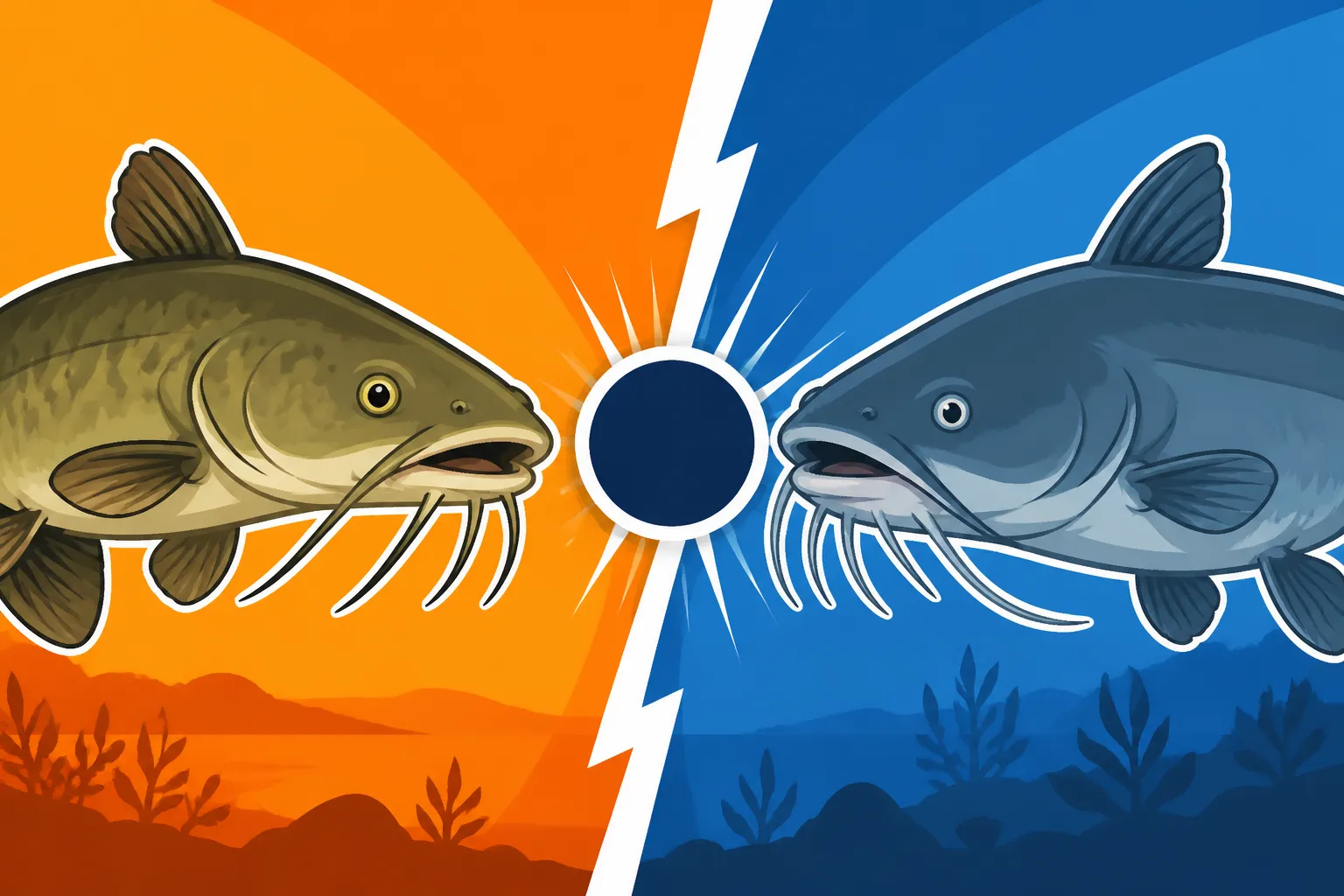
When you've got a channel cat in hand, look for a few tell-tale signs. First, their coloration can vary quite a bit depending on the water they live in, but they often have a greenish-grey to silvery body with a lighter belly. The most iconic feature, especially on younger and medium-sized channel cats, is the presence of small, irregular black spots along their sides. As they get older and larger, these spots can fade significantly, which is where some of the confusion with blue cats comes in.
Another key feature is their body shape. Channel cats tend to have a more slender, elongated body compared to the bulkier blue cat. Their head is usually smaller and more rounded in profile. Their tail fin is also quite distinct: it's typically deeply forked, almost like a swallow's tail. This forked tail is a classic indicator. Finally, feel their skin – it's smooth, as you'd expect from a catfish, but they also have a relatively small head in proportion to their body. If you want a deeper dive, check out our Texas Channel Catfish Identification Guide.
Habitat and Dietary Preferences of Channels
Channel catfish are incredibly adaptable, which is why they're so widely distributed across Texas. You'll find them thriving in a wide range of freshwater environments, from slow-moving rivers and streams to ponds, lakes, and large reservoirs. They prefer areas with some current or moving water, but they're not exclusively river dwellers. They often hang around submerged cover like brush piles, logs, or weed beds, especially during the day.
When it comes to dinner, channel cats are opportunistic scavengers and predators. They'll eat just about anything! Their diet includes insects, crustaceans, snails, smaller fish, and even plant matter. This makes them relatively easy to catch, responding well to a variety of baits. For a good idea of what works, consider reading Best Catfish Bait for Texas Lakes. They're known to readily take prepared baits, chicken liver, cut bait, and even hot dogs. If you're wondering How to Catch Catfish in Texas, channels are often the target of those methods.
Decoding the Blue Catfish: Key Identification Markers
Now, let's turn our attention to the blue catfish, the true giants of Texas's freshwater systems. These impressive fish are renowned for their massive size and powerful fights, making them a bucket-list species for many anglers.
Recognizing the Mighty Blue Catfish
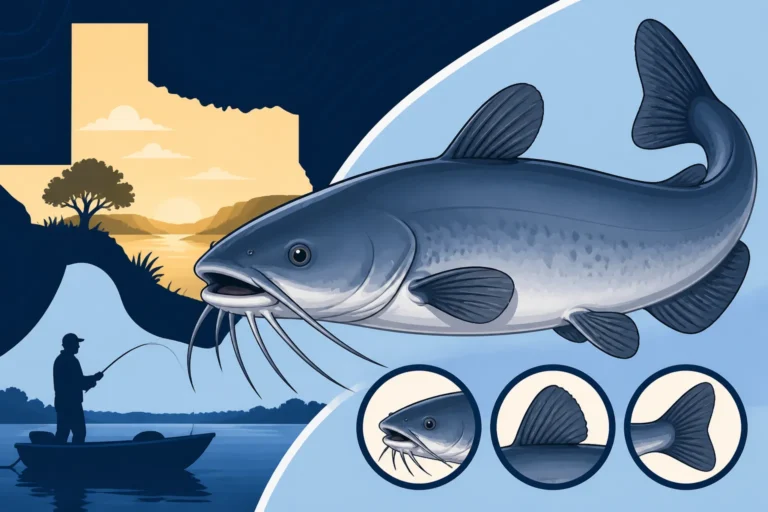
When you encounter a blue cat, the first thing you might notice is their sheer size and robust build. They are generally more heavily built and stockier than channel cats, with a broader, flatter head. Their coloration is usually a uniform bluish-gray or slate gray on their back and sides, fading to a white belly. Critically, blue catfish almost never have spots on their body, even when they're young. If you see spots, you're almost certainly looking at a channel cat.
Their head is notably larger and often described as having a more angular profile than a channel cat's. Similar to channels, their tail fin is also forked, but usually less deeply than a channel cat's. Think of it as a shallower fork. This can sometimes be a point of confusion, which is why the anal fin count becomes so important. You can learn more about these impressive fish in our Texas Blue Catfish Identification Guide.
Blues' Preferred Haunts and Munchies
Blue catfish are primarily big-river and large-reservoir fish. They prefer deeper, faster-moving water, often congregating in main river channels, beneath dam outflows, or in the deep basins of large lakes like Lake Texoma or Lake Livingston. They like strong currents and areas with abundant baitfish. While you might find them shallower at times, especially when actively feeding, their preferred environment is generally more open and expansive than that of channel cats.
Unlike channel cats, which are more omnivorous, blue catfish are primarily piscivorous, meaning they largely prey on other fish. Their diet consists heavily of shad, carp, drum, and other baitfish. They are powerful predators and will actively hunt. This dietary preference means that cut bait – pieces of fresh or frozen shad, carp, or perch – is often the most effective bait for them. If you're aiming for a trophy blue, knowing How big do blue catfish get in Texas is inspiring, and using big chunks of fresh cut bait is often the ticket.
The Fin-tastic Anal Fin: Your Best Bet for ID
If you walk away from this article remembering only one thing, make it this: the anal fin is your most reliable differentiator between channel and blue catfish. While spots and body shape can be ambiguous, especially with varying conditions and fish sizes, the anal fin offers a definitive count.
Counting the Rays: The Definitive Method
The anal fin is the single fin located on the underside of the fish, behind the anus and before the tail fin. To identify your catch, gently spread this fin out and count the individual fin rays (the bony spines that support the fin).
Here's the key:
- Channel Catfish: Will typically have a rounded anal fin with 24-29 fin rays.
- Blue Catfish: Will typically have a straight-edged anal fin with 30-36 (or more) fin rays.
This count is consistent across all sizes of fish and is the gold standard for identification. It takes a little practice to spread the fin and count accurately, but once you get the hang of it, you'll be able to tell the difference quickly. It's a fundamental skill for anyone interested in the Texas Catfish Species Guide.
Visual Cues on the Anal Fin
Even without a precise count, you can often get a good idea just by looking at the shape of the anal fin. The channel catfish's anal fin will appear more rounded or convex along its edge, like a gentle curve. In contrast, the blue catfish's anal fin will have a much straighter, almost flat edge. This is because it contains more rays and is proportionally longer, giving it that distinct straight-edged look.
When holding the fish, gently extend the anal fin and observe its overall shape. Does it look more like a smooth, slightly rounded fan? Or does it look like a longer, squarer blade? That visual difference alone can often tell you what you've got, even if you don't take the time for a precise count.
Beyond Looks: Size, Mouth, and Habitat Clues
While the anal fin is the ultimate decider, other characteristics can provide strong clues, especially when combined with your observation of the fin. These secondary indicators often confirm what the anal fin has already told you.
Mouth Position and Head Shape
Another subtle but helpful difference lies in their mouth and head.
- Channel Catfish: Generally have a smaller, sub-terminal mouth, meaning it's slightly underneath the snout, almost as if their upper jaw slightly overhangs the lower. Their head is typically narrower and more conical.
- Blue Catfish: Possess a larger, terminal mouth, meaning the upper and lower jaws are of equal length, and the mouth opens directly forward. Their head is usually broader and flatter, giving them a more robust, "bulldog" appearance.
If you're looking to catch record-breaking fish, understanding these nuances can help. For instance, knowing What is the Texas record blue catfish was caught on will usually point to cut bait on a large hook, reflecting their predatory nature and big mouth.
Growth Potential and Record-Breaking Sizes
Here's where the two species truly diverge in angler's lore.
- Channel Catfish: While respectable, channel cats typically don't reach the gargantuan sizes of blues. A very large channel cat might push into the 20-30 pound range, with the state record being significantly higher but still well below that of a blue cat. Most channels you catch will be in the 1-10 pound range. For specific numbers, you might look up How big do channel catfish get in Texas.
- Blue Catfish: These are the true heavyweights. Blue catfish are known for growing absolutely massive, often exceeding 50 pounds, with many caught over 100 pounds. The Texas state record blue catfish weighs in at a truly astonishing amount, a testament to their growth potential. If you're dreaming of a true trophy, blues are generally your target. This immense size difference is why they're often treated differently in regulations and fishing strategies.
Where You're Likely to Find Each Species
Knowing where you caught the fish can also be a big clue.
- If you're fishing a smaller, more stagnant pond or a slower-moving creek with lots of cover, your odds of catching a channel catfish are much higher. They prefer those types of environments.
- If you're drifting cut bait in the main river channel of a vast reservoir like Lake Fork, or fishing below a dam on the Red River, you're much more likely to hook into a big blue catfish. They dominate those deeper, more current-heavy, open-water habitats.
Of course, there's always overlap! You can find channel cats in large rivers and blues in some shallower spots, but these general preferences hold true. Knowing Where to catch alligator gar in Texas is about knowing their preferred habitat, and the same applies to catfish.
Quick Reference Guide: Channel vs. Blue Catfish
To help you keep all these differences straight, here's a handy table summarizing the key identification points. Keep this in mind next time you're debating your catch!
| Feature | Channel Catfish | Blue Catfish |
|---|---|---|
| Spots | Small, irregular black spots (especially young) | No spots (uniform coloration) |
| Coloration | Greenish-grey to silvery, lighter belly | Bluish-gray to slate gray, white belly |
| Body Shape | More slender, elongated | Stockier, robust, heavily built |
| Head Shape | Smaller, more rounded, conical | Broader, flatter, more angular |
| Mouth | Sub-terminal (upper jaw slightly overhangs) | Terminal (jaws equal, mouth forward) |
| Tail Fin | Deeply forked | Moderately to shallowly forked |
| Anal Fin Rays | 24-29 rays | 30-36+ rays |
| Anal Fin Shape | Rounded/convex edge | Straight/flat edge |
| Average Size | 1-10 lbs (larger are less common) | 10-50+ lbs (potential for 100+ lbs) |
| Typical Habitat | Ponds, lakes, slow rivers, abundant cover | Large rivers, deep reservoirs, strong current |
Armed with this information, you'll be much better equipped to identify your next catfish catch in Texas. Whether you're chasing the widespread channel cats or the massive blues, knowing your fish enhances the entire angling experience. Happy fishing, y'all!
Disclaimer
This article is for general informational purposes only and does not constitute professional advice. Laws, prices and regulations vary by location and change over time. Consult a qualified professional for guidance on your specific situation.