Best lures for speckled trout in winter
There's a special kind of challenge that comes with chasing speckled trout in Texas during the winter. You've probably felt it – those frustrating days when the water's cold, the wind bites, and the fish seem to have vanished, leaving you wondering if your go-to lures just aren't cutting it. It's a different game than the frenzied bite of spring or fall, requiring a shift in strategy and, most importantly, the right lures. This comprehensive guide is here to shed light on exactly what works when the mercury drops, helping you understand speckled trout behavior and choose the best baits to put more fish in your cooler during the colder months.
Understanding Winter Speckled Trout Behavior in Texas
Winter fishing for speckled trout along the Texas coast isn't just about bundling up; it's about understanding how these magnificent fish completely change their routines. Gone are the days of aggressive chases in shallow flats. Winter demands a more nuanced approach, largely because the trout themselves are operating on a different biological clock.
Why Winter Trout are Different
When the water temperatures in our bays dip, everything slows down for speckled trout. Their metabolism, much like ours on a chilly morning, becomes sluggish. This means they aren't expending a lot of energy, and certainly not chasing baits with the same gusto they would in warmer months. They're trying to conserve energy, focusing on survival rather than prolonged pursuits. This change often leads to a lot of frustration for anglers who haven't adjusted their tactics. You might be throwing your favorite topwater or fast-moving crankbait, only to be met with deafening silence, simply because the trout aren't wired to react to that kind of presentation in the cold.
Beyond the metabolic shift, speckled trout also tend to alter their schooling behavior and habitat preferences significantly in winter. Instead of being spread out across vast shallow flats, they'll often stack up in tighter, more concentrated schools. This makes finding them a challenge, but once you do, the action can be phenomenal. Think of it like a crowded bus stop on a cold day – everyone huddles together for warmth and security. These schools seek out specific areas where conditions are more stable and food might be concentrated, which brings us to their preferred winter haunts.
Key Winter Habitat and Feeding Patterns
During the colder months, speckled trout migrate from the expansive, exposed shallow flats to deeper, more stable environments within the bay system. This typically means deep channels, bayous, guts, and the deeper bends of the Intracoastal Waterway (ICW). These areas offer several advantages: deeper water tends to retain heat better than shallow water, providing a more stable temperature. The currents in these channels can also concentrate baitfish, making it easier for sluggish trout to ambush a meal. Oyster reefs, especially those adjacent to deeper channels or protected shorelines, can also be prime locations, offering both structure and a buffet of smaller organisms.
Their feeding patterns also become much more selective and often confined to shorter windows. Instead of feeding throughout the day, winter trout might only be active for an hour or two, typically during the warmest part of the day, often coinciding with a strong outgoing tide that can wash bait out of back lakes and into the deeper channels. This means you need to be precise with your timing and presentation. If you're not in the right spot, with the right lure, at the right time, you might miss your opportunity entirely. Understanding these shifts is the first step to choosing the best lures and techniques. For more on year-round patterns, check out our guide on the Best Time of Year to Fish in Texas.
Top Lures for Winter Speckled Trout – The Cold Water MVPs
Once you understand why winter trout behave differently, the choice of lures becomes much clearer. We're looking for presentations that mimic a slow, easy meal – something that requires minimal effort for a cold, lethargic fish to ambush. Forget the flashy, fast-moving stuff for now; subtlety is your best friend.
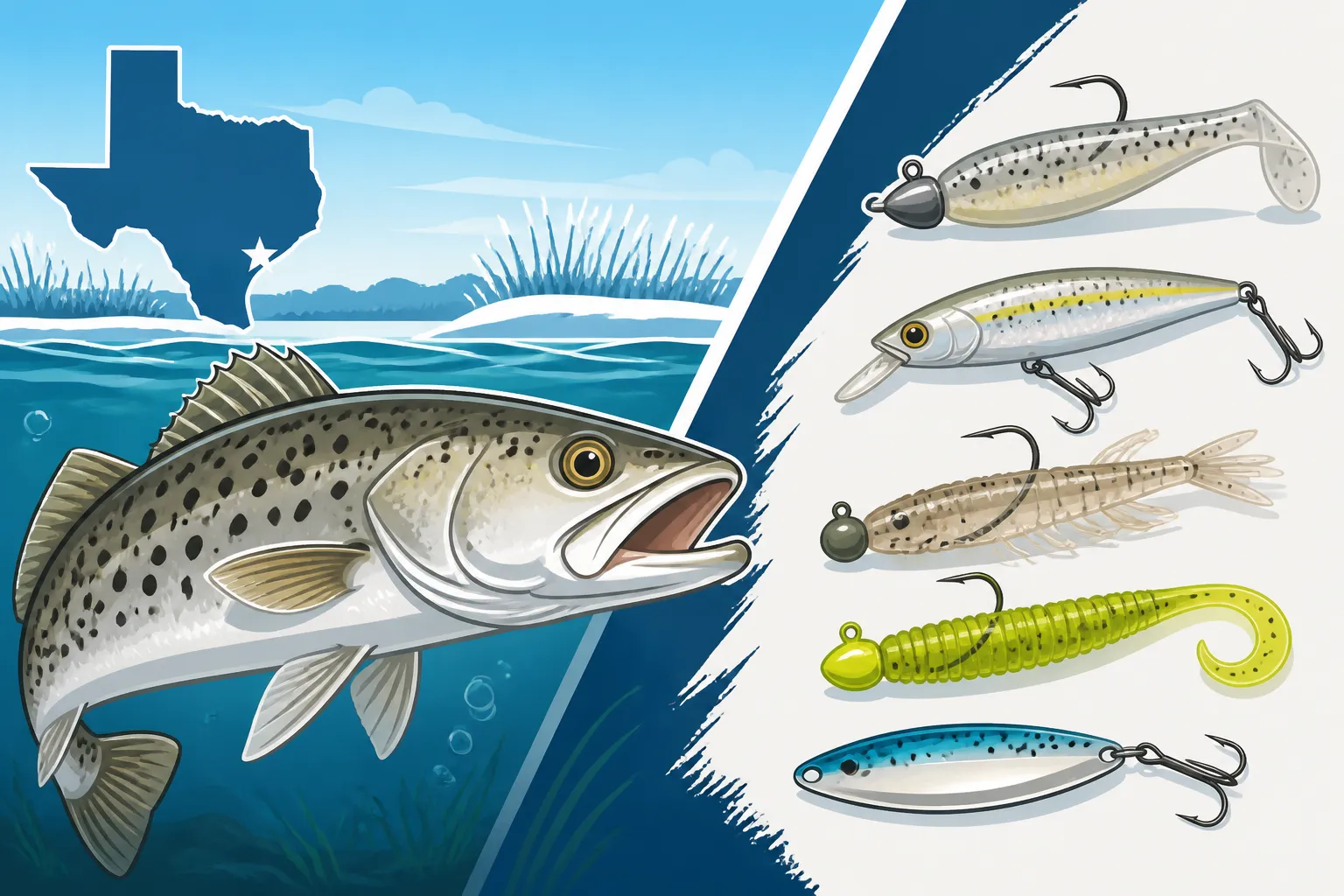
Soft Plastics: The Uncontested Champion
If there's one lure type that shines brightest for winter speckled trout, it's soft plastics. Their versatility, subtle action, and ability to be presented slowly make them absolutely deadly. You can find a huge variety of these, often with great deals available on Amazon, which makes stocking up a breeze.
- Paddle Tails: These are probably the most popular for a reason. Brands like Down South Lures, Z-Man (with their Elaztech material for durability and buoyancy), and Saltwater Assassin make fantastic paddle tails. In winter, opt for sizes ranging from 2.75 to 4 inches. The key is to pair them with a light jig head, typically 1/8 oz to 1/4 oz, allowing for a slow, controlled sink and retrieve. The subtle thumping action of the paddle tail is often just enough to entice a strike without overwhelming a lethargic trout. Retrieve these with a slow, steady reel, perhaps adding a small twitch every few seconds, making them just barely move off the bottom.
- Slow-Sinking Soft Plastics / Scented Worms: Think "twitch bait" in soft plastic form. MirrOlure Lil' Johns or similar slim-profile, soft plastic "worm" baits are phenomenal. These often don't have a lot of inherent action, relying instead on your rod tip to impart a subtle twitch-and-pause retrieve. They mimic a stunned or dying baitfish perfectly, just fluttering slowly down in the water column. The advantage of these is that they stay in the strike zone longer, giving a slow-moving trout ample time to decide to strike.
- Color Selection: This can be debated endlessly, but a few go-to colors tend to produce in winter. Natural baitfish colors like pearl, ghost, or light grey are excellent in clear water. When the water has a bit more stain, or on overcast days, darker colors like plum, root beer, or even dark green can be very effective. Sometimes, a touch of chartreuse or purple can provide just enough contrast to grab attention without being too aggressive. Experimentation is always key, but these are great starting points. Remember, the goal is often less about flash and more about a realistic profile and slow, deliberate movement.
Suspending Twitchbaits: Mimicking Stunned Baitfish
When trout are suspending off the bottom or you're fishing areas with a lot of shell, suspending twitchbaits become absolutely essential. These hard baits are designed to sink to a certain depth and then, crucially, suspend or very slowly sink when you pause your retrieve. This "hang time" is exactly what a cold-water trout needs.
- Why Suspending Action is Crucial: Imagine a cold, hungry trout seeing a baitfish struggling to swim, then just stopping, almost dead in the water. That's what a suspending twitchbait imitates. A trout doesn't have to chase it down; it just has to move a short distance to engulf it. This makes it an irresistible, easy meal. Brands like MirrOlure (the 52M or the popular MirrOdine series), Paul Brown's Fat Boy, or even a Rapala Subwalk are fantastic choices.
- Retrieval Technique: The retrieve is absolutely critical here. Cast it out, let it sink to its working depth, and then begin a cadence of "twitch, pause, twitch, twitch, LONG PAUSE." That long pause is often when the strike occurs. It might be a subtle tap, or your line might just feel heavy. Pay close attention. The colder the water, the longer your pause should generally be.
- Size and Color Considerations: In winter, smaller profiles, typically 2.5 to 3.5 inches, often work best. Colors should again lean towards natural baitfish imitations – silver sides, white bellies, blue or green backs. Clear or translucent patterns can also be very effective, especially on bright, clear days. You can often find a good array of these specialized lures by searching on Amazon, making it easy to compare and pick the right ones for your tackle box.
Scented Baits and Live Shrimp (When All Else Fails)
Sometimes, no matter how good your soft plastic or twitchbait presentation is, the trout just aren't biting. This is where scent and natural bait can make all the difference.
- Importance of Scent: In cold water, a trout's lateral line and sense of smell become even more important for locating food, especially if visibility is reduced (which can happen with winter rains or strong winds). Scented soft plastics, like Berkley Gulp! shrimp or swimming mullet, can provide that extra olfactory appeal. The scent trail can draw in lethargic trout that might not have noticed a purely visual presentation. These can be fished just like regular soft plastics, but the added scent provides an undeniable edge.
- Live Shrimp as the Ultimate Fallback: Let's be honest, sometimes nothing beats the real thing. Live shrimp, when available and lively, is often the ultimate cold-water fallback. Rigged on a light jig head, a popping cork (if conditions allow for a slower retrieve), or even free-lined with a small split shot, a live shrimp is almost impossible for a trout to ignore. The natural movement and scent are unparalleled. The trick is keeping them alive in cold weather. A good insulated livewell or a portable aerated bait bucket is essential. Just remember to check your Texas Saltwater Fishing Regulations for any specific rules regarding bait.
| Lure Type | Best Use Case | Key Characteristics | Retrieval Style | Pros | Cons |
|---|---|---|---|---|---|
| Soft Plastics | General purpose, especially paddle tails | Realistic profile, subtle action, versatile sizes/colors | Slow, steady retrieve with occasional twitches, bottom contact | Highly versatile, cost-effective, great for slow bites | Requires angler to impart action, can be easily torn by fish |
| Suspending Twitchbaits | When trout are suspended or less active | Sinks to depth, "hangs" motionless on pause | Twitch, twitch, long pause, repeat | Irresistible to lethargic fish, stays in strike zone longer | More expensive than soft plastics, specific action required |
| Scented Baits | Low visibility, very finicky fish | Emits scent trail, often realistic shapes | Similar to soft plastics, slow retrieves | Attracts fish by smell, good for slow-moving trout, very effective | Can dry out if not sealed, scent can wash off over time |
| Live Shrimp | When all else fails, ultimate natural bait | Natural movement, scent, taste | Free-lined, under popping cork, light jig head | Unmatched natural appeal, often triggers bites when nothing else will | Keeping them alive is a challenge, can be expensive, easily stolen by small fish |
Essential Techniques for Presenting Winter Trout Lures
Having the right lure is only half the battle. How you present it in the water is equally, if not more, important, especially when you're dealing with sluggish winter speckled trout. Forget your fast-paced summer retrieves; winter demands patience and precision.
The Art of the Slow Retrieve
This cannot be stressed enough: slow down. When water temperatures drop, trout's metabolism slows significantly, meaning they are less likely to chase a fast-moving bait. Your retrieve should reflect this lethargy. A "dead stick" retrieve, where you cast out your soft plastic or suspending twitchbait, let it sink, and then retrieve it with long pauses and minimal movement, is often incredibly effective. Think of it as bumping your lure along the bottom, making it appear like an easy, injured meal.
For soft plastics, a subtle lift of the rod tip, followed by allowing the bait to sink back on a semi-slack line, can trigger strikes. The slack line is crucial because it allows the bait to fall naturally and gives a striking trout less resistance. Often, a bite will just feel like a slight "thump" or added weight on your line rather than an aggressive yank. For suspending twitchbaits, the long pause after a couple of twitches is usually when the trout commits. It gives them time to eye the lure and decide it's worth the minimal effort to eat. Mastering the slow retrieve takes practice, but it's a game-changer for How to Catch Speckled Trout in Winter.
Locating the Right Depth and Structure
Finding winter trout often means finding deeper water. While you might fish 2-4 feet of water in spring or fall, winter typically sends trout to channels, guts, and bayous that are 6-12 feet deep, or even deeper in some areas, especially in places like Galveston Bay Fishing Spots. Look for abrupt depth changes, areas with current breaks, or the edges of oyster reefs that drop off into deeper channels. These structures offer protection from strong currents and a place for bait to congregate.
Using a fish finder is incredibly helpful for identifying these deeper structures and bait concentrations. While we often think of them for bass, knowing how to read a fish finder for bass can easily be adapted to pinpoint trout schools and baitfish in saltwater. If you don't have electronics, rely on bathymetric maps or simply fan-cast an area, paying close attention to when your lure hits bottom or encounters structure. Once you catch a fish, make a mental note – or drop a waypoint on your GPS – of the exact depth and spot, because where there's one winter trout, there are usually many more.
Adapting to Conditions: Water Clarity and Wind
Winter conditions can be highly variable in Texas, and adapting to water clarity and wind is essential. On bright, calm days with clear water, more natural baitfish colors and translucent patterns tend to work best. Trout have excellent eyesight in clear conditions and might be spooked by overly vibrant colors. In these situations, longer leaders (20-30 inches of fluorocarbon) become important to keep your main line from spooking fish.
Conversely, if the water is murky due to recent rains or strong winds, darker, more contrasting colors like plum, root beer, or even black/chartreuse can be more effective. The darker profile stands out better against the stained water. Wind also plays a huge role. On windy days, you might need to increase your jig head weight slightly (e.g., from 1/8 oz to 1/4 oz) to maintain bottom contact and feel those subtle bites. The wind can make precise casting and subtle retrieve challenging, but a slightly heavier jig head helps cut through it and keeps your lure in the strike zone. Remember, your goal is always to present an easy meal, no matter what Mother Nature throws at you.
Gear Considerations for Winter Speckled Trout Fishing
While the lures and techniques are paramount, having the right gear can significantly enhance your winter speckled trout success. Cold-weather fishing often means more subtle bites, requiring heightened sensitivity and a bit of comfort to keep you focused.
Rods, Reels, and Line for Sensitivity
When targeting winter speckled trout, sensitivity is king. You're looking for light bites, not aggressive takes, so your rod and reel setup should be geared towards feeling everything your lure is doing.
- Rods: Opt for a light to medium-light action rod, typically 6'6" to 7'6" in length, with a fast or extra-fast tip. This flexible tip allows you to cast lighter lures and detect the most subtle taps, while the backbone provides enough power to fight a strong speckled trout. Graphite rods are generally preferred over fiberglass for their superior sensitivity. While Best Saltwater Rods for Texas Redfish might suggest heavier gear, for speckled trout, you want something more finesse-oriented.
- Reels: A quality spinning reel in the 2000 to 3000 size range is perfect. Look for one with a smooth drag system and a lightweight feel. You'll be making many casts and retrieving slowly, so comfort and balance with your chosen rod are important.
- Line: Spool your reel with braided line, typically 10-15 lb test. Braid has almost zero stretch, offering incredible sensitivity for feeling those faint winter bites. The thinner diameter also allows for longer casts with lighter lures. Always tie a fluorocarbon leader (15-20 lb test, 2-3 feet long) to your braid using a strong knot like an FG or Alberto knot. Fluorocarbon is nearly invisible underwater, which can be crucial in clear winter conditions, and it provides abrasion resistance against oyster shells and teeth.
Cold Weather Comfort and Safety
Spending hours on the water in winter means battling the elements. Prioritizing your comfort and safety isn't just about being cozy; it's about maintaining focus and avoiding dangerous situations.
- Warm Clothing: Layering is key. Start with a moisture-wicking base layer, add insulating layers (fleece or down), and top it with a waterproof and windproof outer shell. Don't forget a warm hat (you lose a lot of heat through your head!), insulated gloves, and waterproof boots. Hand warmers can be a lifesaver on particularly frigid mornings.
- Safety Tips: Cold water presents unique hazards. Always wear a PFD (Personal Flotation Device), even if you're an experienced boater. Hypothermia can set in quickly if you fall overboard. Let someone know your float plan – where you're going and when you expect to return. Carry a fully charged phone in a waterproof case, and consider bringing a marine radio for emergencies. Remember that boat ramps can be icy, so take extra care when launching and retrieving. While it's tempting to think about Best sun protection clothing for Texas summer fishing year-round, winter requires a different approach to staying safe and warm.
Understanding Texas Speckled Trout Bag Limits and Regulations
Before you even hit the water, it's crucial to be familiar with the local fishing laws. Regulations are in place to ensure the health of our fisheries for future generations, and penalties for non-compliance can be steep.
- License Requirements: Always ensure you have a valid Texas fishing license with the appropriate saltwater endorsement. You can find all the details on Texas Fishing License Requirements Explained and what the Texas Saltwater Endorsement Explained entails.
- Bag and Length Limits: Speckled trout have specific bag and length limits that can vary by region or even change seasonally. Always check the most current Texas Speckled Trout Bag Limits before you go. This information is typically available from the Texas Parks and Wildlife Department (TPWD) website or their outdoor annual. Knowing these limits ensures you're fishing legally and contributing to responsible angling practices. Don't forget that Texas Freshwater Fishing Regulations and Texas Saltwater Fishing Regulations can differ significantly, so be sure you're looking at the right set of rules for your target species and location. Being prepared with this knowledge is just as important as having the right lure in your tackle box.
Disclaimer
This article is for general informational purposes only and does not constitute professional advice. Laws, prices and regulations vary by location and change over time. Consult a qualified professional for guidance on your specific situation.