How to rig cut bait for catfish
Trying to catch catfish in Texas without the right bait and rigging can feel like an exercise in futility, especially when you know those big whiskered beauties are lurking in your favorite lake or river. You've probably tried various concoctions, hoping for a bite, only to be met with silence. This guide is all about cutting through that frustration and teaching you exactly how to rig cut bait for catfish, giving you the knowledge and confidence to land more fish.
Understanding Why Cut Bait Excels for Texas Catfish
When it comes to consistently catching catfish in Texas, especially those trophy-sized blues and flatheads, nothing quite beats a properly presented piece of cut bait. It's not just a tactic; it's practically a science rooted in understanding how these incredible fish hunt and feed.
The Olfactory Advantage
Catfish are primarily nocturnal and often inhabit murky, low-visibility waters, which means they don't rely on sight as much as some other predatory fish. Instead, their world is dominated by scent and vibration. This is where cut bait truly shines. When you cut a baitfish, you're essentially creating a wound that releases a powerful, natural scent trail directly into the water. This trail is like a dinner bell ringing loudly for catfish, calling them in from a considerable distance.
Imagine a big blue catfish cruising the bottom of Lake Ray Roberts, its barbels constantly sensing the environment. Suddenly, a plume of fresh blood and fish oils hits its olfactory receptors. This isn't just a subtle hint; it's a potent, irresistible signal that tells the catfish there's an easy meal nearby. Different fish species, when cut, release varying scent profiles. Oily fish like shad or carp create a wider, more persistent scent cloud, while tougher-fleshed fish might release a more concentrated, yet still effective, aroma. This consistent emanation of scent is why cut bait outperforms live bait in many situations for these bottom-feeding scavengers.
Mimicking Natural Prey
A well-rigged piece of cut bait isn't just a smell; it also presents a visual cue that mimics a natural food source: a distressed, injured, or dead fish. Catfish are opportunistic feeders, always on the lookout for an easy meal. They aren't going to turn down a free lunch that looks, smells, and feels like something that's already part of their diet.
Consider a chunk of fresh shad lying on the bottom near a channel drop-off in Lake Fork. To a passing flathead, this isn't some random object; it looks exactly like a small fish that's met its end, perhaps caught in the current or picked off by another predator. The natural texture and appearance, even when motionless, are highly appealing. In Texas, catfish regularly prey on a variety of local forage fish like shad, sunfish, and small carp. By using these same species as cut bait, you're directly tapping into their natural feeding instincts. It's all about presenting something that screams "easy meal" in both scent and appearance, making it an irresistible target for a hungry catfish.
Versatility Across Species
One of the beautiful things about cut bait is its universal appeal to all three major species of catfish you'll find in Texas: channel catfish, blue catfish, and flathead catfish. However, understanding their individual preferences can significantly improve your success.
- Channel Catfish: These guys are often less picky. Smaller chunks of oily fish like shad or even pieces of hot dogs or shrimp can work wonders. They have a keen sense of smell and will readily investigate smaller, easily digestible morsels. If you're targeting numbers, small, fresh cut bait is often the ticket for channels. You can learn more about them with our Texas Channel Catfish Identification Guide.
- Blue Catfish: The true titans of Texas waters, blue catfish are notorious for their voracious appetites, especially for fresh, oily cut bait. Larger chunks, whole shad, or substantial fillets of carp are prime choices for attracting these giants. They often hunt in schools, so once you find one, you'll likely find more. For targeting these big boys, check out our guide on How to catch blue catfish in Texas lakes. Our Texas Blue Catfish Identification Guide can also help you distinguish them.
- Flathead Catfish: Flatheads are a bit different. While they will eat cut bait, they generally prefer live prey. However, a fresh piece of cut bait, particularly a large fillet or a whole head of a sturdy baitfish like a perch or carp, can still be highly effective, especially if it's placed in their known ambush points. The key for flatheads is absolute freshness; they tend to be less interested in bait that's been sitting around for too long. If you're trying to identify them, our Texas Flathead Catfish Identification Guide is a great resource.
The bottom line is, while cut bait is a fantastic all-around option, tailoring your bait choice and size to your target species will always yield better results.
Choosing and Preparing the Perfect Cut Bait
Selecting and preparing your cut bait properly is just as important as the rigging itself. The freshest, most appropriately sized bait will always be more attractive to a hungry catfish. This isn't a "one size fits all" endeavor; it's about understanding the nuances of what makes a particular piece of bait irresistible.
Best Baitfish for Texas Catfish
When you're out on the water in Texas, the best cut bait often comes from the very waters you're fishing. Using local forage fish ensures your bait smells and tastes familiar to the catfish you're targeting.
- Shad (Threadfin and Gizzard): These are absolute champions for cut bait. They are incredibly oily, releasing a strong, irresistible scent trail. Threadfin shad are smaller, great for channel cats and smaller blue cat pieces. Gizzard shad are larger, perfect for big blue catfish fillets or steaks. They're abundant in most Texas reservoirs and rivers, making them easy to catch with a cast net. The oil content means they bleed and scent the water beautifully.
- Perch (Sunfish, Bluegill, Tilapia): While some anglers prefer to use these live for flatheads, their tough flesh and good scent make them excellent cut bait, especially for channel and smaller blue catfish. Cut into chunks or fillets, they stay on the hook well and release a consistent scent. Bluegill, for example, are plentiful and easy to catch in most Texas ponds and lakes.
- Carp and Buffalo: Don't underestimate these "rough fish." Common carp and smallmouth buffalo are incredibly oily and have a strong, distinct scent that big blue catfish absolutely love. A large fillet or even a steak-sized chunk of carp can be a magnet for trophy blues, especially in lakes like Lake Livingston or Lake Tawakoni where they thrive. The bloodline along the lateral line of carp is particularly potent when cut.
- Other options: Some anglers also have success with smaller drum, suckerfish, or even commercially available frozen baits like mackerel, although fresh local bait is usually superior. For a broader look at bait options, check out our Best Bait and Lures for Texas Fishing guide.
Remember, the fresher the bait, the better. Freshly caught baitfish that are immediately cut will outperform frozen or thawed bait nearly every time because their natural oils and blood are still potent.
The Art of Cutting and Portioning
Once you have your baitfish, how you cut it can significantly impact your success. There's no single "right" way; it depends on the size of your baitfish, your target species, and the presentation you want.
- Fillets: For larger baitfish like gizzard shad, carp, or larger perch, filleting them and cutting the fillets into strips or chunks is very effective. This exposes a lot of meat and blood, creating a strong scent. You can choose to leave the skin on for durability or remove it. Leaving the skin on often helps the bait stay on the hook better and provides a more natural profile.
- Chunks: For medium-sized baitfish like threadfin shad or smaller sunfish, simply cutting the fish into 1-2 inch chunks, often cross-sectionally, works great. This provides a compact, potent piece of bait with both skin and exposed flesh. Aim for pieces that are small enough for your target catfish to swallow easily but large enough to stay on the hook through a cast.
- Steaks: For very large baitfish, especially carp or buffalo intended for trophy blue catfish, a "steak" cut involves taking a cross-section of the fish, often 1-2 inches thick, leaving the backbone and ribs intact. This makes for a very durable, incredibly scent-rich bait that can withstand strong currents and the attention of smaller fish until a big cat finds it.
When cutting, always use a sharp bait knife. Clean cuts release scent more effectively than ragged tears. The goal is to maximize exposed surface area for scent, while maintaining enough structural integrity for the bait to stay on the hook.
Storage and Preservation Tips
Keeping your cut bait fresh and potent, especially under the scorching Texas sun, is crucial. Degraded bait loses its appeal quickly.
- On Ice Immediately: The moment you catch your baitfish, get it on ice. A dedicated bait cooler filled with ice is indispensable. This immediately stops decomposition and preserves freshness.
- Separate from Food: Never store bait with your food or drinks. Keep a separate cooler for bait only to prevent contamination and odors.
- Avoid Waterlogging: While on ice, try to keep the bait from sitting in melted ice water for too long. Place bait in sealed bags or on a rack above the ice to prevent it from becoming waterlogged, which can dilute its scent.
- Vacuum Sealing for Future Use: If you're preparing bait at home for a future trip, vacuum sealing individual portions is an excellent method. It minimizes freezer burn and preserves the bait's freshness and scent for weeks or even months. Just thaw thoroughly before use.
- "Brining" (Optional): Some anglers like to "brine" their cut bait in a saltwater solution for a few hours or overnight. This toughens the meat, helping it stay on the hook longer, and can sometimes enhance the scent. However, for maximum natural potency, fresh-cut and directly rigged is often preferred.
By paying attention to these details, you'll ensure your cut bait remains at its peak effectiveness, drawing in more catfish.
Rigging Techniques for Maximum Catfish Success
Once you have your perfectly prepared cut bait, the next step is to rig it correctly. The right rig ensures your bait is presented naturally, stays put, and allows for a solid hookset when a catfish decides to bite. There are a few tried-and-true methods that Texas anglers rely on.
The Basic Bottom Rig (Carolina Rig Variation)
The basic bottom rig, often a variation of the Carolina Rig, is probably the most popular and effective way to present cut bait for catfish in Texas. It's simple, allows for a natural bait presentation, and keeps your bait on the bottom where catfish often feed.
Here's how to assemble it, step-by-step:
- Mainline: Start with your main fishing line coming from your reel. Many anglers prefer a strong monofilament or braided line for catfish.
- Sinker: Slide a lead weight onto your mainline. An egg sinker or a no-roll sinker are excellent choices. The weight should be heavy enough to hold your bait on the bottom, especially in current, but not so heavy that it's unwieldy. 1-4 ounces is a common range, depending on water depth and current.
- Bead (Optional but Recommended): After the sinker, add a small plastic or glass bead. This protects the knot that you're about to tie from the sinker repeatedly banging against it during casting or when fish are biting.
- Swivel: Tie a strong barrel swivel onto the mainline after the bead. This swivel serves two purposes: it acts as a "stop" for your sinker and bead, and it allows your leader to twist without twisting your mainline.
- Leader: To the other end of the swivel, tie a length of monofilament or fluorocarbon leader. A leader length of 12 to 24 inches is typical. Fluorocarbon is less visible underwater and more abrasion-resistant, which is great around submerged timber or rocky bottoms. The leader should generally be slightly lighter than your mainline, so if it snags, you only lose the hook and leader, not your entire rig.
- Hook: Finally, tie your hook to the end of your leader. For cut bait, large, strong circle hooks are highly recommended. Sizes ranging from 5/0 to 10/0 are common. Circle hooks are designed to hook fish in the corner of the mouth, leading to fewer gut-hooked fish and easier release if desired. While some anglers use J-hooks or even treble hooks, circle hooks are generally safer for the fish and often result in more secure hooksets, especially when using a rod holder.
This rig allows the catfish to pick up the bait and move off with it without immediately feeling the weight of the sinker, making them more likely to commit to the bite. It's a foundational rig that every Texas catfisherman should master. You might find similarities here with our guide on How to fish a Texas Carolina rig. While this article focuses on rod and reel, if you're interested in alternative methods, remember to review Texas Trotline and Jugline Rules before considering those techniques.
The Slip Sinker Rig
The slip sinker rig is very similar to the basic bottom rig, but it offers a crucial advantage: it allows the line to "slip" freely through the sinker, providing even less resistance to a biting fish. This is particularly effective for finicky catfish or in situations where you want the bait to settle naturally without being pulled taut by a fixed weight.
The setup is almost identical to the basic bottom rig, with one key difference: the sinker is not stopped by a swivel directly attached to the mainline. Instead, the sinker (usually an egg sinker) slides directly on the mainline. A small bobber stopper or a small split shot can be crimped onto the mainline a few feet above the hook to prevent the bait from drifting too far from the sinker. Alternatively, you can slide the sinker directly onto your mainline, then tie on your swivel, followed by your leader and hook. The line slides through the sinker when a fish pulls, making it feel less resistance.
When to use it: This rig is excellent when catfish are biting subtly, or when you want to let them run with the bait for a moment before setting the hook. It's often preferred by anglers who hold their rod, as they can feel the bite developing more clearly without the direct drag of a stationary weight.
Here's a quick comparison of key rigging components for common Texas catfishing scenarios:
| Component | Channel Catfish (Small-Medium) | Blue Catfish (Medium-Large) | Flathead Catfish (Large, Live Bait Focus) |
|---|---|---|---|
| Bait | Small cut shad, perch chunks, shrimp, chicken liver | Large cut shad, carp fillets, whole small perch | Live perch, sunfish (can use very fresh cut bait) |
| Hook Size | 2/0 – 5/0 Circle Hook | 6/0 – 10/0 Circle Hook | 7/0 – 12/0 Octopus or Circle Hook |
| Leader | 15-30 lb monofilament or fluorocarbon | 30-80 lb monofilament or fluorocarbon | 50-100 lb fluorocarbon (abrasion resistant) |
| Sinker | 1-3 oz Egg Sinker or No-Roll | 2-6 oz Egg Sinker, Pyramid, or No-Roll | 3-8 oz Pyramid or No-Roll (to hold live bait) |
| Mainline | 15-30 lb mono/braid | 30-80 lb mono/braid | 50-100 lb mono/braid |
| Rig Type | Basic Bottom Rig, Slip Sinker | Basic Bottom Rig, Slip Sinker | Carolina Rig (heavy), Santee Cooper Rig (for live) |
Specialty Rigs for Specific Situations
While bottom rigs are king, there are times when other rigging techniques can give you an edge, especially if the catfish aren't strictly on the bottom.
- Suspension Rig (Under a Bobber): This rig is fantastic when catfish are suspended in the water column, perhaps over a deep hump, or when you're fishing in shallower areas with submerged vegetation that might snag a bottom rig. Instead of a sinker that pulls the bait to the bottom, you use a float (bobber) to suspend your cut bait at a predetermined depth.
- Set it up with a slip bobber or a fixed float. The leader length will dictate your bait's depth. Add just enough weight (split shots or a small egg sinker) to get your bait down without submerging the bobber. This is great for fishing over ledges or when you see schools of baitfish, and thus catfish, higher in the water.
- Drift Rig: For river fishing or covering large areas in lakes, a drift rig can be deadly. This rig is designed to allow your cut bait to tumble naturally with the current, covering ground and mimicking a piece of food drifting downstream.
- This usually involves a lighter weight (or no weight at all) just above your leader and hook, letting the current do the work. The key is to use just enough weight to keep the bait near the bottom but still allow it to move. This can be as simple as a small split shot or a bullet weight. This is particularly effective on rivers like the Trinity or Brazos, where current often carries food for catfish.
By understanding these different rigging options, you can adapt your approach to whatever conditions Texas waters throw at you, ensuring your cut bait is always presented in the most appealing way possible.
Baiting the Hook and Presentation Strategies
You've chosen your bait, prepared it meticulously, and selected the perfect rig. Now comes the moment of truth: putting that enticing cut bait on your hook and getting it into the strike zone. This isn't just about sticking it on; it's about making it look appetizing and getting it to where the catfish are.
Hooking Your Cut Bait Effectively
Getting the cut bait securely on the hook while leaving enough of the hook point exposed for a solid set is crucial. A poorly hooked bait will either fly off during a cast or result in missed bites.
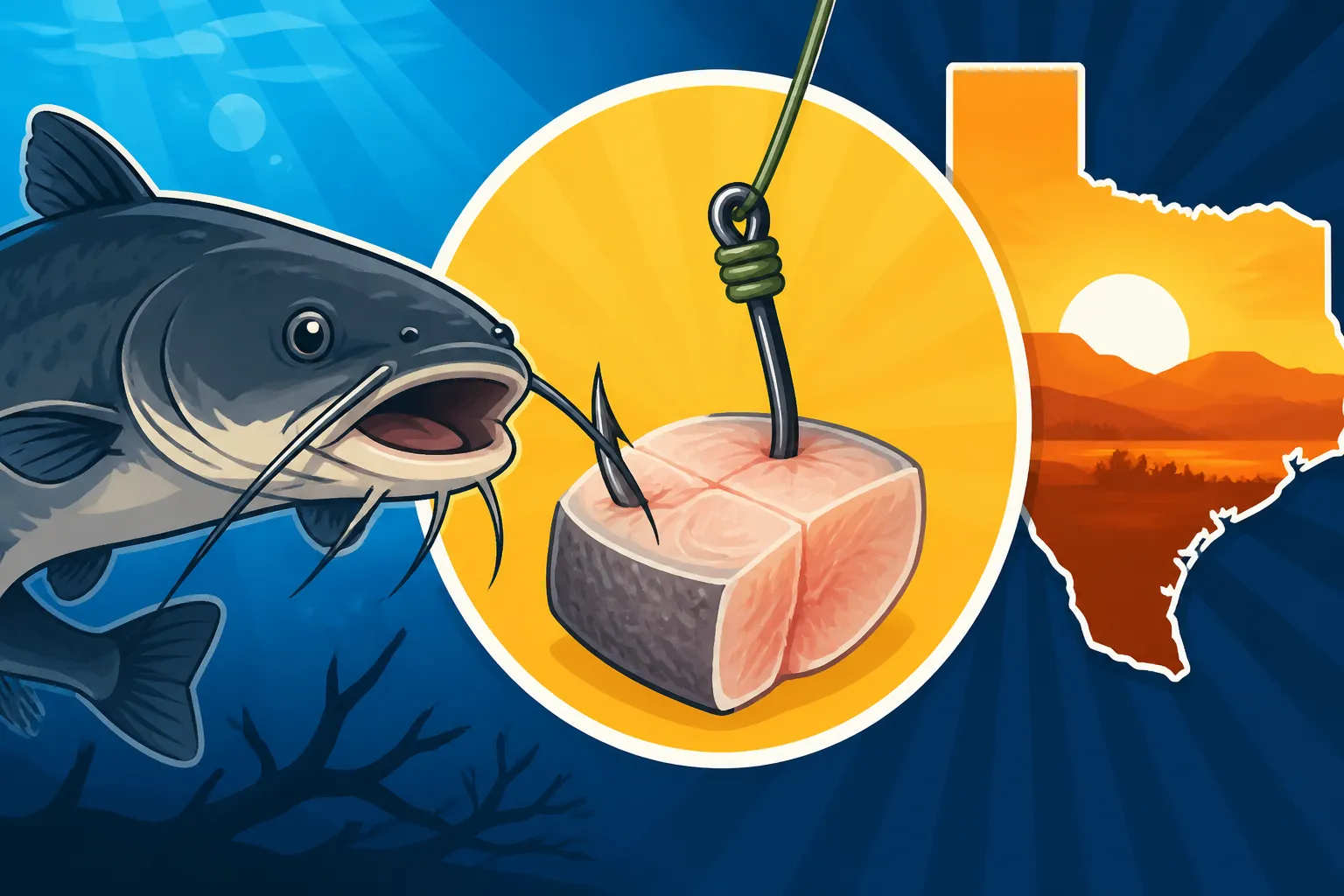
- Through the Skin and Flesh: For fillets or chunks, thread the hook through the skin side once or twice, then embed it deeply into the flesh. The goal is to hide most of the hook shank while ensuring the barb and point are completely exposed. The skin provides a sturdy anchor, preventing the bait from easily coming off.
- Multiple Hook Points (for larger pieces): For larger steak cuts or whole baitfish heads, you might need to use a larger single hook or even a secondary stinger hook to ensure enough exposed point. If using a single hook, try to pass it through a tougher, denser part of the bait – like near the backbone or through a fatty area.
- Keep it Natural: Avoid "balling up" the bait too much. You want it to look like a natural piece of food. A piece of cut bait that's stretched out a bit, allowing its edges to flutter slightly in the current, can be more attractive than a tightly balled-up piece.
- Check Hook Point: After baiting, always double-check that your hook point is clear and sharp. If it's buried, you'll have a hard time getting a good hookset. Catfish mouths are tough, and a clean, exposed hook point is vital.
Casting and Placement
Knowing where to cast your cut bait can be the difference between a slow day and a successful outing. Catfish, especially blues and flatheads, relate to structure and current.
- Fishing Structure: Catfish love structure. Look for humps, underwater points, creek channels, river bends, deep drop-offs, submerged timber, and rock piles. These areas provide ambush points, current breaks, and places where baitfish congregate. Use your fish finder to identify these key features. If you're bank fishing, look for visible changes in shoreline contour, deep pockets, or areas where current might create eddies. Our guide on How to catch catfish from the bank offers more tips.
- Current vs. Still Water: In rivers, cast upstream of your desired spot and let the current carry your bait down to it. The current will also help disseminate the scent trail. In lakes, where current is minimal, focus on casting near known catfish haunts, allowing your bait to settle on the bottom. If you're targeting those deep-water summer cats, consider our article on How deep do you fish for catfish in summer.
- Fan Casting: If you're unsure where the fish are, fan cast your baits, spreading them out in different directions and at different distances. This helps you cover more water and locate active fish. Once you get a bite, focus your subsequent casts on that productive zone.
Patience and When to Re-bait
Catfishing often requires patience, but it's not a passive activity. Knowing when to wait and when to re-bait is part of the strategy.
- The Waiting Game: Once your bait is in the water, resist the urge to constantly check it. Give the scent time to spread and for catfish to find it. Often, bites come in spurts. If you're not getting bites within 20-30 minutes in a known spot, consider moving or at least checking your bait.
- Signs of Bait Degradation: After some time, your cut bait will lose its potency. The scent will dissipate, and smaller fish might pick at it, leaving you with a bare hook or a tattered piece of flesh. If you pull in a rig and your bait is mushy, discolored, or gone, it's definitely time to re-bait. You want a fresh, potent scent trail constantly working for you.
- Re-bait Regularly: As a general rule, re-bait every 30-60 minutes if you're not getting bites. In slow conditions, this ensures you always have the freshest, most effective bait in the water. In active conditions, you'll be re-baiting more frequently as you land fish! Understanding the best times for catfish can also help; refer to our Best time of day to catch catfish guide for more insights.
Essential Gear for Cut Bait Catfishing in Texas
Having the right rod, reel, and terminal tackle can make a huge difference in your cut bait catfishing success, especially when you hook into a true Texas monster. You don't need to break the bank, but investing in reliable, sturdy gear is paramount.
Rods, Reels, and Line
When you're dealing with powerful fish like blue cats and flatheads, your rod and reel need to be up to the task.
- Rods: Look for medium-heavy to heavy action rods, typically 7 to 10 feet long. Shorter rods (around 7 feet) are good for boat fishing and casting accuracy, while longer rods (8-10 feet) excel at casting heavy baits long distances from the bank and absorbing runs from big fish. A brand like an Ugly Stik GX2 often comes to mind – they're known for their legendary durability and sensitivity, perfect for feeling those subtle catfish bites and battling big fish without fear of snapping. The strong backbone allows for powerful hooksets and controlling hard-fighting catfish. Check out our Best Rods for Texas Catfish Fishing for more specific recommendations.
- Reels: A robust baitcasting reel (round or low-profile) or a heavy-duty spinning reel is essential. For baitcasters, models from brands like Penn or Abu Garcia are popular for their strong drag systems and ability to handle heavy lines. Look for reels with a good line capacity (200+ yards of 20lb+ mono or braid) and a smooth, powerful drag that can be adjusted on the fly. For spinning reels, opt for a larger size (4000 series or larger) with a sturdy retrieve and reliable drag.
- Line:
- Mainline: For most cut bait applications, 20-50 lb monofilament or 40-80 lb braided line is ideal. Braided line offers superior sensitivity, minimal stretch, and excellent casting distance, but it can be more visible and requires a tougher leader. Monofilament provides good abrasion resistance and a bit of stretch, which can be forgiving.
- Leader: Always use a fluorocarbon or heavy monofilament leader. This is your insurance policy against abrasion from sharp catfish fins, teeth (yes, flatheads have them!), and submerged structure. A leader of 30-80 lb test, about 1-2 feet long, tied to your swivel, will provide that extra protection.
Hooks, Sinkers, and Swivels
These small components are often overlooked but are absolutely critical to your success. Don't skimp on quality here; a cheap hook or swivel can cost you a trophy fish.
- Hooks: As mentioned earlier, heavy-duty circle hooks are the way to go for cut bait. Brands like Gamakatsu, Owner, or Mustad offer excellent quality and sharpness. Sizes from 5/0 for smaller channel cats up to 10/0 or 12/0 for big blue catfish are standard. Circle hooks are designed to slide into the corner of the fish's mouth as it swims away, making for easy, ethical releases and strong hooksets without needing a hard "jerk" on the rod.
- Sinkers:
- Egg Sinkers: These are ideal for basic bottom rigs and slip sinker rigs. Their rounded shape allows them to roll over obstructions on the bottom with less chance of snagging.
- No-Roll Sinkers: As the name suggests, these are designed to stay put, which is great in currents or on sloped bottoms.
- Pyramid Sinkers: Excellent for holding bottom in strong currents or soft mud.
- Weight: Carry a variety of weights from 1 oz to 6 oz or more, as conditions (current, depth, bait size) will dictate what's needed. You can easily find a good assortment of these on online retailers like Amazon.
- Swivels: Heavy-duty barrel swivels or ball-bearing swivels are necessary to prevent line twist and connect your mainline to your leader. Ensure they have a high breaking strength, matching or exceeding your mainline's rating. Again, reputable brands offer reliable options, many of which are available for purchase on Amazon.
Essential Accessories
Beyond the core tackle, a few accessories will make your cut bait catfishing experience more enjoyable and successful.
- Bait Knife and Cutting Board: A sharp, non-slip bait knife is indispensable for preparing your cut bait safely and efficiently. A small, portable cutting board will keep your boat or bank area clean.
- Pliers/Hook Remover: Catfish have tough jaws and sometimes swallow hooks deep. A good pair of long-nosed pliers or a specialized hook remover is essential for safe and quick hook extraction.
- Gloves: Heavy-duty gloves can protect your hands from catfish spines, sharp hooks, and the sometimes-slimy nature of bait and fish.
- Cooler (for bait and fish): A dedicated cooler for your cut bait, kept on ice, is vital for maintaining freshness. Another larger cooler for keeping your catch fresh, especially in the Texas heat, is equally important. Brands like Yeti or RTIC are popular for their excellent insulation, but even a standard cooler packed with ice will do the trick.
- Rod Holders: If you're fishing multiple rods from the bank or a boat, sturdy rod holders are a game-changer. They keep your rods secure and allow you to fish hands-free while waiting for a bite.
By equipping yourself with these essential gear items, you'll be well-prepared for a productive and exciting day of cut bait catfishing across the diverse waters of Texas.
Disclaimer
Fishing regulations, including bag and length limits, can change. Always consult the latest Texas Parks and Wildlife Department (TPWD) Outdoor Annual or website before heading out. This guide is for informational purposes only and does not supersede official regulations.