How to fish standing timber for bass
Fishing in Texas is an experience like no other, but sometimes, it throws you a real curveball. One of the biggest challenges, and often the most rewarding, is navigating and fishing around standing timber. You know the feeling: you see those majestic, sometimes ghostly, trees poking out of the water or lurking just beneath the surface on your sonar, and you know bass are in there. But getting your lure to them without snagging every other cast feels like a Herculean task, right? You end up losing expensive lures, getting frustrated, and sometimes just giving up on those promising areas. Well, I’m here to tell you that with the right approach, fishing standing timber can become your secret weapon for landing some absolute lunkers. This guide will help you crack the code on how to effectively fish standing timber for bass, turning those frustrating snags into exciting hookups.
Understanding the Allure of Standing Timber for Bass
Standing timber isn't just a collection of old trees; it's a bustling apartment complex for bass. Imagine a dense forest or even scattered individual trees, some still reaching for the sky, others submerged like silent sentinels. For a bass, this isn't an obstacle; it's a perfect home, a pantry, and a fortress all rolled into one. Understanding why bass love these woody havens is the first step to figuring out how to catch them there.
Why Bass Gravitate Towards Wood
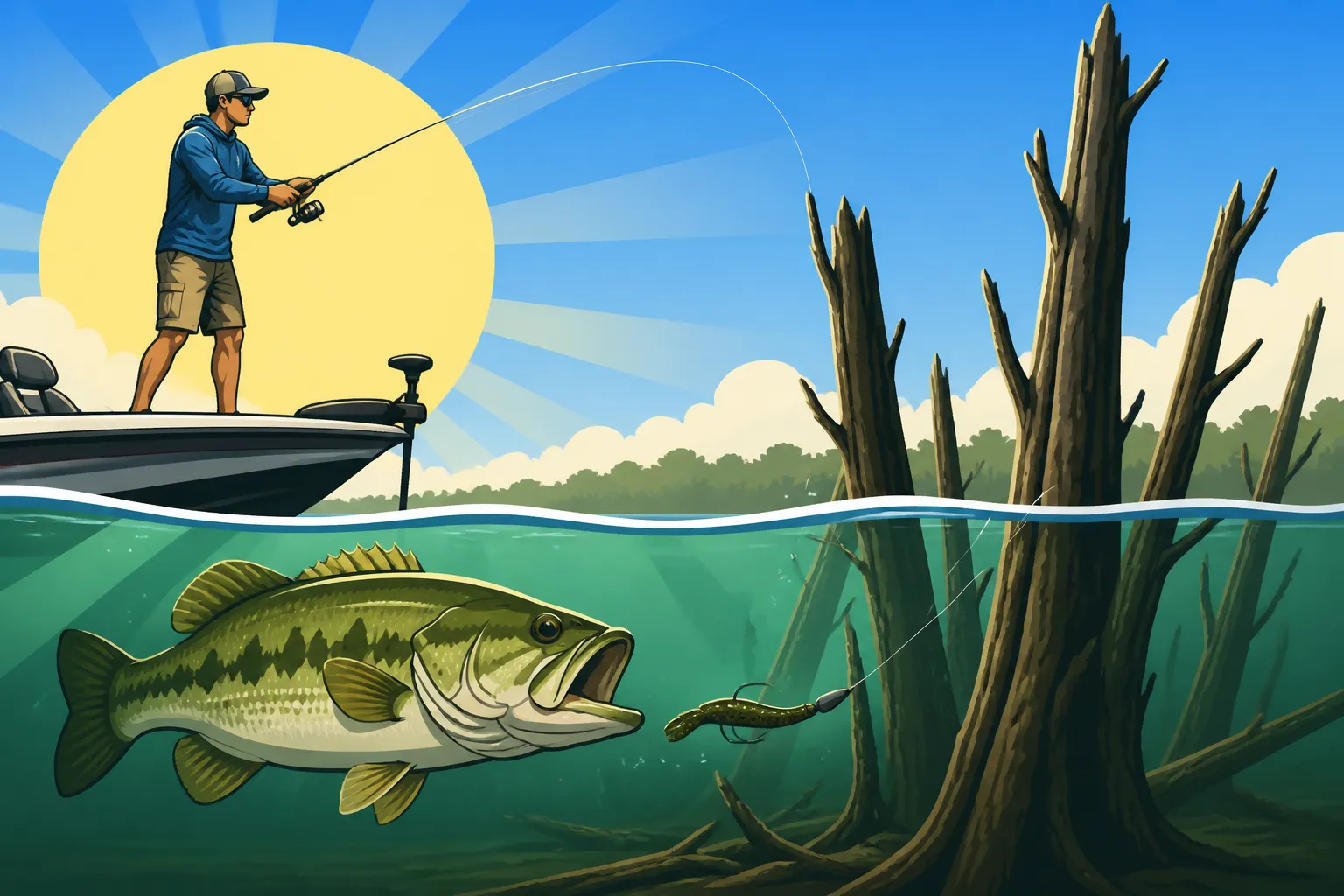
Timber offers incredible protection from the elements and predators, making it a highly sought-after habitat for bass. They use the labyrinth of branches, trunks, and roots as perfect ambush points. A bass can hide motionless behind a submerged log or a cluster of branches, waiting for an unsuspecting shad or sunfish to swim by before exploding from cover. This isn't just about shade on a hot summer day; it's about strategic positioning in their daily hunt for food.
Beyond protection and ambush opportunities, timber forms the foundation of a thriving aquatic ecosystem. Algae quickly grows on the submerged wood, attracting a myriad of insects and microorganisms. This, in turn, draws in smaller baitfish like minnows and juvenile bream, which feed on these tiny creatures. The presence of this abundant food source creates a natural magnet for larger predatory bass, establishing a rich feeding ground within the woody structure. Different types of timber also offer varying levels of benefit – a dense stand of flooded willows might hold schooling bass, while a large, lone submerged oak could be home to a giant, solitary hawg.
Identifying Productive Timber Areas
The key to successful timber fishing isn't just casting into any old tree; it's finding the right trees. Savvy anglers often look for deeper timber, especially areas adjacent to old creek channels or riverbeds that were flooded when the lake was formed. Bass frequently use these dramatic depth changes as highways, moving between shallow feeding grounds and deeper, cooler water. Lakes like Lake Fork or Sam Rayburn Reservoir in East Texas are legendary for their abundant and productive standing timber, often holding giant bass relating to these ancient submerged river systems. Learning how to read lake contour maps for bass fishing can give you a significant advantage in pinpointing these hidden gems.
Modern electronics are your best friend when it comes to locating submerged timber that isn't visible from the surface. Your fish finder can reveal entire forests of underwater trees, helping you identify subtle differences in structure – perhaps a thicker cluster of logs, a unique root ball, or even individual suspended bass within the timber. Once you learn to interpret these sonar readings, you'll unlock hidden hotspots that many anglers simply pass over.
Furthermore, always consider environmental factors like wind and current. While timber provides cover, specific areas within a timber field can be even more productive. A consistent breeze pushing baitfish against one side of a timber stand, or a subtle current break created by a large submerged tree, can concentrate bass. These areas become prime feeding zones where bass expend less energy to catch their meals.
Essential Gear and Tackle for Timber Fishing
Fishing timber is not for the faint of heart, or for light tackle, for that matter. This environment demands robust gear capable of withstanding harsh snags and, more importantly, quickly extracting a heavy bass before it can wrap your line around a submerged limb. Skimping on your setup here will lead to nothing but heartbreak and lost fish.
The Right Rod, Reel, and Line Combo
When you're delving into the dense cover of standing timber, your rod choice is paramount. You'll want a heavy or at least a medium-heavy action rod, typically in the 7-foot to 7-foot 6-inch range. This isn't about delicate presentations; it's about leverage and power. You need a rod with enough backbone to haul a chunky Texas largemouth out of thick brush and strong enough to withstand the jarring shock of a lure getting hung up. Investing in one of the Best Fishing Rods for Texas Anglers specifically designed for heavy cover will pay dividends.
Pair that powerful rod with a reliable baitcasting reel that boasts a strong drag system and a good gear ratio, ideally 7.1:1 or higher. This higher retrieve speed is crucial for quickly picking up slack line and wrenching a bass away from entanglement once you've hooked it. The last thing you want is a slow reel allowing a trophy fish to bury itself deeper into the woody maze.
Line selection is perhaps the most critical component. Braided line, in the 30- to 65-pound test range, is almost non-negotiable for timber fishing. Its superior strength and abrasion resistance are unmatched, making it far less likely to snap when rubbing against rough wood. Many experienced anglers will then add a short, heavy fluorocarbon leader (15- to 25-pound test) using a strong knot like an FG or Alberto. The fluorocarbon provides invisibility, which can be a huge advantage in clearer water, while still offering decent abrasion resistance. Understanding the pros and cons of Braided line vs fluorocarbon for Texas lakes can help you tailor your setup.
Lure Selection and Rigging for Timber
When it comes to lures, the name of the game is weedless. Soft plastics rigged on a How to fish a Texas rig for bass are a fundamental choice. Think worms, creature baits, and senkos that can slip through branches with minimal snagging. The key is to ensure your hook point is completely buried back into the plastic, making it as weedless as possible. This allows you to present the bait right into the heart of the cover where bass are holding.
Jigs, particularly football or casting jigs with stout hooks and robust weed guards, are another timber staple. These lures do an excellent job mimicking crawfish or various baitfish species that bass prey on. They can be worked slowly along the bottom, hopped over submerged limbs, or even flipped into tight spaces. Learning How to catch bass on a jig effectively in heavy cover can dramatically increase your hook-up ratio and reduce snags.
While riskier, certain reaction baits can be incredibly effective. Squarebill crankbaits, with their aggressive diving bills, are designed to deflect off wood, often triggering violent reaction strikes from bass that might otherwise ignore a slower presentation. Spinnerbaits or bladed jigs can also be retrieved through lighter timber, particularly sparse stands or the edges of dense wood, allowing for a faster presentation with a reduced risk of snagging compared to traditional treble-hooked baits.
Strategic Approaches to Fishing Timber
Mastering timber fishing isn't just about having the right gear; it's about knowing how to use it. Your approach needs to be precise, patient, and adaptable, considering both how you present your lure and how the bass's behavior changes throughout the year.
Pitching, Flipping, and Cranking Techniques
When fishing dense timber, precision is everything. Pitching and flipping are your go-to techniques for delivering a lure quietly and accurately into those tight, hard-to-reach pockets of cover where big bass often hide. Instead of making a long cast, these techniques involve a short, pendulum-like swing that lands your bait with minimal splash, reducing the chance of spooking a fish that might be hunkered down next to a submerged stump. Focusing on individual pieces of timber or small openings within a dense forest of drowned trees is key.
Once your jig or Texas-rigged plastic is in the strike zone, the retrieve is critical. Let the lure fall on a semi-slack line, allowing it to navigate through branches without immediately snagging. As it descends, pay close attention to any subtle "thump" or unnatural movement in your line – that's often a bass picking up the bait. Slowly lift and drop your rod tip, keeping contact with the lure but allowing it to fall naturally. The ability to manage your slack line effectively will be the difference between detecting a bite and missing a potential trophy. For more details on effective soft plastic techniques, check out Best Soft Plastics for Texas Bass Fishing.
Don't shy away from reaction baits like squarebill crankbaits or bladed jigs, especially in slightly more open timber or along the edges of a dense patch. The trick here is to deliberately cast to impact the timber. The sudden deflection of the lure off a branch or log often triggers an aggressive, instinctual strike from a bass. Experiment with different retrieve speeds and angles; sometimes a quick burst after a deflection is what it takes to entice a strike.
Seasonal Adjustments for Timber Bass
Bass behavior around timber changes dramatically with the seasons, and understanding these shifts is crucial for consistent success. In the early spring, during the pre-spawn period, bass will often stage on deeper timber located near the entrance to spawning flats. They use these submerged structures as resting areas before moving into shallower water to reproduce. Getting familiar with the Texas Bass Spawning Season Guide will help you predict their movements. As the spawn progresses, some bass may even build their nests directly adjacent to timber, utilizing the cover to protect their eggs and fry.
During the scorching Texas summer, bass seek refuge from the heat. This often means retreating to dense, shaded timber in deeper water. Fishing deep structure in Texas reservoirs becomes vital during these months, as bass will suspend within the cooler water column inside the timber, or hold tight to the bottom in shaded areas. Your best bet for shallower timber during summer will be during the cooler parts of the day, like early morning or late evening.
As fall arrives and water temperatures begin to drop, bass will move more actively, often relocating to shallower timber edges as they engage in a fall feeding frenzy. They're looking to bulk up for the leaner winter months. In winter, bass may suspend in deep timber, often relating to schools of baitfish that also seek the thermal stability and cover of the wood. The Best Time of Year to Fish in Texas provides a broader overview of these annual patterns, but always remember how timber influences these movements specifically.
Navigating Challenges and Maximizing Success
Fishing timber is inherently challenging, fraught with snags and the potential for lost lures. But with the right mindset, a few smart tools, and a commitment to conservation, you can overcome these hurdles and turn those snag-filled nightmares into trophy-catching dreams.
Minimizing Snags and Recovering Lures
Let's be real: you are going to lose lures in timber. It's an inevitable part of the game. However, you can significantly reduce these losses with a few proactive measures. Always peg your weights on Texas rigs using a bobber stop; this keeps the weight from sliding up your line and exposing the hook point. Using stout, weedless hooks is also non-negotiable. The moment you feel your lure touch wood, learn to subtly lift or twitch your rod to guide it over or around the obstruction rather than yanking and driving the hook deeper. This sensitivity to feel the timber is a skill developed over time.
One of the best investments a timber angler can make is a good lure retriever. These handy tools, which you can easily find on Amazon, are designed to slide down your line and dislodge snagged lures. They won't work every time, but they can save you a significant amount of money in lost baits and allow you to retrieve those favorite, hard-to-find lures that often produce the most strikes. Think of it as insurance for your tackle box.
If you do get snagged, resist the urge to violently yank your rod. Instead, point your rod tip directly at the snag, pull the line taut, and then quickly release the tension. This "bow and arrow" technique can sometimes pop the lure free. If that doesn't work, slowly motor your boat directly over to the snag, maintaining tension on your line. Approaching the snag from a different angle often allows the lure to come free, or at least lets you retrieve it by hand if you can reach it.
Advanced Tips for Timber Domination
To truly dominate in timber, you need to become a keen observer. Pay close attention to subtle clues that differentiate one piece of wood from another. A slightly larger diameter log, a unique branch configuration, a small current eddy created by a submerged tree, or even a subtle temperature break can all indicate a prime holding spot for bass within a larger timber field. Your fish finder isn't just for showing trees; it might reveal baitfish schools suspending within the timber, signaling a feeding zone.
Adding a quality fishing scent to your soft plastics or jigs can give you a significant edge, particularly when bass are sluggish or the bite is tough. The added scent and flavor often cause a bass to hold onto your bait longer, giving you more time to set the hook. Many anglers have their preferred brands, with a wide variety available through online retailers like Amazon or your local tackle shop.
Finally, embrace stealth and patience. Timber fishing, especially in shallower areas, often requires a quiet approach. Use your trolling motor judiciously and avoid unnecessary noise. It often takes repeated, precise casts to a single productive piece of timber to annoy a stubborn bass into biting. Don't be afraid to try different angles, retrieve speeds, or even a different lure on that one piece of wood that just looks like it should hold a fish.
Here's a quick comparison of popular timber fishing lures:
| Lure Type | Pros | Cons | Best Conditions |
|---|---|---|---|
| Texas Rigged Soft Plastic | Highly weedless, versatile, natural presentation, great for tight cover. | Slower presentation, can still snag if rigged incorrectly. | Dense timber, targeted pitching/flipping, all seasons. |
| Jig (with weed guard) | Mimics crawfish/baitfish, great for bottom contact, solid hookups. | Can snag if weed guard isn't robust, heavier profile may spook fish. | Moderate to dense timber, deeper water, cooler temps. |
| Squarebill Crankbait | Triggers reaction strikes, deflects well off wood, covers water. | Treble hooks snag easily in dense cover, limited depth range. | Open timber, edges of cover, shallower water, warmer temps. |
| Bladed Jig (ChatterBait) | Excellent vibration and flash, good for enticing reaction bites. | Can snag treble hook in very dense cover, best for moderate cover. | Moderate timber, submerged grass lines near timber, active fish. |
| Spinnerbait | Good flash and vibration, can be retrieved through lighter cover. | Prone to snagging in thick timber, less precise presentation. | Sparser timber, timber lines, windy conditions. |
Fishing standing timber for bass is a challenging but ultimately incredibly rewarding pursuit. It demands focus, the right gear, and a willingness to learn from every snag and every missed bite. But the feeling of pulling a strong bass out of that dense cover, knowing you outsmarted both the fish and the structure, is an unparalleled joy. So, next time you see those ghostly trees, don't shy away. Embrace the challenge, apply these techniques, and get ready to hook into some truly memorable Texas bass.
Disclaimer
This article is for general informational purposes only and does not constitute professional advice. Laws, prices and regulations vary by location and change over time. Consult a qualified professional for guidance on your specific situation.