How to catch bass on heavily fished lakes
We've all been there – you arrive at your favorite Texas bass lake, full of hope and ready to cast, only to find it's crawling with other anglers. Boats are buzzing, bank fishermen are lined up, and every prime spot seems to have a lure already in the water. Trying to catch bass on these heavily fished lakes can feel like trying to find a needle in a haystack, or worse, like the fish have simply packed up and left. But don't despair! This guide is all about equipping you with the strategies, techniques, and mindset to outsmart those wary bass, even when they're under immense pressure.
Understanding the Mindset of Pressured Bass
When a lake sees a lot of fishing activity, the bass aren't just chilling out; they're actively learning and adapting. This isn't just a theory; it's a real behavioral shift that can make your usual tactics completely ineffective. Think of it like this: if you keep seeing the same trick, you eventually catch on, right? Bass are no different.
The Behavioral Shift of Pressured Bass
Constant boat traffic, the whir of trolling motors, the splash of countless lures, and the repeated experience of being caught and released all contribute to bass becoming incredibly wary. They develop a heightened sense of caution. Instead of aggressively striking anything that moves, they become much more selective. They'll often follow a bait, inspect it thoroughly, and then turn away if something feels "off." This can be incredibly frustrating for anglers who are used to more aggressive bites. These bass are essentially educated; they've seen it all, and they're not falling for the same old tricks. They might hug tight to cover, move into deeper or more secluded areas, or only feed during low-light conditions when there's less activity on the water.
Signs of a Heavily Fished Lake
Recognizing a pressured lake goes beyond just seeing a lot of boats. While that's often the first clue, there are other, more subtle indicators. For instance, if you're casting your favorite crankbait into a prime brush pile, and you see bass follow it but never commit, that's a classic sign of pressure. Another indicator might be bass that strike very lightly, almost imperceptibly, just nipping at the tail of your soft plastic. You might also notice a distinct lack of topwater blow-ups during prime hours, or fish that spook easily at the slightest noise or shadow. Beyond the fish behavior, look at the physical environment: well-worn paths along the bank, numerous public access points, crowded boat ramps, and even discarded fishing line can all signal a lake that gets a lot of angling attention. These factors cumulatively create an environment where bass are constantly on high alert, making them a true challenge to catch.
Mastering Finesse Techniques for Wary Bass
When bass are pressured, they become incredibly sensitive to presentation and subtlety. Gone are the days of chucking and winding with heavy gear and large, noisy baits. Instead, it's time to embrace the art of finesse. This approach focuses on lighter lines, smaller baits, and more delicate presentations that mimic natural forage without alarming suspicious fish. It's about coaxing a bite, not forcing one.
The Art of the Subtle Presentation
Finesse fishing is all about minimizing your footprint and offering something that looks as natural and non-threatening as possible. This means scaling down almost everything you do. You'll want to use lighter fishing lines, often fluorocarbon leaders, which are nearly invisible underwater, especially in clear water conditions common in many Texas reservoirs. Smaller hooks, downsized weights, and compact soft plastics are your bread and butter. The retrieve itself becomes a slow, methodical dance rather than an aggressive sprint. You're not trying to elicit a reaction strike as much as you are trying to present an easy meal that the bass can't refuse. Think delicate twitches, long pauses, and slow drags along the bottom. This subtle approach often triggers bites from bass that would ignore a more traditional, aggressive offering. The key is patience and a keen eye for subtle line movement or slight taps that indicate a curious fish.
Essential Finesse Rigs for Texas Lakes
Several specific finesse rigs have proven incredibly effective for catching bass on heavily pressured waters. These are your secret weapons when the bite gets tough.
The Drop Shot Rig
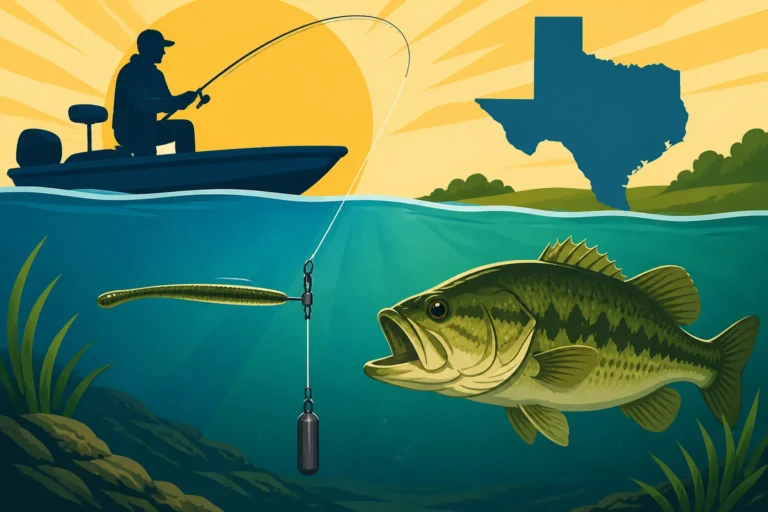
The drop shot is a phenomenal rig for pinpointing bass holding tight to structure or suspended in the water column. Its genius lies in its simplicity: a hook is tied directly to the main line, and a weight is attached to the tag end of the line, typically 6-18 inches below the hook. This setup allows your bait to hover horizontally at a specific depth, just above the bottom, giving it a very natural presentation without any weight interfering with its action. You can gently shake or twitch your rod tip, making the bait dance enticingly in place while the weight keeps it in the strike zone. This is incredibly effective when fish are lethargic or spooky. For clear Texas lakes, a small straight-tail worm or creature bait on a light wire hook is often irresistible. You can find a fantastic selection of drop shot weights, hooks, and soft plastics on Amazon, making it easy to experiment with different combinations. Many anglers swear by a How to fish a drop shot for bass technique for those finicky fish.
The Ned Rig
The Ned Rig has taken the bass fishing world by storm, and for good reason: it's deceptively simple and incredibly effective on pressured fish. It consists of a small mushroom-shaped jighead paired with a compact soft plastic worm, typically 2.5 to 3 inches long. The buoyancy of the plastic, combined with the jighead's design, causes the bait to stand straight up off the bottom when at rest, mimicking a feeding bottom-dweller or a small, vulnerable baitfish. The best way to fish it is with a "do nothing" retrieve – simply cast it out, let it sink, and then drag it slowly along the bottom with long pauses. The subtle action during these pauses is often when bass will strike. This rig is particularly deadly in cold water or when bass are extremely inactive. Learning How to fish a Ned rig for bass can truly make a difference on tough days.
The Wacky Rig and Neko Rig
The Wacky Rig is another finesse superstar, famed for its incredibly natural, shimmying fall. It involves hooking a stick worm (like a Senko-style bait) through its middle, allowing both ends to wiggle freely as it sinks. The slow, seductive descent is often too much for even the most cautious bass to ignore. It’s excellent around docks, laydowns, and sparse grass. The Neko Rig is a variation that adds a small nail weight inserted into one end of the stick worm, giving it a slightly faster, nose-down fall and a different action when dragged or hopped. This can be fantastic for fishing slightly deeper or getting through light cover. Both rigs excel at presenting a soft plastic with maximum natural movement and minimal interference, making them perfect for pressured bass that have seen every other trick in the book.
Here's a quick comparison of these go-to finesse rigs:
| Rig Type | Primary Presentation | Ideal Conditions | Target Depth | Key Advantage |
|---|---|---|---|---|
| Drop Shot | Horizontal hover, vertical | Clear water, vertical structure, suspended fish | Mid-water to deep | Bait stays in strike zone, subtle action |
| Ned Rig | Stand-up, slow crawl | Cold water, sparse cover, inactive fish | Shallow to mid-depth | Natural bottom presentation, buoyant plastic |
| Wacky Rig | Slow, wiggling fall | Clear to stained water, docks, laydowns | Shallow to mid-depth | Max natural movement, easy meal |
| Neko Rig | Nose-down fall, jigging | Clear to stained water, slightly deeper cover | Shallow to mid-depth | Controlled fall, different bottom contact |
When setting up for finesse fishing, consider investing in dedicated gear. A light or medium-light spinning rod paired with a quality spinning reel from Amazon designed for light line can make a huge difference in your ability to cast small baits and detect those faint bites. For line, I often start with 6-8 lb fluorocarbon for my main line or a braided main line with a Best line for Texas bass fishing fluorocarbon leader.
Thinking Outside the Box: Beyond Conventional Wisdom
Even with finesse techniques, there are times on heavily fished lakes when you need to truly differentiate yourself. This means going beyond the popular bait colors and retrieve patterns everyone else is using and surprising the bass with something they haven't seen in a while, or ever. It's about being a detective and a contrarian at the same time.
Experimenting with Unconventional Lures
Imagine a lake where every angler throws green pumpkin or junebug soft plastics. The bass eventually become conditioned to those colors and profiles. This is where you can gain an edge. Don't be afraid to try "weird" colors that aren't typically popular, like chartreuse, white, or even bubblegum pink, especially if the water clarity or forage base suggests it. Sometimes a bright, obnoxious color can trigger an unexpected reaction strike, simply because it's so different. Also, consider different lure types. While everyone is dragging jigs, try a small, subtle swimbait on a light jighead, or a micro-crankbait that barely scratches the bottom. Perhaps an old-school bait that's fallen out of favor, like a grub or a small, single-bladed spinnerbait, might be just the ticket. These unique presentations can bypass the bass's learned wariness and trigger a natural curiosity or feeding response. Look for unique soft plastic shapes or uncommon hard baits. You might just find that overlooked gem that the bass haven't been trained to ignore yet.
Adapting Your Retrieve and Presentation
Beyond the lure itself, how you work that lure can make all the difference. When bass are pressured, they might not react to a steady retrieve or even the typical "hop-hop-pause" of a worm. This is where exaggerated and unconventional retrieves come into play. Try dead-sticking a weightless worm for an incredibly long time, letting it slowly sink and drift with the currents. Sometimes the bass will only pick it up when it's completely still. Conversely, an extremely erratic, jerky retrieve – a series of short, sharp twitches followed by long pauses – can imitate a confused or injured baitfish, triggering a predatory instinct. Don't be afraid to yo-yo a jig or crankbait, letting it fall quickly and then ripping it back up. Another advanced technique is fishing "through" cover instead of just around it. Instead of skirting the edges of a brush pile, try to get your weedless finesse jig or Texas rig into the densest part of the cover. Pressured bass often retreat to the deepest, most inaccessible parts of cover where other anglers fear to tread. A silent, slow approach to these areas can pay off massively. Remember, the goal is to present something that doesn't follow the patterns they've learned to avoid.
Timing and Location: Beating the Crowds and Finding Unpressured Fish
Even with the best techniques, being in the right place at the right time can dramatically increase your success on heavily fished lakes. This often means adjusting your schedule and exploring areas that other anglers overlook or simply can't reach.
Early Birds and Night Owls
The most obvious way to avoid fishing pressure is to fish when nobody else is. This usually means hitting the water before sunrise or staying out after sunset. During these low-light periods, bass often feel more comfortable moving out from cover to feed, and the absence of boat traffic and human activity reduces their wariness significantly. Early morning bites, right as the sun cracks the horizon, can be incredibly productive for topwater or fast-moving baits before the lake gets crowded. For night fishing, bass are often less shy and more aggressive, especially during the hot Texas summers. They'll actively hunt in shallower water, and your light line finesse tactics might be replaced by slightly larger, slower-moving baits that emit vibration or scent. Just remember to prioritize safety when fishing in the dark; a good headlamp from Amazon and knowing your surroundings are crucial. If you're looking for tips on Night Fishing Techniques for Texas Lakes, there are plenty of specific strategies to explore.
Finding Unpressured Water
Sometimes, simply changing when you fish isn't enough; you need to change where you fish. Heavily fished lakes usually have popular spots – main lake points, obvious creek channels, easily accessible brush piles. These get pounded daily. Your job is to find the spots that don't. This might mean exploring areas far from boat ramps, either by making a long run in your boat or, even better, by using a kayak or canoe to access shallow coves, backwaters, or narrow channels that bigger boats can't reach. Best Kayaks for Texas Fishing are specifically designed for navigating these tucked-away gems. Shore anglers might need to hike further along the bank, looking for less-trodden paths that lead to secluded pockets or forgotten corners of the lake.
Another strategy is to identify obscure or subtle structure that most anglers overlook. This could be a single isolated stump away from a main creek channel, a small depth change on a featureless flat, or a barely visible submerged rock pile. High-definition mapping on your fish finder or a dedicated GPS unit (many excellent options available on Amazon) can reveal these hidden nuances. Learn How to read lake contour maps for bass fishing to pinpoint these less obvious targets. Fishing during weekdays instead of weekends is another simple yet effective way to encounter less pressure. Remember, bass will always seek refuge and food, and if the popular spots are too busy or dangerous, they'll relocate to quieter, less disturbed areas. It’s your mission to find those sanctuaries. For anglers without a boat, looking for Best fishing spots accessible without a boat in Texas can open up new opportunities.
Disclaimer
This article is for general informational purposes only and does not constitute professional advice. Laws, prices and regulations vary by location and change over time. Consult a qualified professional for guidance on your specific situation.