What do striped bass eat
One of the biggest head-scratchers for any angler, especially when you're targeting a powerhouse like the striped bass, is figuring out what exactly they're looking to munch on. You can cast all day, but if your bait doesn't resemble their natural diet, you're likely just giving the fish a show. It's frustrating to be out on the water, seeing activity, but not getting any bites. This guide is here to unravel the dietary mysteries of Texas striped bass, helping you understand their preferred menu and, ultimately, significantly improve your chances of a successful catch.
The Primary Forage of Striped Bass in Texas
Striped bass, often simply called "stripers," are formidable predators in the Texas freshwater landscape. Whether you're chasing the pure strain in Lake Texoma Striped Bass Fishing Spots or the hybrid variety in other reservoirs, understanding what they naturally eat is your first step to success. These fish are built for chasing down prey, and their diet primarily consists of the most abundant baitfish available in their environment. They aren't particularly picky, but they do have favorites.
Main Prey Species in Freshwater Lakes
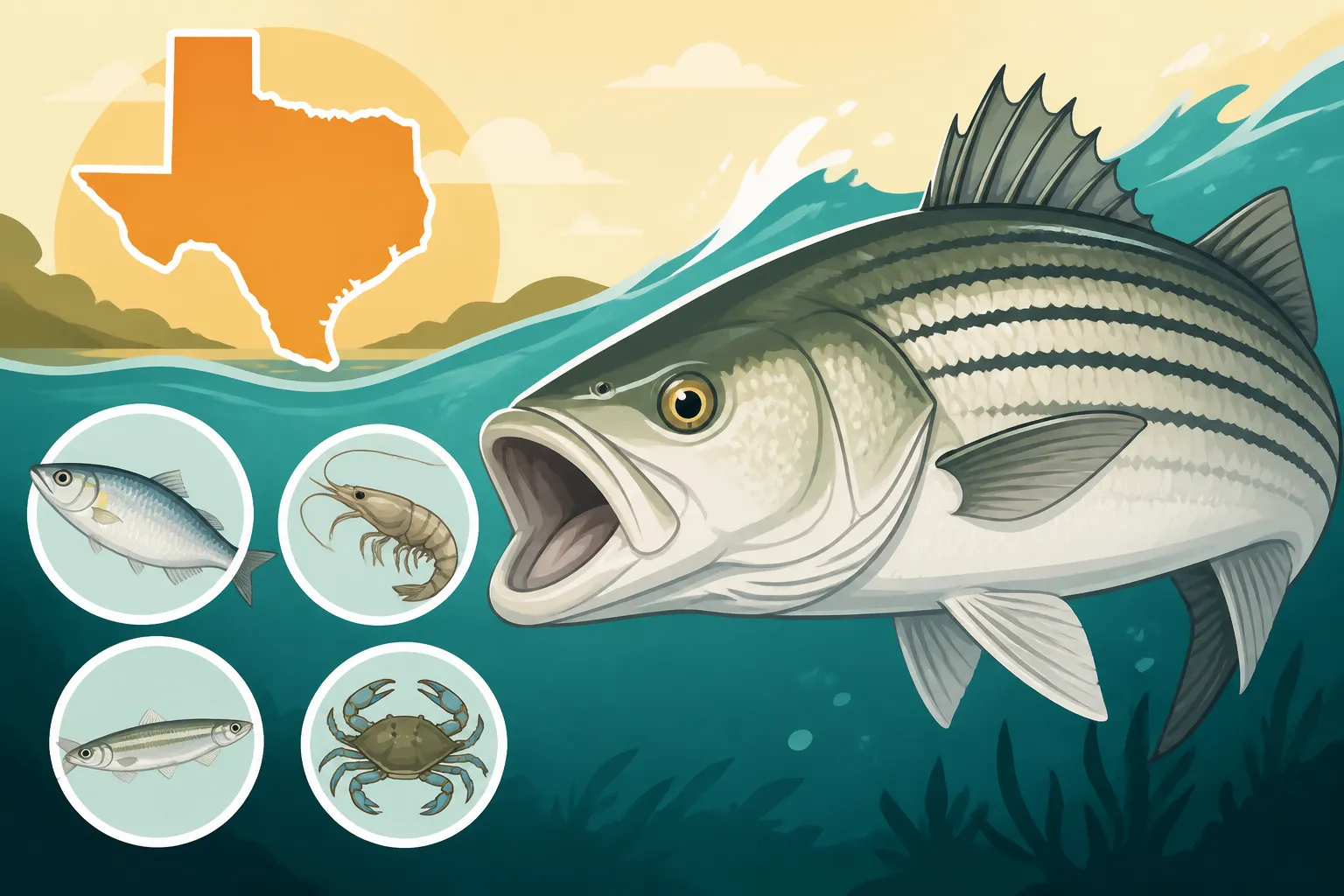
In the vast freshwater lakes and reservoirs across Texas, the striped bass diet revolves heavily around various species of shad. Gizzard shad and threadfin shad are at the top of their hit list. These small, silvery baitfish school in large numbers, making them an easy and energy-efficient meal for cruising stripers. When you see big schools of baitfish flickering on your sonar, chances are those are shad, and the stripers aren't far behind. They'll actively herd these schools, ambushing them from below and driving them to the surface, creating those exciting "topwater boils" that get every angler's heart pumping.
Beyond shad, stripers will also prey on other smaller fish species. This includes juvenile sunfish like bluegill and redear sunfish, which are plentiful in most Texas waters. They might also snack on smaller crappie or even their own juvenile offspring if the opportunity arises. It's truly a "survival of the fittest" world out there, and stripers are high up the food chain. Understanding this local abundance helps you choose the right bait. For instance, if you're fishing a lake known for a dense population of smaller sunfish, presenting a lure that mimics their profile can be incredibly effective, especially when shad schools are harder to locate.
Adaptability and Opportunistic Feeding
One of the reasons striped bass are such successful predators is their incredible adaptability. While shad might be their preferred meal, they are absolutely opportunistic feeders. If shad aren't readily available, or if another food source presents itself, they won't hesitate to switch their diet. This could mean anything from insects and crustaceans in their juvenile stages to larger invertebrates as adults. During certain times of the year, particularly after heavy rains, you might even find stripers gorging on displaced worms or small frogs near inflows. This is where paying attention to recent weather patterns and local conditions really pays off.
This opportunistic nature also extends to non-fish items. Sometimes, especially in riverine environments or areas with strong currents, stripers might consume crawfish, especially during molting periods when they are soft and vulnerable. Even a random lizard or rodent that accidentally falls into the water could become a meal. This highlights why varying your approach can be beneficial; if your usual shad-mimicking lures aren't working, consider something with a different profile or action. Tools to help identify these subtle shifts in their diet, like fish finders or even just observing what local bait shops are recommending, can be a game-changer. Amazon offers a wide range of accessories to help you scout, from underwater cameras to advanced fish finders.
How Diet Changes with Season and Environment
Just like our own appetites change throughout the year, what striped bass eat can vary dramatically with the seasons and the specific environment they inhabit. Water temperature, oxygen levels, and the reproductive cycles of baitfish all play a huge role in shaping a striper's dinner plate. Trying to catch them without considering these shifts can feel like fishing in a ghost town.
Seasonal Shifts in Prey Availability
Springtime in Texas brings a bounty of new life, and stripers capitalize on it. As water temperatures rise, baitfish like shad become more active and begin their own spawning rituals. This creates massive congregations of easy targets for hungry stripers coming out of their winter lethargy. During this period, you'll often find stripers aggressively feeding on large schools of shad in shallower water or near creek channels. This is also a time when many game fish are spawning, and striped bass are not above picking off vulnerable fry or smaller fish.
As summer heats up, surface water temperatures in Texas lakes can become extremely warm, pushing baitfish and stripers alike into deeper, cooler, more oxygenated waters. Here, they might focus on larger, slower-moving prey that they can ambush in thermoclines or around deep structure. The shad might still be around, but their behavior changes, becoming less surface-oriented. In the fall, as waters begin to cool, stripers often enter a "feeding frenzy" mode, aggressively bulking up for winter. This is a fantastic time for topwater action, as shad will be pushed to the surface more frequently. Winter, conversely, sees their metabolism slow, and they become more lethargic, often holding tight to deep structure and feeding less frequently, consuming whatever slower-moving prey they can find with minimal energy expenditure. Best Time to Catch Striped Bass in Texas dives deeper into these seasonal patterns.
Impact of Water Conditions and Habitat
The specific habitat also dictates a striper's diet. In large, open reservoirs like Lake Texoma or Lake Whitney, stripers will chase vast schools of shad across open water. Their long, torpedo-shaped bodies are perfectly designed for this pelagic pursuit. However, in areas with more intricate structure, like standing timber, submerged brush piles, or rocky ledges, their diet might include more bottom-dwelling or structure-oriented prey. This could be smaller catfish, crawfish, or even other species that seek shelter in these areas.
Water clarity also plays a significant role. In clear water, stripers rely heavily on their eyesight to hunt, making natural-looking baits and lures crucial. They'll often school and herd baitfish into open water where their superior vision gives them an advantage. In murkier or stained water, where visibility is low, stripers might rely more on their lateral line to detect vibrations. This means baits that create a lot of commotion or have strong scent profiles can be more effective. The availability of dissolved oxygen, particularly in deeper parts of lakes during summer, creates specific "sweet spots" where both baitfish and stripers congregate. Anglers who understand these environmental factors can predict where the fish will be feeding and, consequently, what they will be feeding on.
Mimicking Their Diet: Best Baits and Lures for Anglers
Knowing what stripers eat is just half the battle. The other half is translating that knowledge into effective fishing strategies. This means selecting the right live baits or artificial lures that perfectly mimic their natural food sources. You don't want to throw a pizza to a fish that only eats sushi, right?
Live Bait That Mirrored Natural Prey
There's an old adage that "live bait is best," and for striped bass, it often holds true, especially when they are being finicky. The most effective live baits are those that are part of the striper's natural diet.
- Shad: Live gizzard shad and threadfin shad are hands-down the kings of live bait for Texas stripers. If you can catch them with a cast net, you're halfway to success. Presenting a live shad on a weighted treble hook or a circle hook, either free-lined or under a balloon, is a classic and highly effective method. The natural action and scent of a struggling shad are irresistible to a hungry striper. Many dedicated striper anglers spend hours netting shad before a trip because they know it's often the best way to entice a bite.
- Other Baitfish: While shad are primary, don't overlook other local baitfish. Live bluegill, small perch, or even small crappie can be incredibly effective, especially if you know the stripers in your particular spot are keying on them. These baits are often more robust and can withstand being fished in stronger currents or deeper water for longer periods. Just be sure to check local regulations regarding the use of specific species as bait.
- Eels (Saltwater): While this guide focuses on freshwater, it's worth noting that in brackish or saltwater environments, live eels are a legendary striper bait. Their serpentine movement drives stripers wild. However, in Texas's inland lakes, shad will be your primary focus.
The key with live bait is to keep it lively. A healthy, active baitfish is much more appealing than a sluggish one. Ensuring your livewell is properly aerated and maintained, especially in the Texas heat, is crucial. You can find excellent livewell aerators and bait buckets on platforms like Amazon.
Artificial Lures That Imitate Their Food
For those who prefer the thrill of artificial lures, there's a vast array of options designed to imitate what stripers eat. The trick is to match the hatch – or at least, match the profile and action.
- Swimbaits: Soft plastic swimbaits, especially those with a paddle tail, are phenomenal for mimicking shad. They come in various sizes and colors, allowing you to match the size of the baitfish stripers are currently feeding on. Rig them on a jig head and retrieve them steadily through schools of bait or over submerged structure. Hard-bodied swimbaits with multiple segments can also create a very lifelike swimming action.
- Crankbaits: Deep-diving crankbaits are excellent for reaching stripers holding in deeper water, especially when they are feeding on shad at specific depths. Select colors like chrome, silver, or those with a blue back to imitate shad. Trolling with crankbaits is a popular and effective method for covering large areas and finding schooling fish. Shallow-diving crankbaits can be used when stripers are busting bait on the surface or holding in shallower water.
- Topwater Lures: When stripers are actively smashing bait on the surface – what we call "boiling" or "busting" – topwater lures are an absolute blast to use. Poppers, walk-the-dog style baits, and prop baits create commotion and splash, perfectly imitating a struggling baitfish near the surface. The visual strike from a powerful striper on a topwater lure is unforgettable.
- Jigs and Slabs: Metal jigs and casting spoons (often called "slabs") are fantastic for imitating dying baitfish dropping through the water column. Vertically jigging these over deep schools of stripers, or casting and retrieving them, can be incredibly effective, especially in deeper water when fish are not actively chasing. Many anglers will add a piece of soft plastic or a bucktail to their jigs for added attraction.
- Soft Plastics: Flukes, grubs, and other soft plastic baits can be deadly when rigged weightless or on a light jig head. These provide a more subtle presentation that can be very effective when stripers are wary or lightly feeding. Using natural colors that mimic shad or other small baitfish is usually the best approach. You might find a fantastic selection of these specific lures on platforms like Amazon, making it easy to stock up before your next trip.
When choosing artificials, always consider the size of the predominant baitfish, the water clarity, and the depth the stripers are holding. A large profile lure might be ignored if stripers are feeding on tiny shad, and vice-versa. Best Lures for Striped Bass on Lake Texoma will give you even more specific recommendations.
Here's a quick reference table for mimicking a striper's diet:
| Primary Forage | Characteristics | Common Artificial Lures | Live Bait Options | Key Fishing Tactic |
|---|---|---|---|---|
| Shad (Gizzard/Threadfin) | Silvery, schooling baitfish, torpedo shape | Swimbaits (paddle/hard), Crankbaits, Topwater, Slabs | Live Gizzard/Threadfin Shad | Trolling, vertical jigging, casting into boils |
| Sunfish/Perch | Wider profile, slower swimming, often structure-oriented | Soft plastic jigs, larger swimbaits, bucktail jigs | Live Bluegill, small Perch | Fishing around structure, slow retrieve, bottom bouncing |
| Crawfish | Bottom dweller, defensive | Jig-n-pig, crawfish-imitating soft plastics | N/A (less common as striper bait) | Dragging/hopping on bottom, near rocks/wood |
| Small Insects/Larvae | Tiny, erratic movement | Small jigs, fly patterns (less common for large stripers) | N/A | Surface fishing for smaller stripers, calm conditions |
Understanding Striped Bass Feeding Behavior
Knowing what they eat is critical, but understanding how and where they prefer to feed makes all the difference. Striped bass are not passive eaters; they are active, strategic hunters, and their behaviors are key indicators of success for anglers. This information is a major component of Texas Striped Bass Fishing Guide.
Schooling and Ambush Tactics
One of the most iconic behaviors of striped bass is their schooling. They often form large groups, especially when targeting vast schools of baitfish. This cooperative hunting allows them to more effectively herd and ambush their prey. You'll often see them pushing shad to the surface, creating those exciting "boils" where the water seems to erupt with feeding fish. These moments are prime opportunities for topwater lures or quickly cast swimbaits. The aggression during these feeding frenzies means they're less picky about the presentation, but you need to get your lure in there fast!
Beyond open-water schooling, stripers also employ ambush tactics, especially when targeting solitary or less mobile prey. They'll hide in submerged timber, rock piles, ledges, or deep channels, waiting for an unsuspecting baitfish to swim by. This is where fish finders come into their own, helping you locate these hidden structures and the fish holding tight to them. Presenting a lure or live bait near these ambush points, perhaps with a slower, more methodical retrieve, can trigger a strike from a waiting predator. Often, when you hook a striper near structure, it's a testament to its patience and ambush prowess.
The Role of Current and Structure
Current is a huge factor in striped bass feeding behavior, even in seemingly still lakes. While lakes don't have river-like currents, they do have thermoclines, subtle water movements caused by wind, and inflows from rivers or creeks. Stripers are strong swimmers and will often position themselves in currents, waiting for baitfish to be swept past them. This minimizes their energy expenditure while maximizing their feeding efficiency. Targeting areas with noticeable current, such as near dam outflows, creek mouths, or even wind-blown points, can be highly productive.
Structure, both natural and man-made, also plays a critical role. Deep ledges, humps, submerged islands, standing timber, bridge pilings, and even old roadbeds provide crucial holding areas for both baitfish and stripers. Baitfish use these structures for shelter, and stripers use them for ambush points. When stripers are not actively chasing schools of bait, they often retreat to these deeper structures to rest and wait. Learning to interpret your sonar to identify these structures and the baitfish and stripers holding around them is a skill that will dramatically increase your catch rate. Best Fishing Electronics for Texas Anglers can help you get started with the right gear. Many anglers even mark their favorite spots and structure types using GPS units, ensuring they can return to productive areas time and time again.
Disclaimer
This article is for general informational purposes only and does not constitute professional advice. Laws, prices and regulations vary by location and change over time. Consult a qualified professional for guidance on your specific situation.