Best Baitcasting Reels for Texas Bass Fishing
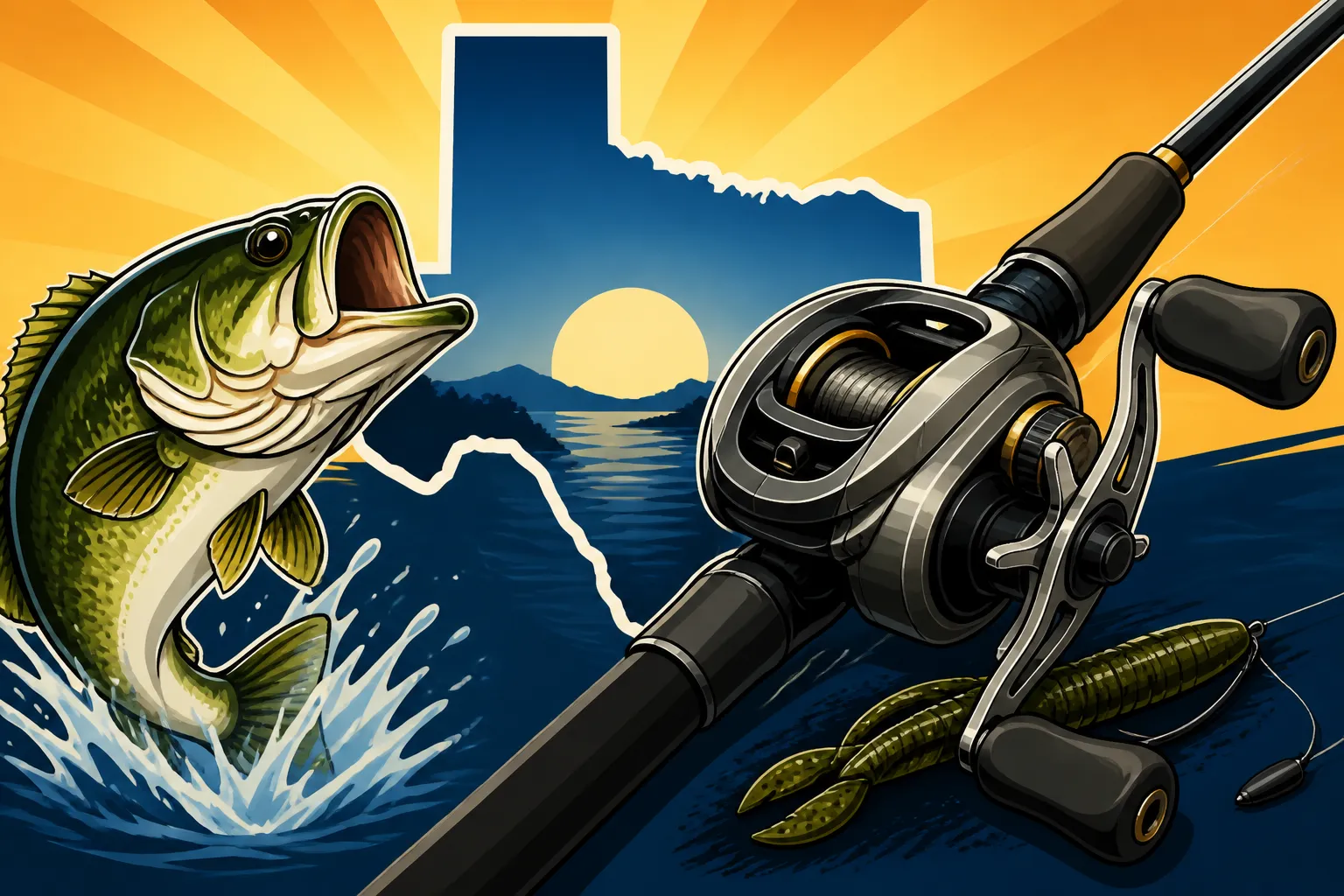
Oh, the baitcasting reel. For so many Texas bass anglers, it's not just a tool; it's an extension of their arm, a symbol of serious intent on the water. But let's be real, stepping into the world of baitcasters can feel a bit intimidating, especially when you're staring down a wall of options at a big store or endlessly scrolling online. This guide is here to cut through the confusion and help you find the absolute best baitcasting reel to conquer those legendary Texas bass.
Why Baitcasting Reels Are a Game Changer for Texas Bass Fishing
For many years, spinning reels were the go-to for pretty much everyone, and they're still fantastic for certain applications, especially finesse fishing or for beginners. But once you start targeting bigger bass, throwing heavier lures, and needing to put that lure exactly where you want it, a baitcasting reel truly shines. It’s about more than just throwing; it’s about control, power, and ultimately, putting more big Texas bass in your boat or on the bank. If you've ever felt like your spinning gear was holding you back from truly dominating the structure, then it's time to consider the baitcaster.
Precision Casting for Structure and Cover
Texas lakes, from Lake Fork to Sam Rayburn, are absolutely littered with prime bass habitat: dense hydrilla beds, submerged timber, gnarly brush piles, and countless docks. Getting your lure into these tight spots, often with only a small window of opportunity, is where a baitcaster earns its keep. The thumb bar release and direct line control allow for incredibly accurate pitches and flips. You can literally drop a jig into a teacup-sized opening in the cattails or skip a soft plastic perfectly under a dock with a level of control that's just not as achievable with a spinning reel. This precision means fewer snags and more time fishing the strike zone. It’s the difference between casting generally at a target and surgically placing your bait on the target, which is crucial when those big lunkers are holding tight to cover.
Power and Control Over Texas Lunkers
Once you've hooked into a substantial Texas largemouth – and let's face it, we grow some giants here – you need a reel that can handle the fight. Baitcasting reels are inherently designed for heavier lines and offer superior cranking power. When that 8-pound bass tries to bury itself in a submerged tree or make a blistering run, the robust gearing and solid construction of a baitcaster give you the leverage to turn its head and steer it away from danger. This power means less chance of breaking off, especially when using braided line, and more confidence in your ability to land that trophy fish. You'll feel every head shake, every surge, but also the reassuring strength of your reel as you bring that fish closer. The direct drive system minimizes flex and maximizes the transfer of power from your hand to the fish, making those intense battles much more manageable.
The Feel and Feedback You Crave
There’s an undeniable connection you feel with your lure and the fish when using a baitcasting reel. The direct path of the line from the reel spool to your rod tip, without the twists and turns of a bail, translates into incredible sensitivity. You can literally feel your crankbait bumping off every rock, detect the subtle tick of a bass inhaling a worm, or know exactly when your jig has cleared a submerged branch. This feedback is vital for understanding what's happening under the water and can dramatically increase your hook-up ratio, especially with light bites. Beyond just function, there’s a certain tactile satisfaction that comes with mastering a baitcaster. The smooth cast, the controlled retrieve, the satisfying click of the anti-reverse engaging – it all adds up to a more immersive and rewarding fishing experience that many anglers find simply addictive.
Key Features to Look for in a Texas Bass Baitcaster
When you're sifting through all the options, trying to figure out which baitcaster is going to be your new best friend on the water, it's easy to get overwhelmed by jargon and numbers. But focusing on a few critical features can make all the difference, especially when you consider the demands of Texas bass fishing. You want something that's not just functional, but reliable and built to withstand the rigors of big fish and our often harsh environment.
Bearing System and Smoothness
The number and quality of bearings in a baitcasting reel directly impact its smoothness, durability, and casting performance. While a higher bearing count often translates to a smoother reel, the quality of those bearings is paramount. Look for reels with corrosion-resistant bearings, especially if you plan to do any saltwater fishing, or if your freshwater lakes occasionally have brackish conditions. A reel with 7-10 high-quality stainless steel bearings (often listed as 'BB' for ball bearings and 'RB' for roller bearings) will generally provide a buttery-smooth retrieve and extend the life of your reel. You'll feel the difference immediately when you turn the handle – less grinding, less friction, and a more consistent feel as you work your lure or fight a fish. This smoothness is not just a luxury; it reduces fatigue during long days of casting and retrieving, allowing you to stay focused on the bite.
Braking Systems: Magnetic vs. Centrifugal
This is often one of the biggest mysteries for new baitcaster users, but understanding the braking system is key to preventing those dreaded "bird's nests" or backlashes. Every baitcasting reel has a braking system designed to control the speed of the spool during a cast, preventing it from spinning faster than your line is coming off.
- Centrifugal Brakes: These systems use small weights that move outwards due to centrifugal force during a cast, applying friction to a braking ring. They're often adjustable internally, requiring you to open the side plate to engage or disengage pins. They provide consistent braking force throughout the cast and are generally preferred by experienced anglers for their fine-tuning capabilities, offering strong initial braking that tapers off. Many hardcore bass anglers swear by centrifugal systems for their consistent performance once dialed in.
- Magnetic Brakes: These systems use magnets that move closer to or further away from the spool, controlled by an external dial. They offer easier, on-the-fly adjustment without opening the reel. Magnetic brakes provide a more consistent braking force throughout the cast, which can be very forgiving for beginners and when facing changing wind conditions.
Many modern reels, particularly higher-end models from brands like Shimano and Daiwa, actually combine both systems for the best of both worlds, offering incredible adjustability. For a versatile Texas bass setup, a dual braking system or a good quality magnetic system with external adjustments can be incredibly beneficial, allowing you to quickly adapt to different lure weights and wind conditions. You can find excellent options for both at places like Bass Pro Shops or even online at Amazon, where you can read detailed reviews about specific models' braking performance.
Frame Material and Durability for Texas Heat
Texas can be brutal on fishing gear. The intense heat, humidity, and the sheer number of times you might be casting and battling fish demand a reel that's built to last. The frame material plays a huge role in a reel's durability and overall feel.
- Aluminum Frames: These are often found on higher-end baitcasters. Aluminum offers excellent rigidity, preventing flex and torque during a fight, which translates into more cranking power. It's also lightweight and durable, but can be more susceptible to corrosion if not properly maintained, especially in saltwater environments.
- Graphite/Composite Frames: More common in mid-range and entry-level reels, graphite frames are lighter and naturally more corrosion-resistant than aluminum. However, they can be more prone to flex under extreme pressure, which might compromise a bit of power when fighting a truly massive fish. For many everyday bass fishing scenarios, a good quality graphite frame is perfectly adequate and can be a great budget-friendly option.
For Texas bass fishing, where you're often setting the hook hard and wrestling fish out of thick cover, a rigid frame is a huge advantage. An aluminum frame will give you that solid, unyielding feel when you're cranking down on a lunker. Consider the environmental factors; if you're frequently fishing brackish water or just want maximum longevity, prioritize corrosion resistance in either material, perhaps through special coatings or anodization.
Matching Your Reel to Your Texas Bass Fishing Technique
One of the beautiful things about bass fishing in Texas is the sheer variety of techniques you can employ. From finesse fishing with shaky heads to slinging giant swimbaits, our lakes demand versatility. While a good all-around baitcaster can handle many situations, truly optimizing your setup for specific techniques can significantly boost your success. It's not about having twenty different reels, but understanding how different reel characteristics complement different presentations.
Flipping and Pitching Heavy Cover
If you've ever watched a seasoned Texas tournament angler, you'll see them flipping and pitching with incredible accuracy into the densest cover. This technique requires a very specific type of baitcasting reel. You need a reel that's relatively compact and comfortable to palm for repetitive short casts. A key feature here is a strong, smooth drag system that can withstand sudden, powerful surges when a bass nails your lure in thick weeds or timber. Additionally, a fast gear ratio (think 7.1:1 to 8.1:1 or higher) is crucial. This high speed allows you to quickly retrieve slack line after a pitch, helping you detect subtle bites, and more importantly, winch a fish out of heavy cover before it can wrap you around a submerged limb. Brands like Lew's and Shimano often offer reels specifically designed for this application, boasting lightweight designs and powerful internal components. How to Fish a Texas rig for bass is a technique that really benefits from a good flipping and pitching setup.
Cranking and Swimbait Applications
For those times when you're throwing big crankbaits, deep-diving plugs, or hefty swimbaits to entice those monster bass, your reel needs a different set of attributes. Here, power and torque take precedence over blazing speed. Look for baitcasting reels with a lower gear ratio, typically in the 5.1:1 to 6.4:1 range. These slower ratios provide more winching power, making it easier to retrieve large, water-resistant lures all day without exhausting your arm. Imagine trying to pull a deep-diving crankbait through 15 feet of water with a fast reel – it's a workout! A slower reel lets the reel do the work. The spool capacity is also important for swimbaits, as you'll often be using heavier monofilament or fluorocarbon lines that take up more space. A robust frame and a strong main gear are vital to handle the constant stress of these power techniques. How to Fish for Bass in Texas often involves a mix of these power presentations to find aggressive fish.
Topwater and Jerkbait Mastery
There's nothing quite like a blow-up on a topwater lure or the frantic darting action of a jerkbait. For these techniques, control and the ability to impart subtle action are paramount. A mid-range to slightly faster gear ratio, around 6.4:1 to 7.1:1, tends to be ideal. This gives you enough speed to pick up slack quickly after a twitch or pause, but not so much that you're overpowering the lure's action. The reel's weight and balance with your rod are also critical, as you'll be constantly working the rod tip to make your lure dance. A lightweight reel helps reduce fatigue and allows for more precise manipulation. A smooth casting system is also important for accuracy, as topwater targets often require hitting a specific spot, like the edge of a grass line or a shady pocket under an overhanging tree. When you're fishing during Best time of year to fish Lake Fork for bass in the warmer months, topwater can be absolutely deadly, and the right reel makes all the difference.
Understanding Gear Ratios and Their Impact on Texas Bass Angling
The gear ratio on a baitcasting reel is one of those numbers that new anglers often glaze over, but it’s absolutely fundamental to understanding how a reel performs and whether it's the right tool for your specific fishing style. Simply put, the gear ratio tells you how many times the spool rotates with one full turn of the handle. This directly translates to how fast you retrieve your line and, importantly, how much power the reel generates. Getting this right can dramatically improve your efficiency and success on the water, especially when chasing various species like those found in the Texas Largemouth Bass Fishing Guide.
Low Gear Ratios for Power and Deep Crankbaits
Reels with lower gear ratios, typically ranging from about 5.1:1 to 6.4:1, are the workhorses of the baitcasting world. A 5.1:1 ratio means the spool turns 5.1 times for every single rotation of the handle. What does this mean for you, the angler? It means increased torque and power. Think of it like the low gears on a bicycle or car – great for climbing hills or pulling heavy loads.
When fishing in Texas, low gear ratio reels are your go-to for:
- Deep Crankbaits: These lures create a lot of resistance in the water. A low gear ratio allows you to steadily retrieve them without wearing out your arm, maintaining that consistent action crucial for deep-water presentations.
- Large Swimbaits: Bigger baits often require more effort to move through the water. The added power from a lower gear ratio makes them easier to work.
- Spinnerbaits and Chatterbaits: If you're slow-rolling these baits along the bottom or through heavy cover, the low gear ratio provides the consistent retrieve speed and power to keep them in the strike zone.
- Heavy Cover Punching/Flipping (sometimes): While fast reels are often preferred for quick line pick-up, some anglers prefer the raw power of a low gear ratio when trying to horse a really big fish out of dense vegetation once hooked.
The key benefit here is stamina. You can fish big, resistant lures all day long with less fatigue, ensuring you're ready for that monster bite.
Mid-Range Gear Ratios for Versatility
The sweet spot for many Texas bass anglers, especially if you're looking for a good all-around workhorse reel, is a mid-range gear ratio. These typically fall between 6.4:1 and 7.1:1. These ratios strike an excellent balance between speed and power, making them incredibly versatile.
A mid-range reel is fantastic for:
- General Purpose Bass Fishing: If you're only going to own one or two baitcasters, one in this range is highly recommended. It can handle a wide array of lures and techniques effectively.
- Jigs and Worms: These techniques often require a moderate retrieve speed, allowing the angler to impart action with the rod tip. The mid-range ratio allows for quick slack line pick-up, crucial for detecting subtle bites, without being overly fast.
- Topwater Lures and Jerkbaits: While some prefer faster reels for topwater, a mid-range reel offers excellent control. It's fast enough to pick up slack and react to a strike, but slow enough to allow you to work the bait precisely without rushing its action.
- Texas Rig and Carolina Rig: These classic techniques benefit from a reel that's responsive but also offers enough torque for a solid hookset.
Many anglers new to baitcasters will find a 7.1:1 reel to be a great starting point, as it provides enough speed to be aggressive but is still manageable for many power-fishing situations. Best Bait and Lures for Texas Fishing lists many options that pair well with a versatile, mid-range gear ratio reel.
High Gear Ratios for Speed and Finesse
When speed is your primary concern, and you need to retrieve line fast, a high gear ratio reel is what you're after. These reels typically start around 7.1:1 and can go up to 8.1:1 or even higher. While they sacrifice some power compared to lower ratios, the speed advantage is undeniable.
High gear ratio reels excel in situations where:
- Flipping and Pitching: As discussed, the ability to rapidly pick up slack line after a short cast is critical. This ensures you're always in contact with your lure, allowing for instant hooksets and quick retrieval of fish from heavy cover before they can snag you.
- Frogs and Buzzbaits: When a bass explodes on a topwater frog or buzzbait, you often need to pick up a lot of slack line very quickly to get a solid hookset. A fast reel makes this much easier.
- Burning Spinnerbaits or Lipless Crankbaits: Sometimes, bass want a lure moving at warp speed. High gear ratio reels allow you to achieve those blisteringly fast retrieves to trigger reaction strikes.
- "Following Up" on Missed Strikes: If a bass misses your topwater or a reaction bait, a fast reel allows you to quickly cast a follow-up lure (like a senko or jig) into the same spot before the fish moves on.
It’s important to note that high gear ratios require a bit more finesse from the angler. You'll need to learn to control your retrieve speed with your hand, as the reel itself will bring in line very quickly. Many experienced anglers fishing for aggressive Texas White Bass Fishing Guide during their run will also opt for faster reels to keep up with the action.
| Gear Ratio Range | Primary Benefit | Ideal Techniques | Example Lures |
|---|---|---|---|
| 5.1:1 – 6.4:1 | Power, Torque | Deep Cranking, Large Swimbaits, Slow Rolling | Deep Crankbaits, Big Swimbaits, Spinnerbaits |
| 6.4:1 – 7.1:1 | Versatility, Balance | Jigs, Worms, Topwater, Jerkbaits, All-Around | Jig & Trailer, Soft Plastics, Walking Baits |
| 7.1:1 – 8.1:1+ | Speed, Quickness | Flipping, Pitching, Frogs, Buzzbaits, Burning | Frog Lures, Buzzbaits, Light Jigs, Fast Spinnerbaits |
Maintenance Tips to Keep Your Baitcaster Running Smooth in Texas Conditions
You've invested in a good baitcasting reel to handle those tough Texas bass, and you want it to last. The harsh realities of our environment – the scorching sun, the fine dust from boat ramps, the occasional splash of lake water, or even salt spray if you venture to the coast – can take a toll. Neglecting your reel is a sure-fire way to end up with a sticky drag, a gritty retrieve, or worse, a complete breakdown. A little preventative care goes a long way in ensuring your reel remains a high-performing piece of equipment.
Regular Cleaning and Lubrication
This is the cornerstone of baitcaster longevity. After every few trips, or certainly after a particularly dirty or wet day, take a few minutes to wipe down your reel. Use a soft cloth to remove any visible dirt, dust, or residue. Pay special attention to the line guide, the spool, and the handle.
For a deeper clean and lubrication, you don't need to completely disassemble your reel every time. Focus on accessible points:
- Line Guide: A Q-tip can be used to clean any grit from around the line guide and worm gear. Apply a tiny drop of specialized reel oil to the worm gear.
- Spool Bearings: Some reels have easily accessible spool bearings (check your reel's manual). A tiny drop of lightweight reel oil on each bearing can make a world of difference in casting distance and smoothness.
- Handle Knobs: Often overlooked, handle knobs can get gritty. A small drop of oil in the appropriate spot can keep them spinning freely.
- Main Gear & Pinion Gear (occasional): Periodically, perhaps once or twice a year depending on usage, it's a good idea to remove the side plate (if your reel design allows for it without extensive disassembly) and apply a small amount of reel grease to the main gear and a drop of oil to the pinion gear. Be careful not to over-grease, as this can attract more dirt and hinder performance.
Remember to use only products specifically designed for fishing reels. Automotive oils or general lubricants can be too thick or contain additives that can damage your reel's components over time. You can find these specialized oils and greases at Bass Pro Shops or other tackle stores.
Protecting Your Reel from the Elements
Beyond cleaning, proactive protection is key in Texas.
- Sun and Heat: Never leave your reels baking in direct sunlight, especially on a black boat deck or dashboard. The intense heat can degrade lubricants, warp plastic components, and even affect your line. Store your rods and reels in a shaded area or in rod lockers when not in use. When you're fishing How to Fish in Hot Texas Summers, take extra care.
- Water Exposure: While reels are designed to get wet, excessive exposure to rain or dunking in the lake should be avoided. If your reel gets thoroughly soaked, make sure to dry it completely before storing it. Open up any accessible side plates, let it air dry in a cool, dry place, and then re-lubricate.
- Dust and Sand: Fine dust and sand are abrasive and can quickly get into the smallest crevices, grinding down gears and bearings. Always try to keep your reels away from dusty environments. If you get sand on your reel, resist the urge to blow it off, as this can push it further into the mechanism. Instead, try to gently brush it off or wipe it with a damp cloth.
Using reel covers or keeping your rods in a rod sleeve can also provide an excellent first line of defense against incidental bumps, dust, and sun exposure during transport and storage.
Seasonal Tune-Ups and Storage
Even with regular cleaning, a baitcaster benefits from a more thorough inspection and tune-up at least once a year, or after heavy use during prime Texas Fishing Seasons Month by Month.
- Professional Servicing: If you're not comfortable taking your reel apart, consider sending it to a professional reel repair shop. They can deep clean, replace worn parts, and ensure everything is functioning optimally. This is especially wise for high-end reels or after a particularly rough season.
- End-of-Season Storage: When the main fishing season winds down, or if you're not going to use a particular reel for an extended period, prepare it for storage. Give it a good clean, apply fresh lubrication, and back off the drag completely. This relieves pressure on the drag washers, preventing them from compressing and losing effectiveness over time. Store your reels in a cool, dry place, ideally in a protective case or bag. Never store them in a humid garage or shed where condensation and extreme temperature swings can cause damage. By following these simple steps, your baitcasting reel will be ready to perform flawlessly whenever those Texas bass decide to bite.
Top Considerations When Buying Your First Baitcasting Reel
Taking the plunge and buying your first baitcasting reel is an exciting step in your bass fishing journey. It opens up a whole new world of techniques and gives you a level of control you might not have experienced before. But with so many options out there, it’s easy to feel overwhelmed. Don't just grab the first one that looks cool; a little thought about these key considerations will ensure you make a smart investment that you'll be happy with for years on the water.
Budgeting for Performance
Let's talk money, because it's a real factor for most of us. Baitcasting reels range from very affordable to downright expensive, and like most things, you often get what you pay for. For your first baitcaster, it’s usually wise to aim for a mid-range price point.
- Entry-Level (Less expensive): These reels are great for getting a feel for baitcasting without breaking the bank. They might have fewer bearings, less durable materials, and simpler braking systems. They are perfectly functional for learning, but may not offer the smoothness or longevity of higher-priced models.
- Mid-Range (Moderate price): This is often the sweet spot. You'll find reels with good quality components, decent bearing counts, effective braking systems (often magnetic, or even hybrid), and a respectable balance of durability and performance. Many anglers find their "forever" reels in this category. Brands like Abu Garcia, Pflueger, and some offerings from Shimano and Daiwa often have excellent options in this range.
- High-End (Expensive): These reels boast top-of-the-line materials, advanced braking systems, superior gearing, and exceptional smoothness. They are often lighter, more durable, and offer unmatched casting performance. While aspirational, they might be overkill for a first-time baitcaster, as the learning curve can be tough on any reel, regardless of price.
My advice? Don't go so cheap that you get frustrated by constant backlashes or poor performance, but don't spend a fortune until you're sure baitcasting is for you. A good mid-range reel will offer a much more enjoyable learning experience and can serve you well for a long time.
Ergonomics and Hand Size
This is a frequently overlooked but incredibly important factor. When you're spending hours on the water, repeatedly casting and retrieving, the comfort of your reel becomes paramount.
- Palming Comfort: A baitcasting reel is designed to be "palmed" – held comfortably in the cup of your hand, with your thumb resting naturally on the spool or thumb bar. Different reels have different profiles and sizes. What feels good to one person might feel awkward to another. If possible, go to a store like Bass Pro Shops and physically hold several different models. Pay attention to how it fits in your hand, how easily you can reach the thumb bar, and if any edges feel uncomfortable.
- Handle Length and Knob Shape: Longer handles often provide more leverage, which is great for cranking large lures or fighting big fish. Handle knob shapes vary too – some prefer paddle-style, others round, or even oversized. This is purely personal preference.
- Left-Hand vs. Right-Hand Retrieve: This is crucial! Most baitcasters are made for right-hand retrieve (meaning you reel with your right hand and cast with your left). However, many models are available in left-hand retrieve (reel with your left, cast with your right). There's no "right" way; it's about what feels natural to you. If you've always reeled a spinning reel with your left hand, a left-hand retrieve baitcaster might feel more intuitive. Make sure you specify which you need when purchasing!
Pairing with the Right Rod and Line
A baitcasting reel is only one part of the equation; it needs to be paired with the right rod and line to perform optimally.
- Rod Selection: Baitcasting reels should always be used with a baitcasting rod. These rods have a trigger grip designed for comfort with a baitcaster and have guides that are oriented upwards, unlike spinning rods. The power (light, medium, heavy) and action (fast, moderate, slow) of your rod should match the lures you intend to throw and the fish you're targeting. For general Texas bass fishing, a 7-foot medium-heavy fast action rod is an incredibly versatile choice that pairs well with many baitcasters. You can learn more in our guide on Best Fishing Rods for Texas Anglers.
- Line Type and Pound Test: Baitcasting reels excel with monofilament, fluorocarbon, or braided line.
- Monofilament: Affordable, forgiving, good knot strength. Good for topwater, crankbaits.
- Fluorocarbon: Low stretch, high sensitivity, nearly invisible underwater. Excellent for jigs, worms, and deep presentations.
- Braided Line: No stretch, incredible strength-to-diameter ratio, highly sensitive. Great for heavy cover, punching, frogging. Often used with a fluorocarbon leader.
- The "pound test" (strength) of your line should match the strength of your rod and the breaking strength capacity of your reel. Never spool a reel with line that's too heavy for its capacity, as this can lead to tangles and reduced casting distance. A good starting point for a versatile bass setup might be 15-20lb fluorocarbon or 30-50lb braid with a fluorocarbon leader. Our guide on Best Line for Texas bass fishing goes into more detail.
Thinking about these three areas will help you narrow down the vast selection and confidently choose a baitcasting reel that will enhance your Texas bass fishing adventures. It's about finding the right tool for your hands and your style of fishing.
Disclaimer
This article is for general informational purposes only and does not constitute professional advice. Laws, prices and regulations vary by location and change over time. Consult a qualified professional for guidance on your specific situation.