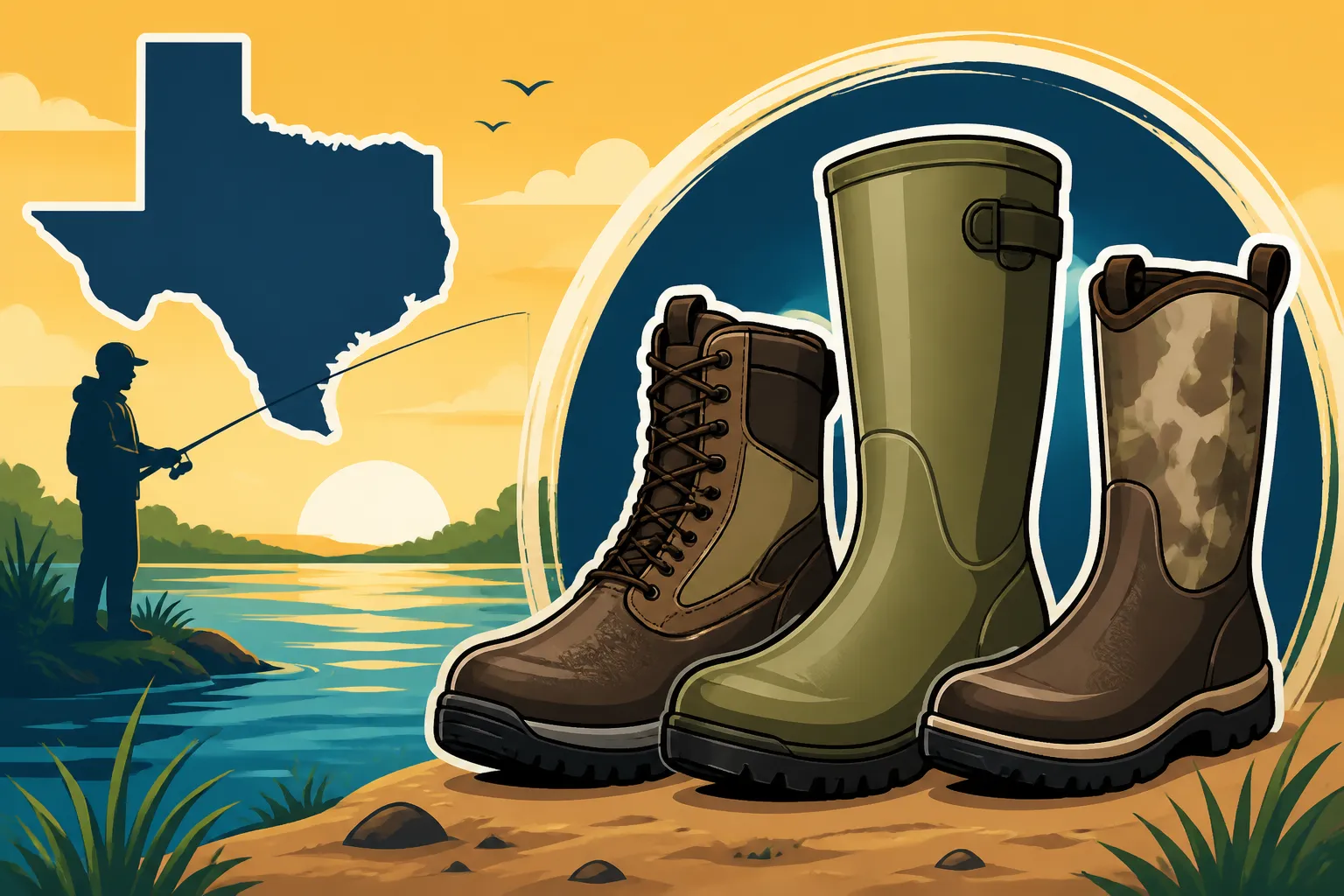
Best boots for bank fishing in Texas
Let's be real for a minute: bank fishing in Texas, while incredibly rewarding, isn't always glamorous. You're not always on a perfectly manicured shoreline. More often than not, you're trudging through sticky mud, navigating slippery rocks, stepping over fallen branches, and maybe even encountering a few thorny surprises. The wrong footwear can quickly turn a peaceful day of fishing into a miserable, squelchy, or even painful experience. This guide is all about helping you find the absolute best boots for bank fishing in Texas, ensuring your feet stay comfortable, dry, and protected no matter what Mother Nature (or a poorly marked trail) throws your way.
Why Your Footwear Matters for Bank Fishing in Texas
Many anglers focus heavily on their rods, reels, and tackle boxes, and rightly so! Those are crucial. But the often-overlooked hero of any bank fishing expedition is what's on your feet. When you're out there for hours, standing, walking, casting, and reeling, your feet are doing a lot of work. The unique challenges of Texas's diverse landscapes, from marshy coastal banks to rocky riverbeds and muddy lake shores, demand specific qualities from your boots. Ignoring your footwear can lead to discomfort, potential injury, and a premature end to your fishing trip.
The Unseen Hazards of Texas Banks
Texas offers an incredible variety of fishing environments, and each one comes with its own set of challenges underfoot. Think about it: one day you might be on the Red River, navigating thick, slick clay banks, and the next you're by the Guadalupe, stepping across moss-covered stones. Without proper protection, these seemingly innocuous elements can become serious hazards.
Mud, especially the sticky, unforgiving kind you find around many Texas lakes after a good rain, can pull off ill-fitting shoes or cause you to slip and fall. Rocky banks, common in places like Canyon Lake or the various rivers, can twist an ankle if you don't have good support. Then there are the natural defense mechanisms of the Texas wilderness: thorns from mesquite, huisache, and prickly pear cacti are abundant in many areas, just waiting to puncture flimsy soles or fabric. You might also encounter broken glass, discarded fishing hooks, or other sharp debris left behind by others. And let's not forget the occasional encounter with wildlife – a snake might be less intimidating when you know your feet are well-protected. Investing in robust boots means you can focus on the fishing, not on where your next step will land.
Comfort and Support: More Than Just a Luxury
Spending an entire day on your feet, especially on uneven or sloped ground, can take a real toll on your body. If your feet aren't comfortable and well-supported, that fatigue quickly spreads to your legs, back, and even your concentration. Imagine trying to make a precise cast when your feet are aching and you're constantly shifting your weight.
Good bank fishing boots provide essential arch support and cushioning, which can absorb the shock of walking on hard ground and reduce strain. Ankle support is also critical, particularly if you're traversing rocky or uneven terrain where a misstep could lead to a sprain. Many lightweight sneakers or casual shoes simply aren't built for the lateral stability and torsional rigidity needed for prolonged outdoor activity on unpredictable surfaces. The right pair of boots will help you maintain your energy and focus, allowing you to enjoy those extra hours on the water chasing that trophy Texas Largemouth Bass Fishing Guide or a big catfish.
Key Features to Look For in Bank Fishing Boots
When you're trying to decide on the perfect pair of boots for your Texas bank fishing adventures, it's easy to get overwhelmed by all the options. But by breaking down the essential features, you can narrow down your choices and find what truly works for you. Think about the conditions you most often encounter and prioritize accordingly.
Waterproofing: Keeping Your Feet Dry
There's nothing quite as miserable as wet feet on a fishing trip, especially if it's cold or you're miles from your vehicle. Effective waterproofing is paramount for bank fishing in Texas. Even if it's not raining, you'll inevitably encounter dew-soaked grass, muddy puddles, or slippery inclines right at the water's edge.
Look for boots made from materials like rubber, neoprene, or those incorporating waterproof-breathable membranes, often branded with terms similar to Gore-Tex. These materials create a barrier that keeps water out while ideally allowing some moisture (sweat) to escape, preventing that clammy feeling. Pay close attention to how the boots are constructed; fully sealed seams are just as important as the material itself. A boot that claims to be waterproof but has poorly sealed stitching will still let water seep in. Consider the height of the boot as well. A taller boot offers more protection when wading into shallow water or trekking through deeper mud, giving you greater confidence and versatility.
Traction: Staying Upright on Slick Surfaces
Texas banks can be notoriously slippery. From slimy river rocks to slick clay and wet grass, a lack of traction is a recipe for an unplanned dip or, worse, an injury. The sole of your boot is your primary contact with the ground, so its design and material are incredibly important.
Look for outsoles with aggressive lug patterns – deep, multi-directional treads that can grip various surfaces. Rubber compounds designed for wet conditions offer superior grip compared to harder, less pliable materials. Different patterns excel in different conditions; wider, deeper lugs are great for shedding mud, while more finely spaced, siped patterns might offer better grip on wet rocks. When you're standing on the bank, trying to land a feisty Texas Crappie Fishing Guide or casting precisely, the last thing you want is to lose your footing. Good traction provides stability, safety, and the confidence to move freely around your chosen fishing spot.
Durability: Built to Withstand the Texas Wild
Your bank fishing boots are going to take a beating. They'll be scraped by rocks, poked by thorns, dragged through mud, and exposed to varying temperatures and moisture levels. Flimsy construction won't last long in the Texas outdoors.
Look for boots with reinforced toes and heels, often made from tougher rubber or synthetic overlays, to protect against impacts and abrasion. The upper material itself should be tough – full-grain leather, heavy-duty synthetics, or thick rubber/neoprene all offer good resistance. Check the stitching; double or triple stitching in high-wear areas indicates a more durable product. A robust shank (a supportive plate often in the midsole) can also add to the boot's structural integrity, protecting your feet from sharp objects underfoot and reducing fatigue. Think of your boots as an investment; a well-constructed pair will serve you reliably for many seasons, far outweighing the initial cost of constantly replacing cheaper, less durable options.
Comfort and Fit: Your Feet's Best Friend
Even the most durable, waterproof, and grippy boot is useless if it's uncomfortable. Poor fit leads to blisters, hot spots, and general misery, cutting your fishing trip short. Comfort isn't just a luxury; it's essential for performance and enjoyment.
When trying on boots, consider the following:
- Arch Support: Does the boot provide adequate support for your foot type? Many boots come with removable insoles, allowing you to swap them out for custom orthotics if needed.
- Cushioning: Is there enough padding in the midsole and footbed to absorb impact and provide comfort over long periods?
- Breathability: While waterproofing keeps water out, good breathability allows sweat to escape. This is especially important during How to Fish in Hot Texas Summers to prevent your feet from getting swampy. Look for boots with breathable membranes or strategic venting.
- Insulation: For cooler winter months, particularly if you're fishing areas like the Guadalupe River for trout, you might want boots with some insulation to keep your feet warm.
- Fit: Try boots on with the type of socks you'd typically wear. Ensure there's enough room in the toe box for your toes to wiggle, but no excessive heel slip. Your foot should feel secure without being cramped. A good fit prevents friction and keeps your foot stable on uneven terrain. Don't buy boots that are too tight, as they can restrict circulation and cause discomfort, especially after your feet swell a bit throughout the day.
Top Boot Types for Texas Bank Fishing
Now that we know what to look for, let's explore the different types of boots that Texas bank anglers commonly rely on. Each type has its strengths and weaknesses, making some more suitable for specific conditions or personal preferences.
| Boot Type | Key Strengths | Common Weaknesses | Ideal Texas Conditions |
|---|---|---|---|
| Rubber Boots | 100% waterproof, easy to clean, excellent in mud | Less breathable, can be heavy, less ankle support | Extremely muddy banks, heavy rain, marshy areas, light wading |
| Waterproof Hiking Boots | Excellent ankle support, good traction, versatile | Not fully submersible, heavier than sneakers | Rocky riverbeds, long walks, varied terrain, light wading |
| Wading Boots/Shoes | Superior grip in water, quick-draining | Less insulation, often require waders for warmth | Shallow river/stream wading, rocky bottoms, warm weather |
| Neoprene Boots | Excellent insulation, flexible, comfortable | Less breathable for hot weather, can be bulky | Cold weather fishing, marshy banks, winter stream fishing |
Rubber Boots: The Classic Mud Warriors
When you think of fishing in muddy conditions, classic rubber boots probably come to mind. And for good reason! These are the quintessential choice for keeping your feet completely dry when you're sloshing through thick, wet mud or standing in shallow water at the edge of a lake.
Pros: Their primary advantage is their complete waterproofing. Made from a single, molded piece of rubber or a durable synthetic, there are no seams for water to penetrate. They're incredibly easy to clean – just hose them off after a muddy outing. Many rubber boots also have excellent grip designed for slippery, mucky terrain. They can be invaluable when you're trying to reach that perfect casting spot across a boggy stretch of land near a creek. Brands like LaCrosse and Muck Boots offer a wide range of options, from ankle-height to full knee-height, allowing you to choose the level of protection you need.
Cons: While superb for wet conditions, rubber boots aren't always the most breathable. In the intense Texas summer heat, your feet can get sweaty and uncomfortable, even if they stay dry from the outside. They can also be a bit heavier and bulkier than other boot types, and some models might lack the advanced ankle support or cushioning found in dedicated hiking boots. However, for those days when you know you'll be dealing with serious mud or standing in water, they are unmatched.
Hiking Boots Waterproof: Versatility for Varied Terrain
For the bank angler who covers a lot of ground, especially on diverse terrain, a good pair of waterproof hiking boots can be an excellent all-around choice. These boots are designed for stability, support, and comfort over long distances and varied surfaces.
Pros: Waterproof hiking boots offer superior ankle support, which is critical when navigating rocky banks, steep inclines, or uneven trails. Their aggressive outsoles are built for traction on dirt, rocks, and even wet grass. Many quality hiking boots incorporate waterproof-breathable membranes (like those found in Merrell or Columbia models), which keep water out while allowing sweat to escape, making them more comfortable for extended wear in varying temperatures. They strike a great balance between protection and comfort, making them suitable for long treks along riverbanks or around larger reservoirs. You can often find a good selection at Bass Pro Shops or online at Amazon.
Cons: While waterproof, most hiking boots are not designed for full submersion like rubber boots or waders. If you step into water deeper than the top of the boot, you're going to get wet. They can also be heavier than some other options, and the material, while water-resistant, might eventually saturate if exposed to prolonged standing water. However, for scrambling over boulders or making your way through brush to get to that secluded fishing hole, their support and durability are hard to beat.
Wading Boots/Shoes: When You Plan to Get Wet
If your idea of bank fishing sometimes involves stepping into the water, whether it's shallow wade fishing on the coast or crossing a small stream, then specialized wading boots or shoes are worth considering. These are often worn with waders, but some heavy-duty wading shoes can be worn alone for light wading in warm weather.
Pros: The biggest advantage of wading boots is their exceptional grip on wet, slippery surfaces found underwater – think algae-covered rocks or slick riverbeds. Their outsoles are specifically designed for this purpose, often featuring felt soles or sticky rubber compounds. They're also built to drain quickly, so your feet aren't waterlogged after you exit the water. If you frequent spots where you need to move in and out of the water, like the Guadalupe River Trout Fishing Guide areas or coastal flats, these are invaluable.
Cons: Wading boots typically offer little to no insulation on their own, meaning you'll need waders for warmth in colder conditions. They are also generally not designed to be completely waterproof when worn without waders, as their purpose is to let water in and then out quickly. For pure bank fishing where you intend to stay dry, they might be overkill or less comfortable for extensive walking than a hiking boot.
Neoprene Boots: Insulation and Flexibility
Neoprene boots are a fantastic option for those colder Texas fishing days, especially when you're still dealing with wet, muddy, or marshy conditions. They combine the waterproofing of rubber with the insulating properties of neoprene wetsuit material.
Pros: Neoprene provides excellent warmth, making these boots perfect for fishing during the cooler months, as outlined in Texas Fishing Seasons Month by Month. They keep your feet warm even when submerged in cold water or trudging through icy mud. The material is also very flexible, offering a comfortable, snug fit that moves with your foot. Many models have good traction and are completely waterproof up to their height. If you're targeting winter white bass runs or fishing in coastal marshes during a cold front, these boots can be a game-changer.
Cons: Just like rubber boots, neoprene isn't typically very breathable. In warmer weather, your feet can quickly overheat and sweat, leading to discomfort. They can also be a bit bulkier than hiking boots, which might affect agility on dry, uneven ground. However, when warmth and waterproof flexibility are your top priorities, neoprene boots truly shine.
Additional Considerations for Texas Anglers
Beyond the specific boot types, there are a few more things to keep in mind that are particularly relevant to bank fishing in the Lone Star State. Thinking through these details will help you make the most informed decision for your unique fishing style and local conditions.
Seasonal Needs: Hot Summers vs. Cooler Winters
Texas weather is notoriously variable, swinging from scorching summers to surprisingly chilly winters. Your ideal bank fishing boot might change with the seasons.
During the intense summer months, when temperatures regularly soar above 90 degrees Fahrenheit, breathability becomes a major concern. Even if a boot is waterproof, if it doesn't allow heat and sweat to escape, your feet will be swimming in moisture from the inside. For summer bank fishing, consider lighter-weight, waterproof hiking boots with good ventilation, or even quick-drying wading shoes if you plan on light wading. You might compromise a bit on absolute warmth for the sake of comfort.
Conversely, for winter fishing, especially in the northern parts of the state or when the wind is whipping across a lake, insulation is key. Cold, wet feet are a fast track to misery. This is where neoprene boots or insulated rubber boots truly come into their own. Look for models with specific temperature ratings if you plan to fish in very cold conditions. Having one lighter, more breathable pair and one warmer, insulated pair might be the ultimate solution for year-round comfort, allowing you to adapt to whatever How to Fish in Hot Texas Summers or a cold snap brings.
Budgeting for Your Boots: An Investment in Comfort and Safety
Like any piece of quality outdoor gear, fishing boots come in a wide range of price points. It's tempting to go for the cheapest option, but when it comes to your feet, a little extra investment can go a long way in terms of comfort, durability, and overall enjoyment of your fishing trips.
Entry-level boots might offer basic waterproofing and decent traction but could lack advanced cushioning, ankle support, or the durability for heavy, long-term use. Mid-range options often provide a good balance of features, comfort, and reasonable longevity. Premium boots, on the other hand, typically feature top-of-the-line materials, advanced ergonomic designs, superior waterproofing technology, and robust construction built to withstand years of abuse.
Think of your boots as essential safety equipment, not just an accessory. Blisters, falls, and thorn punctures can ruin a day or even lead to more serious issues. While you don't need to break the bank, choosing the absolute cheapest pair might lead to more frequent replacements and less comfort in the long run. Many anglers find great deals and a wide selection of brands on platforms like Amazon or by visiting dedicated outdoor retailers like Bass Pro Shops where you can try them on.
Maintenance and Care: Extending Your Boots' Life
Even the best boots won't last if they're not properly cared for. Texas's environment, with its mud, dust, and heat, can be tough on footwear. A little bit of post-trip maintenance can significantly extend the life of your investment.
- Clean Regularly: After each outing, especially if you've been in mud or saltwater (which can be corrosive), take a few minutes to clean your boots. Rinse off mud and debris with a hose or brush. For rubber or neoprene boots, a simple rinse is often enough. For hiking boots, gently brush off dried mud and dirt.
- Dry Thoroughly: This is critical. Never store wet boots. Allow them to air dry completely in a well-ventilated area, out of direct sunlight or intense heat, which can damage materials over time. Stuffing them with newspaper can help absorb moisture and maintain their shape.
- Inspect for Wear: Periodically check for any signs of damage – cracks in rubber, worn-down tread, loose stitching, or compromised waterproofing. Addressing small issues early can prevent them from becoming major problems.
- Condition (if applicable): If you have leather hiking boots, follow the manufacturer's recommendations for conditioning to keep the leather supple and maintain its water resistance.
Taking these simple steps will ensure your chosen bank fishing boots remain your reliable partners for many memorable days chasing fish across the diverse and beautiful waters of Texas. Don't forget to check out Beginner Fishing Gear Checklist for Texas for other essentials!
Disclaimer
This article is for general informational purposes only and does not constitute professional advice. Laws, prices and regulations vary by location and change over time. Consult a qualified professional for guidance on your specific situation.