Best Kayaks for Texas Saltwater Flats
There's nothing quite like the allure of the Texas saltwater flats – those vast, shallow expanses of grass beds, oyster reefs, and sandy bottoms where redfish, speckled trout, and flounder lay in wait. But any experienced angler will tell you that accessing these pristine, often very skinny waters can be a real headache if you don't have the right vessel. Traditional boats draw too much water, and a run-of-the-mill recreational kayak just won't cut it. This guide is here to unravel the mystery of choosing the best kayak for chasing those elusive shallow-water trophies, helping you navigate the options so you can focus on the fish.
The Unique Challenge of Texas Saltwater Flats Fishing
Fishing the Texas saltwater flats is a beautiful ballet of patience, stealth, and knowing your environment. It’s not your average lake fishing trip; the stakes, and the conditions, are entirely different. What works for bass in a deep reservoir won’t necessarily translate to stalking redfish in a foot of water.
Understanding the Flats Environment
The Texas coast boasts an incredible network of bays and estuaries, from Galveston down to the Laguna Madre, all featuring expansive flats. These areas are characterized by extremely shallow water, often just inches to a few feet deep, making them inaccessible to most powerboats. The bottom can be a mosaic of soft mud, dense turtle grass, sharp oyster reefs, and sandy potholes. Visibility is often key here, with clear water allowing you to spot fish before they spot you – a technique known as sight fishing. The challenge is immense, but so is the reward of fooling a wary redfish or a hungry speckled trout in their natural habitat. Texas Redfish Fishing Guide and Texas Speckled Trout Fishing Guide are resources that can help you understand these fish even better.
This unique environment demands a specific set of characteristics from your fishing platform. You need something that can float in incredibly shallow water, maneuver quietly, and withstand the abrasive nature of oyster shells and rough bottoms. Trying to navigate these areas in a kayak not designed for it can lead to frustration, damaged gear, and spooked fish. You’ll find yourself dragging more than paddling, or worse, getting stuck miles from the launch.
Why a Standard Kayak Won't Cut It
Many folks, new to kayak fishing, mistakenly believe any old kayak will do. After all, a kayak floats, right? While technically true, a standard recreational kayak or even a general-purpose fishing kayak often falls short on the Texas flats. They typically lack the stability needed for standing, which is crucial for sight fishing over vast expanses. Imagine trying to balance precariously while poling through a grass flat, trying to spot a redfish’s tail in the glare. It's a recipe for an unplanned swim and a ruined day.
Furthermore, many recreational kayaks are designed for tracking (going straight) in deeper water, not for the quick turns and shallow-water maneuverability required on the flats. Their hull shapes might create too much drag or be prone to grounding easily. Storage can also be an issue, as flats fishing often requires specialized gear, multiple rod setups, and enough space for a cooler to keep your catch fresh under the intense Texas sun. Without proper rod holders or a clear deck, your tackle can become a tangled mess, and valuable fishing time is lost wrestling with gear rather than casting.
Key Features of an Ideal Flats Fishing Kayak
When you’re looking to fish the Texas saltwater flats, your kayak isn't just a vessel; it's an extension of your angling strategy. The right features can make all the difference between a frustrating day and a successful outing.
Stability for Standing and Sight Fishing
This is, without a doubt, one of the most critical aspects of a flats fishing kayak. On the open, often featureless expanse of the flats, elevation is your best friend. Being able to stand up in your kayak allows you to scan the water for signs of fish – a subtle ripple, a fleeing baitfish, or the tell-tale "tailing" of a redfish rooting in the grass. How to Wade Fish for Redfish in Texas really highlights how spotting fish is key. Without the ability to stand, you're severely limited in your visibility and, consequently, your success rate.
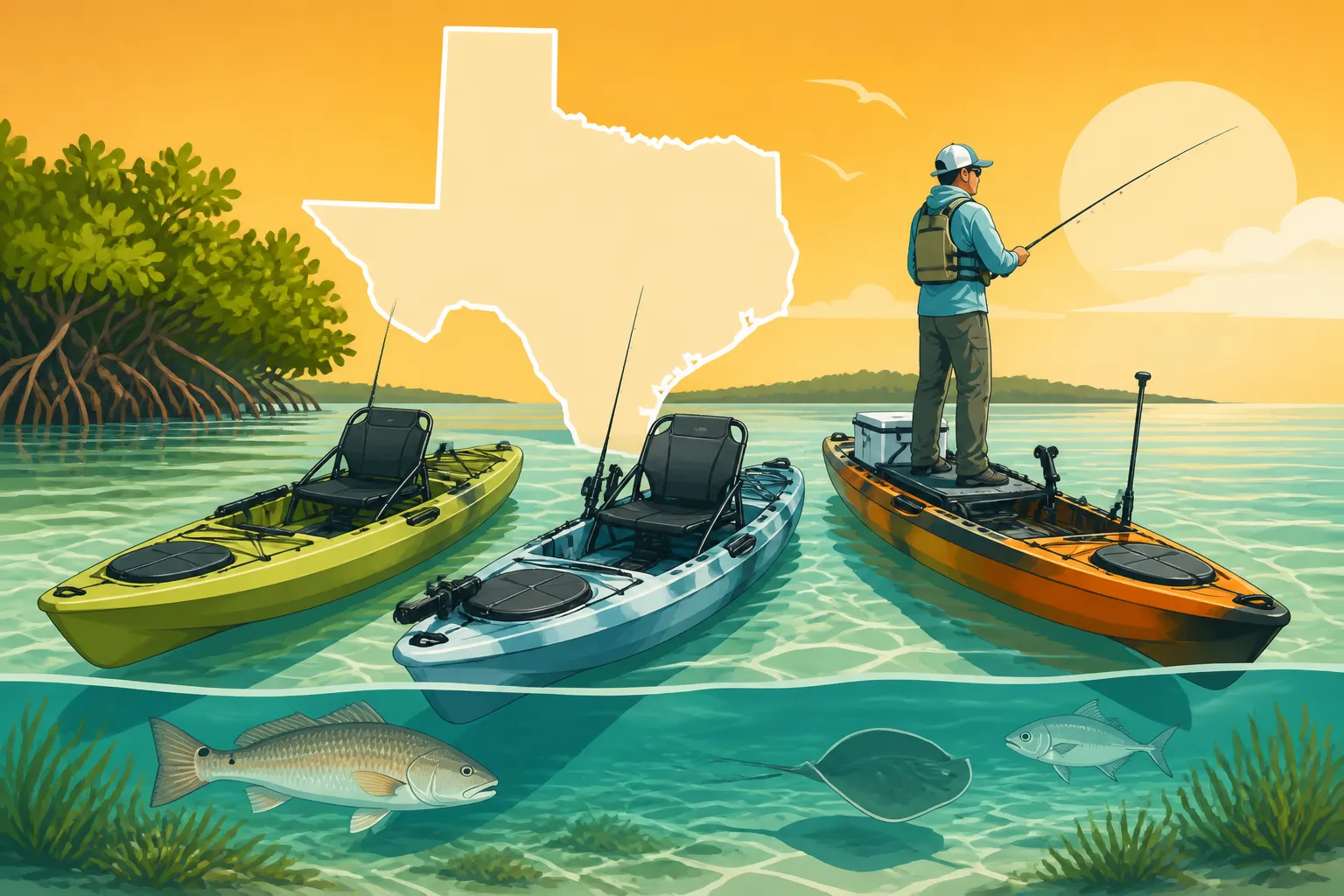
Look for kayaks with a wide, stable hull design. Many flats kayaks incorporate pontoon-style hulls or tunnel hulls that provide exceptional primary and secondary stability. Primary stability is how stable the boat feels when you first get in, while secondary stability is its resistance to tipping once it starts to lean. You want a kayak that feels solid underfoot, allowing you to confidently cast, pole, and even fight a fish without fear of an unexpected dip in the bay. Features like integrated standing platforms, padded deck areas, and even leaning posts can further enhance your ability to sight fish effectively. This stability means less time worrying about falling in and more time focusing on that next cast.
Stealth and Shallow Water Performance
Fish on the flats are incredibly spooky. They live in clear, shallow water, constantly on the lookout for predators. A loud splash, a scraping hull, or even the shadow of a paddle can send them fleeing in an instant. Therefore, stealth is paramount. Your ideal flats kayak should be designed to move through the water with minimal noise and disturbance.
This means a hull that glides efficiently and quietly. Avoid kayaks with overly aggressive chines or sharp edges that can slap the water. A smooth, rounded hull or one designed to reduce water disturbance is preferable. More importantly, the kayak must have an exceptionally shallow draft. This allows you to navigate through mere inches of water, reaching areas that no motorized boat could ever access. The ability to silently pole or paddle through ankle-deep water, rather than dragging your craft, is a game-changer. Look for kayaks that allow for easy integration of a push pole, which is often the most effective and quietest way to move when you're actively searching for fish in extremely shallow conditions.
Durability and Deck Layout
The Texas flats can be unforgiving. Oyster shells are sharp, the sun is relentless, and your gear will get wet. Your kayak needs to be built to withstand this abuse. High-density polyethylene (HDPE) is a common and excellent material, offering a great balance of durability, weight, and affordability. While lighter composite kayaks exist, they often come with a higher price tag and can be more susceptible to impact damage from unexpected oyster bombs.
Beyond material, the deck layout is crucial for an efficient and enjoyable fishing experience. You want an open, uncluttered deck space that allows for easy movement and quick access to your gear. Multiple flush-mount or adjustable rod holders are essential for keeping rods secure and ready for action. Dedicated spaces for a cooler (often a necessity for drinks, snacks, and keeping your catch on ice) and tackle storage are also key. Many flats kayaks feature integrated gear tracks or mounting points, allowing you to customize your setup with fish finders, camera mounts, and other accessories. A well-thought-out deck means less fumbling and more focused fishing, allowing you to quickly switch lures or grab your net when that trophy redfish decides to bite.
Types of Kayaks Best Suited for the Flats
Just like there are different ways to cook a brisket, there are different approaches to kayak design for flats fishing. Each type offers its own set of advantages and compromises, so choosing the right one really comes down to your personal fishing style and priorities.
Pedal Drive Kayaks
Pedal drive kayaks have truly revolutionized fishing, especially for those who spend a lot of time on the water. These kayaks feature a propulsion system, usually a fin-drive or prop-drive, that you operate with your feet, much like riding a bike. This frees up your hands for casting, reeling, and managing your tackle – a massive advantage when trying to maintain position in a slight breeze or chase down a fast-moving school of fish. For navigating larger bay systems to get to the flats, or covering ground between promising areas, they are incredibly efficient. Best Kayaks for Texas Bass Fishing also often highlights pedal drive systems for their efficiency in covering open water.
Brands like Hobie, with their renowned MirageDrive system, or Old Town, with their unique pedal-driven models, are popular choices. They offer impressive speed, allowing you to cover vast distances without exhausting your arms, which can be a huge plus on expansive Texas bays. This hands-free operation also means you can keep your rod in hand, ready for an immediate cast if you spot a fish. However, pedal drive kayaks tend to be heavier and more complex than traditional paddle kayaks. They often come with a higher price point, and the drive unit can sometimes be vulnerable to shallow water obstructions like oyster shells or dense grass, requiring you to lift or remove it in extremely skinny areas. Transporting and launching these heavier vessels might also require a bit more effort or specialized gear.
Paddle Kayaks with Standing Platforms
For anglers who prefer a more traditional, yet highly functional, approach, paddle kayaks specifically designed with enhanced stability for standing are an excellent option for the flats. These kayaks prioritize a wide, often pontoon-style or tunnel hull, that provides an incredibly stable platform. While you'll still use a paddle for propulsion, the ability to stand up and pole or sight fish from an elevated position remains central to their design.
The main advantage of these kayaks is their simplicity and typically lower entry cost compared to pedal drives. Without the mechanical complexity of a pedal system, they are often lighter and easier to transport, launch, and maintain. They also tend to have a truly "zero-draft" capability if you lift your paddle, making them ideal for truly skinny water where a pedal drive might get hung up. The trade-off is that covering long distances requires more physical effort from your arms, and you won't have the same hands-free operation as a pedal drive. However, for those who enjoy the quiet rhythm of paddling and the direct control it offers, especially when making subtle movements to stalk fish, these kayaks are fantastic. Many models from brands like Wilderness Systems or Jackson Kayak offer superb stability and deck layouts perfect for the flats.
Hybrid Kayak/SUP Boards
Taking shallow water access and standing to the extreme, hybrid kayak/stand-up paddleboard (SUP) models are gaining traction among flats anglers. These crafts combine the stability and open deck of a paddleboard with some of the features and tracking ability of a kayak. They are often incredibly wide and stable, specifically designed for anglers to stand and paddle or pole, offering an unparalleled vantage point over the water.
The biggest benefit of a hybrid SUP is its ultimate shallow water performance and unmatched stability for sight fishing. You're standing high and dry, with a panoramic view of the flats, making it incredibly easy to spot fish. Their lightweight nature also means you can access truly remote areas with minimal effort, often paddling or poling through water barely deep enough to cover your ankles. Storage can be more limited compared to traditional kayaks, often relying on bungee systems or deck bags, but dedicated fishing models often include rod holders and attachment points. The main downsides are their susceptibility to wind (due to a higher profile when standing) and potentially less comfortable seating for long paddles compared to a kayak. However, for the dedicated sight fisherman prioritizing maximum visibility and skinny water access, a hybrid SUP offers a unique and highly effective solution.
Essential Accessories for Flats Kayak Angling
Once you’ve got your ideal kayak, it’s time to trick it out. The right accessories can elevate your flats fishing experience from good to absolutely incredible, making you more efficient, safer, and ultimately more successful. Think of it as customizing your ultimate fishing machine.
Paddles, Poles, and Propulsion Aids
Even if you have a pedal drive kayak, a good paddle is absolutely essential. It serves as your backup propulsion, helps with quick directional changes, and can assist in pushing off snags. For flats fishing, a lightweight, durable paddle with a strong blade is key. Carbon fiber or fiberglass paddles are excellent choices as they reduce fatigue over a long day.
But perhaps even more critical for the flats is a push pole. This long, sturdy pole (often 10-18 feet) is your silent engine in extremely shallow water. Instead of paddling, which can spook fish, you use the pole to gently push off the bottom, stealthily gliding across the flats. Look for a push pole that’s lightweight, floats, and has a sturdy foot on the end to prevent it from sinking into soft mud. Many flats anglers also invest in a shallow water anchor system. These are poles that deploy quickly and silently from your kayak, sticking into the bottom to hold you in place against wind or current. Systems like a Power-Pole Micro or similar manual stake-out poles are invaluable for holding position while you cast to a spotted fish or work a particular area. Best anchor for a bay boat in Texas discusses larger anchoring systems, but stake-out poles are the kayak equivalent for the flats.
Storage and Organization Solutions
On the open flats, losing gear overboard is a real possibility, and a cluttered deck is a recipe for frustration. Smart storage and organization are non-negotiable. Start with a quality cooler. The Texas sun is brutal, and you’ll need a robust cooler to keep your drinks cold and your catch fresh. Look for models designed for marine environments that can be securely strapped to your kayak. Brands like Yeti or RTIC are popular for their insulation, but there are many great options available.
For tackle, consider waterproof tackle management systems that fit neatly into your kayak's storage areas or on the deck. Multiple rod holders are also a must – flush-mount holders keep rods out of the way, while adjustable ones allow for quick changes in rod angle. A fishing crate or specialized kayak fishing bag can be invaluable for organizing your tackle, securing your essentials, and providing quick access. Always use leashes or tethers for critical items like your paddle, rods, and expensive electronics. Remember, on the flats, anything that isn't tied down will eventually go for a swim.
Safety and Navigation Gear
Safety should always be your top priority, especially when venturing into potentially remote coastal waters. A properly fitting personal flotation device (PFD) is non-negotiable. Look for a fishing-specific PFD with pockets for small tackle or safety items. Texas Life Jacket Requirements for Boats explains the legal necessities.
Beyond a PFD, essential safety gear includes a whistle (required by law in many places), a sharp knife, and a basic first-aid kit. Given the often vast and sometimes disorienting nature of the flats, navigation tools are crucial. A reliable GPS unit, either handheld or integrated into a fish finder, will help you mark spots, navigate back to your launch, and avoid restricted areas. Many modern fish finders also offer excellent mapping capabilities, showing you depth contours and even bottom composition, which can be immensely helpful for identifying productive areas. Don't forget ample sun protection – wide-brimmed hats, polarized sunglasses (crucial for sight fishing, as discussed in Best polarized lenses for sight fishing), long-sleeved shirts with UPF protection, and plenty of sunscreen. Finally, a waterproof bag for your phone or a satellite communication device provides an essential link to the outside world in case of an emergency.
| Kayak Type | Best For | Pros | Cons |
|---|---|---|---|
| Pedal Drive Kayak | Covering distance, hands-free fishing | Efficient, fast, hands-free operation, good stability | Heavier, more expensive, complex, drive susceptible to shallow snags |
| Paddle Kayak (Standing) | Stealth, maximum stability, shallow water | Simpler, lighter, often more affordable, excellent stability, quiet | Requires arm effort for propulsion, less efficient for distance |
| Hybrid Kayak/SUP | Ultimate sight fishing, extreme skinny water | Highest vantage point, unmatched shallow water access, lightweight | More susceptible to wind, less seating comfort, limited storage |
Choosing and Outfitting Your Flats Kayak
Deciding on the perfect kayak for the Texas saltwater flats isn't just about picking the flashiest model; it's about making an informed decision that aligns with your personal circumstances and fishing ambitions. This isn't a one-size-fits-all situation.
Budget and Personal Needs
Let's be real: fishing kayaks, especially those designed for specialized tasks like flats fishing, can be a significant investment. Before you even start looking, set a realistic budget. Remember, the kayak itself is just the starting point; you'll also need a paddle, PFD, anchor, and a host of other accessories. Brands like Perception and Pelican offer more budget-friendly options that can still get you on the water, while premium brands like Hobie or Old Town often come with higher price tags reflecting their advanced features and build quality. Sometimes you can find great deals on gently used kayaks through online marketplaces or local fishing forums. Whether you browse the extensive selection on Amazon or visit a specialty store like Bass Pro Shops, remember to factor in all the potential costs.
Beyond money, consider your personal needs and physical capabilities. Are you comfortable standing for extended periods? How far do you plan to paddle or pedal? Do you typically fish solo or with a partner? Your physical stature also plays a role – taller, heavier anglers might need an even wider, more stable platform. Test-paddling, if possible, is invaluable. Many outfitters or even fellow anglers are happy to let you try out different models to get a feel for stability and comfort. Don't rush this decision; it's about finding a kayak that you'll genuinely enjoy spending hours in, not just one that looks good on paper.
Transport and Storage Considerations
A fantastic kayak is only fantastic if you can get it to the water and store it properly. The size and weight of your chosen flats kayak will dictate your transport and storage solutions. Larger, heavier pedal-drive kayaks might require a dedicated kayak trailer or a robust roof rack system on your vehicle. Lighter paddle kayaks or hybrid SUPs might be easier to car-top or even fit in the bed of a truck with a bed extender. Always double-check your vehicle's roof rack capacity or towing limits.
Once you're off the water, where will your kayak live? Outdoor storage requires a durable cover to protect it from the intense Texas sun and elements, which can degrade plastic over time. Indoor storage, like a garage, is ideal but requires space. Think about hoists, wall mounts, or simple stands that keep the hull off the ground. Proper storage not only protects your investment but also ensures your kayak is ready for your next adventure. Neglecting these practical aspects can quickly turn your dream of flats fishing into a logistical nightmare. Carefully considering how you'll move and store your kayak can prevent headaches down the road and keep you out on the water chasing those Texas trophies for years to come.
Disclaimer
This article is for general informational purposes only and does not constitute professional advice. Laws, prices and regulations vary by location and change over time. Consult a qualified professional for guidance on your specific situation.