Best backup camera for boat trailering
Trying to back up a boat trailer, especially in a busy ramp area or a tight driveway, can feel like you're trying to thread a needle while blindfolded. That sinking feeling in your stomach as you try to judge distances and angles, often relying on someone else's frantic hand signals, is a frustration most Texas anglers know all too well. This guide is here to shed some light on making that nerve-wracking process a whole lot smoother by exploring the best backup camera options for boat trailering.
Why a Backup Camera is a Game-Changer for Boaters
Let's be honest, backing up a boat trailer is a skill that takes practice, patience, and a healthy dose of luck sometimes. The sheer length of many boat and trailer combinations, coupled with the blind spots created by your boat itself, makes traditional mirror-only backing a nightmare for even seasoned folks. This is where a quality backup camera steps in, turning a stressful maneuver into a manageable one. It's not just about convenience; it's about safety, confidence, and saving yourself from costly dents and dings.
Conquering the Blind Spots and Awkward Angles
One of the biggest headaches when backing a boat trailer is the extensive blind spot directly behind your boat. You can crane your neck, use your side mirrors, and even have a spotter, but there's still a huge area you just can't see. This blind spot becomes particularly dangerous at busy boat ramps, where other vehicles, pedestrians, or even hidden obstacles like bollards or curbs can quickly turn a simple backup into an expensive accident. A good backup camera provides a clear, wide-angle view directly behind your trailer, eliminating that critical blind spot and giving you eyes where you need them most. Imagine being able to see exactly where your trailer tires are headed in relation to the ramp's edge, or precisely how much room you have before hitting that tree in your backyard.
Beyond the immediate rear view, these cameras help immensely with those tricky angles. When you're trying to angle your trailer just so, a slight turn of your steering wheel can result in a dramatic shift at the trailer's end. With a live feed from a camera, you get instant visual feedback, allowing for small, precise adjustments rather than overcorrecting and getting into a jackknife situation. This visual aid drastically reduces the learning curve for new boaters and makes life much easier for experienced ones, especially when dealing with unpredictable surfaces or crowded spaces common at popular Texas lakes like Lake Fork or Sam Rayburn.
Reducing Stress and Increasing Confidence
The stress of trailering can really put a damper on what should be an exciting day on the water. No one wants to start their fishing trip feeling flustered or embarrassed by a difficult backup maneuver. A backup camera fundamentally changes this dynamic. By providing a clear, real-time view of what’s behind you, it takes away much of the guesswork and anxiety. You no longer have to guess if you’re clear of an obstacle or if your trailer is perfectly aligned.
This newfound visibility translates directly into increased confidence. You'll approach boat ramps, parking spots, and tight turns with a calmer demeanor, knowing you have an extra set of eyes. For many anglers, the thought of trailering the boat is almost as daunting as the drive itself, and this technology helps level the playing field. It also means you might be more willing to explore different Best Places to Fish in Texas or tackle more challenging ramps, knowing you have the tools to back up safely. This boost in confidence is invaluable, making the entire boating experience more enjoyable from the moment you leave your driveway to when you pull back in.
Types of Backup Cameras: Wired vs. Wireless
When you start looking into backup cameras for your boat trailer, you'll quickly encounter two main categories: wired systems and wireless systems. Both have their dedicated fan bases, and each comes with its own set of advantages and considerations that are worth understanding before you make a choice.
Wired Backup Camera Systems
Wired backup cameras, as the name suggests, connect the camera on your trailer to the monitor in your truck via a physical cable. This usually involves running a cable from the rear of your trailer, along its frame, and then up to your vehicle where it connects to a display in your dash or on your rearview mirror.
One of the primary benefits of a wired system is its reliability. Since there's a direct connection, you typically won't experience interference, signal dropouts, or lag that can sometimes plague wireless systems. This means a consistently clear and stable image, which is crucial when you're trying to precisely maneuver a large trailer. The image quality tends to be superior as well, as the wired connection can transmit more data without compression. For those who frequently trailer their boat, especially over long distances or in areas with heavy electronic interference, a wired system offers peace of mind. However, the installation process can be a bit more involved. You might need to route cables carefully, potentially drilling small holes or using cable ties to secure everything neatly and protect it from the elements and road debris. While you can do it yourself, some boaters opt for professional installation to ensure a clean and durable setup.
Wireless Backup Camera Systems
Wireless backup cameras transmit video signals from the camera to the monitor without the need for a physical cable running between them. These systems typically use Wi-Fi or a proprietary wireless frequency. They often consist of a camera unit that mounts on the trailer (sometimes magnetically or with suction cups for temporary use) and a monitor that plugs into your vehicle's power outlet or mounts to the dash.
The biggest advantage of a wireless system is undoubtedly its ease of installation and flexibility. There's no complex wiring to run, making them ideal for quick setups or for those who don't want to permanently modify their vehicle or trailer. Many wireless cameras are designed to be easily moved between different trailers or even used as a temporary spotter camera. They're particularly appealing if you only trailer occasionally or use multiple tow vehicles. However, wireless systems can sometimes be susceptible to interference from other electronic devices, strong Wi-Fi signals in urban areas, or even the sheer length of your boat and trailer acting as an obstruction. This can lead to a less stable image, occasional pixelation, or even brief signal loss. Battery life is also a consideration for many wireless units, as some run on internal batteries that need recharging, although others can be hardwired into the trailer's running lights for continuous power. You might find a good selection of these flexible options on platforms like Amazon or at your local Bass Pro Shops.
| Feature | Wired Backup Camera | Wireless Backup Camera |
|---|---|---|
| Installation | More complex (cable routing) | Easier (minimal wiring) |
| Reliability | Very High (no interference) | Can be affected by interference |
| Image Quality | Generally Superior (less compression) | Good (can vary with signal) |
| Latency/Lag | Very Low | Can have slight lag |
| Power Source | Hardwired to vehicle/trailer | Internal battery or hardwired |
| Portability | Low (permanent) | High (easy to move) |
| Cost | Mid-range to High | Low to Mid-range |
| Best For | Frequent trailering, critical applications | Occasional use, multiple trailers, DIYers |
Key Features to Look For in a Boat Trailering Camera
Choosing the right backup camera isn't just about picking wired or wireless; it's about evaluating the specific features that will genuinely make your trailering experience better and safer. Not all cameras are created equal, and some features are far more critical for boaters than for someone just backing up a car.
Durability and Weatherproofing
Let's face it, Texas weather can be a real mixed bag. One day it's scorching hot, the next it's a torrential downpour, and let's not forget the dust on those gravel roads leading to some hidden fishing spots. Your backup camera needs to be built to withstand all of it. Look for an IP (Ingress Protection) rating, with IP67 or IP68 being ideal. An IP67 rating means the camera is dust-tight and can withstand immersion in water up to 1 meter for 30 minutes – perfect for heavy rain or splashing at the ramp. IP68 offers even better water protection. This isn't just a nice-to-have; it’s essential for a device constantly exposed to the elements, from lake water spray to highway grime. Cameras marketed specifically for heavy-duty vehicles or marine use are often a good bet in this regard.
Beyond water and dust, consider the construction materials. A robust housing that can handle vibrations from road travel and accidental bumps is important. Think about the mounting hardware too; corrosion-resistant materials like stainless steel will hold up much better in both freshwater and especially saltwater environments along the Texas coast. You don't want your camera failing after just a few trips because of a little rust.
Wide Viewing Angle and Clear Resolution
When backing up a long boat trailer, your field of vision is crucial. A narrow view might show you what's directly behind the center of your boat, but it won't give you the peripheral awareness you need to see curbs, posts, or the edge of the boat ramp. Aim for a camera with a wide viewing angle, generally 120 to 170 degrees. This wider perspective helps you judge distances and angles more accurately, showing you more of the surrounding environment.
Resolution also plays a huge role in how useful your camera will be. While 1080p HD is fantastic, even a good 720p resolution can offer a clear enough image to discern obstacles and guide your trailer. The key is clarity, especially in varying light conditions. A camera with good night vision capabilities (often achieved with infrared LEDs) is also a blessing for early morning launches or late-night recoveries when the light is low. Being able to clearly see the ramp markers or boat guides on your trailer in the dark can prevent a lot of frustration.
Grid Lines and Reversing Aids
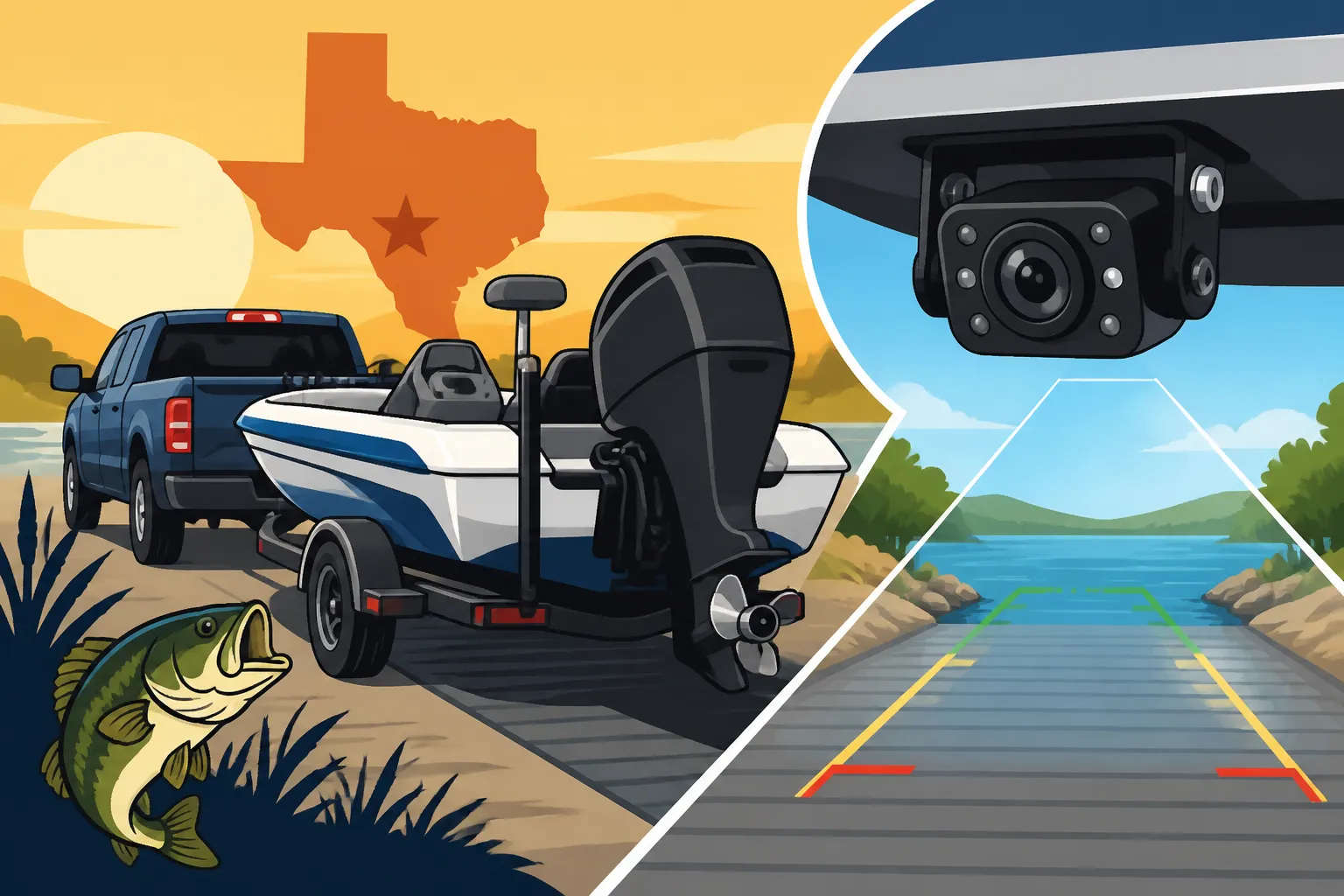
Many backup cameras come with on-screen grid lines, and these are incredibly helpful for boat trailering. These customizable lines overlay the camera's image, providing a visual reference for distance and trajectory. Some advanced systems even offer dynamic grid lines that bend and move with your steering wheel, showing you exactly where your trailer is headed. While dynamic lines are a great bonus, even static grid lines can help you visualize the path of your trailer and judge how much space you have between your trailer and obstacles.
Think of it like having parking assist lines, but for your trailer. These lines can help you consistently back up straight, perfectly align with your boat's bunks, or gauge the distance to the water's edge at the ramp. Some cameras also integrate with parking sensors or offer audible alerts for obstacles, adding another layer of safety. These reversing aids transform the camera from just a view into a smart guiding tool, making you feel like a seasoned pro even if you're still mastering your skills on How to trailer a boat safely on Texas highways.
Installation and Maintenance Tips
Getting your backup camera installed correctly and keeping it in good working order can significantly extend its life and ensure it's always ready when you need it. While some setups are more complex than others, a few basic tips can make a big difference.
Proper Mounting and Wiring Techniques
The first step is deciding where to mount your camera. For boat trailers, the most common spots are on the rear crossbar, near the license plate, or on the trailer frame itself. The goal is to get a clear, unobstructed view of the area directly behind your boat and trailer. Consider mounting it high enough to see over the boat's transom but low enough to capture the ground immediately behind the trailer tires. If you have a particularly long boat, you might even consider a system with multiple cameras or one that can be temporarily positioned on the stern of your boat. When mounting, ensure it's securely fastened to prevent vibrations from distorting the image or causing the camera to fall off. Using lock washers or thread-locking compound can add extra security.
For wired systems, careful routing of the cable is paramount. Run the cable along the trailer frame, away from moving parts, hot exhaust, and sharp edges. Use plenty of cable ties and conduit where possible to protect the wiring from road debris, water, and chafing. Make sure there's enough slack at connection points to allow for turns and articulation without putting strain on the wires. For power, consider tapping into your trailer's running lights or reverse lights, which ensures the camera is powered when your lights are on or when you shift into reverse. If you're not comfortable with electrical work, it's always wise to consult a professional.
Wireless systems might seem easier, but proper mounting is still key. Ensure the camera's transmitter has a clear line of sight to the receiver in your vehicle to minimize interference. If your wireless camera has an external antenna, position it for optimal signal strength. If it's battery-powered, ensure it's easily accessible for charging, or consider a hardwired option that taps into your trailer's electrical system, like the running lights, for consistent power.
Cleaning and Protection for Longevity
Once installed, a little routine maintenance goes a long way. The camera lens, just like your vehicle's mirrors, can get dirty from road spray, dust, mud, and water spots. A dirty lens means a blurry image, rendering your camera far less effective. Make it a habit to wipe down the camera lens with a soft, damp cloth before and after each trip. Avoid abrasive cleaners or cloths that could scratch the lens.
Beyond cleaning, consider protective measures. If your camera isn't permanently mounted, storing it safely when not in use can prevent damage. Even if it's weatherproof, extreme prolonged exposure to the intense Texas sun can degrade plastic components over time. For cameras that stay on the trailer, some boaters use a small, removable cover when the boat is parked long-term. Also, periodically check the wiring for any signs of wear, fraying, or loose connections, especially on wired systems. The vibrations and movements of trailering can sometimes loosen connections or cause wear. Tightening any loose mounts or connections and repairing any damaged insulation can prevent bigger issues down the road. This also ties into overall Texas Boat Safety Equipment Requirements and ensures all components of your trailering setup are functioning correctly. Keeping an eye on your equipment also makes sense for things like Best way to store a boat in Texas summer heat, where extreme temperatures can impact electronics and materials.
Final Thoughts on Trailering with Confidence
Adding a backup camera to your boat trailering setup is truly one of those upgrades that pays dividends in convenience, safety, and peace of mind. No more craning your neck, guessing distances, or relying solely on a nervous spotter. Whether you opt for the robust reliability of a wired system or the flexible ease of a wireless one found at retailers like Bass Pro Shops or on Amazon, the enhanced visibility and confidence you'll gain are invaluable. It’s about making your entire boating adventure, from hitching up to launching, as smooth and enjoyable as possible, allowing you to focus on the fun of fishing.
Disclaimer
This article is for general informational purposes only and does not constitute professional advice. Laws, prices and regulations vary by location and change over time. Consult a qualified professional for guidance on your specific situation.