Best hitch setup for towing a boat in Texas
There's nothing quite like the feeling of hitching up your boat, knowing a weekend of fishing on Lake Fork, Galveston Bay, or Sam Rayburn Reservoir is just around the corner. But for many Texas anglers, the process of safely connecting that boat trailer to their truck can feel like a daunting puzzle, fraught with questions about what's strong enough, what's legal, and what's truly safe. This guide is here to untangle that complexity, walking you through the essential components and best practices for a reliable boat towing hitch setup in the great state of Texas.
Understanding the Basics of Trailer Hitches
Before we dive into the specifics of boat towing, it's crucial to understand the fundamental types of hitches available and how they interact with your vehicle and trailer. Many folks just assume "a hitch is a hitch," but that couldn't be further from the truth, especially when you're talking about heavy loads like boats. The wrong setup can lead to dangerous sway, lost trailers, or even severe accidents, which is the last thing anyone wants on a busy Texas highway.
Receiver Hitches: The Foundation
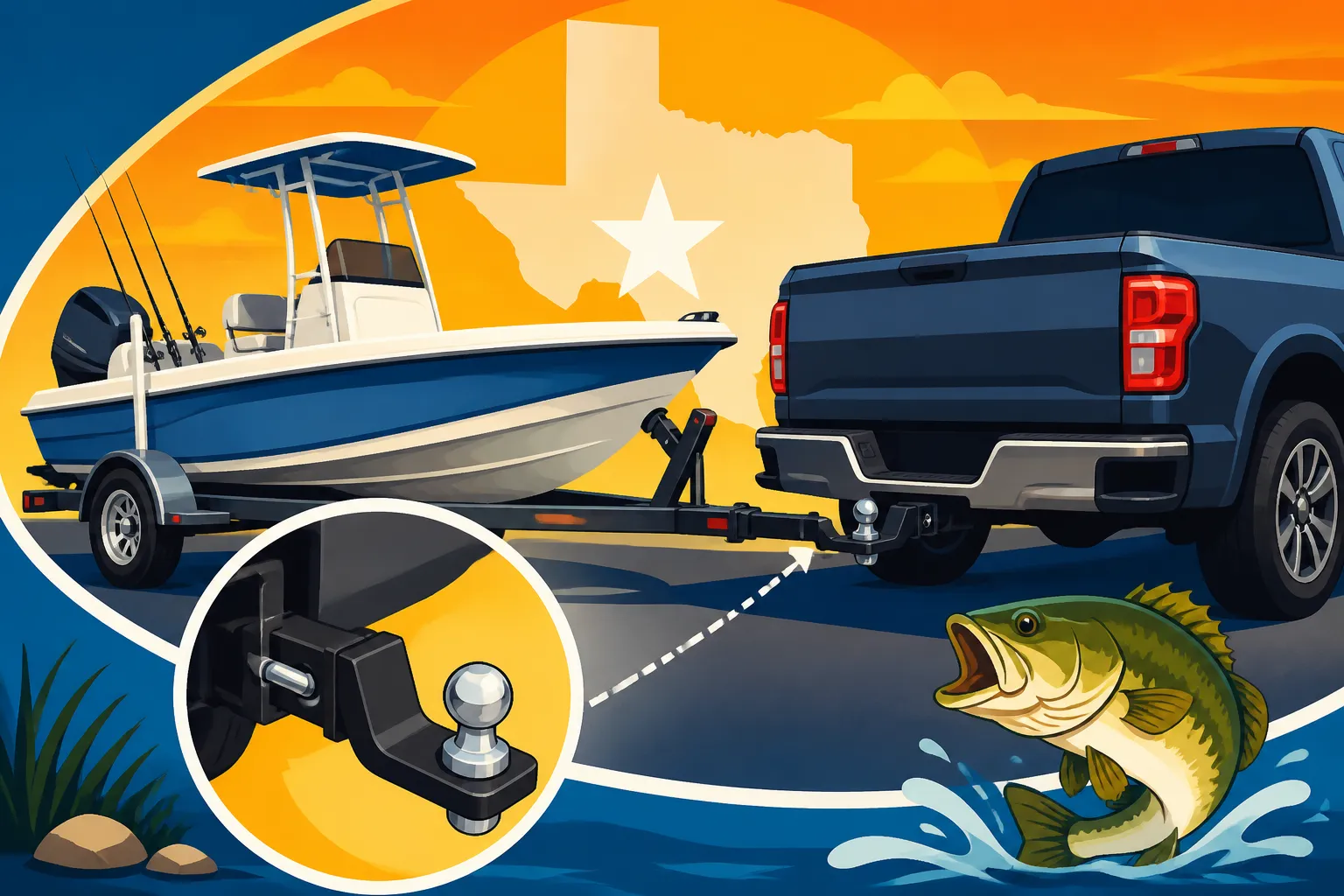
Most modern trucks and SUVs come equipped, or can be easily outfitted, with a receiver hitch. This is the square tube mounted to the frame of your vehicle, usually beneath the bumper. It's designed to accept a removable ball mount or other towing accessories. Receiver hitches are categorized into different classes based on their towing capacity and receiver opening size. For instance, a Class I hitch with a 1.25-inch receiver is great for small utility trailers, but you wouldn't dream of using it for a bass boat. For most fishing boats, you'll be looking at Class III, IV, or even V hitches, which typically have a 2-inch or 2.5-inch receiver opening.
It’s vital to know your vehicle's towing capacity and ensure your receiver hitch matches or exceeds it. Don't just eyeball it; check your owner's manual. Going over the manufacturer's recommended limits isn't just risky; it's an invitation for mechanical failure and dangerous handling on the road. The last thing you want is to be halfway to your favorite fishing spot like Toledo Bend and realize your setup is inadequate.
Ball Mounts and Hitch Balls: The Connection Point
Once you have your receiver hitch, you need a ball mount that slides into it and a hitch ball that connects to your trailer's coupler. The ball mount, often called a drawbar, comes in various lengths and drops/rises to ensure your trailer tows level with your vehicle. This level towing is absolutely critical for safety and proper weight distribution. If your trailer is nose-high or nose-low, it can significantly affect its stability and put undue stress on your vehicle and the trailer itself.
The hitch ball itself is straightforward: it has a specific diameter (e.g., 1-7/8 inch, 2 inch, 2-5/16 inch) that must match your trailer's coupler. Using the wrong size ball means a loose connection and a high risk of the trailer disconnecting while in motion. Always double-check this match before you even start to back up. Many avid anglers, myself included, have a collection of different sized hitch balls and ball mounts for various trailers. You can often find these versatile setups at places like Bass Pro Shops or even order specialized ones through Amazon if you have unique needs.
Key Components of a Texas Boat Towing Setup
Towing a boat isn't just about the hitch; it's a system. Each component plays a critical role in ensuring your boat gets from your driveway to the lake or coast safely and legally. Missing or improperly functioning parts can turn a relaxing trip into a stressful nightmare, or worse, a dangerous situation for you and other drivers on the road.
Weight Ratings: Understanding Your Limits
This is perhaps the most important aspect of safe towing. There are several weight ratings you absolutely must understand:
- Gross Trailer Weight (GTW): This is the total weight of your loaded boat trailer, including the boat, engine, fuel, gear, and the trailer itself. Always weigh your loaded trailer at a certified scale if you're unsure.
- Tongue Weight (TW): This is the downward force exerted by the trailer's tongue onto the hitch ball of the tow vehicle. It should typically be 10-15% of the GTW. Too little tongue weight can cause severe trailer sway, making it incredibly difficult to control. Too much can overload your vehicle's rear axle and suspension.
- Tow Vehicle Rating: Your truck or SUV has a maximum towing capacity specified by the manufacturer. This isn't just about pulling power; it includes braking, suspension, and chassis integrity.
- Hitch Rating: Your receiver hitch and ball mount also have their own maximum weight capacities.
You must not exceed the lowest weight rating of any component in your entire towing system – vehicle, hitch, ball mount, or hitch ball. If your truck can pull 10,000 lbs, but your hitch is only rated for 7,500 lbs, your maximum towing capacity is 7,500 lbs. It’s a classic weak-link scenario. Overlooking these limits is a common mistake and one that can have serious consequences.
Safety Chains and Breakaway Systems
Safety chains are non-negotiable and required by law. They serve as a backup in case your primary hitch connection fails. These chains should be crossed under the trailer tongue, forming an "X" shape, and attached to designated points on your tow vehicle's hitch or frame. The crossing helps cradle the tongue if it detaches, preventing it from digging into the pavement. They should be just long enough to allow for turns but short enough to prevent the tongue from hitting the ground if it disconnects.
For trailers over a certain weight (usually 3,000 lbs GTW in Texas), a breakaway system is also required. This system consists of a battery-powered brake activator that senses when the trailer has separated from the tow vehicle. When activated, it applies the trailer's brakes, bringing it to a safe stop. This is a critical safety feature for larger boat trailers, offering an extra layer of protection on busy Texas roads. Make sure the battery in your breakaway system is regularly checked and charged.
Trailer Lights and Wiring Harness
Functional trailer lights are absolutely essential for safety and legal compliance. This includes running lights, brake lights, turn signals, and often reverse lights. Your tow vehicle needs a wiring harness that connects to your trailer's lighting system, transmitting these signals. Most modern trucks have a factory-installed wiring harness with a standard 4-pin or 7-pin connector.
The 4-pin connector handles basic lighting (tail lights, brake lights, turn signals). The 7-pin connector, common for larger boats, adds functions like reverse lights, auxiliary power for charging a trailer battery, and often the connection for a trailer brake controller. Always test your lights before every trip. A quick walk-around and a visual check of all lights working is a simple step that can prevent a ticket or, more importantly, an accident caused by other drivers not knowing your intentions. It's often frustrating when a wire works one day and not the next; carrying a spare set of fuses and a basic wiring tester can save a lot of headaches on the road.
Choosing the Right Hitch for Your Texas Boating Needs
Selecting the optimal hitch setup goes beyond just capacity; it's about matching your specific boat, vehicle, and towing habits. Whether you're hauling a small jon boat to a river or a large offshore fishing vessel to the Gulf Coast, the right equipment makes all the difference in safety and peace of mind.
Standard Receiver Hitches vs. Weight Distribution Hitches
For lighter to medium-sized boat trailers, a standard receiver hitch combined with the correct ball mount and hitch ball is often sufficient. This setup directly transfers all tongue weight to your tow vehicle's rear axle. However, as boat size and weight increase, especially if your tongue weight approaches or exceeds 10% of your tow vehicle's curb weight, a weight distribution hitch becomes a game-changer.
A weight distribution hitch uses spring bars to distribute a portion of the tongue weight forward to your tow vehicle's front axle and rearward to the trailer's axles. This helps maintain a level towing stance, reduces squat in the tow vehicle's rear, and significantly improves stability and handling, especially in crosswinds or when passing semi-trucks. For larger bass boats or bay boats destined for the Texas coast, the added stability provided by a weight distribution hitch can be invaluable. It transforms the towing experience, making it much more comfortable and secure. Texas Boat Registration Requirements often don't dictate hitch type, but safe towing practices certainly do.
Sway Control: An Added Layer of Stability
Even with a perfectly balanced weight distribution setup, some trailers, especially longer or heavier ones, can be prone to sway, which is terrifying when it happens. Sway control devices can be integrated into weight distribution hitches or purchased as standalone add-ons. These devices use friction or cam-action to resist lateral movement of the trailer, keeping it tracking straight behind your vehicle.
If you've ever felt that unnerving tug from your trailer in strong winds or after a sudden lane change, you know the value of sway control. Texas weather can be unpredictable, with gusty winds sweeping across open highways, so having that extra layer of stability can truly make your journey safer and less stressful. Think of it as an insurance policy for your peace of mind, especially on long hauls down I-45 to Galveston or I-35 to Canyon Lake.
| Hitch Component | Primary Function | Key Considerations |
|---|---|---|
| Receiver Hitch | Mounts to vehicle frame, accepts ball mount | Class rating, opening size (1.25", 2", 2.5") |
| Ball Mount | Slides into receiver, holds hitch ball | Drop/rise to level trailer, weight capacity |
| Hitch Ball | Connects to trailer coupler | Diameter (1-7/8", 2", 2-5/16"), weight capacity |
| Safety Chains | Secondary connection in case of primary failure | Crossed under tongue, proper length, strong enough |
| Wiring Harness | Transmits electrical signals for trailer lights | 4-pin or 7-pin connector, function testing |
| Brake Controller | Activates electric trailer brakes | Proportional vs. time-delayed, proper setup |
| Breakaway System | Applies trailer brakes if trailer detaches (required for heavier trailers) | Battery condition, regular testing |
| Weight Dist. Hitch | Distributes tongue weight for stability (optional) | Reduces squat, improves handling for heavier loads |
| Sway Control | Minimizes trailer sway (optional) | Friction or cam-action, especially useful in wind |
Trailer Brake Controllers
For any boat trailer equipped with electric brakes (which is common for heavier trailers), a trailer brake controller is absolutely essential. This device, mounted in your tow vehicle's cab, allows you to activate and modulate your trailer's brakes. There are two main types:
- Time-delayed controllers: These apply a set amount of braking power to the trailer after a short delay once you press your vehicle's brake pedal. They are simpler but less intuitive.
- Proportional controllers: These are far superior as they sense the deceleration of your tow vehicle and apply braking power to the trailer proportionally and simultaneously. This provides much smoother, more controlled stops, reduces wear on your vehicle's brakes, and significantly enhances safety.
A properly installed and calibrated proportional brake controller makes a huge difference in how your entire rig handles, especially when you need to stop quickly or descend a steep grade. Without it, your vehicle's brakes are doing all the work, which can lead to overheating, fading, and much longer stopping distances. This is a crucial piece of equipment that many overlook until they experience a white-knuckle stopping situation. Remember that Texas Boat Safety Equipment Requirements are critical, but so is your towing gear.
Installation, Maintenance, and Safety Tips
Once you've assembled all the correct components, proper installation, diligent maintenance, and adherence to safety guidelines are what truly ensure a smooth and worry-free towing experience. Cutting corners here isn't just risky; it's potentially catastrophic. We've all seen trailers broken down on the side of the highway, and often, it comes down to a lack of attention to these details.
Proper Installation and Hitch Setup
While many receiver hitches are bolt-on affairs, if you're not comfortable working under your vehicle, professional installation is always recommended. This ensures the hitch is properly secured to your vehicle's frame and that any necessary wiring is correctly routed and connected. For weight distribution hitches, correct setup is even more critical. This involves precise adjustments to the spring bars and sometimes the hitch head angle to achieve the desired weight distribution and level towing. Many larger retailers, like Bass Pro Shops, offer installation services or can recommend qualified installers.
Once installed, always ensure your ball mount is fully inserted into the receiver and secured with the appropriate hitch pin and clip. Never rely on friction alone. The hitch ball must be tightened to the correct torque specification on the ball mount – a loose hitch ball can quickly become a projectile. You can find robust hitch pins and locks at Amazon to secure your setup and deter theft.
Regular Maintenance and Inspections
Towing components endure a lot of stress, so regular inspection and maintenance are key to their longevity and safety. Before every trip, perform a quick pre-trip inspection:
- Check all connections: Ensure the hitch pin is secure, the coupler is latched onto the hitch ball and locked, and safety chains are properly attached.
- Inspect trailer lights: Verify all running lights, brake lights, and turn signals are working.
- Check tire pressure: For both your tow vehicle and trailer, ensure tires are inflated to the manufacturer's recommended pressure. Under-inflated tires are a leading cause of trailer sway and blowouts.
- Examine wiring: Look for any frayed wires, loose connections, or corrosion.
- Test trailer brakes: If applicable, manually activate your trailer brakes to ensure they are engaging properly.
- Lubricate: Keep your hitch ball lightly greased to reduce friction and wear.
After extended towing, it's also a good idea to check the torque on your hitch's mounting bolts and the hitch ball nut. Vibrations and stress can sometimes loosen fasteners over time.
Smart Towing Practices on Texas Roads
Even with the best equipment, how you drive is paramount to safety. Texas highways can be fast and unforgiving.
- Drive defensively: Anticipate stops, allow extra following distance, and brake earlier and more gently than you would without a trailer.
- Slow down: Reduce your speed, especially in adverse weather, on winding roads, or when visibility is poor. Speed is a major factor in trailer sway incidents.
- Wide turns: Remember your trailer will cut inside your vehicle, so take wider turns to avoid hitting curbs or other obstacles.
- Check mirrors frequently: Keep an eye on your trailer in your side mirrors to detect any signs of sway or issues.
- Know your route: Plan ahead for steep grades, sharp turns, or low clearances that might pose challenges for your rig.
- Take breaks: Long hauls can be fatiguing. Pull over safely to rest and re-inspect your setup.
By understanding your gear, maintaining it properly, and driving with an extra dose of caution, you'll be well-equipped to enjoy countless fishing adventures across our beautiful state, from the freshwater havens covered in Texas Freshwater Fishing Regulations to the bountiful Texas Saltwater Fishing Regulations zones.
Disclaimer
This article is for general informational purposes only and does not constitute professional advice. Laws, prices and regulations vary by location and change over time. Consult a qualified professional for guidance on your specific situation.