Does a fishing guide need a special Texas license?
It's easy to get excited about booking a fishing trip with a seasoned guide here in Texas, but sometimes you might wonder about the nitty-gritty details of their operation. Do they need some kind of "special" license beyond what we, as recreational anglers, have to get? It’s a fair question, and one that highlights the complex world of commercial fishing operations. This guide is going to walk you through exactly what licenses and permits a professional fishing guide in Texas needs to legally and safely operate, ensuring peace of mind for both the guide and their clients.
The Foundation: Fishing License Requirements for Texas Guides
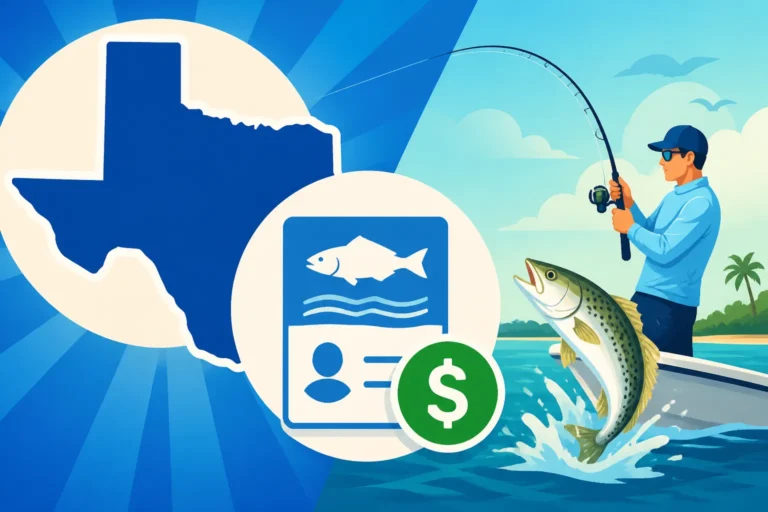
Let's start with the basics. Just like anyone else who plans to cast a line or harvest fish in Texas public waters, a fishing guide needs a personal fishing license. This isn't a "special" guide license, but rather the same kind of license you or I would purchase. However, the exact type depends on whether they're fishing freshwater, saltwater, or both, and if they're residents or non-residents.
The Guide's Personal Fishing License
If your guide is actively participating in the fishing – meaning they're baiting hooks, casting, setting lines, or otherwise attempting to catch fish – they absolutely need to possess a valid Texas fishing license. This is non-negotiable. It doesn't matter if they're just demonstrating a technique or trying to fill a limit alongside their clients; if they're fishing, they need the license. This is generally the same license an individual angler would get, such as a Texas All-Water Fishing License Explained or a specific freshwater or saltwater license.
It's common for guides to have an All-Water Fishing Package, which covers both freshwater and saltwater fishing throughout the state, often including the necessary endorsements. This package simplifies things for guides who might operate in various environments, from East Texas bass lakes to the coastal bays of Galveston or Corpus Christi. Even if a guide claims they "don't fish," merely handling a rod or net to assist in a catch could technically be interpreted as fishing, making a personal license a smart choice for any guide to avoid issues.
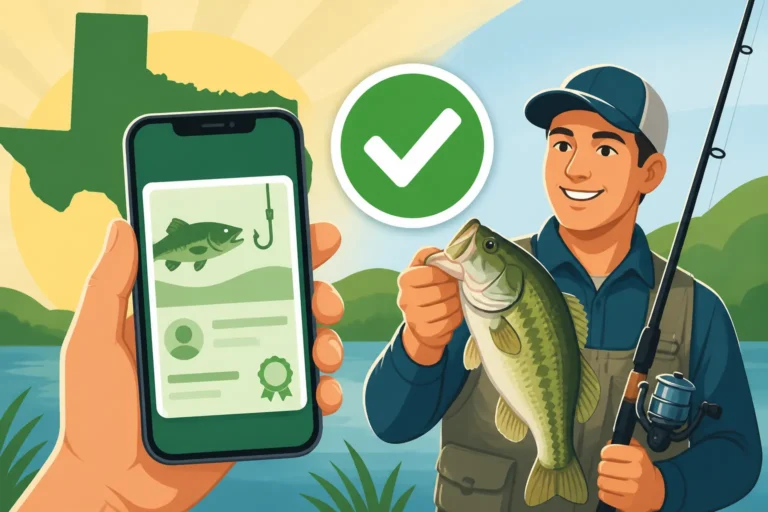
Think of it this way: if a game warden observes someone acting in a manner consistent with fishing, and they don't have a license, they could be cited. A professional guide, who is constantly interacting with fishing equipment, puts themselves at unnecessary risk if they don't carry a current license. They might carry it digitally on their phone using the Texas fishing license mobile app explained or have a physical copy readily available.
Required Endorsements for Specific Waters
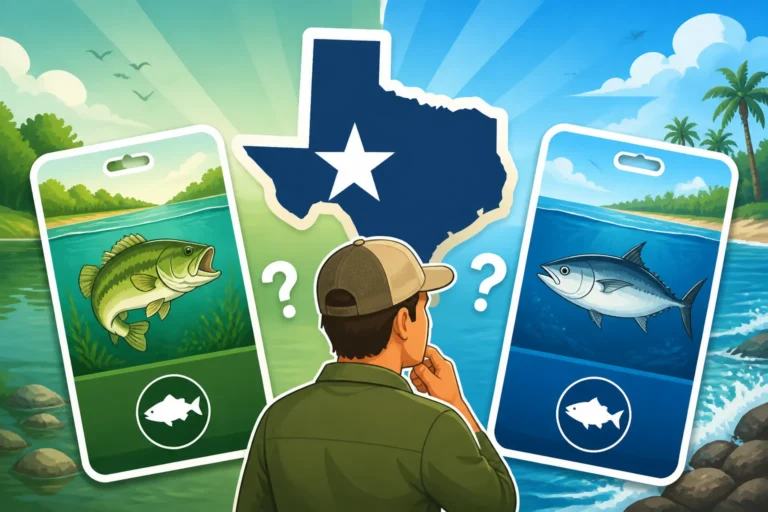
Beyond the basic fishing license, Texas has endorsements that are essentially add-ons for specific types of fishing. For guides, these are just as crucial as the base license. If a guide is taking clients into saltwater, they must have a valid saltwater endorsement as part of their fishing package. The same goes for certain species or gear types, though these are less common for recreational guides.
For instance, a guide operating in Port Aransas bays chasing redfish and speckled trout will absolutely need the saltwater endorsement. Without it, even if they have a general freshwater license, they're not legally permitted to fish in saltwater, nor are they fully compliant as a professional leading trips in those specific waters. The Texas Saltwater Endorsement Explained details these requirements thoroughly.
The beauty of the "All-Water" package is that it typically includes both the freshwater and saltwater endorsements, saving guides the hassle of purchasing them separately. This comprehensive approach ensures they're covered regardless of where their clients want to cast a line, from the largemouth bass waters of Lake Fork to the oyster reefs of Matagorda Bay. It's about being fully prepared for whatever fishing adventure comes their way.
Beyond the Personal: Commercial Permits and Endorsements
This is where the "special license" aspect really comes into play. While a personal fishing license covers the act of fishing, a commercial guide operates a business, and that comes with a whole other layer of regulatory requirements in Texas. These commercial licenses and permits are designed to ensure public safety, protect natural resources, and regulate commercial activity.
The Federal Operator of Uninspected Passenger Vessels (OUPV) License
For many guides who operate on federal waters or even certain state waters that fall under U.S. Coast Guard jurisdiction, the most significant "special license" is the Operator of Uninspected Passenger Vessels (OUPV) license, often called a "Six-Pack" license. This is a U.S. Coast Guard (USCG) credential that allows a captain to take up to six paying passengers on uninspected vessels.
This license requires extensive sea time, passing a comprehensive exam on navigation, rules of the road, safety, and seamanship, as well as a physical and drug test. It’s a serious credential, and a reputable guide will proudly display it. This isn't just a Texas requirement; it's federal law. If your guide is taking you out on the Gulf, or on larger bays that are federally designated navigable waters, this license is essential. It's a key indicator of a guide's professionalism and commitment to safety.
Without a valid USCG OUPV license, a guide cannot legally charge clients to take them fishing on any waters subject to federal jurisdiction. This is a critical distinction that many new anglers might not realize. It’s not just about knowing how to catch fish; it's about safely operating a vessel with paying passengers. You might find a guide buying specialized navigation charts or safety equipment from retailers like Amazon in preparation for their USCG exams or to keep their vessel compliant.
Other Commercial Operating Permits
Depending on the specific type of guided trip and the waters involved, a guide might need other commercial operating permits. For instance, some state parks or managed lakes might require specific permits for commercial operators to launch or conduct business within their boundaries. While less common than the USCG license, it's worth noting.
If a guide is operating out of a specific marina or fishing lodge, there might also be local business permits or dockage agreements that need to be in place. These aren't fishing licenses per se, but they are crucial for a guide's overall legal operation. They show that the guide is running a legitimate business, not just a casual venture. It reflects a level of commitment to their craft and adherence to all applicable laws.
It's also worth considering specific locations. For example, if a guide specializes in trips on Lake Texoma, which straddles the Texas-Oklahoma border, they'll need to be aware of the Lake Texoma Fishing License Rules and potentially possess reciprocal licensing or special permits to operate legally on both sides of the lake, especially if charging for services. This kind of multi-jurisdictional operation adds another layer of complexity.
Navigating Federal and Interstate Waters: Additional Licensing
Texas is a vast state, and its waters can sometimes cross into federal jurisdiction or even other states. This introduces additional layers of licensing that a responsible guide must navigate. It's not always straightforward, and ignorance of these rules is never an excuse.
Federal Fisheries and Beyond the State Line
When a Texas fishing guide ventures into the Gulf of Mexico beyond the state's territorial waters (typically nine nautical miles from shore), they are entering federal waters. In these areas, additional federal permits might be required, especially if targeting certain species managed by federal agencies like NOAA Fisheries. For example, specific permits are needed for highly migratory species like tuna or certain reef fish if they are caught in federal waters.
A guide specializing in offshore trips will not only need their USCG OUPV license but also possibly federal Highly Migratory Species (HMS) permits or Gulf of Mexico reef fish permits, depending on their target species. These permits come with their own set of regulations, reporting requirements, and seasons that are distinct from state regulations. It’s a complex landscape that requires a deep understanding of marine law.
For clients, knowing their guide is federally permitted for offshore trips ensures they are fishing legally and that the guide is operating within the bounds of conservation efforts designed to protect these valuable resources. You might find guides stocking specialized gear for these trips, such as heavy-duty rods and reels, which are often available from online retailers like Amazon for convenience.
Interstate Water Bodies: Lake Texoma and Others
Texas shares several significant water bodies with neighboring states, the most famous being Lake Texoma with Oklahoma, and Toledo Bend Reservoir with Louisiana. For guides operating on these specific lakes, understanding reciprocal agreements and interstate licensing is paramount.
For Lake Texoma, a special license allows anglers (and guides) to fish the entire lake, regardless of which state issued the license, provided it's the proper Texoma-specific license or an all-water license with the correct endorsements. However, commercial guiding operations might have different stipulations. A guide operating from the Texas side of Texoma needs to ensure they are fully compliant with both Texas and potentially Oklahoma regulations, or at least the reciprocal agreements for commercial activity. It’s not just about where you fish, but how you operate commercially on shared resources.
Similarly, on the Sabine River or Toledo Bend, which form parts of the Texas-Louisiana border, there are reciprocal fishing license rules. Guides working these waters must be intimately familiar with these agreements to avoid legal pitfalls. It often means ensuring their Texas license and any commercial permits are recognized, or obtaining additional permits from the neighboring state if their operations extend extensively into those waters.
More Than Just Licenses: Boat Safety and Operational Standards
Beyond the personal and commercial licenses, a professional fishing guide in Texas has a whole host of other responsibilities related to their vessel and overall operation. These are crucial for the safety of their clients and the smooth running of their business.
Boat Registration and Safety Equipment
Every motorized boat operating in Texas public waters, regardless of whether it's used for commercial purposes, must be registered with the Texas Parks and Wildlife Department (TPWD) and display current registration decals. This is a basic requirement for any boat owner. For a guide, this is especially important as their vessel is their workplace. You can find more details on Texas Boat Registration Requirements.
Furthermore, every vessel carrying passengers for hire, especially those operating under a USCG OUPV license, must adhere to strict safety equipment requirements. This isn't just a recommendation; it's the law. This includes:
- Life Jackets: A properly sized, serviceable life jacket for every person on board, readily accessible. For children, it must be worn if under a certain age (typically 13 in Texas while the boat is underway).
- Fire Extinguishers: The correct type and number of Coast Guard-approved fire extinguishers based on the boat's size.
- Visual Distress Signals: Flares or other signals for day and night use, especially in coastal waters.
- Sound Producing Devices: A whistle or horn to signal intentions or alert others.
- Navigation Lights: Functional navigation lights for operation between sunset and sunrise or in periods of restricted visibility.
- First Aid Kit: A well-stocked first aid kit is a must for any professional operator.
Guides often invest in higher-quality safety gear, knowing that their clients' lives depend on it. They'll regularly check expiration dates on flares and inspect life jackets for wear and tear. Retailers like Amazon are a common source for refreshing safety supplies. A guide should be able to confidently show you these items if asked.
Boater Education and Insurance
While a standard boater education course is required for certain age groups to operate a boat in Texas, a professional guide often goes far beyond the minimum. Their USCG OUPV license itself is a testament to advanced boater education, but many also pursue additional training in first aid, CPR, and advanced marine safety. This commitment to ongoing education instills confidence in clients.
Moreover, a responsible fishing guide will carry adequate commercial liability insurance. This protects both the guide and their clients in the unlikely event of an accident or unforeseen incident. While not directly a "license," proof of insurance is a critical aspect of being a legitimate and trustworthy commercial operator. Never hesitate to ask a potential guide about their insurance coverage; a professional will be happy to provide this information.
Think about it: you're trusting this person with your safety, your time, and your money. Knowing they are properly licensed, equipped, educated, and insured offers immense peace of mind. It’s a sign of a guide who takes their profession seriously and understands their responsibilities.
Why All These Rules Matter: Protecting Anglers and Preserving Our Waters
All these licenses, permits, and regulations aren't just bureaucratic hurdles; they serve vital purposes. They protect you, the angler, ensure the guide's professionalism, and contribute to the health of Texas's incredible fisheries.
Protecting Clients and the Environment
The most immediate benefit of a properly licensed and regulated guide is client safety. The USCG OUPV license, in particular, focuses heavily on safe vessel operation, emergency procedures, and passenger management. This means your guide has demonstrated a high level of competence in navigating, preventing accidents, and responding to crises on the water. You're not just getting someone who knows how to catch fish; you're getting a certified boat captain.
These regulations also play a critical role in environmental stewardship. Commercial fishing operations have a greater potential impact on fish populations and habitats due to their frequency and scale. By requiring guides to adhere to bag and length limits (as outlined in things like Texas Freshwater Fishing Regulations and Texas Saltwater Fishing Regulations), proper gear usage, and responsible practices, the state helps ensure that our fisheries remain healthy and sustainable for future generations. A guide who respects these rules is a vital partner in conservation.
Consider a guide taking clients to a sensitive redfish flat. Their knowledge of catch-and-release best practices, understanding of slot limits, and adherence to specific seasonal closures (like Texas Flounder Season and Limits) are all crucial for minimizing impact. These aren't just rules for individuals; they are professional mandates that protect the very resources their livelihood depends on.
Maintaining Professional Standards
In any profession, licensing helps establish a baseline of competence and professionalism. For fishing guides, these licenses and permits signify that the individual has met certain state and federal standards. It distinguishes a true professional from a casual angler who might offer "trips" on the side without proper credentials. This is important for the industry as a whole.
A properly licensed guide is also more likely to be up-to-date on current regulations, fishing techniques, and local conditions. They are invested in their business and reputation, which encourages them to stay informed and provide a high-quality, safe, and productive experience. This benefits everyone, elevating the entire Texas guiding community.
When you book with a fully compliant guide, you're supporting legitimate businesses that contribute to the local economy and respect the laws designed to protect our natural resources. It also ensures that if something goes wrong, there are established protocols and accountability, giving clients a recourse that might not exist with an unlicensed operator.
Avoiding Legal Trouble and Fines
For guides, failing to comply with licensing and permit requirements can lead to serious consequences, including hefty fines, loss of privileges, and even criminal charges. Operating a commercial vessel without a USCG license, for example, is a federal offense. Fishing without a personal license, even for a guide, can result in significant penalties, as discussed in Penalties for Fishing Without a Texas License.
| License/Permit Type | Issuing Authority | Purpose | Penalties for Non-Compliance |
|---|---|---|---|
| Texas Fishing License + Endorsements | TPWD | Legal permission to fish for individuals | Fines, potential loss of fishing privileges |
| USCG OUPV ("Six-Pack") License | U.S. Coast Guard | Legal permission to carry paying passengers on uninspected vessels | Federal fines, loss of license, potential imprisonment |
| Boat Registration | TPWD | Legal identification and ownership of vessel | Fines, impoundment of vessel |
| Commercial Liability Insurance | Private Insurer | Financial protection for guide and clients | Guide personally liable for damages, lawsuits |
| Specific Area/Park Permits | Local/State Authorities | Permission for commercial operations in designated areas | Fines, revocation of operating privileges |
This table clearly illustrates the various layers of compliance required for a professional guide in Texas. Each column represents a critical component of legal and safe operation.
The consequences of operating without the necessary permits extend beyond the guide themselves; it can also put clients in a precarious position. If an incident occurs on an illegally operated vessel, insurance might be void, leaving everyone involved in a difficult spot. It's a risk that no reputable guide or client should be willing to take. Knowing a guide is fully licensed means they are prioritizing their clients' safety and their own legal standing.
Choosing Your Next Texas Fishing Guide: What to Look For
Given all these requirements, how do you, as a client, ensure you're booking a legitimate and professional Texas fishing guide? It boils down to asking the right questions and looking for specific credentials.
What to Ask Your Potential Guide
Don't be shy about asking a potential guide about their credentials before booking a trip. A professional guide will welcome your questions and be transparent with their answers. Here are some key things to inquire about:
- "Do you have a current Texas fishing license with the appropriate endorsements for our trip?" (e.g., saltwater for coastal trips). This confirms their personal legality to fish.
- "Are you a US Coast Guard licensed captain?" If your trip involves a motorized vessel on federal or larger state waters, this is crucial. Ask about their OUPV ("Six-Pack") license.
- "Is your vessel properly registered and equipped with all required safety gear?" A good guide will confirm this and even point out safety features before you depart. You might also subtly observe if they have life jackets for all passengers, visible fire extinguishers, and other necessary items.
- "Do you carry commercial liability insurance?" This is a key indicator of professionalism and protection. While they might not share policy details, they should confirm they are insured.
- "How long have you been guiding in this area?" Experience isn't a license, but it speaks volumes about their knowledge and track record.
A trustworthy guide will have no issue providing satisfactory answers to these questions. They understand that clients are looking for a safe, legal, and productive experience, and their credentials are a big part of that assurance. You're investing in an experience, and you have every right to expect a professional service.
Resources for Verifying Guide Credentials
While you can always ask your guide directly, there are some resources for verification, particularly for USCG licenses. The U.S. Coast Guard maintains a database for verifying captain's licenses. While not publicly available for direct lookups by name, a guide can provide proof of their credentials. You can also typically call the Coast Guard's National Maritime Center to verify a license if you have the captain's full name and license number.
For Texas fishing licenses, while there isn't a public lookup tool by name, you can always ask to see the physical or digital copy of their license. Remember, the goal isn't to be intrusive but to ensure you're in capable and legal hands. Most professional guides have websites or social media pages where they proudly display their certifications and positive client testimonials, further building confidence. Many even feature their USCG license numbers or provide detailed explanations of their safety protocols to reassure potential clients.
Ultimately, choosing a guide with all the necessary licenses and permits is an investment in safety, legality, and a higher quality fishing experience. It allows you to focus on the joy of the catch, knowing that your guide has taken all the necessary steps to run a professional and compliant operation.
Disclaimer
The information provided in this guide is for general informational purposes only and does not constitute legal advice. Fishing regulations and licensing requirements can change, and it is the sole responsibility of individuals and commercial operators to verify and comply with all current local, state, and federal laws. Always consult the official Texas Parks and Wildlife Department (TPWD) and U.S. Coast Guard resources for the most up-to-date and accurate information.