Best line weight for Texas bass fishing
Choosing the right fishing line for bass in Texas can feel like a riddle wrapped in an enigma, especially with our diverse waters, from the crystal-clear Hill Country lakes to the tannin-stained rivers of East Texas, and the constant pressure on our trophy fish. It's not just about what breaks or holds, but what helps you catch more fish consistently. This guide is here to untangle that line of thought, helping you navigate the world of line weights so you can make confident choices on your next Texas bass adventure.
Understanding the Texas Bass Fishing Landscape and Line Weight
Texas bass fishing isn't a one-size-fits-all endeavor. We have everything from sprawling, timber-filled reservoirs like Lake Fork, known for its monster largemouth, to tight, rocky rivers holding feisty Guadalupe bass. The conditions change not just from lake to lake, but day to day, and even hour to hour. The kind of cover you're fishing, the water clarity, the size of the bass you're targeting, and even the type of lure you're using all play a significant role in determining the optimal line weight. Getting this right is a huge step in improving your catch rates.
Why Line Weight Matters More Than You Think
Many anglers, especially those just starting, might grab any line that says "bass fishing" on the spool and call it a day. But the truth is, line weight is a critical factor influencing almost every aspect of your fishing experience. Think about it: too heavy, and your lure might not swim naturally, your casting distance suffers, and finesse presentations become clunky. Too light, and you're risking break-offs on big fish, especially around the unforgiving structure that Texas lakes are famous for.
The right line weight optimizes your casting distance, allowing you to reach those distant submerged hydrilla lines or lily pad fields. It dictates how naturally your lure presents itself in the water – a heavy line can hinder the subtle action of a weightless worm, while a lighter line lets it dance. Sensitivity is another huge factor; a thinner, lower-stretch line transmits those subtle bites much better than a thick, stretchy one. And, of course, when you hook into a Texas leviathan, having the appropriate fighting power and abrasion resistance is paramount to getting that fish to the boat, not losing it to a snag or a rubbed line.
Common Line Types for Texas Bass Anglers
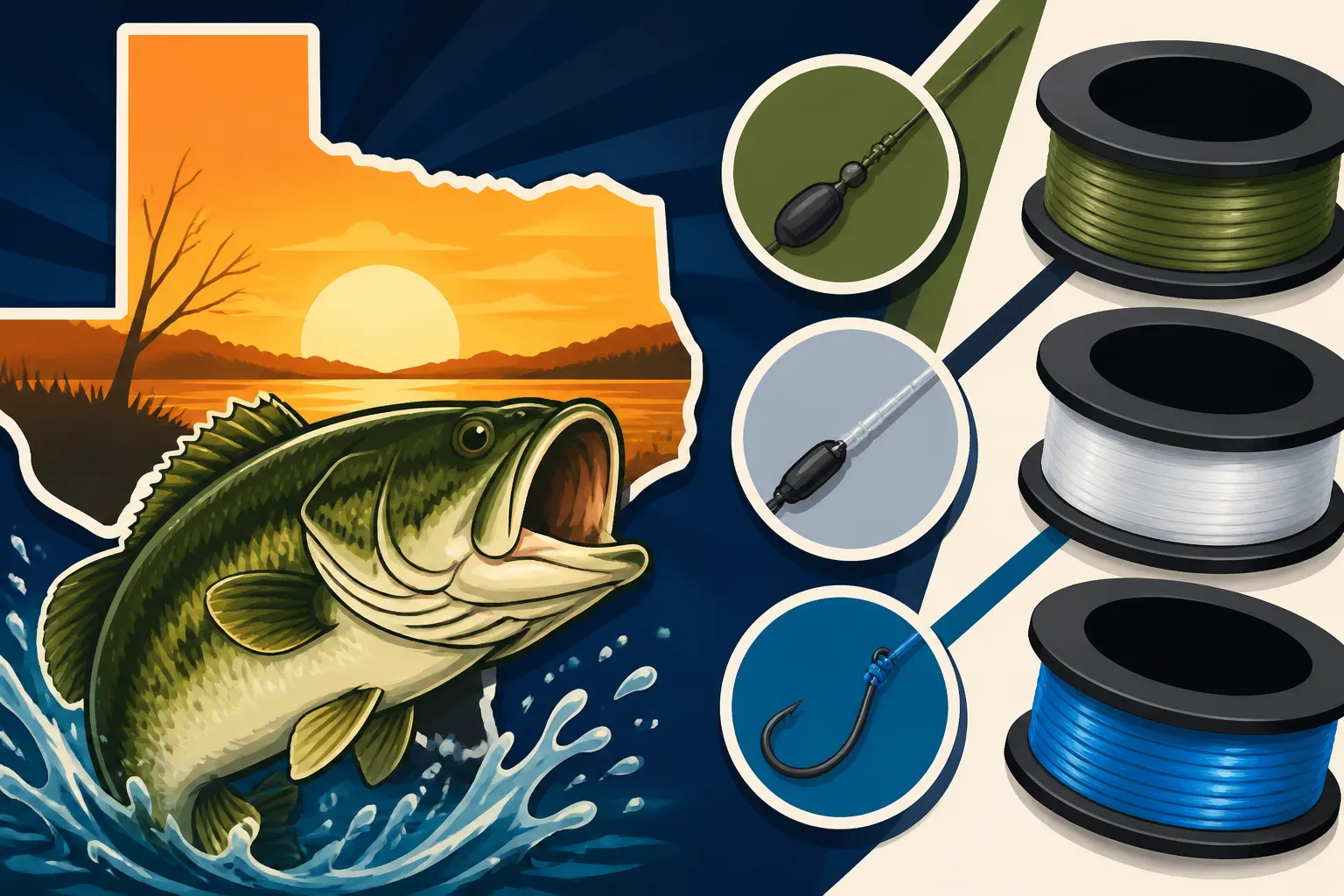
Before we dive into specific weights, let's briefly touch on the three main types of fishing line you'll encounter, as each has its own strengths and weaknesses that influence the best weight choice. Many anglers even combine these types, using one as a mainline and another as a leader. You can find a vast selection of all these line types on platforms like Amazon, making it easy to experiment and find what works for you.
- Monofilament (Mono): This is the classic, affordable, and easy-to-use line. Its key characteristic is stretch, which can be a double-edged sword. The stretch acts as a shock absorber, helping to prevent hooks from tearing out of a bass's mouth during a sudden run or head shake. It's also easy to cast and offers decent knot strength. However, its memory (coiling), lower sensitivity, and susceptibility to UV degradation mean it needs to be changed more frequently. Mono tends to float, making it a good choice for topwater lures.
- Fluorocarbon (Fluoro): Often seen as the "gold standard" for many bass pros, fluorocarbon boasts near-invisibility underwater, making it fantastic for clear water and pressured fish. It has very low stretch compared to mono, offering excellent sensitivity, and it's highly abrasion resistant, a huge plus around rocky banks and submerged timber. Fluoro also sinks, which can be beneficial for getting crankbaits deeper or keeping Texas rigs on the bottom. The downsides are its higher cost and sometimes stiffer nature, which can make knot tying a bit more challenging, though specific knots like the Palomar or improved clinch work great.
- Braided Line (Braid): When it comes to raw strength, zero stretch, and ultimate sensitivity, braid takes the crown. Made from woven synthetic fibers, it offers incredible casting distance and unparalleled power to pull fish out of the heaviest cover. Its lack of stretch means you feel every tick and bump, and hooksets are immediate and powerful. However, braid is highly visible underwater, which can spook wary fish in clear conditions. It also has poor abrasion resistance against hard, sharp objects, and can be notorious for digging into itself on the spool if not spooled tightly. Many anglers use braid as their mainline and tie on a fluorocarbon leader for stealth.
Matching Line Weight to Techniques and Conditions
Now that you know the basics of line types, let's get into the nitty-gritty of choosing the right weight for various techniques and the conditions you'll face in Texas. Remember, these are general guidelines, and personal preference always plays a role.
Line Weights for General Purpose and Reaction Baits
When you're covering water, looking for active fish, or throwing lures that create a reaction strike, you often need lines that cast well, have a bit of forgiveness, and can withstand the aggressive takes.
For lighter reaction baits like smaller crankbaits, spinnerbaits, or even some topwater lures, a 10-14 lb monofilament is often an excellent choice. The inherent stretch in mono helps prevent fish from throwing treble hooks, especially when they jump or make sudden surges. Its floating nature is also a big plus for topwater baits, allowing them to sit higher on the surface and perform their walk-the-dog action effectively. If you're fishing in relatively open water without a lot of heavy cover, this weight range offers a good balance of castability and strength. You might use this setup when fishing the open pockets of hydrilla on a lake like Lake Palestine, where bass are chasing baitfish.
When you're throwing deeper diving crankbaits, lipless crankbaits, or jerkbaits, where getting the bait down and imparting action are key, 12-17 lb fluorocarbon becomes a strong contender. The low stretch of fluorocarbon improves sensitivity, helping you feel subtle bites as your crankbait deflects off structure or ticks the bottom. Its sinking property also helps your crankbaits reach their maximum diving depth more efficiently. The abrasion resistance is a huge bonus when your crankbait is grinding against rocks, stumps, or shell beds. For example, when fishing the ledges and drops of Lake Whitney for striped bass or bigger largemouth, a 15 lb fluorocarbon could be ideal for your deep-diving crankbaits.
Line Weights for Finesse Fishing
Texas waters are often heavily fished, and bass can become incredibly wary. When faced with clear water, high fishing pressure, or stubborn fish, finesse techniques are your secret weapon. These methods demand invisibility, supreme sensitivity, and subtle lure presentations.
For classic finesse presentations like the drop shot, Ned rig, shaky head, or weightless wacky-rigged worms, a 6-10 lb fluorocarbon is the standard. Its invisibility is unmatched, which is absolutely crucial for fooling educated bass in clear-water lakes such as Canyon Lake or Lake Amistad. The low stretch of fluorocarbon ensures that even the lightest tap on your line is transmitted directly to your rod tip, allowing for quick and accurate hooksets on those light-biting fish. Additionally, its sinking properties help these light baits get to the bottom efficiently and stay there. Many anglers swear by a good quality fluorocarbon in this range for their spinning setups.
However, many experienced anglers prefer the best of both worlds: a 10-15 lb braided mainline with a 6-10 lb fluorocarbon leader. This setup provides the incredible casting distance and unparalleled sensitivity of braid, while the fluorocarbon leader maintains the crucial invisibility near your lure. The braid allows for effortless long casts, especially with lightweight finesse baits, and ensures you feel every subtle bite. When you get a bite, the no-stretch braid allows for a solid hookset, and the leader offers that essential stealth. Learning reliable leader knots, like the FG knot or the Alberto knot, is key to making this setup effective. This combination is particularly effective on heavily pressured urban lakes part of the Texas Neighborhood Fishin' program, where fish have seen every lure in the book.
Line Weights for Heavy Cover and Punching
Texas bass love cover. From dense lily pad fields and hydrilla mats to submerged timber and thick brush, if there's cover, there are likely bass. Extracting these fish requires brute strength and a line that can withstand incredible abrasion.
When you're flipping, pitching, or punching through thick vegetation mats, or frogging over slop, a 40-65 lb braided line is your go-to. The sheer power and zero stretch of braid allow you to drive a hook through a bass's jaw in heavy cover and then winch that fish out before it can wrap you up. Brands like PowerPro or Seaguar Smackdown are popular for their strength and smooth casting. This kind of heavy braid is non-negotiable for techniques like punching a Texas rig through matted hydrilla on Sam Rayburn Reservoir or working a frog over thick pads on Caddo Lake. The high pound test also provides excellent abrasion resistance against the fibrous vegetation itself. For these applications, visibility is less of a concern since you're fishing in very stained or dark environments.
For heavy Texas rigs, jigs, and larger worms fished around sparse wood, stumps, or docks, 17-25 lb fluorocarbon offers an excellent balance. It provides good abrasion resistance against hard objects, essential when your line is rubbing against barnacle-covered pilings or submerged timber. While not as strong as heavy braid, this weight of fluorocarbon offers better stealth than braid, which can be important if the cover isn't overwhelmingly dense and the water has some clarity. It's a great choice for pitching jigs under boat docks in a clear lake or working a big worm around standing timber. Remember to check your line frequently for nicks and abrasions, especially after pulling through cover. You can find robust fluorocarbon options in this weight range on Amazon for your heavy cover arsenal.
Specific Texas Scenarios and Pro Tips
Texas fishing presents unique challenges and opportunities. Tailoring your line choices to these specific scenarios can significantly improve your success.
Lake Fork and Other Trophy Lakes
When you're fishing lakes renowned for producing giant bass, like Lake Fork or O.H. Ivie, even your finesse techniques might need a slight upgrade in line weight. A 10 lb fluorocarbon might be sufficient for everyday bass, but if you're targeting a ShareLunker-class fish, you might want to bump up to a 12 or even 15 lb fluorocarbon for finesse presentations, or ensure your braided mainline is at least 20 lbs with a strong leader. The reason is simple: trophy bass are incredibly powerful, and they know how to use cover to their advantage. A slight increase in line strength can mean the difference between landing a personal best and telling a heartbreaking "one that got away" story. Always inspect your line meticulously after every fish or snag, looking for any frays or nicks. Small imperfections can lead to big disappointments when you finally hook into that fish of a lifetime.
River Fishing and Stained Water
Texas rivers, like the Trinity River or the Brazos, often have more stained or muddy water compared to many reservoirs, and they also feature a lot of current, rocks, and woody debris. In these environments, line visibility becomes less of a concern. This is where you can lean into the strengths of monofilament or heavier fluorocarbon for their abrasion resistance and ease of use. A 15-20 lb monofilament is a fantastic choice for throwing spinnerbaits, crankbaits, or even live bait for catfish in a river. Its natural buoyancy also helps keep certain baits higher in the water column when drifting with the current.
If you're targeting bass specifically, a 15-20 lb fluorocarbon can also excel due to its sinking properties and robust abrasion resistance against the rocks and submerged logs common in river systems. When you're fishing for diverse species like channel catfish, blue catfish, or the feisty Guadalupe bass, a versatile setup with durable line is key. Understanding the local current and structure is just as important as your line choice here; fishing in muddy water requires different techniques and considerations compared to clear lakes.
Seasonal Adjustments for Line Weight
Just like bass change their behavior with the seasons, your line choices might also benefit from seasonal adjustments.
- Spring: During the pre-spawn and spawn period, bass are often shallower and can be very aggressive, but also very wary, especially when guarding beds. You might use slightly lighter fluorocarbon (10-12 lb) for finesse presentations around spawning flats, but if you're pitching jigs into heavy cover for pre-spawn giants, you'll still want your 17-25 lb fluorocarbon or even heavy braid. Consider what specific techniques you'll use for how to catch bass in spring in Texas, and match your line accordingly.
- Summer: When the Texas heat sets in, bass often retreat to deeper, cooler waters or bury themselves in dense vegetation. This is when heavy fluorocarbon (15-25 lb) for deep cranking and big worms, or heavy braided line (40-65 lb) for punching mats, really shines. Learning how to fish in hot Texas summers means going after those fish in their summer sanctuaries. You'll need stout line to pull them out.
- Fall: As water temperatures cool, bass become very active, chasing baitfish in open water and around points. This is a versatile time. You'll use a mix of lines for reaction baits (10-15 lb mono or fluoro) and maybe some lighter finesse options if fish are schooling on bait.
- Winter: Cold water often means slower, more lethargic bass that require extremely subtle presentations. Ultra-light fluorocarbon (6-8 lb) is often necessary for truly sensitive finesse techniques like a small jig or drop shot in deep, clear lakes. Understanding how to catch bass in winter in Texas often boils down to feeling those incredibly light bites, and a sensitive, thin line is your best friend.
Here's a quick reference table to help visualize these recommendations:
| Technique | Line Type | Recommended Weight (lbs) | Key Advantages | Common Scenarios |
|---|---|---|---|---|
| Topwater Lures | Monofilament | 10-14 | Floats, stretch for hooksets, good castability | Open water, lily pads, grass lines |
| Deep/Lipless Crankbaits | Fluorocarbon | 12-17 | Sinks, low stretch, sensitivity, abrasion resistant | Ledges, points, shell beds, deep structure |
| Jerkbaits, Spinnerbaits | Fluorocarbon | 10-15 | Low stretch, sensitivity, good castability | Clear water, around cover, baitfish schools |
| Finesse (Drop Shot, Ned, etc.) | Fluorocarbon | 6-10 | Invisible, highly sensitive, sinks naturally | Clear, pressured water, deep structure, sparse cover |
| Finesse (Braid w/ leader) | Braid + Fluoro | 10-15 (braid) + 6-10 (fluoro) | Ultimate sensitivity, castability, stealth leader | Highly pressured fish, deeper finesse, windy conditions |
| Texas Rig, Jigs (Heavy Cover) | Fluorocarbon | 17-25 | Abrasion resistant, good stealth, strong hooksets | Wood, rocks, sparse vegetation, boat docks |
| Punching, Flipping, Frogging | Braided | 40-65 | Max strength, zero stretch, cuts through vegetation | Dense mats, lily pads, thick brush, heavy timber |
Ultimately, the best line weight for Texas bass fishing isn't just one answer. It's a thoughtful combination of line type and pound test that matches your specific technique, the environment you're fishing in, and the temperament of the bass. Experiment, pay attention to how your line performs, and don't be afraid to change it up. Carrying multiple setups with different line types and weights is a common practice among serious anglers, allowing them to quickly adapt to changing conditions and try new methods like how to fish a Texas rig for bass. Many of the best fishing rods for Texas anglers are designed to handle specific line ranges, so pairing your rod and reel with the right line is crucial.
Disclaimer
Fishing involves inherent risks, including but not limited to adverse weather conditions, slippery surfaces, and sharp fishing hooks. Always prioritize safety, wear appropriate protective gear, and be aware of your surroundings. Regulations regarding fishing licenses, bag limits, and specific gear can change; consult the latest Texas Parks and Wildlife Department guidelines before your trip. This guide is for informational purposes only and does not guarantee fishing success or safety.