How water clarity changes lure choice
It can be incredibly frustrating to hit a new spot, whether it's a familiar lake or an entirely new stretch of river, only to find the water looking completely different than you expected. You've got your favorite lures tied on, ready to go, but the water's either crystal clear or the color of chocolate milk, and suddenly, you're wondering if you've brought the right tackle. This guide will dive deep into how water clarity fundamentally changes your lure choice when fishing in Texas, helping you adapt your approach for more successful trips.
Understanding Water Clarity in Texas Lakes and Bays
Texas boasts an incredible diversity of fishing environments, from the vast, deep reservoirs of East Texas to the shallow, brackish bay systems of the Gulf Coast. Each of these unique ecosystems, and even different areas within the same body of water, can present wildly different water clarity conditions. Understanding what dictates this clarity, and how to classify it, is the first step in making smart lure choices.
The Spectrum of Clarity: From Gin Clear to Muddy Milk Chocolate
When we talk about water clarity, we're really talking about how far you can see into the water. This isn't just about whether it looks clean; it's about light penetration and how well a fish can see your offering.
- Gin Clear (10+ feet visibility): Imagine looking into a giant aquarium. You can see the bottom in shallower areas, individual rocks, and even fish swimming by. This is common in certain spring-fed rivers, some Hill Country lakes like Canyon Lake, or offshore Gulf waters. In these conditions, fish rely heavily on sight, and they have plenty of time to inspect your lure.
- Clear (4-10 feet visibility): Most often, you'll find water that's clear but not perfectly gin-clear. You can still see a good distance down, distinguish structure, and clearly make out your lure a few feet below the surface. Many of our larger reservoirs, like Lake Fork or Sam Rayburn Reservoir, can fall into this category on calm days, especially away from heavy boat traffic or recent rain.
- Stained (1-4 feet visibility): This is where things start to get interesting. The water has a greenish, brownish, or tea-stained tint. You might see your lure just below the surface, but a foot or two down, it starts to disappear. This is a very common condition across Texas, especially in fertile lakes or bay systems where algae blooms or tannic acids from decaying vegetation are present. Fish in stained water rely on a mix of sight, lateral line, and scent.
- Murky (6 inches to 1 foot visibility): Here, you can barely see your prop, let alone your lure, once it's submerged. The water might be a strong green from algae, a dark brown from a recent rain runoff, or churned up by heavy winds. Think of the upper reaches of some river systems after a storm, or shallow bays during a stiff breeze. Fish here are relying heavily on their other senses – vibration, sound, and scent – to find food.
- Muddy (Less than 6 inches visibility): This is the extreme end. The water looks like liquid dirt or thick pea soup. You can't see anything below the surface. This happens after significant rain events, major floods, or in areas with very soft bottoms constantly stirred up by currents or boat traffic. Fishing in truly muddy water presents unique challenges, as fish's visual acuity is almost completely nullified.
Factors Affecting Water Clarity in Texas
So, what makes Texas waters change their outfit so often? It's a mix of environmental factors that are constantly at play.
- Rainfall and Runoff: This is probably the biggest culprit for sudden changes. Heavy rains wash dirt, silt, and debris from the land into lakes and rivers, turning clear water into muddy messes very quickly. The type of soil in the watershed plays a huge role; areas with clay soils will get murkier faster than those with sandy bottoms. Understanding how your chosen fishing spot reacts to rain is key, as some lakes clear up faster than others. For example, some urban ponds might stay muddy for days after a significant downpour due to continuous inflow and poor drainage.
- Wind Action: Especially in shallower lakes and bays, sustained strong winds can stir up the bottom sediment, turning relatively clear water cloudy or muddy. This is particularly true for our vast, shallow bay systems like Galveston Bay or Matagorda Bay, where even moderate winds can drastically reduce visibility. Fish, being cold-blooded, are often sensitive to rapid changes in water conditions, and stirred-up sediment not only reduces visibility but can also affect oxygen levels and water temperature, driving fish deeper or to more protected areas.
- Algae Blooms: Nutrient-rich waters, common in many Texas lakes and ponds, are prone to algae blooms, especially in warmer months. These microscopic plants can turn the water green or brownish-green, reducing clarity significantly. While sometimes stained, a severe bloom can make water quite murky. These blooms also deplete oxygen, making areas less hospitable for fish.
- Vegetation and Tannins: Many East Texas lakes, surrounded by dense forests, have water stained a tea-like color due to tannins leached from decaying leaves and wood. This natural staining, while sometimes making the water look "dirty," is often quite stable and fish are accustomed to it. Lakes like Caddo Lake, with its cypress trees, are classic examples of naturally stained water.
- Bottom Composition: Lakes with soft, silty or clay bottoms tend to get murkier faster and stay murky longer when disturbed compared to lakes with hard, rocky, or sandy bottoms. A simple boat wake can churn up the bottom in a shallow, silty creek arm, whereas a rocky point will remain relatively clear. Knowing the bottom composition of your preferred fishing grounds can give you a heads-up on how long it might take for clarity to return after a disturbance.
Lure Choice for Clear Water Conditions
When the water is clear, fish have a distinct advantage: they can see your bait from a distance and inspect it thoroughly. This means your approach needs to be more refined, focusing on realism and subtlety. It's often said that clear water makes for "smarter" fish, meaning they are more easily spooked by unnatural presentations.
Matching the Hatch: Natural Colors and Subtle Presentations
In clear water, the name of the game is realism. Fish are visually oriented, so your lure needs to look as much like their natural forage as possible.
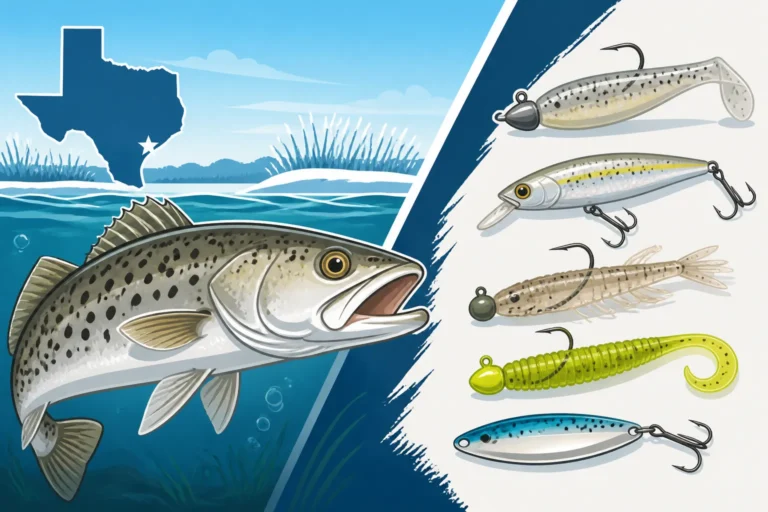
- Natural Color Palettes: Think about the baitfish and crustaceans that live in the water you're fishing. Shad, sunfish, crawfish, minnows – these all have natural, muted tones. Your lures should mimic these. Colors like natural shad, chrome, clear with silver flake, watermelon, green pumpkin, and brown are excellent choices. Translucent plastics often work wonders because they let some light pass through, mimicking the transparency of real baitfish scales. If you're chasing bass, a soft plastic jerkbait in a pearl or ghost shad pattern can be deadly. For saltwater, a clear plastic with a touch of silver or gold flake is a staple for imitating small baitfish. You can find an incredible array of these subtle baits on platforms like Amazon, allowing you to stock up on all the essential natural hues.
- Smaller, Finesse Baits: When fish have time to scrutinize, bigger, bulkier baits can look unnatural. Downsizing your offering often pays dividends. Think about finesse worms, small jigs, tiny swimbaits, or even micro-jigs. A drop shot rig with a small worm or a Ned rig are absolute killers in clear water because they offer a subtle profile and natural movement. Even a smaller crankbait with a tight wobble will often outperform a larger, more aggressive one. The goal is to present something appetizing that doesn't scream "fake."
- Subtle Action is Key: Oversized, erratic movements can spook fish in clear conditions. Opt for lures with a more natural, lifelike action. A shaky head jig with a straight-tail worm, a weightless Texas rig that slowly glides, or a soft plastic swimbait with a gentle tail kick are perfect. Your retrieve should be slower and more deliberate, allowing the fish to approach and inspect without feeling threatened. Think less about drawing attention with splashy commotion and more about drawing attention with convincing imitation. How to fish a drop shot for bass is a great example of a subtle technique that excels in clear water.
The Importance of Line and Lure Action
Beyond color and size, two other factors become paramount in clear water: your fishing line and the precise action of your lure.
- Light Line for Stealth: In clear water, fish can easily see your fishing line. Heavy, visible line can be a major deterrent. Fluorocarbon line is a popular choice for clear water because it has a refractive index very similar to water, making it nearly invisible underwater. Switching to a lighter pound test (e.g., 6-10 lb test for bass, even lighter for crappie) can dramatically increase your bites. Even with braid as your main line, always consider a long fluorocarbon leader (at least 6-10 feet) to ensure stealth. This is especially important when fishing highly pressured clear lakes.
- The Nuance of Lure Action: The way your lure moves through the water can be as important as its color. In clear conditions, a lure that swims unnaturally or has an exaggerated wobble can be easily identified as a fake. Conversely, a lure that shimmers and flashes subtly like a real baitfish can be irresistible. Consider baits with a tight, subtle wobble for crankbaits, or those designed to glide and dart erratically like a fleeing minnow. Soft plastics that have a natural undulation, even when paused, are also highly effective. Experiment with retrieve speeds and pauses; sometimes the most subtle twitch is all it takes to trigger a strike from a wary fish. Don't be afraid to slow down your retrieve significantly in clear water; fish have plenty of time to react. You might even find success with suspended jerkbaits that can be twitched and then left motionless, mimicking a dying baitfish, which clear water bass simply cannot resist.
Lure Choice for Stained or Murky Water Conditions
When water clarity drops, fish's reliance on sight diminishes, and their other senses kick into high gear. This means your lure selection needs to shift dramatically, focusing on drawing attention through contrast, vibration, and sound. It's about making your lure impossible to ignore, even if it can't be seen clearly.
Bright Colors and High Contrast: Getting Noticed
In stained or murky conditions, subtlety is often your worst enemy. You need colors and patterns that stand out and create a strong silhouette.
- Vibrant and Contrasting Colors: Forget the natural shades; it's time to go bold. Chartreuse, hot pink, orange, firetiger, and bright whites are fantastic choices. These colors stand out against the murk and absorb what little light penetrates the water, making them more visible. Two-tone lures that offer high contrast, like black and chartreuse or white and red, also work exceptionally well because they create a distinct silhouette that fish can pick up on even in low light. For example, a junebug or black/blue jig in murky water is a classic for bass, offering a dark profile. For catfish, bright punch baits can be very effective in stained rivers. Stocking up on a diverse range of colors, easily found on Amazon, is crucial for adapting to variable Texas waters.
- Creating a Strong Silhouette: It's not just about the color; it's about the shape and how it appears in low visibility. Dark colors like black or junebug create a very strong, distinct silhouette against a lighter sky or water background, which fish can detect with their limited vision. Consider plastic worms, jigs, or spinnerbait skirts in these dark hues. Conversely, sometimes a bright, opaque white or chartreuse can also provide excellent contrast, especially if there's any ambient light. The key is to make your lure visually "pop" in the diminished light.
- Fluorescent and UV Lures: Some lures are specifically designed with fluorescent or UV-reactive pigments that glow under certain light conditions, even if the water is murky. These can offer an advantage, especially in deeper, darker, or heavily stained water where natural light struggles to penetrate. While not always a magic bullet, they are certainly worth experimenting with when visual cues are at a minimum. Best lure colors for stained water often includes a discussion of these types of baits.
Vibrations and Sound: Sensory Overload for Fish
When fish can't see, they rely heavily on their lateral line (which detects vibrations) and hearing to locate prey. Your lures should be designed to exploit these senses.
- Rattles and Vibration: Lures with built-in rattles are incredibly effective in murky water. The sound waves travel further and alert fish to your lure's presence. Crankbaits with multiple rattles, lipless crankbaits, and even jig rattles added to soft plastics can make a huge difference. Beyond sound, consider lures that displace a lot of water and create strong vibrations. Spinnerbaits with large thumping blades (like a Colorado blade), chatterbaits, and big-bladed swim jigs create powerful vibrations that fish can feel from a distance. These aren't subtle; they are designed to be an undeniable presence in the water. For example, during a spring Texas White Bass Run Timing in a muddy river, a vibrating crankbait or a loud spinnerbait can often outfish anything else.
- Water Displacement and Profile: Lures that push a lot of water create a larger "pressure wave" that fish can detect with their lateral line. Think about big-bladed spinnerbaits, wide-wobbling crankbaits, or soft plastics with large appendages like paddle tails or big craw claws. These larger profiles not only create more vibration but also present a bigger target that is easier for a fish to "feel" in the water. Even the retrieve speed can be adjusted: sometimes a faster retrieve generates more vibration, while other times a slow, methodical retrieve allows the lure's action to be fully felt without being too overwhelming.
- Scent is Your Secret Weapon: In extremely murky or muddy water, scent becomes incredibly important. Many anglers will add scent to their soft plastics, jigs, or even live bait. Scented soft plastics (like those from a popular brand often available on Amazon or your local tackle shop) or dipping conventional lures in scent attractants can provide that extra edge, giving fish a reason to find and bite your lure even when they can't see it. This is particularly effective for species like catfish, where scent is a primary hunting tool. Learning How to catch catfish in Texas often highlights the role of strong-smelling baits.
Adaptability: The Key to Success in Variable Texas Waters
Texas weather is notoriously unpredictable, and so are its waters. A clear lake one day can be a chocolate mess the next after a severe thunderstorm. The most successful anglers in Texas aren't those who stick to one favorite lure, but those who can quickly adapt to changing conditions.
Carrying a Versatile Tackle Box
You simply can't predict what you'll encounter, which is why a well-stocked and diverse tackle box is your best friend.
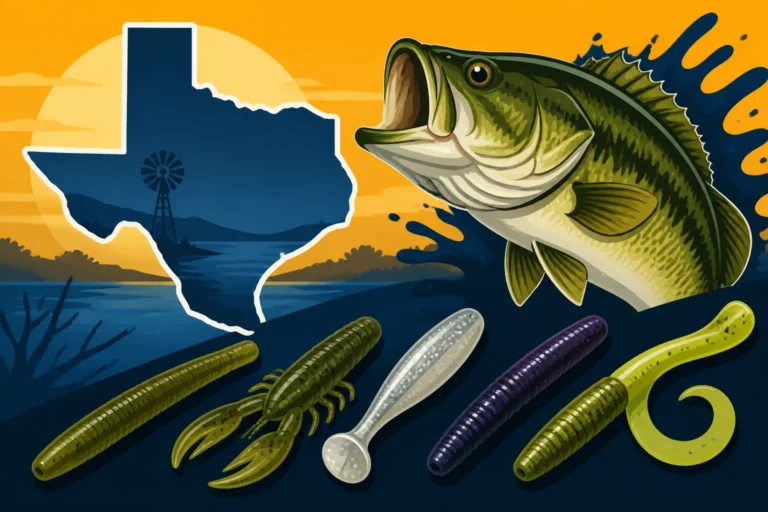
- A Spectrum of Lure Colors: You need to have options for every clarity level. This means having natural colors (greens, browns, clear, shad patterns) for clear water, and bright, contrasting colors (chartreuse, orange, white, black/blue) for stained or muddy conditions. Don't just carry one or two of each; have a decent selection of various lure types in both natural and attention-grabbing hues. Think about soft plastics, crankbaits, jigs, and spinnerbaits across this color spectrum. Remember that Best Bait and Lures for Texas Fishing will always include a wide array of options precisely for this reason.
- Variety in Lure Action and Size: Beyond color, ensure you have lures that offer different actions and sizes. Small finesse baits for clear, pressured fish, and larger, more aggressive, vibrating baits for murky, active fish. Have a mix of silent lures and those with loud rattles. Carry both tight-wobbling and wide-wobbling crankbaits. The more options you have for different presentations, the better equipped you'll be to match the prevailing conditions. A good starting point for any angler is to have a range of Best Soft Plastics for Texas Bass Fishing and Best Crappie Jigs for Texas Lakes in multiple colors.
- Essential Terminal Tackle: Don't forget the little things! This includes a variety of weights (for different depths and presentations), hooks (different sizes and styles), and leaders. Having fluorocarbon leader material on hand for clear water situations, or heavier monofilament for abrasive, murky conditions, is critical. Even simple swivels and snaps can change a lure's action or prevent line twist. Thinking about the full picture of your tackle setup ensures you're ready for anything.
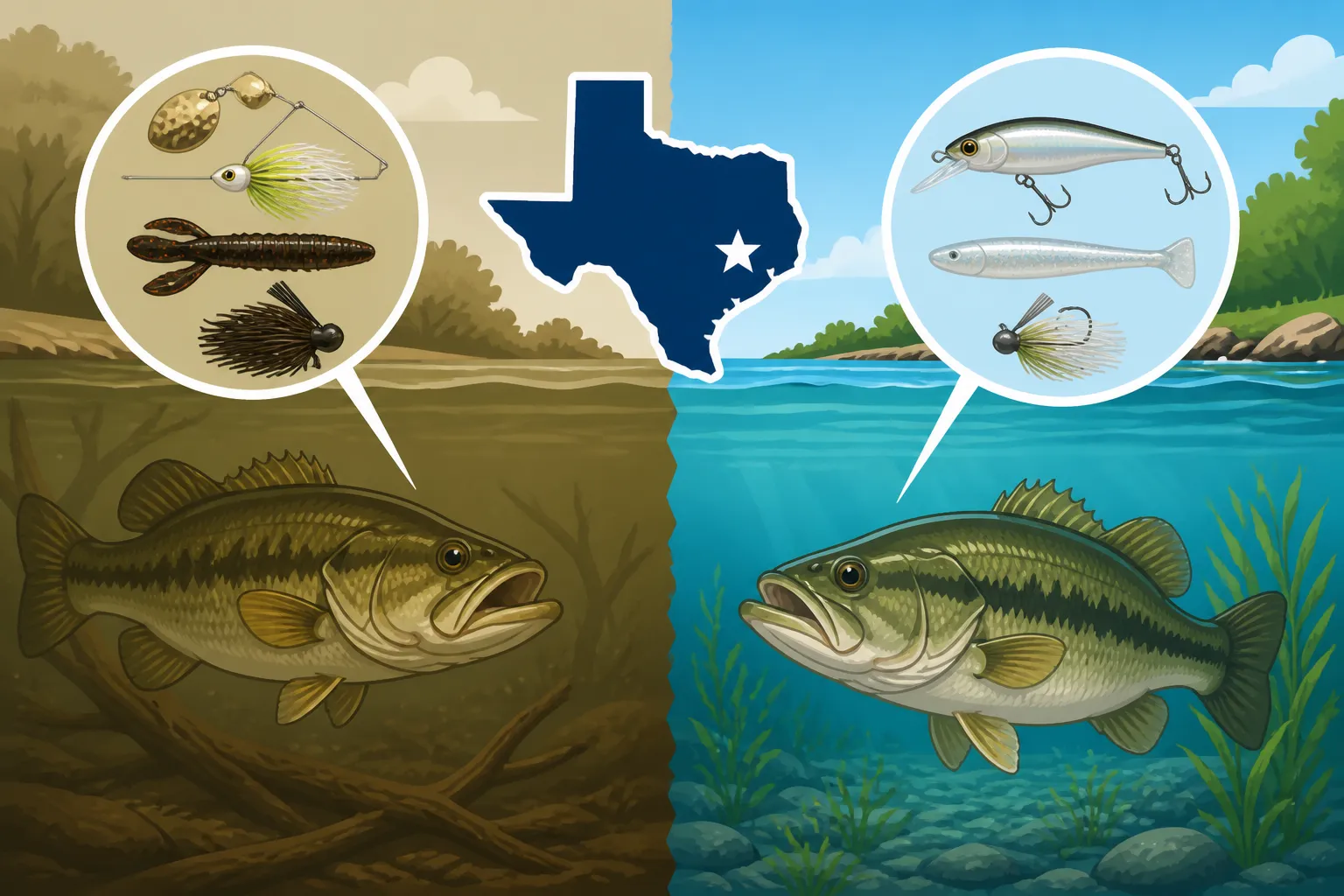
Here's a quick reference table to help visualize lure choices based on clarity:
| Water Clarity Level | Visibility (Approx.) | Recommended Lure Colors | Recommended Lure Types/Action | Key Focus |
|---|---|---|---|---|
| Gin Clear | 10+ feet | Natural, Translucent (shad, pearl, green pumpkin, brown) | Finesse (drop shot, Ned rig), Small Jerkbaits, Subtle Swimbaits, Tiny Jigs | Realism, Stealth, Light Line, Subtle Action |
| Clear | 4-10 feet | Natural, Earth Tones, Light Flakes | Finesse Worms, Small Crankbaits (tight wobble), Jigs, Topwaters (subtle) | Natural Presentation, Minimal Disturbance |
| Stained | 1-4 feet | Chartreuse, White, Black/Blue, Junebug, Orange | Spinnerbaits (Colorado blade), Chatterbaits, Medium Crankbaits, Jigs, Swimbaits | Contrast, Moderate Vibration, Larger Profile |
| Murky | 6 inches – 1 foot | Bright Chartreuse, Hot Pink, Firetiger, Black/Blue | Lipless Crankbaits (rattles), Large Spinnerbaits (thump), Jigs with Rattles, Buzzbaits | Strong Vibration, Loud Rattles, Bold Colors, Scent |
| Muddy | Less than 6 inches | Black, Dark Blue, Chartreuse, Orange, Black/Red | Large Jigs (with rattles), Big Spinnerbaits, Large Texas-Rigged Worms (scented) | Maximum Vibration, Strong Scent, Heavy Water Displacement |
Reading the Water on the Fly
Being able to assess water clarity quickly and accurately is a skill that comes with practice, but it's essential for making those quick decisions on the water.
- First Glance Assessment: When you arrive at a new spot, take a moment to really look at the water. How far can you see into it? Is there a noticeable tint? Is it choppy, indicating stirred-up sediment? Look at your boat's prop; if you can't see it a foot below the surface, you're definitely in stained or murky water. If you're fishing from the bank, look at the shoreline rocks or submerged vegetation. Your initial impression will guide your starting lure choice.
- Experimentation is Key: Don't be afraid to try different things. If your natural-colored bait isn't getting bites in what you thought was clear water, try a brighter one. The fish will tell you what they prefer. Start with your best guess based on clarity, but be ready to pivot. Sometimes, even in seemingly clear water, a subtle stain might call for a slightly bolder color than pure translucence. Keep an open mind and cycle through your options until you find what triggers a strike. This is often the most rewarding part of the fishing puzzle!
- Consider the Weather and Time of Day: Water clarity isn't a static thing. It can change throughout the day based on boat traffic, wind shifts, or even light conditions. On a cloudy day, even clear water might fish better with slightly brighter colors. After a rainstorm, don't assume the entire lake is muddy; sometimes creeks or feeder arms will be blown out while the main lake remains relatively clear. Similarly, How wind affects bass fishing on Texas lakes can also influence clarity dramatically. Always factor in these external variables when making your lure selections. Being observant and flexible will make all the difference in consistently catching fish across the diverse and ever-changing waters of Texas.
Disclaimer
This article is for general informational purposes only and does not constitute professional advice. Laws, prices and regulations vary by location and change over time. Consult a qualified professional for guidance on your specific situation.