Best finesse techniques for pressured lakes
If you've spent any time on the water in Texas, especially near our major cities or popular reservoirs, you've probably felt it – that nagging frustration when the fish just aren't biting, even though you know they're there. It feels like every bass has seen every lure in your tackle box a dozen times over, and they've become masters of evasion. This is the reality of pressured lakes, and it's a challenge many of us face. But don't despair! This guide is all about equipping you with the finesse techniques that can turn those tough days into successful outings, making those wary Texas bass bite.
Understanding Pressured Lakes in Texas
It's a common story: you hit your favorite spot, a lake that used to produce consistent catches, only to find the fishing has gotten tougher than a two-dollar steak. You're not imagining it; many of our beautiful Texas lakes are under increasing fishing pressure. Understanding what this means and how it impacts fish behavior is the first step to adapting your strategy.
What Makes a Lake "Pressured"?
A "pressured lake" is essentially a body of water that sees a high volume of angler activity. Think about popular lakes like Lake Fork, Lake Conroe, or even many of the smaller urban ponds that get hammered every weekend. When fish, especially trophy bass, are constantly exposed to boats, motors, lures, and lines, they become incredibly selective and shy. They learn to associate certain presentations with danger and will often ignore anything that doesn't look absolutely natural or enticing. This isn't just about a lot of people fishing; it's about the cumulative effect of those interactions over time, shaping the fish's instincts.
This constant exposure makes fish behave differently. Instead of aggressively striking at anything that moves, they might only nose a bait, follow it without committing, or completely ignore it if it doesn't fall, twitch, or appear just right. They learn to hold tighter to cover, seek out less disturbed areas, and feed during less conventional times. It's an evolutionary arms race, and anglers have to get smarter to keep up. It's why a technique that worked wonders five years ago might barely get a sniff today.
Signs Your Lake is Pressured
How do you know if you're dealing with a pressured lake, or just having an off day? There are several tell-tale signs. One obvious indicator is seeing a lot of other boats, kayaks, or bank anglers, especially during peak hours. If every prime point, cove, or brush pile has someone already working it, you can bet those fish are seeing a lot of lures. Another sign is when you're getting bites, but they're incredibly subtle – a slight tick, a mushy feeling, or just slack line, rather than a definitive thud. The fish are mouthing the bait without fully inhaling it, testing it before committing.
Beyond observation, the fish themselves will show you. If you're consistently seeing fish on your electronics but they refuse to bite, or if you're catching a lot of smaller, less wary fish but the bigger ones are absent, that's a huge clue. Sometimes, the only fish you catch are those that have recently been stocked and haven't yet learned the ropes. Highly pressured fish will often be found deeper, in denser cover, or in more isolated areas than their unpressured cousins. They demand a delicate approach, and that's where finesse techniques really shine.
The Finesse Philosophy: Why It Works
Finesse fishing isn't just about using small baits; it's a complete mindset shift. It's about subtlety, natural presentation, and appealing to the most cautious instincts of a wary fish. When the aggressive power fishing techniques fail, finesse is often the key to unlocking those stubborn bites.
Embracing a Subtle Approach
The core of finesse fishing is its subtlety. We're talking about lighter lines, smaller hooks, and baits that don't make a huge splash or displace a lot of water. The goal is to present your offering in the most natural, unobtrusive way possible. Imagine a natural prey item, like a small minnow or a crawfish, gently fluttering or crawling along the bottom. That's the movement we're trying to replicate. With finesse, you're not trying to provoke an aggressive reaction strike; you're aiming to trick the fish into thinking your bait is an easy, irresistible meal.
This subtle approach can make all the difference in a lake where fish have been conditioned to avoid anything flashy or loud. Instead of drawing attention with commotion, you're blending in, becoming part of the natural environment. This can be particularly effective in clear water scenarios, common in many Texas Hill Country lakes like Canyon Lake, where fish have excellent visibility and are easily spooked by heavy lines or hardware. The less your presentation screams "angler!", the more likely a cautious bass is to approach it.
Mimicking Natural Forage
Finesse techniques excel at imitating the natural food sources that bass encounter every day. Bass in pressured lakes are often feeding on smaller, less obvious prey. This could be tiny baitfish, freshwater shrimp, insect larvae, or small crawfish. Texas Largemouth Bass Fishing Guide shows that bass diets can be quite varied. A large, gaudy crankbait might look appealing in a tackle shop, but it often doesn't match what the fish are actually eating in a highly pressured environment.
By using smaller, more realistic baits – soft plastics that shimmer like a minnow, or jigs that resemble a crawfish scuttling – you're directly appealing to the bass's natural feeding instincts. These baits, when paired with the right light line and rod, can be worked slowly and methodically, allowing them to hang in the strike zone longer or fall with a tantalizing, lifelike wobble. It’s all about creating an illusion of vulnerability and edibility, making it incredibly hard for a hungry bass to pass up.
Key Finesse Techniques for Texas Waters
When the going gets tough, these are the techniques I often turn to. They've proven their worth on countless pressured Texas lakes, coaxing bites when nothing else would. Each has its own unique presentation and application, but they all share that underlying finesse philosophy.
The Wacky Rig and Neko Rig
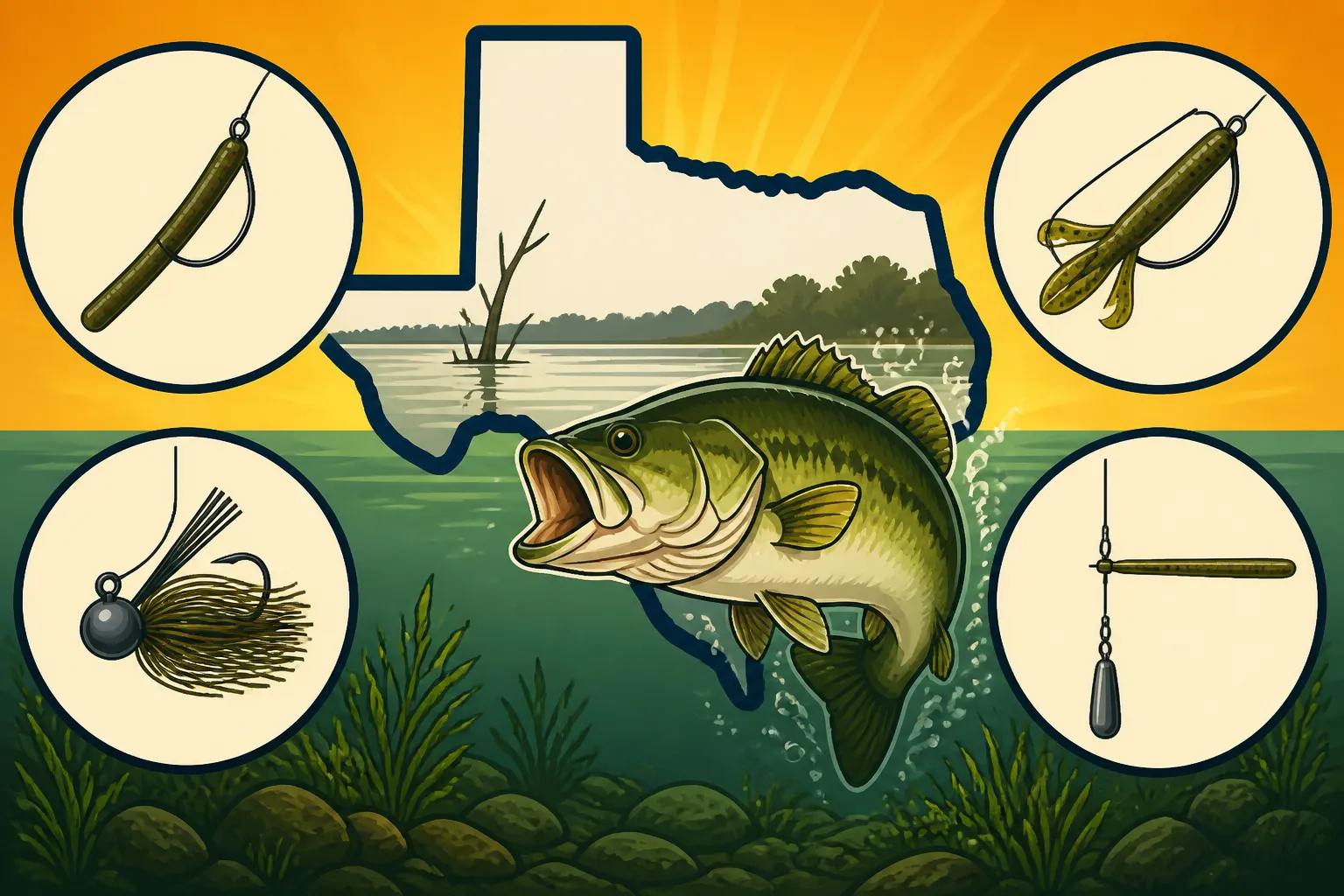
The Wacky Rig is incredibly simple yet devastatingly effective, especially for bass holding tight to cover or suspending over structure. It involves hooking a soft plastic stickbait (like a Senko-style worm) through its middle, allowing both ends to wiggle freely as it sinks. The slow, natural fall and subtle shimmy are often irresistible to hesitant bass. It's a fantastic choice for fishing around boat docks, submerged brush, or sparse vegetation. Just cast it out, let it fall on a semi-slack line, and watch for that tell-tale "tick" or line jump.
The Neko Rig is a close cousin to the Wacky, but with a slight twist that gives it a different action. Instead of hooking through the middle, you insert a small nail weight into one end of the stickbait and hook it slightly off-center near the weighted end. This gives the bait a nose-down posture, making it stand up off the bottom like a feeding baitfish or crawfish. It's excellent for working along rocky bottoms, drop-offs, or around stumps, allowing you to drag it with short hops and pauses. The weighted end allows for better bottom contact and a more controlled fall, which can be crucial when trying to pinpoint fish holding to specific pieces of cover.
Drop Shotting for Suspended Bass
If you want to talk about a game-changer for pressured bass, the drop shot rig is it. This technique involves tying a hook directly to your main line with a Palomar knot, leaving a tag end that you then attach a weight to. This setup allows your bait to suspend at a predetermined depth above the bottom, keeping it right in the fish's face for extended periods. It's perfect for when fish are suspended over deep structure, a common scenario in many Texas reservoirs like Toledo Bend or Sam Rayburn. How to Fish Deep Structure in Texas Reservoirs is a great companion read for this.
The beauty of the drop shot is how subtle and precise it is. You can shake your rod tip gently, imparting a lifelike quiver to your soft plastic bait (often a small worm, minnow imitation, or creature bait), without moving the weight from the bottom. This means you can entice a bite from a bass that wouldn't chase a moving lure, or one that's simply lethargic. You can find a huge variety of drop shot weights and soft plastics on online retailers like Amazon, ensuring you have the perfect setup for any condition.
The Ned Rig: Small Bait, Big Results
Ah, the Ned Rig. This minimalist approach has become a sensation for a reason – it simply catches fish, especially when nothing else will. It consists of a small, mushroom-shaped jig head paired with a short, buoyant soft plastic worm (often called a "TRD" style bait). The buoyancy of the plastic, combined with the unique jig head, causes the bait to stand straight up off the bottom when at rest, mimicking a small foraging creature.
The Ned Rig is incredibly versatile and effective in a wide range of situations, from shallow flats to deep ledges. Its small profile and subtle action are perfect for convincing even the most educated bass to bite. You fish it slowly, often by casting it out, letting it sink, and then either dragging it, short hopping it, or just letting it sit on the bottom with occasional twitches. Don't let its small size fool you; this rig is responsible for catching some surprisingly large bass on pressured lakes throughout Texas. If you're looking for How to fish a Ned rig for bass, this is your starting point.
Shaky Head Magic
The shaky head jig is another finesse powerhouse, particularly useful for fishing around cover. It's essentially a jig head with an exposed hook, designed to be rigged with a straight-tail worm or creature bait. The unique head design allows the bait to stand up and "shake" with the slightest twitch of the rod tip, giving it an erratic, lifelike action that mimics a foraging crawfish or baitfish.
This technique is deadly when bass are hunkered down in brush piles, around stumps, or along rocky banks. You can cast it directly into cover and work it slowly, letting the worm shimmy and dance in place. The exposed hook typically leads to better hook-up ratios compared to Texas-rigged plastics, though you might get snagged more often in heavy cover. The key is finding that perfect balance of jig head weight and plastic size to get the right action. Many anglers swear by the shaky head as their go-to when bass are reluctant to chase.
Gear Up for Finesse Success
Having the right tools for finesse fishing isn't just about comfort; it's about maximizing the effectiveness of these subtle techniques. You wouldn't use a hammer to drive a screw, and similarly, you shouldn't use heavy power fishing gear for finesse presentations.
Rods, Reels, and Line Choices
For finesse fishing, a lighter, more sensitive setup is absolutely crucial. You're often dealing with light bites and need to feel every little "tick" or subtle change in resistance.
- Rods: Look for spinning rods in the 6'6" to 7'3" range, with a fast or extra-fast action and a medium-light to medium power. This combination gives you enough backbone to fight fish but a sensitive tip to detect those light bites and make accurate casts with lighter baits. A quality graphite rod is a must for sensitivity. Brands offering great finesse rods can be found easily, and you can explore options on sites like Amazon. For more on selecting the right stick, check out Best Fishing Rods for Texas Anglers.
- Reels: Pair your rod with a high-quality spinning reel in the 2000 to 3000 size. Smooth drag is essential, as you'll be fighting fish on lighter line. The retrieve ratio isn't as critical as with power fishing, as slow, controlled retrieves are often preferred.
- Line: This is where finesse really shines. I typically run 6-10 lb fluorocarbon line for most finesse techniques. Fluorocarbon is nearly invisible in water, offers excellent abrasion resistance, and has very little stretch, giving you maximum sensitivity. Alternatively, some anglers prefer a braided mainline (10-15 lb) with a several-foot fluorocarbon leader (6-10 lb). The braid provides superior casting distance and sensitivity, while the fluoro leader maintains stealth. The decision often comes down to personal preference and water clarity.
Essential Finesse Baits
The world of finesse baits is vast and exciting, but a few core types will cover most of your bases in Texas.
- Stick Worms: These are the kings of the Wacky and Neko rigs. Soft plastic stickbaits, often infused with salt, provide that incredible slow fall and natural shimmy. Colors like green pumpkin, watermelon red, and junebug are perennial favorites.
- Drop Shot Worms/Minnows: For drop shotting, you'll want smaller, straight-tail worms (4-6 inches), minnow-imitating baits, or even small creature baits. Their subtle movements and lifelike profiles are perfect when suspended. Again, natural colors tend to excel.
- Ned Rig Baits (TRDs): These short, stubby, buoyant soft plastics are specifically designed for the Ned Rig. They come in a variety of colors, but green pumpkin, black, and natural crawfish patterns are always good starting points. The buoyancy is key to that stand-up action.
- Shaky Head Worms: Longer, straight-tail worms (6-10 inches) with a tapered tail are ideal for shaky head fishing. The thin tail provides maximum action with minimal rod movement.
You can really load up on a wide variety of these baits from places like Amazon, experimenting with different colors and sizes to see what the fish prefer on any given day. Remember, sometimes a slight variation in tail design or color can make all the difference when fish are picky.
Tips for Maximizing Finesse Effectiveness
Finesse fishing is more than just throwing a small bait; it's an art form that requires patience, observation, and meticulous execution. These tips can help you fine-tune your approach and get more bites on those tough Texas lakes.
Reading the Water and Fish Behavior
Understanding where and how pressured fish position themselves is critical. They won't always be in the obvious spots. Often, they'll hold on the backside of cover, on subtle depth changes, or in shaded areas. Pay attention to changes in bottom composition, isolated stumps, or sparse grass beds that might go unnoticed by power anglers. How to Read Lake Contour Maps for Bass Fishing can be invaluable here, helping you pinpoint those less-obvious hideouts.
Observe how the fish are reacting to your bait. Are they just nipping at it? Following it without committing? This tells you if you need to slow down, change your retrieve, or even switch to a different bait or color. Sometimes, the smallest change in presentation – a lighter weight, a different twitch, a longer pause – can trigger a strike. Also, consider the time of day and light conditions. Pressured bass often feed more actively during low light periods or when there's a slight chop on the water, offering them a bit more cover.
Patience and Presentation
Patience is perhaps the most important tool in a finesse angler's arsenal. These techniques are rarely about fast, aggressive fishing. It's about letting the bait do its work, often with long pauses and incredibly slow retrieves. Don't be afraid to let a wacky rig sink for a full minute around a brush pile, or let a Ned Rig sit motionless on the bottom for 10-15 seconds. Many bites on finesse baits occur on the fall or during these extended pauses.
Your presentation needs to be impeccable. Casts should be accurate, placing the bait precisely where you think the fish are. Avoid splashing or making excessive noise. When you work the bait, keep your rod tip low and use your wrist to impart subtle movements, rather than big, sweeping motions. The goal is to make the bait look as natural and non-threatening as possible. Best Soft Plastics for Texas Bass Fishing covers many baits perfect for a meticulous presentation. Remember, these fish have seen it all, so every detail matters.
Don't Be Afraid to Experiment
While these techniques are proven, every lake and every day is different. Don't be afraid to experiment with variations. Try different colors of worms, vary the weight of your jig head, or adjust the length of your drop shot leader. Sometimes, simply changing the size of your bait from a 5-inch stick worm to a 4-inch version can make the difference. How to find bass on a new lake often involves a lot of trial and error.
Also, consider the conditions. In clear water, natural colors like green pumpkin or watermelon tend to be best, and even lighter line (6 lb fluoro) might be necessary. In stained or cloudy water, a junebug, black, or even chartreuse might get more attention, and you might be able to get away with slightly heavier line. Wind can also affect your presentation; a lighter weight might drift too much, while a heavier one might sink too fast. Be flexible, pay attention to the feedback the fish are giving you, and adapt your approach as needed.
When to Reach for Finesse Techniques
Knowing when to deploy your finesse techniques is just as important as knowing how. While they can be effective anytime, certain scenarios scream for a subtle approach.
Post-Front and Cold Front Conditions
Texas weather is famously fickle. We can go from sunny and warm to a blustery cold front in a matter of hours. After a strong cold front passes through, fishing often gets incredibly tough. The sudden drop in temperature and stable high pressure can make bass lethargic and less willing to chase. This is prime time for finesse. A slow-falling wacky rig, a stationary Ned Rig, or a subtly shaken drop shot can be just enough to coax a bite from a hunkered-down bass that won't touch a fast-moving crankbait. They're not actively feeding, but they might grab an easy meal that practically floats right into their mouths.
Another example is during a post-spawn lull, where bass are recuperating and not aggressively feeding. A slow, subtle presentation can still trigger a bite from a fish that needs to regain energy. Finesse shines when fish activity is low, proving that even a tiny offering can make a big impact.
Clear Water and High Sun
Many of Texas's deeper, clearer lakes, especially those in the Hill Country like Canyon Lake or Travis, present a challenge on bright, sunny days. In these conditions, bass have excellent visibility and can easily spot heavy lines, bulky baits, or unnatural movements. This is where finesse truly comes into its own. Using lighter fluorocarbon line, smaller baits, and subtle techniques like the drop shot or Ned rig allows you to present your offering stealthily.
The minimal disturbance and natural appearance of finesse baits are crucial here. Instead of spooking the fish with a big splash, you can delicately pitch a weightless wacky worm into a shaded pocket or slowly work a shaky head along a deep rock ledge. The key is to match the hatch as closely as possible and minimize your presence, letting the natural appeal of the bait do the convincing. Think about fishing for Texas Largemouth Bass Length Limits in these clear conditions, a finesse approach will often yield better results.
Heavily Fished Areas
Let's face it, we all have those favorite spots that just produce fish. The problem is, everyone else knows about them too. Public boat ramps, popular fishing piers, and easily accessible bank fishing spots are constantly pounded by anglers. The fish in these areas are educated, cautious, and have seen every trick in the book. This is precisely when you need to switch gears to finesse.
If you're fishing a popular point on Lake Fork, or working the docks on Lake Conroe, casting a big jig or a flashy spinnerbait might get you some curious looks from other anglers, but not necessarily from the bass. Instead, a well-placed Neko rig or a slowly presented shaky head can often pick off those wary fish that have learned to ignore everything else. It's about showing them something they haven't seen a thousand times, or presenting it in a way that feels completely safe and natural.
Here's a quick comparison of some popular finesse techniques:
| Finesse Technique | Best Application | Key Bait Type | Rod/Reel/Line Suggestion | Pros | Cons |
|---|---|---|---|---|---|
| Wacky Rig | Shallow cover, boat docks, sparse grass, open water | Soft plastic stickbait | Medium-light spinning, 2000-3000 reel, 6-8lb fluoro | Extremely natural fall, subtle action | Can be slow to sink, not weedless |
| Neko Rig | Bottom contact, deeper structure, rock piles | Soft plastic stickbait | Medium-light/medium spinning, 2000-3000 reel, 8-10lb fluoro | Stand-up action, good control, casts well | Can get snagged, requires nail weight |
| Drop Shot | Suspended fish, deep water, precise depth control | Small worms, minnow imitations | Medium-light spinning, 2000-3000 reel, 6-10lb fluoro/braid | Keeps bait in strike zone, very sensitive | Can be tricky to rig, line twist possible |
| Ned Rig | Finicky fish, rocky bottoms, subtle bites | Small buoyant worm (TRD style) | Medium-light spinning, 1000-2000 reel, 6-8lb fluoro | Catches everything, easy to fish, stands up | Very small profile might miss big fish |
| Shaky Head | Heavy cover, brush piles, stumps, rocky areas | Straight-tail worms, creature baits | Medium spinning, 2500-3000 reel, 8-12lb fluoro | Great for cover, excellent action, good hookups | Prone to snagging in very heavy cover |
This table should give you a good idea of which finesse technique might be best for your current situation on the water.
Disclaimer
This article is for general informational purposes only and does not constitute professional advice. Laws, prices and regulations vary by location and change over time. Consult a qualified professional for guidance on your specific situation.