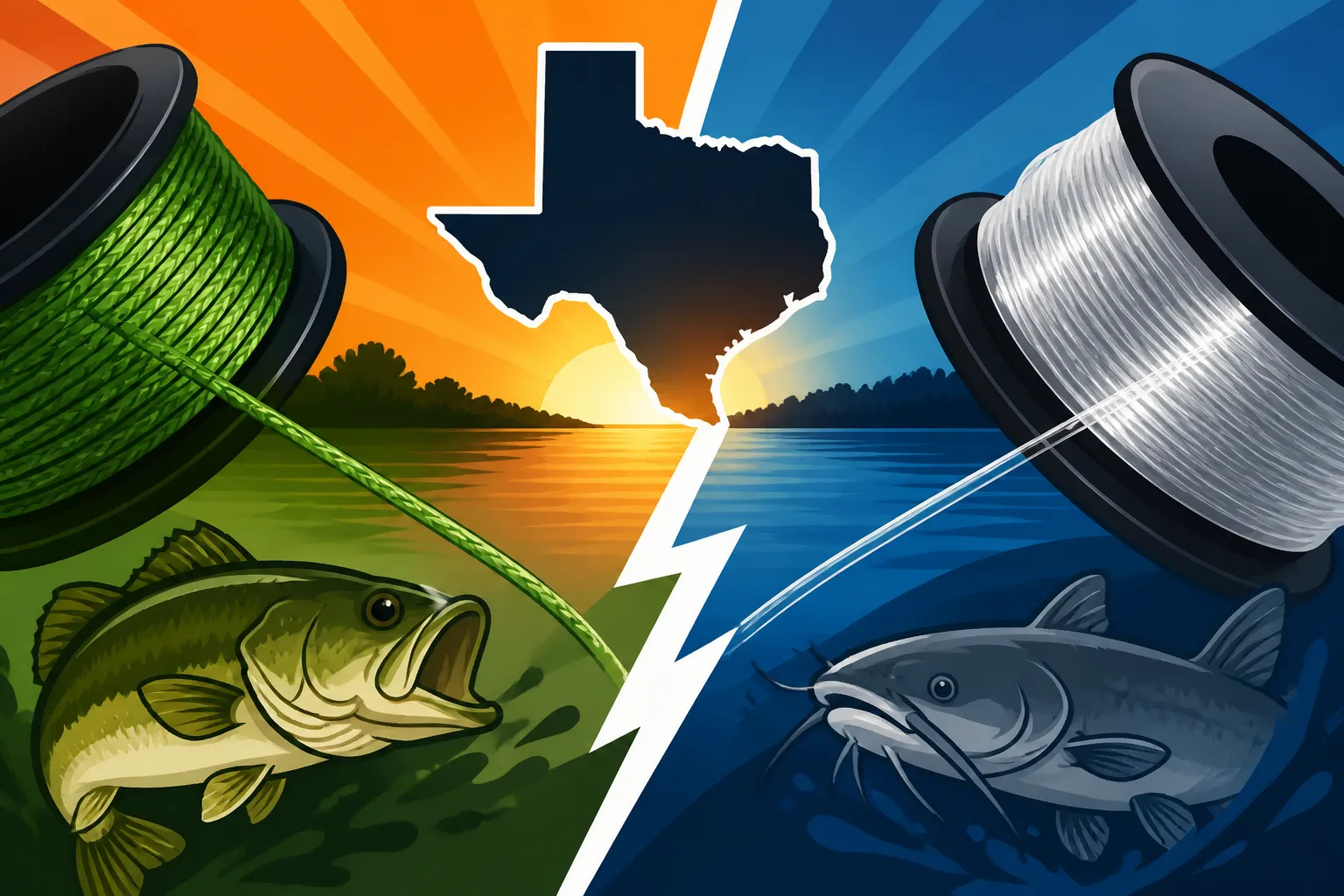
Braided line vs fluorocarbon for Texas lakes
One of the biggest head-scratchers for any angler venturing out onto a Texas lake, whether it's the sprawling depths of Lake Fork or a smaller community pond, is trying to figure out which fishing line is truly best. You've heard the debates: braided versus fluorocarbon, each with passionate advocates claiming their chosen line is superior. This guide will cut through the noise, validate your frustrations with conflicting advice, and help you understand the core differences between braided and fluorocarbon lines so you can make an informed choice for your next fishing adventure in the Lone Star State.
Understanding Your Fishing Line Options for Texas Lakes
When you walk into a tackle shop, or even just browse online, the sheer variety of fishing line can be overwhelming. It's not just about pound test anymore; it's about material, stretch, visibility, and how it interacts with your rod and reel. For Texas anglers, understanding the fundamental characteristics of braided and fluorocarbon lines is crucial, as the conditions here can be incredibly diverse, from clear, deep reservoirs to murky, brush-filled rivers.
The Strengths of Braided Line
Braided line is often touted as the "powerhouse" of fishing lines, and for good reason. It's constructed from multiple strands of synthetic fibers, woven together to create a super strong, thin, and durable line. This construction gives it several distinct advantages that make it a favorite for many Texas anglers, especially when targeting hard-fighting fish in heavy cover.
First and foremost, braided line boasts incredible strength-to-diameter ratio. This means you can use a much thinner line to achieve the same or even greater breaking strength compared to monofilament or fluorocarbon. A thinner line cuts through the water better, allows for longer casts, and can be less affected by current. For example, you might get 30-pound test braid that's as thin as 8-pound test monofilament. This extra power comes in handy when you're setting the hook on a massive largemouth bass buried in a hydrilla mat on Sam Rayburn, or trying to wrench a big blue catfish out of submerged timber. Another massive advantage is its almost complete lack of stretch. When you get a bite, especially subtle ones, that instant feedback travels right up your line, through your rod, and into your hands. This sensitivity is a game-changer for detecting light bites, feeling the bottom composition, or knowing exactly what your lure is doing far below the surface. This is particularly useful when fishing deep structure or using finesse techniques where sensitivity is paramount. Lastly, its exceptional abrasion resistance, while sometimes debated when compared directly to fluorocarbon, is certainly a significant advantage over monofilament, especially when fishing around rough objects. It can stand up to snags on rocks, docks, and timber remarkably well.
The Advantages of Fluorocarbon Line
Fluorocarbon line, while also a synthetic polymer, is extruded as a single strand, similar to monofilament, but with a molecular structure that gives it a completely different set of properties. It burst onto the scene promising incredible stealth and sensitivity, and it has certainly delivered on those fronts, becoming a staple for countless Texas anglers who prioritize a natural presentation and direct feel.
The most celebrated feature of fluorocarbon is its near-invisibility underwater. With a refractive index very close to that of water, fluorocarbon line essentially disappears once it hits the drink. This stealth factor is incredibly important in clear Texas lakes like Canyon Lake or Amistad, where fish have excellent visibility and can be spooked by a more visible line. When you're fishing for wary bass that have seen every lure and line in the book, fluorocarbon gives you a critical edge. You want your lure to be the focus, not your line. Furthermore, fluorocarbon offers excellent sensitivity, much like braid, due to its low stretch. While not entirely stretch-free like braid, it's significantly less stretchy than monofilament, providing a good balance of feel and a bit of shock absorption. This allows you to feel those subtle "thumps" or "ticks" when a fish mouths your bait without aggressively taking it. It's also dense, which causes it to sink faster than monofilament or braid, which can be advantageous for getting crankbaits or jigs down to depth quickly and maintaining contact with bottom-hugging lures. Finally, its superior abrasion resistance is a huge plus. Its hard, dense surface is very resistant to nicks and cuts, making it a reliable choice when fishing around sharp rocks, oyster shells in saltwater bays, or the rough bark of submerged timber.
Key Differences: A Head-to-Head Comparison
Choosing between braided and fluorocarbon isn't about one being universally "better" than the other; it's about understanding their specific strengths and weaknesses and aligning them with your fishing style, target species, and the conditions of the Texas waters you're fishing. Let's really dig into the core distinctions.
Visibility and Stealth
This is perhaps the most significant difference and often the deciding factor for many anglers. Braided line, with its woven construction, is highly visible underwater. While manufacturers offer various colors like green, yellow, or even multi-color, they all stand out to fish, especially in clear water. Think about trying to catch speckled trout in the gin-clear flats of the Laguna Madre; a bright green braid would be a major deterrent. This is why many anglers opt for a leader when using braid in these situations.
Fluorocarbon, on the other hand, is a master of disguise. Its unique molecular structure and refractive index make it virtually invisible underwater. This is its superstar quality. If you're fishing highly pressured lakes like Lake Fork where bass are notoriously educated, or in crystal-clear Hill Country streams for Guadalupe bass, fluorocarbon's stealth can dramatically increase your bites. The fish simply can't see the line connecting to your lure, making your presentation much more natural and enticing. When subtlety is key, fluorocarbon wins hands down.
Sensitivity and Stretch
When it comes to feeling what's happening at the end of your line, both braided and fluorocarbon are excellent, but there are nuances. Braided line is essentially zero-stretch. This means every twitch, every bump, every tiny bite is transmitted instantaneously to your hands. This extreme sensitivity is incredible for detecting light bites in deep water or feeling the precise texture of the bottom. It also makes for incredibly powerful hooksets, as there's no "give" in the line.
Fluorocarbon has very low stretch, far less than traditional monofilament, but it does have some. This minimal stretch offers a slight buffer, which can be beneficial in certain situations, like when a fish makes a sudden run right at the boat, preventing hooks from tearing out. However, for sheer raw sensitivity and power in the hookset, braid typically has the edge. If you're using large jigs or heavy Texas rigs in deep water, the instant feedback of braid can be a huge advantage. How to fish a Texas rig for bass goes into more detail on how critical that sensitivity is.
Abrasion Resistance and Durability
Both lines are considered highly abrasion resistant, but they achieve it in different ways and excel in different scenarios. Braided line, with its woven fibers, is very tough against blunt force and general rubbing. It can take a beating against rough structures like submerged logs, dock pilings, and rocky bottom. However, individual strands can fray if nicked by something sharp, and once frayed, its integrity can be compromised. If you're constantly fishing around sharp oyster shells in Galveston Bay, a deeply nicked braid might be a concern.
Fluorocarbon is exceptionally tough against sharp edges and abrasions due to its hard, dense, and smooth surface. It's much less prone to fraying from nicks and cuts, making it a fantastic choice when fishing around jagged rocks or sharp barnacles. Many anglers prefer fluorocarbon leaders for this reason, even with a braided main line. It acts like a protective shield for your lure. While both are durable, fluorocarbon generally has a slight edge when it comes to resisting sharp cuts and nicks.
Castability and Memory
How easily a line casts and how it behaves off your reel is another important consideration. Braided line is very supple and has virtually no memory. This means it doesn't retain the shape of the spool, leading to fewer tangles, fewer wind knots, and generally longer, smoother casts, especially with lighter lures. It's often the preferred choice for spinning reels because it comes off the spool so effortlessly. For anglers looking for maximum distance on vast Texas reservoirs, braid is hard to beat. Best fishing reels for Texas anglers often highlights reels designed to optimize braid casting.
Fluorocarbon, being stiffer and denser, tends to have more memory than braid. This means it can retain the coil from the spool, especially in heavier pound tests, which can lead to more line twist and tangles, particularly on spinning reels. It typically performs better on baitcasting reels, where the line flows off the spool more directly. When you're constantly casting and retrieving, line memory can be a real headache, affecting presentation and efficiency. High-quality fluorocarbon from brands like Seaguar or Sunline has reduced memory, but it's still a characteristic to be aware of.
Here's a quick comparison table:
| Feature | Braided Line | Fluorocarbon Line |
|---|---|---|
| Visibility | High (stands out underwater) | Very Low (virtually invisible underwater) |
| Stretch | Zero stretch (highly sensitive) | Very Low stretch (sensitive, slight give) |
| Abrasion | Good (resists rubbing, can fray on sharp) | Excellent (resists sharp cuts and nicks) |
| Strength/Dia. | Excellent (thin for high strength) | Good (denser than mono, still strong) |
| Castability | Excellent (supple, low memory, long casts) | Good (stiffer, more memory, better on baitcasters) |
| Buoyancy | Floats (or neutral) | Sinks (denser than water) |
| Cost | Generally higher initial cost | Moderate to high |
When to Choose Which Line Type on Texas Lakes
Now that we've broken down the characteristics, let's talk about real-world applications on Texas waters. Knowing when to use each type of line can drastically improve your success rate and reduce frustration.
Scenarios Where Braided Line Excels
Braided line is your heavy hitter, your workhorse, especially when you're going after big fish in tough spots. One prime example is fishing in dense vegetation, common in lakes like Lake Fork or Sam Rayburn. Whether it's hydrilla, lily pads, or thick grass mats, braid's thin diameter and incredible strength allow it to cut through weeds, making it easier to retrieve your lure and, more importantly, pull a fish out of the jungle. If you're flipping or punching heavy cover with a jig or soft plastic, braid is almost a necessity. Texas Largemouth Bass Fishing Guide often recommends braid for this very reason.
Another ideal use for braid is for topwater fishing. Because braid floats, it helps your topwater lures stay on the surface and perform as designed, without the line pulling them down. When you're throwing a frog over lily pads or a popper for schooling white bass, braid gives you excellent control and powerful, immediate hooksets. This zero-stretch quality is also fantastic for techniques that require a direct feel, like fishing jigs in deep water or using big swimbaits. You'll feel every subtle current, every tap, and know exactly when to set the hook. Even when targeting striped bass on Lake Texoma, where long casts and strong fish are the norm, many anglers swear by braid for its power and casting distance. You can find robust braided lines suitable for these tasks at retailers like Bass Pro Shops.
Scenarios Where Fluorocarbon is Your Best Bet
Fluorocarbon truly shines when stealth and finesse are paramount. If you're fishing in exceptionally clear water, such as many of the deep, rocky lakes in the Hill Country like Canyon Lake, or chasing pressured bass that have seen it all, fluorocarbon's near-invisibility makes it an indispensable tool. Any time the fish are finicky or the water is pristine, reaching for fluorocarbon as your main line or leader can make the difference between a frustrating day and a successful one.
It's also an excellent choice for reaction baits that you want to get to depth and stay there, like crankbaits or deep-diving jerkbaits. Because fluorocarbon sinks, it helps these lures reach their maximum running depth faster and stay in the strike zone longer. Its low stretch also provides a good feel for these baits, letting you detect subtle changes in wobble or tell if you've bumped into cover. For bottom-contact baits like shaky heads, drop shots, or Carolina rigs, fluorocarbon offers a great combination of sensitivity and stealth. When that bass in a clear Texas reservoir is just barely mouthing your worm, you'll feel it with fluorocarbon. And remember, when you're throwing soft plastics that require a natural presentation, like those detailed in Best Soft Plastics for Texas Bass Fishing, a virtually invisible line can significantly boost your success.
The Hybrid Approach: Combining Braided and Fluorocarbon
Many seasoned Texas anglers don't limit themselves to just one line type. Instead, they harness the best attributes of both by using a braided main line with a fluorocarbon leader. This "hybrid" approach offers an incredible versatility that makes it suitable for a wide array of fishing situations across our diverse Texas waters. It’s often considered the best of both worlds, providing strength and sensitivity with stealth where it counts most.
Tying a Fluorocarbon Leader to Braided Main Line
The concept is simple: you spool your reel with braided line as your main line, and then tie a shorter section of fluorocarbon line, typically 6-15 feet long, to the end of your braid. This section of fluorocarbon is your leader, and your lure is tied directly to it. The key to making this work effectively and reliably is a strong, smooth knot that can pass through your rod guides easily.
The two most popular knots for connecting braid to fluorocarbon are the FG knot and the Alberto knot. The FG knot is often considered the strongest and most streamlined, but it can be more challenging to learn and tie quickly on the water. The Alberto knot (or an Improved Alberto knot) is a fantastic alternative, relatively easy to tie, and provides excellent strength. Practice these knots at home until you can tie them confidently and quickly. You want a knot that's neat and strong, as a poorly tied knot is the weakest link in your entire setup. Ensuring your knot is small and smooth helps with casting, preventing it from catching on your rod guides during a cast, which can lead to frustrating snarls and lost fishing time.
When and Why to Use a Leader Setup
Using a fluorocarbon leader with a braided main line is particularly advantageous in Texas for several reasons. Firstly, it gives you the casting distance and strength of braid without sacrificing stealth. You get that virtually invisible presentation at the business end of your line where the fish see it, while benefiting from the thin diameter and knot strength of braid on your spool. This is fantastic when you're fishing clear water but need to make long casts, perhaps for schooling fish on Lake Texoma or open water bass.
Secondly, it provides excellent sensitivity for detecting bites due to the braid, combined with the abrasion resistance of fluorocarbon where your line is most likely to encounter rough cover near your lure. If you're dragging a jig along a rocky ledge, the fluorocarbon leader takes the brunt of the abuse, protecting your main braided line. If it gets nicked, you can just re-tie a new leader without respooling your entire reel. This combo is often recommended for everything from finesse techniques for spotted bass in deeper clear lakes to throwing topwater in slightly stained water. You'll often see seasoned anglers at places like Bass Pro Shops or browsing Amazon for bulk spools of fluorocarbon leader material because they know how essential this setup is. It truly allows you to adapt to a wider range of conditions and target species, giving you confidence that you have the right line for almost any scenario on a Texas lake.
Disclaimer
This article is for general informational purposes only and does not constitute professional advice. Laws, prices and regulations vary by location and change over time. Consult a qualified professional for guidance on your specific situation.