Best budget gear setup for a first Texas fishing trip
Starting your very first fishing adventure in Texas can feel a bit like staring at a mountain of gear at your local Bass Pro Shops, wondering where on earth to begin without emptying your bank account. It’s a common frustration for budding anglers, believe me! The good news is, you absolutely don't need the fanciest, most expensive equipment to catch fish and have a fantastic time out on the water. This guide is all about cutting through the noise and showing you how to assemble a perfectly effective, budget-friendly fishing setup that will get you casting lines and reeling in fish on your very first Texas fishing trip.
The Essentials: Your Core Rod and Reel Combo
When you're just getting started, the sheer variety of rods and reels can be overwhelming. But don't fret! For a first-timer looking to fish in Texas's diverse waters without spending a fortune, simplicity and versatility are your best friends.
Spinning vs. Baitcasting: What's Right for a Beginner?
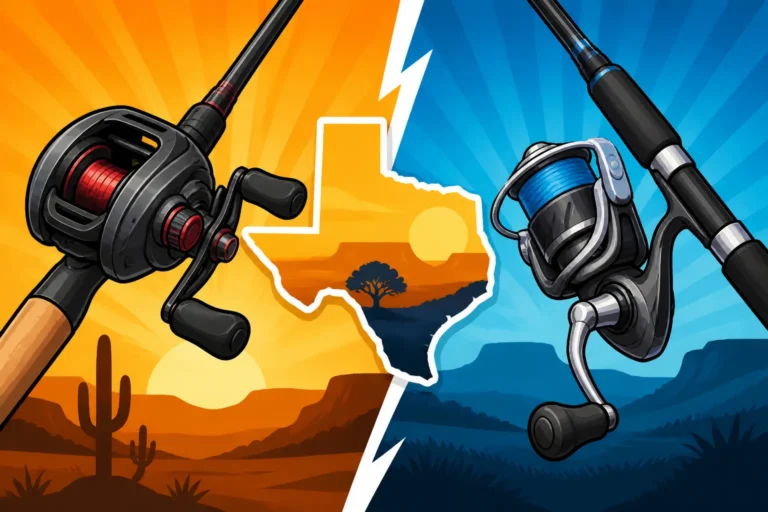
Let's talk about the two main types of rod and reel setups you'll see: spinning and baitcasting. You'll hear seasoned anglers passionately debate the merits of both, but for someone just dipping their toes into Texas fishing, there's a clear winner for ease of use and budget: the spinning combo.
A spinning reel hangs below the rod, and the line comes off a fixed spool. This design makes it incredibly forgiving for beginners. Backlashes, those tangled messes of line that can bring a fishing trip to a grinding halt, are far less common with spinning reels compared to baitcasters. Baitcasting reels, while offering more precision and power once mastered, have a revolving spool that requires a lot more thumb control to prevent those dreaded "bird's nests." As a new angler, you want to spend your time fishing, not untangling line. Spinning reels are generally easier to cast, handle lighter lures and baits with more finesse, and are often available as affordable combos right off the shelf at places like Bass Pro Shops or even online at Amazon. They're perfect for throwing everything from a small worm under a bobber to a medium-sized crankbait, making them incredibly versatile for many Texas species like bass, catfish, and crappie.
Rod Length and Action for Versatility on a Budget
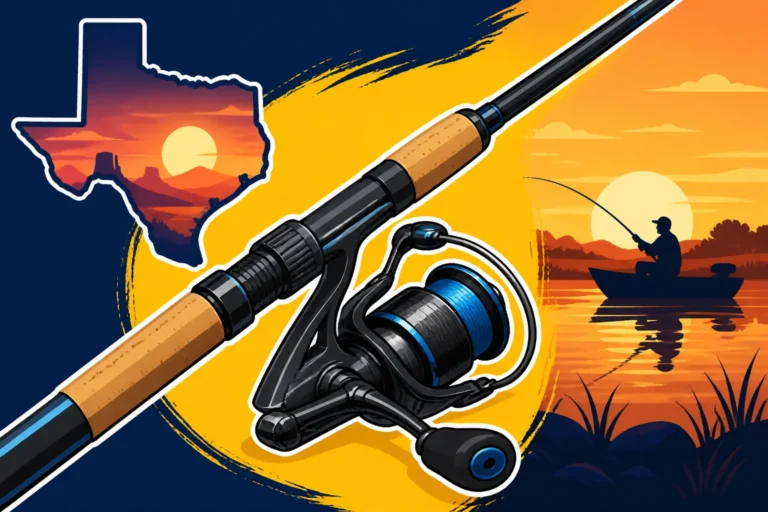
Once you've settled on a spinning reel, the next step is picking the right rod to go with it. When you're on a budget and looking for maximum versatility across different types of Texas fishing, a medium-action rod, typically somewhere between 6 feet 6 inches and 7 feet in length, is your sweet spot.
"Action" refers to where the rod bends. A medium action rod bends primarily in the upper half or third, giving you a good balance of casting distance, backbone for fighting fish, and sensitivity to feel bites. This type of rod is a true workhorse. It's flexible enough to cast lighter baits, yet strong enough to handle a feisty largemouth bass from a local pond or a respectable channel catfish from a river. A 6'6" to 7' length provides enough leverage for good casting distance from the bank or a boat, without being so long that it becomes cumbersome to transport or use in tighter spots. You can easily find quality fiberglass or composite rods in this size and action that are very budget-friendly, often bundled with a matching spinning reel as a combo. This pairing ensures your rod and reel are balanced, making for a much more pleasant casting and reeling experience right out of the gate.
Affordable Reel Options That Won't Quit
Just because you're on a budget doesn't mean you have to settle for a reel that will fall apart after a few outings. There are many fantastic, entry-level spinning reels that offer surprising durability and performance for their price.
When shopping for an affordable spinning reel, look for models from reputable brands that focus on smooth operation and reliable drag. The "drag" is crucial; it's the mechanism that allows line to be pulled off the spool when a fish pulls hard, preventing your line from breaking. A smooth, consistent drag is far more important than a reel having a dozen bearings (though a few good quality bearings do help!). Many budget-friendly reels, especially those sold in combos, will feature sturdy graphite bodies, corrosion-resistant components, and a decent gear ratio for all-around retrieving. You'll want a reel in the 2500 or 3000 size range, which pairs well with your medium-action rod and provides enough line capacity for most freshwater fishing scenarios in Texas. Don't be afraid to read online reviews on sites like Amazon; often, you can find hidden gems that anglers swear by for their bang-for-your-buck value. Remember, maintenance is key for any reel, budget or high-end. A quick rinse with fresh water after each outing and a little lubrication can drastically extend the life of even the most inexpensive reel.
Line, Hooks, Weights, and Floats: The Terminal Tackle Starter Pack
Once you have your rod and reel, you need to connect them to the fish! This is where terminal tackle comes in – everything from your fishing line to your hook. Building a basic, versatile terminal tackle kit doesn't have to be expensive, and it's essential for a successful first trip.
Choosing the Right Line Without Breaking the Bank
Your fishing line is the direct link to your fish, so choosing wisely is important, but that doesn't mean it has to be costly. For a beginner on a budget in Texas, monofilament line is often the best choice.
Monofilament (or "mono") is incredibly affordable, widely available, and very forgiving. It has a good amount of stretch, which acts like a shock absorber, helping to prevent hooks from tearing out of a fish's mouth and absorbing sudden lunges. This stretch also makes it more tolerant of poor knot-tying by beginners. Monofilament is also quite abrasion-resistant and easy to tie. For your versatile medium-action spinning combo, a 8-pound to 12-pound test monofilament line is ideal. This range is strong enough to handle most freshwater species you'll encounter in Texas lakes and rivers, like bass, catfish, and even some smaller striped bass, while still being light enough to cast comfortably with lighter baits. You can spool your entire reel with a bulk spool of mono for very little cost. While braided lines and fluorocarbon lines have their advantages (sensitivity, low visibility), they are generally more expensive and can be trickier for beginners to manage, especially with knot tying. Stick with reliable mono for your first few trips, and you'll be golden.
Essential Hooks and Weights for Texas Waters
A small selection of hooks and weights can cover nearly all your basic Texas fishing needs without costing much at all. Focus on versatility rather than specialty items.
For hooks, you'll want a mix of basic J-hooks and circle hooks. J-hooks (sizes #6 to 1/0) are fantastic for live baits like worms or minnows, and they're what most of us started with. Circle hooks (sizes 2/0 to 4/0) are a game-changer for bait fishing, especially for catfish. Their design helps the hook set itself in the corner of the fish's mouth, making it easier to release fish unharmed if you're not keeping them, and reducing gut-hooking. For bass fishing with soft plastics, a few offset worm hooks (sizes 1/0 to 3/0) are also a great, inexpensive addition. For weights, a variety pack of split shot weights (small, medium, large) and a few bullet weights (1/8 oz to 1/4 oz) will get you started. Split shots are easy to crimp onto your line to get your bait down, and bullet weights are perfect for Texas rigging soft plastics, helping them slide through cover without snagging. This small assortment will let you adapt to different depths and current conditions you encounter.
The Humble Bobber: A Must-Have for Beginners
Don't underestimate the power of a simple bobber, especially for a beginner. It's an incredibly effective and enjoyable tool that adds a visual element to your fishing.
Bobbers, also known as floats, serve two primary purposes: they suspend your bait at a desired depth and they signal a bite. When that bobber twitches, dips, or disappears, you know it's time to set the hook! For budget fishing, you'll want a few clip-on bobbers and maybe a couple of slip bobbers. Clip-on bobbers are easy to attach and remove from your line, perfect for shallower water or when you want to change depths quickly. Slip bobbers, on the other hand, allow your line to slide through them until it hits a small bobber stop, letting you fish much deeper water while still being able to cast easily. This setup is fantastic for crappie, bluegill, and even suspended catfish. Using a bobber is often the first technique many young anglers learn, and it remains one of the most productive and relaxing ways to fish. Plus, watching that bobber dance is half the fun!
| Item | Recommended Size/Type | Approximate Budget Cost Range (Per Item/Pack) |
|---|---|---|
| Rod & Reel Combo | Spinning, Medium Action, 6'6" – 7' rod, 2500-3000 reel | Check current prices at Bass Pro Shops |
| Fishing Line | Monofilament, 8-12 lb test, bulk spool | Check current prices at Amazon |
| J-Hooks | Assorted sizes (#6 to 1/0) | Check current prices at Amazon |
| Circle Hooks | Assorted sizes (2/0 to 4/0) | Check current prices at Amazon |
| Offset Worm Hooks | Assorted sizes (1/0 to 3/0) | Check current prices at Amazon |
| Split Shot Weights | Assorted pack (small, medium, large) | Check current prices at Amazon |
| Bullet Weights | Assorted pack (1/8 oz to 1/4 oz) | Check current prices at Amazon |
| Bobbers | Assorted clip-on and slip bobbers | Check current prices at Amazon |
| Pliers/Multi-tool | Basic fishing pliers with cutters | Check current prices at Amazon |
| Small Tackle Box | Single tray or small utility box | Check current prices at Amazon |
| Sunscreen/Hat | Personal preference, SPF 30+ | Varies by brand |
| Water Bottle | Reusable | Varies by brand |
| Stringer/Small Cooler | Basic fish stringer or small personal cooler | Check current prices at Amazon |
| Tape Measure | Retractable, small | Check current prices at Amazon |
Lures and Bait: Getting the Fish to Bite on a Budget
So you've got your rod, reel, and terminal tackle. Now, how do you actually convince a fish to bite? This is where bait and lures come in. For a budget-friendly first trip, there are some highly effective and inexpensive options that will have you catching fish in no time.
Live Bait: The Ultimate Economical Choice
When it comes to putting fish on the hook, live bait is king, and it's often the most economical choice for beginners. You can't beat nature's own offerings for effectiveness and accessibility.
Worms are arguably the most universally effective and cheapest live bait. A container of nightcrawlers from any local bait shop, gas station, or even your own backyard after a rain, can catch almost any freshwater fish in Texas, from bluegill and crappie to bass and catfish. They are easy to rig on a hook and their wiggling action is irresistible. Minnows are another fantastic option for a variety of species, particularly crappie and bass, though they might cost a little more than worms. For catfish, especially larger ones, cut bait is incredibly effective and can be made from leftovers or inexpensive oily fish like shad (if legal to catch) or even hot dogs. The beauty of live bait is that it's natural, it smells and moves like real food, and fish rarely refuse it. Focusing on live bait for your first few trips will give you immediate confidence and a higher chance of success, which is priceless for a new angler. Remember to check local regulations on what live bait is allowed in the waters you're fishing. You can learn more about specific techniques in our guide, How to Catch Catfish in Texas.
Must-Have Artificial Lures That Won't Empty Your Wallet
While live bait is a sure bet, it's also fun to experiment with artificial lures. You don't need a tackle box full of expensive, flashy lures to catch fish. A few versatile, budget-friendly options can be incredibly productive.
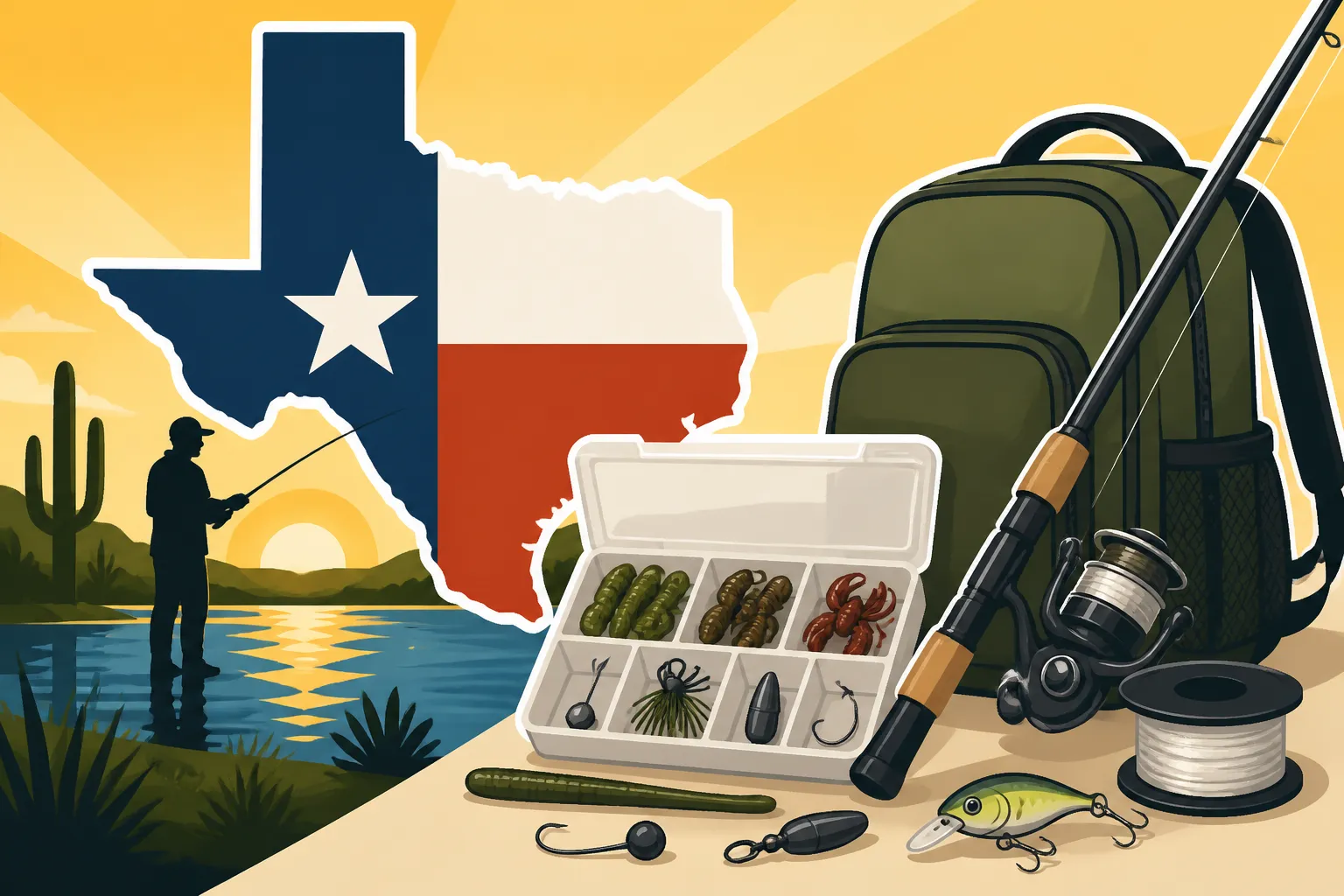
Soft plastic worms and creature baits are your best friend here. A pack of Texas-rigged plastic worms in basic colors like green pumpkin, black, or Junebug can be fished effectively for bass in almost any cover. Brands like Zoom or Strike King offer affordable packs that catch fish season after season. Simply rig them with one of your bullet weights and an offset worm hook, and you've got a killer bass setup. Another excellent budget lure is a spinnerbait. These lures have a wire frame with a blade (or two) that spins, creating flash and vibration, along with a skirted hook. They are incredibly versatile for bass and even some aggressive crappie or white bass. Look for basic white or chartreuse spinnerbaits in 1/4 oz or 3/8 oz sizes. Finally, a single, inexpensive crankbait in a firetiger or crawfish pattern can be a great addition. These dive to a certain depth and wobble, imitating baitfish. These three types of artificials — soft plastics, spinnerbaits, and a basic crankbait — offer different actions and presentations, giving you options for various fishing conditions without breaking the bank. For more insights on this, check out Best Bait and Lures for Texas Fishing.
The Power of Scent and Attractants
Even with budget-friendly baits and lures, you can significantly increase your chances of getting a bite by adding a little scent or attractant. This is a small investment that can make a big difference, especially on heavily fished waters.
Fish rely heavily on their sense of smell, particularly species like catfish, but bass and crappie also react positively to added scent. A small bottle of liquid fish attractant, available for just a few dollars, can be squirted directly onto your artificial lures or even live bait. It helps mask human scent and leaves a tempting trail in the water. For soft plastics, you can also opt for "scented" versions right out of the package, which infuse the plastic itself with fish-attracting oils or salts. By making your bait smell more appealing, you're essentially giving fish another reason to investigate and hold onto your offering for longer, giving you more time to set the hook. This small, cost-effective addition can genuinely turn a slow day into a productive one, boosting your confidence as you navigate the waters for your first Texas fishing trip.
Beyond the Basics: Crucial Accessories That Don't Cost Much
You've got the primary tools, but a few inexpensive accessories can make your first fishing trip much more comfortable, efficient, and safe. These aren't flashy, but they're absolutely essential.
Pliers, Scissors, and a Tackle Box: Organization and Efficiency
These three items are the unsung heroes of any fishing trip. They might not catch fish directly, but they make everything else about fishing easier and more organized.
A good pair of fishing pliers, even an inexpensive multi-tool, is indispensable. You'll use them to remove hooks from fish (a crucial safety measure for both you and the fish), cut fishing line, crimp split shot weights, and even fix minor issues with lures. Look for a pair with a built-in line cutter. A small pair of scissors or nail clippers also works wonders for cleanly trimming line. Nothing is more frustrating than fumbling with tangled line or a deeply embedded hook. Next, a simple tackle box or a small utility box with dividers is a must. You don't need a huge, complicated one. A small, single-tray box or even a few clear plastic utility boxes will keep your hooks, weights, and lures neatly organized and prevent them from rattling around and getting lost. Being able to quickly find the tackle you need means more time fishing and less time searching, which is a big win for any angler, especially a beginner. For more ideas on organizing your gear, check out Beginner Fishing Gear Checklist for Texas.
Sun Protection and Hydration: Safety First!
Texas weather can be glorious, but it can also be brutally hot and sunny. Protecting yourself from the elements is not just about comfort; it's about safety.
A wide-brimmed hat, sunglasses, and sunscreen are non-negotiable for any outdoor activity in Texas, especially fishing, where you're often exposed to direct sunlight for extended periods. The sun's UV rays can cause severe sunburn and long-term skin damage, while glare off the water can be harsh on your eyes. Polarized sunglasses, even an inexpensive pair, will also help you see into the water by cutting glare, potentially allowing you to spot fish or submerged structure. Staying hydrated is equally vital. Always bring plenty of water, especially during the warmer months. A reusable water bottle is an eco-friendly and budget-friendly choice. Dehydration can quickly sap your energy and enjoyment, so make it a priority. Planning for sun protection and hydration ensures you can comfortably and safely enjoy your entire fishing adventure. If you're heading out in the summer, our guide on How to stay safe fishing in Texas summer heat has more essential tips.
Measuring and Handling Your Catch Responsibly
Catching a fish is exciting, and knowing how to handle it properly, especially if you plan to release it, is a vital part of responsible angling. These final accessories help with that.
A simple tape measure or a retractable fishing ruler is crucial for checking if your catch meets Texas's legal length limits, which vary by species and body of water. Carrying a small, compact ruler that's easy to read will keep you compliant with regulations. Secondly, if you plan on keeping your catch for a delicious meal, a fish stringer or a small, inexpensive cooler with ice is essential. A stringer keeps fish alive in the water, maintaining freshness, while a cooler provides a more secure and insulated option, especially in warm Texas temperatures. Learning how to properly unhook and handle a fish, whether you're keeping it or releasing it, is an important skill. Wet your hands before touching a fish to protect its slime coat, and handle it gently. Being a responsible angler means understanding and respecting the fish and the regulations, ensuring the health of Texas's aquatic resources for years to come. For specific regulations, our Texas Fish Bag and Length Limits article can provide detailed information.
Disclaimer
This article is for general informational purposes only and does not constitute professional advice. Laws, prices and regulations vary by location and change over time. Consult a qualified professional for guidance on your specific situation.